Category: Articles

  • Preschool Reading

    Preschool Reading

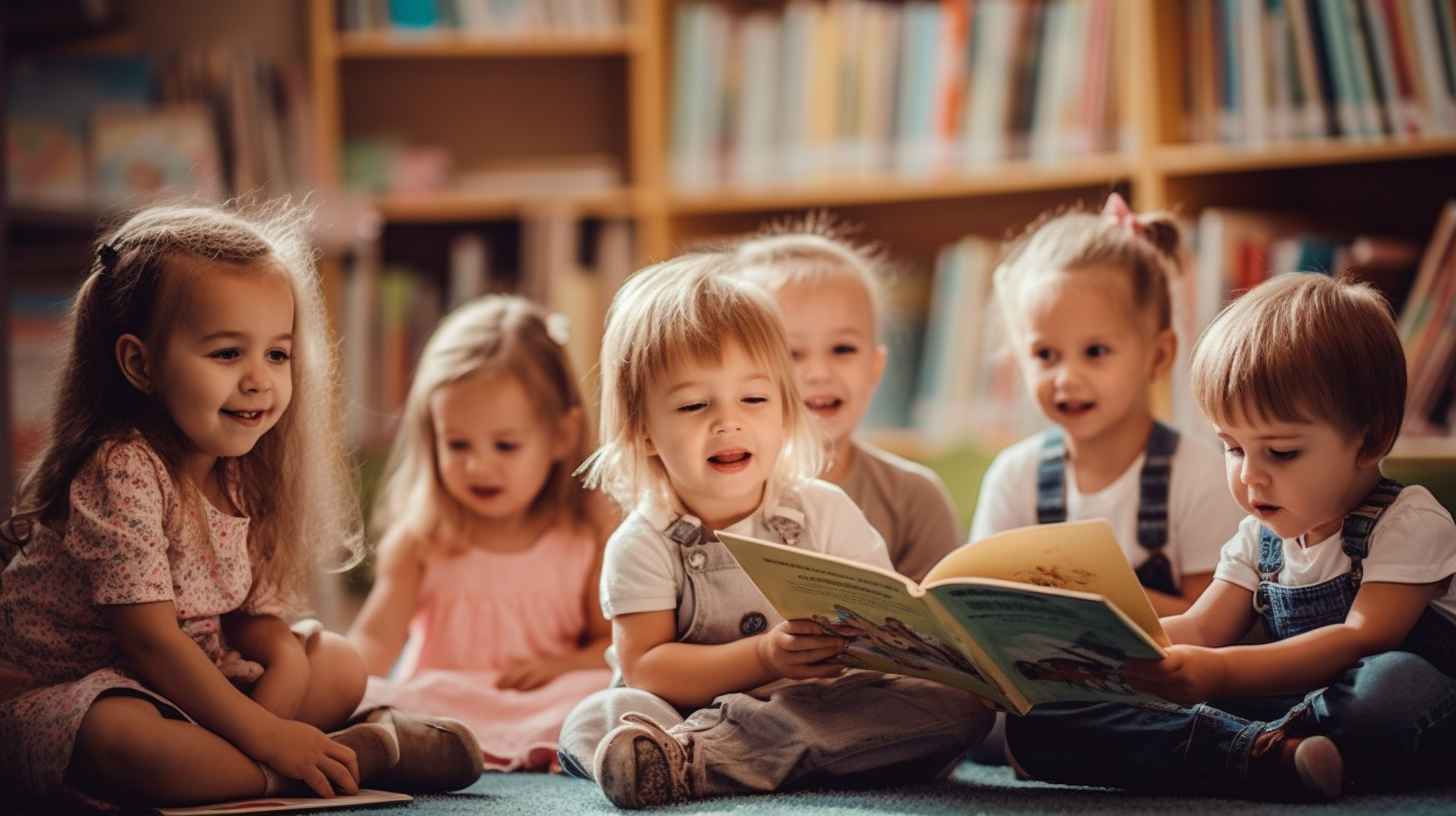
    Below you’re going to find information about preschool reading. The foundation for a child’s success in school and life is laid by their ability to read. Developing a love of reading and beginning to hone their literacy skills in preschool is crucial for kids. Preschoolers can benefit from early exposure to reading by developing critical thinking, comprehension and other essential abilities. We’ll discuss the value of teaching reading skills in preschool, teaching methods and some entertaining activities to support preschoolers reading development in this article. This article will give you the information and resources you need to support your child’s reading development in the preschool years, whether you’re a parent, caregiver, or teacher. Therefore, let’s dive in and explore preschool reading together!

    Table of Contents

    How Do You Teach Preschoolers To Read?

    Preschoolers And Reading: A Winning Combination

    Your preschooler most likely isn’t reading at this time. And that’s okay! It would be best if you didn’t force reading on your child. But as parents, we should keep literacy in mind. You are responsible for setting the scene, supplying the resources, and offering unwavering support. Pushing is not what consent is.

    Your child begins learning to read on her first day of life. Her journey to independent reading starts when she hears your voice, her first exposure to the language. Every small step you take with her prepares her for the day you’ll finally refer to her as an independent reader.

    Preschoolers, or Preschooler who range in age from three to five, should engage in the following kinds of reading-related activities:

  • As often as she likes, but at least once every day, read aloud to a caregiver.
  • They understand the operation of books. The reader reads the text as they turn the pages and read from left to right.
  • Playing with letter sounds, names, and combinations. Use activities, engaging toys, and alphabet books.
  • Practicing rhymes Reading rhymes, nursery rhymes, humorous poetry, and music.
  • Drawing and discussing her drawings.
  • They are writing classes—no requirement for writing practice books (but if your child is eager, feel free). Begin to make markings.

  • Acquiring New Vocabulary And Discussing It

    At this age, you should teach literacy using the same method that preschoolers use to learn: via play. It is not necessary to properly educate a three-year-old to read through tightly structured activities, but this does not imply that literacy exercises cannot or should not be enjoyable. Follow your child’s lead, be bold, and engage in enjoyable literacy exercises. Play with reading now, and soon they’ll be playing with reading.


    Focus On Letter Sounds Over Letter Names

    The ball is represented by the letter “b,” yet when you utter the word ball, it sounds different from when you say the letter B alone. It can be difficult for a young youngster to understand that idea!

    We advise teaching kids the sounds connected to each alphabet letter rather than just the names. Please clarify that B makes the sound /b/. (Ball is pronounced just as it does when spoken aloud.).

    Preschooler can start sounding out small words once they solidly connect a few letters with their sounds. A youngster can sound out both bat and tab if they are familiar with the sounds for B, T, and A.

    The number of words your youngster can sound out will increase as more connections are made between letters and sounds.

    Does this imply that your child won’t learn to match sounds and letters or learn to read if they have already started learning by checking official alphabet letter names with words? Not!

    We suggest this procedure as a learning strategy to aid confident Preschooler in transitioning from letter sounds to words.


    Start With Capital Letters

    It’s much simpler to practice letter formation when each one is distinctive. For this reason, we teach uppercase letters to young Preschooler who still need to enroll in formal education.

    Although uppercase letters are more easily distinguished from one another and are therefore simpler to identify, lowercase letters are still the most prevalent format for letters (if you open a book on any page, the bulk of the letters will be in lowercase).

    Consider how similar the letters “b” and “d” appear. But it’s much simpler to distinguish between “B” and “D.” Therefore, having your child start with capital letters will help them understand the fundamentals of letter identification and reading.

    We found that including your child’s sense of touch can be very helpful in aiding their learning of uppercase letters. Consider purchasing rough paper, such as sandpaper, and cutting out the shapes of the uppercase letters if you want to try it.

    Before giving your child the letter, have them clasp their hands behind their backs. They can infer from their sense of touch which letter they are holding. With magnetic letters, you may play the same game.


    Including Phonics

    According to research, Preschooler with a solid foundation in phonics —the relationship between sounds and symbols—tend to develop into more excellent readers over time.

    A phonetic approach to reading teaches a child how to read words they have yet to learn by mixing the sounds as they go, letter by letter and sound by sound.

    Once Preschooler reach a certain level of automatization, they can immediately sound out words and only use decoding when the sentences are lengthy. The ideal way to teach phonics is directly, sequentially, and methodically.


    Balance Sight Words And Phonics

    Teaching your child to read should also include preparing them with sight words. These are familiar words frequently misspelled and impossible to understand (sounded out).

    Sight words should be memorized since we want to maintain the phonics learning your child has already accomplished. But remember that many young Preschooler may struggle to understand sight words.

    Therefore, it is ideal for spending most of your time building and reinforcing the knowledge and skills required to sound out words if you want to give your child a head start on their reading journey.

    Additionally, it can assist Preschooler in learning new words and how to use them and in understanding how to use context cues when someone is speaking about a subject they would need to know more about.

    Talking gives you a chance to share and build memories that you will cherish forever, and all of these abilities benefit your child as they begin their reading adventure.


    Keep It Simple

    Exploring the real and imagined worlds through text, photographs, and illustrations is what reading is all about. Your youngster should read in a relaxing environment while paying attention to what they are learning rather than cramming in a stressful session at the end of a long day.

    We’re nearly halfway through the list and would like to remind you gently and your child that there shouldn’t be any pressure placed on them to read.

    Finding what will keep your youngster interested and engaged in learning may also take some time. I understand. If it isn’t entertaining, lighter, and fun for you and your child, drop it and try something else.


    Shared Reading Drills

    Consider asking your child to repeat words or sentences when you read to them occasionally while you follow along with your finger.

    If your youngster has trouble understanding a particular word, there’s no reason to quit reading altogether. A brief explanation of the word’s pronunciation or definition is sufficient.

    Another choice is to divide your time reading aloud to your youngster. You can read the first line to beginning readers and then ask them to read the next. It is advantageous to read one page to older kids and then allow them to read the following page.

    Encourage your child to read effectively and frequently; this will help them feel capable and confident.

    Additionally, this method helps your child become more accustomed to reading’s natural flow. They will concentrate on the words they are reading and become more involved with the book in front of them as they pleasantly gaze at the illustrations and listen to the story.

    Rereading literature might be beneficial as well. It enables kids to connect with the story, gain a deeper understanding of the words in a text, and turn familiar terms into “known” words that are then added to their vocabulary. We heartily suggest rereading it!


    Word Gameplay

    Reading doesn’t just have to involve books to get your kid interested. Word games are a fantastic method to keep your child’s attention without having to read an entire novel at once.

    All you need for one of our favorite reading games is a bunched-up sock and a stack of post-It notes. Use separate post-It letters to include sight words or words your child can sound out for this task. After that, adhere the messages to the wall.

    Then, having the bunched-up sock in their hands, your child can stand before the post-Its. Your youngster launches the sock ball at the matching post-It note after you pronounce one of the words!


    Utilize Unusual Reading Materials

    In the same way that playing word games can aid your child’s literacy development, it can also encourage them to read aloud rather than from actual books!

    If you’re interested in doing this, consider forming and shaping letters or words from Play-Doh, clay, paint, or sand appropriate for indoor use.

    Another choice is to put magnetic letters in a big pot. Encourage beginning students to select a letter from the bank and attempt to identify the sound it produces. For slightly more advanced students, ask them to name a word that starts with a similar sound or gather a group of letters that make a word.

    You can scale these exercises to make them more difficult as your youngster gains proficiency. Also, remember to have fun!

    Should A 3 Year Old Be Reading?

    Unlocking The Power Of Early Literacy: Should Your Three-year-old Be Reading?

    Parents might anticipate seeing their child reach their first reading milestones between 3 and 4.

    It might involve pointing out letters or words that are recognizable to them, telling them stories that have been said to them or even making up absurd rhymes.

    Giving your child the most incredible possible start in their reading journey is the main goal at this stage in their development. Making learning enjoyable, engaging, and motivating is crucial during these formative years since reading story depends on it.

    Remember that these are a time of imagination, exploration, and play when teaching your child early reading skills. Above all, put your attention on enjoying books together. You can encourage a lifelong love of reading by making this time spent together enjoyable for the two of you.

    Many kids at this age pass-through “pre-emergent reading.” They might start pointing out and understanding symbols and signs. It is one of the first steps in learning to read, and kids will gradually discover the meaning behind written characters. Point out terms your youngster already recognizes wherever you go, including labels and signs. Use this chance to discuss letters and the sounds they produce with your child to aid in the early development of phonics abilities.


    Three-Year-Olds Can Read

    There is a ton of proof showing preschoolers as young as three can read. It is unique, though. A youngster typically begins reading at the age of five.

    It is okay to delay reading instruction until your child is older.

    Before teaching your child to read, they must be open to the idea. How they respond when you point out words, signs, and labels on objects indicates their receptiveness.

    It’s appropriate to start teaching your child to read if they are intensely interested in the written word, as early reading offers several advantages.


    Can A Three-year-old Be Taught How To Read?

    Yes. Numerous studies suggest that it is possible to teach reading to a three-year-old. There are two prerequisites for achievement.

    The child’s attention is necessary for the parent as the first prerequisite.

    The parent must frequently work with the child to teach them how to read, the second prerequisite.

    It is feasible, but it can be challenging for a parent to handle this independently. You must be patient and spend a lot of time with your youngster alone.


    How To Begin Reading To A Three-year-old?

    There may be some doubt when someone asks how to teach reading to a three-year-old because of the widespread perception that kids this age lack the skills needed to learn to read.

    There are several approaches you might take when teaching a three-year-old to read. By concentrating on the alphabet, you can start by achieving this. Draw illustrations of numerous things and label them with abbreviations for the words they represent.

    An apple would be “a-p-p-l-e,” for instance.

    Your youngster can pick up reading independently after being comfortable with these words.

    Furthermore, parents must discourage reading at this age. Allow them to investigate how they want to learn and enjoy it.


    Literacy development doesn’t begin when your child enrolls in school. Babies and young preschoolers start developing the reading skills they will need as soon as they are born. Some 5-year-olds are already enrolled in kindergarten, and the years between ages 3 and 5 are crucial for reading development.

    Simply reading to your child is the best method to foster a passion and interest in reading, yet many parents still need to do this. Reading with your child allows you to develop a deep relationship with them and gives you a glimpse into the world of reading they will enter.

    You will notice exciting reading milestones emerge as your child progresses from speaking in single-word phrases to speaking in complete paragraphs.

    Your child will start to recognize the address written on your house, the print on the street, stop signs, and recognizable store signage.

    Most preschoolers can recall familiar words and phrases from their favorite books, hold books appropriately, turn pages, and distinguish between a random scribble and a letter or number.

    Some preschoolers can name the letters that start particular words, recognize and write some letters and numbers, and create humorous rhymes and phrases.

    Some preschoolers may even:

  • Predict the outcome of a narrative.
  • Read and write their names and a few famous words.
  • Repeat stories they are familiar with.

  • Discuss Texts

    For preschoolers, a text-rich environment provides the foundation for success in reading. Even if having books at home is a great start, other factors should be considered. Talk can also begin regarding the characters, digits, and words on various items and signs.

    Help your child recognize text’s role in his everyday activities. Mention the brand of his preferred cereal. Show him the clothes labels. Show him the various components of an invitation or birthday card.

    Play games requiring letter and number recognition while you are out and about. Are there any letters on the grocery sign that your toddler can identify for you? Is she able to decipher the serving size of a packaged snack? She will gladly learn more about her surroundings if you don’t force her joy. Never should learning about text be a pain.


    Be Alert To Issues

    Do you suspect that your child may be suffering from a learning disability? Early intervention, as with practically any handicap, can reduce future issues. Speech problems are far more apparent in preschool than potential learning difficulties that can interfere with a child’s reading attempts. If you are worried that your kid is speech delayed, consult your pediatrician for advice.

    Most school systems identify reading difficulties in the first grade. There are, however, warning indicators that you can search for sooner. You should watch this area of development if your 5-year-old cannot “hear” the rhyming in two simple words or tell the difference between a letter and a random squiggle.


    In Early Kindergarten (Ages 1-3)

    Preschoolers typically start:

  • Answer questions like “Where’s the cow?” and “What does the cow say?”
  • And correctly identify items in books.
  • Identify some well-known images.
  • Pointing can be used to locate named items.
  • The pretense of reading a book.
  • Whole passages in novels they are familiar with.
  • Write ink on paper.
  • Know the titles of books and can identify them by the cover image.
  • Page through board books.
  • Have a favorite book and ask to have it read frequently.

  • Early Kindergarten (Age 3)

    Preschoolers typically start:

  • Study books on your own.
  • Lengthier novels can be heard being read aloud.
  • Retell a well-known tale.
  • Using signals and prompts, sing the alphabet song.
  • Create writing-like symbols.
  • Recognize the name’s first letter.
  • Understand how sketching an image differs from writing.
  • Mimic is the act of reading aloud from a book.

  • Early childhood is crucial for building a solid foundation (and a love of) reading in your child. Find out more about your child’s reading readiness skills as one way you can assist. The more information you have, the better you can help your youngster succeed in reading. Remember that preschoolers grow at their rate and according to their schedules. If you are worried, go to your child’s doctor or teacher.

    Recognize when a young child’s early reading is a sign of talent and when it results from responsible parents.


    1. Cognitive Progress

    We need to comprehend how preschoolers’s cognitive development works to understand why and how early reading indicates giftedness. Since most teachers are familiar with Piaget’s theory of developmental evolution, they are less likely to accept parents who assert their kids are more capable than their age.


    2. Language Learning

    Understanding how kids learn a language is the next step in comprehending how early reading indicates giftedness. It’s okay to teach language to preschoolers explicitly.

    The only requirement for learning a language is exposure. It means that a youngster needs to speak to and be spoken to by others. Preschoolers throughout the world will develop in a manner that is typical of their peers.


    3. Language Development And Talented Preschoolers

    The phases of language development are the same for most kids, and they follow a similar pattern, but talented kids may move through those stages more quickly than other kids. Alternatively, they may skip some steps, though it’s more likely that they move through the settings in a different order.

    For instance, a bright child might not be able to speak until he is two years old, but once he does, he says in whole sentences.

    Although it may appear that the youngster skipped past the two-word statements, they may have yet to be able to convey those ideas at that point in their language development.


    How Preschoolers Discover Reading?

    Even at a rapid pace, learning a language is one thing; learning to read is quite another. While learning to read is a skill that must be taught, learning to talk comes naturally.

    Before a youngster learns the skill, it must be taught, and the brain must also be appropriately developed. A youngster must have fully developed muscles before they may learn to walk.

    A youngster can be supported and taught to walk, but he can accomplish it independently once his muscles are developed. Reading is the same way.

    What Are The 3 Basic Reading Techniques?

    Unlocking The Abcs: The Top Three Reading Techniques For Preschoolers

    We all understand the value of reading as a necessary ability for educational achievement. If we didn’t respect reading, we wouldn’t devote the time we do to teaching it. Even though reading is essential, we frequently must teach our preschoolers the required core reading skills. The task involves more than merely reading a written passage from beginning to conclusion. For various informational outcomes, multiple reading strategies should be used.


    Scanning

    Scanning is used when searching a text for a specific piece of information. When a child scans, he swiftly examines the selection to find the detailed information he wants, then reads only that information carefully. He quits reading after learning this information. The reading passage might be a choice on a test that includes reading comprehension questions. Still, it could also be as simple as reading a schedule to find out when a specific movie is showing or examining a weather map in a newspaper. Scanning is a quick reading method that ignores some of the text’s finer details. Preschoolers should consider the format of the responses before scanning for the ones to their questions. Will a time come? Will they have a place to be? Preschoolers will easily find the information if they know this beforehand.

    The method of scanning is similar to that of skimming. Additionally, it entails looking at a passage of text fast and carelessly.

    There is a deliberate distinction between skimming and scanning. While scanning is done to identify specific information in the content, skimming is done to acquire the general concept of the entire work.

    You can use scanning as a reading strategy in a variety of circumstances. One of these circumstances is reviewing a reading passage to reinforce understanding. When checking, you scan the text fast in search of terms or phrases that will jog your recollection.


    Skimming

    Reading that is done quickly is referred to as skimming. However, unlike scanning, skimming aims to absorb the key ideas in a more considerable body of writing instead of providing an answer to a single question. You remove the wealthiest portion of milk when you skim it. Similarly, preschoolers should extract only the most crucial details when scanning a reading section. Reading the initial paragraph, the entire last paragraph, and the first sentence of each subsequent paragraph is the most straightforward approach to studying a unit.

    Your preschoolers need to be able to recognize the main topics in the paragraph as a result of doing this. Additionally, preschoolers should focus on bolded or italicized terms, headings, and subheadings. After skimming, preschoolers can read the complete selection or scan for specific information. For ESL learners, skimming can be challenging since they frequently become bogged down by unfamiliar language and perplexing grammar. Remind your preschoolers to grasp the author’s main points while skimming a paragraph. Please encourage them to use any strange word as a guess rather than worrying about the specifics.

    Skimming is not rapid reading, despite what this may imply. Skimming is simply scanning through material rapidly, whereas speed reading covers much information quickly. When skimming rather than reading rapidly, you pass over the details.

    However, skimming is a helpful reading strategy when all you want to do is understand the primary topic. A practical approach is to “survey” a piece of writing before diving in and reading it thoroughly.

    Skimming can be helpful when you need to review material you’ve previously read. When skimming, you swiftly scan the text of a prior read to help you remember it.

    By making you aware of the main ideas without requiring you to understand the material thoroughly, You can make substantial time savings by skimming. It will save you time if you need to reread the content later and in more detail.


    Read For Specifics

    The most popular reading technique is undoubtedly careful reading or reading for details. This slower reading method begins at the beginning of a passage and continues to the end. Preschoolers should study every sentence when reading for more information, but they shouldn’t try to decipher every word’s exact meaning. Even fluent speakers guess the meaning of unfamiliar words while reading. Ensure your kids that even while reading for information, they should strive to infer the meaning of each word from the context rather than having to memorize it.

    An ability valued in and of itself, the dictionary could be more of a burden than a help if preschooler place too much pressure on themselves when learning new words. Preschoolers should comprehend around 80% of the information they read when reading for details. They can always reread the content. If they require a response to a specific question, they might have overlooked it.

    A practice called detailed reading is attentively reading and examining each word to have a greater comprehension of the text. Extraction of accurate information from a source requires careful reading.

    Skimming is frequently the first step in detailed reading. You first peruse the content to get a general concept of what it is. You then give it a close read.

    It would help if you searched for the meaning of new terms or phrases while reading something in-depth. To grasp things better, you must also put words together. You employ this strategy when reading books, reports, and academic articles.

    Although reading can occasionally appear as simple as a, b, and c, there are clever strategies to increase the value and effectiveness of your preschoolers’ reading. You may equip your preschoolers with the techniques they need to be great learners by teaching them how to skim and scan in addition to reading in detail.


    Tips For Teaching Basic Reading Techniques To Preschoolers

    Teaching basic reading techniques to preschoolers can be challenging, but it can also be a fun and rewarding experience with the right approach. Here are some tips for teaching basic reading techniques to preschoolers:


    Keep it fun

    Preschoolers have short attention spans and learn best when engaged and having fun. Therefore, it’s essential to use a variety of games and activities to make learning to read more enjoyable. Some ideas include:

    Playing word games such as “I Spy” or “Find the Letter” helps preschoolers develop scanning and reading for specific skills.

    Reading picture books with fun stories and colorful illustrations that capture preschoolers’ imaginations

    Singing songs that use rhymes and repetition to help preschoolers learn new words and phrases


    Use Simple Texts

    Preschoolers are still developing their reading skills, so choosing picture books with simple storylines and easy-to-read text is essential. Choose books with large, clear fonts and illustrations that support the text. It will help your child feel confident and booming as they learn to read.


    Practice Regularly

    Reading is a skill that requires regular practice to develop. Set aside time each day for reading practice, even for a few minutes. It will help your child develop strong reading skills and establish a routine for reading that will be useful to them throughout their academic career.


    Be Patient

    Learning to read takes time and practice, and preschoolers may progress at a different pace than their peers. Being patient with your child and celebrating their successes is essential. Encourage them to keep practicing and provide positive feedback to boost their confidence.


    Use A Multi-Sensory Approach

    Preschoolers learn best when they engage all their senses. Therefore, it’s essential to use a multi-sensory approach to teaching reading. For example:

    Encourage your child to touch and feel the book’s pages as they read.

    Use different colors and textures to make reading materials more visually appealing.

    Use songs and rhymes to help your child remember new words and phrases.


    Create A Reading-friendly Environment

    Create a reading-friendly environment at home by setting up a cozy reading nook or creating a bookshelf with a selection of age-appropriate books. Include reading in your daily routine and encourage your child to read for pleasure.


    Encourage Active Reading

    Encourage your preschooler to be an active reader by asking questions and making connections to the story. Ask them to predict what will happen next, identify characters and their emotions, and connect to their experiences. It will help them develop comprehension skills and deeply engage with the story.


    Model Good Reading Habits

    Because preschoolers learn by example, you must model good reading habits for your preschooler. Let them see you reading for pleasure and discuss what you are reading with them. It will show them that reading is an enjoyable activity and help to establish a lifelong love of reading.


    Celebrate Milestones

    Celebrate your preschooler’s reading milestones and accomplishments, no matter how small. It will help to boost their confidence and motivate them to continue practicing. Consider creating a unique chart or sticker book to track their progress and reward them for their achievements.


    Incorporate Technology

    Technology can be a valuable tool for teaching reading skills to preschoolers. Consider using educational apps or interactive e-books to supplement your child’s learning. However, be mindful of screen time and balance it with other activities that promote physical activity and social interaction.


    Use Real-life Examples

    Use real-life examples to help your preschooler understand the practical applications of reading. For example, read restaurant menus, signs on the road, or labels on food packaging. It will help to reinforce the importance of reading and show your child how reading skills are used in everyday life.


    Read Aloud Together

    Reading aloud together is a great way to strengthen the bond between parent and child while promoting reading skills. Choose books that you both enjoy and take turns reading aloud. It will help your child’s reading fluency and build their confidence as a reader.


    In summary, teaching preschoolers basic reading techniques requires various approaches, including fun and engaging activities, simple texts, regular practice, and a multi-sensory approach. By encouraging active reading, modeling good reading habits, celebrating milestones, incorporating technology, using real-life examples, and reading aloud together, you can help your child develop strong reading skills and a passion for reading that will last a lifetime.

    What Does Reading Look Like In Preschool?

    The ABCs Of Preschool Reading: What Learning To Read Looks Like For Your Little One

    The child’s growth is aided in numerous ways by the daily sharing of stories, conversations, and songs.

    The goal is to familiarize the youngster with language, sounds, words, and eventually the value and enjoyment of books. It helps the child develop early literacy abilities, including the capacity to concentrate, listen to, and absorb words. Additionally, it aids the child’s reading success in later childhood.

    Reading to the child helps them develop their imagination and broadens their knowledge of the world. Reading to the child, for instance, can encourage respect for and understanding of various cultures. Additionally, reading helps the child develop social and emotional intelligence.

    By consistently exposing kids to both oral and written language and building on their existing knowledge and linguistic experiences, preschool teachers help kids develop literacy. The child will gain an understanding of the symbolic representation that underlies preschool reading and writing through the use of pictures, play, and the printed word, along with oral language. To help her learn preschool reading, her instructor will implement several entertaining teaching techniques in the classroom, including:


    Reading aloud:

    The teacher is reading the Cat in the Hat to a small group of youngsters gathered around her in the reading nook. She raises the book so they can discuss and view the graphics. Preschoolers estimate what will happen next as the teacher asks questions about the story. Preschoolers learn skills to help them succeed in preschool reading by actively engaging in the story.


    Poetry:

    Essential components of preschool reading include nursery rhymes, music, and poetry. Preschoolers can develop phonemic awareness by listening to and repeating poetry. A crucial skill for success in preschool reading is identifying and isolating the individual sounds, or phonemes, in words, such as the “c” in Cat or the “b” in bat. When preschoolers listen to stories, nursery rhymes, poetry, and conversations, they first inadvertently learn that communication is made up of sounds, syllables, and words.


    Storytelling:

    Preschoolers learn story structure and how to predict outcomes by listening to stories. When you narrate a narrative instead of reading aloud from a book, you can adapt it based on the kids’ reactions, which is a benefit.

    Preschoolers need to be exposed to print daily to grasp how it functions. It includes reading books and periodicals, signs posted around the classroom, bulletin boards, and labels on clothing and other items. They must be taught that spoken and written language are equivalent, that words are made up of letters, and that sentences are constructed of words with spaces between them.


    The alphabet:

    Alphabet books and puzzles allow kids to practice identifying and differentiating letters while teaching them about the connection between sounds and letters.

    Writing and invented spelling are essential components of early reading. The kid will be encouraged to write stories about what he draws, write captions for his artwork, and tell tales based on his experiences and creativity in preschool.


    Dramatic play:

    Through dress-up games and dramatic play, kids can use their imaginations, hone their communication skills, and learn the nuances of spoken language.


    Computers:

    A computer can be a valuable tool for kids learning to write. Preschoolers frequently find it easier to find the letters they seek on the keyboard than form them with a pencil because their small motor control is still developing. The instructor will assist them in the first letter-finding process and urge them to read the words they are creating before printing them.


    The most important activity for developing the information and abilities kids eventually need to learn to read is reading aloud to them.

    Such preschoolers will have had thousands more hours of literacy preparation before entering first grade, including regular Sesame Street viewings, reading, writing, and language activities in preschool, time spent tinkering with magnetic letters on the refrigerator, word and “spelling” games in the car, on the computer, with crayons, and so forth.

    Preschoolers should have a comprehensive, all-encompassing understanding of the nature of print before formal education starts. They should be aware of printed material’s possible appearances and functions and that its basic meaningful units are precise, pronounceable words. They should also be well-versed in the numerous purposes of print, including entertainment, information, communication, and recording, as well as the potential benefits for their own life.

    Youngsters must first understand why they want to be able to read and why they want to learn how to read. Our classrooms must be planned from preschool with these ideas in mind.

    Because it relies on the words and sound structures of the language they know best, learning to read in their native tongue is simpler for English language learners (ELLs). However, kindergarteners are little sponges who soak up all they are taught. They will learn if they are prepared to read simultaneously in two languages. They will learn to read if only English is used to teach them. Excellent instruction is the key to learning to read (and preventing reading issues in one or two languages).


    Using Reading And Pre-reading In The Classroom


    Oral communication exercises

    Teach pre-selected vocabulary words before engaging in an activity or reading a narrative in class. It is constantly beneficial, particularly for ELLs. They will be able to recognize the word, understand its meaning, and retain it. Pre-teaching vocabulary can be done by employing English as a second language (ESL) techniques like:

  • Performing a role or miming
  • Making motions
  • Displaying actual items
  • Indicating using images
  • Drawing quickly on the board

  • Knowledge of phonetics

    Realizing that spoken words have smaller sound units is known as phonemic awareness. Preschoolers familiar with phonetics can start comprehending how the English or Spanish alphabet functions. You can instruct phonemic awareness with exercises like these:

  • It identifies classroom items with proper names, such as desks, doors, and dogs.
  • Clapping exercises that help you recognize the syllables of words

  • Studying poetry and music with rhymes or similar opening sounds

    Using each other’s names as a guide, you can learn more about letters and sounds by asking questions such as Whose name starts with B? is A present in whose name? An “r” appears in whose name? I want to see where you found it.

    Charting new letter and sound discoveries (for instance, “Here are three new letters. Let’s put some words under each letter.”)


    Alphabet proficiency

    Students can start learning the names of the letters once they have mastered the sounds. For ELLs, hearing the sounds and labeling each letter is simpler. The alphabet can be taught using songs and motions representing each letter, such as “A represents alligator. Make your arms swing open and closed like an alligator’s jaws. B stands for bat.” Most bookstores provide books and tapes that include alphabet songs and motions.


    Ideas about printing

    “Big books” are excellent for demonstrating to kids how books operate. After finishing a large book, you can highlight print concepts like:

  • The title, author, and front and back covers of the book
  • The print direction is from left to right.
  • What a word looks like and how words are separated from one another
  • How the text’s substance and structure are connected through the use of inflection and intonation
  • The distinctions among question, exclamation, and period marks

  • Being able to listen

    Reading aloud to your pupils is an excellent technique to model reading while teaching vocabulary. Reading out loud:

  • Describe the features and aspects of the story (characters, setting, problem, solution, plot)
  • Explain any terms, subjects, or ideas that may not be familiar to ELLs.
  • Show the reader how to fix themselves when they make a mistake.
  • Discuss what you are reading out loud.
  • Give preschoolers a chance to recreate the tale they heard in dramatic retellings or use picture cards to order the events.

  • Understanding and decoding

    The second part of the year is a valuable time for ELLs in kindergarten to be exposed to reading through sequenced decodable books. Even though they may only be familiar with a few letter sounds, ELLs can read exciting stories in straightforward decodable books. Because the stories are built on previously mastered letters, sounds, and words, these books may contain some sight words they can memorize, such as “was” or “glad.”

    As you first practice fluency, encourage students through guided reading so they can follow along in their books. You can improve student comprehension by explaining ideas, teaching unfamiliar terminology, posing questions about the narrative, and allowing kids to relate these stories to their experiences.

    Reread the students’ decodable books with a companion after the guided reading. By switching sentences, they can take turns reading. They can read more clearly as a result of this. A safe space where they can feel comfortable reading aloud is also created while reading with a companion.

    When preschoolers are lining up for lunch or recess or transitioning from one activity to the following, use chants, little rhymes, or songs.

    Use thematic modules like “plants” to help kids pick up vocabulary more quickly. They encounter the same terms (all relating to plants) throughout the stories the teacher reads, what they read, and other activities like learning centers.

    What Is The Earliest Age A Child Can Read?

    The Reading Revolution: Discovering The Earliest Age For Preschoolers

    Recognizing letters or letter combinations and then connecting those letters to sounds is the first step in learning to read. Because language is the foundation of reading, learning to read begins in infancy.

    Reading to preschoolers as young as nine months old has been shown in studies to benefit their development. Formal reading instruction begins at a young age as well. There is no set age at which one must learn to read. However, starting gives preschoolers the best chance of success.


    Early Grades Reading Milestones

    Learning to read is a process that includes various developmental milestones along the way. According to reading experts, they have the following:


  • Pretending to read as a toddler, turning the pages of a board book, and having a favorite book frequently requested.


  • In early preschool, singing the alphabet song with prompts and cues, independently exploring books, and recognizing the first letter in their name.


  • Late in preschool, learn to match some letters to sounds , become aware of syllables, and understand that print is read from top to bottom and left to right.


  • Matching some spoken and written words in kindergarten, reading simple words in isolation, and recognizing some familiar words in print.


  • In first or second grade, sounding out or decoding unfamiliar words , self-correcting when errors are made, reading aloud, and understanding basic punctuation and capitalization.


  • Reading longer books independently by the second or third grade, reading out loud with correct emphasis and expression, and understanding the concept of punctuation.


    Can A Two-year-old Child Read?

    Most preschoolers learn to read between the ages of six and seven.

    A 2-year-old, on the other hand, can learn to read. Parental patience, gentle repetition, and dedication are required for success.

    Because preschoolers’s language development varies, there are no hard and fast rules for when they should begin reading. However, many factors influence whether a young child is ready, including their level of attention, oral language acquisition skills, and exposure to written words.


    How Do Two-year-olds Learn?

    Play is a basic form of learning at this age. A significant portion of preschooler’s development takes place without formal lessons.

    Through practice and parental support, a 2-year-old can learn to read. Preschoolers learn to read by watching you read, being read to, learning the alphabet, rereading a story, or playing letter games.

    Before beginning direct reading lessons, you should determine whether your 2-year-old is interested in reading. As a result, you must assess your child’s readiness to learn to read.

    If they aren’t, try again in a few months.


    Reading Ability

    Here are some language skills that a two-year-old should have to help you determine their reading readiness:

  • Complying with basic instructions
  • Identifying pets, siblings, and “mommy” and “daddy.”
  • The ability to speak in 3-4 word sentences
  • They’re used to ending sentences in rhymes.

  • Avoid pressuring your child to read early at all costs; doing so could have disastrous effects if your child loses all interest in books due to feeling pressed or otherwise frustrated during their first few lessons as a parent-child pair.

    These are supposed to be fun and exciting experiences!


    How to Teach Your Child to Read?

    In this section, we’ll go over how you can help your preschooler develop literacy skills so they can learn to read.

    All of the strategies listed below, except direct reading lessons, can be used with most 2-year-olds, even if they require more time for explicit instruction. Introducing these fundamental rules to preschoolers as early as possible is best.


    1. Every day, read to your child.

    When reading to preschoolers, parents should trace their fingers along the words on the page to help them connect letters with what is being said.

    They will be primarily interested in the pictures at this age. But as the months go by, their impressionable minds start to understand that letters are words that can convey a whole story rather than just shapes or symbols on a page!

    When reading a story, use different voices for each character to make the experience more engaging and enjoyable. It will go a long way toward instilling a lifelong love of reading.


    2. Ask questions about the stories.

    Encourage your child to examine photographs and ask questions about what they see. It can be accomplished by asking, “What color are these cars? What is that creature over there?”

    It will get them thinking about what is happening in the story and aid their comprehension.


    3. Inform them about books.

    It’s essential to encourage book exploration while highlighting how reading is an interactive process in which we can learn new things and even influence how the story unfolds because young preschoolers frequently think that books are only for looking at pictures.


    Books For Preschool That Are Recommended


    1. Simple preschoolers’s books

    Simple storybooks are lovely because they have powerful, easy-to-read words and colorful illustrations. They also have a low word count per page, making them ideal for preschoolers learning to read.

    Look for books that feature a favorite character from their preferred television show or animal books that feature simple sentences and pictures of the animals performing the action described in the sentence. This way, your child will be comfortable reading and following along.


    2. Books with rhymes

    Rhyming books are excellent for preschoolers because they encourage repetition, which aids in word memorization. They can also participate in the story by following the terms and pictures.

    Another advantage of rhyming books is that they typically have three or four lines of text per page, making it easier for a child to follow along and determine which line rhymes with the last one.


    3. Examine alphabet books

    Alphabet books are an excellent way to demonstrate to preschoolers that letters make up words and to help them learn letter sounds.

    Preschoolers will enjoy looking at the pictures as they read these simple stories about animals or objects beginning with different letters. After listening, they may recognize words that start with the same letters in other books.


    Increasing Phonemic Awareness

    Phonemes are the sounds that comprise the English language. Consonants, short vowels, long vowels, and digraphs are among them.

    Phonemic awareness is the study of those letter sounds and how to interpret them within a word.

    This skill will assist your child in learning word sounds so that they can read more quickly and fluently and spell more accurately. It will also improve their listening skills because they can hear sounds in comments more easily!


    Here are some enjoyable ways to improve your phonemic awareness:

    1. Sing nursery rhymes and songs.

    Songs and nursery rhymes, such as Twinkle Little Star, teach preschoolers rhyming and help them hear the sounds and syllables in words, which can improve their reading ability.


    2. Getting to know the alphabet and letter sounds.

    It is the age when most preschoolers become interested in the letters of the alphabet. Assist them in learning their names and the sounds they make. You can also teach letter senses, such as distinguishing uppercase letters from lowercase letters or determining which fonts have curved lines versus straight lines.


    3. Have fun with alphabet toys.

    With alphabet toys, preschoolers will enjoy exploring the world of letters. They are excellent for familiarizing your preschoolers with their sounds and shapes.


    4. Learn the ABC song.

    The alphabet song is an enjoyable way to learn the letters and their sounds. Learning the alphabet will help preschoolers learn to read more quickly. You’ll be surprised at how fast your kid remembers their ABCs if you sing it with them!


    5. Get a phonemic awareness-focused reading program.

    Phonemic awareness is crucial for kids’ reading ability because it enables them to learn and use the phonological system, which allows them to comprehend how words are formed.

    With a learning-to-read program emphasizing phonemic awareness, preschoolers can connect letters and sounds as they read words. There are numerous programs available, each with its own set of features.


    How Parents Can Assist In Reading Instruction?

    When teaching their preschoolers to read, parents can help them by playing language games and teaching letter sounds and names. Experts advise parents to continue reading to and with their preschoolers even after they can read independently.

    Parents can assist their preschoolers with phonemic awareness, recognizing and using individual sounds in spoken words. Preschoolers, for example, may hear the word “dog” but not the unique sounds. Preschoolers must learn to listen to these sounds to become readers. Playing language games can be beneficial.


    Conclusion

    You can teach them to read before your child is three or four.

    A significant portion of their brain development occurs by the age of two. They can connect letters and sounds, which will help them understand what they read later.

    Begin early by reading books to them every day. Books that teach about various topics, such as animals, transportation, colors, shapes, and so forth, ask questions as the reader and the child read the story together, even if it’s just one sentence. Then the reader and the reader discuss the book’s content over dinner or during bedtime rituals.

    Are Early Readers Gifted?

    Spotting The Potential Of Talented Young Readers

    What qualities distinguish a gifted reader? We must first define reading and giftedness to respond to this question. Joseph Renzulli proposed a well-known definition of ‘gifted,’ positing that three clusters of human traits interact in the gifted. Three interconnected circles represent the following characteristics:


  • Above-average ability does not imply a high IQ but rather a broad range of abilities from general to specific skills.

  • Task commitment: maintaining sustained motivation, dedication, practice, and excellence in developing ideas and products.

  • Creativity entails thought fluency, flexibility, and originality.

  • Ability to devise novel and practical solutions to problems.

  • Make innovative and unique products.


  • Precocious Readers And Giftedness

    The preschoolers who can read fluently before first grade are more likely to be perceived as intellectually gifted by parents and teachers. This precocious mastery of a complex skill is unquestionably “gifted,” and it necessitates differentiated programming. A six-year-old reading Charlotte’s Web independently does not need to be taught basic word identification skills for many hours each week. On the other hand, we must find out if gifted readers will continue to perform well throughout and beyond their elementary school years.

    A comprehensive prospective study of precocious readers’ later accomplishments has yet to be conducted. Recent research focuses on how long intelligent readers remain excellent, i.e., gifted readers. The standard used to define continued giftedness determines the answer to this question. Several long-term studies have confirmed that early readers remain good readers. By fifth or sixth grade, the typical precocious reader has maintained reading achievement levels far above national norms, and cognitively average advanced readers rarely become below-average readers. However, many intelligent readers do not continue to read at levels considered gifted under most program guidelines.

    Given what we know about reading skill development, the finding that an early start does not guarantee continued exceptional performance is plausible. One crucial factor is a change in the abilities needed to be a good reader as word recognition becomes more automatic, text comprehension rather than word identification becomes central to the definition of good reading, and books start to more intensely test the reader’s general vocabulary and background knowledge. Because they are particularly adept at breaking the code of print, some preschoolers may begin reading at an unusually young age. These same preschoolers are only sometimes endowed with the aspects of verbal intelligence that underpin sophisticated text comprehension. The fact that many later bloomers catch up with time and support from teachers is a second factor that prevents early readers from continuing to stand out as clearly exceptional readers.

    An early start in reading may provide a child with a long-term advantage. Precocious readers appear to be especially adept at scanning a text, which aids comprehension. Preschoolers who achieve well despite coming from disadvantaged backgrounds are likelier to have started reading at a young age. The nature of giftedness, however, changes as skills and preschoolers mature. We must balance celebrating and supporting each child’s current achievements and recognizing that new challenges arise as development progresses and that the same preschoolers may not always meet those challenges most successfully.


    The Myth Of Early Reading And Gifted Achievement

    Reading before the age of five, mainly when self-taught, is still considered a sign of high intelligence by most people. However, the scant longitudinal research on precocious readers finds no direct and reliable links between early reading skills and later high academic achievement.

    Most early readers tracked by researchers read above grade level more often than not. However, by middle school, for some gifted students, the achievement gap in early reading closes compared to more typical students. The first-grader reading at a sixth-grade level may now be a seventh-grader reading at a ninth-grade level.

    Some parents of gifted preschoolers become concerned when they notice their preschoolers’s reading achievement abilities slipping. Does my child suffer from dyslexia? Is my gifted child no longer practiced?

    No. Almost certainly, nothing is wrong with your child. Low achievement does not imply that a child is no longer gifted. Still, a little at-home detective work can help parents decide whether formal testing for potential learning disabilities is worth the time and money or if a different approach to reading instruction is required.


    What To Watch Out For If Your Early Reader Isn’t Academically Successful


    1. Slow Reading Rate

    Early reading students can occasionally astound kindergarten teachers with how quickly they read words. Preschoolers have memorized hundreds of words or mastered phonics skills, allowing them to progress swiftly through basal reader books. However, it’s important to remember that how we measure reading success in later grades differs from how we measure it in elementary school. Throughout middle school, sentences first became longer and more complicated. Preschoolers must recall the words and ideas at the beginning of a paragraph to comprehend what they have just read. It’s common for preschoolers to silently reread the same sentence several times to ensure they understand it.

    Slow reading only sometimes indicates a reading problem. On the other hand, listening to your child read aloud can provide you with valuable information about how they read. Do they frequently skip words as they read? Are they changing letters within words or substituting letters that look or sound similar? Do they read while having trouble understanding longer, unfamiliar words? These questions can help determine whether your child has a learning disability or is just reading for enjoyment.


    2. Incorrect Spelling

    Some early readers appear to “break the code” and end up reading Harry Potter in the back of their kindergarten classroom while their classmates struggle to sound out c-a-t. However, these same kids can’t spell to save their lives by fourth grade. While discussing phonics with a child who has been reading since age four may seem counterintuitive, it is an important question to raise. Some early readers need comprehensive phonics instruction and help reading and spelling complex words correctly.

    Analyzing spelling mistakes can assist in determining where a disconnect may exist. If the problem appears to be focused on complex vowel patterns such as controlled-R and vowel digraphs such as “aw,” then some targeted instruction may likely solve the problem. If the spelling problems are more widespread and include mispronouncing even short vowel sounds, you should consider formal testing to determine the underlying issues causing the pain.


    3. Rereading Low-Level Books Several Times

    A gifted child’s ability to read high-level material does not imply that they can or should read such dense tomes all the time. There was no doubt about the child’s eagerness to grasp political and economic principles. You can’t deny, though, that such reading and analysis can be taxing even for adults. It’s a form of mental exercise that can wear one out completely. Just as some people enjoy unwinding in a hot tub after a long workout, some preschoolers enjoy wrapping their minds in the cloak of fond reading memories. It can gently remind them of the comfort they’ve always found in reading.

    It may be possible to determine whether your child is self-selecting down to a more suitable reading challenge or is simply visiting with an old friend by politely asking them why they select low-level books.


    4. Unable To Respond To Comprehension Questions

    Many parents of gifted early readers are overjoyed when their preschoolers choose thick books on advanced topics from the library, but they don’t always check to see how much the preschoolers retain from the text. Don’t be misled by the casual banter. Bright preschoolers can learn a lot by studying the pictures, charts, and other graphics that adorn the pages of many nonfiction books.

    Reading comprehension is a set of analytical skills gifted students can and should be taught. If your reader’s understanding could be more consistent, go back to the book and ask about what they read. Begin by asking simple questions about the information stated in the text. WHO is the protagonist of the story? When did the story take place? What was the end result? Next, pose thinking questions that require them to connect ideas. HOW did someone complete a specific task? WHY would a particular event occur? Finally, pose evaluative questions that compel the reader to think deeply. Do you believe the character made the right decision? What other options could have been thought of?

    Surprisingly, some younger, highly gifted students initially struggle with more advanced comprehension questions. It’s not a lack of talent. Instead, they’ve become so accustomed to seeking black-and-white answers that they’re only sometimes at ease with the more grayscale areas.


    Early reading does not always translate into a lifelong love of reading or even high academic achievement, but it does indicate at least a moderate level of giftedness. Some gifted preschoolers require direct instruction to continue to excel in their reading abilities. Others may have an underlying learning disability that necessitates a different approach to education. There will always be kids without problems, of course. They are precise about where they should be academic.

    What Age Should A Child Read Fluently?

    Fluent Reading: The Age Milestone Every Parent Wants To Know

    The average age of reading fluency is more of a range than an age. By the second or third grade, most preschoolers read independently and fluently.

    It is critical to recognize that reading fluency is a skill development stage in which earlier pre-reading and learning steps must precede to decode language. A child does not learn to read at a predetermined developmental stage, as they would learn to walk or grip a crayon.


    Reading Development In Six Stages

    Jeanne Chall, a renowned reading expert and phonics advocate, founded and led the Harvard Reading Laboratory from 1967 to 1991. In 1995, Chall identified six developmental stages for a child’s reading journey:


    1. Pre-reading (Infancy to Preschool)

    This stage of development focuses on oral language development and listening skills.


    2. Decoding and Reading (Grades 1-2)

    Preschoolers learn that letters represent sounds in this stage and become acquainted with sound-spelling relationships.


    3. Fluency (Grades 2-3)

    Preschoolers are strengthening their decoding skills and developing additional reading strategies. Fluency is increasing.


    4. Reading for New Knowledge (Middle school)

    Preschoolers in this stage can now start reading for pleasure. They are cultivating strategic reading habits and using reading to broaden their vocabularies and gain background and world knowledge.


    5. Create Multiple Points of View (High school)

    At this point, the reader can critically analyze texts and comprehend multiple points of view in a narrative or text. Both educational and recreational reading is pursued.


    6. Building and Reconstruction (Post-secondary to adulthood)

    At this level, readers can read a large amount of information and then construct their understanding through analysis and synthesis of what they’ve read.


    Simple Ways To Encourage My Child To Read More Fluently

    Parents frequently ask themselves, “How can I help my child read more fluently?” Fortunately, you can use some simple techniques at home to encourage your preschoolers to enjoy reading and do so for pleasure.

    Fluency is essential for your child to develop other reading skills, like comprehension. Developing fluency can improve your child’s understanding of their reading material.


    What Exactly Is Fluency?

    The ability to read “smoothly” is defined as fluency. Your child should only be pausing at a few words while reading. The following factors determine fluency:


  • Accuracy – Accuracy refers to your child’s ability to recognize words instantly. It is the first step toward fluency because it involves decoding letters and recognizing words like sight words.

  • Speed – When we talk about reading fluency speed, we mean how quickly your child can recognize words in a text. A good reader does not have to be fast. A quick reader may need help understanding what they are reading.

  • Expression (or prosody) – How well your child uses pitch, tone, and volume when reading aloud. Expression is usually the result of reading comprehension. The better they understand a text, the more at ease they become while reading and the more expressive they become.


  • When Should A Child Learn To Read Fluently?

    The age at which preschoolers can read fluently varies. Most preschoolers can read independently and fluently by the end of third grade when they are 9-10. At this age, preschoolers can read simple sentences and storybooks.

    Reading as a learning tool should be introduced to your child between 11 and 13. Reading will account for the majority of their learning. And most of the tasks will be for schoolwork, such as textbooks. If they have difficulty reading at this age, they are more likely to have trouble with other subjects. Their reading comprehension may need to be higher, preventing them from understanding what they read.


    What Should You Do If Your Preschoolers Are Unable To Read Fluently?

    If your child has difficulty reading, the sooner you can get them help, the better. Most preschoolers who receive early reading intervention help read at their appropriate level. Here are some home activities you can do to help your child read more fluently:


    1. Build your child’s vocabulary with sight words – The first step in helping your child improve their accuracy is to build their vocabulary with sight words. Sight words, such as “the,” “he,” “she,” or “run,” are the most frequently used words in a language. The more sight words your child knows, the more quickly they will recognize them in a text.


    2. Echo reading is an excellent way to model good reading for your child. When you and your partner are reading a book together, read one sentence and then have them read the same sentence back to you. It allows them to both listen to and practice reading the sentence. This exercise is especially beneficial for improving expression.


    3. Develop your child’s phonemic awareness skills – Phonemic awareness skills can help your child’s accuracy and speed. Play rhyming and word games to help you recognize sounds in words. There are even some reading apps that aim to improve phonemic awareness.


    4. Use reading apps – Numerous apps are designed to make reading enjoyable for preschoolers. Readability is a fantastic app for improving fluency. The app can assist with all three aspects of fluency. Readability employs speech-recognition technology to listen to your child read aloud, identify errors, and provide instant feedback. Your child can also listen to the app read the story aloud, allowing them to follow along as they read.


    5. Rereading books – Rereading books is an excellent way for your child to see their progress and how much better they are becoming as they read the same books repeatedly. It allows them to improve their speed and accuracy.


    6. Give them a break – Give your child a break if they are having trouble reading and are frustrated. Spending too much time on a text stuck can cause them to give up. Keep reading instructions at home briefly and for no more than 20 minutes daily. You can give them the option of continuing, reading a book, or stopping and doing something else.


    7. Blending – Introduce the concept of blending as soon as your child can recognize a few letters. How will we accomplish this? Sound out each note, then use the sounds to blend the word.


    8. Preschoolers require a lot of encouragement to build their confidence. You could put their work on display in the classroom or on the fridge at home to show how much you appreciate their efforts. If your child shows signs of difficulty, talk to the teacher to see if there is anything the teacher can do to help.


    Should I Be Concerned If My Child’s Reading Progress Is Delayed?

    Preschoolers must be taught to read instead of speaking and listening skills. Most parents with multiple preschoolers know this can occur between ages 4 and 7. Some may be a little earlier or later than others. Some preschoolers are natural readers, learning the mechanics of decoding language quickly and beginning to read for pleasure at a young age.

    Other preschoolers may struggle with reading and become frustrated if they are not “measuring up.” It is understandable for a parent to be concerned about a child falling behind when reading fundamentals do not appear to progress as quickly as they are for their peers. Academic and behavioral complications can arise when reading expectations seem out of reach.

    “Around grade two or three, they start to become conscious of their reading—they can lose confidence, stop taking risks, become afraid of being teased. That’s where we start to get behavior issues; some kids will withdraw or stir up trouble to avoid reading, because it’s so painful for them,” says Carol Leroy, director of the Reading and Language Centre at the University of Alberta.


    The Matthew Effect In Academics And Reading

    Reading skills become more critical as your child grows and encounters more complex academic material and a more comprehensive range of subjects and vocabulary. They may even be predictive of future academic success.

    Reading researcher Keith Stanovich coined the term “Matthew Effect” in 1986 to describe the propensity of poor readers to struggle academically over time. This reference to the biblical book of Matthew’s “rich get richer; poor get poorer” summarizes the evidence of reading research: competent early readers tend to accumulate more and superior reading and academic knowledge than peers who struggle to read in primary grades.

    Reading is a fundamental requirement for any academic and career path, whether a novel, a history textbook, or a set of instructions for a science project.

    A good start in reading can make a huge difference in your child’s relationship with reading and attitudes toward school. Give young readers the skills and time to develop the foundations for successful reading. Simultaneously, watch for behavioral resistance, indicating that your child is stressed about homework and needs assistance.


    It is easier than you think to help your child read more fluently, but it does take time. Make their practice time enjoyable and motivating by playing games or using apps that make reading enjoyable and interactive. Using helpful strategies regularly can assist them in learning to read more fluently.

    What Is The Main Purpose Of Teaching Reading For Preschool?

    Building Strong Foundations: The Significance Of Reading In Preschool

    The primary purpose of reading to preschoolers is to help them develop the foundational skills necessary to become successful readers. Reading is a complex skill that requires the development of many more minor skills, and the earlier preschoolers begin to develop these skills, the more successful they are likely to be as readers later on.

    One of the primary goals of teaching reading to preschoolers is to help them develop phonemic awareness, which is the ability to recognize and manipulate individual sounds in words.


    Phonemic awareness can recognize and manipulate individual sounds in words, a critical foundational skill for learning to read. This skill is essential because it helps preschoolers understand the relationship between letters and sounds, a necessary aspect of reading. Without phonemic awareness, preschoolers may struggle to learn to read and have difficulty decoding and spelling words.

    Phonemic awareness is a complex skill that requires developing several more minor skills. One of these skills is the ability to segment words into their sounds. For example, a child with phonemic awareness could identify the sounds in the word “cat” and say them separately: /k/ /a/ /t/. Another critical skill is the ability to blend sounds to form words. For example, a child with phonemic awareness could identify the sounds /k/, /a/, and /t/ and blend them to form the word “cat.”


    Several activities can be used to help preschoolers develop phonemic awareness, which is the ability to recognize and manipulate individual sounds in words. Here are a few examples:


    1. Phoneme segmentation is a critical skill for learning to read and write, as it involves breaking down words into their sounds or phonemes. Preschoolers must recognize and manipulate the sounds that make up words to develop phoneme segmentation skills.

    There are several ways to teach phoneme segmentation, but one standard method involves using manipulatives such as counters or blocks to represent each sound in a word. For example, a teacher might say the word “cat” and ask the child to move a block for each sound in the word – one block for the /k/ sound, one block for the /a/ sound, and one block for the /t/ sound.

    Another strategy for teaching phoneme segmentation is to use pictures or other visual cues to represent each sound in a word. For example, a teacher might show the child a cat picture and ask them to identify the sounds in the word “cat.” The child might then point to a picture of a cup to represent the /k/ sound, an apple to represent the /a/ sound, and a picture of a turtle to represent the /t/ sound.

    As preschoolers develop phoneme segmentation skills, they may also use phoneme deletion and substitution to manipulate word sounds. Phoneme deletion involves removing one sound from a dish and creating a new comment. For example, a teacher might say the word “cat” and ask the child to say the word without the /t/ sound, resulting in the new term “ca.” Phoneme substitution involves changing one sound in a word to create a new comment. For example, a teacher might say “cat” and ask the child to change the /t/ sound to the a /b/ sound to create the new term “cab.”

    In addition to these strategies, several activities can be used to reinforce phoneme segmentation skills. For example, teachers might use rhyming games to help preschoolers recognize and manipulate the sounds in words. When preschoolers are exposed to rhyming words, they realize that words that sound the same at the end have the same ending sound. It helps preschoolers develop their phonemic awareness and prepares them for phoneme segmentation.

    Another activity that can help preschoolers develop phoneme segmentation skills is segmenting words with their body movements. For example, a teacher might say a word and have the child jump for each sound in the word or clap their hands for each syllable. This activity engages preschoolers in a fun, physical way and helps them develop their phonemic awareness.


    2. Phoneme blending combines individual sounds, or phonemes, to form a word. It is an essential skill for preschoolers to develop as they learn to read and write, as it helps them to recognize the sounds in words and combine them to form meaningful units.

    Preschoolers must recognize the different sounds in a word and combine them to create the whole dish to acquire phoneme blending abilities. It can be done through various activities, such as using manipulatives or pictures to represent each sound in a comment or simply asking preschoolers to repeat a word after it has been broken down into its sounds.

    One standard method for teaching phoneme blending is to use word families, which are groups of words that share a familiar sound. For example, the word family “-at” includes dishes such as “cat,” “hat,” and “mat.” By focusing on word families, preschoolers can learn to recognize the patterns in words and develop their phonemic awareness, which is the ability to identify and manipulate individual sounds.

    Another way to develop phoneme blending skills is through games and activities. For example, teachers can play a “mystery word” game, where they say the individual sounds in a word and challenge preschoolers to guess the complete word. They can also use songs and chants emphasizing blending sounds, such as “The Name Game” or “Down by the Bay.”

    Preschoolers can understand how words are constructed by developing phoneme blending skills and learning to read and write more fluently. Through various activities and strategies, teachers can help preschoolers build these skills and prepare them for success in reading and writing.


    3. Rhyming is the ability to recognize and produce words that have the same ending sounds. It is an essential component of phonemic awareness, as it helps preschoolers identify and manipulate words’ sounds. Preschoolers can become more proficient readers and writers by developing rhyming skills as they learn to recognize word patterns and make connections between sounds and letters.

    Preschoolers must be exposed to many rhyming words and given the opportunity to recognize and produce them to develop rhyming abilities. It can be done through games and activities such as rhyming bingo, memory-matching games, and fill-in-the-blank rhyming sentences. Teachers can also use songs, poems, and rhyming stories to help preschoolers learn to recognize and produce rhyming words.

    One strategy for teaching rhyming is to emphasize the ending sounds in words. Teachers can use visual cues, such as pictures or manipulatives, to represent the ending sounds in words or encourage preschoolers to listen to the conclusion said in terms and identify words with the same ending sound.

    Another strategy is to use nonsense words, which do not have a meaning but are made up of sounds similar to actual observations. By practicing nonsense words, preschoolers can develop their rhyming skills without being constrained by the importance of the terms.

    In addition to these strategies, several activities can be used to reinforce rhyming skills. For example, teachers can encourage preschoolers to create rhyming words or challenge them to identify words that do not rhyme in a set of given words.


    4. Syllable clapping is used to help preschoolers develop phonemic awareness by teaching them to recognize and count syllables in words. It is an essential skill for young preschoolers, as it helps them break words into smaller, more manageable units and develop their phonological awareness.

    Teachers can use various methods to teach syllable clapping, such as clapping their hands, tapping a drum, or using other percussion instruments. They can then ask preschoolers to repeat the rhythm of the syllables in a word, using the claps or taps to represent each syllable.

    Another strategy for teaching syllable clapping is to use picture cards or manipulatives to represent the syllables in a word. For example, teachers might use blocks or cubes to describe each syllable in a word or use picture cards to represent each syllable.

    Syllable clapping can also be incorporated into other activities, such as rhyming games and word families. By encouraging preschoolers to recognize and count the syllables in words, teachers can help them to develop their phonemic awareness and prepare them for success in reading and writing.


    5. Sound matching is recognizing and identifying the same sounds in different words. It is an essential skill for preschoolers to develop, as it helps them realize language patterns and build their phonemic awareness.

    To teach proper matching, teachers can use a variety of activities, such as listening games, word sorts, and sound-matching puzzles. In a listening match, for example, the teacher might say two words that begin with the same sound, such as “cat” and “car,” and ask preschoolers to identify the same sound in both terms.

    In a word sort activity, teachers might provide words beginning with the same sound and ask preschoolers to sort the comments based on their initial sounds. For example, they might give a set of words such as “cat,” “cake,” “cup,” and “kite” and ask preschoolers to sort them into two groups based on whether they begin with the sound “c” or “k.”

    Sound-matching puzzles can also help preschoolers develop their sound-matching skills. In a sound-matching puzzle, preschoolers are given a set of pictures and asked to match each image with a word that begins with the same sound. For example, they might be given a cat picture and asked to match it with the word “cat” or a picture of a tree and check it with the word “tree.”


    Another important goal of teaching reading to preschoolers is to help them develop vocabulary and comprehension skills. Preschoolers can learn much about the world around them through books and exposing them to various books can help them build their knowledge and vocabulary. Additionally, teaching preschoolers’ comprehension strategies, such as asking questions, making predictions, and summarizing, can help them become more active readers and better understand their reading.

    Finally, teaching preschoolers can help instill a love of reading that will stay with them throughout their lives. Preschoolers exposed to a wide variety of books and who have positive experiences with reading are more likely to become lifelong readers. By helping preschoolers develop the skills and love of reading they need to be successful readers in the future, we are setting them up for success in school and life.

    What Are Some Reading Activities For Preschoolers?

    Book Worms In The Making: Reading Activities For Little Learners

    Literacy entails more than simply learning to read. It also includes how preschoolers interpret and comprehend their reading, writing, and composition skills. Literacy abilities do not develop overnight.

    If we begin early and build on a child’s experience as they grow, they will be able to read and write and enjoy reading and writing.

    You understand the significance of incorporating preschool learning activities alongside the usual fun and games, but who says you can only do one simultaneously? Here are the best preschool literacy activities to add to your arsenal.


    Preschool Language Activities That Are Both Entertaining And Educational

    The secret to inspiring a love of learning in kids is to make learning seem fun! If you stick to this list, you’ll always have an entertaining and educational activity when needed.


    1. Kick the letter cup around

    This Pre-K activity incorporates letters and sports. Write a single note on each stack of plastic cups. Then arrange the cups in a row, spreading them out slightly. Instruct your child to kick a small soccer ball or another softball toward the letter cups. Instruct them to say the letter’s name on the cup after they knock it down. Make it more challenging by playing a note first, testing their ability to aim for the corresponding cup.


    2. Sorting letters by color

    This preschool activity combines color and letter practice. You only need a marker, colored label stickers, and a printable rainbow. Write one letter on each circle sticker with the quality. Give the child the sheet of stickers and instruct them to peel off each one, say the letter, and stick it to the portion of the rainbow that corresponds to the color. It allows preschoolers to practice letter recognition, color discrimination, and fine motor skills.


    3. Jumping alphabet pillow

    If your preschoolers need energy, this letter activity is ideal. Create a stack of paper plates by writing one large letter on each one. Then, using packing tape, secure each dish to a pillow and distribute them throughout the room. Allow the preschoolers to begin on one side of the room and attempt to jump to the other without touching the floor. Have them say the letter or sound as they jump to each new pillow.


    4. Letter-based connect-the-dots

    This letter recognition activity will get your kids moving and their creative juices flowing. Connect-the-dots are created when you write a few repeating letters down a length of butcher’s paper in a random pattern. As long as every G is connected to every other G, and so on, preschoolers are free to join the letters however they please.


    5. Alphabet smackdown

    It is a fantastic letter recognition game for preschoolers who enjoy knocking things over. The preparation is simple, requiring only a pool noodle, popsicle sticks, and letter stickers. After you’ve made the letters on your child’s pool noodle feet, please give them a ball and have them try to knock it down while you call out a letter!


    6. A book in a bottle for preschoolers

    Storytime includes a hands-on activity with bottles. These inexpensive and customizable literacy tools could be whipped up in an afternoon as a kinesthetic supplement to your preschoolers’s favorite stories. While you read a story in class, students pass the bottle around. The bottles calm her students while focusing their attention on the level.


    7. Crocodile ring

    Consider a crocodile-faced bin filled with letters and surprise cards. I will reach inside the crocodile by the lake to see what (letter) you ate. It is a song that students sing as they pass the crocodile around the circle. The student with the crocodile then pulls out a letter and reads it aloud. Extra surprise cards allow you to repeat a turn, reverse directions, or include anything else you want.


    8. Writing on a feather tip salt tray

    The name of this activity says it all. Preschoolers can use a feather tip to write (letters, numbers, or whole words) in their salt trays! This sensory writing experience is great for motor skill development because it disguises writing practice as playtime. Give your students time to explore the salt tray before their task to ensure everything is clear.


    9. The alphabet ball

    You only need a beach ball and a sharpie for this literacy activity. Write letters on the beach ball, distributing them evenly. First, have the child (or group of preschoolers) throw the ball into the air and then catch it, identifying which letter is facing them. Have them say the letter’s sound or a word that begins with it to make it more challenging.


    10. Painting with magic letters

    For this activity, gather white notecards, a white wax crayon, watercolor paints, and paintbrushes. Write letters on the note cards with the crayon (press firmly to make the “magic” work). Give your kids some paint and brushes and instruct them to paint over the card. When a magical letter is revealed, their eyes will light up! Please inquire as to what letter it is and what sound it makes.


    11. Archeology letter matching game

    This activity, ideal for a dinosaur-themed unit, allows students to play “archeologist” while practicing letter recognition. Place a few magnetic letters on a cookie sheet and write the letters you selected on paper for your students to use as a key. Give the kids a makeup brush and flour the notes so they can “search the site” for hidden letters. When they find one, they must compare it to their paper key before proceeding with the hunt.


    12. Alphabet sensory bins in miniature

    This one is ideal for a classroom setting and could become a go-to setup in the arsenal of any preschool teacher. The classic sensory bins are given a new twist using objects beginning with the same letter. Tape the note to the front of each box, or let the preschoolers guess the letter as they inspect the things. In any case, these sensory bins turn a fun, hands-on activity into a literacy lesson.


    13. Alphabet snowball tossing game

    This “snowball-throwing game requires only paper, tape, and ping-pong balls. Have your kids throw snowballs at some letters taped to the wall while you make the appropriate noises. As a bonus, preschoolers can practice their coordination and alphabet.


    14. Letters with fingerprints

    This letter activity will appeal to your child’s love of finger painting. There is a need for paper, a marker, and a washable ink pad. Begin by writing large letters on a large piece of paper. Then instruct your child to make fingerprints along each letter by dipping their finger in the ink pad. It is an excellent way for young preschoolers to start recognizing letter shapes even if they can’t quite trace them with a pencil.


    15. Game of number matching and slapping

    Any wall can be transformed into a correspondence and number recognition system with a deck of cards and duct tape. Preschoolers will “slap” a pre-taped card to its matching card on the wall in this activity. It could even be a class scavenger hunt with cards taped to various surfaces around the room.


    16. Word families involving ping-pong balls

    With this activity, you can teach simple word families. Golf tees embedded in a Styrofoam base are ideal for swapping out different letters written on ping-pong balls. With the flip of a switch, “dig” becomes “pig”! This game encourages giggling and throwing ping-pong balls; all shenanigans are literacy training.


    17. Number sticker sorting

    This activity is more challenging than this. Make a grid and write a number in each box on a piece of paper. Give your students a sheet of number stickers and ask them to place the numbers in the box with the corresponding number. Please encourage them to write each number in the corresponding box once the numbers have been used up.


    18. Alphabet is fantastic

    If you (or your kids) have the time to collect 52 rocks, you could start this uppercase and lowercase literacy activity outside. Wash the stones and write an uppercase letter on one side, followed by a lowercase letter on the other. Then, using index cards, display words or pictures and challenge preschoolers to recreate the dish.


    19. Name-tracing amusement

    Another fantastic activity will give your child three times the fun while practicing name writing. Begin by writing their name in large letters on a piece of paper with a highlighter. Start by having them pencil-trace the highlighted letters. This triple reinforcement will help the child learn their name letters while giving them a fun craft. Next, have them trace the letters with glue, then yarn (do steps 2 and 3 one letter at a time to avoid a sticky mess).


    20. Paint stick with beginning sounds

    Make these phonological awareness tools with free paint sticks from a home improvement store.


    21. Bingo using letters

    It is a variation of the classic bingo game. Make 16-letter bingo cards and cut small squares of paper to write the corresponding letters on. Place these squares in a pile for the caller to choose from. You can use legos, cheerios, or anything else you have on hand such as bingo markers.


    22. ABC goes fishing

    This game will have your preschoolers’ learning letters without them even realizing it. Make two of each letter by cutting paper into card-sized squares and writing a letter on each one. It’s best to use letter groupings so you can concentrate on just a few at a time. Divide the cards among the players and use the standard game rules to create as many matching letter pairs as possible. “Do you happen to have a B?”


    Final Thoughts

    While learning to read can be a rewarding experience in the end, it can also be a frustrating and time-consuming process for you and your child. If your child becomes weary or agitated during reading activities, take a break and try another day again. Remember that you cannot teach your child to read in a single day.

    Instead, your goal should be to pique their interest and prepare them for reading as they age. More importantly, you want to instill a love of books in your child and show them how reading can expose them to new and exciting information, ideas, and adventures.

    What Is Pre-reading For Preschoolers?

    Learning To Read Before School: Pre-reading For Preschoolers

    Reading is a skill that takes time to master. It is accomplished through a series of small steps that increase in complexity and depth with age. A child must master pre-reading abilities to comprehend the words, letters, pictures, and sounds in books before becoming a good reader.

    Pre-reading skills are essential skills preschoolers can learn and use throughout their lives. Word decoding and reading will benefit preschoolers in school, careers, and any other field they pursue. As parents, we are responsible for providing opportunities for preschoolers to practice pre-reading skills in their early years.


    What Are The Five Pre-Reading Abilities?

    These are the five most critical pre-reading skills that every preschooler must master before beginning to read.


    1. Print Advocacy

    The understanding that letters form words and that these words have meaning when read is called print awareness.

    Knowing that the four letters on a stop sign have a message and that the words in a book tell a story or provide information is what it is all about.

    As they observe people reading from left to right and cover to cover, they gain an understanding of the reading order.


    2. Inspiration to Read

    Before a child can learn to read, they must have a solid desire to decode words and comprehend what is written.

    A baby is too young and lacks the motivation to decode the words in his plastic bath book.

    Older kids familiar with print and listening to their parents read bedtime stories will want to start deciphering the words themselves.

    This ability must be developed until preschoolers develop a strong desire to read.


    3. Understanding What You’re Hearing

    When a child can ask and respond to questions about a story or summarize what they have read or heard, they have developed listening to comprehension.


    4. Letter Understanding

    Understanding upper-case and lower-case letters and distinguishing between letters and their sounds form the basis of letter knowledge.

    Words cannot be decoded without them, and sounds cannot be combined.


    5. Phonological Understanding

    It speaks of recognizing the various sounds that words make (beginning sounds, end sounds, rhyming patterns, middle sounds, and individual sounds).

    Preschoolers with good phonological awareness can blend and decode and manipulate sounds.


    These five skills can be developed in various ways beginning at a young age.

    Here are some ideas, starting with fundamental exercises to improve motivation, print awareness, and listening comprehension and moving on to more challenging drills to improve letter knowledge and phonological awareness.


    What Do Pre-Reading Activities Entail?

    Pre-reading activities are lessons that teachers can use to prepare a preschool child to read.

    The primary pre-reading activity assists them in learning how to decode or pronounce words, which is the first and most crucial step in learning to read. If they don’t know the alphabet, you can teach them with fun games and activities. Don’t be concerned if your child does not want to play these games on the first try; it takes time for preschoolers to become acquainted with new experiences.

    These activities should be provided at least one month before teaching the child to read using reading books. It allows your little ones to become accustomed to what they encounter once they read independently.


    Pre-reading Activities Importance

    The most important advantage of providing pre-reading activities for preschoolers is that it fosters an early love of reading.

    Another advantage is that your little ones will develop a strong interest in books and will be more likely to request that you read to them daily. Furthermore, they will better understand advanced reading skills if they have been thoroughly exposed to all the fundamentals used in the reading.


    1. Make a Picture Book

    Get a copy of your child’s favorite picture book and separate and reshuffle the pages. Then, by putting the pages in the correct order, have your child retell the tale from memory.

    If your child becomes excited to do more, you can remove the text from the pictures. Then test him to see if he can match the reader to the illustrations. Your child may not recognize and read the words, but if you give them enough time to read the books together, they may recognize the form of the terms on each page.

    Pre-reading Skills: Your child will learn how to retell the story in the correct order or sequencing.


    2. You Should Read to Your Child

    Reading to your preschoolers is the best way to introduce them to cadence, words, sequencing, and fluency. Choose an old favorite or book your child would enjoy when reading books. Then, read to them at bedtime and whenever you have time together.

    Make this a habit, and it will soon become a family tradition. Reading to your preschoolers creates a bonding experience and teaches them they can enjoy reading.

    Examples of pre-reading abilities that have been developed include print motivation, an interest in reading books, and vocabulary development.


    3. Make Pictures into Stories

    Ask your child to tell stories about random pictures in the house, such as family photos or magazine pictures. Please encourage your child to identify the characters and what they are doing. Tell him there is no correct answer and that she can only tell him a story from her imagination. Then, to encourage him even more, tell him about your account.

    Vocabulary building, and narrative skills were developed as pre-reading skills.


    4. Make an Environmental Print Book

    Environmental print refers to the words, signs, symbols, and logos preschoolers encounter daily.

    Encourage your child to make an environmental print book. Provide him with resources such as magazines, newspapers, glue, safety scissors, and a stack of blank paper. Allow your child to cut out and paste familiar symbols and logos into his book.

    Developed Pre-Reading Skills: Letter and Print Awareness


    5. Allow Preschoolers to Play with Sequencing

    It is an exciting activity that your child can participate in. Sequencing cards, which can be purchased in stores, may be required. Alternatively, if you want to save money, you can print sets of them yourself. Each card contains a picture that your child must arrange in the correct order.

    When your child has finished sequencing the cards, ask him to tell you the story. It may only sometimes have all the details, but seeing what your preschoolers come up with is entertaining. Your child will understand that accounts have three parts: beginning, middle, and end.

    Narrative Skills, Reading Comprehension, and Sequencing were developed as pre-reading skills.


    6. Label Common Household Items

    You can use a poster board to print the names of the items in your home for this pre-reading activity. Create two sets, one for naming each item and the other for your child to play with.

    Don’t put any pressure on your child to match the two sets. The main idea is to familiarize your child with the appearance and form of the items’ words so that he can eventually recognize the connection. When you do it regularly, your child becomes accustomed to the activity. From seeing his words around your house, he will likely develop and be able to recognize them.

    Vocabulary building, and print awareness are two pre-reading skills that have been developed.


    7. Allow Your Child to Play Word Games

    Word Games allow your child to experiment with letters, words, and sounds necessary for learning to read. You can engage your preschooler in activities such as:

    I Spy: For this game, use language-based clues such as “I spy something that begins with D” or “I spy something that rhymes with a clock.” If your child struggles to understand, add more details such as “I spy something that begins with “C,” and it is placed on the wall” (a clock).

    Word Families: Teach the child to recognize the letters that make up words, such as “at” or “up,” and have them create words that begin with a specific letter, which they can then mix and match to create new comments. For example, you can start with a word like “at” and ask your child what other mention can be made using the letters “at,” and the answer will be a “hat.” It is a fun game to help your child develop their reading skills.

    Rhymes: Preschoolers learn the sounds of words by hearing them in rhymes such as “coke” and “poke.” Try these rhymes with your preschoolers. They can invent rhymes such as “lunch” and “crunch.”

    Vocabulary development, rhyming skills, word recognition, and phonological awareness are all examples of pre-reading skills developed.


    8. Playing Cards

    Flashcards are a great way to teach your child to recognize and name letters. It’s an easy way to introduce the sound-symbol connection necessary for early reading.

    When choosing the material, match the difficulty level to your child’s ability level. So, it is because if you choose materials that are too difficult or too easy for him, he will stay caught up in learning how to recognize letters.

    Letter and print awareness and learning alphabet/letter names and sounds are all pre-reading skills that have been developed.


    By introducing these activities, you will be assisting your child in laying the groundwork for literacy. Numerous phonological awareness games and print motivation activities are available, but here are a few to get you started. Kids enjoy these activities, mainly if they help choose the materials and make up the game rules. And if they want it, they will continue to do it.

    Why Is Reading Important To Preschoolers?

    The Early Literacy Advantage: Why Reading Matters For Preschoolers

    Reading allows us to travel from one world to another. We can immerse ourselves in the lives of fictional characters and learn about cultures vastly different from our own by reading a book. We also could learn new words and phrases, experience other emotions, and develop new skills and knowledge.

    Reading has a wide range of effects on child development due to its learning potential, as evidenced by numerous studies. As a result, teachers and parents are in an excellent position to ensure that reading is an essential part of preschoolers’ daily routines. We’ll explain why this is so important and give you some pointers you can use both in and out of the classroom.


    There are numerous other advantages to reading for a child’s development, including:


    1. Assisted cognitive development. Cognitive development is how we perceive and think about our surroundings regarding intelligence, reasoning, language development, and information processing. Reading gives preschoolers a deep understanding of their world and fills their minds with background knowledge. They then use their newly acquired background knowledge to interpret what they see, hear, and read, assisting their cognitive development.

    Reading to preschoolers plays a significant role in assisted cognitive development. Here’s how:


  • Enhances language development: Reading books with preschoolers exposes them to new words and concepts, which helps build their vocabulary and language skills. It also improves their comprehension abilities as they learn to understand and make connections between different ideas and stories.

  • Improves memory skills: When preschoolers hear stories, they learn to retain information, which helps build their memory skills. They also develop the ability to recall details and sequences of events, essential skills for learning and problem-solving.

  • Develops critical thinking skills: Reading to preschoolers and asking them questions about what they have read can help improve their necessary thinking skills. As they learn to analyze and interpret the stories, they also learn to think critically and make connections between different ideas.

  • Encourages creativity and imagination: Reading stories to preschoolers can help spark their imagination and creativity. They learn to visualize the characters and settings and can imagine new scenarios and possibilities. It can lead to a lifelong love of books and learning.

  • Supports emotional development: Reading stories to preschoolers can assist them in comprehending their own and other people’s emotions. It can promote empathy and emotional intelligence, crucial skills for success. By reading about characters and their experiences, preschoolers can learn about different emotions and how to handle them.


  • 2. Empathy is being developed. When we read a book, we become completely immersed in the story. It allows us to build empathy as we experience other characters’ lives and can identify with how they feel. Preschoolers can then use this understanding to empathize with others in the real world. Furthermore, preschoolers will better understand emotions, which will help them understand their own and others’ feelings. It has a substantial impact on their social development.

    The capacity to comprehend and share the feelings of others is referred to as empathy, an essential social skill critical for success in life. Here’s how reading can help preschoolers develop empathy:


  • Introduces different perspectives: Reading stories to preschoolers exposes them to various characters, cultures, and experiences. By learning about the experiences of others, preschoolers can broaden their understanding of the world and develop a greater appreciation for diversity.

  • Promotes emotional understanding: Reading books that portray sadness, happiness, anger, and fear can help preschoolers understand and recognize these emotions in themselves and others. It can help them develop emotional intelligence, which is the ability to understand and manage their feelings and the emotions of others.

  • Enhances perspective-taking: As preschoolers learn about different characters and their experiences, they can develop the ability to take the perspective of others. This skill is critical for empathy, as it helps preschoolers understand how others might feel and why they act the way they are.

  • Encourages discussion and reflection: Discussing books with preschoolers can help promote empathy. By talking about the characters and their experiences, preschoolers can learn to reflect on the emotions and perspectives of others, which can help them develop their empathy skills.

  • Builds empathy through shared experiences: Reading books to preschoolers can also create a shared experience that promotes kindness. When preschoolers hear stories, they are likely to identify with the characters, which can help them understand and share their feelings.


  • 3. Increasing the preschooler’s understanding. A book can travel us to a different city, country, or world. A kid learns about people, places, and events they would not have known otherwise by reading a book. It gives preschoolers a better understanding of their surroundings and cultures other than their own.

    Gaining a more profound understanding is one of the fundamental reasons preschoolers need to read. Reading books exposes preschoolers to new ideas and experiences, which can deepen their world knowledge. It also helps improve their language, comprehension, and critical thinking skills and can promote empathy and emotional intelligence. Reading can also encourage creativity, imagination, and cultural awareness, contributing to a deeper understanding of the world. By nurturing these skills and experiences, reading can help preschoolers gain a deeper understanding of the world, which is critical for their growth and development.


    4. Developing stronger bonds. A parent’s relationship with their child will undoubtedly improve if they read with them regularly. Reading allows parents to have a common and shared event or happenings to which both parent and child can look forward. Furthermore, it gives preschoolers feelings of attention, love, and reassurance, essential for nurturing and well-being.

    Reading can be a valuable tool for building stronger relationships with preschoolers. Here are a few ways reading can help:


  • Bonding through shared experiences: Reading books together can be an excellent way for preschoolers and adults to bond and share experiences. They can develop a more robust connection by discussing the characters, the story, and their reactions.

  • Encouraging interaction and communication: Reading books can promote interaction and communication between preschoolers and adults. They can improve their communication skills and deepen their relationship by asking questions, making connections, and encouraging discussion.

  • Fostering empathy and understanding: Reading books that depict different emotions, perspectives, and experiences can help preschoolers develop empathy and understand the views of others. It can help build stronger relationships with others as preschoolers learn to understand and appreciate the emotions and experiences of those around them.

  • Promoting language and vocabulary development: Reading books with preschoolers can help improve their language and vocabulary skills, enhancing their ability to communicate and interact with others.

  • Creating a positive and nurturing environment: Reading books together can make a positive environment where preschoolers feel safe, supported, and valued. It can help build trust and security, essential for strong relationships.

  • Reading can be valuable for building stronger relationships with preschoolers. By bonding through shared experiences, encouraging interaction and communication, fostering empathy and understanding, promoting language and vocabulary development, and creating a positive and nurturing environment, reading can help preschoolers develop solid and supportive relationships with the people around them.


    5. Higher levels of imagination and creativity. Reading a book requires us to use our imagination to picture characters, visualize their settings and environments, and guess what will happen next. We must use our imagination to learn about other people, places, events, and times. As a result, as preschoolers use the ideas in their heads to inform their work, their imaginations develop.


    6. Improved literary abilities. Even if they don’t fully understand what you’re saying, reading aloud to young preschoolers teaches them the skills they’ll need when they start reading independently. It teaches preschoolers that reading is accomplished by concentrating from left to right and that turning pages is necessary for progress. Reading to preschoolers as young as six months old can aid in language acquisition and stimulate the part of the brain in charge of language processing.


    7. A broader vocabulary. Hearing words spoken aloud can introduce preschoolers to new vocabulary and phrases they might not have encountered otherwise. Every day, preschoolers will learn new words by reading to a child.


    8. Concentration improvement. Child’s attention can be improved by reading to them frequently and consistently. Youngsters will also be able to focus and pay attention for extended periods, which will benefit them in school.


    What Are the Advantages of Reading to Preschoolers?

    The value of reading to preschoolers cannot be overstated. Reading for enjoyment can help a child’s education, social and cognitive development, well-being, and mental health.

    The Top Ten Advantages of Reading to Preschoolers

    Based on what we’ve said thus far, here are the top ten advantages of reading for preschoolers:

  • Their vocabulary is more extensive and diverse.
  • Academically, they fare better.
  • Their imagination is free to run wild.
  • Their creative abilities grow.
  • They grow in empathy.
  • They gain a better understanding of their surroundings.
  • Their concentration improves.
  • The bond between parent and child strengthens.
  • Their cognitive growth is encouraged.
  • Their social interaction and skills improve.
  • What Are The Four Pre-Reading Strategies?

    Pre-reading Power: The Essential Strategies For Preschool Success

    Reading is an essential skill that opens a world of knowledge and understanding for preschoolers. However, for preschoolers, learning to read can be a daunting task. Fortunately, there are several pre-reading strategies that parents and teachers can use to help preschoolers develop the abilities required to become successful readers. This article will explore four pre-reading strategies to help preschoolers develop a strong foundation for reading.


    Pre-Reading Strategy #1: Read Aloud

    One of the most effective pre-reading strategies for preschoolers is reading aloud. When parents and teachers read to preschoolers, they help them develop listening skills, vocabulary, and comprehension. Listening to stories helps preschoolers understand how language works and how levels are structured. It also exposes them to new words and concepts they may not encounter in everyday conversation.

    Reading aloud also helps preschoolers develop a love of reading. Preschoolers who see their parents or teachers enjoying books are more likely to create a positive attitude towards the task. It can help them develop a lifelong love of learning and exploration.

    When reading aloud to preschoolers, choosing books appropriate for their age and interests is essential. Young preschoolers may enjoy books with bright colors and simple illustrations, while older preschoolers may be interested in stories with more complex plots and characters. It is also essential to engage preschoolers in the report by asking them questions and encouraging them to predict what will happen next.


    Pre-Reading Strategy #2: Phonological Awareness

    Phonological awareness is the capacity for sound manipulation and recognition in spoken language. It is an essential pre-reading skill because it helps preschoolers understand how language works and how sounds combine to form words. Activities that develop phonological awareness, such as rhyming games and songs, can be helpful for preschoolers.

    Rhyming games are an excellent way to help preschoolers develop phonological awareness. Preschoolers can practice recognizing and producing rhyming words by playing games such as “I Spy” or “Rhyme Time.” In “I Spy,” preschoolers take turns saying, “With my tiny eye, I catch something that rhymes with [insert word here].” The other preschoolers must then guess the word those rhymes. In “Rhyme Time,” preschoolers take turns saying a word, and the other preschoolers must devise a word that rhymes with it.

    Songs are another great way to help preschoolers develop phonological awareness. Songs often use rhyme and repetition, which helps preschoolers learn new words and remember them. Some popular preschool songs that can help build phonological awareness include “Twinkle, Twinkle, Little Star” and “The Itsy-Bitsy Spider.”


    Pre-Reading Strategy #3: Letter Knowledge

    Introducing preschoolers to letters and their sounds can be a proper pre-reading strategy. Activities such as letter recognition games and singing the alphabet song can be helpful.

    Letter recognition games can help preschoolers learn to recognize and name letters. One simple game is to hide notes around the room and ask preschoolers to find them. Another game is “Letter Match,” where preschoolers match uppercase and lowercase letters.

    Singing the alphabet song is a fun way to help preschoolers learn the letters of the alphabet. The theme uses a simple melody and repetition, which helps preschoolers remember the letters. Parents and teachers can also use the alphabet song to introduce letter sounds. For example, they can point to the letter “A” and say, “A is for apple.”

    It is important to remember that learning the letters of the alphabet is just the first step in learning to read. Preschoolers must also learn how to combine letters to form words and understand how letters represent sounds.


    Pre-Reading Strategy #4: Print Awareness

    Print awareness involves understanding that print carries meaning and is read from left to right and top to bottom. Pointing out words in books, signs, and labels and discussing what they mean can be a helpful pre-reading strategy for preschoolers.

    Pointing out words in books can help preschoolers develop print awareness. Parents and teachers can point to terms as they read and encourage preschoolers to follow along. They can also ask preschoolers to find specific words on a page or identify the first letter of a word.

    Signs and labels are another great way to help preschoolers develop print awareness. Pointing out words on signs and labels and discussing their meaning can help preschoolers understand how print is used in everyday life. For example, parents and teachers can point to a stop sign with the word “STOP” and explain that it means to halt or pause.


    Instruction:

    While these four pre-reading strategies are essential, it is important to remember that every child learns at their own pace. Some preschoolers may develop specific skills more quickly than others, which is okay. It is essential to be patient and consistent when teaching pre-reading skills and to provide preschoolers with opportunities to practice these skills fun and engagingly.

    Parents and teachers can use a variety of activities to teach these pre-reading skills. For example, they can use games, songs, and interactive activities to help preschoolers learn. Here are some examples of activities that can be used to teach pre-reading skills:


    1. Alphabet puzzles: Alphabet puzzles are a fun way to help preschoolers learn letter recognition and develop fine motor skills. These puzzles can be found at most toy stores or online retailers.


    2. Rhyming games: Rhyming games can be played at home or in the classroom. Examples include “I Spy,” “Rhyme Time,” and “Rhyming Bingo.”


    3. Interactive reading: Interactive reading involves asking preschoolers questions as you read and encouraging them to predict what will happen next. It can be done with any book.


    4. Letter tracing: Letter tracing is a fun way to help preschoolers learn to write letters. Parents and teachers can give preschoolers letter tracing worksheets or use sand or shaving cream to practice letter writing.


    5. Sight word activities: Sight words are words that preschoolers need to recognize without sounding them out. Parents and teachers can create flashcards or play games with sight words to help preschoolers develop this skill.


    6. Story retelling: After reading a story, ask preschoolers to retell it in their own words. It helps preschoolers develop comprehension skills and understand story structure.


    7. Picture walks: Before reading a book, take a “picture walk” through the book. Look at the pictures and discuss what might happen in the story.


    8. Nursery rhymes: The development of phonological awareness in preschoolers can be significantly aided by nursery rhymes. These rhymes help preschoolers learn about rhythm, sound patterns, and rhyming words.


    9. Word games: Word games such as “I Spy” or “Word Scavenger Hunt” can be a fun way to help preschoolers develop letter knowledge and phonological awareness skills.


    10. Letter and sound matching: Preschoolers can match letters with the sounds they make. For example, you can ask preschoolers to check the letter “B” with the sound “buh.”


    It is essential to make learning fun and engaging for preschoolers. By using a variety of activities and strategies, parents and educators can aid kids in learning the skills they need to become successful readers.

    In addition to these activities, providing preschoolers with a print-rich environment is essential. It means surrounding them with books, signs, and labels. It can help preschoolers develop print awareness and understand how print is used daily.


    Components Of Teaching Preschoolers How To Read

    In addition to the pre-reading strategies discussed above, there are other essential components to teaching preschoolers how to read. These include:


    Vocabulary development: Preschoolers must develop a solid vocabulary to understand what they are reading. Parents and teachers can help preschoolers learn new words by labeling objects, reading books with rich language, and engaging in conversations with preschoolers that incorporate new vocabulary.


    Background knowledge: Preschoolers must also develop background knowledge to understand their reading. It can be done by exposing preschoolers to various experiences, such as visits to museums, zoos, and parks and reading books on various topics.


    Comprehension: The ability to comprehend what is being read is known as comprehension. Parents and teachers can help preschoolers develop comprehension skills by asking questions about the story, encouraging preschoolers to make predictions, and assisting preschoolers in summarizing what they have read.


    Fluency: Fluency is the ability to read smoothly and accurately. Parents and teachers can help preschoolers develop fluency by reading aloud to preschoolers, modeling good reading habits, and providing preschoolers with opportunities to practice reading.


    Motivation: Finally, the reason is essential to teaching preschoolers how to read. Parents and teachers can motivate preschoolers by providing them with various books, enthusiastically reading books, and creating a positive reading environment.


    It is important to remember that teaching preschoolers how to read is a process that takes time and patience. Parents and teachers should only expect preschoolers to become fluent readers after some time. Instead, they should focus on providing preschoolers with a rich literacy environment that encourages them to develop a love of reading.

    Teaching preschoolers pre-reading skills is essential to helping them become successful readers. Using various techniques and activities, parents, teachers, and other caregivers can assist kids in acquiring the skills they need to read confidently and with enthusiasm. In addition to the pre-reading strategy discussed above, it is essential to focus on vocabulary development, background knowledge, comprehension, fluency, and motivation. By doing so, parents and teachers can help preschoolers develop a strong foundation for reading that will serve them well throughout their lives.


    In conclusion, there are several pre-reading strategies that parents and teachers can use to help preschoolers acquire the abilities required to succeed as readers. Reading aloud, developing phonological awareness, introducing letter knowledge, and promoting print awareness are all essential pre-reading strategies that can help preschoolers develop a strong foundation for reading.

    Parents and teachers can combine these strategies to create a comprehensive approach to pre-reading instruction. By engaging preschoolers in various activities that develop listening skills, vocabulary, comprehension, phonological awareness, letter knowledge, and print awareness, parents, and teachers can help preschoolers become confident and enthusiastic readers.

    What Is The Importance Of Pre-reading Skills For Preschoolers?

    Unlocking The World Of Words: The Importance Of Pre-reading Skills For Preschoolers

    Pre-reading skills are essential for preschoolers as they lay the foundation for future success in reading and writing. These skills help preschoolers understand the sounds in spoken words, the meanings of words, and the language structure. Pre-reading skills also help preschoolers become confident and enthusiastic readers, which is crucial for academic and personal success.


    Here are a few reasons why pre-reading skills are essential for preschoolers:


    Improves Reading Comprehension:

    Reading comprehension alludes to the ability to understand what one is reading. This skill is essential for success in school and must not communicate directly with the actual working space. Preschoolers with strong reading comprehension skills can better understand what they read, retain information, and make connections between what they know and what they are reading.

    Pre-reading skills, such as phonemic awareness, vocabulary development, and print awareness, are crucial in improving reading comprehension. Preschoolers with solid phonemic awareness can decode words and better understand the sounds in spoken words. Preschoolers with an extensive vocabulary can better understand the meaning of words in a text. And preschoolers who have strong print awareness skills understand the relationship between letters and sounds, which helps them understand how words are written.

    Parents and caregivers can support the development of reading comprehension by providing preschoolers with age-appropriate books and reading them regularly. Reading books with preschoolers and engaging in conversations about the stories they read helps preschoolers make connections between what they know and what they are reading, which improves their reading comprehension skills.

    In addition to reading, parents and caregivers can engage preschoolers in activities that promote critical thinking and problem-solving skills, such as asking questions about a story, making predictions, and summarizing what they have read. These activities help preschoolers think more deeply about what they are reading, which improves their reading comprehension skills.

    Moreover, parents and caregivers can also expose preschoolers to new experiences and provide opportunities to explore the world around them. Preschoolers with a wide range of backgrounds can better connect what they know and what they are reading, improving their reading comprehension skills.


    Supports Academic Success:

    Pre-reading skills are essential for academic success because they lay the foundation for future reading and writing success. Preschoolers with solid pre-reading skills are better equipped to decode words, understand the meaning of words, and comprehend what they are reading, all critical skills for academic success.

    Phonemic awareness, for example, helps preschoolers recognize and spell words correctly, which is essential for success in reading and writing. Preschoolers with solid phonemic awareness are better able to decode words and understand how sounds work together to make words. This skill is essential when preschoolers learn to read and write early in school.

    Vocabulary development is another pre-reading skill that supports academic success. Preschoolers with an extensive vocabulary can better understand the meaning of words in a text, which is essential for success in reading and writing. Furthermore, a significant language supports academic success because it helps preschoolers understand complex texts and makes it easier to communicate their ideas effectively.

    Reading comprehension is another critical pre-reading skill that supports academic success. Preschoolers with strong reading comprehension skills can better understand what they are reading, retain information, and make connections between what they know and what they are reading. These skills are essential for success in all academic subjects, including science, social studies, and mathematics.

    Print awareness is also an essential pre-reading skill that supports academic success. Preschoolers with solid print awareness skills understand the relationship between letters and sounds, which helps them understand how words are written. This skill is essential for academic success because it supports the development of reading and writing skills.

    Finally, pre-reading skills also support academic success because they foster a love of reading. Preschoolers who enjoy reading are more likely to read regularly, which supports their academic success by improving their reading and writing skills.


    Promotes Language Development:

    Pre-reading skills play a crucial role in promoting language development in preschoolers. Language development refers to the acquisition of the ability to understand and use language effectively, which is essential for success in school and life. Preschoolers with solid language development skills can better communicate their ideas, understand what others say, and understand written language.

    Phonemic awareness is one of the vital pre-reading skills that promote language development. This skill involves recognizing and manipulating the sounds in spoken words, which is essential for reading and writing. Preschoolers with strong phonemic awareness can better understand the sounds in spoken words, which supports their language development.

    Vocabulary development is another pre-reading skill that promotes language development. Preschoolers with an extensive vocabulary can better understand the meaning of words in a text, essential for understanding spoken and written language. An extensive vocabulary also supports language development because it enables preschoolers to express their ideas and communicate more efficiently with others.

    Reading comprehension is another pre-reading skill that promotes language development. Preschoolers with strong reading comprehension skills can better understand what they are reading, which helps them understand written language. Furthermore, reading comprehension supports language development because it helps preschoolers understand and make connections between spoken and written language.

    Print awareness is also an essential pre-reading skill that promotes language development. Preschoolers with solid print awareness skills understand the relationship between letters and sounds, which helps them understand how words are written. This skill supports language development because it enables preschoolers to understand written language and to write effectively.

    Finally, pre-reading skills also promote language development because they support the development of listening skills. Preschoolers who read regularly develop more vital listening skills, which supports their language development by improving their ability to understand what others are saying.


    Increases Self-Confidence:

    Pre-reading skills play a crucial role in increasing self-confidence in preschoolers. Self-confidence refers to a child’s belief in their ability to succeed, which is essential to their overall well-being and academic success. Preschoolers with solid pre-reading skills can better understand what they are reading, increasing their self-confidence.

    One of the critical ways pre-reading skills increase self-confidence is by developing reading comprehension skills. Preschoolers with strong reading comprehension skills can better understand what they are reading, increasing their confidence in reading and comprehending text. Furthermore, as preschoolers become more confident in their reading abilities, they are more likely to engage in independent reading, increasing their confidence and sense of achievement.

    Vocabulary development is another pre-reading skill that increases self-confidence. Preschoolers with an extensive vocabulary can better understand the meaning of words in a text, increasing their confidence in reading and comprehending it. A significant language also increases self-confidence because it enables preschoolers to express their ideas and communicate more efficiently with others.

    Phonemic awareness is another pre-reading skill that increases self-confidence. Preschoolers with strong phonemic awareness skills can better recognize and manipulate the sounds in spoken words, which supports their ability to read and comprehend text. This increased ability to read and understand text further increases preschoolers’s confidence in reading proficiency.

    Print awareness is also an essential pre-reading skill that increases self-confidence. Preschoolers with solid print awareness skills understand the relationship between letters and sounds, supporting their ability to read and comprehend text. This increased ability to read and learn further text increases preschooler’s confidence in their reading abilities.

    Finally, pre-reading skills also increase self-confidence by promoting a love of learning. Preschoolers who are read to regularly and encouraged to engage in pre-reading activities are more likely to develop a love of learning and a positive attitude towards reading. This love of knowledge and positive attitude towards reading further increases preschooler’s self-confidence and sense of achievement.


    Summary

    Pre-reading skills play a crucial role in preparing preschoolers for future success. Pre-reading skills are the building blocks preschoolers need to become successful readers and are essential for academic success in school and beyond.

    One of the ways pre-reading skills prepare preschoolers for future success is through the development of reading comprehension skills. Preschoolers with strong reading comprehension skills can better understand what they are reading, which supports their ability to learn and retain information. Reading comprehension is essential for academic success because it is necessary for success in all subjects, not just language arts.

    Vocabulary development is another pre-reading skill that prepares preschoolers for future success. Preschoolers with an extensive vocabulary can better understand the meaning of words in a text, which supports their ability to read and comprehend text. Furthermore, sign language is essential for success in all subjects, as it enables preschoolers to express their ideas effectively and communicate more efficiently with others.

    Phonemic awareness is another pre-reading skill that prepares preschoolers for future success. Preschoolers with strong phonemic awareness skills can better recognize and manipulate the sounds in spoken words, which supports their ability to read and comprehend text. This increased ability to read and learn text is essential for success in all subjects because it enables preschoolers to understand and retain information more effectively.

    Print awareness is also an essential pre-reading skill that prepares preschoolers for future success. Preschoolers with solid print awareness skills understand the relationship between letters and sounds, supporting their ability to read and comprehend text. This increased ability to read and learn text is essential for success in all subjects because it enables preschoolers to understand and retain information more effectively.

    Finally, pre-reading skills also prepare preschoolers for future success by promoting a love of learning. Preschoolers who are read to regularly and encouraged to engage in pre-reading activities are more likely to develop a love of knowledge and a positive attitude towards reading. This love of learning and positive attitude towards the task is essential for future success because it encourages preschoolers to be curious, to ask questions, and to seek out new information.

    What Are The Benefits Of Pre Reading Activities?

    Igniting A Lifelong Love Of Learning: The Benefits Of Pre-Reading Activities

    Pre-reading activities refer to the tasks and exercises before reading to prepare preschoolers to comprehend a particular text. These activities are crucial in helping preschoolers build background knowledge, develop Vocabulary, and connect to the topic. Here are some of the benefits of pre-reading activities:


    1. Building background knowledge is one of the critical benefits of pre-reading activities. It refers to preparing preschoolers to comprehend a text by providing relevant information and knowledge about the subject matter. When preschoolers understand the topic they are about to read, they are better equipped to make connections, understand the text, and retain the information.

    Pre-reading activities help to build background knowledge in several ways. Firstly, by providing preschoolers with relevant information and learning about the subject matter, they are better equipped to understand the text and to make connections between the information they read and their existing knowledge. It can be done through discussions, lectures, videos, or related articles.

    Secondly, pre-reading activities help preschoolers develop a deeper understanding of the subject matter by encouraging them to reflect on their existing knowledge and identify gaps. It can be done by brainstorming, journaling, or writing about the topic. When preschoolers can identify the areas in which they need more information, they are better equipped to focus on the text and compare what they know and are about to read.

    Thirdly, pre-reading activities help preschoolers to develop Vocabulary related to the subject matter. When preschoolers learn new vocabulary words and understand their meanings in the text context, they are better equipped to comprehend the text and connect new words and existing knowledge. It enhances their ability to understand the text and retain the information.

    Fourthly, pre-reading activities often expose preschoolers to various multimedia sources that provide information and knowledge about the subject matter. For example, preschoolers may be asked to watch a video or listen to a podcast related to the topic. It helps preschoolers to build a more comprehensive understanding of the subject matter and to make connections between the information they receive through different sources.


    2. Developing vocabulary is a vital component of pre-reading activities and is essential in preparing preschoolers to comprehend a text. Vocabulary refers to the words, terms, and expressions used to convey meaning. Preschoolers with a rich vocabulary are better equipped to understand and retain the information they read.

    Pre-reading activities that focus on developing Vocabulary help preschoolers build a foundation for understanding the text. By introducing new words and concepts related to the subject matter, preschoolers are better equipped to comprehend the text and to make connections between the information they read and their existing knowledge. For example, suppose a child is reading a text about the rainforest. In that case, pre-reading activities might introduce the Vocabulary related to flora and fauna of the rainforest, such as “canopy,” “understory,” and “herbivore.”

    Developing Vocabulary also helps preschoolers to make predictions about the text. When preschoolers have a solid understanding of the Vocabulary related to the subject matter, they are better equipped to think about what they might read in the text and to make predictions about the information they are about to receive. It helps to engage preschoolers with the material and to make the reading process more enjoyable.

    In addition, pre-reading activities that focus on developing vocabulary can help preschoolers to understand the text on a deeper level. When preschoolers are familiar with the Vocabulary related to the subject matter, they are better equipped to understand the text and to make connections between the information they read and their existing knowledge. It enhances their ability to understand and retain information.

    Pre-reading activities that focus on developing vocabulary also help preschoolers to build critical thinking skills. When preschoolers are exposed to new words and concepts, they are challenged to think about their meanings and to consider how they fit into the larger context of the text. It helps to develop critical thinking skills and to prepare preschoolers for higher-level thinking activities such as analysis, synthesis, and evaluation.

    Finally, pre-reading activities that focus on developing vocabulary help to create a sense of relevance for preschoolers. When preschoolers learn new vocabulary words and understand their meanings in the text context, they see how the information they are about to read is relevant to their lives and interests. It helps to engage preschoolers with the material and to make the reading process more enjoyable.


    3. Making connections is essential to pre-reading activities and critical in preparing preschoolers to comprehend a text. Connecting refers to linking new information to the child’s knowledge and experiences. When preschoolers make connections, they can better understand, retain, and make meaning of the information they are reading.

    Pre-reading activities that focus on making connections help preschoolers to build a foundation for understanding the text. By connecting the information in the text to their own experiences, preschoolers can relate to the material and make the reading process more enjoyable. For example, suppose a child reads a reader about a particular community. In that case, pre-reading activities ask preschoolers to think about their community and how it is similar or different from the community in the text.

    Making connections also helps preschoolers to make predictions about the text. When preschoolers can connect the information in the text to their own experiences, they are better equipped to think about what they might read in the text and to make predictions about the information they are about to receive. It helps to engage preschoolers with the material and to make the reading process more enjoyable.

    In addition, pre-reading activities that focus on making connections help preschoolers to understand the text on a deeper level. When preschoolers can connect the information in the text to their own experiences, they can better understand the material and make connections between the information they read and their existing knowledge. It enhances their ability to understand and retain information.

    Pre-reading activities that focus on making connections also help preschoolers to build critical thinking skills. When preschoolers are challenged to connect the information in the text to their own experiences, they are forced to think about the relationships between the data and their own lives. It helps to develop critical thinking skills and to prepare preschoolers for higher-level thinking activities such as analysis, synthesis, and evaluation.

    Finally, pre-reading activities that focus on making connections help to create a sense of relevance for preschoolers. When preschoolers can connect the information in the text to their own experiences, they see how the information they are about to read is relevant to their lives and interests. It helps to engage preschoolers with the material and to make the reading process more enjoyable.


    4. Predicting outcomes is a valuable pre-reading activity that helps preschoolers to build their comprehension skills and engage with the material they are about to read. By making predictions about what they will read, preschoolers can engage with the material actively and set the stage for a deeper understanding of the text.

    Predicting outcomes involves asking preschoolers to guess what will happen in the text based on prior knowledge and experiences. For example, a teacher might ask preschoolers to make predictions about the plot of a story based on the title or to predict the outcome of an experiment based on the hypothesis. These predictions help preschoolers to focus their attention on the text and to engage with the material actively.

    In addition to engaging preschoolers with the material, predicting outcomes also helps preschoolers to build their comprehension skills. When preschoolers make predictions, they engage in the analysis and synthesis process. They analyze their information and synthesize it with their prior knowledge to make an educated guess about what will happen in the text. This process helps to develop critical thinking skills and prepares preschoolers for higher-level thinking activities such as analysis, synthesis, and evaluation.

    Furthermore, predicting outcomes helps to build confidence and motivation in preschoolers. When preschoolers make accurate predictions, they feel satisfied and proud. This positive experience encourages them to engage with the material and make future predictions.

    Predicting outcomes is also a great way to foster collaboration in the classroom. Preschoolers can share their thoughts and ideas, engage in discussions, and build community when they make predictions. This collaborative process helps to build relationships between preschoolers and to create a supportive learning environment.


    5. Engaging preschoolers’ interests is an essential aspect of pre-reading activities and is critical in preparing preschoolers to comprehend a text. By connecting the reader to preschoolers’ interests, pre-reading activities increase preschoolers’ motivation and engagement with the material, leading to better comprehension and retention of the information.

    One way to engage preschoolers’ interests is to ask them to relate the text to their own experiences and interests. For example, let’s say a child is interested in sports; a teacher might ask them to think about how the information in the text relates to their favorite sport. It helps to connect the material to the child’s interests and to make the reading process more enjoyable.

    Another way to engage preschoolers’ interests is to incorporate hands-on or interactive activities into pre-reading. For example, a teacher might ask preschoolers to visually represent the text’s information or role-play a scene from the story. These hands-on activities help to engage preschoolers’ interests and to make the material more relevant and enjoyable.

    It is also essential to provide preschoolers with a choice in their reading texts. Allowing preschoolers to choose their texts helps to engage their interests and increases their motivation to read. When preschoolers can select readers, they are interested in, they are more likely to be involved with the material and actively participate in the pre-reading activities.

    In addition, pre-reading activities that focus on engaging preschoolers’ interests help to build their background knowledge and schema. Preschoolers can better understand and retain the information when connecting the text to their experiences and interests. It, in turn, helps to build their background knowledge and schema, essential components of successful reading comprehension.


    6. Improving Comprehension: Pre-reading activities help improve preschoolers’ text comprehension. By preparing preschoolers for what they are about to read, they are better equipped to understand the text and to make connections between the information they read and their existing knowledge. Additionally, by encouraging preschoolers to engage with the text and make predictions actively, they can better understand and retain the information.


    7. Encouraging Critical Thinking: Pre-reading activities often involve critical thinking, such as discussing and reflecting, brainstorming, and making predictions. These activities encourage preschoolers to think critically about the text and to make connections between what they are about to read and their own experiences, background knowledge, and personal beliefs. It helps preschoolers understand the text more deeply and engage in meaningful discussion and analysis.

    Should A Four-Year-Old Be Reading?

    Too Soon or Right on Time? The Debate on Whether Four-Year-Olds Should Be Reading

    The exception is when a preschooler reads on their own. These beginning readers use visual cues and have mastered matching letters to sounds and words. They could better pay attention and have learned a few sight words. If your child is a proficient reader, there is no need to encourage them further or provide them with a ton of books colossal read. Common words like “and,” “the,” “her,” and “there” are examples of sight words that pictorial cues cannot learn.

    Don’t add to your child’s worries if they aren’t on the fast track. Many kids need more time to be ready to sit down and concentrate on a book for a very long by the time they are four. Others may master the fundamentals of reading but lack the cognitive capacity to understand the text fully. No matter how hard their parents or instructors prod, the task is one of those talents kids only pick up when they’re ready. In actuality, overbearing nagging can discourage your child from reading.

    Getting your child interested in books right now is of utmost importance. When the time is perfect for him, a person who enjoys language and stories will combine the fundamentals independently for some youngsters, which occurs at age 5. For others, it may be at age 6 or 7.


    Your Preschooler Discovers Letters And Numbers

    Literacy development doesn’t begin when your child enrolls in school. Babies and young preschoolers start developing the reading skills they will need as soon as they are born. Some 5-year-olds are already enrolled in kindergarten, and the years between ages 3 and 5 are crucial for reading development.

    Simply reading to your child is the best method to foster a passion and interest in reading, yet many parents still need to do this. Reading with your child allows you to develop a deep relationship with them and gives you a glimpse into the world of reading they will enter.

    You will notice exciting reading milestones emerge as your child progresses from speaking in single-word phrases to speaking in complete paragraphs. Your youngster will begin to recognize street signs, stop signs, well-known store signage, and your house address.

    The majority of preschoolers will: be able to recall familiar words and phrases from their favorite books; be able to handle a book correctly and flip the pages; be able to pretend to read books and know the difference between a random scribble and a letter or number.

    Preschoolers may: recognize and write some letters and numbers, name the letters that start with particular words, or make up silly rhymes or expressions.

    Some preschoolers may predict what will happen in a narrative text, read and write their names and a few other words they are familiar with, and repeat stories.


    Discuss The Text

    The foundation for successful reading is laid for preschoolers in a text-rich environment. Even if having books at home is a great start, other factors should be considered. Talk can also begin regarding the characters, digits, and words on various items and signs.

    Help your child recognize text’s role in his everyday activities. Mention the brand of his preferred cereal. Show him the clothes labels. Show him the various components of an invitation or birthday card.

    Play games requiring letter and number recognition while you are out and about. Are there any letters on the grocery sign that your toddler can identify for you? Is she able to decipher the serving size of a packaged snack? She will gladly learn more about her surroundings if you don’t force her joy. Text literacy development should never be a chore.


    Be Alert To Issues

    Do you suspect that your child may be suffering from a learning disability? Early intervention, as with practically any handicap, can reduce future issues. Speech problems are far more apparent in preschool than potential learning difficulties that can interfere with a child’s reading attempts. If you are worried that your kid is speech delayed, consult your pediatrician for advice.

    Most school systems identify reading difficulties in the first grade. There are, however, warning indicators that you can search for sooner. You should watch this area of development if your 5-year-old cannot “hear” the rhyming in two simple words or tell the difference between a letter and a random squiggle.


    Ages 3 To 5 Reading Activities


    1. Playful Letters

    Copying words onto paper is something that kids like doing. Use letter stamps, stickers, or magnets to write your child’s name so he may copy it himself. Encourage him to “write” his own words with the letters. At this age, when a youngster wants to communicate in writing, it’s “all okay” if they write letters backward, spell seemingly at random, and hold their marker weirdly.


    2. What Word Begins With

    One of the fundamental steps in learning to read is connecting letters and sounds. Play a word-guessing game with your youngster. What letter begins “p-p-p-pirate”? What about “M-m-mommy”? Find as many words with the same letter as you can together after your youngster correctly picks one.


    3. The Author is Your Child

    Getting a word in edgewise with a three-year-old can be challenging because they are often chatty at that age. You can use your child’s passion for communication by producing a book together. Describe a pleasant day at the park or visiting friends to start a conversation. Write a sentence or two from your child’s writing on each page of the document you’ve bound together. Please read the story to her afterward and let her add illustrations.


    4. Unusual Reading Methods

    Reading to your child is lovely, but “dialogic” reading is even better. When that happens, invite your kid to take part in the narrative. Ask your youngster what he anticipates will happen after the current page before turning the page. Asking your child to imagine alternative book endings is another option. What would have happened, for instance, if the young girl hadn’t returned to the toy store to retrieve Corduroy from it in the classic book Corduroy?


    5. Deliver Letters Outside

    The act of poking things with a stick is one of the tactile activities preschoolers enjoy the most.

    Creating letters from Play-Doh or drawing them in sand or clay are popular preschool activities. Utilize your environment to play with letters the next time you are outdoors, whether at a park, on the beach, or in the snow. Write notes in the sand, dirt, or snow in turn.


    6. Simply The Facts

    Attempt to pique your child’s interest in nonfiction literature. Find books about the subjects that interest your child at the library or bookstore. On-level books with lots of pictures created just for preschoolers this age contain topics like cars, dinosaurs, dogs, and other things.


    Ages 3-5 Online Literacy

    Your youngster gets a special surprise when they use your computer, smartphone, or tablet. Try some literacy-building activities to make fun time with your child into an educational opportunity.


    Using A Phone Or Tablet To Read

    Numerous great books are available as phone apps that your child can read or have read to him. Look for these well-known books:

  • Jon Stone’s The Monster at the End of This Book
  • Sandra Boynton’s book The Going to Bed Book
  • Just big enough for a little critter.
  • Additionally, you might want to research “Tales to Go,” a subscription-based app that broadcasts over 900 stories for preschoolers between the ages of 3 and 11 and is updated frequently.


    Games With Words And Letters For Your Phone Or Tablet

    Try the following applications to improve your sound-letter link and practice spelling and sight words:


  • Preschooler’s favorite characters and series inspire Scholastic’s books and game apps. Go, Clifford, Go! may be a favorite show for your Preschooler.

  • A multimedia storytelling platform for writing, sharing, and publishing stories is called Scribble Press (and the Scribble Press app is available on iTunes).

  • Users can choose letters to create words to recognize pictures of ducks, lambs, pigs, and other animals in Word World’s “Build a Word,” based on the PBS Kids television program. iPhone, iPod Touch, and iPad.

  • Animal names can be spelled using phonics rather than letter names and either upper- or lowercase letters in First Words: Animals. iPhone, iPod Touch, and iPad.

  • ABC flashcards with an interactive alphabet: A moving graphic brings each letter to life. For instance, your toddler can “play” a screen image of a xylophone with X. iPod Touch, iPad, and iPhone.


  • Systems For Learning And Play For Kids

    Leapfrog and VTech are two well-known brands in preschooler’s video games. Depending on your child’s interests, each gives a range of choices.

    You may obtain spelling activities, word recognition, vowel and consonant practice, and spelling from Leapfrog. The game’s themes feature characters from Disney, Sesame Street, Dora, Thomas the Tank Engine, and other famous franchises. LeapPad, Leapster, Tag, and Tag Junior are some of their well-known products.

    Similar games and goods are also available from VTech. Their platforms include “laptop” computers and mobile devices made by MobiGo.


    Reading Milestones


    Infancy (Up to Age 1)

    Preschoolers typically start:

  • learn how to interpret meaning from movements and sounds
  • when talked to, respond
  • refocus their focus on a person or thing
  • comprehend at least 50 words
  • grasp for books and use a light hand to turn the pages
  • to stories and images, respond by vocalizing and patting the images

  • Toddlers (Ages 1–3)

    Preschoolers typically start:

  • Answer questions like “Where’s the cow?” and “What does the cow say?” and correctly identify items in books.
  • identify some well-known images
  • They can use pointing to locate named items.
  • the pretense of reading a book
  • whole passages in novels they are familiar with
  • write ink on paper
  • know the titles of books and can identify them by the cover image
  • page through board books
  • have a favorite book and ask to have it read frequently

  • Early Preschool (Age 3)

    Preschoolers typically start:

  • study books on your own
  • They can hear lengthier novels being read aloud.
  • retell a well-known tale
  • using signals and prompts, sing the alphabet song.
  • create writing-like symbols
  • recognize the name’s first letter
  • understand how sketching an image differs from writing
  • mimic the act of reading aloud from a book

  • Late Preschool (Age 4)

    Typically, preschoolers start with:

  • Identify well-known brands and signs, notably those on posters and packaging,
  • identify rhymes in words
  • list some of the alphabet’s letters.
  • Recognizing the names’ initial letters
  • jot down their names.
  • Name the first letters or sounds in each word
  • various letters’ sounds can be found below.
  • create a syllabic awareness
  • Try writing words with recognizable letters.
  • Be aware that print is to be read from left to right and from top to bottom.
  • Read aloud their stories and retell them.
  • What Is Preschool Reading?

    Beyond the ABCs: Exploring The World Of Preschool Reading

    Your child may seem to be developing at the rate of a sprout; yesterday, it looked like they were starting to walk, and now they are entering the delightful realm of preschool reading!

    But don’t worry; we’re here to prevent you from being carried away by the tide.

    Your child will be exposed to new experiences and information once preschool reading begins. They will be building many crucial abilities that will help their learning for years to come throughout this time. Talk about being ready to read!

    This article aims to inform you of what your preschooler will learn and be able to do and how you can improve their at-home education (while having fun!).


    Preschool Reading Components

    It’s challenging to learn to read. Your youngster must master a few skills before they may curl up with a book of Shakespeare.


    1. Listening

    Your youngster encounters a lot of new things in preschool. Their ability to listen will be one of their first and most crucial lessons.

    Your youngster probably focuses on different intensities at home and in the classroom. Your youngster might need help paying close attention while listening, which is essential for effective learning.

    Settle down! Your child will eventually learn to pay close attention to understand and follow instructions from teachers throughout preschool, but it will take some time. Their listening ability will also advance at home, which is an extra plus!

    Preschool reading is a time when listening is very crucial. Your child has to have their ears “open” and their brains “on” to fully comprehend and integrate all the information they will learn from a narrative.


    2. Sensitivity in literature

    It’s the emotions that drive stories. Probably out of instinct, your child will comprehend this. They will express disapproval or laughter in response to the character’s poor or ridiculous behavior.

    Your child may react more dramatically if the book is more gripping. They’ll undoubtedly react with some strong emotions if they’re immersed in the plot of a narrative! Response to stories demonstrates that your youngster is interested, concentrated, and learning.

    Make an effort to select books that reflect your child’s preferences. Additionally, novels that emphasize straightforward plotlines, basic grammar, lively illustrations, and lots of action are excellent picks!

    Additionally, the information in these books must be educational and entertaining for your youngster. As a bonus, storytime can be used to practice colors, the alphabet, or sizes, shapes, and numbers.


    3. Understanding phonology and learning the alphabet

    Your youngster must understand how words are formed using letters and sounds before learning to read terms.

    It is where letter-sound correspondence, phonological awareness, and alphabetic abilities come into play.

    The sounds that make up words are known as phonological awareness. For young preschoolers, this entails, among other things, being able to count the number of syllables in a comment and identifying rhymes.

    When we say “letter-sound correspondence,” we imply that your child knows the sounds corresponding to each letter of the alphabet and knows the alphabet. Before learning to read and write the letter T, your child will first learn the sound it makes.

    Your child can participate in phonological awareness activities if they can identify these letters in uppercase and lowercase.

    They’ll develop into strong and competent preschool learner as a result!


    4. Understanding of reading

    Preschoolers in preschool are too young to identify metaphors or discuss what characters might stand for. But that doesn’t negate that comprehension skills are a part of preschool reading!

    By putting the most crucial elements first, your preschooler will learn how to summarize a story’s actions. Additionally, they will recount some of their favorite short stories using their memory. As youngsters learn to follow and remember an account in order, these summaries follow a sequential format.

    A story’s events may be the subject of inquiry from preschoolers who want to know more. They can also respond to basic questions concerning past events, character emotions, or specific visual features (such as Rapunzel’s hair color).

    Their focused comprehension abilities influence your child’s language, narrative, and vocabulary knowledge.

    As they practice comprehension, it will get better and better for them!


    5. Writing and reading application materials

    Your preschooler is trying to write. However, it may just look like scribbles to you! For your youngster to build their reading and writing skills, pre-writing activities like doodling and drawing are essential.

    Their writing may not be clear yet, but that’s okay. What counts is whether your child desires to write and can distinguish between writing and drawing.

    Your kid can replicate letters and words more precisely as their fine motor abilities improve during preschool. The ability to write and read their name will probably be the first skill they learn.

    If they have siblings, they will start labeling items that are theirs by using this talent to significant effect.

    Preschoolers’ reading and writing abilities will advance together, increasing their interest in stories. Anytime they feel like it, they can start sharing a story—about something that happened to them throughout the day or about something they read aloud to their class.

    They might become more daring readers as they become older, asking to read on their own (most likely just reciting their favorite book aloud from memory) or practicing pseudo-reading by pretending to read birthday cards, store signs, or recipe directions as you prepare.


    6. Awareness of books and print

    Last, your child’s preschool reading abilities involve knowledge of books and print. More than only what happens to characters will be taught to your youngster.

    Additionally, they will learn how to use book material to gather plot hints. For example, the illustration on the cover frequently serves as a preview of the tale inside.

    They will discover what an author and an illustrator do in addition to learning how to recognize informational elements of a book, like a title, the table of contents, and the spine.

    Additionally, they’ll be able to use books effectively. They will learn that words are separated by spaces when we read, that page’s flip from right to left, and that reading occurs from left to right and top to bottom.

    Using images is another excellent strategy. Your child will learn to use pictures and graphics to help them understand the information they read and hear in stories.


    Preschool Reading Skills Improvement


    1. The alphabet through repetition.

    Have them practice the letters to help your child develop preschool reading skills.

    Simple, entertaining activities to help youngsters practice and learn the alphabet includes singing the alphabet and playing alphabet games.

    These exercises will encourage their efforts to recognize and learn letters and aid in understanding the alphabetic concept.


    2. Play games to improve phonological awareness.

    You and your child can enjoy numerous phonological awareness games at home. They are enjoyable, easy to use, and uncomplicated.

    Playing phonological awareness games helps your youngster practice word play by rhyming or switching up the letter sounds in words. These games will aid in the advancement of their reading abilities beyond preschool!


    3. Improve their motor skills by hand.

    You don’t simply have to have your toddlers trace letters to help them develop their writing abilities. We advise you to try several techniques to help your child develop fine motor skills.

    Including time for your child to craft with you is one such strategy. Different shapes, numbers, letters, and creative artwork can be traced, cut, glued, painted, and decorated. Your child’s fine motor abilities can develop due to all these things.

    Be bold and involve your kid in writing projects. For instance, if you’re sending a card for someone whose birthday is soon and want to include a greeting, we recommend leaving a small blank spot for your child to “write” their message.


    Perfecting A Skill Requires Practice


    1. Tell each other fictitious tales.

    Who says your child can only read books that are already in print? To concoct a tale together would be a pleasant change of pace!

    You and your partner can decide whether to convey your tale verbally, in writing, and with or without illustrations. A scenario is an excellent place to start.

    Ask your youngster to predict what might happen when you say, “One sunny day, Mr. Turtle was sitting on a log.” Continue doing this till your tale is finished!


    2. Examine novel teaching techniques.

    The traditional education methods are excellent (they have been around for so long!). Your child might occasionally want to try something new, though.


    Reading In Preschool Is Just The Start

    This article should have assisted you in navigating the realm of preschool reading. This comprehensive guide is not a list of laws. Some of these talents may be acquired by your child more quickly or more slowly than you anticipate.

    That’s just okay! Every child develops at their rate. We are confident that you will appreciate the “getting there” process as much as you will enjoy watching your child master preschool reading with all these enjoyable activities.

    How Much Can Four-Year-Olds Read?

    Exploring The Limits Of Early Literacy: What Four-year-olds Can Read

    Your youngster is bound for independence, leaving the clumsy and silly toddler behind. The change from a toddler to a preschooler appears to occur suddenly. School preparation depends on developing skills between the ages of 3 and 5.

    Four-year-olds can read and write. Since early literacy abilities frequently develop at this age, 4-year-olds can read and write. Some 4-year-olds can trace or copy letters, demonstrating their first knowledge of letter construction. The majority of 4-year-olds are focusing on high-frequency words, letter identification, and phonemic awareness.

    It is best to encourage reading and writing in your 4-year-old through play gently. You can choose games, toys, and books that will best assist your 4-year-old’s developing skills by determining what they already know and should know.


    What Academic Content Should A Four-Year-Old Know?

    A list of developmental milestones and markers determines what constitutes normal and abnormal behavior.

    As talents grow at various rates, there is a wide range of normal development. Developmental milestones suggest the knowledge and abilities your child should have.


    Reading Ability At Four Years Old

    Early reading abilities will advance alongside your child’s verbal skills.

    Your child ought to be able to by the age of four.

  • Identify a few alphabet letters.
  • Name any letters’ or words’ initial sounds.
  • Retelling tales
  • Be able to distinguish between letters and numbers.
  • Play rhyme-based word games.
  • Sort the letters into sounds.
  • Recognize well-known words, symbols, and signs.

  • Writing Ability At Four Years Old

    Both fine and gross motor abilities will determine early writing readiness. To write well, you need strength, endurance, and grip.

    Your child ought to be able to by the age of four.

  • Circles, vertical and horizontal lines, and all other pre-writing strokes are complete.
  • Draw letters and lines.
  • Copy well-known letters.
  • Color
  • Start using scissors with a bit of precision.
  • Start gripping writing instruments with a tripod grip by placing your middle finger joint between your thumb and pointer finger.
  • These abilities only sometimes need to be acquired by age four. These are still developing talents that your child will continue to grow as they practice.


    Math Skills At Four Years Old

    Rote counting and amount awareness are the foundational concepts of math. The first stage in developing visual math skills is distinguishing numbers and letters.

    Your youngster should be able to: at age 4

  • Sorting, categorizing, and separating various objects.
  • Choose three shapes, at least.
  • Count at least four different hues.
  • Count to ten.
  • List the numbers from 1 to 10 in order.
  • At the age of four, math aptitude is still developing. Preschoolers are encouraged to surpass milestone expectations through repetition, play, and practice, which improves their math skills.


    Social Skills Of 4-Year-Olds

    Preschool years are a time of rapid social-emotional development. Preschoolers seeking independence and camaraderie outside their immediate family develop their social abilities quickly.


    Social-Emotional

    By turning 4, kids have begun to develop into social beings. Play with others is preferable to playing by themselves.

    Four-year-olds start expressing their preferences and searching for new experiences. By 4, kids are looking for independence and will take up new challenges to show it.


    Play

    To find satisfaction, your child may play more cooperatively with other kids. The ideas of “game rules” and sharing are new abilities that make gameplay more cooperative.

    Playtime for your 4-year-old could transition from active direct play to imaginative pretend play.


    Respect

    Currently, four-year-olds are actively trying to make other people happy. They’ll start acting in a way that is more likable and respectable in society. Additionally, instead of exploding into a fit, they will begin negotiating peaceful resolutions to disputes.

    Your child will act more respectfully toward their surroundings and those who inhabit them once they grasp rules and boundaries.


    Self-Control

    Instead of physically expressing their feelings, four-year-olds do so orally. They can tell their preferences. They can comply and consider all options before behaving if they know their feelings.


    Obedience

    Four-year-olds understand obeisance. They intend to please others, follow two- or three-step instructions, and demonstrate respect for others and their environment.


    Fine Motor Skills At Four Years Old

    Play is the best way for preschoolers to learn; this is how they should know. They ought to be jumping, hurling, kicking, and running.

    Your child should be capable of the following at age 4:

  • Use a spoon and fork.
  • Use scissors to cut
  • Lines, shapes, and letters can be traced or copied.
  • Make a figure with a body.
  • Stack ten or more items.
  • Independent attire
  • The pursuit of independence by your youngster maintains their motor skills honed and developing.


    Before Starting School, What Knowledge Should A 4-year-old Have?

    Your child’s preparation for school dramatically depends on the skills they learn at home. Your youngster should be able to communicate before leaving for school. Although the expression need not be perfect, it must be comprehensible.

    Your child should be able to play peacefully with others and communicate their needs, wants, and feelings. Social skills ranging from turn-taking to asking for help are critical for youngsters starting school.

    Four-year-olds should be capable of dressing and feeding themselves. For preschoolers of school age, using the restroom and communicating bathroom needs is essential.

    Academic preparation before your child’s commencement in school is optional but very beneficial. They can practice, recognize, and use to sort objects, letters, numbers, shapes, and colors.

    Your child should be familiar with these fundamental academic skills before attending school.


    How To Improve A 4-Year-Old’s Language Abilities?


    1. Encourage your child to recount stories by reading aloud to them at least once daily.

    One of the most crucial things you can do to develop fundamental literacy skills for your child is to read aloud to them frequently. Try to underline new words in your vocabulary and incorporate them into regular speech. Additionally, it’s a brilliant idea to encourage your kid to role-play, use puppets, or draw images to illustrate stories you’ve read. A decent rule of thumb is that they should be able to understand and recount short stories that last five to ten minutes by the time they attend school.


    2. Ask your kid to read to you.

    Choose some straightforward phonics-based ” decodable ” books and enjoy hearing your youngster read. Please verify that the person appropriately sorts out letters and words rather than assuming what they are. Always be patient and acknowledge the effort. Overemphasizing mistakes can frustrate young learners, so it’s crucial to avoid pushing your child too hard and offers lots of praise instead. The main objective at this point is to encourage kids to view reading as a positive activity.


    3. Allow your youngster to select the books they desire to read.

    It’s a terrific idea to take your kid to the library immediately so they can enjoy selecting their books. The key objective is to offer preschoolers a sense of ownership and satisfaction over what they read, so as to avoid being too involved in the selection process. Ask them to identify the titles of the books they choose, discuss the novels with them, and see if they can pick out any words from the blurb. Let them become acquainted with a book’s parts.

    Anything you can do to improve your listening and communication abilities can help your child’s language development.


    Reading Readiness Indicators

    Interest leads to reading preparedness. Your child will be encouraged to master the correct techniques required to become a proficient reader if they are interested in reading.

    If your kid can:

  • Name all their letters.
  • Recognize that sounds are made by letters.
  • Recount a tale in the context.
  • They might be demonstrating to you that they are prepared to read.


    My Child Is Ready For Preschool, But ….

    Your child’s social-emotional and physical readiness will determine whether or not they might benefit from preschool.

    Can your youngster detach from you without being anxious in social-emotional terms? Play well with other kids? Do they have the capacity to withstand prolonged sensory input and overstimulation? Can they communicate their ideas?

    Do they have toilet training? Can they dress and feed themselves?

    If you said “Yes” to these inquiries, your kid might be prepared for preschool.


    Relevant Inquiries


    1. Is potty training necessary for a 4-year-old?

    A 4-year-old needs to be trained to use the restroom, especially before starting school. Talk to your child’s pediatrician about any stress in your child’s life if they are having trouble with this milestone. However, keep in mind that accidents at this age are typical.


    2. When should a child be able to read fluently?

    By the second grade, kids between the ages of 6 and 8 should be able to read proficiently. Of course, there are exceptions, and while many kids can read proficiently by the time they’re four years old, others can still be struggling by the time they’re nine.


    Final Reflections

    Every youngster develops and grows at their rate. If your child has yet to accomplish all of their milestones by a certain age, don’t stress.

    Through play and regular interactions, preschoolers learn. You can encourage a child’s growth by conversing and playing with them.

    Your youngster should steadily pick up new abilities and achieve developmental milestones. Speak with your primary healthcare provider if you detect any skill improvement or regression delays.

    At What Age Do Kids Read Fluently?

    The Ultimate Guide To Knowing When Your Child Will Read Fluently

    Early exposure to language is essential for a child’s success later on.

    Depending on the child, different preschoolers begin reading at different ages. As educators, we may give young preschoolers the resources they need to succeed in reading from an early age.


    What Is The Typical Age At Which A Youngster Begins To Read?

    Some kids begin reading at four or five, while others wait until they are between six and seven. Little ones will pick up reading at their rate; as instructors, it is our role to make learning fun. Make reading a special occasion and a time to connect with your child so they come to look forward to it.


    Why Is Early Literacy Development So Crucial For Preschoolers?

    No one can deny the importance of language in a child’s early development. Later, we’ll go through the five essential elements of reading and provide you with some beautiful exercises to assist your child in reaching their full reading potential.


    Reading is one of the most crucial abilities a child will ever learn, so don’t cut corners on it. It depends on the child and how much stimulation they receive early on.

    Babies respond well to language while still inside the womb. Even before they are born, we parents might read to our kids. How much a child is spoken to while they are young significantly impacts their ability to learn in the future.

    Books are vital for fostering a rich linguistic experience. Kids’ ability to express themselves more freely when writing since written language has a more extensive vocabulary than regularly spoken language.

    Because that language is vital to a child’s success in the future, it is highly typical for preschools to begin teaching reading to preschoolers before they enter school. When preschoolers first enter school, literacy is a top priority. The accomplishment gap between households has widened due to the epidemic, creating educational inequality. Helping kids learn to read and write is more crucial than ever.

    Learning to read involves a variety of steps and abilities. It only happens after some time; these require time to grow. Numerous benefits for early readers will continue to exist. They will be more focused, speak more words, and know more about the world. Preschoolers who read will also do better later in math and science. The likelihood that a youngster will understand the test they are reading increases with the strength of their reading abilities.

    It’s important to emphasize that while toddlers may be able to decipher words on a page, more is needed to be fluent in reading. Reading fluency develops around seven or eight when a kid has mastered the knowledge and skills necessary for word recognition with some automaticity, accuracy, and speed.

    It takes a lot of brain power to make this happen! From word decoding to text comprehension, connecting the facts to the theme, and more.


    Why It’s Crucial To Read To Young Preschoolers?

    Your child will develop in many ways if you talk, sing, and read stories to them every day.

    Your child is becoming accustomed to sounds, words, language, and, eventually, the value and enjoyment of books. Early literacy skills like listening to, understanding terms, and concentration are all developed in your child. It also aids in your child’s success when reading later in childhood.

    Your child’s imagination is piqued, and their world knowledge is increased through story reading. For instance, reading to your child can encourage respect for and understanding of various cultures. Your child’s social and emotional intelligence also grows due to homework.

    Additionally, reading with your child is a terrific way for you to connect and spend quality time with them.


    Reading Books To Young Preschoolers

    Reading to your child at this stage is about making the most of your time together while having fun with the text and pictures in picture books. Here are some suggestions to help you and your preschooler get the most out of your reading time.


    Examining The Book

    Before you begin, ask your kid some questions about the book:

  • Who are the book’s creator and illustrator?
  • What do you suppose the subject of this tale is?
  • Who might be there?
  • What do you think will occur?

  • Reading The Narrative

  • Change your reading speed and volume as you please. It might be enjoyable to alter your voice and facial expression to fit different personas.
  • As you read the words, encourage your kid to trace them with their finger.
  • Allow your child to turn the book’s pages.
  • For example, you might ask your youngster, “What do you anticipate will happen next?”, “Why is the baby cheerful?”, “Who has the ball?”
  • Assist your child in understanding the story by asking them, “How would you feel if this were you? “or “If this were to happen to you, what would you do?”
  • Repeated words and phrases can be chanted or sung together.

  • Taking A Look At The Words, Letters, And Punctuation

  • It would be best if you made the distinctions between lowercase and capital letters and those between letters and words. ‘There is a capital M.’ is one example. It is more significant than this lowercase m; can you notice that?’
  • Consider the various punctuation signs, such as question marks, exclamation points, and full stops. Justify the meaning of these. An illustration might be, “There is a question mark. One of those signals a question being asked, so when we see one, we know it.
  • Point out terms in bold or large font and describe how this alters how we pronounce those words. Consider the statement, “Look how huge the word BOOHOO is. It must be a loud wail from the infant.
  • Concern yourself with the names and sounds of the letters.
  • Play word and letter-finding games, particularly on the letters in your child’s name.

  • Additional Reading Activities <,/p>

  • Assist your child in creating stories and accompanying pictures.
  • Together, create a storybook. Use your child’s artwork and reports or let them determine the narrative.
  • Encourage your child to tell you a description using only the illustrations in a storybook if they cannot read words.

  • Essential Advice For Aspiring Readers

  • Set a schedule and share at least one book daily. Sharing a book is a pleasant way to start and end the day. The habit can include visiting a favorite reading spot that is cozy and welcoming.
  • To help your child concentrate, turn off the TV and radio and put your phone on mute.
  • While you read, please keep your child close or place them on your knee so they can see your face and the book.
  • Play around and have fun while making silly noises and sounds.
  • Encourage your youngster to talk about the photos by repeating words they are already familiar with.
  • Follow your child’s interests. Sometimes, kids only want to read briefly, and that’s fine.
  • Allow your kid to choose the books. Be prepared to read your favorite novels repeatedly!

  • What Books Are Appropriate For Young Preschoolers To Read?

    Books with a good repetition, rhyme, and rhythm are frequent favorites among young readers. Indeed, rhyme and repetition are two effective teaching methods for young preschoolers.

    Your youngster might particularly like these things in preschool:

  • Books on the alphabet, shapes, sizes, and numbers
  • Books with basic plots, particularly those having rhythm and repetition
  • Books on relationships with family, friends, and school
  • Books with protagonists who are roughly your child’s age and who have unusual characteristics
  • Books with a sense of humor and humor; for instance, characters who use amusing words or are frivolous or even “naughty.”
  • Books related to certain hobbies, such as dinosaurs, fairies, football, or animals. Non-fiction books, such as those about the universe, the ocean, inventions, food, and travels around the world, pique the interest of confident preschoolers.

  • Books To Recommend For Young Preschoolers

    Here are some books you can read with your preschooler. These books have many rhymes, rhythms, and repetitions that young preschoolers adore.


    Animal-Themed Books

  • By Bronwyn Bancroft: An Australian 1, 2, and 3 of animals
  • Bronwyn Bancroft has created an Australian animal alphabet.
  • Alexa Moses’ book Bat vs. Poss
  • Lynley Dodd’s Hairy Maclary assortment
  • Author Mem Fox’s Koala Lou
  • Bob Graham’s Let’s get a pup
  • Patrick Benson and Martin Waddell’s “Owl Babies”

  • Mem Fox’s “Possess Magic”
  • Squish bunny, a work by Katherine Battersby
  • By Eric Carle, “The Very Hungry Caterpillar”

  • Reading Material For Families And Kids

  • Alexander and the awful, awful, no good, extremely unpleasant day by Judith Viorst
  • Toddlers in Australia can get Magabala Books
  • Author: Penny Matthews Title: Maddy’s First Day
  • From the book Me and My Dad by Sally Morgan and Ezekiel Kwaymullina
  • By Lucy Cousins, Za-Za’s young brother

  • Eccentric Characters In Books

  • From Barbara Macfarlane, Naughty Agapanthus
  • Olivia and other books in this series by Ian Falconer
  • Kirsty Murray’s When Billy Was a Dog

  • World-Related Books

  • By Frane Lessac, “A is for Australia.”
  • Are we still there? Author: Alison Lester
  • Australian wildlife big book for young readers by Steve Parish
  • Insects with heads and tails, by John Canty
  • Shaeeza Haniff’s hammock is made of a rice bag
  • Penny Dann’s The Wheels on the Bus
  • What Are The Main Goals Of Pre-reading?

    Pre-reading 101: Essential Goals For Early Childhood Education

    There are specific reading readiness abilities that kids routinely and predictably learn based on their age, even though every child develops at their rate. These preschool pre-reading abilities inform parents, caregivers, and educators of what to watch for while a child’s development is tracked. They can also highlight any reading abilities that could require additional attention.

    Statistics Brain reports that few people genuinely enjoy reading. They assert that 42% of college graduates won’t read another book after graduation and that 70% of adults haven’t set foot in a bookstore in the previous five years. They also claim that 50% of US adults can’t read books appropriate for grade 8, and 42% of college graduates will only read another book after graduation.

    Now, hold on because readers exist. After all, we cannot function in today’s world without reading. We read as we travel. While purchasing, we read. On social media, we read.

    Sadly, though, those are only simple examples.

    The problem with the quotation above is that most academic professionals concur that reading is an essential academic skill. If adults aren’t reading, then it’s likely that our kids aren’t either.

    We do, however, assume that you are a reader or, at the absolute least, that you want your preschoolers to be readers, given that you got yourself here, on this blog post, explicitly regarding pre-reading abilities.


    What Do You Mean By Pre-reading Skills?

    Pre-reading abilities are the abilities your child needs to have before they start reading. When they begin formal schooling, these elements will lessen the stress and challenge of learning to read. One of the best things a parent can do to get their kid ready for reading is to assist with pre-reading skill development.

    And it’s less complicated than you may imagine.


    Every Child Needs The Six Pre-reading Skills

    Kids develop six primary pre-reading abilities before and during preschool that, if properly mastered, greatly facilitate their learning to read. I prefer that there are only four, with the first two being different pre-reading skills that also fit into other skills.


    Pre-reading skill number one: Print Motivation

    Having a passion for and interest in reading entails having print motivation. In front of their kids, parents should read.


    How to motivate print: A Guide

  • To your child’s eye, display print. Whether it’s an email, recipe, or shopping list doesn’t matter. Prove you’re a reader as well.
  • Every day read aloud to your kids.
  • Use a natural voice while reading happily.
  • Give your kid the freedom to choose any books he wants from the book basket or the library.
  • Identify books for your child that are on subjects she finds intriguing.


  • Narrative skills are the second pre-reading skill

    Narrative abilities entail being able to describe things and recount story events, albeit for a small child, this may only involve repeating important nouns from the visuals.


    Narrative skills: How to improve them?

  • Play a pretend game with your kid.
  • For your child, create upbeat tales.
  • To hear a story from your child, ask them to.
  • When reading books, post open-ended queries.
  • Study dull books. (The predictability benefits young kids.)


  • Third, Print awareness in pre-reading

    Understanding the purpose of print and the fact that each word on a page corresponds to a spoken word constitutes print awareness.

    Knowing how to handle a book, which sides the cover is, how to hold the book, how to flip the pages one at a time, and which direction to turn the pages are all examples of print awareness.


    Advice for promoting Print Awareness skills

  • Permit kids to hold books.
  • Assist your youngster in learning the proper technique to handle a book and flip the pages.
  • As words are read, arrow them out.
  • Use well-known words like your child’s name or typical public locations.


  • Pre-reading skill number four: Vocabulary

    Knowing the names of things and making associations between them and other things, emotions, or ideas are the only requirements for having a vocabulary in this sense. You can also use this to describe a child’s oral language abilities.

    The connecting aspect of this is crucial. Useless flashcard software is optional. You can realize the same assertions about increasing vocabulary in incredibly straightforward methods.


    How to expand your preschooler’s vocabulary?

  • Read nonfiction works with lots of visuals.
  • Read preschooler’s books as well.
  • When speaking to your youngster, use words from a broad vocabulary. If you use a “large term,” define it.
  • While reading, define any unknown terms.
  • Ask your child to describe toys or other items. He needs your assistance in finding the correct words to describe something.


  • Phonographically Awareness is pre-reading skill number five

    The aspect that comes before phonics is phonological awareness. It involves hearing the little sounds that makeup words and experimenting with each separately.


    Phonological Awareness skills: How to promote them?

  • Your child should be encouraged to speak absurd things.
  • To engage your youngster, make word puzzles for them to solve.
  • To change a word’s starting or ending sound, set a challenge for your youngster. From cat to fat to sit, for instance, or from cat to can to cap.
  • Share nursery rhymes and sing songs with your youngster.


  • Letter Knowledge is the sixth pre-reading skill

    Understanding how letters differ from one another in terms of their appearance, names, and sounds is known as letter knowledge. It includes all the steps to teach a youngster how to recognize letter names and sounds.


    How to promote letter knowledge?

  • Sing the alphabet song.
  • Teach preschoolers to recognize names.
  • Read novels with the alphabet.
  • Solve alphabet puzzles.
  • Ask your kid to describe each letter’s shape.
  • When you’re out and about, point out the familiar notes.


  • How To Improve Your Preschooler’s Pre-reading Skills?

    Most of these recommendations are common sense for parents, and you probably already practice many of them. What wonderful readers you are creating!

    Or, after reading this, you could feel a little overburdened. Just choose one idea to concentrate on. Start with the pre-reading skill that comes naturally to you, such as print motivation, then work up to the other pre-reading abilities afterward.

    Finding your child’s name’s letters, in other words, logos, and books, are one of the best pre-reading activities you can try. Preschoolers enjoy discovering their letters in unexpected places, which helps them understand that letters can have genuine meaning.


    Pre-reading Techniques That Improve Preschooler’s Reading Comprehension

    Pre-reading techniques are teaching methods created to provide your child with structure, direction, and background information before exploring a new text.

    By providing your kid with the resources they need to become an active reader, these tactics work to improve their reading comprehension abilities.

    They’ll be on their way to reading and writing scholarly essays in no time by using the information they already have about particular subjects, learning how to use context clues, and discussing the book with you.


    Basic Strategies For Pre-Reading

    Pre-reading techniques, as the name implies, are employed before reading a book to your child. You can assist your youngster in getting ready to immerse himself in any story by using key tactics. Take a look at that!


    1. Previewing

    It does not mean searching for the movie adaptation’s trailer, though it could be interesting to do so later to compare and contrast the material.

    To preview a book, you should allow your child to gather hints from the title and cover art, interior pictures, and, for older kids, the table of contents to predict what will happen or what they will learn.


    2. Purpose

    Practicing mindfulness before reading to your child is usually a good idea. Discuss with them the reading objectives they still have in mind.

    Do they still require assistance pronouncing lengthier words? Do they wish to improve the expression and voice of their characters? Getting their opinions will make agreeing on a purpose or aim for your reading time easier.


    3. Predictions

    Before your child has the chance to read anything, try to guess what will happen in the story using the materials at their disposal.

    What details can they learn from the title, cover, and images alone? You two may then keep making predictions as the plot develops.


    To Be A Successful Reader, You Need These 5 Pre-Reading Skills:


    1. Reading Inspiration

    Preschoolers must be ready to learn and motivated to read to do so.


    What Are Kids Capable Of?

  • Display a passion for reading and books.
  • Request that you read aloud.
  • Fake reading.

  • Parents: What Can They Do?

  • Give your child the freedom to choose the book they wish to read.
  • Each day, read to your kids.
  • Enjoy your reading.


  • 2. Language Abilities

    Before learning to read, preschoolers need to acquire language abilities, so they can explain things, share their information, and express their opinions.


    What Are Kids Able To Do?

  • Respond to simple inquiries concerning a story.
  • Retell a tale in your own words.
  • Describe the characters, setting, and other components of a story.

  • How Can Parents Help?

  • “What do you think will happen next?” and other open-ended inquiries are reasonable to ask your child.
  • Retell the tale with your child using puppets or a flannel board.
  • Encourage your youngster to create a narrative of their own.


  • 3. Ideas About Print

    Preschoolers need to comprehend the principles of books and print to learn how to read.


    What Are Kids Able To Do?

  • Holding a book properly.
  • Page through them in the proper order.
  • Read from top to bottom and left to right.
  • Recognize that each word carries a message and represents a spoken word.

  • How Can Parents Help?

  • Track the words with your finger.
  • Show the reader the book’s title, author, and front cover.
  • Let your kid grasp the book, flip the pages, and point at the words as you read.


  • 4. Knowing Letters

    Understanding the many names and sounds of the alphabet’s letters is known as letter knowledge.


    What Are Kids Capable Of?

  • The alphabet’s letters by name.
  • Understanding capital and lowercase letters.
  • Describe the sound of each letter.

  • Parents: What Can They Do?

  • Teach your kid how to spell their name.
  • Consult alphabet books.
  • Ask your youngster to recognize the letters on grocery store items or signs across the neighborhood.


  • 5. Awareness Of Phonology

    Recognizing the tiny sounds that make up words is known as phonological awareness.


    What Are Kids Able To Do?

  • Rhyme
  • The number of syllables in a word.
  • Combine various sounds.
  • Divide or segment words into their component sounds.
  • To create a new comment, swap one letter’s sound for another.

  • How Can Parents Help?

  • Sing rhymes and songs.
  • Play with words.
  • Reading books with rhymes
  • What Are Pre-reading Activities For Preschoolers?

    Fun And Easy: Pre-reading Activities For Your Little Ones

    Preschoolers can only learn to read fluently after some time. It employs a gradual learning method that increases complexity and depth with age. A child must first master pre-reading abilities to comprehend the sounds, letters, words, and illustrations in books before becoming a proficient reader.

    Pre-reading abilities are crucial skills that toddlers can learn and use for the rest of their lives. Kids who can read and decode words will have an advantage in school, the workplace, and any other endeavor they choose. As parents, we must allow kids to practice pre-reading in their formative years.


    Pre-reading Activities: What Are They?

    Pre-reading lessons are introductory exercises teachers can employ to prepare preschoolers for reading.

    The essential pre-reading task is to assist students in mastering word pronunciation or word decoding, which is the first crucial step in learning how to read. You can use entertaining games and activities to teach kids the alphabet if they need to become more familiar with it. It’s normal for youngsters to get used to new activities, so don’t be concerned if your child is reluctant to play these games.

    Before introducing the youngster to reading through books, these activities should be available for at least a month. Your young students will become accustomed to what they will encounter once they begin reading on their own in this way.


    Pre-reading Activities And Their Importance

    Foster’s love of reading early on is the main advantage of offering pre-reading activities to preschoolers.

    Another benefit is that your young students may become highly interested in books and be more inclined to request that you read to them daily. They will also be more adept at advanced reading techniques if exposed to all the fundamentals employed in the reading.


    The Top Pre-Reading Activities For Young Preschoolers


    1. A Picture Book Remake

    Get a copy of your child’s preferred picture book (get a cheap replica from a thrift shop), split the pages, and rearrange it. Then, give your child instructions to recreate the tale from memory by putting the pages in the proper order.

    You can remove the text from the photographs if your child becomes more eager to participate. See whether he can match the reader to the illustrations after that. If you spend enough time reading the books aloud to your child, even though they may not be able to read the words, they may recognize the form of the phrases on each page.

    Your child will learn to recount the narrative in order or by sequencing, which will help them develop their pre-reading skills.


    2. Make Your Child Read

    Reading to your preschoolers is the most effective approach to teaching them cadence, words, sequencing, and fluency. Pick a book you have read before or one your child would like to read when you are reading. Read to them at bedtime and any other time you spend with them afterward.

    Develop this practice, and your family will soon have a tradition. Reading to your kids fosters a relationship between you and them and teaches them that reading is something you and they both enjoy.

    Print motivation or interest in reading books, as well as vocabulary development, are pre-reading skills that have been developed.


    3. Makeup Tales Based On Images

    To get your child to share stories, ask them to use any available images, such as photos from their family or magazines. Let your child describe the characters and their actions. Tell a narrative only she could have imagined and let him know there is no right or wrong response. Then you might share a tale of your own to bolster his confidence.

    Vocabulary development and narrative abilities were pre-reading capabilities that they developed.


    4. Produce An Environmental Print Book

    The words, signs, symbols, and brands kids regularly view are environmental prints.

    Help your child produce his book of environmental prints. A pile of blank paper, glue, safety scissors, and several reference materials should be provided to him. Allow your child to copy and paste recognizable logos and symbols into his book.

    Letter and Print Awareness: A Pre-Reading Skill Developed


    5. Play Sequencing Games With Kids

    Your child can engage in this fun pastime. You might require sequencing cards, which you can get from retailers. Alternatively, you can print sets independently if you want to save money. Each card has a picture that your youngster must arrange in the proper order.

    Ask your child to relate the narrative after arranging the cards correctly. It may only sometimes have all the information, but seeing what your preschoolers come up with is entertaining. A story’s beginning, middle, and end are all concepts your youngster will learn.

    Narrative skills, reading comprehension, and sequencing are examples of pre-reading skills that have been developed.


    6. Everyday Household Items Should Have Labels

    You might write the names of the things you have in your home on the poster board for this pre-reading activity. Make two sets; one gives each item a name, and the other is delivered to your child to play with.

    Don’t put any pressure on your child to match the two sets. The key goal is to familiarize your child with the appearance and structure of the words used to describe the objects so that he can eventually link his own. Once you engage in it frequently, your child becomes accustomed to the action. He’ll probably grow to know words from seeing them in your home as he speaks.

    The build-up of vocabulary and print awareness are examples of pre-reading skills.


    7. Allowing Kids To Engage In Word Games

    Word Games allow your child to experiment with the letters, words and sounds crucial to learning to read. With your preschooler, you can play games like:


    I Spy: Use language-based cues for this game, such as “I spy something that starts with D” or “I spy something that rhymes with a clock,” and if your child has trouble understanding, add more information, like “I spy something that starts with “C,” and it is on the wall.”


    Word Families: Have preschoolers create words that begin with a specific letter, then mix and match those words to create new ones. It will help them learn to distinguish the letters that make up words, such as “at” or “up.” It is a fun game to help your child improve their reading skills. As an illustration, you may start with a word like “at” and ask your child what other word can be constructed using the letters “at.” The response will be a “hat.”


    Try these rhymes with your preschoolers to help them understand the sounds of words like “poke” and “coke,” often used in short verses. Like “lunch” and “crunch,” they can make up their rhymes.

    Vocabulary development, rhyme sense, word identification, and phonological awareness are all pre-reading skills that have been developed.


    8. A Set Of Flashcards

    Your child can learn to recognize and name the letters by using flashcards. It’s a straightforward approach to introduce young readers to the relationship between sounds and symbols, which is crucial for early reading.

    You need to be careful while choosing the content to match the level of complexity of your child’s aptitude. Therefore, he must learn to recognize letters if you select too challenging or superficial things.


    9. Use Magnetic Letters To Make Crafts

    Purchase a few inexpensive cookie sheets and a few sets of magnetic letters. Help your youngster begin by teaching them the names and characteristics of the letters. You can start arranging the letters of the alphabet when he becomes more at ease. He can sometimes pronounce and spell simple things like “cat,” “bat,” and his name.

    Kids can extend the exercise by tracing letter shapes with their fingers in a tray of sand, dry rice, shaving cream, or similar material while using the magnetic letters as models. Alternatively, the youngster could form letters with Pla-Doh or arrange beads, blocks, or toy cars.


    10. Construct A Rhyming Box

    To explore the miniatures section of your neighborhood craft store:

    1. Use this project as an excellent justification.

    2. Search for objects that rhyme, such as a fan, a pan, a shell, and a bell.

    3. Shake the shoebox after you’ve put around ten sets of them inside of it.

    4. Open the box with your kid and have them pair up the rhymed objects.

    You can give your child something that doesn’t rhyme with anything else and ask them to draw something that does to prolong this activity.

    Letter and print awareness, learning the names and sounds of the letters of the alphabet, and development of pre-reading skills.


    You will be aiding your child in laying the foundations of literacy by introducing them to these exercises. There are several phonological awareness games and other print motivation exercises available. However, there are some tools you can use as a starting point. These activities are fun for kids, especially if you let them pick the supplies and decide on the game’s rules. They’ll carry on doing it if they find it enjoyable.

    What Is The Importance Of Reading For Preschoolers?

    A Brighter Future: The Importance Of Reading For Your Preschooler

    With the help of reading, we can go to many worlds. Reading books allows us to immerse ourselves in the fictitious characters’ lives and discover a different culture. Besides experiencing various emotions and learning new words and phrases, we can also learn new abilities and skills.

    Reading impacts a child’s development because it can teach them much, which has been demonstrated in several studies. As a result, parents and teachers have an excellent opportunity to make sure that reading is a crucial part of kids’ daily routines. We’ll discuss why this is crucial and offer advice you may utilize both within and outside the classroom.


    What Are The Advantages Of Reading For Kids?

    One must pay attention to the value of reading to youngsters. A child’s educational, social, and cognitive growth, well-being, and mental health can all benefit from reading for enjoyment.


    How Does Reading Affect A Child’s Development?

    The tremendous advantages of reading for a child’s development have been revealed by several studies undertaken and commissioned by BookTrust. According to one study, reading helps youngsters develop future literacy skills, encourages social connection between adults and preschoolers, and helps kids become more aware of their surroundings. Additionally, it describes how reading may be a “solid source of information” for kids.

    This constancy can be extremely helpful for kids growing up in difficult situations because it gives them consistent access to the text.

    There are numerous additional advantages reading can have on a child’s development, such as:


    Cognitive development with assistance. When we talk about our intelligence, reasoning, language development, and information processing, we talk about cognitive development. Give youngsters a thorough awareness of their world and instill background knowledge in their minds by reading them. They then employ this learned background information to interpret what they observe, hear, and read, promoting their cognitive abilities.


    Fostering empathy. When we read a book, we immerse ourselves in the narrative. Experiencing other characters’ lives and relating to their emotions enables us to build empathy. Preschoolers can then apply this knowledge to empathize with others in the actual world. Preschoolers will also develop a more profound understanding of emotions, which will aid them in comprehending their feelings and those of others. It has a significant positive impact on their social development.


    They are acquiring a more profound comprehension. A book can transport us anywhere, including a new country, city, or universe. Youngsters can learn things about people, places, and events via books that they wouldn’t otherwise know.


    They are strengthening the connections. A parent’s relationship with their child will grow better if they read to them frequently. A regular and enjoyable activity that parents and preschoolers may look forward to is reading, which gives parents a chance to do so. Additionally, it gives kids a sense of appreciation, love, and security, all essential for nurturing and well-being.


    What Function Do Stories Serve In Early Childhood Education?

    Preschoolers who read aloud to them develop a lifelong love of books. There is evidence from much research that reading for pleasure leads to better academic performance across the board, not just in English.

    Reading to youngsters has numerous positive effects on their education:


    They increased literary prowess. Even if they can’t fully grasp what you are saying, reading aloud to young preschoolers helps them develop the reading abilities they will need once they start reading independently. It teaches kids that reading is accomplished by focusing from left to right and that turning pages is necessary for progress. Even in the early months of a child’s life, reading to them can aid in language development and activate the area of the brain responsible for language processing.


    Increased vocabulary. Preschoolers may not otherwise be exposed to various fresh languages and expressions if they hear words spoken aloud.

    A child will learn new words daily if you read to them daily.


    Higher focus. You can strengthen a child’s capacity for focus by reading frequently and consistently. Youngsters can also focus and pay attention for extended periods, aiding them in school.


    Higher levels of imagination and creativity: We must use our imagination to picture characters, see their locations and environments, and predict what will happen next when reading a book. If we want to learn about different individuals, places, events, and times, we must use our imagination. Preschoolers with more developed dreams are also more creative since they employ their thoughts in their work.

    And finally, a youngster will get better at reading the more they are read to and read on their own. The more a child reads, the higher their general academic performance and social abilities, such as empathy. Practice indeed makes perfect.


    Guidelines For Reading To Your Child

    Parents and kids alike can enjoy reading aloud as a fun exercise. Teachers should routinely promote it at school and home since they find it gratifying.


    What May Parents Do To Read To Their Preschoolers?

    Reading aloud to your child at home enhances their classroom learning and provides extra one-on-one support that the classroom cannot offer. Keeping the following in mind can help you have productive reading sessions:


    Begin young. A baby can look at photos and hear your voice even when young. While reading aloud to your child, name the items in the illustrations by pointing them on the page and stating their names. Your youngster will learn about real-world objects and the value of language as a result of doing this from two different informational sources. It would be best to read aloud to your child even after they can read independently to give them practice.


    Create a habit around it. Consistently, do your best to read to your youngster each day. Include this in your regular activities and those of your child so that it becomes ingrained in both of your minds just as much as toothbrushing is.

    If you skip a day, pick up your routine again when you have the time and try not to get disheartened.


    Promoting variety. Reading to your child should include as many different books as possible. By doing so, you may expose them to various fictional settings, people, and cultures while encouraging them to use their imagination freely.


    Keep your cool. Sometimes we lose sight of how things were and how we felt when we were that age. When we consider how much a youngster still doesn’t know compared to how we, as adults, take reading for granted, it becomes easier to be patient with them.

    If you don’t point out the words as you go, how should a toddler learn to read from left to right? How will kids realize that each word represented by a scribble on the page is a word? If they don’t comprehend, take your time and be patient.


    Talk about it some more. Try to continue the story after reading it to your youngster. Depending on their age, you should probe them about what they read. ‘Did you like that story?’ is an example. Which character did you like best?” or “What makes you think the prince was content?”. Not every story you read requires you to do this, so don’t feel pressured.

    Even if you don’t talk to your child about reading, if they like the book, they will grow to love it.


    The Best Ways For Teachers To Promote Reading

    If you work as a teacher, reading to your students will come naturally to you. Nevertheless, some students in your class might only have access to reading. Although there may be several causes for this, try to emphasize to parents how important it is for their child to read aloud to them. As an example, you could:


    Send out a newsletter. You may put together a twice-weekly or once-monthly newsletter that summarizes what your class has read and why throughout that period. After that, explain how parents can continue reading the selected subject at home. If your class has been studying science fiction for the past two weeks, please recommend more literature for parents to read at home.


    Launch a book club. If you have the time, start a book club with your class or the entire school. As part of this, kids should read a book at home once a week or once a month. After that, you can assess their comprehension of and interest in that book by holding frequent meetings.


    Invite the kids to participate. Let your students realize that reading is enjoyable and valuable. Ask your class to design posters that inspire people to read or have them make a display on which they can list their favorite books and explain why they like them. By doing this, you can encourage in them a love of reading that will motivate preschoolers to read at home.


    Set a good example. Inform your students that you appreciate reading. Share with them a book you just finished reading or one that has always been your favorite. You could also read a book when your students are engaged in silent reading. It will encourage your students to read for pleasure on their own.


    A strong, fulfilling, and rewarding pastime is reading. A book may educate youngsters about themselves, their world, and the cultures that make it up and serve as a comfort and a friend. There are many advantages to reading to kids, so parents and educators should promote it.

    Conclusion

    In conclusion, preschool reading lays the groundwork for future academic and personal success in preschoolers and is an essential part of their development. Parents, caregivers, and educators can aid preschoolers in acquiring critical abilities like language development, comprehension, and critical thinking by encouraging a love of reading and exposing them to various reading materials. Preschoolers can improve their reading abilities while having a good time with engaging and entertaining activities like read-aloud, storytelling, and interactive games. Every child learns at their rate, so it’s important to remember that persistence and patience are essential for success. You can assist your child in developing a love of reading and putting them on the path to becoming lifelong readers by utilizing the methods and exercises offered in this article. So why try some of these suggestions with your kids right away and watch as their reading abilities grow? Preschool reading is the ideal starting point for young readers because every book opens up a new world of opportunities.

  • Montessori Preschool

    Montessori Preschool

    A well-known approach to education that places a strong emphasis on individualized instruction and a child-centered perspective is the Montessori method. This approach was created by Dr. Maria Montessori in the early 1900s and has since been modified for use at various educational levels, including preschool. Preschools that focus on independence, self-directed learning, and a sense of community, like Montessori ones, are growing in popularity all over the world with preschoolers.

    This article will examine the principles and practices of the Montessori preschool education approach and its advantages and potential disadvantages. Additionally we’ll go over how the Montessori method differs from more conventional preschool education and what factors parents should consider when selecting a Montessori preschool for their child. This article will give you insightful information about the Montessori method of preschool education whether you’re a parent or an educator, and it will assist you in making an informed choice about your child’s early education.

    Table Of Contents

    What Is Montessori Education?

    What is Montessori Education?

    Montessori education is a holistic approach to education that is based on observation and understanding of the child’s development. It is based on respect for the child, hands-on learning, and a focus on the whole child. The Montessori Method recognizes that each child is unique and has individual needs, interests, and pace of development.

    In a Montessori classroom, the teacher is a facilitator, guiding and supporting the child as they explore and discover the world around them. The classroom is designed to be a prepared environment. The materials and activities are carefully chosen to support the child’s development and encourage them to learn through exploration and discovery.


    Why is Montessori Education Effective?

    Montessori education is effective because it recognizes the importance of meeting the whole child’s needs. That includes not only their academic needs but also their social, emotional, and physical needs. Since Montessori education focuses on the entire kid, it helps develop well-rounded individuals who can think critically, solve issues, and collaborate.

    Hands-on learning is one of the cornerstones of the Montessori educational philosophy. This approach allows preschoolers to learn by doing rather than just being told what to do. This type of learning is much more engaging and memorable, allowing preschoolers to connect what they are learning and the real world.

    Another essential aspect of Montessori education is the focus on individual progress. In a Montessori classroom, each child can work at their own pace, with the teacher guiding and supporting them or as needed. No child is left behind, and each child can reach their full potential.

    Finally, Montessori education is effective because it fosters independence, creativity, and problem-solving skills. Preschoolers are encouraged to think for themselves, devise solutions to problems, and express their creativity in various ways. These skills are essential for success in school and life and are developed in a Montessori environment.


    What Makes Montessori Education Different?

    Montessori education is different from traditional education in several ways. One of the most significant differences is focusing on each child’s needs and development. In a Montessori classroom, preschoolers can work independently, with the teacher supporting and guiding them as needed.

    Another key difference is the hands-on approach to learning. In a Montessori classroom, preschoolers are encouraged to learn through exploration and discovery rather than being told what to do. This type of learning is much more engaging and memorable, allowing preschoolers to connect what they are learning and the real world.

    Finally, Montessori education is different because of the focus on the development of the whole child. That includes not only their academic needs but also their social, emotional, and physical needs. With a holistic approach, Montessori education helps develop well-rounded individuals more ready for success in school and life.


    The Benefits of Montessori Education

    Montessori education is a unique approach developed over a century ago by Dr. Maria Montessori. It is based on respect for the child, hands-on learning, and a focus on the whole child. In recent years, Montessori education has gained popularity and is now used in schools and homes worldwide. But what makes Montessori education so beneficial for preschoolers? We shall examine the various advantages of a Montessori education in this post.


    1. Fosters Independence

    One of the critical benefits of Montessori education is that it fosters independence in preschoolers. Montessori classrooms are designed to prepare environments where preschoolers can explore and discover the world around them. The teacher is a facilitator, guiding and supporting the child as needed but allowing them to work at their own pace and make their own decisions. That helps to develop independence, as preschoolers are encouraged to think for themselves and solve problems independently.

    2. Encourages Critical Thinking

    Montessori education encourages critical thinking, as preschoolers are encouraged to explore and connect what they are learning and the real world. The hands-on approach allows preschoolers to learn by doing, which is much more engaging and memorable than being told what to do. This type of learning helps preschoolers develop critical thinking skills, as they can connect what they are learning and the world around them.


    3. Promotes Creativity

    Montessori education promotes creativity, as preschoolers can express themselves in various ways. That includes not only artistic expression but also creative problem-solving and critical thinking. In a Montessori classroom, preschoolers are encouraged to think outside the box and come up with solutions to problems. That helps foster creativity and innovation, essential skills for success in school and life.

    4. Supports the Whole Child

    Montessori education is designed to support the whole child, including their academic, social, emotional, and physical needs. This holistic approach to education helps to create well-rounded individuals better prepared for success in school and life. For example, Montessori classrooms often include outdoor play and physical activity, which helps to develop coordination and gross motor skills and provides an opportunity for social interaction and play.


    5. Builds Confidence

    Montessori education is also beneficial in building confidence in preschoolers. Preschoolers are encouraged to work independently, with the teacher supporting and guiding them as needed. That means no child is left behind, and each child can reach their full potential. As preschoolers can complete tasks and activities independently, their confidence grows, positively impacting their self-esteem and overall success.

    6. Supports Individual Development

    Another critical benefit of Montessori education is that it supports each child’s development. In a Montessori classroom, preschoolers can work independently, with the teacher there to help and guide them as needed. It means no child is left behind, and each child can reach their full potential. The focus on each child’s individual needs helps to ensure that preschoolers can develop at their own pace and reach their full potential.


    7. Prepares Preschoolers for Success in Life

    Finally, Montessori education prepares preschoolers for success by fostering independence, critical thinking, creativity, and well-rounded development. Preschoolers who are exposed


    A Guide to Understanding the Philosophy of Early Childhood Education

    Montessori is a unique and innovative approach to early childhood education that Dr. Maria Montessori developed over a century ago. The Montessori method emphasizes a child-centered learning environment that meets each child’s needs and interests. In Montessori classrooms, with certified Montessori teachers’ help, preschoolers are encouraged to explore, discover, and learn at their speed.

    According to the Montessori philosophy, all preschoolers have an innate desire to learn and discover their world. The doctor says Montessori, the role of the teacher is to provide a supportive and nurturing environment in which preschoolers can develop their innate abilities and interests. Montessori teachers are trained to observe and understand each child’s needs and interests and provide activities and materials to help them reach their full potential.

    One of the critical elements of the Montessori method is the use of specially designed materials and activities. These materials are designed to help preschoolers develop essential skills, such as fine motor coordination, concentration, and problem-solving skills. For example, preschoolers in Montessori classrooms may work with specially designed blocks and puzzles, use bead chains to learn about numbers and arithmetic, and engage in practical life activities like pouring and sorting to help develop their coordination and agility.

    Another critical aspect of the Montessori method is the mixed-age classroom. In a Montessori classroom, preschoolers of different ages work together in a supportive and cooperative environment. It helps promote social and emotional development and provides opportunities for preschoolers to learn from one another. Older preschoolers often take on leadership roles, helping younger preschoolers with activities and materials and serving as positive role models.

    The Montessori education approach is characterized by a strong focus on individuality and self-directed learning. Preschoolers are encouraged to choose what they want to learn and how they want to learn it. They are given the freedom and independence to explore the materials and activities that interest them and to move at their own pace. That allows preschoolers to develop their unique learning styles and interests and helps foster a love of learning that will last a lifetime.

    One of the benefits of the Montessori approach is that it provides a strong foundation for future academic success. Preschoolers who attend Montessori schools have higher confidence, independence, and self-esteem and are well-prepared for later years’ academic and social challenges. In addition, research has shown that Montessori students are more likely to succeed in school, be creative and independent thinkers, and have a strong sense of responsibility and compassion for others.

    Another critical aspect of the Montessori approach is the hands-on, experiential learning emphasis. Preschoolers are encouraged to touch, taste, smell, and explore the world around them rather than being told what to do and what to think. This type of learning helps to engage preschoolers on a deeper level and helps to develop critical thinking and problem-solving skills.

    The Montessori method is also designed to be flexible and adaptable so that it can be adapted to meet the needs of each child. Teachers are trained to observe and understand each child’s needs and interests and provide activities and materials to help them reach their full potential. That way, the Montessori approach can meet each child’s unique needs and help them develop to their fullest potential.

    What Are The Negatives Of Montessori?

    Montessori Education: A Closer Look at Its Negative Aspects

    Montessori education is a unique and innovative approach that has recently gained popularity. Early in the 20th century, Italian physician and educator Maria Montessori created the Montessori method; the Montessori method is based on the belief that preschoolers have an innate desire to learn and should be given the freedom to explore and learn at their own pace. Montessori schools aim to foster independence, creativity, and a love of learning in preschoolers by offering hands-on. This hands-on learning environment is created to match each child’s specific needs.

    Despite its many benefits, Montessori education has its challenges. In this post, we’ll examine some of the drawbacks of Montessori education and some of the objections made to this teaching approach.


    Lack of Standardization

    One of the biggest criticisms of Montessori education is the need for more standardization. Unlike traditional schools, which have a standardized curriculum and assessments, Montessori schools have a great deal of flexibility in terms of what they teach and how they teach it. This lack of standardization can be both a strength and a weakness of Montessori education. On the one hand, it allows for a more individualized and tailored approach to education. Still, on the other hand, it can make it difficult for preschoolers to transition from Montessori to traditional schools.

    For example, a child who has spent their early years in a Montessori environment may struggle to adapt to a traditional school setting where the pace of learning is more structured and the focus is on academics. This lack of standardization can also make it difficult for parents to determine the quality of a Montessori school, as there is no standard curriculum or set of guidelines that all schools must follow.


    Lack of Focus on Traditional Academics

    Another criticism of Montessori education is that it needs a strong focus on traditional academics. Montessori schools place a greater emphasis on hands-on, experiential learning and the development of life skills such as problem-solving and critical thinking. At the same time, these skills are essential, more than they may be needed to prepare preschoolers for success in traditional schools, where a strong foundation in reading, writing, and mathematics is often essential.


    Lack of Socialization

    One of the concerns often raised about Montessori education is that it needs to provide more opportunities for socialization. Montessori classrooms are usually designed for independent work, and preschoolers are given much freedom to work independently or with a partner. While enabling kids to work at their speed and pursue their interests may also reduce the chances for kids to socialize with their peers and learn social skills.


    Cost

    Another drawback of Montessori education is the cost. Montessori schools are often more expensive than traditional ones, which can be a barrier for families considering their preschoolers’ education. That is particularly true for families already struggling financially, as the cost of Montessori education may be too high for them to bear.


    Limited Accessibility

    Another drawback of Montessori education is that it is not always accessible to all families. Montessori schools are often located in affluent areas and may not be available in lower-income communities. This lack of accessibility can limit the opportunities for preschoolers from less wealthy families to benefit from Montessori education.


    Lack of Support for Special Needs Preschoolers

    Finally, another criticism of Montessori education is that there may be better choices for preschoolers with special needs. Montessori classrooms are designed to be self-contained and self-directed, and preschoolers with special needs may struggle to keep up with the pace of the classroom and the demands of independent work. Furthermore, Montessori schools may need more resources or expertise to support preschoolers with special needs, which may need specialized care and support.


    Conclusion

    In conclusion, Montessori education is a distinct and cutting-edge method with several advantages, including a focus on individualized learning and life skills development. However, it has flaws, including a lack of standardization, a lack of focus on traditional academics, a lack of socialization, and the expense and the absence of assistance for kids with special needs.


    What are the negatives of Montessori?

    The Montessori method of education is a child-centered approach that has been gaining popularity in recent years. The Montessori process, which Dr. Maria Montessori created more than a century ago, stresses a practical, experiential education tailored to each child’s unique needs and interests. Despite its popularity, parents and educators must be aware of some negative aspects of the Montessori method.

    One of the key criticisms of the Montessori method is that it can be expensive. Montessori schools are often private institutions that charge tuition, and the cost of Montessori materials and equipment is high. That can make it difficult for families on a tight budget to afford a Montessori education for their preschoolers.

    Another criticism of the Montessori method is that it can be difficult for preschoolers to transition to a more traditional school setting. Montessori schools often emphasize self-directed learning and individual exploration, which can contradict many conventional schools’ more structured and standardized approaches. That can make it difficult for Montessori students to adapt to a new learning environment and may limit their opportunities for success in later years.

    The Montessori approach’s lack of standardization is another issue. While Montessori schools are based on Dr. Montessori’s teachings, no governing body oversees the implementation of the Montessori method. That can result in various interpretations and practices for teaching with Montessori materials, making it difficult for parents to know what they are getting when choosing a Montessori school for their child.

    Another criticism of the Montessori method is that teachers need help providing individualized attention to each child in a classroom setting. Montessori classrooms are often large and mixed-age, representing various abilities and interests. That can make it challenging for teachers to provide the level of individual attention each child needs to succeed.

    Some parents and educators are concerned about the lack of structure in Montessori classrooms. The Montessori method emphasizes self-directed learning and individual exploration, which can sometimes result in a lack of focus and discipline among students. While some kids can benefit from this strategy, others might need the structure and direction of a more conventional classroom to learn.

    Finally, there are concerns about the need for more accountability in Montessori schools. Unlike traditional schools, Montessori schools are often subject to different levels of oversight and accountability, making it difficult for parents to know if their child is receiving a high-quality education.

    In conclusion, while the Montessori method has many positive aspects, it is also essential for parents and educators to be aware of its negative aspects. The Montessori process can be expensive and complex for preschoolers to transition from, needs more standardization, require teachers to provide individualized attention, needs more structure, and needs more accountability. It is essential for parents to carefully consider these factors when deciding whether the Montessori method is the right choice for their child.


    How Do The Negatives Of Montessori Affect Preschoolers?

    The Montessori method of education has been gaining popularity in recent years due to its focus on child-centered, hands-on learning that meets each child’s individual needs and interests. However, there are also negative aspects of the Montessori method that can impact preschoolers. Understanding these negatives is essential for parents and educators considering a Montessori education for their preschoolers.

    One of the most notable effects of Montessori’s drawbacks on preschoolers is that it may reduce their chances of success in the future. Preschoolers educated in a Montessori setting may need help to adapt to a more structured and standardized approach in traditional schools, which can limit their opportunities for academic and social success. That can also make it difficult for preschoolers to succeed in higher education and the workforce, where a more traditional and structured approach is often the norm.

    The lack of standardization in Montessori can also be harmful to preschoolers. Without a governing body to oversee the implementation of the Montessori method, there can be a wide range of interpretations and approaches, making it difficult for preschoolers to receive a consistent and high-quality education. That can also limit their opportunities for success later in life, as they may need to receive the education and preparation they need to succeed in traditional schools and beyond.

    The lack of individualized attention in Montessori classrooms can also impact preschoolers. Montessori classrooms are often large and mixed-age, representing various abilities and interests. That can make it challenging for teachers to provide the level of individual attention each child needs to succeed, resulting in preschoolers falling behind or failing to reach their full potential.

    The lack of structure in Montessori classrooms can also harm preschoolers. While Montessori’s self-directed and individualized approach can work well for some preschoolers, others may need the system and guidance of a more traditional learning environment.

    Finally, the lack of accountability in Montessori schools can also impact preschoolers. Without the same level of oversight and accountability as traditional schools, it can be difficult for parents to know if their child is receiving a high-quality education. It can result in preschoolers receiving an education that needs to be improved to prepare them for success later in life.

    In conclusion, the negatives of the Montessori method can significantly impact preschoolers. The lack of standardization, individualized attention, structure, and accountability can limit preschoolers’ opportunities for success later in life and negatively impact their academic and social development. Parents and educators should carefully consider these aspects when determining whether the Montessori method is the best option for their kids.

    What Are Montessori Activities?

    Exploring the Montessori Method: Unveiling the World of Engaging Learning Activities for Young Preschoolers

    The Montessori method of education is a child-centered approach that aims to encourage independent thinking, exploration, and creativity in young preschoolers. It is a distinct and successful method of instruction that has grown in popularity all around the world. At the heart of this approach are Montessori activities – engaging and fun learning activities that help preschoolers develop various skills and interests.

    Montessori activities are designed to be both educational and enjoyable for preschoolers. They promote learning by engaging the child’s senses and encouraging exploration and discovery. The Montessori approach teaches a child a particular skill and fosters a lifelong love of learning.

    This article will explore the world of Montessori activities and why they effectively promote preschoolers’ learning and development.


    The Philosophy behind Montessori Activities

    The Montessori technique was developed in the early 1900s by Dr. Maria Montessori, an Italian physician and educator. According to Dr. Montessori, preschoolers have an innate urge to learn and investigate their surroundings. She also believed that allowing kids to explore and learn independently is the most incredible way for them to learn.

    Montessori activities are designed to help preschoolers develop their interests and explore the world around them at their own pace. The Montessori approach encourages preschoolers to become self-motivated, independent learners who take pride in their achievements.

    Montessori activities are child-centered and follow the child’s natural interests and abilities. The activities are fun and engaging, and preschoolers can work on them independently or in small groups. The goal is not to teach preschoolers a specific skill but to encourage them to explore and discover the world around them.


    Types of Montessori Activities

    Montessori activities can be grouped into five main categories: practical life activities, sensory activities, language activities, math activities, and cultural activities. Let’s examine each of these areas in more detail.

    Practical Life Activities: Practical Life activities are a foundational aspect of Montessori education. They are designed to help preschoolers develop practical skills that will aid in their independence, self-confidence, and overall well-being. These activities often involve using real-life tools and materials that preschoolers may encounter in their daily lives, such as pouring water or juice, washing dishes, or sweeping floors.

    Through practical life activities, preschoolers learn to control their movements and develop fine motor skills. They also learn to focus their attention and develop concentration, as they must complete each task with care and precision. This can help them to develop a sense of responsibility and pride in their work, as well as an understanding of the importance of taking care of their surroundings.

    Additionally, practical life activities can help preschoolers develop social skills, such as cooperation and sharing, as they often work together to complete tasks or use materials. This can also help them to develop a sense of empathy and respect for others.


    Sensory Activities: These activities aid in the growth of a child’s senses, including touch, sight, and hearing. They help preschoolers to learn about the world around them and to develop their powers of observation.


    Language Activities: These activities help preschoolers develop their language skills. They include activities such as matching objects to pictures and learning the sounds of letters.


    Math Activities: These activities help preschoolers develop their math skills. They include activities such as counting, sorting, and measuring.


    Cultural Activities: These activities help preschoolers learn about different cultures and traditions. They include learning about other foods, music, and clothing.


    How Montessori Activities Promote Learning and Development

    Montessori activities are designed to be fun and engaging for preschoolers. They promote learning by engaging the child’s senses and encouraging exploration and discovery. The activities are also intended to be self-correcting, meaning the child can learn from their mistakes without adult intervention.

    Montessori activities also promote the development of various skills, such as problem-solving, critical thinking, and creativity. Preschoolers are encouraged to think creatively and outside the box. They learn how to work independently and in groups and develop social skills.

    The Montessori approach also promotes the development of self-discipline and self-motivation. Preschoolers are encouraged to take responsibility for their learning and pride themselves in their achievements.


    Conclusion

    Montessori activities are an effective way of promoting preschoolers’ learning and development. They are designed to be engaging and fun for preschoolers.


    Montessori activities

    Montessori activities are educational exercises and play-based learning activities designed to support the development of young preschoolers. The approach is based on the teachings of Maria Montessori, an Italian physician and educator who developed the method in the early 1900s.

    Montessori activities are designed to be hands-on and interactive, encouraging preschoolers to engage with their environment and learn through exploration and discovery. The activities are typically presented in a structured manner, with preschoolers encouraged to work at their own pace and explore their interests.

    Montessori activities cover many subjects, including math, language, practical life skills, and sensory exploration. They are often organized into different classroom or learning space areas, with each location focused on another subject or skill.

    Some examples of Montessori activities include:

    Sensorial activities: These activities aid in the growth of a child’s senses, including touch, smell, taste, and hearing. Examples include sorting objects by texture, identifying smells, or matching sounds.


    Practical life activities: These activities help preschoolers develop practical skills for everyday living, such as pouring, spooning, and folding. Examples include transferring water between containers or practicing buttoning and zipping clothes.


    Math activities: These activities help preschoolers develop an understanding of numbers and basic math concepts. Examples include counting objects, matching numbers with written symbols, or practicing addition and subtraction.

    Language activities help preschoolers develop language skills, including reading, writing, and vocabulary. Examples include matching words with pictures, practicing letter sounds, or tracing letters and words.

    Montessori activities are designed to be engaging and enjoyable for preschoolers, helping them develop a love of learning and a curiosity about the world around them. They are often presented fun and creatively, using colorful materials and interactive tools to capture preschoolers’ interest and imagination.

    In conclusion, Montessori activities are a valuable educational tool for young preschoolers, providing a hands-on and engaging approach to learning. By supporting preschoolers’ natural curiosity and creativity, these activities can help lay a strong foundation for lifelong education and exploration.

    Several teaching methods are adequate for young preschoolers’ learning in the Montessori process. Here are some of the best teaching methods in Montessori activities:

    Hands-on Learning: The Montessori method emphasizes the importance of hands-on learning. Preschoolers are encouraged to explore and manipulate materials to learn new concepts. The materials used are carefully designed to be self-correcting, meaning the child can see and correct their mistakes.


    Child-led Learning: Montessori activities are designed to be child-led. Kids are allowed to select their activities and set their paces. The teacher acts as a guide and facilitator rather than a lecturer.


    Multi-age Classrooms: Montessori classrooms are typically multi-age. It allows younger preschoolers to learn from older preschoolers and older preschoolers to reinforce their learning by teaching more youthful preschoolers. It also creates a sense of community and will enable preschoolers to develop social skills.


    Individualized Learning: In the Montessori method, each child’s learning is individualized. The teacher observes the child’s progress and provides materials and activities appropriate for their development level.


    Active Learning: Montessori activities emphasize active learning, meaning preschoolers learn by doing. Hands-on activities encourage them to explore, experiment, and discover new concepts.

    Overall, the Montessori method focuses on creating an environment conducive to learning and encourages preschoolers to be independent, curious, and self-motivated learners.

    As with any educational method, the Montessori approach has proponents and critics. While some believe that the Montessori way is highly effective in promoting the development of young preschoolers, others question its practicality and ability to prepare preschoolers for traditional academic settings.

    The following are some justifications for and against the Montessori approach:

    Arguments for Montessori:

    Child-Centered Approach: The Montessori method emphasizes each child’s needs and interests. Having the freedom to explore and study at their own pace can encourage a love of learning and self-motivation in kids.


    Hands-On Learning: The Montessori approach emphasizes hands-on learning, effectively engaging preschoolers in education. This approach can also be constructive for preschoolers who struggle with traditional lecture-based instruction.


    Social Development: Montessori classrooms are typically multi-age, which can help preschoolers develop social skills and learn from their peers.


    Arguments against Montessori:

    Limited Preparation for Traditional Academic Settings: Critics of the Montessori method argue that the child-led, hands-on approach may not prepare preschoolers for traditional academic settings, where lecture-based instruction is more common.


    Limited Academic Focus: While the Montessori method emphasizes the development of the whole child, some critics argue that it needs more emphasis on academic subjects such as reading, writing, and math.


    Cost: Montessori schools can be expensive, making the approach inaccessible to some families.

    Overall, the effectiveness of the Montessori method may depend on the child’s individual needs and learning style. While some preschoolers may thrive in a Montessori environment, others may require a more structured approach to learning. It is essential for parents to carefully consider the needs of their child and the benefits and drawbacks of different educational methods before making a decision.

    What Is The Montessori Work Cycle?

    Mastering Productivity: Understanding the Montessori Work Cycle

    The Montessori work cycle is a fundamental aspect of the Montessori method of education, developed by Dr. Maria Montessori. A work cycle is a structured approach to learning that allows preschoolers to develop independence and focus while promoting the development of their cognitive, physical, and social-emotional skills.

    The Montessori educational technique, which has been used for over a century, is recognized for its distinctive way of instruction. One of the core components of this approach is the Montessori work cycle, which plays a critical role in helping preschoolers to develop a love of learning and a sense of independence. This article will explore the Montessori work cycle in more detail and examine why it is essential to this innovative educational approach.


    What is the Montessori Work Cycle?

    The Montessori work cycle is a fundamental aspect of the Montessori method of education. It is a structured period during which preschoolers can choose their activities and work independently or with others. This period lasts for around three hours in a Montessori classroom and is designed to allow preschoolers to engage in deep, focused work. During this time, preschoolers are encouraged to explore materials and activities specially selected to support their language, math, and practical life skills development.

    One of the critical features of the Montessori work cycle is that it is entirely self-directed. Preschoolers can choose their activities and work at their own pace. They are also encouraged to take responsibility for their learning and decide which activities to pursue. This level of independence is a fundamental part of the Montessori approach and is designed to help preschoolers to develop self-confidence and a sense of autonomy.

    In a Montessori classroom, the work cycle typically consists of several key components:

    Preparation: At the beginning of the work cycle, preschoolers are given time to prepare themselves for their learning activities. It might involve choosing a work area, gathering materials, or reviewing previous lessons.

    Work Time: During the central portion of the work cycle, preschoolers engage in self-directed learning activities. They are free to choose from a variety of materials and activities that have been carefully selected to support their development in various areas, such as language, math, practical life skills, and sensory exploration. Teachers may provide guidance or support as needed, but the emphasis is on allowing preschoolers to work independently and at their own pace.

    Clean Up: At the end of the work cycle, preschoolers are responsible for cleaning up their materials and returning them to their proper places. It aids in the growth of their feeling of accountability and planning.

    Reflection: After the work cycle is complete, preschoolers may have the opportunity to reflect on their learning and share their experiences with their peers or teachers.

    The work cycle in a Montessori classroom typically lasts for several hours, allowing preschoolers to fully engage in their learning activities and develop a sense of concentration and focus. The Montessori work cycle is designed to help preschoolers develop a lifelong love of learning and a strong foundation for academic and personal success by providing a structured yet flexible environment that encourages independence and self-directed learning.

    The Montessori method of education is designed to help preschoolers develop independence, self-confidence, and a love of learning. One of the critical components of this approach is the Montessori work cycle, designed to empower young minds and foster a lifelong love of learning.


    Empowering Young Minds: The Benefits of the Montessori Work Cycle

    The Montessori work cycle is a structured learning approach that promotes independence, self-direction, and a love of learning. In a Montessori classroom, preschoolers are given a block of uninterrupted time to engage in self-directed learning activities. During this time, they are free to choose from various materials and activities that have been carefully selected to support their development in multiple areas, such as language, math, practical life skills, and sensory exploration.

    The work cycle typically lasts for several hours, allowing preschoolers to fully engage in their learning activities and develop a sense of concentration and focus. The Montessori work cycle is designed to help preschoolers develop a lifelong love of learning and a strong foundation for academic and personal success by providing a structured yet flexible environment that encourages independence and self-directed learning.


    Benefits of the Montessori Work Cycle

    Montessori education is an approach to learning that has been gaining popularity recently, and for a good reason.


    Here are some benefits of Montessori education.


    Fostering Independence and Self-Motivation: One of the most significant benefits of Montessori education is promoting independence and self-motivation in students. Preschoolers can work freely, at their own pace, and on tasks that interest them in Montessori classrooms. This approach encourages preschoolers to take responsibility for their learning and to develop a sense of self-discipline.


    Nurturing Creativity and Curiosity: Montessori education also highly values creativity and curiosity. Preschoolers are encouraged to investigate, learn, and ask questions about their surroundings in a Montessori classroom. This approach fosters a love of learning and helps preschoolers develop a lifelong curiosity about the world.


    Promoting a Love of Learning and a Growth Mindset: Montessori education also encourages a love of learning and a growth mindset. By emphasizing the learning process rather than just the result, The development mentality that enables pupils to see difficulties and errors as chances to learn and advance is fostered in students by Montessori educators.


    Encouraging Self-Discipline and Responsibility: Preschoolers are given great freedom and accountability in a Montessori classroom. This approach encourages preschoolers to develop self-discipline and take responsibility for their learning. By encouraging preschoolers to take ownership of their knowledge, Montessori education helps them develop the skills and habits needed to succeed.


    Developing Social and Emotional Skills: In the Montessori educational system, social and emotional intelligence is highly prized. Montessori classrooms are designed to be supportive and inclusive environments where preschoolers feel safe and comfortable. Through various activities and experiences, Montessori educators help preschoolers develop essential social and emotional skills such as empathy, cooperation, and conflict resolution.


    Enhancing Problem-Solving and Critical-Thinking abilities: Another benefit of Montessori education is the emphasis on problem-solving and critical thinking. Montessori classrooms encourage preschoolers to think for themselves and develop their solutions to problems. This approach helps preschoolers develop necessary problem-solving and critical thinking skills to serve them well in all areas of life.


    Providing a Supportive and Inclusive Learning Environment: Montessori education also provides a supportive and inclusive learning environment. Montessori classrooms are designed to be welcoming and inclusive to preschoolers of all backgrounds and abilities. This approach helps preschoolers develop a sense of respect and empathy for others and helps them learn to appreciate and value diversity.


    Cultivating Respect for Oneself, Others, and the Environment: Respect is another key value in Montessori education. Montessori classrooms are designed to develop respect for oneself, others, and the environment. Through various activities and experiences, preschoolers learn to appreciate and respect themselves, their peers, and the world around them.


    Facilitating Hands-On Learning and Exploration: Montessori education values hands-on learning and exploration. Preschoolers are encouraged to investigate the world around them in a Montessori classroom through various hands-on activities and experiences. This approach helps preschoolers develop a deeper understanding of the world and enables them to make meaningful connections between different concepts and ideas.


    Independence and Self-Direction: The Montessori work cycle empowers preschoolers to take charge of their learning. By allowing them to choose their activities and work at their own pace, preschoolers develop a sense of independence and self-direction essential for later life success.


    Concentration and Focus: The work cycle encourages preschoolers to engage in deep, focused work, helping to develop their attention span and concentration skills. That is a valuable skill that will serve them well throughout their academic and personal lives.


    Collaboration and Community: Although the Montessori work cycle is focused on self-directed learning, it also encourages teamwork and community building. Preschoolers are encouraged to share materials, work together on projects, and support one another in their knowledge.


    Flexibility and Adaptability: The Montessori work cycle is designed to allow preschoolers to adapt to changing circumstances and make adjustments as needed. It is a necessary talent for success in a changing world.


    Love of Learning: Perhaps the most crucial benefit of the Montessori work cycle is that it fosters a lifelong love of learning. The work cycle encourages preschoolers to explore and discover the world around them by providing a stimulating, engaging learning environment.


    Conclusion

    The Montessori work cycle is an essential component of the Montessori method of education, it is designed to empower young minds and foster a lifelong love of learning. Providing preschoolers with a structured yet flexible environment that encourages independence, self-direction, and a love of learning, the Montessori work cycle helps set preschoolers on a path to academic and personal success. If you are considering a Montessori education for your child, the work cycle is just one of the many benefits this approach offers.

    What Is The Order Of The Montessori Materials?

    Counting on Success: The Montessori Materials Guide

    Montessori preschool is a unique educational approach emphasizing each child’s needs and interests. Founded by Dr. Maria Montessori in the early 20th century, this approach is based on the idea that preschoolers have an innate desire to learn and explore their environment. Montessori preschools provide preschoolers with a hands-on and engaging learning environment that allows them to learn at their own pace and to take ownership of their learning. In this article, we will explore the fundamental principles of the Montessori preschool approach, including the role of the teacher, the use of materials, and the emphasis on child-centered learning. We will also discuss the benefits of Montessori preschool for preschoolers’ cognitive, social, and emotional development.

    The Montessori materials are typically presented to preschoolers in a specific order based on their developmental needs and abilities. This order is often referred to as the “Montessori sequence” and is designed to build on previous learning and lead to the acquisition of more complex skills.

    The exact order of the Montessori materials can vary slightly depending on the specific school or teacher. Still, generally, it follows a pattern that goes from the simplest to the most complex. The order typically follows the child’s developmental stages and interests.


    1. Sensorial Materials:

    The sensorial materials in Montessori education are designed to help preschoolers develop and refine their senses. Preschoolers are naturally curious and eager to explore their environment, and the sensory materials allow them to do so in a structured and organized way. These materials typically include sorting, matching, and grading materials by size, color, shape, and texture.

    The sensory materials are intended to assist preschoolers in developing their visual, auditory, tactile, olfactory, and gustatory senses. For example, the Montessori Color Tablets allow preschoolers to match and sort tablets of varying shades, allowing them to develop their understanding of color. The Pink Tower, a series of wooden cubes ranging from 1 cm to 10 cm, will enable preschoolers to build towers and develop their sense of size and spatial relationships.

    The sensorial materials help preschoolers develop their ability to observe and discriminate differences to make accurate judgments about their environment. By manipulating these materials, preschoolers can learn to make increasingly subtle distinctions and develop a more refined understanding of the world around them.


    2. Practical Life Materials:

    The practical life materials in Montessori education are designed to help preschoolers learn everyday life skills, such as pouring, scooping, washing, cleaning, and dressing. These activities help preschoolers develop coordination, concentration, independence, and self-confidence.

    Practical life materials are often the first materials introduced to preschoolers in a Montessori classroom. They allow preschoolers to develop the skills to care for themselves and their environment. For example, preschoolers may learn to pour water from a pitcher into a cup or tie their shoelaces. These activities may seem simple, but they are essential for developing a child’s competence and self-esteem.

    The practical life materials also help preschoolers develop their ability to focus and concentrate. Preschoolers can learn to focus on and complete tasks carefully and deliberately by engaging in these activities. This focus and concentration can carry over into other areas of their lives, helping them to become more successful learners.


    3. Language Materials:

    The language materials in Montessori education are designed to help preschoolers learn language and literacy skills, including the alphabet, phonics, reading, writing, and grammar. These materials are intended to be hands-on and engaging, allowing preschoolers to explore language concretely and meaningfully.

    The language materials typically begin with introducing the sounds of the letters of the alphabet. Preschoolers are taught to associate each letter with a specific sound and learn to recognize and write the letters themselves. From there, preschoolers move on to more complex language activities, such as reading and writing words and sentences and learning about parts of speech and sentence structure.

    The language materials in Montessori education emphasize the importance of building a solid foundation in language skills. By providing preschoolers with the opportunity to develop their language skills concretely and meaningfully, they can better understand and appreciate the power of language.


    4. Math Materials:

    The math materials in Montessori education are designed to help preschoolers develop math skills, including counting, sorting, sequencing, and performing basic mathematical operations. These materials are intended to be hands-on and engaging, allowing preschoolers to explore math concretely and meaningfully.

    The math materials typically begin with introducing the concept of quantity, with activities like the Number Rods and the Spindle Box. From there, preschoolers move on to more complex math activities like addition, subtraction, multiplication, and division. The Montessori math materials emphasize the importance of building a solid foundation in math skills. By providing preschoolers with the opportunity to develop their math skills concretely and meaningfully, they can better understand and appreciate the power of mathematics.


    5. Cultural Materials:

    The cultural materials in Montessori education are designed to introduce preschoolers to geography, history, science, and the arts. These materials are intended to be hands-on and engaging, allowing preschoolers to explore the world around them concretely and meaningfully.

    The cultural materials typically include exploring maps, studying different cultures, and experimenting. Preschoolers may also learn about animals, plants, and the natural world. The Montessori cultural materials emphasize the importance of building a solid foundation in knowledge and understanding of the world around us. By allowing preschoolers to explore and understand their environment, they can better appreciate the interconnectedness of all things.

    In conclusion, the Montessori materials are carefully designed to support preschoolers’ natural developmental needs and interests. Each material has a specific purpose, and they are presented to preschoolers in a sequence that builds on their existing knowledge and skills. By providing preschoolers with a hands-on and engaging learning environment, the Montessori materials allow them to learn at their own pace and take ownership of their learning.

    It’s important to note that the Montessori materials are not intended to be prescriptive or to force preschoolers to learn in a particular way. Instead, they are designed to be flexible and adaptable, allowing preschoolers to use them in a way that makes sense to them. This approach helps preschoolers to develop their problem-solving skills and to become more independent and self-directed learners.

    Overall, the Montessori materials are essential to the Montessori approach to education. They are carefully designed to support preschoolers’ natural developmental needs and allow them to learn hands-on, engaging, and meaningfully. By providing preschoolers with a rich and stimulating learning environment, the Montessori materials help to set preschoolers on a path toward a lifetime of learning and growth.


    Importance of Knowing Your Preschooler’s Material

    Knowing your preschooler’s materials is essential for parents and educators to support their learning and development effectively. Preschoolers between the ages of 3 to 6 have a natural curiosity and a desire to explore their environment, making it an optimal time to introduce them to new concepts and ideas. Therefore, providing preschoolers with developmentally appropriate materials that match their abilities, interests, and learning styles is crucial.

    One of the essential components of a Montessori preschool program is using materials designed to meet the child’s developmental needs. These materials are carefully selected and arranged in a specific sequence to support the child’s cognitive, social, and emotional development. Understanding how these materials work, what concepts they cover, and how they can help your child’s learning is essential.

    Knowing your preschooler’s materials helps ensure they are engaged in meaningful and purposeful activities supporting their development. It enables parents and educators to provide preschoolers with various materials that cater to their interests and learning styles, allowing them to develop new skills and knowledge at their own pace.

    Moreover, understanding your preschooler’s materials allows you to create a learning environment conducive to their development. By providing a range of materials that support different areas of learning, such as language, math, practical life skills, and cultural awareness, parents and educators can help preschoolers to develop a well-rounded skill set that prepares them for the next stage of their education.

    In conclusion, knowing your preschooler’s materials is essential for effectively supporting their learning and development. By understanding the materials used in a Montessori preschool program, parents and educators can create an engaging and purposeful learning environment that supports preschoolers’ cognitive, social, and emotional growth. It is essential to provide preschoolers with developmentally appropriate materials that cater to their interests and learning styles, allowing them to develop new skills and knowledge at their own pace.


    Benefits of Montessori Preschool

    Montessori preschool offers a unique educational approach that emphasizes the holistic development of preschoolers. Here are some of the critical benefits of Montessori preschool for preschoolers’ cognitive, social, and emotional development:


    1. Cognitive Development:

    The Montessori preschool approach stimulates preschoolers’ cognitive development by providing a hands-on, engaging learning environment. Using specially designed Montessori materials helps preschoolers develop problem-solving skills, spatial reasoning, and critical thinking abilities. The Montessori approach also encourages preschoolers to explore their interests and passions, which helps to foster a love of learning that can last a lifetime.


    2. Social Development:

    Montessori preschools emphasize developing social skills, such as communication, collaboration, and empathy. The mixed-age classrooms provide opportunities for preschoolers to interact with preschoolers of different ages and abilities, promoting a sense of community and belonging. The Montessori approach also encourages preschoolers to be independent and self-directed learners, which helps to build their confidence and self-esteem.


    3. Emotional Development:

    Montessori preschools strongly emphasize preschoolers’ emotional development. The focus on creating a nurturing and supportive learning environment helps preschoolers to feel safe and secure, promoting their emotional well-being. The Montessori approach also encourages preschoolers to develop self-regulation skills, such as self-control and mindfulness, which helps them to manage their emotions effectively.


    4. Individualized Learning:

    Montessori preschools provide individualized learning experiences that cater to each child’s unique needs and abilities. Montessori materials allow preschoolers to learn independently without feeling rushed or pressured. This approach promotes a sense of autonomy and independence, which helps preschoolers to take ownership of their learning.


    5. Cultural Awareness:

    The Montessori preschool emphasizes cultural awareness and appreciation. Preschoolers are introduced to a diverse range of cultures, languages, and traditions, which helps to foster a sense of respect and understanding for people from different backgrounds.

    In conclusion, Montessori preschool offers a unique and holistic approach to education that supports preschoolers’ cognitive, social, and emotional development. By providing preschoolers with a hands-on and engaging learning environment, Montessori preschools help to foster a love of learning and promote the development of essential life skills that prepare preschoolers for success in the future.

    What Toys Are Considered Montessori?

    The Montessori-Approved Toy Guide For Kids

    The Montessori approach to preschool learning is a child-centered approach that emphasizes practical life skills, sensory knowledge, and self-directed learning. One key aspect of the Montessori method is using carefully selected educational toys and materials. These toys encourage exploration and creativity and promote learning and development. This article will explore the Montessori approach to preschool learning and the types of toys and materials considered Montessori-approved. We will discuss the benefits of these toys for preschoolers’ cognitive, social, and emotional development and provide examples of Montessori toys that can be used in preschool classrooms or at home.


    Montessori Toys

    Montessori toys promote preschoolers’ independent learning, self-discovery, and exploration of their environment. Montessori toys are typically simple, natural, and based on real-life concepts. Here are some examples of toys that are considered Montessori:


    1. Object Permanence Box:

    The object permanence box is an essential Montessori toy that helps preschoolers develop the object permanence concept. The understanding that an object exists even when out of sight is known as object permanence. The box allows preschoolers to practice this concept by placing an object in the hole and seeing it reappear in the drawer. This activity promotes hand-eye coordination, fine motor skills, and problem-solving skills.


    2. Shape Sorter:

    A shape sorter is a Montessori toy that helps preschoolers to develop their problem-solving skills and spatial reasoning. The toy typically consists of a box with different-shaped holes and several wooden shapes that fit into the holes. Preschoolers must figure out which form works into which hole and then manipulate the shapes to fit them into the holes. This activity promotes cognitive development, hand-eye coordination, and fine motor skills.


    3. Sensory Balls:

    Small balls with different textures, colors, and materials allow preschoolers to explore their senses and develop hand-eye coordination. These balls can be used for throwing, catching, rolling, and squeezing, promoting gross motor skills and tactile stimulation.


    4. Wooden Blocks:

    Wooden blocks are simple, natural toys that allow preschoolers to engage in open-ended play and develop their creativity, imagination, and problem-solving skills. Preschoolers can use the blocks to build structures, create patterns, and engage in imaginative play. This activity promotes cognitive development, fine motor skills, and hand-eye coordination.


    5. Puzzle Toys:

    Montessori toys require preschoolers to match shapes, colors, and patterns to complete a picture or design. Puzzle toys help preschoolers to develop their fine motor skills and critical thinking abilities, as well as their ability to focus and concentrate. These toys come in various forms, such as jigsaw, peg, and shape puzzles, and are suitable for preschoolers of different ages and abilities.


    6. Art Supplies:

    Montessori encourages creative expression, so art supplies such as paints, markers, and crayons can be considered toys. Art supplies allow preschoolers to explore their creativity and imagination and develop fine motor skills and hand-eye coordination. Montessori encourages using natural materials and encourages preschoolers to express themselves freely through their art.

    In conclusion, Montessori toys promote preschoolers’ independent learning and exploration of the world around them. They are typically simple, natural, and based on real-life concepts. Montessori toys promote cognitive, social, and emotional development and result in essential life skills that prepare preschoolers for success in the future.


    The Montessori Approach to Preschool Learning

    The Montessori approach to preschool learning is a child-centered approach that emphasizes independence, freedom, and respect for the child’s natural development. Early in the 20th century, Dr. Maria Montessori, an Italian physician and educator, created this approach. The Montessori method is based on the principle that every child is unique and has the potential to learn and grow in their way and at their own pace.

    Several fundamental principles characterize the Montessori approach to preschool learning:

    1. Prepared Environment:

    The Montessori classroom is a carefully prepared environment designed to meet the child’s needs. This environment is organized into different areas that correspond to the different types of learning that the child will engage in. The environment has developmentally appropriate materials and activities that promote learning and exploration. This prepared environment offers the following benefits for preschoolers:

  • Order and structure: The prepared environment offers a sense of order and structure that helps preschoolers feel safe and secure.
  • Sense of ownership: Preschoolers are encouraged to take ownership of their environment and materials, which promotes a sense of responsibility and pride.
  • Freedom of movement: The environment is designed to allow preschoolers to move around freely and engage in different activities, promoting a sense of independence.

  • 2. Child-Centered:

    The Montessori approach is child-centered, which recognizes each child’s individual needs and interests. Preschoolers can choose their activities and work independently without being pressured or judged. This approach offers the following benefits for preschoolers:

  • Personalized learning: Preschoolers can pursue their interests and work at their own pace, promoting self-directed learning.
  • Development of self-esteem: The child-centered approach helps preschoolers develop a sense of self-worth and self-esteem, as they are not constantly judged or compared to their peers.
  • Respect for the child: The Montessori approach respects the child’s natural development and encourages preschoolers to participate actively in their learning.

  • 3. Practical Life Skills:

    The Montessori approach emphasizes developing practical life skills, such as cooking, cleaning, and self-care. These skills help preschoolers to become more independent and self-sufficient. This approach offers the following benefits for preschoolers:

  • Real-world skills: Practical life skills are essential for preschoolers’ future success, as they help them navigate daily life.
  • Confidence and independence: Developing practical life skills helps preschoolers feel confident and independent, promoting a sense of self-worth.
  • Respect for others: The development of practical life skills promotes respect for others as preschoolers learn to take care of their own needs and contribute to the needs of their community.

  • 4. Sensorial Learning:

    The Montessori approach emphasizes sensorial learning, meaning preschoolers learn through their senses. They are encouraged to explore the world around them through touch, taste, smell, sight, and sound. This approach offers the following benefits for preschoolers:

  • Holistic learning: Sensorial learning engages the whole child, promoting the development of their senses, imagination, and creativity.
  • Critical thinking: Sensorial learning promotes critical thinking and problem-solving, as preschoolers are encouraged to explore and experiment.
  • Respect for the environment: Sensorial learning promotes respect for the environment as preschoolers learn to appreciate the natural world through their senses.

  • 5. Self-Directed Learning:

    The Montessori approach promotes self-directed learning, allowing preschoolers to choose activities and work independently. This approach encourages preschoolers to take ownership of their knowledge and to develop a sense of responsibility and independence. This approach offers the following benefits for preschoolers:

  • Active engagement: Self-directed learning encourages preschoolers to participate actively in their education, which promotes engagement and motivation.
  • Adaptability: Self-directed learning promotes adaptability and flexibility as preschoolers navigate different knowledge and environments.
  • Life-long learning: Self-directed learning helps prepare preschoolers for life-long learning as they develop the skills to pursue their interests and goals.

  • 6. Peace Education:

    The Montessori approach promotes peace education by emphasizing respect for oneself, others, and the environment. This approach teaches preschoolers to value diversity and resolve conflicts peacefully and respectfully. This approach offers the following benefits for preschoolers:

  • Conflict resolution: Peace education promotes conflict resolution and teaches preschoolers how to approach conflicts respectfully and peacefully.
  • Empathy: Peace education encourages preschoolers to develop compassion and understanding for others, which promotes social and emotional development.
  • Environmental responsibility: Peace education teaches youngsters to care for nature and promotes ecological responsibility

  • In addition to these fundamental principles, the Montessori approach offers several benefits for preschoolers’ cognitive, social, and emotional development. These benefits include:

    1. Improved concentration: The Montessori approach promotes deep concentration and focus, which helps preschoolers to develop their attention span and cognitive abilities.


    2. Social and emotional development: The Montessori approach promotes social and emotional development by encouraging preschoolers to work collaboratively and develop empathy for others.


    3. Academic achievement: The Montessori approach has been shown to promote academic achievement, particularly in math, reading, and writing.


    4. Creativity and imagination: The Montessori approach encourages creativity and imagination, which helps preschoolers to develop their problem-solving and critical thinking skills.


    5. Self-esteem and confidence: The Montessori approach promotes self-esteem and confidence, as preschoolers are encouraged to take ownership of their learning and pursue their interests.

    Overall, the Montessori approach to preschool learning is a child-centered and holistic approach that emphasizes developing practical life skills, sensory knowledge, and self-directed learning. This approach promotes cognitive, social, and emotional development and helps preschoolers develop the skills necessary for success.


    Conclusion

    The Montessori approach to preschool learning is holistic and child-centered, emphasizing practical life skills, sensory knowledge, and self-directed learning. This approach has numerous benefits for preschoolers’ cognitive, social, and emotional development, including improved concentration, social and emotional development, academic achievement, creativity, and self-esteem.

    One key aspect of the Montessori approach is using carefully selected educational toys and materials. These toys encourage exploration and creativity and promote learning and development. Montessori toys include practical life, sensory, language, math, and cultural materials.

    Implementing Montessori principles and using Montessori toys in preschool classrooms or at home can benefit preschoolers’ learning and development. Preschoolers can use these materials to engage in hands-on exploration and learning, develop problem-solving and critical thinking skills, and gain confidence in their abilities.

    Overall, the Montessori approach and toys can offer a unique and effective way to support preschoolers’ development in preschool and beyond. Focusing on practical life skills, sensory learning, and self-directed learning can help preschoolers develop the skills and knowledge necessary for future success.

    How Do Montessori Kids Learn?

    Unveiling the Montessori Method: Introducing an Educational System for Kids

    Montessori kids learn through various methods to engage their curiosity and promote hands-on exploration and discovery. The Montessori approach to learning is based on the idea that preschoolers have an innate desire to learn and explore and learn best when they are free to follow their interests and work at their own pace.

    One of the critical components of the Montessori approach is the use of specialized educational materials. These materials are designed to be self-correcting, meaning that preschoolers can work with them independently and receive feedback on their progress. For example, Montessori math materials may include beads or blocks that preschoolers can manipulate to learn addition, subtraction, multiplication, and division.

    Montessori classrooms also emphasize practical life skills, such as cooking, cleaning, and caring for the environment. Preschoolers learn by doing and participating in real-world activities, developing a sense of responsibility, independence, and confidence.

    Another critical aspect of the Montessori approach is the use of mixed-age classrooms. In these classrooms, preschoolers of different ages and abilities work together and learn from one another. Older preschoolers serve as role models and mentors for younger preschoolers, while younger preschoolers can learn from and be inspired by older preschoolers.

    In Montessori classrooms, teachers play a supportive and observant role. They guide preschoolers, provide individualized instruction, and give preschoolers the space and freedom to learn independently. This approach helps to foster a love of learning and a sense of autonomy in preschoolers.

    Montessori kids learn through hands-on exploration, self-directed learning, practical life skills, and peer collaboration. This approach allows preschoolers to learn independently, develop their problem-solving and critical-thinking skills, and gain confidence in their abilities.


    Pros of Montessori Preschool

    Several pros of Montessori preschool make it a popular choice for parents looking for a child-centered and holistic approach to education. Here are some of the main advantages of Montessori preschool:


    1. Child-Centered Approach

    One of the critical advantages of Montessori preschool is its child-centered approach. The Montessori educational philosophy is predicated on the notion that kids are naturally curious and eager to learn. It means that Montessori preschools are designed to be flexible and adaptable, allowing preschoolers to learn at their own pace and in a way that is best suited to their unique needs, interests, and abilities.

    Montessori preschool’s learning environment is carefully designed to promote exploration, discovery, and hands-on learning. Preschoolers are encouraged to work independently; teachers provide individualized guidance and support. This approach helps to foster a love of learning and encourages preschoolers to become self-motivated learners who are confident and capable of achieving their goals.


    2. Practical Life Skills

    Another critical advantage of Montessori preschool is its focus on practical life skills. Montessori educators believe that preschoolers should be prepared for life beyond the classroom and that practical skills such as cooking, cleaning, and caring for the environment are essential for preschoolers’ development.

    In a Montessori preschool, preschoolers are taught practical life skills from a young age. They learn to care for their environment, including cleaning up after themselves and others. They also learn basic cooking and food preparation skills, which can help to promote healthy eating habits and encourage preschoolers to try new foods. By emphasizing practical life skills, Montessori preschools help preschoolers to become independent, responsible, and confident individuals who are prepared for the challenges of daily life.


    3. Sensorial Learning

    The Montessori approach strongly emphasizes sensorial learning, which means learning through the senses. Preschoolers are urged to use all of their feelings to explore their surroundings in a Montessori preschool. It helps develop their cognitive and emotional skills and allows them to connect their experiences and learning.

    In a Montessori preschool, preschoolers receive various hands-on learning materials to stimulate their senses. For example, preschoolers might work with textured fabrics to develop their understanding of touch or with scented materials to build their sense of smell. By engaging the reasons in this way, Montessori preschools help preschoolers to develop their cognitive skills and to become more aware of the world around them.


    4. Self-Directed Learning

    Another critical advantage of Montessori preschool is its emphasis on self-directed learning. In a Montessori preschool, preschoolers are given the freedom and autonomy to choose their learning activities. This approach helps to foster a love of learning and encourages preschoolers to become independent and self-motivated learners.

    In a Montessori preschool, teachers act as facilitators rather than instructors. They provide guidance and support, but ultimately, the child decides what to work on and how to approach their learning. This approach helps preschoolers develop a sense of ownership over their learning and encourages them to become more self-confident and capable.


    5. Mixed-Age Classrooms

    Montessori preschool classrooms typically have preschoolers of different ages and abilities. It allows preschoolers to learn from and be inspired by their peers and provides opportunities for older preschoolers to serve as role models and mentors for younger preschoolers.

    In a mixed-age classroom, preschoolers are encouraged to collaborate and work together. Younger preschoolers can learn from older preschoolers, and older preschoolers can develop leadership skills and a sense of responsibility. This approach helps to promote a sense of community and encourages preschoolers to become more socially aware and empathetic.


    6. Academic Achievement

    Studies have shown that Montessori preschool can positively impact academic achievement. Preschoolers who attend Montessori preschools have been found to perform better on standardized tests and have higher academic achievement levels than preschoolers in traditional preschools. The Montessori approach promotes a love of learning and encourages preschoolers to become self-motivated learners who can achieve their goals.

    Preschoolers are encouraged to take responsibility for their learning in a Montessori preschool. They can choose their learning activities and receive individualized teacher guidance and support. This approach helps preschoolers become more engaged and invested in their learning, which can lead to higher academic achievement.


    7. Emotional development

    The Montessori approach places a strong emphasis on emotional development. Preschoolers are taught to respect themselves, others, and the environment in a Montessori preschool. They are encouraged to be kind, empathetic, and compassionate and to develop a strong sense of social responsibility.

    The mixed-age classroom environment in Montessori preschools provides opportunities for preschoolers to develop social skills and emotional intelligence. Younger preschoolers can learn from older preschoolers, and older preschoolers can develop leadership skills and a sense of responsibility. This approach helps to promote a sense of community and encourages preschoolers to become more socially aware and empathetic.


    8. Creativity and Imagination

    Montessori preschools also place a strong emphasis on creativity and imagination. Preschoolers are encouraged to explore their interests and develop their unique learning paths. They are provided with hands-on learning materials that allow them to experiment, create, and problem-solve uniquely.

    By encouraging creativity and imagination, Montessori preschools help preschoolers develop cognitive and emotional skills and become more confident and self-assured. Preschoolers who are encouraged to be creative and imaginative are better able to think critically and solve problems, which can lead to higher academic achievement and success in all areas of life.

    In conclusion, Montessori preschools offer a range of benefits for preschoolers’ cognitive, social, and emotional development. By providing a child-centered approach, emphasizing practical life skills, promoting sensorial learning, encouraging self-directed learning, offering mixed-age classrooms, promoting academic achievement, focusing on emotional development, and encouraging creativity and imagination, Montessori preschools help preschoolers to become confident, capable, and well-rounded individuals who are prepared for the challenges of daily life.


    Impact of Montessori on Educators, Parents, and Preschoolers

    The Montessori approach to education significantly impacts educators, parents, and preschoolers. Let’s explore each of these in more detail:


    1. Impact on Educators

    The Montessori approach requires educators to undergo specialized training, which equips them with the knowledge and skills needed to support preschoolers’ learning and development. Montessori educators are trained to create a prepared environment that fosters independent learning and exploration, and they are skilled at observing and responding to each child’s needs.

    Montessori educators are also expected to act as facilitators of learning rather than traditional “teachers.” They support preschoolers in self-directed learning rather than dictating what they should know and how to learn it. This approach requires a lot of patience, understanding, and creativity and can be highly rewarding for educators passionate about child-centered learning.


    2. Impact on Parents

    For parents, the Montessori approach can be a valuable resource for their preschoolers’ learning and development. Montessori schools often offer parent education programs, which provide parents with the tools and resources needed to support their preschoolers’ learning at home.

    The value of parental involvement in preschoolers’ education is emphasized by the Montessori method as well. Parents are encouraged to actively participate in their preschoolers’ education and work closely with educators to support their preschoolers’ individual needs and interests.


    3. Impact on Preschoolers

    The Montessori approach has a profound impact on preschoolers’ learning and development. It promotes the development of essential life skills, such as independence, problem-solving, and critical thinking. Preschoolers are free to explore and learn at their own pace, which can help to foster a love of learning and a sense of self-motivation.

    Montessori schools are designed to provide a nurturing and supportive environment for preschoolers to grow and learn. The mixed-age classrooms allow preschoolers to learn from and support one another, and the emphasis on emotional development helps preschoolers become more empathetic, socially aware, and confident.

    Overall, the Montessori approach positively impacts educators, parents, and preschoolers. It promotes a child-centered approach to learning and provides a supportive and nurturing environment for preschoolers to grow and thrive.


    Conclusion

    In conclusion, the Montessori approach to education is child-centered and promotes independence, problem-solving, and critical thinking. Preschoolers learn at their own pace and with their interests and passions, which helps foster a love of learning and self-motivation. The Montessori approach has many benefits for preschoolers, including developing essential life skills, emotional development, and social awareness.

    Additionally, the Montessori approach positively impacts educators, as it requires specialized training and promotes a facilitator approach to learning. Parents are also supported by Montessori schools, which offer parent education programs and encourage parent involvement in their preschoolers’ education.

    The impact of the Montessori approach on educators, parents, and preschoolers is significant and helps create a supportive and nurturing environment for preschoolers to grow and learn. Montessori education offers a unique opportunity for preschoolers to develop the skills and knowledge they need to succeed and become confident, independent, and empathetic individuals.

    What’s The Difference Between Montessori And Traditional Preschool?

    Breaking Down the Differences: Montessori vs. Traditional Preschool

    Montessori

    According to the central tenet of a Montessori preschool, a kid learns about the world around them via play. Kids participate in each activity to leverage their experiences to teach concepts and ideas, from learning to button a coat to counting to ten. Even the arrangement of the activities on the shelves is intended to promote learning.

    The freedom and time provided by Montessori curricula allow kids to understand an idea fully. A Montessori school day is divided into two 2- to 3-hour blocks: morning and afternoon. These extended periods of quiet time give people more time for research and study. It enables kids to learn independently and at their speed.

    Montessori also acknowledges that every kid learns differently. Because of this, each child’s academic needs and developmental stage are considered while designing lessons and activities.


    Preschool

    Play is also essential in a conventional preschool context, but it is more likely to occur between teacher-led instruction about colors, letters, and numbers. According to the theory, various topics and concepts can be introduced in a well-structured classroom, guaranteeing that every child is exposed to them. The teacher and their daily agenda set the learning pace. For instance, in a conventional preschool, the day would start with pupils moving between stations while playing with blocks, dress-up accessories, and toy automobiles.

    The instructor will then pause the students’ imaginative activity to read a story or have a quick conversation on numbers.

    Even while preschools have a range of day lengths, instruction is more frequently divided into smaller chunks to “fit” everything into the day. Additionally, the whole class usually receives a single lecture. In other instances, teachers might separate the students to work with them in small groups or one-on-one, but this is a different way of teaching everyone the same material.


    Curriculum

    The subjects and lessons your child will study in the classroom make up the curriculum. The formative years of a child’s life are a time of discovery and rapid learning. Although the content of the Montessori and the preschool curriculum are comparable, each school takes a distinct approach to the material.


    Montessori

    Play is given more importance in the Montessori curriculum than labor. It has five subject areas for instruction:


    Math: The Montessori preschool curriculum enables preschoolers to grasp abstract mathematical concepts at their own pace via hands-on activities and play. They can learn more complex mathematical ideas when ready, including matching numbers and counting.


    Language: Preschoolers develop their vocabulary and linguistic knowledge in a Montessori preschool. Through letter recognition, phonics, and instruction in a proper pencil grip, the language curriculum in Montessori classrooms aids preschoolers in developing spoken language, reading comprehension, and writing skills. Culture: The Montessori curriculum teaches kids about the outside world, the local community, and social obligations. In the Montessori classroom, kids study geography, science, history, art, and music. By learning about the culture, kids develop respectful responses to variety.

    Learning to refine and organize sensory data such as touch, smell, sound, sight, and taste is one way that Montessori receptive methods help pupils better grasp the world around them. Through play-based learning, preschoolers investigate their surroundings. To let kids explore their senses, they play with toys with various colors, forms, and other features.


    Practical living: Montessori preschools assist pupils in acquiring essential life skills they can apply outside the classroom. The Montessori curriculum offers kids engaging learning chances to put skills like cleaning, moving items, and food preparation to practice. They can gain independence, focus, grace, civility, and fine motor abilities by learning these skills.

    Students are encouraged to learn quickly in specialized learning environments, such as Montessori classrooms. The Montessori curriculum doesn’t impose a rigid structure or demand that kids reach milestones by a certain age.


    Preschool

    Preschoolers are often expected to meet the same criteria at the exact times as part of the traditional preschool program. Instead of letting each child learn at their own pace, preschool teachers frequently offer the same subjects to all kids at once.

    Preschoolers do not have to follow particular standards, so the substance of the curriculum can vary significantly from school to school. One preschool program might emphasize a religious topic, while another might emphasize school preparation skills.


    Education methods

    A school’s educational philosophy refers to its ideas about how instructors should instruct and how learners should learn. Its instructional strategies mirror how daily tasks and learning are imparted. The most straightforward approach to observing how a school’s educational philosophy is implemented daily is through its teaching methods.


    Montessori

    In a Montessori school that has earned AMI accreditation, the instructor helps the students learn by doing. Specialized materials with varied degrees of complexity are offered in a Montessori classroom so the child can advance at their own pace. After a class, the student might investigate the materials from several angles. As youngster manipulates various items, they can grasp the fundamental concepts of each. Montessori resources encourage unrestricted creativity as well as self-education and self-correction.


    Preschool

    In schools and preschools using conventional methods, everyone learns the same thing simultaneously. The instructor teaches the class a lesson on the alphabet or a new number and then bases the rest of the day’s and week’s teachings on that introduction. A traditional preschool often provides practical ways for kids to investigate the idea. However, the speed at which they can explore is planned to accommodate most kids. Although this isn’t always negative, it doesn’t consider that kids, even those the same age, develop and grow at different rates. Additionally, learning typically relies more on practice and reinforcement than experience.


    Environment

    When comparing Montessori and regular preschools, you should look at more than just educational theories and teaching techniques. What type of atmosphere will support your child’s learning and growth should ultimately be one of your top priorities. Where are they going to thrive?


    Montessori

    The classroom setting at a Montessori preschool will be warm and inviting, but there won’t be many vivid colors or lights present. Instead, you’ll find stations with well-lit areas and kid-friendly, interactive items. Additionally, you’ll see that the classroom layout is given a lot of attention. No matter what the preschoolers are doing, a Montessori setting features kid-sized furniture arranged in a way that encourages inquiry and creativity. On shelves, activities are appropriately positioned.

    Clutter is one thing you’ll notice should be introduced to a Montessori classroom. Everything in the space serves a purpose and belongs somewhere. Preschoolers pick up on these concepts early and have a strong desire to keep their surroundings orderly.

    A Montessori education is based on the tenet that multi-age classes offer greater chances for learning and development. That is due to two factors. First, younger preschoolers gain from older preschoolers’ guidance. Second, older kids who are allowed to tutor younger kids learn and retain the information more effectively.

    It doesn’t necessarily follow that a 3-year-old and a 10-year-old will be in the same classroom. But you can anticipate seeing rooms with kids who are two to three years apart in age. For instance, preschoolers in a preschool class will range in age from three to six.


    Preschool

    Most preschoolers in a traditional preschool environment will be the same age. Depending on the institution, they could have designated seats or be required to stick to a strict daily schedule that moves them from one lesson or activity to the next. They also adhere to a predetermined discipline/reward scheme to control conduct. Even though each school’s design is unique, it is more common to see classrooms cluttered with toys and other objects, painted in vivid colors, and decorated with pictures. Additionally, a regular preschool setting is frequently similar to a Montessori environment. The speed of education is set by the group rather than the individual in a traditional preschool class, which is one of its most distinguishing characteristics. They follow a relatively rigid schedule. Thus the course must move on based on most students’ results. That implies that rather than breaking up into smaller groups to work on different assignments, the class spends more time together as a big group while also learning the same topic.


    Groupings By Age

    What age groups are present in a particular classroom is called an age grouping. The age divisions in Montessori classrooms and conventional preschools are different.


    Montessori

    Teachers are only one source of learning for kids. Ages are blended in the Montessori classroom so the kids can learn from each other. Preschoolers in typical Montessori preschool classrooms range in age from three to six. The Montessori school of thought emphasizes how kids can learn from their surroundings, especially other kids.

    A more extensive age range in the Montessori classroom enables younger students to learn from their older counterparts. The opportunity for older preschoolers to serve as role models for their younger classmates helps them develop their self-esteem and confidence. As they interact with younger students in the Montessori classroom, older students can practice the concepts and abilities they are learning. By making friends and solving problems with their peers, Montessori kids gain social skills. Students in a mixed-age group are exposed to a more excellent range of complicated social interactions, which helps them develop their interpersonal communication and teamwork skills.

    Preschool

    Preschoolers of the same age generally attend preschool classes. For instance, a preschool might only accept preschoolers aged three or a combination of three and four. Small class size allows kids to engage with kids their age, but it prevents younger pupils from benefiting from engaging with older kids.


    Course Size

    The average class size can vary between Montessori classrooms and other preschool classrooms. The number of students is the class size in a school.


    Montessori

    Compared to other preschool programs, the average size of the Montessori classroom is greater.

    While many believe that small classes are preferable for preschoolers, the Montessori approach performs best with more significant types. Although they play a crucial role, Montessori teachers primarily serve as guides, allowing the kids to learn more from one another than from the adults in the room.

    More kids in a classroom mean more peers for pupils to interact with. Additionally, a larger student body enables the kids to create groups with friends their age. A typical Montessori classroom aims to have between 28 and 35 pupils, which aids in developing language skills and teaches students about belonging to a community as they interact.


    Preschool

    Class sizes in preschools vary. While some preschools seek to retain larger class sizes, others prefer maintaining low enrollment rates. According to the prekindergarten age group, Texas limits public preschool classroom sizes to 22 pupils or fewer per classroom. However, because of their mix of age groups, Montessori classrooms flourish with a more significant number of preschoolers. Preschoolers benefit from the larger class since it includes older and younger classmates.

    What Are The 5 Principles Of Montessori?

    Montessori Magic: Understanding the 5 Principles

    The main goal of the Montessori method is to support the child’s holistic development and foster their innate potential for learning and growth. It is achieved by creating a supportive and nurturing learning environment where the child is encouraged to explore and discover at their own pace and where their interests and abilities are recognized and cultivated. The ultimate aim is to help preschoolers develop into confident, self-directed, and responsible individuals equipped to pursue their goals and live fulfilling lives.

    Montessori preschools emphasize the following goals:

    1. Promoting independence: Montessori preschools encourage preschoolers to be self-sufficient and independent in their daily activities. This includes teaching them practical life skills, such as dressing and preparing snacks.

    2. Nurturing curiosity: Montessori preschools provide a rich and varied environment that stimulates preschoolers’ natural curiosity and encourages them to explore and discover new things.

    3. Supporting social and emotional development: Montessori preschools promote social and emotional development by fostering community, encouraging cooperation and collaboration, and helping preschoolers learn to express their emotions healthily.

    4. Developing cognitive skills: Montessori preschools help preschoolers develop cognitive skills by providing a range of activities that challenge their thinking and problem-solving abilities.


    The five main principles of the Montessori method are:

    1. Respect for the child: This includes recognizing each child as an individual with unique strengths, needs, and interests.

    2. Prepared environment: The learning environment is designed to be aesthetically pleasing, organized, and rich in educational materials that are accessible to the child.

    3. Observation: Close observation of the child is crucial to understanding their needs, abilities, and interests and guiding their education.

    4. Following the child: This involves adapting the educational approach and materials to suit each child’s needs and abilities rather than imposing a fixed curriculum.

    5. Developing independence: Montessori education aims to help preschoolers develop independence, self-confidence, and a love of learning.

    Montessori is an educational approach developed by Maria Montessori, an Italian physician and educator, in the late 19th and early 20th centuries. It is predicated on the notion that kids are inherently curious and eager to learn and that this drive for information and understanding should serve as the cornerstone of kids’ education.

    The Montessori method seeks to provide a supportive and nurturing learning environment where preschoolers are encouraged to explore, discover, and learn at their own pace. That is achieved using educational materials and activities designed to be hands-on, engaging, and accessible to the child. The Montessori approach also emphasizes the importance of close observation and collaboration between teacher and child to understand each child’s needs, abilities, and interests and provide a customized educational experience.

    There are several reasons why the Montessori method is considered adequate and beneficial for preschoolers. Some of these include:

  • It fosters independence, self-esteem, and self-confidence in preschoolers.
  • It encourages preschoolers to pursue their interests and passions and helps to build a love of learning.
  • It provides preschoolers with hands-on, sensory-based learning experiences, which can be more engaging and memorable than traditional classroom-based instruction.
  • It recognizes that preschoolers develop at their own pace and provides a flexible approach to education that accommodates individual differences.
  • It gives preschoolers a sense of control over their learning and encourages them to participate in the educational process actively.
  • The Montessori method is considered a positive and practical approach to education. It emphasizes the importance of individualized instruction, hands-on learning experiences, and developing independence and self-direction.

    What Sets a Montessori Preschool Apart from a Regular Preschool? When choosing a program for your child, there are numerous aspects to consider. Your options may be limited or highly different depending on where you reside. Focus your search and choose the right program for your family by being aware of the critical distinctions between Montessori and conventional preschools.

    The first distinction between a Montessori preschool and a traditional one is child- and teacher-directed learning.

    It’s a widespread misperception regarding Montessori that there are no rules or restrictions and that the kids “get to do anything they want.” Nothing is more than it is, but if you are accustomed to a more traditional educational paradigm where the role of the teacher is given priority, it can seem that way.

    The instructor is the main character in the classroom in a conventional preschool. She leads preschoolers through station activities, group activities, and the daily program. She ensures that everyone participates in various activities and that all the kids follow the rules established by the school or those specified by the curriculum.

    The teacher in a Montessori classroom takes the pupil’s lead. Preschoolers pick up information at their rate, motivated by their interests. That indicates that kids are free to choose how they want to spend their time, but only within certain limits established by the teacher. In a Montessori classroom, the teacher has several different responsibilities:

    She sets up the classroom so that it will pique the genuine interest of each youngster.

    She studies a youngster and decides which lessons would be appropriate at the time, engaging them and either introducing new concepts or reinforcing ones they have already learned.

    She invites a child to a lesson and demonstrates how to use the resources independently.

    The child is then allowed to choose that material on his own again.

    In a conventional preschool setting, the instructor is in charge. She serves as the teacher in a Montessori environment.


    A youngster practices math skills. Montessori preschool differs from conventional preschool.

    Using this interactive arithmetic curriculum, a youngster learns her teen numbers.


    Work vs. Play: Another Difference Between Montessori and Traditional Preschool

    In a traditional preschool, a kid will often spend most of the day playing with toys and environments they are comfortable with. ” centers ” are set aside in a standard preschool classroom for different kinds of play or skills. For social and imaginative play, there will be a dress-up section, a block area for construction, a puzzle area, etc. Although preschoolers will have time to choose their activities throughout the day, most of the program is predetermined. Preschoolers will rotate around centers and participate in group activities like story time or art.

    The items on the shelves in a Montessori classroom are called “works,” not “toys.” After getting instruction from the instructor on how to use an item, a child is free to choose that item at any time during the morning or afternoon work session. In a Montessori classroom, kids can always work on arithmetic, language, art, and geography lessons. They are invested in the job since they choose it themselves. They are interested in it and are learning something from it!

    Maria Montessori thought kids were like little sponges, capable of soaking up significant knowledge when given the correct atmosphere. This belief was based on observation and years of working with kids. She carefully crafted her materials and precise teaching methods to enhance a child’s willingness to learn. Preschoolers enjoy learning new things and taking on challenging tasks since it is enjoyable for them and resembles play.


    A child uses the Moveable Alphabet to write words. Montessori and traditional preschools differ from one other.

    Using colorful manipulatives like the Moveable Alphabet makes learning to read and write enjoyable.

    The third distinction between a traditional preschool and a Montessori one is the setting in the classroom.

    A traditional preschool classroom has vibrantly colored rugs, tables, chairs, posters, and wall decorations. Toys, games, and other well-known things are stocked on the shelves. Youngsters can access puzzles, dolls, automobiles, and blocks. A play-based center should have a lot of colors. The design of a Montessori classroom will change slightly. There will be fewer bright lights and more subdued sounds. All furnishings will be child-sized, and any wall art or decorations will be positioned lower so they are at the preschoolers’ eye level. Although the classroom may be active and busy, it should also be serene.

    Practical Life, Sensorial, Math, Language, and Cultural are the different curricular areas that make up a Montessori classroom (Art, Science, Geography). There should be a range of seating alternatives, workplaces, and a reading or quiet corner. Preschoolers pass around the classroom at their own pace, choosing projects that interest them, hearing lessons from the teachers, and having fun with their classmates during the morning. The class comes together for circle time at the morning’s end to prepare for the afternoon.


    A teacher leads circle time. Montessori and traditional preschools differ from one other.

    At the end of the whole morning, everyone assembles for circle time.


    Selecting One of Two

    The first step is recognizing some primary distinctions between Montessori and conventional preschool programs. Ask around once you understand the many alternatives in your area. You can get a feel of which programs would better fit your family by consulting internet evaluations and recommendations from friends.

    Please take a tour once you’ve narrowed it down. Websites are only capable of so much. It would help if you visited a school to understand it better. A visit should ideally occur during a regular school day so you can see how your child will spend her day. Take into account your child’s needs. Will your sensitive child be too overwhelmed in a vibrant, noisy classroom? How about your active child? How does the program take varying requirements and personalities into account? Ask as many questions as necessary to obtain the required information since there are no wrong questions.

    What Is The Curriculum Of Montessori?

    The Montessori Curriculum and its Several Areas

    The Montessori curriculum is a child-centered, experiential approach to education that emphasizes self-directed learning and individual development. It is based on the educational philosophy of Dr. Maria Montessori, an Italian physician and educator who developed the method in the late 19th and early 20th centuries. The Montessori curriculum is designed to support the whole child’s development and meet their individual needs and interests rather than impose a pre-determined set of subjects or materials.

    The Montessori curriculum is divided into several areas, each designed to support the whole child’s development. These areas are interrelated and integrated, with lessons in one place often reinforcing concepts learned in another. The main areas of the Montessori curriculum are:


    1. The Practical Life Skills area of the Montessori curriculum focuses on helping preschoolers develop coordination, independence, and a sense of responsibility. This area is designed to support preschoolers growing from infants and toddlers into confident and capable individuals who can take care of themselves and their environment.

    The activities included in the Practical Life Skills area are relevant to preschoolers’ everyday lives, such as pouring, folding, and sweeping. These tasks are carefully designed to be appropriate for the child’s developmental stage and are presented sequentially, with each new activity building upon the skills learned in the previous one. For example, a child might start by pouring water from one container to another, then progress to more complex tasks such as polishing silverware or folding laundry.

    The Practical Life, Skills area activities are designed to develop fine motor skills, coordination, and a sense of order. As preschoolers perform these tasks, they learn to control the movement of their hands and fingers, which helps to develop their talent and coordination. They also know to focus their attention and to carry out tasks with care and precision, which helps to build their sense of order and awareness of detail.

    In addition to developing physical skills, the Practical Life Skills area of the Montessori curriculum also helps preschoolers develop essential social and emotional skills. For example, as preschoolers work together to perform a task, they learn to communicate, share, and be considerate of others. They also develop a sense of responsibility, as they are encouraged to take care of their things and to be responsible for the materials they use. This sense of responsibility helps build self-esteem and confidence, as preschoolers feel accomplished when completing a task.

    The Practical Life Skills area of the Montessori curriculum is also designed to support the development of a child’s independence. Preschoolers are encouraged to take an active role in their care, such as dressing and feeding themselves, and to participate in caring for their environment, such as cleaning up after a meal. This independence helps preschoolers to develop a sense of autonomy and to feel capable and in control of their own lives.

    The Practical Life Skills area of the Montessori curriculum is integral to the Montessori approach. It helps preschoolers develop the skills and confidence they need to succeed in school and life. It is also a valuable component of the Montessori curriculum, as it provides preschoolers with hands-on experiences that are both meaningful and engaging. Kids are free to move about the classroom, selecting activities that interest them, and they are encouraged to work at their own pace without the pressure of grades or competition. It allows them to develop confidence and self-assurance and become confident, creative, and curious learners well-prepared for life’s challenges and opportunities.


    2. The Sensorial area of the Montessori curriculum is designed to support preschoolers in developing their senses and to help them understand and make sense of the world around them. This area is focused on allowing preschoolers to explore the qualities of their environment, such as color, shape, texture, and sound, through hands-on experiences. The materials used in the Sensorial area are designed to be appealing and engaging. They are arranged logically, allowing preschoolers to progress from superficial to complex tasks.

    The Sensorial area includes materials that help preschoolers develop their sense of touch, such as textured blocks and fabrics, and materials that allow them to develop their understanding of sight, such as color tablets and shape blocks. The materials in this area are designed to help preschoolers develop their ability to distinguish between different qualities, such as size, shape, and texture, and to learn to categorize and classify objects based on these qualities.

    In addition to helping preschoolers develop their senses, the Sensorial area also supports the development of their cognitive abilities, such as memory, problem-solving, and reasoning. As preschoolers work with the materials in the Sensorial site, they are encouraged to make observations, draw conclusions, and develop hypotheses. It helps to support their cognitive development and lays the foundation for more advanced thinking and reasoning skills.


    3. The Montessori Math curriculum is another critical area of the Montessori curriculum, and it is designed to support preschoolers in developing their understanding of mathematical concepts. The materials used in this area are concrete, hands-on materials that help preschoolers to explore mathematical concepts in a tangible and meaningful way.

    The Math area includes materials such as counting beads, number rods, and arithmetic blocks, as well as more complex materials, such as the decimal system and the multiplication table. These materials are presented logically, allowing preschoolers to progress from superficial to complex tasks. As preschoolers work with the materials in the Math area, they develop their understanding of mathematical concepts, such as number recognition, addition, subtraction, and multiplication, and their ability to think abstractly and make connections between mathematical concepts.

    The Montessori Math curriculum is designed to support preschoolers in developing their ability to think logically, systematically, and critically. Preschoolers are encouraged to work with the materials in the Math area at their own pace and are free to explore and discover mathematical concepts in their way. It allows them to develop a deep understanding of mathematical concepts and to become confident and capable mathematicians.


    4. The Language area of the Montessori curriculum is designed to support preschoolers in developing their verbal and written communication skills. This area includes various hands-on materials and activities prepared to be meaningful and engaging and based on the development of language and literacy skills.

    The Language area includes activities such as sandpaper letters, sound boxes, and movable alphabets and more advanced materials, such as reading and writing materials. These materials are presented logically, allowing preschoolers to progress from superficial to complex tasks. As preschoolers work with the materials in this area, they develop their understanding of the sounds and symbols of language and their ability to read and write.

    The Montessori Language curriculum is designed to support preschoolers in developing their ability to think critically and creatively, as well as their ability to communicate effectively. Preschoolers are encouraged to work with the materials in this area at their own pace and are free to explore and discover language and literacy concepts in their way. It allows them to understand language and literacy concepts and become confident communicators deeply.

    In addition to supporting the development of language and literacy skills, the Language area also supports the development of social and emotional skills, such as cooperation, empathy, and self-esteem. Preschoolers are encouraged to work together, help, and support one another as they engage in language and literacy activities. It helps to develop their social skills and to foster positive relationships with their peers.


    5. The Cultural Subjects area of the Montessori curriculum is designed to support preschoolers in developing a broad understanding of the world around them. This area includes various hands-on materials and activities prepared to be meaningful, engaging, and based on the study of geography, history, science, and the arts.

    The Cultural Subjects area includes materials such as maps, globes, geological materials, and more advanced materials, such as botanical and zoological specimens. These materials are presented logically, allowing preschoolers to progress from superficial to complex concepts. As preschoolers work with the materials in this area, they develop their understanding of the world and its various cultures and their appreciation for the natural world.

    The Montessori Cultural Subjects curriculum is designed to support preschoolers in developing their ability to think critically and creatively and understand the interconnectedness of all things. Preschoolers are encouraged to work with the materials in this area at their own pace and are free to explore and discover cultural concepts in their way. It allows them to develop a deep understanding of the world and to become confident and capable learners.

    In addition to supporting the development of cultural knowledge and understanding, the Cultural Subjects area also supports the development of social and emotional skills, such as cooperation, empathy, and self-esteem. Preschoolers are encouraged to work together, help, and support one another as they engage in cultural activities. It helps to develop their social skills and to foster positive relationships with their peers.

    What Do 4 Year Olds Learn In Montessori?

    The Learning Of A Four-year-old Using The Curriculum Of Montessori

    The Montessori method of education is a child-centered approach that recognizes each child’s needs and interests. It aims to support their academic and emotional development in a supportive and stimulating environment. The curriculum for four-year-olds in a Montessori classroom is designed to meet their needs and build on the foundational skills they developed in their early years.

    1. The Practical Life Exercises are an essential component of the Montessori curriculum for preschoolers of all ages, including four-year-olds. These activities help preschoolers develop fine motor skills, coordination, a sense of order, and independence. They also help build confidence and a sense of responsibility as preschoolers learn to care for themselves and their environment.

    The Practical Life Exercises are designed to be simple, repetitive, and meaningful tasks based on everyday life activities. Some examples of these activities include:

    1. Pouring: Preschoolers are provided with containers of varying sizes, shapes, and liquids of different colors and viscosities. The preschoolers practice pouring the juices from one container to another, improving their hand-eye coordination and control.

    2. Spooning: Preschoolers practice spooning dry ingredients, such as rice or beans, from one container to another. This activity helps to improve their skill and hand-eye coordination.

    3. Washing dishes: Preschoolers practice washing and drying dishes, improving their fine motor skills and coordination. They also learn to take care of their environment and appreciate the importance of cleanliness.

    4. Polishing: Preschoolers are given a variety of objects to polish, such as silverware or wooden toys. This activity helps to develop their hand-eye coordination and attention to detail as they work to make things shine.

    5. Sweeping: Preschoolers practice sweeping the floor, improving their gross motor skills and coordination. They also learn about the importance of keeping their environment clean and tidy.

    6. Gardening: Preschoolers can care for plants, such as watering and planting seeds. This activity helps to build their understanding of the natural world and the importance of taking care of it.

    7. Dressing frames: Preschoolers practice putting on and taking off articles of clothing, such as jackets and shoes, on a dressing frame. This activity helps develop hand-eye coordination and independence as they learn to care for themselves.

    8. Buttoning and zipping: Preschoolers practice buttoning and zipping clothing, developing their fine motor skills and coordination.

    The Practical Life Exercises are designed to help preschoolers develop essential skills and foster their sense of pride and accomplishment. As preschoolers complete these activities, they create a sense of independence and responsibility and gain confidence in their abilities.

    The Practical Life Exercises are carefully structured and sequentially presented to the preschoolers in a Montessori classroom. Preschoolers are introduced to the activities individually and are encouraged to work at their own pace. The teacher provides guidance and support as needed, and the preschoolers can repeat the actions as often as they like.

    Practical Life Exercises also play an essential role in the socialization process. Preschoolers are encouraged to work together and to help one another, promoting cooperation and collaboration. They also learn to appreciate the perspectives and opinions of others and to understand the importance of empathy and compassion.


    2. Sensorial activities are crucial in the Montessori curriculum for preschoolers of all ages, including four-year-olds. These activities are designed to help preschoolers develop their senses and refine their perceptions of the world around them. They allow preschoolers to explore their environment and learn about the properties of different materials, such as texture, color, and shape.

    Some examples of sensory activities include:

    1. Touch Boards: Preschoolers are presented with various textures, such as rough, smooth, bumpy, and soft, and they are invited to touch and explore each surface. This activity helps develop their sense of touch and ability to discriminate between different textures.

    2. Color Tablets: Preschoolers are presented with color tablets arranged from light to dark. They are invited to order the pills and identify the different colors. This activity helps refine their sense of color and ability to discriminate between shades.

    3. Sound Cylinders: Preschoolers are presented with cylinders filled with different materials, such as rice, beans, and sand. They are invited to shake each cylinder and listen to the sound it makes. This activity helps develop their sense of hearing and their ability to discriminate between sounds.

    4. Smelling Bottles: Preschoolers are presented with different scents, such as lavender, cinnamon, and vanilla. They are invited to smell each bottle and identify the other scents. This activity helps refine their sense of smell and ability to discriminate between different odors.

    5. Shape Sorting: Preschoolers are presented with shapes, such as triangles, circles, and squares, and they are invited to sort them into groups. This activity helps develop their sense of sight and ability to discriminate between shapes.

    6. Size Gradients: Preschoolers are presented with a set of objects that are arranged in order from smallest to largest. They are invited to put the things in order and to identify the different sizes. This activity helps refine their sense of size and ability to discriminate between different sizes.

    7. Taste Sets: Preschoolers are presented with a set of food items that are sweet, sour, salty, and bitter, and they are invited to taste each one and identify the taste. This activity helps refine their sense of taste and ability to discriminate between different flavors.

    The sensory activities are designed to be hands-on, interactive, and engaging for preschoolers. They allow preschoolers to explore their environment and develop their senses in a meaningful and enjoyable way. The activities are also designed to be self-correcting, meaning that preschoolers can see for themselves when they have made a mistake and correct it without an adult’s help.

    The sensory activities are carefully structured and sequentially presented to the preschoolers in a Montessori classroom. Preschoolers are introduced to the exercises individually and are encouraged to work at their own pace. The teacher provides guidance and support as needed, and the preschoolers can repeat the activities as often as they like.

    Sensory activities also play an essential role in the socialization process. Preschoolers are encouraged to work together and to help one another, promoting cooperation and collaboration. They also learn to appreciate the perspectives and opinions of others and to understand the importance of empathy and compassion.


    3. Language development is essential to the Montessori curriculum, especially for four-year-olds. In a Montessori environment, language development is emphasized through various activities and experiences that encourage preschoolers to express themselves and communicate with others.

    Some of the critical components of language development in a Montessori classroom include:

    1. Oral language: Preschoolers are encouraged to converse with their peers and the teacher and express their thoughts and ideas clearly and articulately. The teacher provides opportunities for preschoolers to participate in group discussions and share their thoughts and feelings.

    2. Vocabulary development: Preschoolers are exposed to a rich and diverse vocabulary and are encouraged to use new words in their conversations and writing. The teacher introduces new words through stories, songs, and other activities, and the preschoolers are encouraged to use the latest words in their speech and writing.

    3. Reading and writing: Preschoolers are introduced to the alphabet and essential reading and writing skills in a Montessori classroom. They are encouraged to develop their phonemic awareness, which is hearing and manipulating word sounds. It is done through sandpaper letters, where preschoolers trace the letters with their fingers, and the movable alphabet, where preschoolers can build words with letter tiles.

    4. Storytelling and drama: Preschoolers are encouraged to use their imaginations and to express themselves through storytelling and drama. They can act out stories and role-play, which helps to develop their language skills and to build their confidence in expressing themselves.

    5. Multilingual exposure: Montessori classrooms often have a multilingual approach, exposing preschoolers to different languages and cultures. This exposure to other languages helps to broaden their understanding of the world and to develop their language skills in a meaningful and enjoyable way.


    4. Mathematics is an essential subject in the Montessori curriculum, and it is taught in a meaningful and relevant way to preschoolers’ everyday lives. The Montessori approach to mathematics emphasizes hands-on, concrete experiences and aims to develop preschoolers’ understanding of mathematical concepts through sensory exploration and discovery.

    Some of the critical components of the Montessori mathematics curriculum include:

    1. Number recognition and counting: Preschoolers are introduced to numbers and counting through various hands-on activities and materials, such as number rods, sandpaper numbers, and counting bead chains. The materials provide a concrete representation of numbers, allowing preschoolers to see and feel the quantity represented by each number.

    2. Addition and subtraction: Preschoolers are introduced to the concepts of addition and subtraction using materials such as the golden bead material, which provides a concrete representation of the operations. Preschoolers can physically manipulate the beads to perform addition and subtraction, which helps them to understand the underlying concepts.

    3. Multiplication and division: Preschoolers are introduced to multiplication and division through activities and materials that accurately represent these operations. For example, they may use the stamp game or multiplication boards to practice multiplying and dividing numbers.

    4. Measurement: Through hands-on activities and materials, preschoolers are introduced to measurement concepts such as length, weight, and volume. They use measuring tapes, scales, and graduated cylinders to compare and understand the measurement concepts.

    5. Geometry: Preschoolers are introduced to geometric concepts such as shapes, symmetry, and spatial relationships through hands-on activities and materials. They use geometric solids, shape trays, and other materials to explore and discover geometric concepts.

    In a Montessori classroom, mathematics is taught in a way accessible to all preschoolers, regardless of their abilities and interests. The materials are designed to be hands-on, interactive, and engaging, and they provide preschoolers with opportunities to explore mathematical concepts in a meaningful and relevant way.

    The teacher plays a vital role in promoting mathematics in a Montessori classroom. The teacher creates a positive and supportive learning environment where preschoolers feel comfortable exploring mathematical concepts and asking questions. The teacher also provides opportunities for preschoolers to practice their mathematics skills, and she provides feedback and guidance as needed.

    In addition, the Montessori mathematics curriculum emphasizes the importance of critical thinking and problem-solving. Preschoolers are encouraged to think creatively and explore mathematical concepts in various ways. It helps to develop their problem-solving skills and to build their confidence in working with mathematical concepts.

    Is Montessori For Slow Learners?

    The Montessori Approach: Helping All Preschoolers Thrive

    Montessori is an educational technique developed in the early twentieth century by Italian physician and educator Maria Montessori. It is founded on the premise that preschoolers are naturally curious and eager to learn, and it focuses on providing an atmosphere that fosters individual growth and learning. The Montessori method promotes self-directed learning and hands-on experiences to help each child reach their full intellectual, physical, and social potential. Montessori classrooms are distinguished by sensory-stimulating items and activities that inspire exploration, discovery, and learning.

    The Montessori method is based on the principle that preschoolers learn best through direct experience and exploration. It means that the classroom setting fosters the child’s innate curiosity and desire to learn. Preschoolers are encouraged to work at their own pace and pursue interests, with the teacher’s responsibility to provide support, guidance, and challenge as needed.

    Using specially created items known as Montessori materials used to teach concepts in a concrete, hands-on manner is a crucial part of the Montessori approach. These products are frequently self-correcting, so the youngster can see if they have made a mistake. They can be used to inspire exploration and discovery in a variety of ways.

    Another critical feature is the Montessori approach’s emphasis on developing the whole child. The Montessori curriculum includes instruction in practical life skills, sensory education, cultural studies, physical education, and academic subjects like arithmetic, language, and science.

    The Montessori method also emphasizes the need to teach preschoolers independence and self-discipline. Preschoolers are encouraged to make decisions and accept responsibility for their learning and behavior. The teacher provides direction and support to assist them in developing these skills.

    The Montessori method is based on the idea that each child has different needs, interests, and learning styles and that education should be personalized to individual development.


    What Do Preschoolers Learn in Montessori?

    In Montessori education, preschoolers learn through hands-on, sensory-based experiences that allow them to explore and discover the world around them. The Montessori curriculum is designed to meet the individual needs and interests of each child and covers a wide range of subjects, including:


    1. Practical life skills

  • Preschoolers learn essential life skills such as dressing, caring for their environment, and preparing simple meals.
  • Preschoolers in Montessori learn practical life skills essential for daily living, such as dressing themselves, preparing simple meals, and caring for their environment. These activities help preschoolers develop their coordination, independence, and responsibility.

  • 2. Sensorial Education

  • Preschoolers use their senses to explore and understand the world, including learning about size, shape, texture, and color.
  • Sensorial education in Montessori involves exploring the world through the senses, including touch, sight, hearing, smell, and taste. Preschoolers learn about properties such as size, shape, texture, and color through hands-on activities that engage their senses. This type of learning helps preschoolers to develop their cognitive and perceptual abilities.

  • 3. Mathematics

  • Preschoolers learn mathematical concepts through hands-on activities, such as counting and sorting objects and understanding quantities and measurements.
  • Mathematics is taught through hands-on activities, such as counting and sorting objects, understanding quantities and measurements, and learning basic arithmetic operations. Preschoolers work with concrete materials and manipulatives to develop a deep understanding of mathematical concepts.

  • 4. Language

  • Preschoolers develop language skills through reading, writing, storytelling, and exposure to different languages and cultures.
  • Language development is vital to the Montessori curriculum; preschoolers learn through reading, writing, and storytelling activities. They also know about grammar, syntax, and different languages and cultures.

  • 5. Science and nature

  • Preschoolers explore and learn about the natural world through hands-on activities and experiments, such as observing plants and animals and understanding the physical properties of matter.
  • Science and nature are studied through hands-on experiments and activities that help preschoolers to understand the natural world. Preschoolers learn about the physical properties of matter, observe plants and animals, and study environmental systems.

  • 6. Cultural studies

  • Preschoolers learn about different cultures and their traditions, customs, and values.
  • Cultural studies in Montessori provide preschoolers with an understanding of different cultures and their traditions, customs, and values. Preschoolers learn about geography, history, and the arts and are encouraged to appreciate and respect the world’s diversity.

  • 7. Music, art, and movement

  • Preschoolers explore their creativity through music, art, and movement activities, which can help to develop their fine motor skills and sense of self-expression.
  • Music, art, and movement are integral to the Montessori curriculum, and preschoolers can explore their creativity through these activities. These experiences help preschoolers to develop their fine motor skills, self-expression, and appreciation of the arts.
  • In addition to these subjects, Montessori classrooms emphasize social and emotional development, encouraging preschoolers to work together and develop communication and interpersonal skills.


    Is Montessori For Slow Learners?

    Montessori education was not explicitly created for slow learners. It was developed by Italian educator Maria Montessori to meet the needs of all preschoolers, regardless of their abilities. The Montessori approach is based on the belief that every child has unique needs and interests and that education should be tailored to meet those needs. The Montessori system is designed to support the child’s natural development and help them reach their full potential, regardless of whether they are considered slow learners. Montessori education is effective for preschoolers of all abilities and backgrounds and has been used in schools and homes worldwide. But, slow learners can be enrolled in Montessori education. The Montessori approach supports each child’s needs and abilities, regardless of their learning style or pace. In Montessori classrooms, preschoolers are encouraged to work at their own pace and to pursue their interests. It helps slow learners feel comfortable and confident in their learning and supports them in reaching their full potential. Additionally, Montessori teachers are trained to differentiate their instruction to meet each child’s needs and provide additional support and guidance to those who need it. So, slow learners can benefit from Montessori education just as much as other preschoolers.


    Should I Enroll My Child in Montessori?

    Whether or not you should enroll your child in Montessori depends on several factors, including your child’s individual needs, interests, learning style, and your family’s educational philosophy and priorities.

    Enrolling your child in Montessori can give them a unique and dynamic educational experience emphasizing hands-on, self-directed learning. This approach values each child as an individual and seeks to foster their unique potential and development through tailored learning experiences. In a Montessori classroom, preschoolers can explore, discover, and learn at their own pace, which can build their independence, self-esteem, and sense of responsibility. Additionally, the Montessori method can help to develop your child’s critical thinking, problem-solving, and creativity skills, preparing them for success in school and beyond. With its focus on hands-on, experiential learning and individualized attention, Montessori can be an excellent choice for families looking to provide their preschoolers with a supportive and enriching educational experience.

    Montessori education can also offer numerous benefits to parents. With its focus on child-centered, self-directed learning, Montessori allows preschoolers to take an active role in their education, which can help to reduce stress and frustration for both parents and preschoolers. In Montessori classrooms, preschoolers receive individualized attention and support, which can help ensure their unique needs and interests are met. Montessori can help instill a love of learning in preschoolers, which can last a lifetime by providing a safe and supportive environment for learning. Additionally, the emphasis on practical life skills and social and emotional development can help preschoolers to develop essential life skills, such as independence and teamwork, that will serve them well throughout their lives. For parents, the peace of mind that comes with knowing that their child is receiving a high-quality education can be invaluable.

    Montessori education can offer the following benefits to parents:

    1. Reduced stress and frustration: Focusing on self-directed learning, Montessori can help reduce stress and frustration for parents and preschoolers as preschoolers take an active role in their education.

    2. Individualized attention: Montessori classrooms provide individualized attention to each child, which can help ensure their unique needs and interests are met.

    3. Installation of a love of learning: The hands-on, experiential approach of Montessori education can foster a love of learning in preschoolers, helping them to become lifelong learners.

    4. Development of life skills: Focusing on practical, social, and emotional development in Montessori classrooms can help preschoolers develop essential life skills, such as independence and teamwork.

    5. Peace of mind: Knowing that one’s child receives a high-quality education in a safe and supportive environment can bring peace to parents.

    6. Improved academic outcomes: Preschoolers in Montessori tend to perform well academically, with many studies showing that they score higher on standardized tests and have better educational results than their peers.

    7. Flexibility: Montessori schools often offer half-day and full-day programs, which can be convenient for working parents.


    Best Preschoolers for Montessori

    The Montessori method is designed to be adaptable to preschoolers of diverse backgrounds and abilities. No specific type of child is “best” for Montessori. The approach values each child as an individual and seeks to foster their unique potential and development through hands-on, self-directed learning experiences. Montessori suits preschoolers of varying temperaments, learning styles, and abilities.

    The Montessori method recognizes that every child is unique and has their own pace of development. It’s a child-centered educational approach focusing on each child’s needs, interests, and abilities. Instead of a one-size-fits-all approach, Montessori creates a tailored learning environment that accommodates different learning styles and personalities.

    For example, introverted preschoolers who prefer quiet, solitary activities can thrive in Montessori, where they can explore and learn at their own pace. At the same time, preschoolers who are more extroverted and enjoy socializing can also benefit from the collaborative learning opportunities available in a Montessori classroom.

    The Montessori method is suitable for preschoolers of all abilities, including those with special needs. The focus on hands-on, experiential learning and self-directed exploration creates a supportive and inclusive environment that can help preschoolers with diverse needs reach their full potential.

    In short, the Montessori approach values each child as an individual and seeks to foster their unique development and potential, making it suitable for many preschoolers.

    What Are The Two Types Of Montessori?

    Montessori Education: Exploring the Two Types

    Montessori is an educational approach developed by Italian physician and educator Maria Montessori in the late 19th and early 20th centuries. The Montessori method is characterized by a child-centered educational philosophy emphasizing hands-on learning, individualized instruction, and freedom within limits. In Montessori classrooms, students are encouraged to work independently and choose activities based on their interests and abilities. The classroom environment is also carefully prepared, with materials and activities designed to stimulate learning and encourage exploration. Montessori education aims to foster independence, creativity, and a love of learning in preschoolers. It is based on the belief that preschoolers are naturally curious and capable of learning and that the role of the teacher is to provide a supportive and engaging environment that allows preschoolers to grow and develop to their full potential.


    The Benefits of Montessori

    MONTESSORI: What are the Benefits?

    Montessori is an educational philosophy and approach to teaching young preschoolers that emphasizes independence, freedom within limits, and respect for a child’s natural psychological, physical, and social development. Italian physician and educator Maria Montessori developed it in the early 20th century.

    The Montessori approach to education involves a prepared environment carefully designed to promote exploration, discovery, and learning through hands-on activities and self-directed play. Preschoolers are encouraged to work at their own pace and to pursue their interests, while teachers serve as guides and facilitators rather than lecturers or disciplinarians.

    The Montessori method is based on the belief that preschoolers learn best when actively engaged in the learning process and have a natural desire to explore and discover. It is also grounded in the idea that preschoolers develop at their own pace and in their own way and should be given the freedom to express themselves and make choices in their learning.

    There are thousands of Montessori schools worldwide, from infant and toddler programs to elementary, middle, and high schools. The Montessori approach has also been adapted for homeschooling and other educational settings. The Montessori approach to education has been gaining popularity in recent years due to its many benefits for young preschoolers. With a focus on individualized instruction, hands-on learning experiences, and the development of life skills, Montessori education provides a supportive and encouraging environment for preschoolers to grow and develop. In Montessori classrooms, preschoolers are encouraged to explore their passions and interests, fostering creativity and a love of learning. The emphasis on social skills and cooperation also prepares preschoolers for success in school and life. Overall, the benefits of Montessori education are numerous and can impact a child’s future success and well-being. The Montessori approach to education offers many benefits to preschoolers, including:

    1. Individualized instruction: Montessori education allows each child to progress at their own pace and work on activities tailored to their interests and abilities. This individualized approach fosters a love of learning and helps preschoolers develop confidence and self-esteem.

    2. Hands-on learning: Montessori education emphasizes hands-on learning experiences, allowing preschoolers to touch, explore, and manipulate materials to support their understanding. This learning type helps preschoolers develop fine motor skills and supports overall cognitive development.

    3. Development of life skills: Montessori classrooms emphasize developing practical life skills, such as self-care, independence, and self-discipline. These skills are essential for preschoolers’ overall development and prepare them for success in school and life.

    4. Encouragement of creativity and curiosity: Montessori classrooms provide a supportive and encouraging environment that fosters preschoolers’ imagination and curiosity. Preschoolers are encouraged to explore their passions and interests, allowing them to develop their unique talents and abilities.

    5. Emphasis on social skills: Montessori education places a strong focus on the development of social skills, such as cooperation, communication, and empathy. Preschoolers are encouraged to work together, share materials, and help each other, fostering positive relationships and a strong sense of community.

    6. Preparation for later academic success: Montessori education lays the foundation for last academic success by developing critical thinking skills, problem-solving abilities, and a love of learning. Preschoolers attending Montessori schools are well prepared for elementary and secondary education success.

    In conclusion, Montessori education offers many benefits to preschoolers, including individualized instruction, hands-on learning, development of life skills, encouragement of creativity and curiosity, emphasis on social skills, and preparation for later academic success.


    The Two Types of Montessori

    There are two main approaches to Montessori education: the traditional and contemporary Montessori methods. The conventional approach is based on the teachings and principles developed by Dr. Maria Montessori and emphasizes a structured and systematic approach to learning. The current Montessori system is more flexible and adaptable and incorporates modern pedagogical techniques and theories. Both methods aim to promote independence, creativity, and a love of learning in preschoolers.


    Traditional Montessori Method

    The traditional Montessori method is an educational approach developed by Dr. Maria Montessori in the early 20th century, based on her observations of preschoolers. The following vital elements characterize it:

    1. Hands-on learning: Preschoolers learn through direct experience with materials and the environment rather than through direct instruction.

    2. Prepared environment: Classrooms are designed to be aesthetically pleasing, orderly, and well-equipped with materials that are accessible to preschoolers.

    3. Individualized instruction: Preschoolers progress at their own pace and follow their interests, with the teacher as a guide and facilitator.

    4. Multi-age classrooms: Preschoolers of different ages learn together, with older preschoolers serving as role models and mentors for younger preschoolers.

    5. Sensorial materials: Preschoolers use materials designed to engage their senses, such as blocks, puzzles, and other manipulatives.

    The traditional Montessori method emphasizes respect for the child and their natural curiosity, creativity, and learning ability. It also strongly emphasizes developing a child’s independence, self-discipline, and self-confidence.


    Contemporary Montessori Method

    The contemporary Montessori method is a more modern and adaptable approach to Montessori education that incorporates the latest pedagogical theories and techniques. It builds upon the core principles of the traditional Montessori method but allows for more flexibility in its implementation.

    Some of the key features of the contemporary Montessori method include the following:

    1. Integration of technology: The use of technology, such as computers and tablets, is incorporated into the learning experience to enhance preschoolers’ skills and knowledge.

    2. Focus on collaboration: Preschoolers are encouraged to work together and to share ideas, which helps to foster teamwork, communication, and problem-solving skills.

    3. Adaptability to different cultures: The contemporary Montessori method is designed to be culturally sensitive and responsive, so it can be adapted to meet the needs of preschoolers from diverse backgrounds.

    4. Emphasis on life skills: Besides academic subjects, the contemporary Montessori method strongly focuses on developing life skills, such as critical thinking, empathy, and environmental awareness.

    Overall, the contemporary Montessori method offers a dynamic and flexible approach to education that is designed to meet the needs of 21st-century learners.


    Should I Enroll My Child in Montessori?

    Whether or not you should enroll your child in Montessori depends on several factors, including your child’s individual needs, interests, learning style, and your family’s educational philosophy and priorities.

    Enrolling your child in Montessori can give them a unique and dynamic educational experience emphasizing hands-on, self-directed learning. This approach values each child as an individual and seeks to foster their unique potential and development through tailored learning experiences. In a Montessori classroom, preschoolers can explore, discover, and learn at their own pace, which can build their independence, self-esteem, and sense of responsibility. Additionally, the Montessori method can help to develop your child’s critical thinking, problem-solving, and creativity skills, preparing them for success in school and beyond. With its focus on hands-on, experiential learning and individualized attention, Montessori can be an excellent choice for families looking to provide their preschoolers with a supportive and enriching educational experience.


    Best Preschoolers for Montessori

    The Montessori method is designed to be adaptable to preschoolers of diverse backgrounds and abilities. No specific type of child is “best” for Montessori. The approach values each child as an individual and seeks to foster their unique potential and development through hands-on, self-directed learning experiences. Montessori suits preschoolers of varying temperaments, learning styles, and abilities.

    The Montessori method recognizes that every child is unique and has their own pace of development. It’s a child-centered educational approach focusing on each child’s needs, interests, and abilities. Instead of a one-size-fits-all approach, Montessori creates a tailored learning environment that accommodates different learning styles and personalities.

    For example, introverted preschoolers who prefer quiet, solitary activities can thrive in Montessori, where they can explore and learn at their own pace. At the same time, preschoolers who are more extroverted and enjoy socializing can also benefit from the collaborative learning opportunities available in a Montessori classroom.

    The Montessori method is suitable for preschoolers of all abilities, including those with special needs. The focus on hands-on, experiential learning and self-directed exploration creates a supportive and inclusive environment that can help preschoolers with diverse needs reach their full potential.

    In short, the Montessori approach values each child as an individual and seeks to foster their unique development and potential, making it suitable for many preschoolers.


    Summary

    In conclusion, the traditional and contemporary Montessori methods are two approaches to Montessori education that have evolved to meet the changing needs of preschoolers and the educational landscape. While the conventional Montessori method is based on the original principles and teachings of Dr. Maria Montessori, the contemporary Montessori process incorporates modern pedagogical techniques and technology to create a dynamic and flexible approach to education. Both methods aim to promote independence, creativity, and a love of learning in preschoolers while fostering essential skills such as critical thinking, empathy, and teamwork. Whether one chooses the traditional or contemporary approach, the ultimate goal is to provide preschoolers with a rich and engaging learning experience that helps them reach their full potential.

    How Is Montessori Different From Preschool?

    Montessori vs Preschool: Understanding the Key Differences

    MONTESSORI: What is it?

    Montessori is an educational approach developed by Italian physician and educator Maria Montessori in the late 19th and early 20th centuries. The Montessori method is characterized by a child-centered educational philosophy emphasizing hands-on learning, individualized instruction, and freedom within limits. In Montessori classrooms, students are encouraged to work independently and choose activities based on their interests and abilities. The classroom environment is also carefully prepared, with materials and activities designed to stimulate learning and encourage exploration. Montessori education aims to foster independence, creativity, and a love of learning in preschoolers. It is based on the belief that preschoolers are naturally curious and capable of learning and that the role of the teacher is to provide a supportive and engaging environment that allows preschoolers to grow and develop to their full potential.


    Preschool: What is it?

    A preschool is an educational institution for preschoolers aged three to five who are not yet eligible for primary school. The primary focus of a preschool is to provide a safe and nurturing environment for young preschoolers to develop social skills, emotional regulation, and early academic abilities through play and structured activities. Preschools typically offer a variety of educational experiences, including storytelling, art and craft, music, and movement, as well as opportunities for outdoor play and exploration. A preschool aims to prepare preschoolers for success in later academic pursuits and lay a foundation for lifelong learning.


    MONTESSORI vs. PRESCHOOL

    Montessori and preschool are educational approaches for young preschoolers but differ in philosophy, curriculum, and teaching methods.

    Philosophy: Montessori is based on a child-centered approach emphasizing individualized instruction and hands-on learning. It views preschoolers as capable and naturally curious learners who should be allowed to explore and discover at their own pace. On the other hand, preschool tends to have a more structured approach and may use play-based and didactic methods to teach pre-academic and social skills.

    Curriculum: Montessori classrooms have a carefully prepared environment with materials and activities to stimulate learning and encourage exploration. The curriculum is designed to meet the individual needs and interests of each child, with a focus on practical life skills, sensory awareness, and exploration. Preschools typically have a more structured curriculum that includes pre-academic skills such as numbers, letters, shapes, social skills, and creative activities.

    Teaching Methods: Montessori teachers act as guides, providing support and guidance for students as they work on self-directed activities. The focus is on creating an environment where preschoolers can learn and grow at their own pace. On the other hand, preschool teachers may use structured activities, play, and direct instruction to teach pre-academic and social skills.

    In conclusion, while both Montessori and preschool share a common goal of preparing young preschoolers for success in later academic pursuits, they differ in their approach to education and the methods they use to achieve their goals.


    MONTESSORI: How is it Different from Preschool?

    Montessori and preschool are two different educational approaches for young preschoolers, but they differ in their philosophy, curriculum, teaching methods, and overall approach to education. While both aim to prepare preschoolers for success in later academic pursuits, they have unique ways of achieving this goal. Montessori education is based on a child-centered approach that emphasizes individualized instruction and hands-on learning and encourages student independence. On the other hand, preschool education tends to have a more structured, teacher-directed approach focusing on pre-academic skills and socialization. These differences are reflected in the two systems’ curriculum, teaching methods, and overall classroom environment.

    Classroom Environment: Montessori classrooms are designed to be a child-centered learning environment, with materials and activities accessible to the students. At the same time, preschools may have a more traditional classroom setup with a teacher-led instructional approach.

    Student Independence: Montessori emphasizes student independence, allowing students to work at their own pace and choose activities based on their interests and abilities. Preschools tend to have a more structured approach with a teacher leading the activities.

    Assessment: Montessori education emphasizes observation and documentation, while preschools may use more traditional evaluation forms, such as tests and quizzes.

    Age Range: Montessori education typically begins at birth and continues through the primary grades, while preschool education is generally for preschoolers aged three to five.

    Emphasis on Creativity: Montessori strongly focuses on creativity and encourages students to explore their passions and interests. At the same time, preschools may have a more structured approach to creativity and allow for less self-expression.

    Group Size: Montessori classrooms tend to have smaller group sizes, allowing for more individualized attention, while preschool classrooms may have larger group sizes.

    In conclusion, Montessori and preschool are different in their assessment methods, age range, emphasis on creativity, and group size, as well as in their philosophy, curriculum, teaching methods, and classroom environment.


    MONTESSORI: What are the Benefits?

    The Montessori approach to education has been gaining popularity in recent years due to its many benefits for young preschoolers. With a focus on individualized instruction, hands-on learning experiences, and the development of life skills, Montessori education provides a supportive and encouraging environment for preschoolers to grow and develop. In Montessori classrooms, preschoolers are encouraged to explore their passions and interests, fostering creativity and a love of learning. The emphasis on social skills and cooperation also prepares preschoolers for success in school and life. Overall, the benefits of Montessori education are numerous and can impact a child’s future success and well-being. The Montessori approach to education offers many benefits to preschoolers, including:

    1. Individualized instruction: Montessori education allows each child to progress at their own pace and work on activities tailored to their interests and abilities. This individualized approach fosters a love of learning and helps preschoolers develop confidence and self-esteem.

    2. Hands-on learning: Montessori education emphasizes hands-on learning experiences, allowing preschoolers to touch, explore, and manipulate materials to support their understanding. This learning type helps preschoolers develop fine motor skills and supports overall cognitive development.

    3. Development of life skills: Montessori classrooms emphasize developing practical life skills, such as self-care, independence, and self-discipline. These skills are essential for preschoolers’ overall development and prepare them for success in school and life.

    4. Encouragement of creativity and curiosity: Montessori classrooms provide a supportive and encouraging environment that fosters preschoolers’ imagination and curiosity. Preschoolers are encouraged to explore their passions and interests, allowing them to develop their unique talents and abilities.

    5. Emphasis on social skills: Montessori education places a strong focus on the development of social skills, such as cooperation, communication, and empathy. Preschoolers are encouraged to work together, share materials, and help each other, fostering positive relationships and a strong sense of community.

    6. Preparation for later academic success: Montessori education lays the foundation for last academic success by developing critical thinking skills, problem-solving abilities, and a love of learning. Preschoolers attending Montessori schools are well prepared for elementary and secondary education success.

    In conclusion, Montessori education offers many benefits to preschoolers, including individualized instruction, hands-on learning, development of life skills, encouragement of creativity and curiosity, emphasis on social skills, and preparation for later academic success.


    MONTESSORI vs. Preschool: What should I Pick?

    It needs to be more accurate to say that Montessori is better than preschool or vice versa, as both approaches have their strengths and benefits. It ultimately depends on each child’s individual needs and learning style, as well as the educational goals and preferences of the parents.

    The individualized instruction and hands-on learning experiences offered in a Montessori setting may best fit some preschoolers. The Montessori approach allows preschoolers to work independently, develop their interests, and gain independence and self-confidence.

    A preschool’s structured and teacher-directed approach may be more suitable for other preschoolers. Preschools often emphasize pre-academic skills and socialization, preparing preschoolers for the academic rigors of elementary school.

    Considering both approaches carefully, visiting the schools, and observing the classroom environments before deciding is essential. The best system will depend on the child’s specific needs and learning style, as well as the educational goals and preferences of the parents.

    In conclusion, both Montessori and preschool have their strengths and benefits, and it needs to be more accurate to say that one approach is better. The best approach will depend on each child’s individual needs and learning style, as well as the educational goals and preferences of the parents.


    Conclusion

    In conclusion, Montessori and preschool are two distinct educational approaches for young preschoolers that have differences in their philosophy, curriculum, teaching methods, and overall approach to education. Montessori education is based on a child-centered approach that emphasizes individualized instruction and hands-on learning and encourages student independence. In contrast, preschool education tends to have a more structured, teacher-directed approach focusing on pre-academic skills and socialization. Both methods have their strengths and benefits, and the best system will depend on each child’s individual needs and learning style, as well as the educational goals and preferences of the parents. Ultimately, both Montessori and preschool aim to provide preschoolers with a supportive and engaging educational environment that prepares them for success in later academic pursuits.

    What Are The Basic Montessori Materials?

    The Magic of Montessori Materials: Exploring the Basics

    Montessori is a teaching method and educational philosophy developed in the late nineteenth and early twentieth century by Dr. Maria Montessori, an Italian physician and educator. The Montessori practice emphasizes hands-on learning and self-directed activity and is based on the belief that preschoolers have unique developmental characteristics and innate learning tendencies. Montessori classrooms are typically characterized by mixed-age groupings, materials, and activities designed to be accessible to preschoolers of different abilities and interests. The Montessori approach aims to help preschoolers develop independence, creativity, and a lifelong love of learning.


    What are the Goals of Montessori?

    The Montessori method aims to support the child’s holistic development, fostering their physical, social, emotional, and cognitive growth. The ultimate aim is to help preschoolers become confident, independent, and responsible individuals with a deep love of learning and a strong sense of self.

    The Montessori method emphasizes a child-centered, experiential learning environment designed to meet each child’s needs and interests to achieve this goal. This approach recognizes that preschoolers have an innate curiosity and desire to learn and that they learn best through hands-on experiences and exploration. Preschoolers are encouraged to work at their own pace and to pursue their interests in a Montessori classroom, with the teacher acting as a facilitator and guide.

    The Montessori approach also strongly emphasizes developing the child’s independence, concentration, and self-discipline. It is achieved through the use of specific materials and activities that are designed to encourage the child to focus and work independently. Additionally, the Montessori method values the development of social skills and respect for others and enables preschoolers to collaborate and communicate with their peers.

    Overall, Montessori education aims to help preschoolers reach their full potential and equip them with the skills and knowledge necessary to become lifelong learners and active, responsible members of society.


    How does Montessori Achieve these goals?

    The Montessori approach to education achieves its goals through several key elements, including a child-centered learning environment, hands-on experiential learning, mixed-age groupings, freedom within limits, individualized attention, development of independence and self-discipline, and an emphasis on social skills and respect for others. The Montessori method encourages preschoolers to investigate, learn, and grow holistically and meaningfully in a safe and stimulating learning environment. Through hands-on, experiential activities, individualized attention and support, and a focus on social skills and self-discipline, preschoolers develop a deep love of learning and the skills and knowledge necessary to become confident, independent, and responsible individuals. Montessori achieves its goals through a combination of several key elements, including:


    1. Child-centered learning environment

    Montessori classrooms are designed to be accessible and engaging to preschoolers, with materials and activities tailored to their needs and interests.

    The Montessori classroom is designed to be accessible and engaging to preschoolers, with materials and activities tailored to their needs and interests. The environment is organized in an aesthetically pleasing and predictable way, allowing preschoolers to feel comfortable and confident in their learning space.


    2. Hands-on, experiential learning

    The Montessori approach emphasizes hands-on learning and exploration, allowing preschoolers to learn through direct experience with materials and activities.

    The Montessori approach emphasizes hands-on learning and exploration, allowing preschoolers to learn through direct experience with materials and activities. Preschoolers are encouraged to touch, manipulate, and experiment with the materials, which helps them to understand and internalize the concepts they are learning.


    3. Mixed-age groupings

    Montessori classrooms usually include preschoolers of all ages and skills, allowing for peer learning and natural social development.

    Montessori classrooms often comprise preschoolers of varying ages and abilities, allowing for peer learning and natural social development. Preschoolers learn from one another, and older preschoolers often become natural mentors and leaders for younger preschoolers.


    4. Freedom within limits

    Preschoolers are free to choose their activities and work at their own pace within the structure and guidelines set by the teacher.

    Preschoolers are free to choose their activities and work at their own pace within the structure and guidelines set by the teacher. It allows preschoolers to develop autonomy and responsibility and learn at their own pace.


    5. Individualized attention

    Teachers provide individualized attention and support to each child, observing and guiding their progress and adjusting the environment and materials as needed.

    Teachers provide individualized attention and support to each child, observing and guiding their progress and adjusting the environment and materials as needed. Teachers help preschoolers set and achieve their goals and build their confidence and independence.


    6. Development of independence and self-discipline

    Preschoolers are encouraged to work independently and develop their discipline and focus through specific materials and activities.

    Preschoolers are encouraged to work independently and develop their discipline and focus through specific materials and activities. For example, preschoolers may be asked to focus on a task for a set amount of time or to follow a particular sequence of steps to complete an activity. It helps preschoolers develop concentration, focus, and self-discipline, essential skills for success in school and life.


    7. Emphasis on social skills and respect for others

    Preschoolers are encouraged to collaborate and communicate with their peers and to develop respect for others and their environment.

    Preschoolers are encouraged to collaborate and communicate with their peers and to develop respect for others and their environment. Teachers foster a supportive and inclusive classroom community in which preschoolers are encouraged to share ideas, help one another, and develop positive relationships with their peers.

    By combining these elements, Montessori education creates a supportive and engaging learning environment that encourages preschoolers to explore, learn, and grow holistically and meaningfully.


    What materials do they use in Montessori?

    The Montessori approach utilizes many specially designed materials to support preschoolers’ learning and development. These materials include sensorial materials that stimulate and refine the five senses, practical life materials that support the development of life skills, language materials that support literacy, mathematical materials that support mathematical concepts, cultural materials that expose preschoolers to the arts and sciences, botany and zoology materials that introduce preschoolers to the study of plants and animals, and music and art materials that support musical and artistic development. All of these materials are carefully chosen and prepared by the teacher to meet the needs and interests of each child and the class as a whole. They are designed to be accessible and engaging, promoting hands-on exploration and learning. The Montessori approach utilizes a wide range of materials designed to support preschoolers’ learning and development in various areas, including:


    1. Sensorial materials: These materials are designed to stimulate and refine the child’s five senses (sight, sound, touch, taste, and smell), helping them to understand and categorize information about the world around them. Sensorial materials include shaped blocks, color tablets, sound cylinders, and texture boxes.

    Practical life materials support the child’s development of life skills and independence, including pouring, washing, and folding. Practical life activities help preschoolers to develop coordination, focus, and a sense of responsibility.


    2. Language materials: These materials support the development of language and literacy skills and include activities such as sandpaper letters, good games, and word-building exercises.


    3. Mathematical materials: These materials support the development of mathematical concepts and skills and include activities such as counting beads, number rods, and fraction circles.


    4. Cultural materials expose preschoolers to the arts, sciences, and geography and include activities such as maps, globes, and cultural artifacts.


    5. Botany and Zoology materials introduce preschoolers to studying plants and animals and include activities such as classification cards, plant and animal specimens, and life cycle charts.


    6. Music and Art materials: These materials support the development of musical and artistic skills and appreciation and include activities such as musical instruments, painting, and drawing materials.

    All of these materials are designed to be accessible and engaging to preschoolers. The teacher carefully chooses and prepares them to meet the needs and interests of the individual child and the class. By utilizing these materials, the Montessori approach supports preschoolers’ holistic development and helps them to gain a deeper understanding of the world around them.


    Conclusion

    In conclusion, the Montessori approach to education offers a unique and effective way of supporting preschoolers’ growth and development. By providing a supportive, engaging learning environment that emphasizes hands-on experiential learning, individualized attention, and a focus on social skills and self-discipline, the Montessori approach helps preschoolers to become confident, independent, and responsible individuals. Preschoolers can gain a deep understanding of the world around them through carefully designed materials and develop a lifelong love of learning. The Montessori approach has been successfully implemented in schools worldwide for over a century, and its success is a testament to its effectiveness and popularity. The Montessori method is well worth considering whether you are a parent looking for a new educational approach for your child or a teacher looking to enhance your teaching practices.

    The materials used in the Montessori approach support preschoolers’ learning and development. Each cloth is carefully designed to meet the needs and interests of individual preschoolers and the class as a whole and is chosen to promote hands-on exploration and learning in areas such as the five senses, practical life skills, language, mathematics, culture, botany, zoology, music, and art. These materials provide a rich and engaging environment for preschoolers, allowing them to build their understanding of the world and develop a love of learning. Whether used in the home or a Montessori classroom, these materials are essential to the Montessori approach and contribute to its effectiveness and popularity. By utilizing these materials, preschoolers can grow and develop holistically and meaningfully, setting them up for success in all aspects of their lives.

    What Can A 2 year Old Do In Montessori?

    Beyond Playtime: Learning Opportunities for Two-Year-Olds in Montessori

    A 2-year-old in a Montessori environment can engage in a variety of activities designed to support their developmental needs and foster independence, such as:

  • Practical life exercises: pouring, spooning, washing hands, etc.
  • Sensory exploration: sorting, matching, and grading materials by size, shape, color, etc.
  • Early language development: naming objects, expanding vocabulary, etc.
  • Early math concepts: counting, recognizing numbers, and simple addition and subtraction.
  • Gross motor skills development: climbing, crawling, running, etc.
  • Music and movement: singing, dancing, and playing with musical instruments.
  • The focus is on self-directed, hands-on learning experiences that support the child’s natural curiosity and development.


    A 2-year-old in a Montessori setting would typically engage in activities that support their physical, cognitive, and emotional development. Some everyday activities for this age group in a Montessori environment might include:


  • Sensory exploration: 2-year-olds are naturally curious and love to explore their environment through touch, taste, smell, and other senses. They might engage in activities like pouring and transferring materials, feeling different textures, or sorting objects by color or shape.

  • Gross motor skills development: Two-year-olds are becoming more confident in their physical abilities and are working on developing their large muscle groups. Activities like crawling, climbing, running, and jumping can all be incorporated into their play to help them build strength and coordination.

  • Fine motor skills development: Two-year-olds also develop small muscle control, which is necessary for activities like holding a pencil, using utensils, and manipulating small objects. Activities like threading beads, stacking blocks, and manipulating puzzle pieces can help develop fine motor skills.

  • Language development: Two-year-olds rapidly develop their language skills and are eager to communicate with the people around them. Montessori activities that encourage language development include singing songs, telling stories, and labeling objects in the environment.

  • It’s important to note that Montessori activities are tailored to meet each child’s needs and interests. A few instances of what a 2-year-old in a Montessori setting might be doing are provided here.


    2-year-old Montessori Milestones

    What Activities Should My Two-Year-Old Be Able to Perform?

    Parenting is both challenging and rewarding. You want your preschoolers to learn and grow at the same rate as other preschoolers their age or more quickly than other preschoolers since you are responsible for teaching them the fundamentals of life.

    Are you interested in learning what language, motor, and other developmental milestones your toddler should have attained at this point? What your child should be able to perform at age two is covered in the content below, along with how early education aids in your child’s growth milestones.


    Milestones for Motor Skills at Two Years Old

    Your child should be able to turn a doorknob or remove a jar lid by now with coordinated wrist, finger, and palm movements. Even with an uncomfortable grasp, they might be able to hold a crayon or pencil. In any case, your child can now practice drawing lines and circles on paper. Additional motor milestones that your child should reach by age two are listed below.

  • leaps into action
  • walking while carrying toys
  • starts to move
  • on their tiptoes
  • stomps on a ball
  • Unaided, climb up and off of furniture
  • builds a tower out of blocks using a handful of them.
  • Starts using one hand more often than the other when holding objects
  • discharges the container’s contents
  • travels alone
  • pulls a toy while walking from behind
  • walks while carrying a big toy or multiple toys
  • holds on to anything for assistance while they ascend and descend stairs.
  • hurls the ball overhand.

  • Milestones in Language and Speech Development at Two Years Old

    Your two-year-old will start accomplishing more language milestones faster than ever as they go from baby babbling to constructing entire sentences. The speech and language skills listed below are ones that your child should start honing at age two.

  • Repeat phrases from conversations overheard,
  • develop a vocabulary of at least fifty words,
  • and identify and name familiar things, people, animals, and bodily parts.
  • utters many single words, including “cat,” “dog,” “milk,” “yes,” and “no.”
  • uses everyday words and expressions like “bye-bye,” “night-night,” and “all done.”
  • uses two to four-word phrases like “I want more,” “I love you,” and “Hi, mom” when speaking.

  • 2 Year Old Cognitive Developmental Milestones

    Your child can now enjoy following along and turning the pages in a book, participating more while you read together because their attention span is longer than when they were 18 months old. Here are a few more cognitive development milestones your two-year-old should be able to achieve.

  • Sorts things based on their shape, size, and color
  • and plays simple pretend games.
  • Finds items, even those that are concealed under two or three covers.
  • Identifies an object or image when one is named after it, particularly in novels and pictures.
  • Rhymes and completes phrases in well-known stories
  • and obeys simple one-, two-, or three-step instructions, such as “Pick up your shoes and place them in the closet” to the letter.

  • Social and Emotional Developmental Milestones at Age 2

    Despite the cliché that your child is going through the “Terrible Twos,” the truth is that your toddler is developing and gaining social and emotional skills at a breakneck pace. It’s incredible to see your child’s brain growing at breakneck speed to create all the connections they will require throughout their lifetime. Your child should reach several social and emotional milestones by age two while playing.

  • mimics people to win their approval, especially adults and older kids
  • Demonstrates stubbornness and defiant behavior, for example, by refusing requests from adults, their doll, or imaginary friend or disobeying orders.
  • being more conscious of their differences from others
  • becoming more and more excited to be around other kids
  • Growing independence is shown.
  • begins to act irrationally
  • Upsurge in separation anxiety episodes about mid-year, then decline.
  • Primarily alongside other kids, but eventually includes them in games of chase.

  • What to Do If Your Child Shows Developmental Delays?

    Stay calm if your child has yet to reach some developmental milestones. Neither you nor your child is to blame. You might be making every effort to support your young child. It’s normal for your youngster to occasionally take a few additional months before attempting and mastering new skills.

    To determine your child’s present level, talk to your pediatrician if their development is being delayed excessively. The indicators of potential developmental delay for your child at age two are listed below.

  • unable to walk
  • After several months of walking, they cannot acquire a full heel-toe pattern or step on their toes.
  • speaks fewer than fifteen words
  • Two-word phrases, such as “drink milk,” is prohibited.
  • They must understand how everyday household items like a brush, phones, bells, forks, and spoon work.
  • not able to mimic movements or words,
  • disregards simple directions,
  • cannot push a toy with wheels,
  • loses abilities they once possessed

  • The Benefits of Early Education for Your Child’s Development

    Early childhood education offers lifelong advantages that increase the likelihood of future success. Additionally, this facilitates socializing in a safe atmosphere, supports your child’s healthy brain development, and exposes them to diversity and the importance of diversity. Early education will improve your child’s overall learning and retention if the right tools and technologies are used according to their age.

    Childhood education programs also have positive effects on one’s health in addition to mental, physical, and social benefits. Early childhood programs that provide high-quality care can favor your child’s learning and development. Therefore, routine exams for vision, hearing and developmental milestones guarantee that kids are well cared for.


    2 to 3 Years of Age

    Your child will become increasingly independent between the ages of 2 and 3. They will transition from playing back and forth with other kids to sitting next to a pal. It would help if you used this opportunity to teach your child about sharing and thinking of others. Describe what you observe in others: “Liza is getting closer and taking a closer look at your cars. Consider her want to play.”

    Preschoolers may find this newfound freedom confusing, and it may cause them to have more tantrums. They are also learning the meaning of words like “no,” “my,” and “I will do it” at this time. Give your child options to express their ideas and demonstrate the value of their words by teaching them how to use words or pointing to a “feeling chart” to do so.

    Give preschoolers appropriate options, such as “would you prefer to put on your pajamas first or brush your teeth first?” to prevent outbursts. Your toddler will experience love and value and the opportunity to learn to make choices. Ensure you’re also taking deep breaths, modeling appropriate social behavior, and teaching kids safe ways to feel and express their emotions.


    Infographic on Social and Emotional Health and Development

    Your child’s capacity to get along with others and safely meet their needs depends on their social and emotional development. These abilities are crucial for academic success in school and afterward.

    What Is Montessori Daily Routine?

    A Day in the Life: The Montessori Daily Routine

    Montessori

    The Montessori approach is a child-centered educational approach developed by Italian physician and educator Maria Montessori in the late 19th and early 20th centuries. It is based on the belief that preschoolers have an innate desire to learn and that the role of the educator is to create an environment that supports and nurtures this natural curiosity and creativity. The Montessori approach emphasizes hands-on, experiential learning and values the child’s physical, emotional, social, and cognitive development. It is characterized by its specially designed materials, a multi-age classroom setting, and a focus on independence, choice, and self-directed learning. Today, Montessori schools and programs can be found in many countries worldwide, and the method continues to be a popular and influential approach to education.

    In a Montessori classroom, preschoolers work at their own pace and can choose their activities. This self-directed approach allows preschoolers to develop a sense of independence, confidence, and a love of learning. The classroom environment is designed to be orderly and structured, with materials that are accessible to preschoolers and are designed to promote hands-on exploration and discovery. The daily routine includes individual and group activities, such as practical life exercises, sensory activities, language and mathematics lessons, cultural studies, outdoor play, and snack and meal times.

    The Montessori approach has been widely adopted worldwide and is used in schools, homes, and other educational settings. It effectively promotes academic success and social and emotional development and strongly focuses on individualized learning, allowing preschoolers to work at their own pace and develop to their full potential.


    Daily Routines in Montessori

    The daily routine in Montessori education is a critical component of the overall approach, as it creates a structured and predictable environment that supports preschoolers’ growth and development. The schedule combines individual and group activities, allowing kids to learn and explore independently and participate in group discussions and presentations to foster collaboration and social skills. The daily routine includes practical life exercises, sensory activities, language and mathematics classes, cultural studies, outdoor play, and snack and meal times, all designed to support the child’s natural developmental needs and foster independence and concentration. The daily routine in Montessori is flexible and adaptable, allowing for changes and adjustments to meet each child’s individual needs and interests.

    In a Montessori environment, a typical daily routine includes a mix of individual and group activities that are structured yet flexible to accommodate the needs and interests of the child. Some common elements of the daily routine may include:

  • Practical life exercises, such as pouring, folding, and sweeping, to develop coordination and concentration
  • Sensory activities, such as matching, sorting, and exploring textures, to develop the five senses and problem-solving skills
  • Language activities, such as reading, writing, and storytelling, to develop communication skills
  • Mathematics activities, such as counting, sorting, and measuring, to develop early number sense and arithmetic skills
  • Cultural activities, such as geography, history, science, and art, to develop a sense of wonder and appreciation for the world
  • Outdoor play to promote physical activity and exposure to nature
  • Group lessons and presentations to develop social skills and cooperation
  • Snack and meal times to foster independence and table manners.
  • The daily routine supports the child’s natural developmental needs and allows for self-paced learning and discovery.


    Why are daily routines important in Montessori?

    Daily routines are a cornerstone of the Montessori approach, which supports preschoolers’ growth and development. The routine provides a structured and predictable environment, which helps to create a calm and orderly atmosphere that promotes learning and focus. It also allows preschoolers to develop independence, self-confidence, and a love of learning. It also provides opportunities for hands-on, experiential activities and group lessons to foster social skills and cooperation. The daily routine in Montessori education meets each child’s unique needs and interests, promoting whole-child development and laying the foundation for lifelong learning.

    Daily routines in Montessori are essential for several reasons:

    1. Structure and predictability: The daily routine provides a sense of design and predictability for preschoolers, which helps to create a calm and orderly environment. Preschoolers thrive in this environment and can focus better and be more productive.

    2. Supports individual needs: The daily routine is flexible and adaptable, allowing for changes and adjustments to meet each child’s needs and interests. It will enable preschoolers to learn, grow at their own pace, and develop their full potential.

    3. Develops independence: The daily routine emphasizes activities encouraging independence, such as practical life exercises and self-directed exploration. It helps preschoolers develop a sense of control over their learning and promotes self-confidence and self-esteem.

    4. Nurtures natural curiosity: The daily routine includes hands-on, experiential learning activities to encourage preschoolers’ natural curiosity and creativity. It helps preschoolers to develop a lifelong love of learning.

    5. Promotes whole-child development: The daily routine includes activities that promote physical, emotional, social, and cognitive development. It helps preschoolers to develop a well-rounded sense of self and a strong foundation for future learning.

    6. Develops social skills: Group lessons and presentations are included in the daily routine to help preschoolers develop social skills and cooperation. Preschoolers learn to work together and appreciate the value of diversity and different perspectives.

    Overall, the daily routine in Montessori is designed to support preschoolers’ natural developmental needs and create an environment that fosters learning and growth. The daily exercises in Montessori education are of utmost importance, providing a structured and predictable environment that supports preschoolers’ growth and development. The routines balance individual and group activities, promoting hands-on learning, independence, and social skills and laying the foundation for lifelong learning. The daily practices in Montessori education are critical in fostering a love of learning and promoting the whole-child development of preschoolers. Effective implementation of these routines requires careful planning and preparation, as well as a commitment to adapting to the needs and interests of each child. Overall, the daily routines in Montessori education play a crucial role in setting preschoolers on a path toward success and empowering them to reach their full potential.


    Implementing daily routines in Montessori

    Implementing the daily routines in Montessori education requires careful planning and preparation by teachers and a commitment to fostering hands-on, experiential learning and encouraging independence. The daily routine is a critical component of the Montessori approach and helps to create a structured and predictable environment that supports preschoolers’ growth and development. Effective implementation involves:

  • Establishing a consistent routine and schedule.
  • Incorporating hands-on activities.
  • Promoting independence.Fostering social skills.
  • Adapting to individual needs.
  • Regularly evaluating and reflecting on the practice.

  • With these steps, teachers can create a supportive and nurturing environment that promotes learning and growth for each child.

    Teachers can implement the daily routines in Montessori by following these steps:

    1. Plan and prepare: Before starting the daily routine, teachers should prepare the materials and activities they will use. They should also familiarize themselves with each child’s developmental needs and interests in the class.

    2. Create a predictable environment: Teachers should establish a consistent routine and schedule and ensure that the classroom environment is orderly and predictable. It helps preschoolers feel secure and focused.

    3. Encourage independence: Teachers should encourage preschoolers to be independent and make choices about their learning. It can be done by offering a variety of activities and materials and encouraging preschoolers to work at their own pace.

    4. Foster hands-on, experiential learning: Teachers should incorporate hands-on learning activities, such as practical life exercises and sensory activities, into the daily routine. These types of activities help preschoolers to develop their senses and problem-solving skills.

    5. Foster social skills: Teachers should plan and conduct group lessons and presentations to help preschoolers develop social skills and cooperation. These activities should encourage preschoolers to work together and appreciate the value of diversity and different perspectives.

    6. Adapt the routine: Teachers should be flexible and adapt the daily routine to meet the needs and interests of each child. It can be done by adjusting activities and materials or providing individual support and guidance.

    7. Evaluate and reflect: Finally, teachers should regularly evaluate and reflect on the daily routine, seeking feedback from preschoolers and making adjustments as needed. It helps to ensure that the practice remains effective and supports the learning and development of each child.

    Implementing the daily routine in Montessori requires careful planning and preparation and a commitment to fostering hands-on, experiential learning and encouraging independence. With these elements, teachers can create a supportive and nurturing environment that promotes learning and growth.


    Conclusion

    In conclusion, the daily routine in Montessori education supports preschoolers’ growth and development. It provides a predictable environment that fosters independence, hands-on learning, social skills, and whole-child development. Effective implementation of the daily routine requires careful planning and preparation, as well as a commitment to adapting to the needs and interests of each child. With its focus on experiential learning and independent exploration, the daily routine in Montessori education provides a foundation for lifelong learning and sets preschoolers on a path toward success.

    What Kind Of Toys Are Montessori?

    Play with Purpose: Exploring Montessori Toys for Preschoolers

    Simple, usually made of natural materials, and based on reality are the hallmarks of Montessori toys (so think butterflies instead of fairies). These open-ended, minimalist toys are made to encourage learning and world exploration in your child. These toys were made with a purpose in mind—addressing particular developmental milestones and abilities—but they are also a lot of fun. These toys adhere to Maria Montessori’s method, a child-centered philosophy devised in the early 1900s by an Italian psychiatrist and doctor.

    The Montessori educational approach is built on encouraging kids to investigate their surroundings. Play is essential to that discovery because kids learn by touching and interacting with things. It’s crucial that you, as a parent, look for toys that will aid in your child’s learning and development outside of the classroom. Beginning with Montessori’s stage theory of evolution, the facility’s function, and the production of optimal knowledge for the child’s growth while fostering independence and self-sufficiency through each period of life, these concepts form the foundation of the Montessori educational approach.

    A Montessori toy promotes preschoolers’ experimenting with advancing learning. The toy should be something kids can grip and handle to help them improve their fine motor skills. The toy should also allow preschoolers to use their imaginations and function independently at their speed.

    Below are seven qualities found in Montessori toys:


    #1 Montessori Toys are Simple

    Simple toys are the finest to offer young preschoolers. Your youngster attempts to understand this bizarre, fantastic world they have only recently encountered. When you give kids ordered knowledge, they learn best.

    For instance, a straightforward puzzle with three solid-color triangles, circles, and squares gives your baby ordered knowledge about shapes. When they remove and reorganize the pieces, they learn the connections between the three geometrical structures to identify between them. Without the distraction of ornamental faces or random shapes, kids take in how these shapes relate to one another. Preschoolers find it easier to abstract the critical components of an activity when there is more information presented in one object.


    #2 They are Based on Reality.

    Your child’s brain is generally unable to discriminate between imagination and reality before age six. They must first understand how the world functions to develop natural creativity and a secure relationship with their environment. Read preschoolers’ novels about events like tigers living in the rainforest rather than tigers operating buses. Give preschoolers toys that have genuine repercussions. Avoid the boxes with knobs and buttons that make random noises and aren’t tied to anything. Playthings that illustrate cause and effect are best. Dropping the ball into a hole will cause it to roll down a ramp and emerge for your child to handle again. Your infant will swat at it, and an actual bell will ring.


    #3 They are Made of Natural Materials.

    Whenever possible, choose toys made of natural materials. A wooden or metal rattle will educate your infant more about the world than a plastic one. The metal is initially chilly before warming up in their hand. Wood offers many different textures. Additionally, the baby has a unique “taste” for metal and wood.

    On the other hand, plastic is constantly at the same temperature, has no taste, and feels unnatural in the mouth. Similarly, metal and wood offer an exciting weight when your toddler plays with puzzles, balls, and other similar toys. Depending on size, they will feel and weigh differently, with plastic typically requiring a more significant size adjustment. In contrast to plastic, which typically requires a more substantial change in size before a noticeable difference in weight, they will vary in feel and weight based on size.


    #4 They are Functional and Constructive.

    Every item we provide our kids should demand their involvement and action be used. The finest toys for our preschoolers’ growth enable them to investigate and involve their free will, choices, and ideas. They don’t just watch an adult’s sense of amusement as a passive bystander. They interact, manipulate, and build as they learn about their surroundings and capacities.


    #5 They Offer Limited Choices.

    Limit the options your youngster has while arranging their toys. Too many options can be confusing and unsatisfying. It is more difficult for preschoolers to decide about the toys they want to play with and stick with them once they have chosen. They will flutter from one toy to the next, creating a mess and feeling increasingly unfinished, rather than focusing on the toy and thoroughly appreciating its function and value. As a child ages, the ideal amount of toys will rise, although this will depend on each child’s personality. Rotating through their collection will allow them to play with and investigate their toys.


    #6 They Motivate STEM Learning.

    The most excellent Montessori toys may appear straightforward, but they are made with STEM (science, technology, engineering, and mathematics) learning and critical thinking development in mind. For instance, a wooden ball dropped into a hole in an object permanence box enables your youngster to experiment. The ball, however, can exit the TV through a different spot.


    #7 They are made for a Particular Age.

    Did you know that playing isn’t just for having fun but is also a fundamental part of your child’s education? Still, preschoolers have a shorter attention span, making them quickly bored. A 1994 Professional Care of Mother and Child journal study suggests choosing toys that are right for your child’s stages of development. By doing this, you are choosing toys that are challenging enough for their age without being too difficult for them to figure out.


    We’ve compiled a list of eight Montessori toys for preschoolers and kindergarteners to assist you in finding other toys that will aid your preschoolers’ learning. Preschoolers can be better prepared for a lifetime of learning with these toys.


    1. Stockmar Beeswax Block Crayons

    Preschoolers can experiment with color combinations thanks to these distinctive, translucent beeswax crayons. The Stockmar beeswax crayons layer produces a broad spectrum of colors and tones. In contrast to conventional crayons, the first color is covered when another color is applied. These crayons are less likely to pose a choking hazard due to their larger, blockier size, making them simple for small hands to grasp.


    2. Phonetic Reading Blocks

    Phonetic reading blocks are ideal for parents who want their preschoolers to develop reading confidence. The blocks twist to make 80 phonetic words for young readers to learn using five vowels and thirteen consonants. To create new comments, preschoolers rotate the blocks. Preschoolers can more easily estimate the pronunciation of words they have never seen before because of the rhymes between each word. The set also includes definitions to help kids learn new words while they play.


    3. Abacus

    Preschoolers can learn math concepts and color/pattern recognition using practical tools like the abacus. Many kids, especially kinesthetic learners, require more than just mathematical equations printed on the chalkboard. Preschoolers can better understand addition and subtraction because of an abacus’s visual, activity-based learning. To count the beads and see how they match the built-in equations printed on the wood, students can physically slide the beads.


    4. Multiplication Board

    This multiplication board is another fantastic hands-on math tool that helps kids visualize multiplication principles as they write down the correct numbers. Preschoolers can turn over each block to reveal the solution because each has two numbers on the top. Remove all the blocks to up the difficulty, then challenge them to reassemble them in the proper order.


    5. Peg Board Set

    Preschoolers can use this Montessori toy to improve their fine motor skills, count and sort objects, and detect patterns more clearly. The large, easy-to-grasp pegs with this set can be piled on top of one another to create towers, which is an excellent hand-eye and wrist coordination exercise.


    6. Pipe and Joint Construction Building Interlocking Set

    This fun pipe and joint construction set will let your child’s imagination go wild with 30 interlockings and jumbo-sized parts perfect for young hands. Kids can build whatever they desire with a collection of interlocking tubes and wheels. You may get youngsters started building with the given idea set, or you can adopt the Montessori method and let them explore and create with their imaginations.


    7. Wood Stirring Drum

    A wood stirring drum is perfect for nurturing your child’s musical side if they constantly transform anything they touch into an instrument. When struck, eight wooden tongues with different pitches make up the drum’s cylinder (like a xylophone). As they stir food in a pot, preschoolers play the drum circularly, hitting each wooden tongue. Preschoolers can enjoy randomly creating musical notes as they go or work on hand-eye coordination by attempting to strike certain tones.


    8. Crystal Mining Kit

    The Montessori educational approach focuses on encouraging preschoolers to discover via practical tasks. Kids may learn about crystals in a fun way by using this mining kit. Kids can dig up eight different crystals from a soft plaster shell. It also includes a magnifying glass so they can carefully compare the variations between each crystal as they discover them.

    What Type Of Child Is Best For Montessori?

    Is Montessori Right for Your Child? Identifying the Best Fit


    Should I Enroll My Child in Montessori?

    Whether or not you should enroll your child in Montessori depends on several factors, including your child’s individual needs, interests, learning style, and your family’s educational philosophy and priorities.

    Enrolling your child in Montessori can give them a unique and dynamic educational experience emphasizing hands-on, self-directed learning. This approach values each child as an individual and seeks to foster their unique potential and development through tailored learning experiences. In a Montessori classroom, preschoolers can explore, discover, and learn at their own pace, which can build their independence, self-esteem, and sense of responsibility. Additionally, the Montessori method can help to develop your child’s critical thinking, problem-solving, and creativity skills, preparing them for success in school and beyond. With its focus on hands-on, experiential learning and individualized attention, Montessori can be an excellent choice for families looking to provide their preschoolers with a supportive and enriching educational experience.


    What Do Preschoolers Learn in Montessori?

    In Montessori education, preschoolers learn through hands-on, sensory-based experiences that allow them to explore and discover the world around them. The Montessori curriculum is designed to meet the individual needs and interests of each child and covers a wide range of subjects, including:


    1. Practical life skills

    Preschoolers learn essential life skills such as dressing, caring for their environment, and preparing simple meals.

    Preschoolers in Montessori learn practical life skills essential for daily living, such as dressing themselves, preparing simple meals, and caring for their environment. These activities help preschoolers develop their coordination, independence, and responsibility.


    2. Sensorial Education

    Preschoolers use their senses to explore and understand the world, including learning about size, shape, texture, and color.

    Sensorial education in Montessori involves exploring the world through the senses, including touch, sight, hearing, smell, and taste. Preschoolers learn about properties such as size, shape, texture, and color through hands-on activities that engage their senses. This type of learning helps preschoolers to develop their cognitive and perceptual abilities.


    3. Mathematics

    Preschoolers learn mathematical concepts through hands-on activities, such as counting and sorting objects and understanding quantities and measurements.

    Mathematics is taught through hands-on activities, such as counting and sorting objects, understanding quantities and measurements, and learning basic arithmetic operations. Preschoolers work with concrete materials and manipulatives to develop a deep understanding of mathematical concepts.


    4. Language

    Preschoolers develop language skills through reading, writing, storytelling, and exposure to different languages and cultures.

    Language development is vital to the Montessori curriculum, and preschoolers learn through reading, writing, and storytelling activities. They also know about grammar, syntax, and different languages and cultures.


    5. Science and Nature

    Preschoolers explore and learn about the natural world through hands-on activities and experiments, such as observing plants and animals and understanding the physical properties of matter.

    Science and nature are studied through hands-on experiments and activities that help preschoolers to understand the natural world. Preschoolers learn about the physical properties of matter, observe plants and animals, and study environmental systems.


    6. Cultural Studies

    Preschoolers learn about different cultures and their traditions, customs, and values.

    Cultural studies in Montessori provide preschoolers with an understanding of different cultures and their traditions, customs, and values. Preschoolers learn about geography, history, and the arts and are encouraged to appreciate and respect the world’s diversity.


    7. Music, Art, and Movement

    Preschoolers explore their creativity through music, art, and movement activities, which can help to develop their fine motor skills and sense of self-expression.

    Music, art, and movement are integral to the Montessori curriculum, and preschoolers can explore their creativity through these activities. These experiences help preschoolers to develop their fine motor skills, self-expression, and appreciation of the arts.


    In addition to these subjects, Montessori classrooms emphasize social and emotional development, encouraging preschoolers to work together and develop communication and interpersonal skills.


    The Benefits of Montessori to Preschoolers

    Montessori education is a unique approach to learning that has been shown to provide many benefits to preschoolers. With its focus on self-directed learning, individualized attention, and hands-on experiences, Montessori provides preschoolers with the tools they need to become confident, independent, and booming learners. By emphasizing social and emotional development, practical life skills, and creativity, Montessori helps preschoolers grow into well-rounded individuals prepared for success in school and life. Preschoolers in Montessori tend to perform well academically, and many studies have shown that they have better academic outcomes than their peers. With its focus on the whole child, Montessori provides an environment that fosters a love of learning and prepares preschoolers for a bright future. Montessori education can offer many benefits to preschoolers, including:

    1. Self-directed learning: Montessori emphasizes hands-on, self-directed learning, which can help preschoolers develop independence, critical thinking skills, and self-esteem.


    2. Individualized attention: In Montessori classrooms, each child works at their own pace, allowing them to receive individualized attention and support from their teacher.


    3. Improved academic performance: Preschoolers in Montessori tend to perform well academically, with many studies showing that they score higher on standardized tests and have better educational outcomes than their peers.


    4. Development of life skills: Montessori classrooms focus on practical life skills, such as caring for the environment and preparing simple meals, which can help preschoolers to develop their coordination, independence, and sense of responsibility.


    5. Encouragement of creativity: The Montessori curriculum emphasizes creativity and self-expression, allowing preschoolers to explore their imagination and develop their artistic skills.


    6. Emphasis on social and emotional development: Montessori classrooms encourage preschoolers to work together and develop their communication and interpersonal skills, preparing them for success in school and life.


    7. Development of a love of learning: The hands-on, experiential approach of Montessori education can foster a love of learning in preschoolers, helping them to become lifelong learners.


    Overall, Montessori education can provide preschoolers with a supportive and enriching learning environment that values each child as an individual and seeks to foster their unique potential and development.


    The Benefits of Montessori to the Parents

    Montessori education can also offer numerous benefits to parents. With its focus on child-centered, self-directed learning, Montessori allows preschoolers to take an active role in their education, which can help to reduce stress and frustration for both parents and preschoolers. In Montessori classrooms, preschoolers receive individualized attention and support, which can help ensure their unique needs and interests are met. Montessori can help instill a love of learning in preschoolers, which can last a lifetime by providing a safe and supportive environment for learning. Additionally, the emphasis on practical life skills and social and emotional development can help preschoolers to develop essential life skills, such as independence and teamwork, that will serve them well throughout their lives. For parents, the peace of mind that comes with knowing that their child is receiving a high-quality education can be invaluable.

    Montessori education can offer the following benefits to parents:

    1. Reduced stress and frustration: Focusing on self-directed learning, Montessori can help reduce stress and frustration for parents and preschoolers as preschoolers take an active role in their education.


    2. Individualized attention: Montessori classrooms provide individualized attention to each child, which can help ensure their unique needs and interests are met.


    3. Installation of a love of learning: The hands-on, experiential approach of Montessori education can foster a love of learning in preschoolers, helping them to become lifelong learners.


    4. Development of life skills: Focusing on practical, social, and emotional development in Montessori classrooms can help preschoolers develop essential life skills, such as independence and teamwork.


    5. Peace of mind: Knowing that one’s child receives a high-quality education in a safe and supportive environment can bring peace to parents.


    6. Improved academic outcomes: Preschoolers in Montessori tend to perform well academically, with many studies showing that they score higher on standardized tests and have better educational results than their peers.


    7. Flexibility: Montessori schools often offer half-day and full-day programs, which can be convenient for working parents.


    Overall, Montessori education can provide parents with the peace of mind that comes with knowing that their child is receiving a high-quality education that values their unique needs and interests and prepares them for success in school and life.


    Best Preschoolers for Montessori

    The Montessori method is designed to be adaptable to preschoolers of diverse backgrounds and abilities. No specific type of child is “best” for Montessori. The approach values each child as an individual and seeks to foster their unique potential and development through hands-on, self-directed learning experiences. Montessori suits preschoolers of varying temperaments, learning styles, and abilities.

    The Montessori method recognizes that every child is unique and has their own pace of development. It’s a child-centered educational approach focusing on each child’s needs, interests, and abilities. Instead of a one-size-fits-all approach, Montessori creates a tailored learning environment that accommodates different learning styles and personalities.

    For example, introverted preschoolers who prefer quiet, solitary activities can thrive in Montessori, where they can explore and learn at their own pace. At the same time, preschoolers who are more extroverted and enjoy socializing can also benefit from the collaborative learning opportunities available in a Montessori classroom.

    The Montessori method is suitable for preschoolers of all abilities, including those with special needs. The focus on hands-on, experiential learning and self-directed exploration creates a supportive and inclusive environment that can help preschoolers with diverse needs reach their full potential.

    In short, the Montessori approach values each child as an individual and seeks to foster their unique development and potential, making it suitable for many preschoolers.

    Conclusion

    In conclusion, the Montessori method of preschool education offers a distinctive and successful strategy for teaching preschoolers. Montessori preschools promote a sense of community while emphasizing individualized learning, which aids in developing critical life skills like independence, self-discipline, and problem-solving aptitudes in preschoolers. The Montessori method successfully fosters overall growth and development even though it may differ from more conventional forms of preschool education.

    The Montessori approach is not one-size-fits-all, so parents should carefully consider their child’s unique needs and learning preferences before selecting a Montessori preschool. Parents may also be worried about the price and accessibility of Montessori preschools in their area. Overall, parents who value individualized learning and a child-centered approach to education should strongly consider the Montessori method of preschool instruction. The independence, community, and self-directed learning emphasized in Montessori preschools can aid in developing the abilities kids need to succeed in all facets of life.
  • Preschool Zoom Backgrounds

    Preschool Zoom Backgrounds

    Welcome to the world of preschool Zoom backgrounds! Zoom has become a crucial tool for preschoolers to connect with their teachers, classmates and family members as online learning and virtual meetings have become more common. For preschoolers, Zoom backgrounds can be a fun and interesting way to inject excitement into online classes and meetings. They allow preschools to create a more visually appealing and interactive environment that can help hold preschoolers attention and keep them engaged in the learning process. Zoom backgrounds for preschoolers can take preschoolers to new places and engage their imaginations making virtual learning more engaging and fun. In this article, we will look at some imaginative and enjoyable preschool Zoom backgrounds to help you improve your preschoolers virtual learning environment. And also in this article, they will also tackle the advantage and disadvantages of Zoom backgrounds for preschool classes and online meetings. These backgrounds will make your online classes and meetings more interactive and engaging. So let’s explore the world of preschool zoom backgrounds together!

    Table Of Contents

    What Is An Appropriate Background On Zoom For Kids?

    Creating The Right Zoom Space: How To Optimize Backgrounds For Kids

    The COVID-19 pandemic has influenced the way we work, learn, and interact with one another. As a result, virtual communication platforms such as Zoom have become essential tools for students and teachers alike. Zoom classes have become the new normal for many students, as remote learning is necessary to ensure safety during the pandemic. However, with the rise of virtual classrooms, it’s essential to consider the environment’s and background’s impact during these classes. The selection of Zoom backgrounds dramatically enhances the online learning experience, making it more enjoyable and engaging for students. In this article, we’ll explore the benefits of using Zoom backgrounds and how to select appropriate ones.

    When selecting an appropriate background on Zoom for kids, it’s essential to consider the video call’s purpose and the child’s age. Here are some tips to help you choose an appropriate background:


    1. Simple and uncluttered:

    When choosing a background for a child on a Zoom call, it’s essential to keep it simple and uncluttered. It means avoiding backgrounds with too many colors, patterns, or visual elements that might be distracting or overwhelming. A simple set with a solid color or a subtle way can keep the focus on the child and their interactions with others on the call. If the background is too busy, it may be easier for others on the call to concentrate or engage with the child, especially if they are young or easily distracted.


    2. Age-appropriate:

    When selecting a background, it’s essential to consider the child’s age and interests. Younger preschoolers may prefer environments with cartoon characters, animals, or other bright and colorful designs that are visually engaging and age-appropriate. Older preschoolers may like more sophisticated backgrounds like landscapes, cityscapes, or abstract designs. An age-appropriate environment can help the child feel more comfortable and engaged on the call.


    3. Safe and appropriate:

    Another important consideration when choosing a background for a child on a Zoom call is safety and appropriateness. You want to ensure the experience is appropriate for the child’s age and the ring’s purpose. Avoid sets with violent or scary themes, as well as any content that might be considered inappropriate for the child’s age or the purpose of the call. For example, if the call is for a school project, you might choose an educational background related to the discussed topic. If the ring is with family members, choose a personal or meaningful experience for the child.


    4. Personalization:

    Allowing the child to choose their background can help them feel more engaged and

    comfortable on the call. You can help them feel more in control and invested in the ring by giving them a choice. However, ensuring that the options they choose are safe and appropriate is essential. You can provide a selection of pre-approved backgrounds or allow the child to select their location from a source you trust. Giving the child agency in choosing their environment can help them feel more invested and engaged in the call.


    5. Blank background:

    A blank background can be a good option for a child on a Zoom call if all else fails. It can help ensure that the child is the ring’s focus and that there are no distractions. A blank background can also be helpful if the child is feeling overwhelmed or overstimulated by the video call. Removing visual distractions can help the child feel more comfortable and focused on the call.


    In conclusion, choosing an appropriate background for a child on a Zoom call is essential. Keeping the set simple, uncluttered, age-appropriate, safe, and proper, allowing for personalization, or using a blank background can help the child feel more comfortable and engaged on the call. Each of these tips can be adapted to the child’s specific needs and preferences, the call’s purpose, and the technology available. Choosing an appropriate background can help ensure a positive and engaging experience for the child on the call.


    Why Having The Right Zoom Background Is Important: For Educator And Preschool Students

    The COVID-19 pandemic has necessitated a significant shift in how we teach and learn. With remote learning becoming increasingly prevalent, virtual communication platforms like Zoom have become essential tools for educators and students. One important consideration when using Zoom for remote learning is the environment’s and background’s impact on the learning experience. For educators and preschool students, having the right Zoom background can be essential to creating a positive and engaging online learning experience.

    1. For educators, having a professional and appropriate background can help to create a positive impression on their students. The right Zoom background can set the tone for the learning environment, making it more conducive to effective teaching and learning. It means choosing simple, uncluttered backgrounds and being free of distractions. It’s also important to consider the students’ age group and select sets appropriate for their developmental level.

    2. The right Zoom background can significantly enhance preschool students’ learning experience. Young preschoolers are more easily distracted, so having an engaging background that is not overstimulating can help keep their attention focused on the teacher and the lesson. Bright, colorful backgrounds with simple, age-appropriate graphics can be an excellent option for preschool students. Additionally, having a consistent background for each class can help young preschoolers feel more comfortable and engaged with learning.

    When choosing the right Zoom background for educators and preschool students, it’s essential to consider the following factors:

  • Age-appropriate graphics and content
  • Simple and uncluttered backgrounds
  • Locations that are appropriate to the purpose of the class
  • Consistent use of the exact site for each class
  • Environments that enhance the learning experience and do not cause distraction

  • In conclusion, having the right Zoom background is essential for educators and preschool students. The appropriate knowledge helps create a positive and engaging learning environment, making remote learning more effective and enjoyable. Educators and students can significantly enhance the online learning experience by choosing the right background.


    Benefits Of Having The Right Zoom Background

    As remote work and virtual learning continue to be the new norm, creating a professional and engaging online presence has become increasingly important. One of the key ways to achieve this is by selecting the right Zoom background. The benefits of having the right Zoom background can be substantial for both educators and students and include the following:


    1. Creates a professional and polished image: Having the right Zoom background can help to create a professional and polished image for educators, students, and professionals in any industry. In a world where online meetings and remote work have become the norm, it is essential to present a professional image. Selecting an appropriate and well-designed background can enhance your online presence and make a positive impression on others. A professional background can help establish credibility, trust, and confidence, which is essential for building strong relationships with students or colleagues.


    2. Reduces distractions: Zoom backgrounds can help to reduce distractions during online meetings or classes. A busy or cluttered environment can be visually distracting, making focusing on the speaker or the lesson more challenging. A simple and uncluttered background can reduce distractions and make concentrating on tasks easier. Reducing distractions is particularly important for educators since it can help keep students engaged and focused on the lesson.


    3. Enhances engagement: Using a visually engaging and appropriate Zoom background can help to enhance engagement and make online meetings or classes more exciting and interactive. Educators can capture their students’ attention and create a more engaging learning experience by choosing a set relevant to the topic of discussion or lesson. For example, a science teacher might choose a background with images of the solar system or a chemistry lab, which can create a more immersive and engaging learning experience.


    4. Adds personalization: A customized Zoom background can help add a personal touch to your online presence. For educators, this can help create a more approachable and friendly image, making it easier for students to connect with them. Customized backgrounds can also develop a sense of community and promote a shared understanding of identity among team members or students. For example, a sports team might use a background that features the team logo or a group photo to promote team spirit and identity.


    5. Consistent branding: For businesses or educational institutions, using a consistent Zoom background can help to establish and reinforce brand identity. A branded Zoom background can create a sense of unity and cohesion among team members or students while promoting the brand. It can be essential for large organizations with a distributed workforce or student body. Educators or team leaders can help to create a sense of community and shared identity, even when working remotely, using a consistent background.


    Having the right Zoom background can provide several benefits, including creating a professional image, reducing distractions, enhancing engagement, adding personalization, and promoting consistent branding. These benefits can make online meetings and remote learning more effective and engaging while promoting a positive image and sense of community. Educators and students can significantly enhance the online learning experience by selecting an appropriate and visually engaging background, making it more effective and enjoyable for all involved.


    Conclusion

    In conclusion, the rapid shift to remote work and virtual learning has made Zoom classes and meetings an integral part of our lives. As a result, having the right Zoom background has become increasingly crucial for educators and students. The right Zoom background can create a professional and polished image, reduce distractions, enhance engagement, add personalization, and promote consistent branding. These benefits can make online meetings and remote learning more effective and engaging while promoting a positive image and sense of community.

    For educators having the right Zoom background is essential for creating a thriving virtual learning environment. Educators can capture their students’ attention by selecting visually engaging knowledge relevant to the lesson and creating a more immersive and engaging learning experience. Customized sets can also develop a sense of community and promote a shared understanding of identity among students.

    In summary, the right Zoom background can significantly enhance the online learning experience for educators and students. By taking the time to select an appropriate and visually engaging location, educators and students can create a more effective and enjoyable virtual learning environment. As remote work and virtual learning continue to be the new norm, embracing technology, such as Zoom, and using it to its fullest potential to create engaging and productive learning experiences is essential.

    How Do You Get Fun Zoom Backgrounds For Preschooler?

    Preschool At Home: Bring The Fun With These Zoom Backgrounds

    With the shift to virtual learning, Zoom has become an essential tool for preschool teachers to conduct classes remotely. But sitting through hours of online courses can be monotonous and unengaging, especially for young preschoolers. Teachers can use fun Zoom backgrounds that are appropriate for preschoolers to make virtual learning more interactive and fun. These backgrounds help create a more engaging learning experience, keep preschoolers focused, and add an element of fun to virtual classes. This article will explore different ways to get fun Zoom backgrounds for preschoolers and the benefits of using these backgrounds in virtual learning.


    Fun Zoom backgrounds for preschoolers can be an excellent way to make virtual learning more engaging and exciting. Here are some ways to bring fun Zoom backgrounds for preschoolers:


    1. Use Free Online Resources: Many websites offer free Zoom backgrounds appropriate for preschoolers. For example, websites such as Canva, Unsplash, and Pexels offer a variety of high-quality and visually appealing backgrounds. These websites allow you to search for specific keywords, such as “cartoon,” “nature,” or “animals,” and browse through the available options. Once you find a background you like, download it and add it to your Zoom account.


    2. Create Customized Backgrounds: Creating customized backgrounds can be a fun and engaging way to teach preschoolers. For example, if the lesson is about colors, you could create a set with different colors and have the preschoolers identify them. Many free online design tools like Canva and Adobe Spark allow you to develop customized Zoom backgrounds. You can use a variety of elements, such as text, shapes, and images, to create a visually appealing and relevant setting for the lesson.


    3. Use Picture Books: Picture books can be a great source of fun Zoom backgrounds for preschoolers. Choose a book with engaging and colorful illustrations and take screenshots of the pages. These screenshots can be used as Zoom backgrounds, making the virtual learning experience more engaging and interactive. You could even create a virtual story time by using the book’s illustrations as a backdrop and reading the story aloud.


    4. Ask Parents To Contribute: Parents can be a valuable resource for getting fun Zoom backgrounds for preschoolers. Ask them to take photos of their preschoolers doing fun activities, such as playing in the park or drawing a picture, and use these as backgrounds. It can be a great way to add a personal touch to the virtual learning experience and make it more engaging for the preschoolers.


    5. Use Educational Websites: Many educational websites offer free resources, including Zoom backgrounds, that are fun and educational. For example, PBS Kids has a collection of scenes featuring characters from popular preschoolers’ shows. These backgrounds are an excellent way to make virtual learning fun and engaging while reinforcing critical educational concepts.


    6. Use Virtual Background Apps: Several virtual background apps allow you to create fun Zoom backgrounds. These apps typically offer a range of templates and graphics that you can use to create customized experiences. For example, the “Background Eraser” app allows you to remove the background from any photo and replace it with a fun image or graphic.


    7. Host A Background Contest: Encourage preschoolers to create fun Zoom backgrounds by hosting a contest. You can provide them with a theme, such as animals or outer space, and have them create their sets using paper, markers, and other materials. You can select the best backgrounds and use them during virtual learning sessions.


    8. Use Video Backgrounds: You can also use video backgrounds to make virtual learning more engaging for preschoolers. For example, videos of nature scenes, animals, or other fun visuals can be found and used as backgrounds. It can be a great way to make virtual learning more immersive and interactive for preschoolers.


    In conclusion, there are many ways to get fun Zoom backgrounds for preschoolers, including educational websites, virtual background apps, hosting a background contest, and video backgrounds. Educators can make the experience more enjoyable and memorable for preschoolers by incorporating these fun and engaging backdrops into virtual learning.


    Tips for Choosing Zoom Backgrounds for Preschoolers

    Here are some tips for choosing Zoom backgrounds that are suitable for preschoolers:


    1. Consider Age-Appropriate Themes:

    When selecting Zoom backgrounds for preschoolers, it’s essential to consider age-appropriate themes. Preschoolers are curious about their surroundings and enjoy learning through exploration. They are fascinated by bright colors, animals, nature, and other fun visuals. Thus, choosing a background related to the taught topic, such as a background with a picture of a farm for a lesson on animals, can make virtual learning more interactive and engaging.

    The theme of the background should be relevant to the lesson, so it’s not just a random image but something that supports the topic. The right Zoom background can help spark a child’s curiosity and make learning fun.


    2. Use Simple And Clear Images:

    Preschoolers may need help to focus on complex images or patterns. It’s essential to choose simple backgrounds, focusing on the main image. The environment should be clean and transparent. It’s vital to make sure that the image is clear and focused, so preschoolers can easily understand the image and relate it to the topic being taught. Simple images and clear text are the best choices for preschoolers.

    The background should be visually appealing but not so complex that it distracts from the lesson. Keeping the design simple is essential so preschoolers can easily understand the image and relate it to the class.


    3. Avoid Overstimulating Backgrounds:

    While choosing fun and engaging backgrounds is important, it’s also essential to avoid overstimulating grounds that can be distracting and make it difficult for preschoolers to focus. Overstimulation can lead to distraction and reduce the effectiveness of the virtual learning experience. Avoid using backgrounds with too many colors, patterns, or animations.

    The background should be manageable but straightforward and visually appealing. It should include only a few colors, patterns, or animations that could distract from the lesson. If the background is too busy, the child may become overwhelmed and lose interest in the class.


    4. Choose High-Quality Images:

    It’s essential to choose high-quality images when selecting Zoom backgrounds for preschoolers. Low-quality images can be blurry or pixelated, making them less engaging and ineffective in creating an immersive learning experience. High-quality photos will allow the preschoolers to see the details of the image and become more engaged in the lesson.

    The image should be clear and high-quality to make it easy to understand and relate to the lesson. A low-quality vision will be blurry and may distract from the class. High-quality images will help preschoolers understand the concept being taught and keep them engaged.


    5. Make It Interactive:

    Choosing an interactive Zoom background can help keep preschoolers engaged and focused. For example, you can use a set with images of different shapes or colors and ask preschoolers to identify them. It can be a fun and interactive way to reinforce concepts being taught.

    The interactive background should be related to the lesson and be simple and visually appealing. It should include a visual prompt that helps preschoolers learn and participate in class. Interactive backgrounds help to reinforce the task and make it more memorable. Preschoolers are more likely to remember what they have learned if they have participated in an interactive activity.


    In conclusion, the right Zoom background can make virtual learning more interactive and engaging for preschoolers. By considering age-appropriate themes, using simple images, avoiding overstimulating backgrounds, choosing high-quality photos, and making backgrounds interactive, educators can help make virtual learning more fun and effective for preschoolers.


    Benefits Of Using The Appropriate Zoom Background In Virtual Learning

    Using the appropriate Zoom background can benefit preschoolers during virtual learning. Here are some of the key benefits:


    1. Increased engagement: A fun and visually appealing Zoom background can help increase preschoolers’ engagement during virtual learning. It can capture their attention and excite them to participate in the lesson. An interactive background or features of animated characters can make learning more enjoyable and keep students focused on the material.


    2. Improved retention: Zoom backgrounds can also help improve retention of the lesson material. If the location is related to the taught topic, preschoolers are more likely to remember the concepts presented. For example, if the lesson is about animals, a background featuring a zoo or jungle can help students remember the different animals they learned about.


    3. Provides a familiar setting: Using a consistent Zoom background for virtual learning can make preschoolers feel like they are in a friendly environment. It can help reduce anxiety and make them more comfortable during the virtual learning experience. A familiar background can help put students at ease and create a sense of routine and structure in their learning environment.


    4. Enhances creativity and imagination: Choosing fun and creative Zoom backgrounds can help stimulate a child’s imagination and creativity. It can encourage preschoolers to ask questions and explore the topic further. For example, if the lesson is about space, a background featuring a rocket ship or planets can inspire students to think about space exploration and ask questions about their learning.


    5. Fosters a sense of community: Zoom backgrounds can also help create a sense of community during virtual learning. If all the students use the exact location, it can foster a feeling of togetherness and shared experience. For example, if the lesson is about teamwork, a background featuring a sports team or a group of people working together can help reinforce the class and create a sense of unity among the students.


    6. Provides a distraction-free environment: Educators can help reduce distractions during virtual learning by choosing a suitable Zoom background. Overstimulating or distracting backgrounds can take away from the lesson, but a simple and visually appealing environment can help keep preschoolers focused. A plain or muted background can help students concentrate on the class without any unnecessary distractions.


    In conclusion, using the appropriate Zoom backgrounds for preschoolers can provide several benefits for virtual learning. A fun and visually appealing background can increase engagement and stimulate imagination, while a consistent and familiar environment can reduce anxiety and foster a sense of community. Educators should consider the benefits of Zoom backgrounds when selecting the right location for their virtual lessons. By doing so, they can help create a more effective and enjoyable virtual learning experience for preschoolers.

    What Can A 4 Year Old Do On Zoom?

    Discovering The Opportunities On Zoom: What Can A 4-Year-Old Do?

    In the age of virtual learning, preschoolers as young as preschoolers participate in Zoom classes. While keeping young preschoolers engaged and entertained through a computer screen may seem challenging, many activities can be adapted to the virtual environment. This article will examine some of the enjoyable and educational activities preschoolers can do on Zoom. We will also provide tips and strategies for parents and teachers to maximize virtual learning. Whether it’s singing songs, playing games, or practicing social skills, there are many ways for preschoolers to learn and have fun on Zoom.

    Four-year-olds can engage in a variety of activities on Zoom, especially in a virtual learning or classroom setting. Here are some examples of what a 4-year-old can do on Zoom:


    1. Participate in circle time: Circle time is a vital part of preschool education and can be easily adapted to a virtual setting on Zoom. Preschoolers sit in a circle during circle time and participate in group activities such as singing, reading stories, and discussing curriculum-related topics. The teacher can use Zoom to lead the group in singing or reciting rhymes while displaying the lyrics on the screen. They can also read stories aloud, using the “share screen” function to display the book to the group. It can help preschoolers feel engaged and connected and develop essential social and emotional skills such as sharing, taking turns, and following instructions.


    2. Engage in the show and tell: Show and tell is a classic activity that can be adapted to virtual learning on Zoom. Preschoolers can choose an object from their home to share with the group and discuss why it is essential. It can help them build their language and communication skills and confidence in public speaking. The teacher can facilitate the activity by taking turns and encouraging preschoolers to ask questions about each other’s objects. Additionally, the teacher can use the “share screen” function to display the thing to the group, allowing all preschoolers to see it more clearly.


    3. Play educational games: Many educational games can be played on Zoom to help preschoolers learn essential skills such as letters, numbers, and colors. For example, the teacher can share their screen and play games that involve identifying letters or numbers or matching colors. They can also play problem-solving games, such as puzzles or riddles. It can help preschoolers develop essential cognitive skills, such as critical thinking and memory, while making learning fun and engaging.


    4. Participate in group art activities: Art is a great way to encourage creativity and self-expression and can be adapted to Zoom virtual learning. Teachers can provide art supplies or ask preschoolers to use household items to create art together. For example, they can ask preschoolers to make collages or draw pictures of a specific theme or topic. The teacher can also use the “share screen” function to display each child’s art to the group, allowing everyone to see and appreciate each other’s creations. It can help preschoolers feel connected and inspired and develop their fine motor skills and creativity.


    5. Engage in role-playing activities: Role-playing activities can help 4-year-olds practice their social skills and emotional intelligence and can be adapted to virtual learning on Zoom. For example, preschoolers can act out social situations such as sharing, taking turns, or expressing emotions. The teacher can provide prompts and scenarios for the preschoolers to act out and use the “share screen” function to display visual aids or props to enhance the activity. It can help preschoolers feel more confident and competent in social interactions and develop essential skills such as empathy and communication.


    6. Sing and dance: Singing and dancing are fun and engaging ways to get preschoolers moving and energized and can also be adapted to virtual learning on Zoom. Teachers can lead sing-alongs or dance parties on Zoom to engage preschoolers and get them excited about learning. They can choose songs or dances related to the curriculum or that preschoolers are already familiar with. The teacher can also use the “share screen” function to display lyrics or dance moves and encourage preschoolers to sing or dance along. It can help preschoolers feel more connected and engaged and develop essential physical and emotional skills such as coordination, rhythm, and self-expression.


    Overall, there are many creative and engaging ways for 4-year-olds to participate in virtual learning on Zoom. By adapting classic preschool activities such as circle time and show and tell and incorporating educational games, art activities, role-playing, and music and movement, teachers can provide a fun and interactive learning experience for young preschoolers. It is essential for teachers to be patient and flexible and to adapt to the unique needs and interests of each child. Additionally, it is vital for parents to be involved and supportive and to create a positive and stimulating learning environment at home. By working together, teachers and parents can help young preschoolers thrive and develop essential skills and knowledge, even in the virtual learning setting.

    It is important to note that young preschoolers may face challenges with virtual learning, such as limited attention spans, difficulty with technology, and lack of social interaction. Teachers can keep the sessions short and engaging in addressing these challenges and providing clear instructions and support for using technology. They can also encourage preschoolers to interact with each other and the teacher through show and tell and role-playing. Parents can also support their preschoolers by providing a quiet and comfortable learning environment, helping them to use the technology, and encouraging them to participate and ask questions.

    In conclusion, while virtual learning on Zoom may present challenges for young preschoolers, there are many creative and engaging ways for them to learn and grow. By adapting classic preschool activities and incorporating fun and educational games, art activities, role-playing, and music and movement, teachers can provide a stimulating and enriching learning experience for young preschoolers. Teachers and parents must collaborate to support and encourage preschoolers and foster a positive and engaging learning environment at home. By doing so, young preschoolers can thrive and develop essential skills and knowledge, even in the virtual learning setting.


    Making Sure that Preschoolers Can Participate in Zoom Activities

    Zoom activities can be an excellent way for preschoolers to learn and have fun. Still, it is essential to ensure they can fully participate and engage in the virtual environment. Here are some pointers and strategies for ensuring that preschoolers can join in Zoom activities:


    1. Ensure that the child has a comfortable and quiet space:

    A comfortable and quiet space can make a big difference in the ability of a preschooler to participate in Zoom activities. A calm space reduces distractions and makes it easier for the child to focus on the action. Additionally, a comfortable room can make the child feel at ease and ready to learn. It could be a designated learning area with a comfortable chair or cushion, a desk, and good lighting.


    2. Provide clear instructions:

    Preschoolers require clear and simple instructions for them to be able to participate in virtual activities. Teachers and parents should explain the actions, tasks, or games in a language easily understood by the preschooler. They should ensure the instructions are short, straightforward, and easy to follow. A simple visual representation of the instructions could also be helpful.


    3. Keep sessions short and engaging:

    Because preschoolers have a short attention span, keeping Zoom sessions brief and engaging is critical. Preschoolers can stay focused for only a few minutes, so sessions should last 15-20 minutes. Preschoolers can maintain their interest and stay engaged by keeping the sessions engaging and interactive.


    4. Use visual aids and props:

    Visual aids and props are great tools for making Zoom activities interactive and engaging for preschoolers. Pictures, drawings, and puppets can make the action more exciting and encourage participation. The visual aids help to capture the preschooler’s attention and make the training more memorable. Props like storybooks, toys, and puzzles can create a more interactive and engaging experience.


    5. Encourage participation and interaction:

    Preschoolers may be shy or hesitant to participate in virtual activities, so it is essential to encourage them to interact with the teacher and other preschoolers. One way to do this is by asking questions and encouraging the preschooler to respond. Parents and teachers can also create opportunities for preschoolers to share ideas and participate in games or activities. Encouraging participation makes preschoolers more likely to develop their social skills and feel more comfortable in the virtual learning environment.


    6. Provide breaks:

    It is essential to provide preschoolers with regular breaks during Zoom activities. Zoom can be tiring for preschoolers, and it is necessary to allow them to rest and take a break from the screen. A short break every 10-15 minutes can help to refresh their attention and prevent fatigue. During these breaks, preschoolers could be encouraged to stretch, move around, or take a few minutes to rest their eyes.

    Overall, ensuring that preschoolers can participate in Zoom activities involves:

  • Creating a comfortable and engaging environment.
  • Providing clear and straightforward instructions.
  • Using visual aids and props.
  • Encouraging participation.
  • Providing regular breaks.
  • By following these tips and strategies, parents and teachers can help preschoolers participate in Zoom activities and maximize virtual learning.


    Conclusion

    In conclusion, there are many ways to ensure preschoolers can participate in Zoom activities, despite the challenges of virtual learning. By creating a comfortable and engaging environment, providing clear instructions, using visual aids and props, encouraging participation, and providing regular breaks, parents and teachers can help preschoolers to develop their social skills, improve their communication, and gain new knowledge.

    In today’s world, Zoom has become a valuable tool for virtual learning and staying connected. For preschoolers, the challenge of virtual learning can be overcome by creating a positive and interactive learning environment that caters to their unique needs. With the proper support, preschoolers can be fully engaged and motivated to learn and participate in virtual activities.

    Therefore, teachers and parents must ensure preschoolers have access to a comfortable and quiet space, clear instructions, short and engaging sessions, visual aids and props, encouragement for participation and interaction, and regular breaks during virtual learning sessions.

    By following these strategies and tips, preschoolers can benefit from Zoom activities and continue to learn, grow, and thrive in a virtual learning environment. Overall, the key to success for preschoolers in virtual learning is to make the experience engaging, fun, and interactive.

    What Do You Do With Zoom On Kindergarten?

    How To Make The Most Of Zoom In Kindergarten: Tips And Tricks For Teachers And Parents

    Zoom has become a valuable tool for teachers to conduct virtual classrooms, especially for young learners in preschool and kindergarten. It allows teachers to provide a safe and interactive learning environment where students can engage in various activities and discussions with their classmates and teachers. Zoom can be used in multiple ways to support student learning, such as facilitating virtual field trips, peer-to-peer learning, conducting digital portfolio reviews, offering virtual rewards, and inviting virtual guest speakers. This article will explore how teachers can use Zoom to support young learners and enhance their educational experience.


    As a teacher, Zoom can be a valuable tool for engaging with and supporting kindergarten students in a virtual learning environment. Here are some ways that teachers can use Zoom in their kindergarten classrooms:


    1. Conduct live video classes: One of the most valuable uses of Zoom in a kindergarten classroom is to conduct live video classes. It allows teachers to engage with their students in real time, share their screens to demonstrate concepts, and communicate with students via video and audio. Teachers can also use Zoom’s interactive features, such as polls and chat, to facilitate class discussions and check for student understanding.

    When conducting live video classes, teachers must establish clear expectations and rules for their students, such as how to participate in discussions and use the chat feature. Teachers should also use engaging teaching methods, such as incorporating games or activities, to help maintain student engagement and attention.


    2. Host virtual show-and-tell sessions: They are popular in kindergarten classes and can be conducted virtually using Zoom. Teachers can invite students to share something special with the course, such as a toy or artwork, and explain it briefly.

    To host a virtual show-and-tell session, teachers can create a schedule for students to take turns sharing and set guidelines for what can and cannot be shared. Teachers should also create a safe and respectful virtual environment where students feel comfortable sharing with their classmates.


    3. Provide one-on-one support: Teachers can use Zoom to hold one-on-one meetings with students and their parents to discuss their progress and offer feedback and support. It allows teachers to provide personalized attention to their students and address any concerns or challenges they may face.

    Teachers should be prepared to discuss students’ progress during one-on-one meetings and provide specific feedback on their work. Teachers should encourage parents to participate in the discussion and share their observations or concerns about their child’s progress.


    4. Facilitate group discussions: Zoom can facilitate group discussions among students, where they can share their thoughts and ideas on a given topic. It helps promote student collaboration and communication skills and can be used as a way to foster critical thinking and problem-solving skills.

    To facilitate group discussions, teachers should set clear guidelines for participation and encourage students to share their thoughts and ideas. Teachers can also use Zoom’s breakout room feature to split students into smaller groups for more focused discussion.


    5. Share resources and materials: Zoom can share educational resources and materials with students, such as videos, presentations, and digital whiteboards. Teachers can use the screen-sharing feature to display the material and guide students through the content.

    When sharing resources and materials, teachers should be prepared to explain the content and answer any questions that may arise. Teachers should also provide a safe and respectful virtual environment where students feel comfortable asking questions and sharing their thoughts.


    6. Provide feedback and assessments: Teachers can use Zoom to provide feedback to students on their work and reviews, such as quizzes or assignments. It allows teachers to give personalized feedback and support to their students, even in a virtual environment.

    Teachers should be clear about their expectations and grading criteria to provide feedback and assessments. Teachers can use the screen-sharing feature to review students’ work and provide real-time feedback. Teachers can also use Zoom’s chat feature to communicate with students privately and address any concerns or questions they may have.


    7. Virtual field trips: Teachers can use Zoom to take their students on virtual field trips to places they may not be able to visit in person, such as museums or other countries. Teachers can use the screen-sharing feature to show students a virtual tour or presentation of the place they are visiting and facilitate discussions and activities related to the trip.

    Teachers should provide clear guidelines and expectations for behavior and participation when conducting virtual field trips. Teachers should also provide background information on the place they visit and prepare engaging activities or discussion questions to enhance student learning.


    8. Virtual classroom rewards: Teachers can use Zoom to offer virtual tips or incentives to students for their participation and good behavior in the virtual classroom. It could include virtual stickers, certificates, or virtual classroom parties.

    To implement virtual classroom rewards, teachers should set clear expectations and guidelines for behavior and participation in the virtual classroom. Teachers should also communicate the tips and incentives to students in advance and ensure they are fair and inclusive.


    9. Peer-to-peer learning: Teachers can use Zoom to facilitate peer-to-peer learning activities, where students work together in pairs or small groups to complete an action or assignment. It helps promote student collaboration and communication skills and can be used as a way to foster critical thinking and problem-solving skills.

    To facilitate peer-to-peer learning activities, teachers should set clear guidelines for participation and assign roles or responsibilities for each student. Teachers can also use Zoom’s breakout room feature to split students into smaller groups for more focused discussion and activities.


    10. Digital portfolio reviews: Teachers can use Zoom to conduct digital portfolio reviews, where students share their work and receive feedback from their teachers and peers. It helps promote student self-reflection and accountability and can be used to promote student growth and development.

    When conducting digital portfolio reviews, teachers should provide clear guidelines for what should be included in the portfolio and how it will be reviewed. Teachers should also provide feedback and support to students on improving their work and setting goals for future learning.


    11. Virtual guest speakers: Teachers can use Zoom to invite virtual guest speakers into the classroom, such as experts in a particular field or community members. It helps expose students to new perspectives and ideas and can be used as a way to promote student curiosity and interest in learning.

    To invite virtual guest speakers, teachers should communicate the invitation in advance and provide clear guidelines and expectations for the guest speaker. Teachers should also prepare engaging discussion questions and activities related to the guest speaker’s topic.


    In summary, Zoom can be a valuable tool for kindergarten teachers to engage with their students and provide support in a virtual learning environment. Using Zoom’s interactive features, teachers can create engaging classes, facilitate group discussions, provide personalized feedback and support to their students and virtual field trips, offer virtual rewards, promote peer-to-peer learning, conduct digital portfolio reviews, and invite virtual guest speakers. Teachers should also prioritize creating a safe and respectful virtual environment and using Zoom’s privacy and security features to protect their students’ privacy.


    Importance Of Having Activities On Zoom Classes For Preschoolers

    With the shift to virtual classrooms due to the COVID-19 pandemic, teachers have had to adapt their teaching strategies to engage young learners. One effective way to do this is by incorporating activities in Zoom classes. Engaging preschoolers in interactive and fun activities on Zoom has become an essential part of online teaching. Here are some reasons why activities on Zoom classes for preschoolers having is essential:


    1. Promotes active learning: Incorporating activities into Zoom classes for preschoolers promotes active learning, which is essential for young learners. Active learning refers to actively engaging students in the learning process. Preschoolers participating in hands-on activities are more likely to ask questions, connect learning to real-life situations, and stay motivated. Active learning promotes a deeper understanding of the material and helps preschoolers retain information longer. Active learning allows preschoolers to apply their learning to real-world situations and develop essential problem-solving skills.


    2. Enhances social interaction: Zoom activities allow preschoolers to interact with their classmates and teachers in a virtual classroom setting. Social interaction is vital for developing preschoolers’ social skills, including communication, teamwork, and problem-solving. Preschoolers learn to share ideas and work collaboratively in small groups or pairs. The virtual classroom environment is also a safe space for preschoolers to express themselves and build confidence in social interactions.


    3. Provides a break from traditional learning: Virtual learning can be monotonous and tedious, especially for younger preschoolers. Incorporating activities into Zoom classes can break up the monotony of conventional education and provide a fun and exciting learning experience. Activities make preschoolers more likely to stay motivated and interested in learning.


    4. Supports different learning styles: Every child has a unique learning style, and incorporating activities into Zoom classes caters to many learning styles. Some preschoolers may prefer visual aids, while others may prefer hands-on activities. With various activities, preschoolers can engage in the learning process in a way that suits their learning style. This personalized approach to learning promotes a deeper understanding of the material and helps preschoolers retain information longer.


    5. Boosts creativity: Activities encourage preschoolers to use their creativity to solve problems and complete tasks. Creativity is a critical skill that can help preschoolers succeed in all aspects of life. Creative activities can help preschoolers develop problem-solving skills and think outside the box. Creativity is an essential component of innovation and can lead to new ideas and approaches to problem-solving.


    In summary, incorporating activities into Zoom classes for preschoolers promotes active learning, enhances social interaction, provides a break from traditional education, supports different learning styles, and boosts creativity. With engaging and interactive activities, virtual learning can be as effective as formal in-person learning. Teachers should continue to use a variety of activities to create a fun and engaging learning experience for their students.


    Conclusion

    In the wake of the COVID-19 pandemic, virtual classrooms have become the norm, particularly for young learners in preschool and kindergarten. One effective way to engage preschoolers in virtual classrooms is by incorporating activities into Zoom classes. Activities include virtual field trips, peer-to-peer learning, digital portfolio reviews, virtual rewards, and inviting guest speakers. Engaging preschoolers in interactive and fun activities on Zoom is essential to online teaching.

    In this article, we explored why having activities in Zoom classes for preschoolers is essential. Incorporating activities promote active learning, enhances social interaction, provides a break from traditional education, supports different learning styles, and boosts creativity. Active learning actively engages preschoolers in learning, promoting a deeper understanding of the material and helping preschoolers retain information longer. Social interaction is vital for developing preschoolers’ social skills, including communication, teamwork, and problem-solving. A break from traditional learning can break up the monotony of virtual learning and provide a fun and exciting learning experience. Supporting different learning styles promotes a personalized approach to learning and helps preschoolers engage in the learning process in a way that suits their learning style. Finally, incorporating activities boosts creativity and encourages preschoolers to think outside the box, developing problem-solving skills.

    In conclusion, incorporating activities into Zoom classes for preschoolers effectively promotes active learning, enhances social interaction, provides a break from traditional education, supports different learning styles, and boosts creativity. Teachers should continue using virtual classroom activities to support preschoolers’ learning and engagement. Engaging in fun and interactive activities helps to make virtual learning more engaging and enjoyable for young learners, ensuring a more effective and fruitful learning experience.

    How Do I Make My Zoom Background Interesting For Preschooler?

    Creative Ways To Use Zoom For Preschoolers

    Here are some tips to make your Zoom background interesting for preschoolers:


    1. Use bright, bold colors:

    Bright and bold colors are an excellent way to engage and captivate preschoolers during a Zoom call. Preschoolers in this age group are naturally drawn to bright and eye-catching colors, which can help keep their attention focused and spirits high. When selecting a Zoom background, consider using bold primary colors, such as red, blue, and yellow, or bright pastel colors, such as pink, green, and orange. These colors are easy for young preschoolers to recognize and will help to make your Zoom call more visually appealing and engaging.

    It’s important to note that overusing bright colors or too intense colors may distract and overwhelm some preschoolers. To avoid this, consider combining bright colors and more muted colors, such as neutral colors like white, gray, or beige, to create a balance. It can help to make a visually appealing background while keeping the focus on the child and the conversation.


    2. Use characters or themes that preschoolers love:

    Preschoolers often have vital interests and passions, such as a favorite TV show, movie, animal, or object. By choosing a Zoom background that features their favorite characters or themes, you can create an environment that is both visually appealing and meaningful to them. It can keep them interested and engaged during the call and make the experience more personal and memorable.

    For example, if your child loves the movie “Frozen,” consider using a Zoom background that features their favorite characters, such as Elsa, Anna, and Olaf. Or, if they love animals, think of using a Zoom background that features an image of their favorite animal, such as a puppy, kitten, or bears. Incorporating these elements into the experience allows you to create a visually appealing Zoom call relevant to your child’s interests and passions.


    3. Use interactive elements:

    During a Zoom conversation, interactive elements like moving objects or animations may be a great way to keep kids interested and delighted. Preschoolers in this age group are naturally curious and love to explore. By incorporating interactive elements into the background, you can provide them something new and exciting to look at during the call.

    For example, consider using a Zoom background with simple animations, such as a butterfly flapping its wings or a train moving across the screen. These animations capture and hold preschoolers’ attention and make the experience more fun and engaging.


    4. Use patterns and shapes:

    Simple patterns and shapes can be a great way to create a visually appealing and calming background for preschoolers. Preschoolers in this age group are just beginning to learn about basic concepts such as colors and shapes, so using these elements in the set can help reinforce these concepts while keeping their attention focused.

    For example, consider using a Zoom background that features a pattern of colorful shapes, such as circles, triangles, and squares. These patterns can be visually appealing and calming for preschoolers and help teach basic concepts, such as colors and shapes. Additionally, patterns can be repetitive and comforting for preschoolers, which can help to keep them calm and focused during the call.


    5. Use educational themes:

    Using educational themes in your Zoom background can be a great way to reinforce essential skills and concepts for preschoolers, such as numbers, letters, and simple word recognition. By incorporating these elements into the background, you can provide preschoolers a fun and interactive way to practice their skills during the call.

    For example, consider using a Zoom background with a grid of numbers or an alphabet chart with letters and corresponding images. It can be a great way to help preschoolers recognize numbers and letters and practice their counting and spelling skills. Additionally, you can use educational themes to teach preschoolers about different animals, shapes, and other basic concepts, by using images and illustrations in the background that relate to these topics.

    Using educational themes in your Zoom background can also help create a more structured and focused environment for preschoolers during the call, which can benefit preschoolers who struggle with attention and focus. By providing them with educational material to engage with, you can keep their attention focused and provide them with opportunities to practice essential skills and concepts.


    6. Use personal photos:

    Using personal photos in your Zoom background can be a great way to create a more personal and meaningful experience for preschoolers. By incorporating images of family members, pets, or other special people and places, you can create a background that is both visually appealing and meaningful to them.

    For example, consider using a Zoom background with an image of your child’s family or a photo of their favorite toy. It can make the experience more personal and meaningful for them and give them a visual reminder of the people and essential things. Additionally, using private photos can help create a more relaxed and comfortable environment for preschoolers during the call, which can benefit preschoolers who struggle with anxiety or nervousness.

    To summarize, there are ways to make your Zoom background exciting and captivating for preschoolers. By incorporating bright, bold colors, characters and themes that preschoolers love, interactive elements, patterns and shapes, educational articles, and personal photos, you can create a Zoom call experience that is visually appealing and meaningful for your child. With creativity and effort, you can make virtual communication more enjoyable and effective for your preschooler.


    Here are some examples of Zoom virtual backgrounds that you and your kids are sure to love:


    1. Cartoon characters:

    Using popular cartoon characters as a background can make kids interested in virtual calls fun and engaging. For example, you can use sets featuring characters from Paw Patrol, Peppa Pig, or The Simpsons. It is a great way to incorporate familiar and beloved characters into the call, making it more exciting and entertaining for kids.


    2. Animals:

    Animal-themed backgrounds can be a fun and engaging way to bring the natural world into your virtual calls. For example, you can use backgrounds featuring cute and cuddly animals such as pandas, monkeys, penguins, and wild and exotic animals such as lions, giraffes, or elephants. It is an excellent way for kids to learn about different animals and the natural world.


    3. Space:

    Space-themed backgrounds can be fun and educational to interest kids in the universe and beyond. For example, you can use grounds featuring planets, stars, and galaxies or illustrations of spaceships and astronauts. It is a great way to get kids interested in science and space and encourage them to explore the mysteries of the universe.


    4. Sports:

    Sports-themed backgrounds can be fun and engaging to engage kids in physical activity and sports. For example, you can use grounds featuring illustrations of your favorite sports, such as basketball, soccer, or football, or images of athletes in action. It is a great way to get kids interested in sports and encourage them to be active and healthy.


    5. Art:

    Art-themed backgrounds can be fun and engaging to interest kids in creativity and art. For example, you can use grounds featuring famous works of art, such as the Mona Lisa or Starry Night, or illustrations of favorite artists and their works. It is a great way to get kids interested in art and encourage them to explore their creative side.


    6. Nature:

    Nature-themed backgrounds can be a calming and relaxing way to bring the great outdoors into your virtual calls. For example, you can use backgrounds featuring lush green forests, sparkling oceans, or breathtaking mountain landscapes. It is a great way to get kids interested in nature and encourage them to appreciate the beauty of the world around them.


    7. Patterns and shapes:

    Patterns and shapes-themed backgrounds can be fun and engaging to interest kids in design and visual conventions. For example, you can use grounds featuring colorful and playful patterns or abstract and geometric shapes. It is a great way to get kids interested in design and encourage them to explore the visual world around them.


    8. Fantasy and fairy tales:

    Fantasy and fairy tale-themed backgrounds can be a fun and imaginative way to get kids interested in stories and magic. For example, you can use backgrounds featuring enchanted forests, castles, or illustrations of famous fairy tales such as Cinderella, Snow White, or The Little Mermaid. It is a great way to interest kids in stories and encourage them to explore their imagination.


    9. Transportation:

    Transportation-themed backgrounds can be a fun and engaging way to get kids interested in different modes of transportation. For example, you can use backgrounds featuring airplanes, trains, cars, or boats. It is a great way to get kids interested in a vehicle and encourage them to learn about how we can travel and explore the world.


    10. Food:

    Food-themed backgrounds can be fun and engaging to interest kids in healthy eating and cooking. For example, you can use grounds featuring healthy and delicious foods, such as fruits, vegetables, and whole grains, or illustrations of famous chefs and their creations. It is a great way to get kids interested in cooking and encourage them to learn about healthy eating habits.


    In conclusion, there are many different virtual background options for Zoom that you and your kids are sure to love. From cute and cuddly animals to fantastical fairy tales to healthy and delicious foods, there’s a background that will appeal to kids of all ages and interests. Incorporating fun and engaging environments into your virtual calls can make the experience more exciting and memorable for you and your kids.

    How Do You Make Zoom Classes Fun For Kids?

    Virtual Fun: Tips For Engaging Kids In Zoom Classrooms

    Making Zoom classes fun for kids can be a challenge, especially when compared to in-person learning, but there are several ways to make the experience more engaging for preschoolers:


    1. Interactive activities:

    Interactive tools within the Zoom platform are a great way to make classes more engaging for kids. The platform has several built-in features that can be used for interactive activities, such as the “Whiteboard” or “Annotations.” These tools can be used to play games or have kids solve puzzles. For example, you can have kids work together to complete a virtual scavenger hunt or create a story together on the whiteboard. By making the class more interactive, kids will stay more focused and engaged, and it will help break up the monotony of a traditional lecture-style course.


    2. Group work:

    Encouraging kids to work in groups on assignments and projects can foster a sense of community and collaboration. When kids work together, they can bounce ideas off each other, offer feedback, and help each other learn. It can also break up the monotony of individual work and make the class feel less like a lecture. You can use the breakout room feature in Zoom to have kids work in small groups on a project, or you can have kids work together on a shared document. It will make the class fun and help kids develop essential teamwork and collaboration skills.


    3. Use of visual aids:

    Visual aids, such as slides or videos, can help keep kids engaged and make the material more interesting. Visual aids can help break up a lecture’s monotony and stimulate kids visually. For example, you can use slides to present information, show models or videos to introduce a topic, or provide a hands-on demonstration. By incorporating visual aids into the class, kids can better understand and retain the material more effectively.


    4. Encouraging movement:

    Encouraging kids to get up and move around during breaks can help them stay focused and prevent boredom. Movement can help kids recharge and refocus their energy, which can be especially important during a long class. You can have kids stand up, stretch, or play a quick physical activity game. By incorporating movement into the course, kids can stay more engaged and focused, and it will also help break up the monotony of a traditional lecture-style class.


    5. Personalizing the class:

    Personalizing the class by incorporating the kids’ interests and hobbies into the lesson can help them feel more connected and invested in the material. For example, if a kid is interested in sports, you can use examples from sports to explain a concept. By personalizing the class, kids will be more likely to pay attention and be able to relate to the material more meaningfully. It can also help to increase their motivation and engagement in class.


    6. Encouraging participation:

    Encouraging kids to participate by asking questions and inviting them to share their thoughts and opinions can help them feel more engaged in the class. When kids feel like their voice is heard, they are more likely to pay attention and be invested in the class. You can ask open-ended questions or have kids participate in class discussions. By making the course more participatory, kids will feel like they are a part of the learning process and will be more likely to retain the information.


    7. Making it fun:

    Adding fun and humor to the class, such as jokes or entertaining videos, can help kids feel more relaxed and at ease and make the course less like a chore. Humor can help to break up the monotony of a traditional lecture-style course and make the class more enjoyable for kids. For example, you can incorporate funny videos or memes related to the topic you’re discussing. It can lighten the mood and make the class more enjoyable for kids. You can also tell jokes or stories related to the subject matter, which can help kids understand the material better and remember it more easily. By incorporating elements of fun into the class, kids will be more likely to look forward to attending and will be more motivated to participate and engage with the material.


    Making Zoom classes fun for kids requires a combination of interactive activities, group work, visual aids, movement, personalization, participation, and fun elements. By incorporating these strategies, you can help kids stay focused and engaged and make the class feel less like a chore. By making the course more enjoyable, kids will be more likely to retain the information and be more motivated to participate and learn.

    Additionally, it’s essential to consider the age and interests of the kids in your class and the subject matter to determine the best approach for making the class more fun. For example, younger kids may respond better to visual aids and movement, while older kids prefer group work and discussion.

    It’s also important to be flexible and adaptable, as what works for one class may not work for another. Feel free to experiment with different strategies and approach each type with a fresh perspective, trying new methods and incorporating feedback from the kids.

    Lastly, creating a positive and inclusive learning environment where kids feel comfortable and supported is crucial. Encourage kids to participate, offer praise and positive feedback, and be patient and understanding when they make mistakes. Creating a supportive and inclusive environment will make kids feel more comfortable and motivated to engage with the material and have fun while learning.

    In conclusion, making Zoom classes fun for kids requires creativity, adaptability, and a focus on creating a positive and inclusive learning environment. By incorporating interactive activities, group work, visual aids, movement, personalization, participation, and fun elements, you can help kids stay focused and engaged and make the class feel less like a chore.


    Fun Games To Play In Zoom Classes

    Here are some fun preschool games that can be played in a Zoom class:


    1. Simon Says: Simon Says is a classic game that is simple to play and can be adapted for a virtual setting. In this game, the teacher acts as Simon and gives commands, while the kids follow only the orders that start with “Simon says.” For example, “Simon says, touch your toes” or “Simon says, jump up and down.” The game’s goal is to follow Simon’s commands while trying not to do anything when Simon doesn’t say “Simon says.” This game is great for preschoolers because it helps improve their listening and following instructions skills and ability to react quickly.


    2. Animal Charades: Animal Charades is a fun and interactive game that kids can play in Zoom classes. The teacher gives the kids an animal to act out, and they must pantomime the animal for their classmates to guess. For example, if the animal is a lion, the child might pretend to roar, swat at imaginary flies, and roll around as if they were napping. This game is great for preschoolers because it helps improve their communication skills and ability to express themselves creatively.


    3. Zoom Bingo: Zoom Bingo is a fun way to incorporate game elements into the Zoom class while reinforcing the material taught. To play, the teacher creates a bingo board with items or pictures related to the lesson and has kids place markers on the things as they appear on the screen during the class. For example, if the study is about different types of fruits, the teacher might create a bingo board with pictures of apples, bananas, grapes, and other kinds of fruit. This game is great for preschoolers because it helps improve their recognition and recall skills and attention to detail.


    4. Spot the Difference: Spot the Difference is a fun and interactive game that can be played in a Zoom class. The teacher displays two similar images, and the kids must identify their differences. For example, the teacher might show two pictures of a cat, one with a missing whisker or a different color collar. This game is great for preschoolers because it helps improve their observation skills and ability to notice small details.


    5. Show and Tell: Show and Tell is a classic game that can be adapted for a virtual setting. Give each child a chance to show and tell something to the class, whether it’s a toy, a book, or a unique item they have at home. This game is great for preschoolers because it helps improve their communication and public speaking skills and ability to express themselves and share their interests.


    6. Ball Toss: Ball Toss is a fun and interactive game that can be played in a Zoom class. The teacher passes a virtual ball to each child to answer a question or perform a task. For example, the teacher might ask the child a question related to the lesson or have them perform a simple task, like counting to ten. This game is great for preschoolers because it helps improve their attention and participation skills and ability to follow instructions.


    7. Freeze Dance: Freeze Dance is a classic game that is simple to play and can be adapted for a virtual setting. The teacher plays music, and the kids dance until the music stops; then, they have to freeze in place. This game is great for preschoolers because it helps improve their gross motor skills and ability to follow directions.


    8. Balloon Pop: Balloon Pop is a fun and interactive game that can be played in a Zoom class. The teacher displays balloons on the screen, and each child turns to pop a balloon to reveal a surprise inside. The shock could be a question, a task, or a fun image. This game is great for preschoolers because it helps to improve their fine motor skills and their ability to interact with a virtual environment. Surprise and excitement can help keep the kids engaged and focused during the class.


    9. Red Light, Green Light: Red Light, Green Light is a classic game that is simple to play and can be adapted for a virtual setting. The teacher acts as the traffic light and commands the kids to follow, such as “red light” to stop and “green light” to go. This game is great for preschoolers because it helps to improve their reaction time and ability to follow directions quickly.


    10. Picture Matching: Picture Matching is a fun and interactive game that can be played in a Zoom class. The teacher displays images, and the kids must find matching pairs. For example, the teacher might show pictures of different types of fruit, and the kids have to find matching pairs of apples, bananas, grapes, and so on. This game is great for preschoolers because it helps improve their memory and recall skills and ability to identify and match similar objects.


    These fun games can help keep preschoolers engaged and interested during Zoom classes. Kids can improve their skills and have fun by incorporating interactive and hands-on elements. It’s important to remember to be patient and understanding with preschoolers during virtual classes, as it may take some time for them to get used to the format and technology.

    How Do You Entertain A 3 Year Old On Zoom?

    Keeping Your Little One Smiling: 5 Easy Tricks For Entertaining A 3-year-old On Zoom

    Storytelling is a great way to entertain a 3-year-old on Zoom. Here are some tips to help make your storytelling experience fun and engaging:

  • Choose a story that is appropriate for their age and interest. Picture books with colorful illustrations and simple storylines are an excellent place to start.
  • Use props, such as stuffed animals or toys, to help illustrate the story. You can even have the child bring their toy to the Zoom call so that they can participate in the storytelling.
  • Encourage the child to participate by asking questions and predicting what might happen next.
  • Make silly voices for the characters or create sound effects to add to the excitement.
  • Consider using visual aids, such as virtual backgrounds or illustrations, to help bring the story to life.
  • Keep the story short and simple, as a 3-year-old’s attention span can be limited.
  • Finish the story with a fun activity related to the report, such as drawing a picture or singing a song.

  • Following these tips, you can create an enjoyable and interactive storytelling experience for the 3-year-old on Zoom.


    Playing games is a great way to entertain a 3-year-old on Zoom. Tournaments help keep the child engaged, build their cognitive skills, and foster social interaction. Here are some game ideas that you can play with a 3-year-old on Zoom:


    1. Simon Says: This classic game is a great way to get the child moving and following instructions. To play, you’ll take turns giving commands, such as “Simon says touch your nose” or “Simon says jump up and down.” The child must only do the action if the command starts with “Simon says.”


    2. I Spy: This game is fun to practice observation and memory skills. To play, you’ll take turns saying, “I spy with my little eye something that is [color or shape of an object in the child’s view].” The child must guess what the object is.


    3. “Guess what’s in my hand?” This game is a simple guessing game. To play, you’ll hold up an object in one hand, such as a pencil or a toy, and have the child guess what it is.


    4. Virtual Tic-Tac-Toe: You can play this classic game by drawing a 3×3 grid on paper and taking turns marking squares with Xs and Os.


    5. Virtual Hangman: You can play this classic word-guessing game by drawing a stick figure on paper and taking turns thinking of letters. You’ll add a body part to the stick figure for each incorrect guess until it’s complete.


    6. Charades: This is a fun acting game. To play, you’ll take turns acting out different actions, such as eating, drinking, or playing an instrument, without speaking. The child must guess what you’re acting out.


    7. Virtual Scavenger Hunt: You can create a virtual scavenger hunt by listing items for the child to find in their home. You can compete to see who can find all the things first.


    8. Freeze Dance: This is a fun dance game. To play, you’ll choose a song and take turns dancing while the music plays. When the music stops, everyone must freeze.


    These games help keep the child engaged and entertained while building cognitive and social skills. Remember to keep things simple and adjust the game based on the child’s age and interest level.

    It’s also essential to encourage the child to take breaks and engage in physical activity to help maintain their focus and energy levels. With creativity and patience, you can have a great time playing games with a 3-year-old on Zoom.


    Crafting is a great way to entertain a 3-year-old on Zoom. Crafting activities allow the child to express their creativity and imagination while building fine motor skills. Here are some craft ideas that you can do with a 3-year-old on Zoom:


    1. Paper Plate Crafts: You can make various fun and simple crafts using paper plates, such as masks, animals, or sun and moon. You can use paint, markers, or other materials to decorate the leaves and create designs.


    2. Popsicle Stick Crafts: Popsicle sticks can make fun crafts, such as picture frames, puppets, or even a bridge. You can also use glue and other materials to hold the posts together and create different shapes and designs.


    3. Scratch Art: Scratch art is a fun and simple craft that allows the child to make their designs by scratching off a black surface to reveal a colorful background. You can use scratch art paper or cards and give the child a stylus or toothpick to make their designs.


    4. Salt Dough Crafts: Salt dough is a fun and simple material that can make all sorts of crafts, such as ornaments, handprints, or sculptures. You can make the dough using flour, salt, and water and give the child different materials to decorate their creations.


    5. Finger Painting: Finger painting is a fun and messy way to encourage the child to be creative. You can give the child a piece of paper and finger paints and encourage them to make their designs.


    6. Paper Mache: Paper mache is a fun and messy way to make all sorts of crafts, such as balloons, bowls, or sculptures. You can make the paper mache mixture using flour, water, and newspaper and give the child different materials to decorate their creations.


    7. Stamping Crafts: You can make fun and simple crafts using stamps and ink, such as cards, posters, or paper wrapping. You can give the child different logos and ink colors and encourage them to make their designs.


    Singing is a fun and interactive activity that can help to build the child’s vocabulary, memory, and social skills. Here are some tips for having a fun and triumphant sing-along on Zoom with a 3-year-old:


    1. Choose the right songs: When selecting tunes for the sing-along, choosing songs appropriate for the child’s age and attention span is essential. Some great options for 3-year-olds include simple nursery rhymes, action songs, and familiar preschoolers’ songs.


    2. Make it interactive: Encourage the child to participate in the sing-along by making it interactive. You can ask them to clap their hands, stomp their feet, or even lead the group in a chorus.


    3. Use props: Props can make the sing-along fun and engage the child. You can add scarves, hats, or toys to the experience.


    4. Encourage participation: Encourage the child to participate in the sing-along by making it a positive and supportive environment. You can cheer them on and praise them for their efforts.


    5. Keep it short: Sing-alongs can be tiring for a 3-year-old, so keeping them short and sweet is essential. You can aim for 10-15 minutes and then take a break and do something else.


    6. Make it fun: The key to a triumphant sing-along is to make it fun for the child. You can use silly voices, funny actions, or even silly hats to add to the experience.


    7. Encourage creativity: Encourage the child to be creative and imaginative during the sing-along. You can ask them to make up their verses, actions, or songs.


    Other Examples Of Entertainment

    1. Mindfulness and relaxation: Encourage the child to participate in simple mindfulness activities like deep breathing or visualization exercises. It can help calm the child and provide a break from screen time.

    Here’s how you can structure these activities:

  • Preparation: Before the Zoom meeting, explain mindfulness and relaxation activities to the child and why they are essential. You can also find simple videos or guided meditations appropriate for preschoolers.
  • Introduction: During the Zoom meeting, introduce the mindfulness and relaxation segment and explain the purpose of the activity.
  • Activity: Lead the child through a simple mindfulness or relaxation exercise, such as deep breathing or visualization. Encourage the child to close their eyes and focus on their breath or imagine a peaceful scene.
  • Reflection: After the activity, ask the child how they feel and encourage them to share any thoughts or feelings they experienced during the exercise.
  • Repeat: You can repeat the mindfulness and relaxation activity several times during the Zoom meeting. It can help calm the child and provide a break from screen time.

  • 2. Animal show-and-tell: Encourage the child to share their favorite stuffed animal or toy and talk about why it’s unique to them. They can also play games with their toy or animal.

    Here’s how you can structure the activity:

  • Preparation: Before the Zoom meeting, encourage the child to choose their favorite stuffed animal or toy to show to the group. They can also choose a few props to use during the show-and-tell.
  • Introduction: During the Zoom meeting, introduce the animal show-and-tell segment and explain the purpose of the activity.
  • Presentation: Allow the child to present their stuffed animal or toy and talk about why it’s unique to them. They can share interesting facts or stories about the animal and demonstrate its unique features or abilities.
  • Interaction: Encourage the other participants to ask questions or make comments about the animal. It can create a sense of community and promote social skills.
  • Pretend play: After the show-and-tell, encourage the child to pretend to play with their stuffed animal or toy. They can act out different scenarios and explore their imaginations.
  • What Are Zoom Backgrounds For Preschoolers?

    Virtual Learning Just Got Better: Transform Your Child’s Zoom Experience With These Fun Backgrounds

    Zoom backgrounds are digital images or videos that are used as the background during online meetings or video conferencing. Zoom backgrounds have become increasingly popular for adding creativity and personalization to virtual meetings. For school preschoolers, Zoom backgrounds can be a fun and educational tool that can help to create a positive and engaging virtual learning environment.


    1. One of the ways that Zoom backgrounds can be used in a school setting is to set the scene for different subjects . For example, a geography teacher could use an experience of a world map to help students visualize the geography of other countries and continents. It helps create a visual connection between the subject matter and the virtual learning environment and helps keep students engaged and focused during the lesson.

    Using a geographical background can help students better understand the geography of different countries and regions. For example, a teacher could point to other countries and continents in the environment and provide information about the physical features, such as mountains, rivers, and oceans. It can help students to see the geography of different areas and to make connections between other countries and continents.

    Using a geographical background can also reinforce key learning outcomes and objectives. For example, a teacher could use the experience to review important facts about different countries, such as their capitals, major cities, and physical features. It can help students to retain important information and prepare for exams and assessments.

    In addition, the use of a geographical background can also help to create a more interactive and engaging virtual learning environment. For example, a teacher could use the experience to create quizzes or games related to geography. For instance, students could be asked to identify different countries on the map or place flags in the correct location. It helps keep students motivated and interested in the lesson and can be a fun way to review and reinforce key concepts and information.

    Furthermore, using a geographical background can also help foster a sense of community and connection among students and teachers, even when they are learning virtually. Using the exact location or creating a scene together, students and teachers can feel a sense of unity and shared experience, which can be particularly important in a virtual learning environment where students may feel isolated or disconnected from their peers and teachers.

    Therefore, using a geographical background in a virtual learning environment can be a powerful and effective tool for teaching geography. By providing a visual and interactive environment, teachers can help students better understand the geography of different countries and regions, reinforce key learning outcomes and objectives, create a more engaging and interactive learning environment, and foster a sense of community and connection among students and teachers. Whether used as a tool for reviewing essential facts, creating quizzes or games, or reinforcing key concepts and information, using a geographical background in a virtual learning environment can help improve students’ learning experience.


    2. Career-themed Zoom backgrounds can be an excellent way for school preschoolers to learn about different professions and career paths and to start thinking about what they might like to do when they grow up. By using career-themed backgrounds, teachers can help students to explore different careers and to gain a deeper understanding of what it takes to succeed in other professions. Here’s how career-themed backgrounds can be used in a school setting:


    Introduce different careers: One of the essential benefits of career-themed backgrounds is that they can help to introduce students to other trades and professions. For example, a scene featuring a doctor, a scientist, or an engineer can help students to learn about different jobs and to start thinking about what they might like to do when they grow up.


    Highlight essential skills and attributes: Career-themed backgrounds can also highlight the skills and characteristics necessary for success in different professions. For example, a scene featuring a scientist might include images of laboratory equipment or a graph of scientific data, which can help students learn about the skills and attributes necessary for success in science.


    Encourage students to consider their interests and strengths: Career-themed backgrounds can also be used to assess their interests and strengths and start thinking about what careers might be a good fit for them. For example, a set featuring an artist might include images of paintbrushes and canvas, which can help students think about their creative skills and interests.


    Reinforce key learning outcomes: Career-themed backgrounds can also reinforce key learning outcomes and objectives related to careers and the workforce. For example, a scene featuring a construction worker might include images of construction tools and blueprints, which can help students learn about the skills and attributes necessary for success in the construction industry.


    Encourage students to explore their options: Career-themed backgrounds can encourage students to explore their options and start thinking about what they might like to do when they grow up. For example, a scene featuring a teacher might include images of books and chalkboards, which can help students learn the skills and attributes necessary for success in education.


    3. Sports-themed Zoom backgrounds can be an excellent way for school preschoolers to learn about sports, health, and fitness and to start thinking about what types of physical activity they enjoy. Using sports-themed backgrounds, teachers can help students explore different sports and better understand the skills and attributes necessary for success in other athletic pursuits. Here’s how sports-themed backgrounds can be used in a school setting:


    Introduce different sports: One of the essential benefits of sports-themed backgrounds is that they can help to introduce students to other sports and athletic pursuits. For example, a scene featuring a famous soccer player or a basketball court can help students to learn about different sports and to start thinking about what types of physical activity they might enjoy.


    Highlight essential skills and attributes: Sports-themed backgrounds can also highlight the skills and points necessary for success in different sports. For example, a scene featuring a gymnast might include images of a balance beam or a floor exercise, which can help students learn the skills and attributes necessary for gymnastics.


    Encourage students to think about their interests and abilities: Sports-themed backgrounds can also be used to encourage students to think about their interests and skills and to start considering what sports might be a good fit for them. For example, a background featuring a swimmer might include images of a pool or swim equipment, which can help students to think about their aquatic skills and interests.


    Reinforce key learning outcomes: Sports-themed backgrounds can reinforce key learning outcomes and objectives related to health and fitness. For example, a scene featuring a runner might include images of a running track or a heart rate monitor. It can help students learn about exercise’s benefits and the importance of maintaining a healthy lifestyle.


    Encourage students to explore their options: Sports-themed backgrounds can encourage students to explore their options and to start thinking about what types of physical activity they might enjoy. For example, a scene featuring a tennis player might include images of a tennis court or a tennis racket, which can help students learn about the sport and start thinking about their athletic skills and interests.


    4. Technology-themed Zoom backgrounds can be a great way to teach school preschoolers about technology, computer science, and engineering. Using technology-themed backgrounds, teachers can help students learn about the different types of technology, explore how technology works, and gain a deeper understanding of technology’s impact on our lives. Here’s how technology-themed backgrounds can be used in a school setting:


    Introduce different types of technology: One of the essential benefits of technology-themed backgrounds is that they can help introduce students to other kinds of technology and give them a better understanding of how it works. For example, a scene featuring a computer or a smartphone can help students to learn about the different types of devices that exist and to start thinking about how they are used.


    Highlight essential technology skills and concepts: Technology-themed backgrounds can highlight critical technical skills and concepts. For example, a scene featuring a robot might include images of computer coding, which can help students to learn about the basics of computer programming and to start thinking about how robots work.


    Encourage students to explore technology: Technology-themed backgrounds can encourage students to explore and start thinking about how technology works. For example, a scene featuring a circuit board might include images of electronic components and wiring, which can help students to learn about the basics of electronics and to start thinking about how computers and other electronic devices work.


    5. Music-themed Zoom backgrounds can be a great way to introduce school preschoolers to the world of music and to help them develop an appreciation for different musical styles and genres. By using music-themed backgrounds, teachers can help students to learn about other instruments, musicians, and musical symbols and to explore the impact that music has had on our culture and society. Here’s how music-themed backgrounds can be used in a school setting:


    Introduction to different instruments: Music-themed backgrounds can help students learn about other tools and start thinking about each instrument’s role in a piece of music. For example, a scene featuring a piano might include images of different piano keys and musical symbols, which can help students learn about the piano’s basics.


    Highlighting famous musicians: Music-themed backgrounds can also be used to highlight famous musicians and composers. For example, a set featuring Beethoven might include images of sheet music, which can help students to learn about the composer’s music and to start thinking about his impact on classical music.


    Encouraging students to explore music: Music-themed backgrounds can also encourage students to study music and start thinking about their musical interests and abilities. For example, a scene featuring a guitar might include images of different guitar chords, which can help students learn about the guitar’s basics and start thinking about their musical skills.


    Reinforcing key learning outcomes: Music-themed backgrounds can also support key learning outcomes and objectives related to music education. For example, a scene featuring a choir might include images of sheet music and vocal symbols, which can help students learn about the importance of singing and start thinking about music’s role in a choir performance.

    What Zoom Backgrounds For Teachers?

    Get The Classroom Look: The Top Zoom Backgrounds For Teachers

    1. A virtual chalkboard background is popular among teachers looking to create a traditional classroom atmosphere during virtual lessons. This background can help to set the tone for a productive and educational session and can also serve as an effective tool for presenting information and leading discussions.

    There are a few things to consider while making a virtual chalkboard background. First, you’ll want to find an image of a large, high-resolution chalkboard to use as a background. There are many free images available online, or you can take your photograph of a chalkboard. If you take your picture, clean the chalkboard beforehand and ensure the lighting is even and the background is free from clutter or distracting elements.

    Once you have your image, you can use Photoshop to add any elements you want to include. For example, add a border to the idea, or add your name or your class name. You can also use the software to add writing or diagrams to the chalkboard, which is particularly useful for presentations or lectures.

    Once you have customized your background, you must set it as your Zoom background. It is done in the settings menu of the Zoom application and is a straightforward process. Select the “Virtual Background” option, choose the image you want to use, and you’re ready!


    2. An educational-themed background is popular among teachers looking to create a learning-focused atmosphere during virtual lessons. This type of background helps to set the tone for a productive and educational session and serves as a visual cue to preschoolers that they are in a learning environment.

    There are many educational-themed backgrounds, including scenes featuring bookshelves, a world map, or a science lab. The key to selecting an educational-themed environment that will work well for you is considering your subject matter and the tone you want to set for your class. For example, if you’re a science teacher, a background featuring a science lab might be a great choice. A world map scene might be better if you’re a history teacher.

    Once you have selected an educational-themed background, you need to customize it to fit your needs. It can be done using photo editing software like Photoshop. You can add your name or the name of your class to the background or add some additional elements to the scene, such as books or scientific equipment. The goal is to make the experience your own and to help set the tone for your virtual lessons.

    Once you have customized your background, you must set it as your Zoom background. It is done in the settings menu of the Zoom application and is a straightforward process. Select the “Virtual Background” option, choose the image you want to use, and you’re ready!

    Examples of educational-themed backgrounds:


    A library background: A background featuring a library scene, such as shelves filled with books, a reading nook, or a study desk, can help to create a sense of learning and education. This type of background is an excellent choice for meetings focusing on research, knowledge, or academic subjects.


    A classroom background: A background featuring a classroom scene, such as a blackboard or whiteboard, a classroom door, or a chalkboard, can help to create a sense of structure and organization. This type of background is an excellent choice for meetings focusing on teaching, learning, and education.


    3. A fun, the lighthearted background is an excellent Zoom background. Firstly, it helps to break up the monotony of online learning. Online learning can be challenging for preschoolers and teachers alike, and a fun, lighthearted background can provide a much-needed visual change of pace. Preschoolerss will feel more comfortable and engaged in the virtual learning experience by creating a relaxed and playful atmosphere.

    Secondly, a fun, lighthearted background can also serve as a visual cue to preschoolers that they are in a relaxed and playful environment. It can be essential for younger preschoolers, who may need help with the demands of virtual learning. By providing a visual cue that the virtual classroom is a fun and engaging place, preschoolers will be more likely to stay focused and engaged during lessons.

    Thirdly, a fun, lighthearted background can foster preschoolers community and connection. In a virtual classroom, it can be uncomplicated for preschoolers to feel isolated and disconnected from one another, which can negatively impact their learning experience. A fun, lighthearted background can unite preschoolers and create community, even in a virtual setting.

    Example of lighthearted backgrounds:


    A fun illustration: A background featuring a fun image, such as a colorful cityscape, a whimsical forest, or a playful animal, can help to add a touch of personality and lightheartedness to the meeting. This type of background is an excellent choice for sessions that involve creativity, imagination, and play.


    A playful image: A background featuring a fun idea, such as a group of friends laughing, a beach scene, or an active pet, can help to create a lighthearted and enjoyable atmosphere for the meeting. This type of background is an excellent choice for social or informal meetings where a more relaxed and playful approach is desired.


    4. A motivational background can be an excellent choice for Zoom backgrounds for virtual lessons. A motivational environment can encourage preschoolers and set a positive tone for the virtual classroom by providing a visual representation of inspiration and motivation. Additionally, a motivational climate can remind preschoolers of the importance of hard work and perseverance, which can be especially helpful for preschoolers facing challenges or obstacles in their academic journey.

    One of the critical factors of using a motivational background is that it can help to boost preschoolers’ confidence and self-esteem. A visual representation of motivational quotes, inspiring images, or uplifting messages can remind preschoolers that they can achieve their goals and overcome obstacles. It can be essential for preschoolers who may feel discouraged or disheartened by the demands of virtual learning.

    Another benefit of using a motivational background is that it can help to set a positive and productive tone for the virtual classroom. By creating a visual representation of inspiration and motivation, a motivational background can encourage preschoolers to focus on their goals and put forth their best effort. It can be essential for preschoolers overwhelmed by virtual learning demands, as a motivational background can remind them to stay focused and keep pushing forward.

    Example of motivational background:


    A motivational illustration: A background featuring a picture or graphic that conveys a positive message can be an excellent choice for a motivational meeting. It could be an image of a world map, a tree growing, or any other symbol representing growth, progress, and achievement.


    A classroom scene: A background featuring a colorful and interactive classroom scene can create a sense of excitement and engagement for the meeting. It could be a photo of a bustling classroom filled with preschoolers or a stylized illustration of a school.


    5. A personalized background can be an excellent choice for Zoom backgrounds for virtual lessons. A customized environment allows teachers to showcase their individuality and personal style, which can help make the virtual classroom more engaging and unique. Additionally, a personalized experience can help connect teachers and preschoolers, visually representing the teacher’s interests and personality.

    Using a personalized background allows teachers to express their personalities and creativity. Teachers can choose a location that reflects their interests, hobbies, or style. For example, a teacher who loves to travel might choose a background featuring a scenic landscape from one of their favorite destinations. A teacher who enjoys art might choose a location featuring one of their favorite pieces of artwork. By expressing their individuality and personal style through their background, teachers can make the virtual classroom more engaging and unique.

    Another benefit of using a personalized background is that it helps foster a sense of connection between teachers and preschoolers. In a virtual classroom, it can be unpredictable for preschoolers to feel disconnected from their teachers. A personalized background can help bridge this gap by visually representing the teacher’s personality and interests. For example, if a teacher shares a passion for gardening, preschoolers may feel more connected to them if they see a background featuring a beautiful garden. It can make a more positive and supportive learning environment.

    Using a personalized background can also be an excellent way for teachers to demonstrate their creativity and technology skills. By choosing a unique and eye-catching experience, teachers can show preschoolers that they are tech-savvy and knowledgeable about using virtual tools. It can foster a more positive and supportive learning environment, as preschoolers will feel more confident in learning and using technology.

    Here are some examples of personalized background:


    A hobby or interest: Teachers can choose a background featuring an image related to one of their hobbies or interests. It could be a photo of a favorite sport, a picture of a musical instrument, or an image related to a passion for cooking. By sharing an image associated with their hobby or interest, teachers can demonstrate their personality and help build a sense of connection with preschoolers with similar interests.


    A professional accomplishment: Teachers can choose a background featuring an image or illustration related to one of their professional accomplishments. It could be a photo of a certificate, diploma, or award they have received or an example of a project they have completed. By sharing an image of their professional accomplishments, teachers can demonstrate their achievements and inspire preschoolers.

    How Can I Create A Preschool Zoom Background?

    Brighten Up Your Zoom Room With A Preschool Background

    Creating a preschool Zoom background is a great way to make online learning fun and engaging for preschoolers. A customized experience can generate excitement and encourage preschooler to participate in the Zoom session. An instruction manual for making a Zoom background for young preschooler is provided below.


    Step 1: Choose a Theme

    The first step in creating a preschool Zoom background is to choose a theme. Consider an article relevant to the preschooler’s interests or related to the Zoom session’s subject matter. For example, if the Zoom session is focused on animals, choose a background featuring images of different types of animals. It will not only make the set visually appealing, but it will also help to engage preschooler in the Zoom session and make it more enjoyable for them.

    Choosing a theme appropriate for the preschool age group is essential, as some may not be suitable for this age group. For example, an article focused on violence or adult content is inappropriate for preschoolers. When choosing a theme, consider the interests of the preschooler in your preschool program, and look for educational and fun articles.


    Step 2: Gather Images

    Once you have chosen a theme, you must gather the images you want to use in your background. You can find pictures online, create your operating graphic design software, or use a combination. When choosing images, look for high-quality, colorful, and appropriate images for the preschool age group.

    When searching for images online, use a reputable image search engine and only free photos. You can also create images using graphic design software like Adobe Illustrator or Canva. It can be a fun and creative way to create a background tailored to your preschool program’s needs.


    Step 3: Edit Images

    Once you have gathered the images you need, you need to edit them to be the right size and format for a Zoom background. Zoom backgrounds need at least 1920 x 1080 pixels and should be in a JPG or PNG format. You can use image editing software like Adobe Photoshop or Canva to resize and format the images.

    When editing images, be sure to crop the photos so that they fit the aspect ratio of a Zoom background. You should also adjust the images’ brightness, contrast, and saturation to make them look their best. If you add text or other design elements to the photos, use a font that is easy to read and appropriate for the preschool-age group.


    Step 4: Create the Background

    The next step is to create the background. You can make the background by arranging the images on a single canvas in a way that is visually appealing. Add text, borders, or other design elements to the scene to make it more engaging.

    When arranging the images, consider the overall look and feel of the background—creating a balanced, visually pleasing set with a good mix of pictures and text. Consider using a color scheme consistent with your preschool’s branding or the Zoom session’s theme.


    Step 5: Save the Background

    Once you have created the background, you must save it in the correct format. Zoom backgrounds must be saved as JPG or PNG files and named with the .jpg or .png extension.

    When saving the background, choose a high-quality setting to ensure it looks its best when used in a Zoom session. If you are using graphic design software, you may also have the option to export the background in different sizes and formats, depending on the needs of your preschool program.


    Step 6: Upload the Background

    Finally, you need to upload the background to Zoom. To do this:

  • Log in to your Zoom account and go to the “Settings” section.
  • Select the “Virtual Background” option, and click the “+” icon to add a new background.
  • Select the scene you created and click “Save” to apply it to your account.
  • Once you have uploaded the background, you can use it in any Zoom session you participate in. You can change your location anytime by returning to the “Virtual Background” option in the Zoom settings and selecting a different background.


    It is essential to remember that not all computers and devices can use virtual backgrounds in Zoom. If your computer or device does not support virtual environments, you cannot use this feature.

    In conclusion, creating a preschool Zoom background is a fun and creative way to engage preschooler in a Zoom session. These steps will help you create an educational, visually appealing environment appropriate for preschool. Using a background tailored to your preschool program’s needs, you can make Zoom sessions more enjoyable and engaging for everyone involved.


    What Zoom Background Will Preschoolers Appreciate?

    Preschooler in preschool are in a very creative and curious stage of development. A Zoom background they would appreciate would be visually engaging, colorful, and fun. Some ideas for preschool-friendly environments include:


    1. Animals: Preschooler at this age love animals, so consider using a background that features their favorite creatures. A set featuring different animals, such as lions, elephants, and giraffes, can be a great way to engage young preschooler. This background can also teach preschooler about the different animals that live in the world and their habitats and behaviors. For example, you could use a set of the African savanna and talk about the other animals that live there and what they eat. Additionally, you could use this background to teach preschooler about endangered species and why it is essential to protect wildlife.


    2. Space: Space is another popular theme among preschoolers. You could use a background of the stars, planets, or even the moon. It could be a great way to introduce the concept of outer space to young preschooler. For example, you could use a solar system background to discuss the different planets and their appearance. Additionally, you could use this background to discuss the moon, its phases, and the stars and constellations. This background can also be used to teach preschooler about space exploration and the different spacecraft sent to space.


    3. Art: Preschooler at this age love to create and explore art. You could use a background that features their favorite colors, shapes, and patterns. It could also be an excellent opportunity to introduce new art techniques to young preschooler. For example, you could use a background that features different types of paintings and discuss the methods used to create them, such as watercolors, oils, and acrylics. Additionally, you could use this background to teach preschooler about different artists and their work. This type of background can also be used to inspire preschooler to create their art and explore their creativity.


    4. Cartoons: Preschooler love cartoons and animated characters. You could use a background featuring their favorite cartoon or movie characters. For example, you could use a scene featuring characters from the famous film “Frozen” and talk about the different characters and their personalities. Additionally, you could use this background to teach preschooler about the various elements of storytelling, such as character development, plot, and theme. This background encourages preschooler to create their own stories and explore their imaginations.


    5. Nature: Preschooler at this age are fascinated by nature and the outdoors. You could use a background that features the beautiful scenery of nature, such as a forest, a beach, or a mountain range. For example, you could use a forest background to discuss the different trees and animals and the importance of preserving our natural habitats. Additionally, you could use this background to teach preschooler about the different seasons and how they affect the environment. This background encourages preschooler to get outside and explore the world around them.


    6. Transportation: Preschooler love vehicles and transportation, so consider using a background with cars, trains, airplanes, or boats. For example, you could use an experience of a busy airport or train station and talk about the different modes of transportation and how they work. Additionally, you could use this background to teach preschooler about other countries and cultures and how lift helps us explore and connect with the world around us.


    7. Under the Sea: Preschooler are fascinated by the ocean and sea creatures, so consider using a background that features a colorful underwater world. For example, you could use an environment featuring different types of fish, dolphins, whales, and coral reefs and talk about the different kinds of sea creatures and how they live and interact in their underwater habitat. Additionally, you could use this background to teach preschooler about ocean conservation and why protecting our oceans and the creatures that live there is essential.


    8. Superheroes: Preschooler love to play and pretend, and many are fans of superheroes. You could use a background that features their favorite superheroes, such as Superman, Spider-Man, or Wonder Woman. For example, you could use a scene featuring the superhero team-up to discuss each hero’s powers and abilities. Additionally, you could use this background to teach preschooler about teamwork and how other people can come together to achieve a common goal.


    In conclusion, many different types of backgrounds would be appreciated by preschoolers. Choosing a visually engaging and age-appropriate environment that can also be used as an educational tool is essential. Whether you choose an experience featuring animals, space, art, cartoons, or nature, the goal should always be to create a fun and engaging environment that will inspire and educate young preschooler.

    What Are The Benefits Of Using Virtual Background In Teaching?

    Virtual Learning: Exploring The Benefits Of Virtual Backgrounds

    Virtual backgrounds in teaching are becoming increasingly popular, especially with the rise of remote and online learning. Virtual grounds offer several benefits for teachers and preschoolers alike and can help to create a more engaging, interactive, and supportive learning environment.

    Virtual backgrounds are digital images or videos used as the background of an online meeting or video call. They can be customized and changed to suit different lessons, activities, and themes and effectively add a personal touch to virtual learning.


    Using virtual backgrounds in teaching can offer several benefits, including:


    1. Engagement: Virtual backgrounds, especially for younger preschoolers, can be visually engaging and help capture preschoolers’ attention. Using a set related to the taught topic, you can create a more immersive and interactive learning experience that encourages preschoolers to participate and stay focused.

    For instance, if you teach about space, you could use a virtual background of the galaxy or a space station. It would create a more engaging and stimulating environment for the preschoolers, which would be especially beneficial for younger preschoolers with shorter attention spans. Additionally, a virtual background related to the taught topic can help establish a connection between the lesson and the preschoolers’ real-world experiences. It can increase preschoolers engagement and encourage them to ask questions and participate in discussions.


    2. Flexibility: Virtual backgrounds can be easily changed, allowing teachers to switch between subjects or themes quickly. It can benefit younger preschoolers who become easily distracted or bored with the same background.

    For example, if you teach a lesson on plants and animals, you could use a virtual jungle or forest background. After the class, you could switch to a virtual experience of a desert for a lesson on different habitats. The ability to quickly switch between virtual backgrounds helps keep preschoolers engaged and interested in their studies, which is especially important for younger preschoolers who may lose interest fast.


    3. Creativity: Virtual backgrounds can enhance creative expression and inspire preschoolers to think outside the box. For example, teachers could use a virtual environment to set the scene for a story or roleplay activity or to create an interactive game that encourages preschoolers to use their imaginations.

    For instance, you could use a virtual background of a castle to create an interactive roleplay activity where preschoolers can imagine themselves as knights, princesses, or dragons. This activity can help preschoolers develop their creativity and critical thinking skills and be a fun learning method. Additionally, virtual backgrounds can foster community and collaboration between preschoolers as they work together to create a story or participate in a group activity.


    4. Accessibility: Virtual backgrounds can provide preschoolers access to new and exciting environments and experiences that may not otherwise be possible. For example, teachers could use a virtual location to take preschoolers on a virtual field trip to a museum, zoo, or historical site or to explore a foreign country or different period.

    For instance, you could use a virtual background of the Great Wall of China to teach preschoolers about the history and culture of China. It would allow preschoolers to explore a new environment and culture without leaving the classroom, which can be especially beneficial for preschoolers who may not have the opportunity to travel. Additionally, virtual backgrounds can provide preschoolers access to experiences and environments that may not be safe or feasible in real life, such as exploring the inside of a volcano or visiting the bottom of the ocean.


    5. Relevance: Virtual backgrounds can be used to help preschoolers make connections between the topics being taught and real-world experiences. By using a virtual environment relevant to the topic, teachers can help preschoolers understand the importance of the subject and make it more relatable.

    For example, if you are teaching a lesson on the water cycle, you could use a virtual background of a cloud or a waterfall. It helps preschoolers see the connections between the subject matter and the natural world and helps to make the lesson more engaging and memorable. Additionally, virtual backgrounds help preschoolers understand the relevance of the subject matter to their daily lives and increase their motivation to learn.


    6. Creates a positive and supportive learning environment: Virtual backgrounds can help create a positive and supportive learning environment for preschoolers, especially younger preschoolers. Using a colorful, cheerful, and inviting set, you can create a warm, welcoming atmosphere that encourages preschoolers to participate and feel confident in their abilities.

    For example, you could use a virtual background of a forest with cute animals or a sunny beach to create a positive and supportive learning environment. This background can help to soothe and calm preschoolers and can also be a source of inspiration and motivation. Additionally, virtual sets can help preschoolers feel more at ease and comfortable during virtual learning sessions, which can be especially important for younger preschoolers who may be anxious or nervous about virtual learning.


    7. Enhances creativity and innovation: Virtual backgrounds can inspire preschoolers to think creatively and innovatively. Using a unique and unconventional set, you can encourage preschoolers to think outside the box and develop new and creative ideas.

    For example, you could use a virtual background of a futuristic city or a digital landscape to encourage preschoolers to think about the future and imagine new technologies and innovations. This background can help preschoolers develop critical thinking and problem-solving skills and inspire new and innovative ideas. Additionally, virtual sets can encourage preschoolers to use their imaginations and think creatively about their learning subjects.


    8. Supports the integration of technology in the classroom: Virtual backgrounds can be used to support the integration of technology in the school and to encourage preschoolers to become familiar with new and innovative technologies. By using virtual sets in their lessons, teachers can help preschoolers to understand the importance of technology and to become more proficient in using it.

    For example, you could use a virtual computer or tablet background to encourage preschoolers to use technology in their lessons. It helps preschoolers understand technology’s role in their education and helps them develop their digital skills. Additionally, virtual backgrounds can support technology integration in the classroom and encourage preschoolers to use technology positively and productively.


    9. Improves focus and concentration: Virtual backgrounds can improve focus and concentration for preschoolers during virtual learning sessions. By using virtual experiences that are calming, relaxing, and free of distractions, teachers can help to reduce distractions and promote a more focused and productive learning environment.

    For example, you could use a virtual background of a peaceful landscape or a simple pattern to improve focus and concentration for preschoolers during virtual learning sessions. This background would help preschoolers avoid distractions and focus on the lesson or activity.


    10. Adds variety and interest: Virtual backgrounds can add variety and interest to virtual learning, making it more engaging and enjoyable for preschoolers. By using different virtual locations for other lessons and activities, teachers can help keep preschoolers interested and motivated and create a more dynamic and interactive learning environment.

    For example, if you teach a lesson about different countries and cultures, you could use virtual backgrounds representing other regions. It could include images of famous landmarks, cultural symbols, or natural landscapes. Changing the virtual environment during the lesson could give preschoolers a visual representation of each country or culture, making the class more engaging and exciting. 


    Conclusion

    Using virtual backgrounds in teaching can bring numerous benefits that enhance the overall virtual learning experience. The use of virtual sets can create a more engaging and interactive environment, which can be particularly beneficial in the current scenario where virtual learning has become a norm.

    Virtual backgrounds can add variety and interest to the learning process by incorporating elements related to the lesson or activity. By doing so, preschoolers can visualize the subject matter, which can help make the learning process more memorable and engaging. Moreover, virtual backgrounds can also help to reduce distractions and improve focus and concentration, which are crucial for effective learning.

    Another benefit of using virtual backgrounds is that they can encourage creativity and self-expression. Allowing preschoolers to choose their virtual experience can create a personalized learning environment that reflects their interests and personality. It can make learning more enjoyable and fulfilling and help create a more supportive and empowering learning environment.

    Overall, the use of virtual backgrounds in teaching has the potential to revolutionize the virtual learning experience. By incorporating virtual sets into your virtual learning sessions, you can create a more engaging, dynamic, and supportive learning environment for preschoolers. It helps to ensure that preschoolers stay motivated and engaged and helps to make the virtual learning process more enjoyable and memorable.

    How Do You Put A Background On Zoom For Kids?

    Virtual Learning: Exploring The Benefits Of Virtual Backgrounds

    Zoom has become an essential tool for many people worldwide, especially for parents with young preschoolers attending preschool remotely. Zoom allows preschoolers to continue their education and maintain social connections with classmates and teachers. However, parents can add a background to their Zoom video call to make these online sessions more engaging for kids. In this article, we will discuss how you can put a background on Zoom for kids in preschool.


    Why Use Backgrounds In Zoom For Kids In Preschool?

    Virtual backgrounds are a fun and exciting way to make Zoom calls more engaging and interactive, particularly for young preschoolers who may struggle to sit still during long online sessions. Backgrounds help preschoolers focus on the topic at hand and can help them feel more connected to their classmates and teachers. It is also an excellent way to spark preschoolers’ imaginations and creativity, as they can choose backgrounds that reflect their interests or favorite characters.


    How To Put A Background On Zoom For Kids In Preschool?

    You must install the Zoom desktop client on your computer to put a background on Zoom. You can download it from the Zoom website. Once you have installed the Zoom desktop client, follow the steps below to add a backdrop to your Zoom video call:

  • Open the Zoom desktop client and sign in to your account.
  • Click on the “Settings” icon in the top right corner of the screen.
  • In the left-hand menu, click on “Virtual Background.”
  • Here, you will see a list of default Zoom backgrounds. You can select one of these backgrounds or upload your custom background. To upload your custom background, click the “+” icon and select the image file from your computer.
  • Zoom will automatically detect your face and replace the background behind you with your selected image. You can also preview the environment before joining a call.

  • Tips For Choosing Backgrounds For Kids In Preschool

    When selecting backgrounds for kids in preschool, it is essential to choose images appropriate for their age and interests. Here are some tips to keep in mind when selecting sets:


    Use bright colors and simple designs: Young preschoolers are attracted to bright colors and simple designs. Look for backgrounds that have bold colors and simple shapes.


    Choose age-appropriate images: Make sure your chosen pictures are appropriate for your child’s age. Avoid ideas that may be scary or too mature for young preschoolers.


    Reflect on your child’s interests: Choose backgrounds that reflect your child’s interests. If your child loves animals, choose backgrounds with pictures of animals. If your child loves superheroes, choose backdrops with images of superheroes.


    Use educational backgrounds: Choose educational backgrounds that can help your child learn. For example, you can choose sets with letters, numbers, or shapes.


    Change backgrounds regularly: To keep things interesting, change the background regularly. You can change the background every week or every day to keep your child engaged.


    Examples of Backgrounds for Kids in Preschool

    Here are some examples of backgrounds that you can use for kids in preschool:


    Nature backgrounds: Choose backgrounds with images of trees, flowers, and animals. It can be a great way to teach your child about nature and the environment.


    Cartoon backgrounds: Choose images of your child’s favorite cartoon characters. Engaging your child and making them feel more comfortable during online sessions can be fun.


    Space backgrounds: Choose backgrounds with images of planets, stars, and space shuttles. It can be a great way to teach your child about space and science.


    Educational backgrounds: Choose backgrounds with letters, numbers, or shapes. It can be a great way to teach your child about basic concepts and help them develop their cognitive skills.


    Holiday backgrounds: Choose images of Halloween, Christmas, or Easter. Celebrating holidays and keeping preschoolers engaged during special events can be fun.


    Fantasy backgrounds: Choose backgrounds with images of fairies, dragons, or unicorns. It can be a great way to spark your child’s imagination and creativity.


    Underwater backgrounds: Choose backgrounds with images of fish, whales, and other sea creatures. Teaching your child about the ocean and marine life can be fun.


    Sports backgrounds: Choose images of your child’s favorite sports or athletes. Engaging your child and teaching them about sportsmanship and teamwork can be fun.


    Music backgrounds: Choose backgrounds with images of musical instruments or musicians. Introducing your child to music and inspiring them to pursue their interests can be fun.


    Art backgrounds: Choose backgrounds with images of famous paintings or artists. Introducing your child to art and inspiring them to explore their creativity can be fun.


    Adding a background to your Zoom video call can be a fun and engaging way to make online sessions more exciting for kids in preschool. Parents can help their preschoolers stay focused and engaged during online sessions by selecting age-appropriate and enjoyable backgrounds. Parents should also change locations regularly to keep things interesting and help their child develop their imagination and creativity. By following these tips and guidelines, parents can create a fun and engaging online learning environment for their preschoolers in preschool.

    In addition to backgrounds, parents can also use other features of Zoom to enhance their child’s online learning experience. For example, parents can use Zoom’s annotation feature to draw on the screen and engage their preschoolers in interactive activities. They can also use Zoom’s chat feature to communicate with their child’s teacher or other parents and share ideas and resources.

    It is important to remember that while online learning can be a great tool, it should differ from face-to-face interactions and hands-on learning experiences. Parents should balance their child’s online learning with other activities, such as outdoor play, arts and crafts, or reading. They should also regularly communicate with their child’s teacher and provide feedback on their child’s progress and needs.

    In conclusion, using virtual backgrounds on Zoom can be a fun and creative way to engage kids in preschool during online learning sessions. Parents can help preschoolers stay focused and engaged by selecting appropriate and exciting backgrounds while learning from home. Parents should also use other features of Zoom to enhance their child’s learning experience and balance online learning with other activities. With these tips and strategies, parents can create a positive and engaging online learning environment for their preschoolers.


    As with any technology, parents need to monitor their child’s use of Zoom and ensure their safety and privacy. Parents should familiarize themselves with Zoom’s security features, such as password protection and waiting rooms, and use them to control who can access the online sessions. They should also supervise their child’s use of Zoom and limit their screen time to prevent eye strain and promote healthy habits.

    In addition, parents should also consider the social and emotional needs of their preschoolers during online learning. Preschool preschoolers thrive on social interaction and may struggle with the lack of in-person contact during online sessions. Parents should facilitate virtual playdates and social activities for their preschoolers to interact with other kids their age. They can also talk to their child’s teacher about ways to promote socialization during online learning sessions, such as group activities or breakout rooms.

    Overall, using virtual backgrounds on Zoom can be a fun and effective way to engage preschool preschoolers during online learning sessions. Parents can make online sessions more engaging and exciting for their preschoolers by selecting appropriate and attractive backgrounds. However, it is essential to balance online learning with other activities and monitor your child’s use of Zoom to ensure their safety and well-being. With these tips and strategies, parents can create a positive and productive online learning environment for their child in preschool.

    What Is The Best Virtual Background For Zoom For Preschool?

    The Ultimate Guide To Virtual Backgrounds For Zoom Preschool Lessons

    Virtual backgrounds have become essential to online learning and communication, and preschoolers are no exception. With the increasing use of Zoom and other video conferencing platforms, preschoolers can now have engaging and interactive virtual learning experiences with the help of virtual backgrounds. As virtual learning has become the norm for many preschoolers, using virtual environments can be a fun and educational tool to enhance their overall experience.

    Integrating virtual backgrounds into online learning and communication has revolutionized the virtual experience, particularly for preschoolers. With the widespread use of video conferencing platforms such as Zoom, preschoolers can now engage in virtual learning sessions that are both interactive and visually appealing. Virtual backgrounds have become a crucial aspect of the virtual learning experience, as they can enhance the overall experience for preschoolers and make it more enjoyable and educational.

    Due to the ongoing COVID-19 pandemic and social distancing measures, virtual learning is necessary for many preschoolers. The use of virtual backgrounds can make the virtual learning experience less monotonous and more engaging. It is because preschoolers can immerse themselves in a visually stimulating environment tailored to their interests and preferences. Whether it be through images of their favorite cartoon characters, picturesque landscapes, or personal photos, preschoolers can enjoy a virtual learning experience that is both fun and educational.

    Furthermore, virtual backgrounds can contribute to preschoolers’ overall development and well-being. By providing a visually appealing and engaging environment, virtual experiences help to maintain preschoolers’ focus and attention, even during long virtual sessions. Additionally, virtual backgrounds can promote creativity, imagination, and individuality among preschoolers. It can foster a sense of ownership and control over their virtual learning experience, leading to increased motivation and engagement in the learning process.

    Virtual backgrounds have become a crucial aspect of online learning and communication for preschoolers. With the ability to enhance the virtual learning experience and contribute to preschoolers’ overall development and well-being, using virtual backgrounds is an essential tool that should be considered. Virtual grounds provide endless opportunities for preschoolers to express themselves and engage with their virtual environment, whether for educational or personal purposes.

    Various virtual backgrounds suit preschoolers, and each type can offer unique benefits. Here are some of the best virtual grounds for preschoolers:


    1. Nature backgrounds: Nature backgrounds are among preschoolers’ most popular virtual grounds. These backgrounds feature images of natural landscapes and elements, such as forests, rivers, oceans, and more. Using nature backgrounds can provide preschoolers with a calming and serene atmosphere during virtual learning sessions, which can help improve their focus and concentration.

    The images of nature used in these virtual backgrounds can be a visual distraction from the monotony of the virtual learning experience, which can help preschoolers stay engaged and focused. Furthermore, nature backgrounds allow preschoolers to learn about the natural world and better appreciate the environment.

    Examples of nature backgrounds suitable for preschoolers include images of flowers, butterflies, woodland creatures, and other cute and playful animals. These images can be especially appealing to preschoolers, as they can evoke feelings of wonder and delight. Additionally, these images can serve as a visual reference for virtual lessons, helping preschoolers to learn and retain information in a fun and interactive way.

    Nature backgrounds are an excellent choice for preschoolers’ virtual backgrounds, as they provide a calming and serene atmosphere that can help to enhance the virtual learning experience. Whether through images of flowers, butterflies, woodland creatures, or other cute and playful animals, nature backgrounds can provide preschoolers with a visually appealing and educational environment that can foster their focus, concentration, and imagination.


    2. Cartoon backgrounds: Cartoon backgrounds are a fun and playful way to enhance the virtual learning experience for preschoolers. These backgrounds feature popular and well-known cartoon characters from franchises such as Disney and Pixar, which preschoolers can easily recognize and relate to. Using cartoon backgrounds can bring a lighthearted and playful atmosphere to virtual learning sessions, making the experience more enjoyable and engaging for preschoolers.

    Examples of cartoon backgrounds for preschoolers include images of Winnie the Pooh, Toy Story, and Mickey Mouse, among many others. These characters are widely recognized and loved by preschoolers, which can help to create a positive and familiar atmosphere during virtual learning sessions. Additionally, these characters can serve as visual aids for virtual lessons, assisting preschoolers in learning and retaining information in a fun and interactive way.

    Furthermore, using cartoon backgrounds can also promote creativity and imagination among preschoolers. By allowing preschoolers to immerse themselves in the world of their favorite cartoon characters, these backgrounds can inspire preschoolers to engage in imaginative play and creative storytelling. It can enhance the virtual learning experience and improve preschoolers’ overall development and well-being.

    In conclusion, cartoon backgrounds are excellent for preschoolers’ virtual environments. Cartoon backgrounds can bring a playful and lighthearted atmosphere to virtual learning sessions, making the virtual learning experience more enjoyable and engaging for preschoolers. Whether through images of Winnie the Pooh, Toy Story, or Mickey Mouse, cartoon backgrounds can provide preschoolers with a visually appealing and educational environment that can foster their imagination and creativity.


    3. Learning backgrounds: Learning backgrounds are a crucial tool in supporting the learning and development of preschoolers in the virtual classroom. These backgrounds are specifically designed to provide preschoolers with visual aids that can help their education and make the virtual learning experience more engaging and interactive.

    Examples of learning backgrounds for preschoolers include images of the alphabet, numbers, and shapes, which can serve as a visual reference for virtual lessons. These images can help preschoolers learn and retain critical information, such as alphabet letters, numerical sequences, and basic geometric shapes. By providing preschoolers with these visual aids, virtual learning can become a more interactive and enjoyable experience that can foster their understanding and retention of information.

    Learning backgrounds can also promote critical thinking and problem-solving skills among preschoolers. By allowing preschoolers to engage with visual aids and interact with them during virtual lessons, these backgrounds can encourage preschoolers to think critically and solve problems independently. It can be especially beneficial for preschoolers who may struggle with traditional learning methods, as it can provide them with a visual and interactive way of learning that suits their needs and preferences.

    In conclusion, learning backgrounds are an essential tool for supporting the learning and development of preschoolers in the virtual classroom. With the ability to serve as visual aids and promote critical thinking and problem-solving skills, teaching backgrounds can make the virtual learning experience more engaging and interactive for preschoolers. Whether through images of the alphabet, numbers, or shapes, educational backgrounds can provide preschoolers with a visually appealing and educational environment that can foster their understanding and retention of information.


    4. Personalized backgrounds: Personalized backgrounds are an excellent way for preschoolers to express their individuality and creativity in the virtual classroom. These backgrounds allow preschoolers to feature images that are personal and meaningful to them, making their virtual learning experience more personalized and enjoyable.

    For example, personalized backgrounds can feature images of their favorite toy, pet, or family member. It allows preschoolers to bring a piece of their home and personal life into the virtual classroom, making the experience more relatable and familiar. Additionally, personalized backgrounds can promote a sense of ownership and pride among preschoolers, as they can showcase their interests and passions to their classmates and teachers.

    Moreover, personalized backgrounds can also inspire creativity and imagination among preschoolers. Allowing preschoolers to create their environments can encourage preschoolers to think critically and creatively about their interests and passions. It can enhance the virtual learning experience and improve preschoolers’ overall development and well-being.

    In conclusion, personalized backgrounds are an excellent way for preschoolers to express their individuality and creativity in the virtual classroom. With the ability to feature personal and meaningful images to preschoolers, these backgrounds can make the virtual learning experience more personalized and enjoyable. Additionally, customized backgrounds can inspire creativity and imagination, fostering preschoolers’ overall development and well-being.


    Virtual backgrounds can play a crucial role in enhancing the virtual learning experience of preschoolers. Whether through nature, cartoons, learning, or personalized scenes, numerous options are available to suit preschoolers’ diverse needs and interests. With virtual backgrounds, preschoolers can have a fun and engaging virtual learning experience where they can express themselves and learn in a positive and supportive environment.

    Virtual backgrounds can have a profound impact on the virtual learning experience of preschoolers. With a vast array of options available, including nature backgrounds, cartoon backgrounds, learning stages, and personalized sets, it is possible to create a virtual learning environment that is engaging, supportive, and aligned with the needs and interests of preschoolers.

    Nature backgrounds, for instance, can provide a calming and serene atmosphere for preschoolers, helping them to focus and concentrate during virtual lessons. Cartoon backgrounds can bring a playful and lighthearted atmosphere to virtual learning, allowing preschoolers to engage with familiar and beloved characters. Learning backgrounds can be a visual aid for virtual lessons, helping preschoolers grasp new concepts and ideas. Personalized backgrounds allow preschoolers to express their individuality and creativity, making their virtual learning experience more personal and meaningful.

    Moreover, virtual backgrounds can foster community and connection among preschoolers. By creating a visually stimulating and engaging virtual learning environment, preschoolers can feel more connected to their classmates and teachers, fostering a sense of belonging and community.

    In conclusion, virtual backgrounds are an essential tool for enhancing the virtual learning experience of preschoolers. With their ability to create an engaging, supportive, and personalized learning environment, virtual backgrounds can be crucial in promoting preschoolers’ overall well-being and development in the virtual classroom.

    How Do You Interact With Preschoolers On Zoom?

    Playful Preschool: Navigating Zoom Interactions With Little Learners

    In the age of virtual learning, Zoom has become an essential tool for preschool teachers to continue to educate and engage young preschoolers. However, keeping preschoolers focused and entertained during Zoom classes can be challenging. To overcome this challenge, teachers must incorporate interactive elements into their lessons.

    Interactive elements include videos, games, hands-on activities, and virtual field trips. These elements provide a more engaging and immersive experience for preschoolers and allow them to participate actively in the lesson. For example, teachers can use videos to introduce new concepts and follow up with a hands-on activity to reinforce learning. Games can also be used to reinforce concepts and to keep preschoolers engaged and entertained.

    Moreover, interactive elements can help preschoolers to develop essential skills, such as problem-solving, critical thinking, and creativity. These skills are crucial for their future success and can be cultivated through interactive learning experiences.

    In conclusion, incorporating interactive elements into Zoom classes is essential for keeping preschoolers engaged and motivated. By providing a more engaging and immersive experience, teachers can help preschoolers to develop crucial skills and lay the foundation for their future success.


    Strategies For Engaging Preschoolers In Zoom Classes

    Preschoolers might find it challenging to stay engaged and entertained in Zoom sessions, but it is doable with the appropriate approaches. The following are some strategies that teachers can use to engage preschoolers during virtual learning.

    First, it is essential to provide clear structure and visual aids. Preschoolers thrive on routine and predictability, so providing them with a clear schedule for the Zoom class is necessary. Slides or videos can serve as visual aids that hold kids’ attention and interest.

    Second, incorporate hands-on activities. Preschoolers are naturally curious and enjoy hands-on activities, so combining these elements into the Zoom class can keep them engaged and motivated. For example, teachers can provide a list of materials needed for the activity and encourage preschoolers to gather them in advance.

    Third, use regular breaks. Preschoolers have short attention spans and must provide frequent breaks to prevent burnout. Preschoolers can stretch, move around, or have a snack during these breaks.

    Finally, it is essential to recognize that every preschooler is unique and may require a different approach. Therefore, working with parents and caregivers is crucial to understand each child’s needs and preferences and to tailor the Zoom class accordingly.

    In conclusion, engaging preschoolers in Zoom classes requires a tailored approach and a little creativity. By providing clear structure, incorporating hands-on activities, using regular breaks, and recognizing each child’s unique needs, teachers can successfully engage preschoolers in virtual learning.


    How Can You Engage Preschoolers During Zoom Meetings?


    1. Incorporating movement into virtual classes , especially for young preschoolers, can enhance their engagement and focus. In the context of Zoom classes, incorporating exercise can break up the monotony of sitting still for a prolonged period and keep preschoolers alert and focused. Simon says this can be achieved through physical gestures, such as incorporating physical movement to reinforce concepts or interactive games requiring training. These games can provide a fun and interactive learning experience, helping to break up the monotony of the class and keep preschoolers engaged.

    Another approach is to incorporate fun and interactive games that require movement. It can include movement-based games, such as Simon says, where preschoolers follow the teacher’s commands and perform physical activities. These games can break up the monotony of the class, provide a fun and interactive learning experience, and keep preschoolers engaged. Using these techniques, teachers can help keep young preschoolers entertained and focused during virtual classes.


    2. Be silly and include humor: Incorporating humor and silliness into virtual classes can significantly impact preschoolers’ engagement and overall learning experience. During Zoom classes, it can be challenging to keep young preschoolers engaged for an extended period, but incorporating humor and being silly can help to break up the monotony and keep their attention focused. For example, using silly Zoom filters can help engage preschoolers and make the experience more fun and memorable.

    Using humor and silliness in virtual classes can create a positive and relaxed learning environment. Preschoolers are more likely to be interested and receptive to learning new ideas while having fun. Also, humor can help relieve stress and tension, making the class a more enjoyable experience for everyone involved. By being silly and incorporating humor into virtual classes, teachers can create a fun, engaging, and memorable experience for preschoolers that will help them stay focused and engaged during the course.


    3. Use virtual whiteboards: The whiteboard feature on Zoom can be a valuable tool for engaging preschoolers in virtual classes. Using the whiteboard, teachers can create an interactive and collaborative learning experience that will help keep preschoolers focused and engaged. Teachers can utilize the whiteboard, for instance, to demonstrate topics and provide visual aids to assist students in understanding them. Additionally, preschoolers can participate by drawing or writing on the whiteboard, allowing them to actively engage with the material being taught.

    Incorporating the whiteboard feature into virtual classes can also provide an opportunity for creativity and imaginative play. Preschoolers love to draw, and the whiteboard feature can provide a fun and interactive way to express their creativity. For instance, teachers can utilize the whiteboard to conduct sketching activities in which students produce artwork in response to predetermined prompts. By incorporating the whiteboard into virtual classes, teachers can create a fun and interactive learning experience that will help keep preschoolers engaged and focused during the course.


    4. Use screen sharing feature: The screen sharing feature on Zoom is a valuable tool that can be used to engage preschoolers in virtual classes. By utilizing this feature, teachers can share presentations, videos, and other materials to help reinforce the concepts being taught. For example, a teacher can screen share a video to help demonstrate an idea or share a presentation with visual aids and interactive elements to help engage preschoolers. Additionally, the screen-sharing feature can provide hands-on demonstrations and simulations, assisting preschoolers in better understanding the material being taught.

    Incorporating the screen-sharing feature into virtual classes provides an opportunity for real-world connections. By sharing relevant materials and resources, teachers can help connect the material taught to real-life situations, making the learning experience more meaningful and relevant to preschoolers. Additionally, the screen-sharing feature can show preschoolers examples of how the concepts they are learning are used in everyday life, helping to increase their engagement and motivation.


    5. Play games: Playing games during Zoom classes can be fun and engaging for preschoolers to learn. Teachers can create interactive games that reinforce the material taught by utilizing the whiteboard and screen-sharing features. For example, a teacher can use the whiteboard to create a quiz or match game, helping preschoolers review critical concepts and vocabulary. Additionally, teachers can share videos or presentations that include tournaments, providing a hands-on and interactive learning experience.

    Incorporating games into virtual classes can help increase preschoolers’ engagement and motivation. By making the learning experience fun and interactive, preschoolers are more likely to stay focused and interested in the material. Additionally, playing games can allow preschoolers to apply what they have learned in a fun and stress-free environment. Teachers can also use contests to assess preschoolers’ understanding of the material, providing valuable feedback on areas where they may need additional support.


    6. A parent should be present to keep the child focused & engaged: Having a parent present during Zoom classes can help improve the learning experience for preschoolers. Teachers can ensure that the child stays focused and engaged during the lesson by having a parent there to support and assist the child. The parent can repeat instructions, help position the child’s body if necessary, and remind the child to listen to what the teacher says. This level of support can be significant for young preschoolers or those with neurodivergent conditions, who may struggle to maintain focus or follow instructions independently.

    Incorporating parents into the learning process can also improve family engagement and relationships. It allows parents to observe their preschoolers’ learning and get involved in their education. By working with the teacher, parents can support their child’s education and provide additional resources and support at home. Additionally, involving parents in the learning process can provide valuable feedback and insights for teachers, helping them better understand the child’s strengths and areas for improvement.


    7. Begin the meeting by outlining the expectations: At the start of each Zoom class, it’s essential to establish clear expectations and goals for the session. Making a visual calendar or checklist that outlines the meeting’s expectations for the child is one efficient method to accomplish this. The teacher can achieve this by typing up a list or visual schedule at the start of the session and returning to the whiteboard to cross off items as they are finished by utilizing Zoom’s whiteboard function. This approach can be constructive for preschoolers who benefit from structure and clear expectations. By using this tool, teachers can help keep the child focused, organized, and engaged throughout the class.


    8. Let them be the teacher: Relating to zoom classes, allowing students to take on the role of the teacher can significantly enhance their engagement and understanding of the material. By allowing them to explain concepts to you, they become more active participants in the learning process and have an opportunity to solidify their understanding of the material. During a zoom class, you can use this technique by asking students to explain a particular concept to you and then have them demonstrate their understanding by sharing their screen or using the whiteboard feature. This role switch can also provide valuable insights into the student’s knowledge of the material, helping you to adjust your teaching approach accordingly.

    How Do I Engage My Five-Year-Old On Zoom?

    Unlocking The Zoom Code: How To Make Virtual Playtime Fun For Five-Year-Olds

    As educators navigate the world of online learning, engaging preschoolers through video meetings has become a key challenge. The shift to remote learning has required educators to re-evaluate their strategies for maintaining preschoolers engagement. Traditional classroom behaviors, such as proximity, are no longer effective in a virtual setting. With preschoolers of all ages, the lack of attention and involvement in online learning can quickly become a concern, leading to a need for creative solutions that can maintain preschoolers interest and motivation.

    Additionally, it is essential to note that online learning requires different approaches to teaching and engagement. It can pose a challenge for educators who are used to the traditional classroom setting, where they can rely on non-verbal cues and physical proximity to maintain preschoolers attention and participation. In the virtual environment, finding creative ways to engage and motivate preschoolers becomes even more essential, especially when they are working from home and can easily be distracted.

    Moreover, the lack of physical interaction and socialization can also affect the preschoolers’ mental and emotional well-being. It highlights the need for educators to focus on academic learning and provide opportunities for socialization and connection in their virtual classes. Whether through virtual games or group activities, these interactions can help create a sense of community and reduce feelings of isolation for preschoolers who miss the social interaction they typically have in a physical classroom.

    Therefore, educators must adapt their teaching methods to the virtual environment and find innovative ways to engage and motivate their preschoolers. By doing so, they can help ensure that preschoolers are learning effectively, staying motivated, and building connections with their peers even when they are not in the exact physical location.


    Some Strategies To Engage Preschoolers On Your Next Zoom Meeting


    1. Screen sharing – One of the most fundamental aspects of remote learning is sharing one’s screen. It allows educators to present various materials to preschoolers, from daily questions to entire slide shows. The use of pre-existing slide shows can save time and effort in preparation. In addition, the built-in features of Zoom, such as the “raise hand” or the chat room, can facilitate engagement and interaction between the teacher and preschoolers. However, educators must be mindful of what is visible on their desktops and internet browsers before sharing the screen to avoid potential embarrassment.


    2. Creating breakout rooms – Zoom provides the ability to create breakout rooms for collaboration. By enabling this feature in the account settings, the instructor can automatically or manually assign preschoolers to rooms and even rename the rooms based on group names or topics. Using breakout rooms can foster a more collaborative setting, allowing the instructor to join rooms to monitor the discussion, post announcements, or place a time limit on the sessions. At the end of the breakouts, the preschoolers have 60 seconds to wrap up their discussions before rejoining the leading group. This feature provides a flexible and dynamic way to enhance preschoolers collaboration and interaction during online classes.


    3. Virtual backgrounds – Virtual backgrounds in Zoom can serve a purpose beyond just being fun – While virtual environments on Zoom have become famous for their comedic value, they can also be used as a teaching tool. Educators can utilize virtual backgrounds to recreate historical events, showcase geographical locations being studied, or even gauge preschoolers’ agreement with a topic by having them choose a green or red background. This creative use of virtual environments can enhance the learning experience and provide a change from the typical Zoom meeting atmosphere. Moreover, using the Grid view allows for quick and effective assessment of preschoolers understanding.


    4. Live quiz or trivia – Live quizzes or trivia games can effectively engage preschoolers in a virtual learning environment. With tools like Kahoot!, Quizziz, or even Crowdpurr, educators can create engaging quiz games that can be conducted either in real-time or at the preschoolers’ pace. These games are an excellent way to keep preschoolers engaged and break up the monotony of remote learning. Additionally, including timed questions and decreasing scores as time elapses can prevent preschoolers from simply “Googling” the answers and encourage them to participate actively in the game. Furthermore, with Kahoot’s latest “Challenge” feature, educators can create self-paced challenges for preschoolers with limited access to technology or who can’t participate in real-time. Overall, live quizzes and trivia contests give preschoolers a fun and engaging approach to learning in a distance learning setting.


    5. Survey preschoolers – The “Raise Hand” button in Zoom may ask preschoolers for feedback in a virtual environment, but the chat room can also be used as a makeshift survey platform if the needed replies are succinct. It allows educators to collect valuable insights from their preschoolers and make adjustments in their teaching approach, better to suit the needs and preferences of the class. Teachers can also utilize online survey tools such as Google Forms or SurveyMonkey to gather more in-depth preschoolers feedback. These tools can help collect important information about how preschoolers adjust to online learning, their challenges, and what areas can be improved. With these insights, teachers can better tailor their instruction to meet the needs of their preschoolers and enhance the overall learning experience. The results can also be used to drive decision-making and inform future planning for online learning. Surveying preschoolers can create a sense of community, promote active engagement, and provide opportunities for collaboration and feedback.


    6. Interactive presentations – When utilizing Zoom or other virtual meeting platforms, it’s possible to enhance the learning experience by using interactive displays. One tool is Nearpod, which allows educators to guide preschoolers through real-time presentations. With Nearpod, the teacher can share their screen and slides, and the preschoolers can follow along on their devices. This approach is efficient with two screens, allowing the teacher to present the information on one screen while the preschoolers follow along on the other. However, even if the teacher only has one screen, web-based solutions like Nearpod make it possible to provide an interactive and engaging presentation.


    7. Embrace pause – Embracing uncertainty can benefit preschoolers during distance learning lessons. While silence may seem awkward in a virtual classroom, allowing preschoolers time to reflect and process the information presented is essential. Encouraging preschoolers to take a moment to think and gather their thoughts can lead to a deeper understanding of the material and foster critical thinking skills. Additionally, taking breaks during a lengthy lesson can also help reduce feelings of boredom or burnout. By embracing the pause, teachers can create an environment where preschoolers can actively engage with the material and be more attentive during the lesson.


    8. Brain breaks can be a valuable addition to any virtual lesson plan. Taking breaks during a long lecture or class session cannot be overstated. These breaks allow preschoolers to reflect on what they have learned or to stretch and move their bodies. It can help reduce fatigue and improve focus and engagement, leading to better learning outcomes. Educators can use fun activities like online games or mindfulness exercises to help preschoolers relax and recharge when incorporating brain breaks into a virtual lesson. These breaks can be scheduled at regular intervals throughout the study or spontaneous, depending on the needs of the preschoolers. Incorporating brain breaks into a virtual learning environment can be a powerful tool for promoting preschoolers engagement, wellness, and learning success.


    9. Online projects – Organizing projects online can be a valuable tool for preschoolers to continue working on long-term projects despite the constraints of distance learning. Whether they work individually or in groups, preschoolers can still engage in meaningful and engaging activities that allow them to exercise their creativity and critical thinking skills. To facilitate these projects, educators can utilize various online tools, such as project management platforms, digital collaboration tools, and virtual file-sharing systems, to ensure preschoolers have the resources and support they need to succeed. This approach helps preschoolers stay engaged and motivated and allows them to develop essential skills, such as collaboration, communication, and problem-solving, necessary for success in their future academic and professional endeavors.


    10. Reveal answers – It is common for silence to feel awkward in virtual classrooms, especially when many preschoolers are on the screen. However, it is essential to incorporate opportunities for preschoolers to pause and reflect throughout the lesson. A helpful strategy is analog methods, such as paper and pencil exercises. One example is sharing a math problem on the screen and having preschoolers discuss the solution before revealing their answers. Another is using the webcam or phone camera to guide preschoolers in a “directed drawing” activity, where the teacher provides instruction and preschoolers share their finished products at the end. These strategies can provide a much-needed break from the digital environment of online learning.


    11. Use digital flashcards – With the shift to distance learning, and preschoolers are often limited to practicing flashcards independently, leading to a lack of engagement and reduced effectiveness. It is why digital flashcards, which offer dynamic and entertaining ways to drill and reinforce topics, are a good option for preschoolers who struggle with self-study. Utilizing digital flashcard platforms like Quizlet, Anki, or Cram allows preschoolers to have a more dynamic and enjoyable studying experience through interactive games and activities and the ability to connect with other preschoolers for interactive study sessions. It can result in improved learning outcomes and a more enjoyable preschoolers study experience.

    What Is Some Creative Zoom Background?

    Zooming In Style: How To Choose The Perfect Creative Background For Your Next Call

    With the rise of remote learning and online classes, preschoolers and teachers alike have been forced to find new and creative ways to make virtual learning environments more engaging and interactive. One method uses fun and imaginative Zoom backgrounds for kids, preschoolers, and kindergartners.

    A fun and imaginative Zoom background can add excitement and playfulness to virtual learning environments and make online classes more appealing and enjoyable for young preschoolers. It can be essential for preschoolers and kindergartners, as their attention span is shorter, and they are still developing their love of learning.

    One great way to add creativity to a Zoom background is by using bright and vibrant colors. Using bright and bold colors can capture the attention of young preschoolers and bring a sense of energy and excitement to the virtual learning environment. It can be accomplished by incorporating kid-friendly images, pictures, and cartoon characters.

    Another way to make a Zoom background more engaging and interactive is through educational themes. For example, incorporating educational themes such as the alphabet, numbers, or shapes can help young preschoolers learn and practice essential skills while participating in virtual classes. These themes can also be integrated into games and activities, making the virtual learning environment more fun and interactive.

    Moreover, incorporating interactive elements into the Zoom background can also be highly effective. For instance, including interactive features such as puzzles, mazes, or hidden objects can help to keep young preschoolers engaged and focused during online classes. These interactive elements can also reinforce learning and promote problem-solving skills. Incorporating the interests and hobbies of young preschoolers into the Zoom background can also be a great way to make virtual learning more enjoyable. For example, incorporating themes related to animals, space, or nature can help capture young preschoolers’ interest and keep them engaged. It can also create a personalized and welcoming virtual learning environment that feels fun and exciting for young preschoolers.

    In conclusion, using creative and imaginative Zoom backgrounds for kids, preschoolers, and kindergartners can make virtual learning environments more engaging and enjoyable. By incorporating bright colors, educational themes, and interactive elements, teachers and preschoolers can work together to create a fun and compelling virtual learning environment that promotes the development of essential skills and fosters a love of learning.


    Some Examples Of Creative Zoom Backgrounds


    1. A Virtual Playground: A virtual playground background can be a great way to bring a sense of fun and excitement to preschool and kindergarten classes. With swings, slides, and a jungle gym, this background can encourage physical activity and imaginative play, helping young preschoolers to stay engaged and interested in the virtual learning environment. Additionally, incorporating bright colors and fun graphics helps capture the attention of young preschoolers and keep them focused on the lesson.


    2. Underwater Adventure: An underwater-themed background can be a fascinating and educational way to explore the world beneath the waves. With colorful fish, plants, and coral reefs, this background can bring the beauty and diversity of the ocean to the virtual classroom. This background can be especially effective for science classes, providing preschoolers with a visual representation of the oceanic environment and helping them learn about different sea life types.


    3. Forest Friends: An enchanted forest filled with talking animals and cute creatures can bring magic and imagination to the virtual learning environment. This type of background is perfect for preschool and kindergarten classes focusing on storytelling and imaginative play. Using bright colors and whimsical graphics can help engage young preschoolers and foster their love of learning. Additionally, this background can be a great way to encourage preschoolers to be creative and use their imagination.


    4. Outer Space Odyssey: A background featuring planets, stars, and other celestial objects can be a great way to take young preschoolers on a journey through the cosmos. This type of background can be incredibly engaging and educational for science and math classes, helping preschoolers to learn about the solar system and the mysteries of the universe. Using bright colors and detailed graphics can make the virtual learning experience more exciting and help preschoolers stay focused on the lesson.


    5. Fairytale Landscape: A whimsical and fantastical landscape featuring castles, dragons, and mythical creatures can be a fun and imaginative way to bring storybook themes to the virtual classroom. This background can be especially effective for preschool and kindergarten classes, encouraging preschoolers to use their imagination and expand their creativity. Additionally, this background can help preschoolers to develop their love of storytelling and ignite their passion for learning.


    6. Animal Safari: A background featuring a variety of wild animals in their natural habitats can be a great way to bring the excitement of a safari to the virtual classroom. This background can be a great way to introduce young preschoolers to different animals and their habitats, helping to foster their appreciation for the natural world and their understanding of the importance of conservation. With bright colors and engaging graphics, this background helps keep preschoolers focused and engaged during virtual classes, making the learning experience more enjoyable and effective.


    Tips On Having A Creative Zoom Background

    Here are some tips for creating engaging and educational zoom backgrounds for kids:


    1. Make It Eye-Catching: By using bright and bold colors, you can create an animated and visually appealing background that will capture the attention of young preschoolers and make the virtual learning experience more enjoyable. Choose colors that are appropriate for the age group and that complement the educational theme of the background.


    2. Emphasize Education: By incorporating themes such as numbers, shapes, or letters, you can make the background educational and engaging for young preschoolers. It allows them to practice and reinforce essential skills while participating in virtual classes. Consider using illustrations and graphics to bring the educational themes to life.


    3. Age Appropriate: When creating the background, it’s essential to remember the preschoolers’ age and developmental stage. Choose themes and images that align with their age’s learning goals. It will help to keep them engaged and interested in the virtual learning environment.


    4. Add Interactivity: To make the virtual learning experience more engaging, consider incorporating interactive elements such as games, puzzles, or other activities. It can keep the attention of young preschoolers and make the background more dynamic and enjoyable.


    5. High-Quality Images: Use high-quality images, graphics, and illustrations in your background to create a professional and polished look. It will help maintain the interest and attention of young preschoolers and reflect positively on the teacher or presenter.


    6. Simple Animations: Using simple animations in your background can help keep young preschoolers’ attention and make the experience more dynamic and engaging. Make sure to choose appropriate energies for the age group and align them with the educational theme of the background.


    7. Avoid Overcrowding: When creating a background, it’s important to avoid overcrowding it with too many elements. It can distract young preschoolers and make it difficult for them to focus on the virtual learning experience. Keep the background simple and easy to understand, and ensure the elements you include are meaningful and purposeful.

    By following these tips, you can create a fun and imaginative Zoom background that will help to make virtual learning more enjoyable and effective for young preschoolers.


    Importance of Creative Zoom Backgrounds

    Having a creative Zoom background for kids is essential for several reasons:


    Enhances engagement: A visually appealing background can grab the attention of young preschoolers and keep them focused during virtual classes. Using bright and bold colors, educational themes, and interactive elements can help create a lively and engaging learning environment, increasing student participation and engagement.


    Fosters creativity: Using imaginative and creative backgrounds can stimulate the imagination of young preschoolers and encourage them to think outside the box. It can develop their creative skills and inspire them to explore new ideas and perspectives.


    Supports learning: By incorporating educational themes such as numbers, shapes, or letters into the background, young preschoolers can learn and practice essential skills while participating in virtual classes. It helps reinforce their understanding of key concepts and improve their learning outcomes.

    Promotes inclusivity: Using a variety of backgrounds that reflect the diverse interests and experiences of young preschoolers can help to create a more inclusive and welcoming virtual learning environment. It can foster community and encourage preschoolers to feel valued and respected.


    Improves overall experience: A well-designed and engaging background can make the virtual learning experience more enjoyable for young preschoolers. It can increase their motivation to participate in virtual classes and lead to better learning outcomes.


    Increases motivation: A visually appealing and engaging background can increase the motivation of young preschoolers to participate in virtual classes. When preschoolers are excited and interested in their learning, they are more likely to engage with the material, ask questions, and seek additional resources to help them understand the concepts. It can lead to better learning outcomes and a more positive learning experience.


    Builds a positive learning environment: A creative and visually appealing background can help to create a positive and engaging virtual learning environment that fosters a love of learning and instills a sense of excitement and curiosity in young preschoolers.


    Enhances retention: Using themes and images that are relevant and meaningful to young preschoolers makes them more likely to remember and retain the information they are learning during virtual classes.


    Improves focus: A well-designed background that is free of distractions can help young preschoolers to stay focused and better absorb the information they are learning.


    Encourages participation: When preschoolers are engaged and interested in the virtual learning environment, they are more likely to participate in class, ask questions, and contribute to discussions.


    Promotes collaboration: By incorporating interactive elements, such as games and activities, into the background, young preschoolers can collaborate to complete tasks, further enhancing their learning experience.

    What Are The Disadvantages Of Using Virtual Backgrounds In Preschool?

    The Dark Side Of Virtual Backgrounds: Why They May Not Be Ideal For Preschoolers

    The use of virtual backgrounds in preschool is becoming increasingly popular as more and more classrooms move online. While virtual backgrounds can be a fun and engaging way to add visual interest to online classes, there are several disadvantages to their use in a preschool setting.

    In general, one of the main disadvantages of virtual backgrounds in preschool is that they can be distracting for young preschoolers. Preschool-aged preschoolers have short attention spans, and even the most well-designed virtual environment can be too stimulating for them. The bright colors, animations, and moving images can overwhelm young preschoolers, making it difficult for them to focus on the task. It can lead to decreased engagement and attention, making it harder for them to learn and retain information.

    Another disadvantage of virtual backgrounds in preschool is that they may need to be age-appropriate. Preschool-aged preschoolers are still developing their cognitive and visual skills, and specific images and themes may be too complex or mature for them. Additionally, virtual backgrounds may contain elements that can be frightening or disturbing for young preschoolers, such as images of animals or scenes of natural disasters. It can cause anxiety and stress and make the virtual learning experience less enjoyable for them.

    Moreover, virtual backgrounds can also present a technical challenge in a preschool setting. Many preschool teachers and caregivers may need more technical skills or resources to create or find appropriate virtual backgrounds. Not all students may have access to the necessary technology to view virtual environments, which can create an unequal learning experience. It can also lead to technical difficulties during online classes, as students may need help loading the virtual backgrounds, which can interrupt the learning process.

    While virtual backgrounds can be a fun and engaging addition to virtual preschool classes, they also have several disadvantages that must be considered. Virtual backgrounds can challenge young preschoolers’ learning and well-being from being too distracting to not being age-appropriate. Their young kids’ learning requirements and comfort should precede any potential disadvantages of adopting virtual surroundings in a preschool context.


    Specifically, here are some disadvantages of using virtual backgrounds in Zoom:


    1. Limited Interactivity: Zoom backgrounds, by nature, are static images that cannot be interacted with, which can be a disadvantage in preschool education, where hands-on and interactive learning is crucial. This lack of interaction can limit preschool students’ engagement and learning opportunities, making it harder for them to grasp and retain information.


    2. Technical Challenges: Setting up a zoom background may be challenging, particularly for preschool students needing more technical skills or equipment. It can lead to frustration and a lack of confidence in using technology, negatively impacting the virtual learning experience.


    3. Inappropriate Content: Zoom backgrounds risk exposing preschool students to inappropriate or distracting content, such as images or videos unsuitable for their age group. It can disrupt not only their learning experience but also harm their development.


    4. Distracting Elements: A more complex or cluttered zoom background can distract preschool students and hinder their ability to focus and participate in virtual classes. Additionally, bright or flashing scenes can cause visual fatigue and strain, making it harder for preschool students to concentrate for extended periods.


    5. Lack Of Personalization: Zoom backgrounds may not reflect preschool students’ interests and experiences, making the virtual learning experience feel impersonal and less engaging. Personalization is crucial in preschool education as it helps students feel more connected to the learning materials and their teachers, increasing motivation and engagement.


    6. Technical Glitches: Technical glitches and malfunctions can occur with zoom backgrounds, disrupting the virtual learning experience for preschool students. It can lead to frustration and a loss of focus, making it harder for students to learn and retain information.


    7. Technical Inequalities: Not all preschool students may have access to the technology or equipment needed to use zoom backgrounds, leading to inequalities in the virtual learning experience. It can result in students feeling left behind or excluded, harming their motivation and engagement in virtual classes. Additionally, students from economically disadvantaged backgrounds may need access to high-quality devices and internet connectivity, making it challenging to use zoom backgrounds effectively.


    8. Limits Social Interactions: The use of zoom backgrounds can restrict the ability of preschool students to interact and communicate with each other, leading to a less engaging and social learning experience.


    9. Difficulty with Attention: Zoom backgrounds that are too flashy, bright, or animated may make it easier for preschool students to concentrate, as their attention may be diverted by the experience rather than the content of the virtual class.


    10. Limited Flexibility: Preschool students may have different preferences or requirements for their virtual learning environment, but zoom backgrounds may not allow individual customization or adjustment.


    11. Reduced Immersion: Zoom backgrounds can create a visual setting for virtual classes but do not provide the same immersion and physical presence as in-person learning.


    12. Inadequate Representation: The use of zoom backgrounds may need to accurately reflect preschool students’ diverse backgrounds and cultures, leading to a lack of representation and inclusivity in the virtual learning environment.


    Tips To Prevent The Disadvantages Of Using Virtual Backgrounds

    To avoid the penalties of using zoom backgrounds in preschool, here are some tips that can be useful:


    1. Encouraging Interactivity: Interactive elements and activities can be incorporated into virtual classes to make the learning experience more engaging and interactive for preschool students. It can include interactive games, hands-on projects, and collaborative activities that involve movement and participation. It can keep preschool students engaged and focused and promote community in the virtual classroom.


    2. Simplifying Technology: Providing clear and straightforward instructions for preschool students and their parents on how to set up and use zoom backgrounds can help to minimize technical challenges and ensure that the technology is accessible and easy to use. It can include step-by-step guides, video tutorials, and access to technical support as needed.


    3. Monitoring Content: Regularly monitoring the zoom backgrounds used by preschool students is essential to ensure that the content is age-appropriate and free of distracting elements. It can involve setting guidelines for good experiences and regularly reviewing and removing any inappropriate or distracting backgrounds.


    4. Keeping Backgrounds Simple: Using simple and uncluttered backgrounds can minimize distractions and promote focus during virtual classes. It can involve selecting visually pleasing environments with a calming effect and avoiding backgrounds with excessive graphics or busy patterns.


    5. Personalizing the Experience: Incorporating personalized backgrounds that reflect the individual interests and experiences of preschool students can help to create a more welcoming and engaging virtual learning environment. It can involve allowing students to select their backgrounds or using backgrounds with themes related to their interests and experiences.


    6. Maintaining Technical Support: Providing technical support to preschool students and their families can help minimize technical issues and resolve any technical problems quickly. It can involve having a dedicated technical support team or providing resources and contact information for technical support as needed.


    7. Promoting Accessibility: Ensuring that all preschool students have access to the technology and equipment needed to use zoom backgrounds is essential to promote equality and fairness in the virtual learning experience. It can involve providing computers, internet connectivity, and other necessary equipment to students who need it and addressing any technological barriers.


    8. Foster Collaboration: Encourage preschool students to work together on virtual projects and activities, which can help to build social skills and foster a sense of community among classmates.


    9. Encourage Creativity: Provide opportunities for preschool students to create and use their zoom backgrounds, which can be a fun and creative activity that promotes self-expression.


    10. Foster Independence: Teach preschool students how to set up and use zoom backgrounds independently, which can help build their confidence and independence in using technology.


    11. Limit Distractions: Consider turning off or limiting non-essential features, such as chat and emoticons, during virtual classes to reduce distractions for preschool students.


    12. Encourage Parental Involvement: Encourage parents to get involved in virtual classes by participating in activities, helping their child set up zoom backgrounds, and monitoring their child’s use of technology.

    By implementing these tips, the potential disadvantages of using zoom backgrounds in preschool can be minimized, and the virtual learning experience can be improved for all students.


    Preventing the disadvantages of virtual backgrounds is crucial for preschoolers for several reasons:


    Positive Learning Environment: Creating a positive and engaging virtual learning environment is essential for preschoolers as it can impact their educational experience and motivation to learn.


    Cognitive Development: During the preschool years, preschoolers undergo rapid cognitive development, and providing them with an environment that supports and stimulates their learning is essential.


    Social and Emotional Development: Virtual learning can be isolating for preschoolers, and creating an environment that supports their social and emotional development is essential.


    Attention and Focus: Preventing distracting and inappropriate content in virtual backgrounds can help improve preschoolers’ attention and focus, allowing them to participate fully in virtual classes and retain the information being taught.


    Accessibility and Inclusiveness: Providing equal access to technology and resources is essential to ensure that all preschoolers can participate in virtual learning and foster inclusiveness in the virtual learning environment.


    Parental Support: By preventing technical challenges and ensuring that virtual backgrounds are age-appropriate and free of distracting elements, parents can feel more confident and supported in helping their preschoolers participate in virtual classes.

    Overall, preventing the disadvantages of virtual backgrounds is essential for preschoolers’ overall well-being, education, and future success.

    Conclusion

    In conclusion, preschool Zoom backgrounds are a fantastic way to inject fun and creativity into virtual learning for preschoolers. Preschoolers can be transported to various locations and fantasy worlds with the correct zoom background, igniting their imaginations and enhancing the fun and engagement of virtual learning. Preschool Zoom backgrounds can help preschoolers stay focused and engaged in online lessons and meetings by enhancing their interactivity. Preschool Zoom backgrounds can depict a vibrant classroom, a beloved storybook scene, or a fun interactive game, among countless other possibilities. Why not use some of the imaginative and entertaining backgrounds offered in this article to spice up your upcoming online meeting or class? Always remember that preschool Zoom backgrounds can enhance preschoolers online learning experiences by making them feel more connected and engaged.

  • Preschool Printables

    Preschool Printables

    Preschool printables are instructional tools created to improve preschoolers’ learning experience. These printables feature various activities that are especially suited to the requirements and interests of preschoolers, including coloring pages, tracing activities, puzzles, and games. Preschool printables can be utilized at home and in the classroom, giving parents and teachers an essential tool for involving kids in enjoyable and interactive learning. In this article, we’ll look at the developmental improvements to the early development of preschoolers using preschool printables and different advantages of preschool printables such as their capacity to improve education, adaptability, enjoyment and interest factor and affordability. Also, we will discuss the importance of using preschool printables in every preschool and how to use them to assist early childhood education at home and in the classroom. Preschool printables can be a significant tool for supporting preschoolers’ cognitive, social, and emotional development whether they are teachers and parents.

    Table Of Contents

    What Are Examples Of Preschool Printables?

    Engage Your Little Learner with These Preschool Printables

    Preschool Alphabet Printables

    1. Ladybug Letter Puzzles – These puzzles help preschoolers practice matching uppercase and lowercase letters. Please put them in a sensory bin for even more fun.

    Did you know that ladybugs secrete a foul-tasting fluid from their legs to ward off predators (though I’m curious how anyone knows it tastes terrible)?

    That’s one of the interesting facts you’ll discover while researching a ladybug theme. There are plenty more facts to astound the kids with! Many of them piqued my interest.


    It’s finally time for the Printable Ladybug Puzzles.

    Yes, the ladybug sensory bin is fantastic on its own. Let the kids play with it before introducing the letter puzzles.

    We used the following materials:

  • Ladybug alphabet puzzles to print (grab your copy at the bottom of this post)

  • Printer

  • Pouch laminating

  • Laminator

  • 2. Easter-Themed Letter Recording Sheet – Have the kids record the letters they find hidden inside plastic Easter eggs (or an Easter-themed sensory bin).

    It is one of those elementary activities that kids (and teachers!) adore. It’s hands-on, engaging, and enjoyable, with much learning.


    How to Use the Easter Alphabet Printable for Free

    First, decide how you want the Easter egg letter play set up. Do you want to focus on only lowercase, uppercase, or both uppercase and lowercase letters?

    Next, gather the magnetic letters you intend to use. Place one letter per egg in a basket or tray for the kids to enjoy.

    Print out the Easter alphabet recording sheet(s) you want the kids to use. Set out the papers and markers or pencils if you want the kids to be able to take them home. If you want to reuse the sheets, laminate them or put them in a dry-erase pocket with some dry-erase markers.

    Once everything is in place, let the kids play! Explain that they will be letter detectives and challenge the preschoolers to find every letter in the alphabet.

    The preschoolers can open the plastic eggs and identify the letters inside. If you’re using recording sheets for this activity, have the kids circle the letters they find. They can accomplish this by crossing out the letters, but I advise them to try writing the notes themselves.


    3. Say It, Write It, Make It Alphabet Mats – The printable mat can use letter cards with a spring theme.

    The first and second sections of the alphabet mat are always the same:


    Say It

    Allow the child to select a letter card. She recognizes the letter by saying it aloud. The child then places the alphabet card in the square labeled “Say it” in the upper left-hand corner. Of course, assist as needed.


    Could you make a note of it?

    It’s now time for the child to write the letter. When using this printable, a dry-erase marker is the best option. In the “Write it” square, have him write the letter in uppercase and lowercase.

    Have a simple sensory writing tray on hand to add a multi-sensory approach to this part. If you prefer, the preschoolers can write the letters on that tray.


    Create It

    The free alphabet printable concludes with instructions for creating the letters. Discuss the sounds the letters make with the preschoolers as they make them. You can even ask them to come up with words that start with their chosen letter.

    This section is intended to be hands-on, and it can be completed with a variety of materials.


    4. Heart Letters – We worked on the preschoolers’ names using these printable heart letters. Of course, they can be used for a variety of other purposes.


    Names for Hearts Printable

    Unlike the other two heart name crafts, this one focuses on name formation rather than letter formation. Because the letters are already printed, the preschoolers use them to experiment with arranging the letters to form their names.

    Print the heart letters for the child’s name (remember to grab the printable at the bottom of the post). Reduce the size before printing if the hearts are too large for you. If you want the preschoolers to use the letters repeatedly, I recommend laminating them.

    Take an envelope and write the child’s name on it. Then, place the heart letters inside the envelope. Invite the child and experiment with combining the letters to form the child’s name. Along the way, discuss the letter names and sounds.


    5. Apple Alphabet – Use these letters during a Ten Apples Up on Top activity or an apple theme.

    Winter Read It, Build It, Write It Printable Letters – Combine the winter-themed letters with the printable mat for a comprehensive alphabet activity.


    Directions for a Printable Apple Name Activity

    Prepare the apple letter. I printed my letter apples, but there are other ways to make them, such as handwriting letters on apple die-cuts or hand-cut apples. It doesn’t have to be anything extravagant!

    I’d recommend laminating the letter apples once they’re finished. They’ll withstand repeated use this way (I know from experience)! Repeat with a drawing or photograph of the child (ren).

    Use a pocket chart, a large piece of paper, a part of cardboard, or simply the kitchen table for this activity. Encourage the child to write her name from left to right. Then assist her in stacking her name vertically, with the first letter apple on top and each subsequent letter beneath. She can include a photo or drawing of herself at the bottom of her name!

    This apple name activity is ideal for a pocket chart in the classroom. Keep the laminated photos of the preschoolers, as well as the letter apples, nearby. During circle or center time, the preschoolers can practice writing their names and the names of their friends!


    More Preschool Literacy Printables

    6. Name Snowman Craft – Encourage preschoolers as they learn their names by using the printable snowball letters (and editable snowman hat).


    7. Weather-Themed Word Cards – Printable word cards with a weather theme. Alternatively, add them to your calendar or circle time area.


    8. Christmas Letter Tiles Pages – Use these pages to have the kids create a variety of Christmas-themed words.


    9. Nursery Rhyme Journals – Use these pages to help your students create poetry journals.


    10. Monster Matching Cards – Simple cards for creating or writing Halloween words. We played a matching game with them.


    11. Rhyming Activity for Twinkle, Twinkle, Little Star – Simple rhyming cards to extend a classic nursery rhyme.


    12. Reptile Word Cards – Preschoolers can use these cards to write reptile words or use letter tiles to create the dishes.


    13. Winter Word Cards – Encourage preschoolers to create a variety of winter words using writing, magnetic letters, or letter tiles.


    Free Preschool Printables for Number Learning

    14. Valentine’s Day Number Cards – Heart-themed number cards with a candy jar counting mat to accompany them. Preschoolers can experiment with number order, number recognition, and one-to-one correspondence.


    15. Monster Number Cards – Monster-themed square number cards. We used them in a slime monster counting game.


    16. Robot Number Cards – Use these number cards with your preschoolers during a robot theme (or anytime). We had a lot of fun with them with a sensory writing tray.


    17. Lion Ten Frames – Work on number identification and one-to-one correspondence with these printable ten frames, mini erasers, math manipulatives, or small toys.


    18. Train Numbers – A set of number cards with a railroad or transportation theme.


    19. Preschool Snack Math – Kids enjoy counting and sorting their snacks! Allow them to use these snack math sheets to do so.


    20. Print the acorn and leaf calendar numbers for fall circle time or other early math activities.

    Apple Numbers enables preschoolers to order numbers, count, and practice one-to-one correspondence.


    21. Christmas Tree Slime and Ornament Numbers – The preschoolers can practice counting and one-to-one correspondence by pairing the ornament numbers with slime.


    22. Valentine Dice Games – A sweet and straightforward heart-themed dice game in two versions (colorful and black-and-white).


    Printable Dice Game Roll and Cover Math

    23. Snowman Roll and Cover – Work on counting and identification with this snowman-shaped number game and printable number cube.

    Preschoolers enjoy dice games. That was my experience when I taught kindergarten and preschool. There’s something about rolling a die that excites kids, so it’s fun to channel that enthusiasm into a learning game like this. The kids have a great time throwing dice and practicing early math concepts.


    The Snowman Dice Game Materials

    Here’s what we used for our snowman roll and cover (purchases made through links in this post may result in commissions):

  • Downloadable game (get yours at the end of this post)

  • Dice

  • Mini snowman erasers

  • Sequins in the shape of snowflakes

  • Printer

  • Laminator (optional) (optional)

  • You can use the printable number cube with the game or actual dice. That is entirely up to you and your preschoolers.

    24. Valentine’s Day Activities for Preschoolers I started with some fun Valentine’s Day clip art and added the numbers, sections, and text on the computer.


    Dice Game Supplies

    Consider gathering a few items before you begin. The following are the main items you’ll need (I may receive commissions for purchases made through links in this post):

  • Dice

  • Printable Valentine’s Day games are at the bottom of this post.

  • If the games are consumable, the preschoolers will require coloring materials:

  • Crayons

  • Pencils in various colors

  • Markers

  • Dot painting

  • What Kind Of Preschool Printables Sell The Best?

    The Best-Selling Preschool Printables: What Every Parent Needs to Know

    Preschool printables are a popular and valuable resource for parents and educators alike. They offer many learning opportunities for young preschoolers, from basic concepts like colors and shapes to more advanced skills like reading and writing. But with so many different types of preschool printables available, it can take time to determine which ones sell the best.

    Here are some types of preschool printables that tend to sell well:


    1. Alphabet and letter recognition printables sell well among the most popular preschool printables. These printables are designed to help young preschoolers learn the alphabet and recognize different letters. They often feature fun and engaging activities that keep preschoolers interested and focused while providing a solid foundation for learning.

    The importance of letter recognition cannot be overstated. It is one of the most basic and essential skills preschoolers need to develop before reading and writing. Parents and educators are laying the groundwork for more advanced literacy skills by teaching preschoolers to recognize and identify letters.

    One of the most common alphabet and letter recognition printables is tracing letters. These printables provide preschoolers with a visual model of each letter and allow them to practice writing each letter by tracing over it with a pencil or marker. Tracing letters is a great way to help preschoolers learn the shape and form of each letter and the correct direction of the strokes.

    Another popular type of alphabet printable is matching uppercase and lowercase letters. This activity helps preschoolers learn to recognize the different forms of each letter and understand that uppercase and lowercase letters are separate but related. Matching letters can be done in various ways, from simple matching games to more complex puzzles that require preschoolers to match the letters to pictures or words.

    Some alphabet and letter recognition printables also focus on letter sounds. These printables may include activities like matching pictures to the first letter sound or practicing identifying words that start with a particular letter. By helping preschoolers associate sounds with letters, parents and educators can build the foundation for reading skills.

    Many alphabet printables incorporate fun and engaging activities to keep preschoolers interested. For example, alphabet coloring pages feature each letter with a fun and engaging picture that preschoolers can color. Alphabet scavenger hunts can be done at home or in the classroom, where preschoolers search for objects that start with each alphabet letter.


    2. Numbers and counting printables are another popular preschool printable category that sells well. These printables are designed to help young preschoolers learn and practice basic math concepts, such as counting, number recognition, and simple addition and subtraction. Using these printables, parents, and educators can help preschoolers develop foundational math skills that will serve them well as they progress through their education.

    One of the most common types of numbers and counting printables is counting and matching numbers. These printables give preschoolers a visual representation of numbers and allow them to practice counting and matching numbers to objects. This activity helps preschoolers learn to associate numbers with quantity and develop basic counting skills.

    Another popular type of printable is identifying shapes. These printables often incorporate shapes into fun and engaging activities that help preschoolers learn to recognize and remember different forms. Identifying conditions is an essential foundational skill that helps preschoolers develop spatial reasoning and visual perception, which are necessary for math and other subjects.

    Simple math concepts like addition and subtraction can be introduced through preschool printables. These printables may include simple math problems or puzzles that preschoolers can solve. It can help preschoolers develop a basic understanding of mathematical concepts and build confidence in their math skills.

    Number and counting printables can also be designed to be reusable or adaptable to various activities. For example, flashcards with numbers and counting can be used for multiple activities, from simple counting games to more complex math problems. Similarly, puzzles with numbers and shapes can be adapted to various difficulty levels, making them suitable for preschoolers at different stages of development.

    Incorporating fun and engaging themes and graphics is another way to make number and counting printables more appealing to young preschoolers. Printables that feature animals, nature, or other child-friendly themes can capture preschoolers’ attention and motivate them to learn. Additionally, incorporating various colors, shapes, and patterns can help make the printables more visually exciting and appealing.


    3. Phonics and reading printables are valuable resources for parents and educators of preschool preschoolers. These printables are designed to help young preschoolers develop foundational literacy skills, such as phonics, reading comprehension, and vocabulary. Parents and educators can help preschoolers become confident and capable readers using these printables.

    Phonics and reading printables typically focus on helping preschoolers learn to recognize and identify letters, sounds, and words. One of the most common types of phonics printables is letter-sound recognition printables. These printables help preschoolers learn to associate each letter with its corresponding sound. They often include fun and engaging activities, such as matching the letter to its sound, tracing letters, and identifying words that start with a particular sound.

    Another type of phonics printable is word family printable. These printables focus on teaching preschoolers to recognize and identify common patterns in terms. Parents and educators can help preschoolers develop their reading skills and vocabulary by recognizing word families. Word family printables often include fun and engaging activities, such as sorting words by their word family and creating new words using the word family pattern.

    Reading comprehension printables are another popular category of phonics and task printables. These printables are designed to help preschoolers develop their reading skills by practicing comprehension strategies, such as predicting, summarizing, and inferring. They often include short stories or passages with questions that help preschoolers practice these skills.

    Phonics and reading printables can also be designed to incorporate a variety of themes and topics that are of interest to young preschoolers. For example, printables that feature animals, nature, or other child-friendly themes can help to capture preschoolers’ attention and motivate them to learn. Additionally, incorporating various colors, shapes, and patterns can help make the printables more visually exciting and appealing.

    In addition to helping preschoolers develop their phonics and reading skills, these printables can also help preschoolers develop their fine motor skills. For example, tracing letters and words and coloring in pictures can help preschoolers develop hand-eye coordination and dexterity. Additionally, the repetitive nature of many phonics and reading printables can help preschoolers develop their focus and attention span.

    Phonics and reading printables are valuable resources for parents and educators of preschool preschoolers. Using these printables, parents, and educators can help preschoolers develop foundational literacy skills, such as phonics, reading comprehension, and vocabulary. These printables often include fun and engaging activities that capture preschoolers’ attention and motivate them to learn. By incorporating various themes, colors, shapes, and patterns, these printables can help preschoolers develop their fine motor skills and attention span. Using these printables, parents, and educators can help young preschoolers become confident and capable readers, setting them on a path to success in their education and beyond.


    4. Writing practice printables are a valuable resource for parents and educators of preschool preschoolers. These printables are designed to help young preschoolers develop foundational writing skills, such as letter formation, writing essential words, and simple sentences. Parents and educators can help preschoolers become confident and capable writers using these printables.

    One of the most common types of writing practice printables is letter tracing printables. These printables allow preschoolers to practice correctly forming letters by tracing dotted lines that show proper formation. It helps preschoolers develop fine motor skills and hand-eye coordination while teaching them how to create notes appropriately.

    Another popular type of writing practice printable is handwriting practice printables. These printables provide preschoolers with lines to write on and encourage them to write the letters and words themselves. This activity helps preschoolers develop their writing skills and learn to form letters and words independently.

    Sentence writing printables are another category of writing practice printables. These printables provide preschoolers with a sentence or prompt and ask them to write a response. This activity helps preschoolers develop their writing skills by practicing forming complete sentences and thinking critically about what they want to say.

    Creative writing printables are another popular category of writing practice printables. These printables encourage preschoolers to use their imagination and write stories, poems, or other creative pieces. This activity helps preschoolers develop their writing skills by encouraging them to think creatively and express themselves.

    Writing practice printables can also be designed to incorporate a variety of themes and topics that are of interest to young preschoolers. For example, printables that feature animals, nature, or other child-friendly themes can help to capture preschoolers’ attention and motivate them to practice their writing skills. Additionally, incorporating various colors, shapes, and patterns can help make the printables more visually exciting and appealing.

    In addition to helping preschoolers develop their writing skills, these printables can also help them develop fine motor skills. Tracing letters and words, writing on lines, and coloring in pictures can help preschoolers develop hand-eye coordination and dexterity. Additionally, the repetitive nature of many writing practice printables can help preschoolers develop their focus and attention span.


    Additionally, preschool printables:


    1. Math printables: Math printables can help preschoolers learn basic math skills, such as counting, recognizing numbers, and essential addition and subtraction. Some popular math printables for preschoolers include number tracing, counting worksheets, and pattern recognition printables.


    2. Coloring pages: Coloring pages are always popular with young preschoolers. Preschoolers enjoy coloring pictures of their favorite animals, characters, and objects. These printables can help preschoolers develop fine motor skills, hand-eye coordination, and creativity.


    3. Shape and color recognition printables can help preschoolers learn to recognize different shapes and colors. They can include activities such as matching shapes and colors, sorting objects by color, and identifying conditions in everyday things.


    4. Handwriting practice printables: In addition to letter tracing printables, other types of handwriting practice printables can be popular with preschoolers. These can include printables that ask preschoolers to practice writing their names or words they are learning to spell.


    5. Puzzle and game printables: Preschoolers love puzzles and games. Puzzle and game printables can include activities such as matching games, mazes, and simple crossword puzzles. These activities can help preschoolers develop problem-solving skills and critical thinking.


    6. Science and nature printables: Science and nature printables can be a great way to introduce preschoolers to basic science concepts and the natural world. These printables can include activities such as identifying different types of plants and animals, learning about the seasons, and basic science experiments.


    7. Social-emotional learning printables: Printables can help preschoolers develop essential social and emotional skills, such as empathy, self-regulation, and communication. These printables include identifying emotions, practicing self-care, and learning about different cultures.

    What Program Is Best For Making Printables?

    Printables Made Simple: 5 Must-Try Programs

    1. Canva is an online graphic design tool that has gained immense popularity over the years due to its user-friendly interface, powerful features, and wide range of templates and design elements. It is one of the most powerful applications for making printables, and both beginners and experts will find it very user-friendly.

    One of the critical features of Canva is its vast library of templates that can be customized to create unique and visually appealing printables. The templates are organized into categories such as social media, marketing, events, and education, making it easy for users to find the right design for their needs. Once a template is selected, it can be customized using the drag-and-drop interface, which allows users to add text, images, shapes, and other design elements. Canva also offers a wide range of fonts and color palettes, which can be used to create custom designs that match the user’s brand or style.

    Another feature that makes Canva famous for creating printables is its ability to collaborate. Users can invite team members or clients to view and edit designs in real-time, making it easy to get feedback and make changes quickly. Canva also offers a “Brand Kit” feature, which allows users to store brand colors, logos, and fonts in one place, making it easy to keep your brand’s identity constant throughout your designs.

    Canva’s easy-to-use interface also includes various tools for image editing, such as cropping, resizing, and adding filters. Users can edit and enhance images within the Canva platform without switching to another program.

    Canva also offers a premium subscription that unlocks additional features and design elements. The premium subscription includes access to a more extensive library of templates, other fonts, design elements, and the ability to resize designs for different platforms with one click. The premium subscription also offers advanced collaboration features like creating folders to organize plans, team member roles, and permissions.


    2. Adobe InDesign is a professional desktop publishing software widely used by graphic designers, publishers, and marketers. It is considered the best program for making printables in the US due to its advanced features, professional-grade tools, and extensive compatibility with other Adobe products. Here are some reasons why Adobe InDesign is the best program for making printables in the US:


    A. Advanced Layout Tools: Adobe InDesign offers advanced layout tools allowing users to create complex layouts easily. Its powerful tools make it easy to create designs with multiple columns, pages, and master pages, which is handy for creating printables such as books, magazines, and brochures.


    B. Compatibility with Other Adobe Products: Adobe InDesign is part of the Adobe Creative Cloud suite of applications, making it easy to work with other Adobe products such as Photoshop and Illustrator. Users can easily import and edit graphics created in other Adobe products, making it a versatile tool for designing printables.


    C. Professional-Grade Typography: Adobe InDesign offers advanced typography features such as OpenType support, hyphenation and justification, and the ability to create custom fonts. It makes creating beautiful typography in printables such as books, magazines, and newsletters easy.


    D. Customizable Workspace: Adobe InDesign offers a customizable workspace tailored to the user’s needs. Users can create custom menus, toolbars, and workspaces that make it easy to access frequently used tools and features.


    E. Collaboration Features: Adobe InDesign makes collaborating with other designers and stakeholders easy. Users can share their designs with others and receive real-time feedback, making it easy to make changes and revisions.


    F. Support for Print and Digital Formats: Adobe InDesign is compatible with many print and digital formats, making it easy to create printables for various applications, such as books, magazines, brochures, flyers, and digital publications.


    G. Large User Community: Adobe InDesign has a large user community in the US, so users can easily find support, tutorials, and resources online. It makes it easy for users to learn new features and techniques and troubleshoot any issues.


    3. Microsoft Publisher is a desktop publishing software often used to create flyers, brochures, newsletters, and other marketing materials. However, it is also an excellent choice for creating preschool printables. Here are some reasons why Microsoft Publisher is the best program for making preschool printables:

    A. Easy-to-Use Interface: Microsoft Publisher’s user-friendly interface makes it easy for beginners to create professional-looking preschool printables. It has a range of templates and design elements that can be customized with just a few clicks, making it a quick and easy tool for creating printables.


    B. A Range of Templates: Microsoft Publisher has many templates ideal for creating preschool printables. These templates include calendars, worksheets, activity sheets, and more. Users can select the template and customize it with images and text.


    C. Built-in Clip Art and Images: Microsoft Publisher includes an extensive library of clip art and images ideal for creating preschool printables. These images can be easily inserted into a document, making creating engaging and visually appealing printables quick and easy.


    D. Customizable Fonts: Microsoft Publisher includes a wide range of fonts that can be customized to create unique and visually appealing printables. Users can choose from various fonts, adjust the size and color, and create custom fonts.


    E. Integration with Microsoft Office: Microsoft Publisher is part of the Microsoft Office suite of applications, which integrates seamlessly with other Office applications such as Word and Excel. It makes creating printables that can be shared with other Microsoft Office users easy.


    F. Cost-Effective: Microsoft Publisher is a cost-effective solution for creating preschool printables. It is included in the Microsoft Office suite, meaning that users with a Microsoft Office subscription can use it without incurring additional costs.


    G. Customizable Page Layout: Microsoft Publisher allows users to customize the page layout of their preschool printables. Users can create printables in various sizes and formats, including posters, flyers, and banners.

    Therefore, Microsoft Publisher is the best program for making preschool printables due to its easy-to-use interface, range of templates, built-in clip art and images, customizable fonts, integration with Microsoft Office, cost-effectiveness, and customizable page layout. Its range of features makes it a versatile tool for creating engaging and visually appealing printables for preschoolers. Whether you create calendars, activity sheets, or worksheets, Microsoft Publisher has everything you need to develop high-quality printables.


    4. Affinity Designer is a vector graphics editor developed by Serif, a British software company. It is a professional-grade graphic design software popular among designers, illustrators, and digital artists. Thanks to its powerful features and user-friendly interface, Affinity Designer is considered one of the best alternatives to Adobe Illustrator. Here are some key features of Affinity Designer:

    A. Vector Drawing Tools: Affinity Designer offers a range of vector drawing tools essential for creating high-quality graphics. These tools include pen, pencil, brush, and shape tools, which can be used to create vector illustrations, logos, and typography.


    B. Pixel Editing: Affinity Designer offers pixel editing tools that allow users to create and edit raster images within the vector environment. It makes adding textures, gradients, and other effects to vector artwork easy, which can then be exported in various formats.


    C. Advanced Color Management: Affinity Designer offers advanced color management features that allow users to create and manage color profiles. It is beneficial for designers who work on print projects, as it ensures that colors are consistent across different devices and printers.


    D. Non-Destructive Editing: Affinity Designer offers non-destructive editing tools that allow users to change their artwork without permanently altering the original image. Users can experiment with different effects and filters without worrying about losing their original artwork.


    E. Multi-Artboard: Affinity Designer allows users to create multiple artboards within a document. It helps create designs that require different sizes or layouts, such as posters, business cards, or website mockups.


    F. Seamless Integration with Other Affinity Products: Affinity Designer is part of the Affinity Suite of products, including Affinity Photo and Affinity Publisher. These products are designed to work seamlessly together, making moving artwork between different applications accessible.


    Support for Multiple File Formats: Affinity Designer supports many file formats, including EPS, PDF, SVG, and AI. It makes it easy to export artwork for use in other applications or to share with other designers.


    G. User-Friendly Interface: Affinity Designer has a user-friendly interface that is easy to navigate, even for beginners. It offers customizable toolbars and workspaces, which can be tailored to the user’s specific needs.


    H. Regular Updates: Affinity Designer is regularly updated with new features and improvements. It ensures that the software remains up-to-date with the latest trends and technology and that users can continue to create high-quality designs with the latest tools and features.


    5.PicMonkey is a popular online photo editor that allows users to create and edit images and design graphics, logos, and other visual content. The platform offers a range of editing tools and features, making it useful for personal and professional use. These are some of the critical elements of PicMonkey:

    A. User-Friendly Interface: PicMonkey has a user-friendly interface that is easy to navigate, even for beginners. The platform offers a range of customizable templates, which can be used to create a wide range of designs, including social media posts, invitations, business cards, and more.


    B. Photo Editing Tools: PicMonkey offers a range of photo editing tools, including essential tools such as crop, resize, and rotate, and advanced tools such as touch-up, exposure, and color adjustments. These tools can enhance the quality of photos and create unique visual effects.


    C. Design Tools: PicMonkey offers a range of design tools, including text overlays, shapes, and graphics. These tools can be used to create logos, banners, and other visual content, making them useful for small business owners and freelancers.


    D. Templates: PicMonkey offers a range of customizable templates for various design projects, including social media posts, invitations, and business cards. These forms may be changed and tailored to fit the user’s specific needs, making creating professional-looking designs without any design experience easy.


    E. Collaboration: PicMonkey allows users to collaborate on design projects with others. This feature is handy for teams or groups working on a project, enabling everyone to work on the same design simultaneously.


    F. Mobile App: PicMonkey has a mobile app that can be downloaded on iOS and Android. It allows users to edit and create designs on the go, making it a valuable tool for those who need to work remotely or while traveling.


    G. Cloud Storage: PicMonkey offers cloud storage, allowing users to save and access their designs from anywhere. It is beneficial for those who work on multiple devices, as it ensures that their plans are always accessible.


    H. Customer Support: PicMonkey offers customer support via email and chat. The platform also has a comprehensive help center, including tutorials, articles, and FAQs to help users with issues.

    Are Printables Developmentally Appropriate For Preschoolers?

    Printable or Problems? Exploring the Developmental Appropriateness for Preschoolers

    As technology advances and becomes more accessible, printables in early childhood education have become increasingly popular. Printables or digital worksheets and activities that can be printed out are often marketed as a convenient and effective way to supplement learning for young preschoolers. However, the question remains: are printables developmentally appropriate for preschoolers?

    Printables can be a helpful tool for teaching and reinforcing concepts such as letters, numbers, shapes, and colors. However, it is essential to consider the child’s developmental level when using printables. Preschool-aged preschoolers have unique developmental needs, including the need for hands-on, interactive learning experiences.

    While printables may be visually appealing, they do not provide the same sensory input and experiential learning as physical manipulatives and activities. That can lead to a disconnect between what the child sees on the printable and what they are experiencing in real life. Additionally, printables often require fine motor skills that are still developing in preschoolers, leading to frustration and a lack of engagement.

    Furthermore, preschoolers thrive on social interaction and learning through play. Printables, often solitary activities, provide different opportunities for socialization and collaboration than group activities or play-based learning.

    However, this is not to say that printables should be avoided entirely in preschool education. Printables can be a helpful supplement to hands-on learning activities and can be used developmentally appropriate for preschoolers. For example, using printables as a visual aid during a group activity or as a supplement to a sensory-based learning activity can be effective.

    In conclusion, printables can be helpful in preschool education, but it is essential to consider their developmental appropriateness. Preschoolers have unique developmental needs that require hands-on, interactive learning experiences, socialization, and play-based learning. Printables can be a helpful supplement to these experiences, but they should only replace them partially. By understanding the needs of preschool-aged preschoolers, educators can make informed decisions about using printables in early childhood education.

    In recent years, printable worksheets and activities have become increasingly popular in early childhood education. While these printables can be a convenient and cost-effective way to supplement learning for young preschoolers, it is essential to consider the potential drawbacks of using them as the primary source of learning for preschoolers.

    One of the main drawbacks of relying heavily on printables for learning is that they provide a different level of hands-on, experiential learning than physical manipulatives and activities. Preschoolers with unique developmental needs learn best through hands-on exploration and play-based activities. Printables, often solitary activities, provide different opportunities for socialization and collaboration than group activities or play-based learning.

    Additionally, printables often require fine motor skills that are still developing in preschoolers. That can lead to frustration and a lack of engagement, especially if the child needs help to complete the activity due to underdeveloped fine motor skills. Furthermore, some printables may not be developmentally appropriate for preschoolers and may require skills beyond their current level of understanding.

    Another potential drawback of relying on printables as the primary source of learning is that they can lead to a lack of creativity and critical thinking skills. Preschoolers are naturally curious and creative and thrive when given opportunities to explore and discover independently. On the other hand, printables often provide a set answer or outcome, leaving little room for exploration or creativity.

    Finally, printables can be over-reliant on technology and screen time, adversely affecting young preschoolers’ physical and mental health. While technology can be a valuable tool in education, it should not replace the importance of physical activity, socialization, and hands-on learning experiences for young preschoolers.


    How Can Printables Be Effectively Incorporated Into A Preschool Classroom To Supplement Hands-on Learning Activities?

    Printables, such as worksheets, coloring pages, and activity sheets, can be helpful tools in increasing hands-on learning activities in a preschool classroom. While they should not replace the importance of hands-on, interactive learning experiences, there are several ways in which printables can be effectively incorporated into a preschool curriculum.

    One way to use printables in a preschool classroom is to use them as a review or reinforcement tool. After completing a hands-on activity, such as a science experiment or art project, teachers can provide students with a printable worksheet or activity that helps reinforce the concepts they just learned. For example, after a science experiment involving mixing colors, students can complete a printable worksheet asking them to identify and color various combinations.

    Another way to incorporate printables into a preschool curriculum is to use them as a tool for assessment. Printables can assess students’ understanding of a concept or skill, such as counting or letter recognition. Teachers can also use printables to track student progress over time, making identifying areas where students may need additional support easier.

    Printables can also be used as a supplement to literacy and language learning activities. Printable worksheets can help students practice letter recognition, phonics, and basic writing skills. Coloring pages and storybook activities can encourage early literacy skills, such as comprehension and vocabulary development.

    Selecting age-appropriate materials and providing support and guidance as needed is essential to ensure that printables are effectively incorporated into a preschool curriculum. Teachers should also use printables with hands-on activities and group learning experiences to ensure students receive a well-rounded education.


    How Do The Developmental Needs Of Preschool-aged Preschoolers Differ From Those Of Older Students, And How Does This Impact The Appropriateness Of Using Printables?

    Preschool-aged preschoolers are in a critical development period, and their needs differ significantly from those of older students. These developmental differences impact the appropriateness of using printables as a primary tool for learning.

    Preschool-aged preschoolers have significant cognitive, social, emotional, and physical development. They are still developing fundamental skills, such as language, gross and fine motor skills, and problem-solving abilities. As a result, they require a developmentally appropriate curriculum, which means that the learning experiences and materials are tailored to meet their specific needs and abilities.

    In contrast to older students, preschool-aged preschoolers have shorter attention spans, are less able to sit still for extended periods, may struggle with using scissors or holding a pencil, and need fine motor abilities. Additionally, their language and literacy skills are still in the early stages of development, and they require more hands-on and interactive learning experiences.

    These developmental differences impact the appropriateness of using printables as a primary tool for learning. While printables can effectively supplement hands-on learning experiences, they should not be used as the primary source of learning for preschoolers. Instead, a preschool curriculum should focus on hands-on and interactive learning experiences like sensory play, storytelling, and dramatic play.

    When using printables with preschool-aged preschoolers, selecting age-appropriate materials that align with their developmental needs is essential. Printables should encourage creativity, exploration, and problem-solving and should not require too much writing or coloring, as these skills are still developing.

    Providing support and guidance to preschool-aged preschoolers when using printables is crucial. Teachers should provide clear instructions, offer demonstrations, and provide one-on-one assistance. Additionally, teachers should provide opportunities for students to work collaboratively and offer positive feedback and encouragement.


    What Are Some Key Factors That Teachers And Parents Should Consider When Deciding Whether Or Not To Use Printables With Preschoolers?

    Printables are popular resources educators and parents use to supplement learning for preschool-aged preschoolers. While they can effectively reinforce concepts and provide additional practice, several key factors should be considered when deciding whether or not to use printables with preschoolers.

    Firstly, it is essential to consider the age-appropriateness of the printable material. Preschool-aged preschoolers have different developmental needs than older students and require materials that align with their abilities and interests. Printables should be designed to encourage exploration, creativity, and problem-solving and should not require too much writing or coloring, as these skills are still developing.

    Secondly, it is crucial to consider the purpose of the printables. Printables should be used to supplement hands-on and interactive learning experiences rather than as the primary source of learning. Printables can reinforce concepts and provide additional practice when used with other learning materials, but they should not be used in isolation.

    Thirdly, it is essential to consider the quality of the printables. High-quality printables should be visually appealing and engaging and provide clear instructions. Additionally, they should be designed to encourage critical thinking and problem-solving rather than just rote memorization.

    Fourthly, it is crucial to consider the time and resources required to use printables effectively. Teachers and parents should ensure they have the necessary materials, such as printers, paper, and ink, to produce the printables. Additionally, teachers should consider the time required to prepare and distribute the printables and the time necessary for students to complete them.

    Lastly, it is essential to consider each child’s individual needs and interests. Printables may be more or less effective for preschoolers, depending on their learning styles and interests. Teachers and parents should be open to experimenting with different learning materials and approaches to find what works best for each child.


    In conclusion, while printables can be a valuable tool for reinforcing concepts and providing additional practice, there are several vital factors that teachers and parents should consider when deciding whether or not to use them with preschool-aged preschoolers. Teachers and parents can effectively incorporate printables by selecting age-appropriate and high-quality materials, using printables in conjunction with hands-on learning experiences, considering the time and resources required, and tailoring the approach to the individual needs and interests of each child into a preschool curriculum.

    What Printables Can I Teach My Pre K At Home?

    Printables Playtime: Fun and Educational Activities for Pre-K at Home!

    Are you looking for a fun and educational way to engage your pre-K child at home? Look no further than Printables Playtime! Printables are a great way to provide your child with hands-on learning experiences that promote cognitive, motor, and language development.


    Coloring Pages

    Coloring pages are a classic printable activity that never gets old. Not only do they help your child develop fine motor skills, but they also encourage creativity and self-expression. Countless online coloring pages feature your child’s favorite characters, animals, and objects. You can even print out blank coloring pages and let your child create their designs.


    Shape and Color Recognition Worksheets

    Shape and color recognition worksheets are a great way to help your child learn about different shapes and colors. These worksheets often feature simple exercises matching objects with corresponding shapes or colors. You can even create your shape and color recognition games using printables. For example, you can print pictures of different things and have your child match them with the correct shape or color.


    Alphabet and Number Worksheets

    Alphabet and number worksheets are essential for pre-K preschoolers learning to read and write. These worksheets often feature tracing exercises, letter and number recognition activities, and essential addition and subtraction problems. You can use the alphabet and number worksheets to teach your child how to write each letter and number and count, add, and subtract basic numbers.


    Puzzles and Games

    Printable puzzles and games are a great way to promote your pre-K child’s problem-solving and critical-thinking skills. Many puzzles and games are available online, including mazes, word searches, matching, and memory games. You can even create your puzzles and games using printables. For example, you can print pictures of different animals and have your child match them with their corresponding habitats.

    In conclusion, printable playtime is a fun and educational way to engage your pre-K child at home. Whether you’re using coloring pages, shape, and color recognition worksheets, alphabet and number worksheets, or puzzles and games, countless printables available online will help your child develop essential skills while having fun.


    What Are Some Popular Printables For Teaching Pre-K Preschoolers At Home?

    If you’re a parent of a pre-K child, you may be looking for ways to supplement your child’s learning at home. Using printables is a fantastic method to accomplish this. Printables are activities you can print from the internet and use to teach your child various skills.


    Alphabet Worksheets

    Worksheets for the alphabet are a terrific way for your child to learn the letters of the alphabet. These worksheets often feature tracing activities, letter recognition exercises, and coloring pages that help your child learn the shapes and sounds of each letter. Alphabet worksheets can also teach your child how to write each letter.


    Number Worksheets

    Number worksheets are another popular printable for pre-K preschoolers. These worksheets often feature counting exercises, number recognition activities, and essential addition and subtraction problems. Using number worksheets, you can help your child develop critical math skills that will serve them well throughout their academic career.


    Shape and Color Recognition Worksheets

    Shape and color recognition worksheets are a great way to teach your child about different shapes and colors. These worksheets often feature simple exercises matching objects with corresponding shapes or colors. Shape and color recognition worksheets can help your child develop critical visual and cognitive skills.


    Coloring Pages

    Coloring pages are a classic printable activity that always stays in style. Not only do they help your child develop fine motor skills, but they also encourage creativity and self-expression. Countless online coloring pages feature your child’s favorite characters, animals, and objects. You can even print out blank coloring pages and let your child create their designs.


    Mazes and Puzzles

    Mazes and puzzles are another fun and engaging printable activity for pre-K preschoolers. These activities help develop problem-solving, critical thinking, and fine motor skills. Many mazes and puzzles are available online, including simple and jigsaw puzzles.


    How Can Printables Enhance A Pre-K child’s Learning And Development?

    Printables are an excellent tool for parents and educators to enhance a pre-K child’s learning and development. There are many ways to use printables to involve kids in enjoyable and informative activities that support linguistic, motor, and cognitive development.


    Promote Fine Motor Skills

    One of the key benefits of using printables is that they can help promote fine motor skills in pre-K preschoolers. Activities such as coloring, tracing, and cutting require preschoolers to use their hands and fingers precisely, which helps develop fine motor skills. Printables can also be used to practice writing letters and numbers, further developing fine motor skills.


    Encourage Creativity and Imagination

    Printables can also be used to encourage creativity and imagination in pre-K preschoolers. Coloring pages and blank pages can be used to encourage preschoolers to draw and create their designs. Printable activities that involve matching objects or completing puzzles can also help preschoolers develop problem-solving skills and encourage them to think creatively.


    Develop Language and Communication Skills

    Printables can also be used to develop language and communication skills in pre-K preschoolers. Preschoolers can improve their vocabulary and reading skills using word-picture matching and story-fill-ins. Preschoolers can also improve their communication skills by using printables to encourage conversation, such as those requiring them to discuss pictures or finish a tale with a partner.


    Practice Basic Math and Science Skills

    Printables can be used to practice basic math and science skills in pre-K preschoolers. Activities that involve counting, Kids can learn fundamental math concepts by engaging in activities like counting things or filling in missing numbers. Printables that involve matching objects with their corresponding shapes or colors can also help preschoolers develop basic science skills.


    What Are Some Tips For Selecting Appropriate Printables For A Pre-K Child’s Age And Skill Level?

    Selecting appropriate printables for a pre-K child’s age and skill level can be challenging. With so many online options, it can be difficult to determine which activities will be the most beneficial for your child. This article will explore tips for selecting appropriate printables for a pre-K child’s age and skill level.


    Consider Your Child’s Interests

    The first step in selecting appropriate printables for your pre-K child is considering their interests. Look for printables that feature their favorite characters, animals, or objects. Preschoolers are more likely to engage in and enjoy activities that align with their interests, making learning more fun and engaging.


    Assess Your Child’s Skill Level

    It’s essential to assess your pre-K child’s skill level before selecting printables. Look for activities that align with your child’s current abilities rather than those that are too easy or difficult. Consider your child’s language, cognitive, and motor development when selecting activities and any specific areas where they may need additional support.


    Choose Activities that Promote Learning and Development

    When selecting printables, choose activities that promote learning and development in your child. Look for activities promoting fine motor skills, language and communication, problem-solving, and cognitive development. Activities involving reading, counting, and matching objects can also benefit pre-K preschoolers.


    Use a Variety of Printables

    It’s essential to use a variety of printables when teaching pre-K preschoolers. Use a mix of coloring pages, worksheets, puzzles, and other activities to keep learning fun and engaging. Be sure to rotate activities frequently to keep your child engaged and interested.


    Stay Engaged with Your Child

    It’s essential to stay engaged with your child while they are completing printables. Provide guidance and support as needed, and encourage your child to ask questions and explore their creativity.


    How Can Parents Make The Most Of Using Printables In Their Pre-K Child’s Home Learning Experience?

    Printables are an excellent resource for parents looking for fun and engaging ways to teach their pre-K preschoolers at home. Printables offer a wide range of activities that can help promote learning and development, from fine motor skills to cognitive and language development. In this article, we’ll explore some tips for parents to make the most of using printables as part of their pre-K child’s home learning experience.


    Establish a Routine

    Establishing a routine is critical to making the most of using printables as part of your pre-K child’s home learning experience. Set aside specific times each day for learning activities, and make sure your child knows what to expect. That will help create a sense of structure and consistency, which can comfort young preschoolers.


    Set Goals

    Establish objectives for your pre-kindergarten child’s learning at home. It will be simpler for you to keep tabs on their growth and ensure they achieve their developmental goals. Use a variety of printables to help your child achieve their goals, such as worksheets for practicing writing letters or coloring pages for promoting fine motor skills.


    Provide Guidance and Support

    Provide guidance and support to your pre-K child as they complete printables. Offer praise and encouragement for their efforts, and assist when needed. That will help your child feel supported and motivated to continue learning.


    Use a Variety of Printables

    Use a variety of printables to keep learning fun and engaging. Rotate activities frequently to keep your child interested, and offer a mix of coloring pages, worksheets, and other activities to promote different areas of development. It will help keep your child engaged and motivated to learn.


    Incorporate Real-World Experiences

    Incorporate real-world experiences into your pre-K child’s learning experience. Use printables that relate to their daily experiences, such as counting objects in their environment or practicing writing their name. It will help your child see the practical applications of their learning and make the experience more meaningful.


    Make it Fun!

    Above all, make using printables as part of your pre-K child’s home learning experience fun! Incorporate games and activities your child enjoys, and use various materials and techniques to keep things interesting. That will help your child stay motivated and engaged and make learning a positive experience.

    In conclusion, using printables as part of your pre-K child’s home learning experience can be a fun and rewarding experience for both parents and preschoolers. By establishing a routine, setting goals, providing guidance and support, using a variety of printables, incorporating real-world experiences, and making learning fun, parents can help their pre-K preschoolers achieve their developmental milestones and prepare for a lifetime of learning.

    What Are Fun Printables For 4 Year Olds?

    Printable Palooza: Fun-filled Activities for 4-year-olds!

    Printables are a great way to keep 4-year-olds engaged and learning at home. With so many online options, choosing which printables to use can be overwhelming. That’s why we’ve compiled a list of fun-filled activities for 4-year-olds to make your search easier.


    Alphabet and Number Tracing Worksheets

    Writing letters and numbers is an essential skill for 4-year-olds to develop. Tracing worksheets can help them practice their handwriting skills and improve their fine motor skills. These worksheets typically feature dotted letters and numbers that preschoolers can trace with a pencil or crayon.


    Color by Number Worksheets

    Color-by-number worksheets are a fun way for 4-year-olds to learn their numbers and colors. These worksheets typically feature a picture divided into different numbered sections. Each section corresponds to a color; preschoolers can color in each team based on the assigned number.


    Shape and Pattern Worksheets

    Learning shapes and patterns is another essential skill for 4-year-olds. Shape and pattern worksheets typically feature different conditions or habits preschoolers can identify and color in. These worksheets can help improve their visual recognition skills and ability to distinguish between shapes and designs.


    Printable Games

    Printable games can be a fun way to keep 4-year-olds entertained and engaged. These games can range from memory-matching to board games that preschoolers can play with family members. Printable games can help improve a child’s social skills and ability to follow the rules.


    Arts and Crafts Printables

    Arts and crafts printables are a great way to foster creativity and imagination in 4-year-olds. These printables can include coloring pages, cutouts, and templates for creating different crafts. These activities can help improve fine motor skills and provide a fun outlet for creativity.

    In conclusion, many fun and educational printables are available for 4-year-olds to enjoy. These activities can help improve their fine motor skills, cognitive development, and creativity. So, get printing and start enjoying some Printable Palooza with your 4-year-old!


    What Are Some Printable Coloring Pages That 4-year-olds Will Enjoy?

    Coloring is a fun and engaging activity for preschoolers, and 4-year-olds are no exception. Coloring helps young preschoolers develop fine motor skills, hand-eye coordination, and creativity. Many options are available online if you’re looking for printable coloring pages that 4-year-olds will enjoy. Below are a few suggestions to get you going.


    Animals

    Preschoolers love animals, and printable coloring pages featuring different animals will be a hit. There are plenty of options, from cats and dogs to farm animals and zoo animals. Preschoolers can learn about other animals and their habitats while having fun coloring them in.


    Favorite Characters

    4-year-olds often have favorite characters from books, TV shows, or movies. Many printable coloring pages feature popular characters like Elsa and Anna from Frozen, Mickey Mouse, and Peppa Pig. Preschoolers can use their creativity to color these characters and create their unique versions.


    Vehicles

    Vehicles are often a fascination for young preschoolers, from cars and trucks to airplanes and boats. Printable coloring pages featuring vehicles of different types can spark preschoolers’ imaginations and help them learn about various forms of transportation.


    Nature

    Printable coloring pages featuring nature scenes like forests, mountains, and beaches can help preschoolers learn about the environment while having fun coloring. They can also learn about different seasons and the changes that occur in nature throughout the year.


    Fantasy

    4-year-olds often have vivid imaginations, and printable coloring pages featuring fantasy creatures like unicorns, dragons, and fairies can help foster their creativity. These pages often feature intricate designs and patterns that can help improve a child’s focus and attention to detail.


    How can printable puzzles and mazes help develop problem-solving skills in 4-year-olds?

    Puzzles and mazes are not just fun activities for preschoolers; they can also help develop problem-solving skills. Printable puzzles and mazes are a great way to engage 4-year-olds in problem-solving activities that are both challenging and rewarding. Here are some ways that printable puzzles and mazes can help develop problem-solving skills in young preschoolers.


    Developing Critical Thinking Skills

    Printable puzzles and mazes require preschoolers to think critically to solve them. They have to look at the problem from different angles and consider all possible solutions before arriving at the correct one. This type of critical thinking helps develop problem-solving skills that can be applied to other areas of life.


    Improving Spatial Reasoning

    Puzzles and mazes require preschoolers to think spatially and understand how different pieces fit together or how to navigate through a maze. This type of spatial reasoning is essential for many areas of life, from reading maps to building structures.


    Encouraging Perseverance

    Printable puzzles and mazes can be challenging, especially for 4-year-olds just beginning to develop problem-solving skills. However, by working through these challenges, preschoolers learn to persevere and not give up when faced with complex problems. That can help build resilience and a growth mindset to serve them well.


    Enhancing Memory Skills

    Many printable puzzles and mazes require preschoolers to remember patterns or sequences to solve them. It helps develop memory skills that can be applied to other areas of life, such as remembering instructions or phone numbers.


    Fostering Creativity

    Printable puzzles and mazes often have unique and creative designs that can help foster creativity in young preschoolers. They can see how different elements fit together and experiment with other solutions to solve the puzzle or maze.


    What Types Of Printable Educational Activities Can Be Used To Teach 4-year-Olds About Shapes And Colors?

    Shapes and colors are fundamental concepts that 4-year-olds can learn through various fun and printable educational activities. By using interactive and engaging activities, preschoolers can learn about shapes and colors in a hands-on way that makes learning enjoyable. Here are some types of printable educational activities that can be used to teach 4-year-olds about shapes and colors.


    Coloring Pages

    Coloring pages are an excellent resource for kids to learn about various colors and forms. By coloring in multiple formats, they can learn about the other characteristics of each body, such as how many sides they have, whether ít round or flat and how they can be combined to form more complex shapes.


    Shape Tracing Worksheets

    Shape tracing worksheets are another effective way to teach 4-year-olds about shapes. These worksheets provide a variety of forms for preschoolers to trace, helping them to develop their fine motor skills and learn the characteristics of different profiles simultaneously.


    Shape Sorting Games

    Shape-sorting games are a fun and interactive way for preschoolers to learn about shapes. These games typically involve sorting different objects into their corresponding shape categories, which helps preschoolers recognize each shape’s distinct characteristics and remember how they can be grouped.


    Color Matching Activities

    Color-matching activities are an excellent way for preschoolers to learn about different colors. These activities typically involve matching objects or pictures of things that are the same color, helping preschoolers develop their color recognition skills and learn how different colors can be combined.


    Shape and Color Bingo

    Shape and color bingo is a fun and engaging game that helps preschoolers to learn about shapes and colors. The game involves matching different shapes and colors on a bingo card to the corresponding conditions and colors that are called out.


    Are There Any Printable Games Or Activities That Can Help Improve A 4-year-Old’s Fine Motor Skills?

    Fine motor skills are essential for 4-year-olds to develop as they engage in more complex tasks, such as writing, drawing, and manipulating small objects. While many physical activities can help improve fine motor skills, printable games and activities can also support a child’s development. Here are some printable games and activities that can help enhance a 4-year-old’s fine motor skills.


    Dot-to-Dot

    Dot-to-dot activities are a great way to help 4-year-olds improve their fine motor skills. These activities involve connecting dots in a numerical sequence to reveal a hidden picture. Preschoolers can develop hand-eye coordination, finger strength, and pencil control following the dots.


    Tracing Worksheets

    Tracing worksheets is another effective way to improve fine motor skills. These worksheets typically involve tracing lines or shapes, which helps preschoolers to develop their hand-eye coordination and pencil control. Tracing worksheets can also be customized to include letters or numbers, assisting preschoolers in practicing writing skills simultaneously.


    Cut and Paste Activities

    Please cut and paste activities can help 4-year-olds improve their fine motor skills by engaging them in cutting out shapes and gluing them onto a surface. These activities can be customized to include various conditions, helping preschoolers to develop their scissor skills and hand-eye coordination.


    Memory Games

    Memory games are a fun and engaging way to help preschoolers improve their fine motor skills. These games typically involve flipping over cards to find matching pairs, requiring preschoolers to use their fingers to convert the cards and improve their finger strength and agility.


    Puzzles

    Puzzles are another great way to improve fine motor skills. These activities require preschoolers to manipulate small pieces with their fingers and fit them together to form a complete picture. Puzzles can be customized to include different shapes and sizes, making them versatile tools for improving fine motor skills.

    In conclusion, many printable games and activities can help improve a 4-year-old’s fine motor skills. Dot-to-dot activities, tracing worksheets, cut-and-paste activities, memory games, and puzzles are just a few examples of the many tools available to parents and educators. Incorporating these activities into a child’s routine can support their development and help them build the fine motor skills they need for success in the years ahead.

    What Is The Best Printables For Preschoolers?

    Unlocking Your Child’s Potential: The Ultimate Guide to the Best Preschool Printables

    Printables

    Printables are digital files designed to be printed on paper or other printable mediums. They are typically used for various purposes, such as decorations, party supplies, educational materials, organizational tools, etc. Printables can range from simple text-based documents to complex graphics and images and can be produced in various file formats, such as PDF, JPG, PNG, and more. They are convenient because they can be easily accessed, downloaded, and printed from a computer or other device, making them a popular option for people who want to save time and effort by not having to create these items from scratch.


    Preschool Printables

    Preschool printables are educational materials designed for young preschoolers who are not yet old enough for formal schooling, typically between the ages of 3 and 5. These printables are intended to help preschoolers learn and develop essential skills in a fun and interactive way.

    Preschool printables can take many forms, including worksheets, coloring pages, flashcards, and other hands-on activities. These materials often focus on basic concepts such as the alphabet, numbers, shapes, colors, and essential vocabulary words. They may also include activities that promote fine motor skills, such as tracing letters and cutting with scissors.

    Preschool printables are widely available online, and many websites and blogs offer free or low-cost downloads of these materials. They can also be found in educational workbooks and activity books for young preschoolers.

    Preschool printables are a popular tool for parents and teachers who want to support young preschoolers’ learning and development. Preschoolers can use these materials to engage in fun and interactive activities that help them build foundational skills and prepare them for formal education.


    Benefits of Preschool Printables

    Preschool printables have become increasingly popular for parents and teachers to support young preschoolers’ learning and development. These educational materials, designed for preschoolers between 3 and 5, come in various forms, including worksheets, coloring pages, flashcards, and other hands-on activities. Parents and teachers can help preschoolers build foundational skills in a fun and interactive way by incorporating preschool printables into their daily routines. This article will explore the various benefits of preschool printables for preschoolers and parents and offer tips on effectively using these materials.


    To the Preschoolers

    Here are some ways that preschoolers can benefit from using preschool printables, along with an explanation for each:


    1. Develops fine motor skills: Preschool printables often require preschoolers to use their hands to color, cut, and trace shapes and letters. These activities help develop fine motor skills for writing, drawing, and buttoning clothes. By practicing these skills, preschoolers can improve their hand-eye coordination and dexterity.


    2. Promotes cognitive development: Preschool printables can help preschoolers develop their cognitive skills by introducing them to fundamental concepts such as letters, numbers, colors, and shapes. These activities can also help preschoolers learn to follow instructions, focus on details, and think critically.


    3. Supports language development: Preschool printables can help preschoolers develop their language skills by introducing them to new words and concepts. Activities such as word matching, picture labeling, and rhyming games can help preschoolers expand their vocabulary and improve their understanding of language.


    4. Builds confidence and self-esteem: Completing preschool printables can give preschoolers a sense of accomplishment and boost their self-confidence. When preschoolers can finish a task independently, they feel proud of their achievement and are more likely to tackle new challenges.


    5. Provides opportunities for parent-child interaction: Preschool printables can be fun for parents to interact with their preschoolers and support their learning. By working on these activities together, parents can help their preschoolers learn new concepts and provide positive feedback and encouragement. It can strengthen the parent-child bond and create a positive learning environment.


    Overall, preschool printables can be a valuable tool for young preschoolers, providing many benefits that can support their development and prepare them for future learning.


    To the Parents

    Here are some ways that parents can benefit from using preschool printables to support their child’s learning and development, along with an explanation for each:


    1. Provides structured activities: Preschool printables offer a structured way for parents to engage their preschoolers in educational activities. It can benefit parents who homeschool or seek ways to supplement their child’s learning outside the classroom.


    2. Helps parents track their child’s progress: Preschool printables can provide a way for parents to track their child’s progress and identify areas where their child may need additional support or practice. Parents can see how their child is progressing over time by keeping a record of the activities their child has completed.


    3. Encourages parent-child interaction: Completing preschool printables with their child can be a fun way for parents to interact with their child and spend quality time together. It can strengthen the parent-child bond and create a positive learning environment.

    4. Provides flexibility: Preschool printables are often available online and can be accessed anytime, making it easy for parents to fit educational activities into their busy schedules. Parents can choose appropriate activities for their child’s interests and adjust the difficulty level as needed.


    5. Saves time and money: Preschool printables can be affordable and convenient for parents to provide educational activities for their preschoolers. Rather than buying expensive workbooks or hiring a tutor, parents can find a variety of free or low-cost printable activities online.


    Preschool printables can be valuable for parents who want to support their child’s learning and development. Preschool printables can help parents track their child’s progress, encourage parent-child interaction, provide flexibility, and save time and money by providing a structured way to engage in educational activities.


    What Should Preschool Printables Contain?

    Preschool printables are valuable for parents and teachers who want to support young preschoolers’ learning and development. However, not all printables are created equal. This article will explore what makes a good preschool printable and what features you should look for when selecting printables for your child.


    1. Age-appropriate content: A good preschool printable should be designed with the age and developmental level of the child in mind. The content should be accessible and appropriate for the child’s cognitive abilities.


    2. Clear instructions: A good preschool printable should have clear instructions that are easy for preschoolers to understand. The instructions should be written in simple and concise language, including illustrations or examples.


    3. Engaging visuals: Preschool preschoolers are often drawn to colorful and visually appealing materials. A good preschool printable should have age-appropriate exciting visuals that support the activity’s learning goals.


    4. Developmentally appropriate activities: A good preschool printable should include developmentally appropriate activities for the child’s age and stage of development. Activities should promote learning and growth in critical literacy, math, science, social, and fine motor skills.


    5. Variety of activities: A good preschool printable should include various activities that engage different learning styles and interests. The printable should offer activities such as coloring pages, matching games, mazes, and puzzles to keep the child engaged and interested.

    6. Learning objectives: A good preschool printable should clearly state the activity’s goals. It will help parents and teachers understand what the child should be learning and allow them to monitor progress and identify areas for improvement.


    7. Accessible to print and access: A good preschool printable should be easy to print. The printable should be available in a digital format that can be downloaded and printed easily. The printable should also be designed to fit standard paper sizes to make printing and sharing easier.


    The Best Preschool Printables

    Preschool printables are an excellent way for parents and teachers to support preschoolers’ learning and development in a fun and engaging way. These educational materials come in various forms, including worksheets, coloring pages, and games. There are many possibilities accessible figuring out where to start can take time. This article will explore the best preschool printables available, from basic skills like letters and numbers to more advanced science and social studies concepts. Whether you’re a parent or a teacher, these printables will engage and challenge your child.


    1. Alphabet printables: They are an excellent wayA for preschoolers to learn the letters of the alphabet and develop their literacy skills. These printables can include coloring pages, letter tracing worksheets, and matching games.


    2. Number printables: Number printables are an excellent way for preschoolers to learn basic math skills. These printables can include counting worksheets, number tracing sheets, and simple addition and subtraction problems.


    3. Shape and color printables: Shape and color printables are an excellent way for preschoolers to learn about shapes and colors. These printables can include coloring pages, matching games, and shape-tracing worksheets.


    4. Science printables are an excellent way for preschoolers to learn about the world around them. These printables can include worksheets on animals, plants, and the human body.


    5. Social studies printables: Social studies printables are an excellent way for preschoolers to learn about history, geography, and other cultures. These printables can include worksheets on maps, holidays, and famous people.


    6. Fine motor skills printables: Printables are an excellent way for preschoolers to develop their fine motor skills. These printables can include cutting and tracing worksheets and coloring pages requiring small movements and attention to detail.


    7. Seasonal and holiday printables: Seasonal and holiday printables are a great way to celebrate holidays and the changing seasons. These printables can include coloring pages, word searches, and matching games.


    8. Activity printables: Activity printables are a great way to keep preschoolers engaged and learning. These printables can include mazes, dot-to-dot worksheets, and other fun activities that promote critical thinking and problem-solving.

    In conclusion, many different preschool printables are available, each designed to support preschoolers’ learning and development differently. Parents and teachers can help preschoolers build foundational skills, foster their curiosity and creativity, and prepare them for future education by incorporating various printables into their daily routines. Whether you’re looking for basic skills practice or more advanced concepts, there’s sure to be a printable perfect for your child.

    What Is The Use Printables In Preschool?

    Enhancing Preschool Learning through the Power of Printables

    Printables

    Printables refer to a variety of printable materials that are used to support the learning of preschool preschoolers. These materials include worksheets, coloring pages, puzzles, games, and other activities that are designed to teach basic concepts and skills such as alphabet recognition, number sense, counting, colors, shapes, and more.

    the use of printables in preschool has many benefits. They can help preschoolers develop important cognitive, fine motor, language, social-emotional, and creative skills, as well as support their academic learning. Therefore, printables are a valuable tool for preschool teachers and parents to use in supporting the learning and development of young preschoolers.

    In a preschool context, printables refer to educational materials for young preschoolers, usually ages 3 to 5, to help them develop early literacy, numeracy, and other skills. These materials are generally in the form of worksheets, coloring pages, flashcards, and other activities designed to be printed and used by parents, teachers, and caregivers to engage young preschoolers in learning. Some preschool printable examples include alphabet and number tracing worksheets, matching games, story prompts, and puzzles. These materials are often available for free or purchased online. They can be helpful tools for supporting young preschoolers’ learning and development at home or in the classroom.


    The Uses of Printables in Preschool

    Printables have become a popular tool for supporting young preschoolers’ learning and development in preschool. These digital files, designed to be printed on paper or other printable mediums, offer a wide range of fun and educational activities that can help build early literacy, numeracy, and other essential skills. Whether used at home or in the classroom, preschool printables provide a convenient and engaging way for young preschoolers to practice crucial concepts and develop critical abilities. From tracing letters and numbers to solving puzzles and coloring pages, preschool printables offer many opportunities for young preschoolers to grow and learn.

    Preschool printables are a great way to support early learning and provide young preschoolers with opportunities to practice essential skills. Here are a few ways in which these materials can be used in a preschool setting:


    1. Printables are an excellent tool for supporting literacy development in young preschoolers. They can be used to teach a wide range of literacy skills, including letter recognition, phonics, sight word recognition, reading comprehension, and writing. Here are some examples of how printables can be used in literacy development:

    a. Letter Recognition: Printables can be used to teach preschoolers to recognize letters of the alphabet. Worksheets with letters in different fonts and sizes can help preschoolers learn to recognize letters and differentiate between uppercase and lowercase letters. Letter tracing worksheets can help preschoolers learn how to form letters and improve their handwriting.

    b. Phonics: Printables can be used to teach preschoolers phonics, which is the relationship between sounds and letters. Phonics worksheets can help preschoolers learn to identify letter sounds and blend them together to form words. They can also be used to teach preschoolers about word families, rhyming words, and beginning and ending sounds.

    c. Sight Word Recognition: Printables can be used to teach preschoolers sight words, which are words that are recognized instantly without sounding out the letters. Sight word worksheets can help preschoolers learn to recognize and spell common sight words, which will help them become more confident readers.


    2. Numeracy Development: Printables can include number recognition and counting activities and simple addition and subtraction problems. These activities can help young preschoolers develop a foundation in mathematics and understand the relationship between numbers and quantities.


    3. Fine Motor Skills: Many preschool freebies, including worksheets for tracing and coloring, can help preschoolers develop their fine motor skills, which are essential for future success in activities like writing and using scissors.


    4. Creativity: Coloring pages and other creative activities can be fun for young preschoolers to express themselves and build their creativity.


    5. Independent Learning: By providing young preschoolers with opportunities to work with printables independently, they can learn how to follow directions, solve problems, and develop their self-esteem and confidence.

    Overall, preschool printables can be a valuable resource for parents, teachers, and caregivers, offering a wide range of fun and educational activities to support young preschoolers’ learning and development.


    The Importance of Printables in Preschool

    Printables play a crucial role in supporting the growth and development of young preschoolers in their preschool years. These educational materials are designed specifically for the needs and abilities of young preschoolers, offering engaging and fun activities that build essential skills such as early literacy, numeracy, and fine motor abilities. Printables can help lay the foundation for future success in school and life by providing young preschoolers opportunities to practice these skills. In addition, preschool printables offer a convenient and accessible way for parents, teachers, and caregivers to support young preschoolers’ learning in the classroom and at home. Whether part of a structured learning program or as a fun and educational activity, printables are essential in promoting the growth and development of young preschoolers in preschool. Printables are bare in preschool for several reasons:


    1. Supporting Early Literacy Development: Printables focusing on literacy skills, such as letter recognition, phonics, and reading, provide young preschoolers opportunities to practice these essential abilities. For example, tracing worksheets, alphabet flashcards, and story prompts can help build phonemic awareness, phonics skills, and early reading abilities.


    2. Building Numeracy Skills: Printables focusing on numeracy skills, such as number recognition, counting, and basic arithmetic, provide young preschoolers with opportunities to practice these essential abilities. For example, number tracing worksheets, counting activities, and simple addition and subtraction problems can help build a mathematical foundation and understand the relationship between numbers and quantities.


    3. They are improving Fine Motor Skills: In many preschool printables, fine motor abilities, including dexterity and hand-eye coordination, are needed for activities requiring fine motor skills, such as coloring pages and worksheets. By regularly practicing these skills, young preschoolers can improve their overall talent and prepare themselves for future success in activities like writing and using scissors.


    4. Encouraging Creativity: Printables that offer creative activities, such as coloring pages and story prompts, allow young preschoolers to express themselves and build their creativity. These activities can also help develop fine motor skills and hand-eye coordination.


    5. Supporting Independent Learning: By providing young preschoolers with opportunities to work with printables independently, they can learn how to follow directions, solve problems, and develop their self-esteem and confidence. It can benefit young preschoolers learning to read and write, as they can work through the materials at their own pace.

    Preschool printables offer many benefits for young preschoolers, providing opportunities to practice essential skills, build critical abilities, and develop their creativity and confidence.


    The Benefits of Printables in Preschool

    Printables offer numerous benefits for preschoolers and their parents. These educational materials are designed specifically for the needs and abilities of young preschoolers, providing engaging and fun activities that build essential skills such as early literacy, numeracy, and fine motor abilities. Preschoolers can practice crucial concepts and develop their abilities using printables, laying the foundation for future success in school and life. Printables provide parents with a convenient and accessible way to support their child’s learning and development at home and on the go. Whether used as part of a structured learning program or as a fun and educational activity, printables offer a wealth of opportunities for preschoolers and their parents to grow and learn together.

    Printables can benefit preschoolers and their parents in several ways:


    1. Supporting Early Literacy Development: Printables focusing on literacy skills, such as letter recognition, phonics, and reading, provide preschoolers with opportunities to practice these essential abilities. It can help build phonemic awareness, phonics skills, and early reading abilities, laying the foundation for future literacy and language arts success.


    2. Building Numeracy Skills: Printables focusing on numeracy skills, such as number recognition, counting, and basic arithmetic, provide preschoolers with opportunities to practice these essential abilities. It can help build a foundation in mathematics and an understanding of the relationship between numbers and quantities, preparing preschoolers for future success in math.


    3. They are improving Fine Motor Skills: Many preschool printables, such as tracing worksheets and coloring pages, requiring fine motor skills, such as agility and hand-eye coordination. By regularly practicing these skills, preschoolers can improve their overall talent and prepare themselves for future success in activities like writing and using scissors.


    4. Encouraging Creativity: Printables that offer creative activities, such as coloring pages and story prompts, give preschoolers opportunities to express themselves and build their creativity. These activities can also help develop fine motor skills and hand-eye coordination.


    5. Supporting Independent Learning: By providing preschoolers with opportunities to work with printables independently, they can learn how to follow directions, solve problems, and develop their self-esteem and confidence. It can benefit preschoolers learning to read and write, as they can work through the materials at their own pace.

    6. Convenient and Accessible Learning: For parents, printables offer a convenient and accessible way to support their child’s learning and development. Whether used at home or on the go, printables provide many opportunities for preschoolers and their parents to grow and learn together.

    Printables offer numerous benefits for preschoolers and their parents, providing opportunities for growth and development, creativity and expression, and convenient and accessible learning.

    How Do You Make A Preschool Printable?

    Crafting Engaging and Effective Preschool Printables: A Comprehensive Guide

    Preschool Printable

    Preschool printables are educational materials designed for young preschoolers who are not yet old enough for formal schooling, typically between the ages of 3 and 5. These printables are intended to help preschoolers learn and develop essential skills in a fun and interactive way.

    Preschool printables can take many forms, including worksheets, coloring pages, flashcards, and other hands-on activities. These materials often focus on basic concepts such as the alphabet, numbers, shapes, colors, and essential vocabulary words. They may also include activities that promote fine motor skills, such as tracing letters and cutting with scissors.

    Preschool printables are widely available online, and many websites and blogs offer free or low-cost downloads of these materials. They can also be found in educational workbooks and activity books for young preschoolers.

    Preschool printables are a popular tool for parents and teachers who want to support young preschoolers’ learning and development. Preschoolers can use these materials to engage in fun and interactive activities that help them build foundational skills and prepare them for formal education.


    How Do You Make A Preschool Printable?

    Making a preschool printable can be fun and rewarding to create educational materials for young preschoolers. Whether you are a teacher, parent, or caregiver, creating your preschool printables can help engage and educate preschoolers in a way tailored to their needs and interests. Here are some steps to follow when starting a preschool printable:


    1. Choose a topic: Select the topic you want to teach the preschoolers. It could be numbers, letters, shapes, colors, animals, or anything else you think would be appropriate for the age group.


    2. Decide on the format: You could use several forms when creating your preschool printable. For example, you could create a coloring page, a matching game, a maze, or a connect-the-dots game.


    3. Design the printable: Once you have chosen your topic and format, it’s time to start designing it. You could create your design using software like Microsoft Word or an online tool like Canva, which has pre-designed templates you can customize.


    4. Add images: Preschoolers respond well to visual aids, so it’s a good idea to include pictures in your preschool printable. You could use clipart or photos to illustrate your topic.


    5. Please keep it simple: Remember that preschoolers have short attention spans, so it’s essential to keep your printable simple and easy to understand. Use large fonts and clear images to make it easy for preschoolers to read and follow along.

    6. Print and distribute: Once you have finished designing your preschool printable, it’s time to print it out and distribute it to the preschoolers. Please give them a printed copy or email it to parents to print at home.

    In conclusion, creating a preschool printable is a great way to engage and educate young preschoolers. These simple steps can make fun and effective educational materials to help preschoolers learn and grow. So, get creative and start designing your preschool printables today!


    What Should A Preschool Printable Contain?

    Preschool printables are a great way to engage young preschoolers in learning activities. They can be used in various settings, such as in classrooms, homeschooling, and even at home with parents. But what exactly should a preschool printable contain to be effective? Here are some essential factors to take into account while making a preschool printable:


    1. Clear Instructions: Preschoolers need clear and straightforward instructions. Ensure that the instructions for the activity are easy to follow and understand. You could use images or pictures to illustrate the education for young preschoolers who can’t read yet.


    2. Age-Appropriate Content: The content of the preschool printable should be appropriate for the age group it’s intended for. For example, preschoolers enjoy coloring, tracing, matching games, and basic puzzles. Ensure that the content is easy enough for the child.


    3. Visual Appeal: Preschoolers are attracted to colorful and visually appealing materials. Ensure the printable is designed with bright colors and graphics that capture the preschoolers’ attention. Use extensive and clear images to make it easy for preschoolers to understand the activity.


    4. Engaging Content: Preschoolers enjoy activities that are fun and engaging. Use topics that interest preschoolers, such as animals, food, transportation, and famous TV or movie characters. Create a storyline or narrative for the printable to keep preschoolers engaged and interested.


    5. Skills-Based Learning: A preschool printable should contain activities that promote skills-based learning, such as hand-eye coordination, fine motor skills, cognitive skills, and language development. Ensure that the exercises help the child learn and develop new skills.


    6. Repetition: Preschoolers learn through repetition, so it’s essential to ensure that the printable provides ample opportunities for the child to practice a particular skill. Ensure that the activity can be repeated multiple times to reinforce the taught concept.

    In conclusion, a good preschool printable should be age-appropriate, visually appealing, engaging, and promote skills-based learning. Ensuring the printable contains these key elements will teach young preschoolers new concepts and skills. So, next time you create a preschool printable, remember to incorporate these essential elements to make it effective and engaging.


    Other Way To Create Printables:

    Preschool printables are educational materials designed to help young preschoolers learn basic concepts such as letters, numbers, shapes, colors, and more. These materials can be used in various settings, including schools, daycare centers, and homes. If you want to create a preschool printable, there are several steps you can follow to ensure that your material is educational, engaging, and age-appropriate.


    Step 1: Determine Your Learning Objective

    The first step in creating a preschool printable is determining your learning objective. This means deciding what specific knowledge or skills you want young preschoolers to learn from your printable. For example, you should teach preschoolers about shapes, colors, letters, numbers, or essential vocabulary words.

    To determine your learning objective:


    1. Consider the age and developmental level of your target preschoolers.


    2. For preschool-aged preschoolers, focus on simple concepts and skills appropriate for their age and abilities.


    3. Think about what preschoolers at this age typically know and what they are ready to learn next.

    Once you have identified your learning objective, you can start brainstorming ways to teach it in printable format. For example, if your learning objective is to teach preschoolers about colors, you might create a printable with different pictures that preschoolers can color in with the appropriate colors. If your learning objective is to teach preschoolers about letters, you might create a printable with other letters and pictures corresponding to each letter.

    It’s essential to ensure your learning objective is clear and specific so that your printable is focused and effective. This will also help you to determine what content to include in your printable and how to design it in a way that engages young preschoolers and helps them learn.


    Step 2: Choose Your Content

    The next step is to choose your content. You can create content or use existing resources, such as books or websites, for inspiration. Make sure that your content is age-appropriate and engaging for young preschoolers.


    Step 3: Decide on the Format

    Preschool printables can take many forms, including worksheets, flashcards, coloring pages, and more. Decide on the format that best fits your learning objective and content. For example, if you want preschoolers to learn the letters of the alphabet, you might create a set of flashcards with each letter and a corresponding picture.


    Step 4: Design Your Printable

    Once you have determined your learning objective, chosen your content, and decided on the format, it’s time to design your printable. Use a software program like Microsoft Word or Google Docs to create your printable. Be sure to use large, clear fonts and bright, engaging colors to make your printable appealing to young preschoolers.


    Step 5: Test Your Printable

    Before you share your preschool printable with others, test it to ensure it is effective and engaging. Ask young preschoolers to use your printable and observe their reactions. Are they engaged and interested in the material? Do they understand the concepts you are trying to teach? Use their feedback to make any necessary changes to your printable.


    Step 6: Share Your Printable

    Once you have created a successful preschool printable, share it with others. You can distribute it to parents, teachers, and caregivers through email, social media, or other channels. You can also share it on educational websites or blogs.

    In addition to the steps outlined above, there are some best practices to keep in mind when creating preschool printables:

  • Please keep it simple: Young preschoolers have short attention spans, so keep your printable simple and focused on one or two key concepts.

  • Use visuals: Preschoolers learn best through visuals, so include pictures and illustrations in your printable to reinforce critical concepts.

  • Be age-appropriate: Make sure your content and design are appropriate for the age of your target preschoolers.

  • Use engaging activities: Include coloring, matching, and tracing to keep preschoolers interested in the material.

  • Provide clear instructions: Ensure your instructions are clear and easy to follow for young preschoolers.

  • Creating a preschool printable can be a fun and rewarding experience. Following the steps outlined above and keeping best practices in mind, you can create educational materials to help young preschoolers learn and grow.

    What Are Common Printable Planning Activities For Preschool?

    Print and Play: The Best Planning Activities for Preschoolers

    Printable planning activities for preschool are educational worksheets and activities that can be printed and used to plan and organize activities for preschool-aged preschoolers. These activities typically include coloring pages, mazes, puzzles, matching games, and other fun exercises designed to help young preschoolers develop hand-eye coordination, problem-solving, and critical thinking skills. These printable activities can be found online and are often free to download and print, making them a cost-effective and convenient way for preschool teachers and parents to plan engaging and educational activities for young preschoolers. Everyday printable planning activities for preschool include:

  • Alphabet and number tracing worksheets

  • Planning for Alphabet and number tracing worksheets

  • To create Alphabet and number tracing worksheets, you can follow these steps:


  • 1. Choose a font style for the letters and numbers you want to trace.


    2. Decide on the size of the letters and numbers, making sure they are large enough for young preschoolers to trace quickly.


    3. Create a template for each letter and number, leaving enough space for tracing lines.


    4. Make certain the tracing lines are consistent and spaced evenly.


    5. Decide how many tracing worksheets you want to create and duplicate the templates accordingly.


    6. You can also add illustrations or colors to the worksheets to make them visually appealing to preschoolers.


    7. Finally, please print out the worksheets; they are ready to use!


    Color Recognition And Matching Activities

    Planning for Color recognition and matching activities

    To prepare for color recognition and matching activities, consider the following steps:


    1. Determine the age group: Choose appropriate activities for the age group you are working with. For young preschoolers, start with basic color recognition activities, while for older preschoolers, more advanced color-matching activities can be used.


    2. Select appropriate materials: Depending on the activity, you may need colored cards, blocks, beads, paint, or other materials.


    3. Create a lesson plan: Decide the activities you want to use and the order in which they will be presented. Make sure to include clear instructions and examples for each activity.


    4. Consider differentiation: Make sure to offer different difficulty levels for different abilities. For example, you could provide a simple color-matching activity for beginners and a more challenging one for more advanced students.


    5. Prepare the environment: Set up the room or area conducive to the planned activities. For example, paint covers the floor and surfaces to protect them from spills.


    6. Get feedback: After conducting the activities, ask for feedback from the students and make any necessary modifications to the activities for future use.

    The key to a successful color recognition and matching activity is to make it fun, engaging, and age-appropriate.


    Shape Recognition And Tracing Exercises

    Planning for Shape recognition and tracing exercises

    Here are some steps to prepare for shape recognition and tracing activities:


    1. Determine the age group: The first step is to determine the age group you are planning these exercises for, as the difficulty level can vary based on the age group.


    2. Choose the shapes: Select the conditions you want to include in the exercises, such as circles, squares, triangles, etc.


    3. Decide on the difficulty level: Decide on the difficulty level of the exercises, such as tracing basic shapes, tracing more complex forms, recognizing shapes in different orientations, etc.


    4. Prepare the materials: You’ll need paper, pencils, and something to trace the shapes. You can also use different colors for different forms to make it more engaging for the preschoolers.


    5. Create the exercises: Create the practices by drawing the shapes on paper and instructing the preschoolers to trace and recognize them.


    6. Monitor progress: Regularly monitor the preschoolers’ progress and adjust the difficulty level as needed.


    7. Provide positive feedback for the preschoolers’ efforts and progress, and encourage them to continue practicing.


    Cutting And Pasting Crafts And Puzzles

    Planning for Cutting and pasting crafts and puzzles

    Cutting and pasting crafts and puzzles are a great way to encourage creativity and improve fine motor skills. Here are some tips for planning these activities:


    1. Determine the age group: Choose appropriate crafts and puzzles for the age group you’re planning for.


    2. Gather materials: Make sure you have all the necessary supplies, such as scissors, glue, paper, cardboard, and any additional decorations.


    3. Space plan: Make sure you have a clear and safe workspace for the preschoolers to complete their crafts and puzzles.


    4. Consider the time: Choose activities that can be completed within your available time frame.


    5. Offer choices: Provide various options for preschoolers, such as different paper types, patterns, and themes.


    6. Assist: Be available to help and answer questions, especially for younger preschoolers who need extra support.


    7. Have fun: Encourage creativity and have fun with the process!


    Early Writing And Drawing Prompts

    Planning for Early writing and drawing prompts

    Here are some suggestions for early writing and drawing prompts for preschoolers:

    Writing Prompts:

  • Write about a particular person in your life

  • Describe your favorite food

  • Write about a place you would like to visit

  • Describe a day in your pet’s life in your writing.

  • Write a story about a magical adventure.

  • Drawing Prompts:

  • Draw a picture of your family

  • Draw a picture of your favorite animal

  • Draw a picture of your dream house

  • Your favorite activity should be illustrated.

  • Draw a picture of your favorite food.

  • It’s important to remember that preschoolers at this stage may not have developed their writing or drawing skills, so it’s best to offer simple prompts and encourage them to do their best without putting too much pressure on them.


    Vocabulary And Memory Games

    Planning for Vocabulary and memory games

    You can use the procedures listed below to organize vocabulary and memory games:


    1. Define the objective: Determine what you want to achieve through the game, such as improving vocabulary, enhancing memory recall, etc.


    2. Choose the target audience: Determine who the game is for, such as kids, language learners, or elderly people.


    3. Select the content: Choose the words, phrases, or facts you want to include in the game based on your audience and objectives.


    4. Decide on the format: Choose the type of game you want to create, such as a matching game, flashcard game, or quiz.


    5. Design the game: Create the rules, graphics, and other elements.


    6. Test the game: Playtest with a small group of people to identify any issues and make improvements.


    7. Refine and improve: Based on the feedback, refine and improve the game to make it more engaging and effective.


    8. Launch the game: Share it with your target audience and gather feedback to continue improving it.


    Simple Mazes And Dot-To-Dot Puzzles

    Planning for Simple mazes and dot-to-dot puzzles

    When planning for simple mazes and dot-to-dot puzzles, it’s essential to consider a few key factors:


    1. Age range: The target audience’s age range will determine the maze’s complexity or puzzle. For younger preschoolers, simple mazes with significant pathways are best. Older preschoolers and adults can use more complex mazes with smaller paths.


    2. Difficulty level: The difficulty level can be adjusted by changing the size of the maze or puzzle or by adding more or fewer connecting points in a dot-to-dot mystery.


    3. Theme: The theme of the maze or puzzle can be chosen based on the target audience’s interests. For example, you can create a maze based on a specific holiday or a dot-to-dot mystery of a popular character.


    4. Printing: When printing mazes or puzzles, it’s essential to consider the paper’s and print’s sizes. A larger image may be easier for younger preschoolers to complete, while a smaller footprint may be more challenging for older preschoolers and adults.


    5. Materials: Depending on the intended use, you may need to consider the materials used to create the mazes or puzzles. For example, consider using durable materials if the maze or mystery will be used frequently.


    Sorting And Counting activities

    Planning for Sorting and counting activities

    Sorting and counting activities can be designed in the following steps:


    1. Determine the purpose and objectives of the activity: As a result, you’ll be better able to decide what sort of counting and sorting activity is best and what supplies are needed.


    2. Choose the materials: Select objects, toys, or manipulatives that are appropriate for the age and skill level of the participants.


    3. Set up the activity: Arrange the materials in a way that is accessible to participants and create any necessary sorting categories or labels.


    4. Demonstrate the activity: Show participants how to sort and count the objects and provide clear instructions on what they are to do.


    5. Encourage participation: Provide support and encouragement as participants work on the activity.


    6. Evaluate the activity: Observe participants and assess their understanding and ability to sort and count.


    7. Reflection: After the activity, reflect on what worked well and what could be improved for future sorting and counting activities.


    Simple Story Prompts And Storytelling Exercises

    Planning for Simple story prompts and storytelling exercises

    Here are some simple deck prompts and storytelling exercises that can help you improve your storytelling skills:


    1. Write a story in 100 words or less


    2. Tell a report from a different perspective (e.g., tell the story of the villain in a fairytale)


    3. Create a character and write their backstory


    4. Write an account with only dialogue, without any descriptive text


    5. Write a story based on a random object or image


    6. Write a story that starts with the line, “I never expected to see him again.”


    7. Write a story in reverse, beginning with the climax and working backward


    8. Write a narrative with only three characters in a single area.


    9. Create an account inspired by a song or poem


    10. Write a description with the line at the conclusion, “And that was the moment I realized everything had changed.”


    Music And Movement Activities.

    We are planning Music and movement activities.

    Here are some steps for planning music and movement activities:


    1. Determine your goals and objectives: What do you want to achieve with the activities? What skills do you want to develop?


    2. Choose appropriate music: Think about the rhythm, tempo, and genre of the music you want to use. Verify if it complies with your aims and ambitions.


    3. Create a safe space: Make sure the area where the activities will occur is secure and free of potential hazards.


    4. Plan the activities: Decide the movements you want to incorporate (e.g., jumping, dancing, stretching). Consider different levels of difficulty to cater to various skill levels.


    5. Involve participants: Encourage participants to contribute their ideas and preferences for the activities.


    6. Evaluate the activities: Consider what went well and what may be done better the next time you run the activities.


    7. Adjust your plan accordingly: Use feedback from the evaluation to make any necessary adjustments to your plan for future music and movement activities.

    How Long Should A Preschool Take The Printables?

    Get Ready to Print: Making the Most of Printables in Preschool

    Printable activities, such as worksheets and coloring pages, are commonly used in preschool settings to teach basic skills and concepts. These materials can be a valuable tool for teachers and caregivers, providing a structured activity that can be easily incorporated into lesson plans. However, there are several factors to consider when using printables in preschool settings, including the appropriate amount of time to spend on these activities.


    1. Preschool-aged preschoolers have relatively short attention spans, ranging from 10 to 20 minutes. It is, therefore, essential to design printable activities that are age-appropriate and engaging to limit the amount of time spent on each activity. Too complex or time-consuming activities can lead to frustration and disinterest, whereas brief and focused actions are more likely to hold preschoolers’ attention and reinforce learning.

    When planning printable activities for preschoolers, it is also essential to consider the child’s developmental level. For example, a three-year-old may still need to gain the fine motor skills to complete a complex tracing or coloring activity, whereas a four or five-year-old may be able to complete these tasks more efficiently. Providing a range of activities appropriate for each child’s skill level and developmental stage is essential.


    2. Besides providing age-appropriate and engaging activities, it is also essential to integrate printable activities into a comprehensive and holistic approach to preschool education. While printables can be a valuable tool for teaching basic skills, such as letter recognition or counting, other learning activities should be used in the classroom. Preschoolers learn best through hands-on experiences and play-based learning, and it is essential to provide a variety of activities that encourage exploration, creativity, and socialization.

    For example, preschoolers may also engage in art projects, sensory play, outdoor exploration, and music and movement activities in addition to printable activities. These exercises help preschoolers develop creativity, problem-solving, socialization, and emotional regulation skills. By providing a balanced approach to learning that includes structured activities such as printables and unstructured activities such as play, preschoolers can develop a range of skills and competencies that will serve them well in their future academic and personal lives.


    3. Another essential consideration when using printable activities in preschool settings is the role of the teacher or caregiver in facilitating learning. While printables can be a valuable tool for teaching basic skills, it is essential to use them to encourage active participation and engagement on the part of the child. Teachers and caregivers can help to facilitate learning by using printables as a starting point for discussion and exploration rather than simply presenting them as a task to be completed.

    For example, a printable activity that involves counting objects could be used as a springboard for discussing the concept of numbers and how they relate to everyday life. This approach encourages preschoolers to actively engage with the material rather than simply completing a task in isolation.


    4. Besides facilitating learning through active engagement, teachers and caregivers can also use printable activities to encourage creativity and self-expression. For example, a coloring page can be used as an opportunity for preschoolers to experiment with different colors and textures and to express their unique styles and preferences. By encouraging preschoolers to use printables as a starting point for creative expression, teachers and caregivers can help to foster a sense of individuality and self-confidence that will serve preschoolers well in all areas of their lives.

    In conclusion, printable activities can be valuable for teaching basic skills and concepts in preschool settings. However, it is essential to use these activities in a way that is developmentally appropriate, engaging, and integrated into a comprehensive approach to learning. By providing a balance of structured and unstructured activities and using printables as a starting point for discussion and exploration, teachers and caregivers can help foster the development of a wide range of skills and competencies essential for success in both academic and personal life.

    It is also essential to remember that preschoolers’ time on printable activities should be limited and tailored to each child’s needs and abilities. Generally, activities should be short and focused, with breaks in between to help maintain preschoolers’ attention and focus. This approach can prevent frustration and boredom and ensure preschoolers fully engage with the material.

    Ultimately, printable activities in preschool settings should be viewed as part of a more comprehensive early childhood education approach emphasizing active engagement, exploration, and creativity. By providing a range of activities designed to foster the development of a wide range of skills and competencies, teachers and caregivers can help preschoolers build a strong foundation for success in all areas of their lives.


    Printable Activities for Different Age Groups

    Printable activities can be an excellent tool for teaching basic skills and concepts to preschoolers of all ages. Here are some ideas for printable activities for different age groups:


    1. Infants and Toddlers (0-2 years)

    Printable activities for infants and toddlers focus on developing sensory and motor skills. These can include:

  • Simple coloring pages with large shapes and bold colors that can be used for finger painting, crayons, or markers

  • Simple puzzles with large pieces

  • Picture books with big pictures and simple profiles to stimulate their sight and visual recognition skills

  • Simple mazes that allow infants and toddlers to trace lines and shapes

  • Flashcards with pictures and words to help develop vocabulary

  • 2. Preschoolers (3-5 years)

    Printable activities for preschoolers can be more complex than those for infants and toddlers. Preschoolers are learning important pre-reading, math, and social skills at this age. Some printable activities that can help in their development include:

  • Tracing and writing practice sheets to help develop fine motor skills and hand-eye coordination

  • Matching games that require preschoolers to match words or images with their corresponding counterparts

  • Straightforward math problems to develop basic arithmetic skills

  • Connect the dots games that need preschoolers to recognize and connect numbers in sequence

  • Word search puzzles and crossword puzzles can help build vocabulary and pre-reading skills

  • Coloring pages with more complex images and details that require attention to detail and focus

  • 3. Elementary School Students (6-11 years)

    Printable activities for elementary school students are more complex and challenging than for younger preschoolers. At this age, preschoolers are developing their critical thinking and problem-solving skills. Some printable activities that can help in their development include:

  • Multiplication and division practice sheets to build math skills

  • Word puzzles such as scrambled words and cryptograms that require critical thinking

  • Reading comprehension sheets to improve reading and comprehension skills

  • Writing prompts and journaling exercises that encourage creative writing

  • Geography and history quizzes that promote learning and retention of important facts

  • Sudoku puzzles and other brain teasers that develop critical thinking and problem-solving skills

  • 4. Middle and High School Students (12-18 years)

    Printable activities for middle and high school students are more advanced and require higher critical thinking and analysis. Some printable activities that can help in their development include:

  • SAT and ACT practice sheets to prepare for college entrance exams

  • Writing and research prompts to develop advanced writing skills and research abilities

  • Critical reading and analysis exercises to improve reading comprehension and analytical skills

  • Vocabulary worksheets that include advanced words and require the use of context clues

  • Science and math worksheets that require a high level of critical thinking and problem-solving

  • Graphic organizers and mind maps to help with the organization and planning of essays and research papers

  • In conclusion, printable activities can be an excellent tool for teaching basic skills and concepts to preschoolers of all ages. The key is to ensure that the activities are age-appropriate and designed to help preschoolers develop the skills and competencies they need to succeed in school and life. With the appropriate printable activities, preschoolers can develop essential skills such as critical thinking, problem-solving, and creativity while having fun and engaging in meaningful learning experiences.


    How Printables Help Preschoolers Learn

    Printable activities are an effective tool for helping preschoolers learn and develop essential skills. Here are some ways in which printables can help preschoolers learn:


    1. Improving fine motor skills:

    Many printable activities require preschoolers to use their hands and fingers to color, trace, cut, and paste. These activities can help improve their fine motor skills, essential for writing, drawing, and using scissors.


    2. Developing cognitive skills:

    Printable activities can help preschoolers develop cognitive skills such as problem-solving, critical thinking, and memory. Activities such as puzzles, mazes, and matching games require preschoolers to use their cognitive skills to solve problems and remember information.


    3. Learning basic concepts:

    Printable activities can help preschoolers learn basic concepts such as colors, shapes, letters, and numbers. Activities such as coloring pages, tracing sheets, and matching games can help preschoolers learn to recognize and identify these basic concepts.


    4. Encouraging creativity:

    Printable activities such as coloring pages, drawing prompts, and writing prompts can encourage preschoolers to be creative and use their imagination. These activities can help preschoolers to express themselves and develop their creative skills.


    5. Developing social skills:

    Some printable activities, such as board games and social storybooks, can help preschoolers develop critical social skills such as turn-taking, sharing, and empathy. These activities can also help preschoolers learn to communicate and cooperate with others.


    6. Reinforcing learning:

    Printable activities can be an excellent tool for reinforcing learning that has taken place in the classroom. Teachers can use printable activities to help preschoolers practice skills they have learned in class, such as counting, letter recognition, and basic math.


    7. Providing engaging and interactive learning experiences:

    Printable activities can provide engaging and interactive learning experiences for preschoolers. These activities can be fun and stimulating, which can help to maintain preschoolers’ attention and interest in learning.

    In conclusion, printable activities can be a valuable tool for helping preschoolers learn and develop essential skills. By providing engaging and interactive learning experiences, printable activities can help preschoolers develop cognitive, fine motor, social, and creative skills. By using printables in the classroom, teachers can reinforce learning and help preschoolers practice and master essential skills. Printable activities are an effective and accessible tool for enhancing preschoolers’ learning experiences.

    What Are The Printables Activities For Preschoolers?

    Engage Preschoolers with These Fun Printable Activities

    Preschool printables are an excellent resource for parents and educators who want to provide engaging and educational activities for young preschoolers. These printable activities can help preschoolers develop essential skills, such as fine motor skills, cognitive skills, and social-emotional skills. They can also make learning fun and exciting for preschoolers, helping to cultivate a love of learning that can last a lifetime. This article will explore some of the most popular and effective preschool printables, including coloring pages, tracing worksheets, cut-and-paste activities, counting activities, and social storybooks. We will discuss the benefits of each exercise and provide examples of how they can promote learning and development in preschoolers. Whether you are a parent or an educator, this article will give you some valuable insights and inspiration for using preschool printables to support the growth and development of young preschoolers.

    There are many printable activities available that are designed specifically for preschoolers. Here are some examples of printable activities that preschoolers can enjoy:


    1. Coloring pages:

    Preschoolers love to color, and printable coloring pages are a great way to encourage creativity and fine motor skills. Coloring pages can feature animals, shapes, letters, and numbers, among other things. Benefits of coloring pages include:

  • Encouraging creativity: Coloring pages allow preschoolers to explore their creativity and imagination by choosing colors and creating designs.

  • Developing fine motor skills: Holding and controlling a crayon or marker can help preschoolers develop fine motor skills and hand-eye coordination.

  • Promoting focus and attention: Coloring can help preschoolers focus and concentrate on a task, which can help them develop attention skills.

  • 2. Tracing sheets:

    Tracing sheets can help preschoolers learn to write letters and numbers and develop fine motor skills. Preschoolers can trace dotted lines and shapes to practice writing and drawing. Benefits of tracing sheets include:

  • Developing writing skills: Tracing letters and numbers can help preschoolers learn to write and recognize them, an essential skill for their future academic success.

  • Improving hand-eye coordination: Tracing requires preschoolers to use their hands and eyes together, which can help develop their hand-eye coordination and fine motor skills.

  • Building confidence: As preschoolers practice tracing and get better at it, they can feel a sense of accomplishment and develop self-confidence.

  • 3. Matching games:

    Matching games can help preschoolers learn to recognize and identify shapes, letters, and numbers. These games can feature pictures, words, or both. Benefits of matching games include:

  • Developing cognitive skills: Matching games require preschoolers to use their cognitive skills, such as attention, memory, and problem-solving, which can help them develop these skills.

  • Enhancing visual discrimination: Matching games can help preschoolers develop their ability to distinguish between similar objects or shapes, which is an essential visual discrimination skill.

  • Making learning fun: Matching games are a fun and engaging way for preschoolers to learn and practice new skills.

  • 4. Puzzles:

    Puzzles can help preschoolers develop problem-solving and critical-thinking skills. Printable puzzles can include jigsaw puzzles, mazes, and other puzzles. Benefits of puzzles include:

  • Developing problem-solving skills: Puzzles require preschoolers to think critically and solve problems, which can help them develop these essential skills.

  • Building hand-eye coordination: Puzzles require preschoolers to manipulate objects with their hands, which can help them develop their hand-eye coordination and fine motor skills.

  • Improving spatial awareness: Puzzles can help preschoolers develop their spatial understanding and ability to visualize objects in their minds.

  • 5. Board games:

    Printable board games can help preschoolers develop social skills such as turn-taking and sharing. These games can feature themes such as animals, colors, or shapes. Benefits of board games include:

  • Developing social skills: Board games require preschoolers to interact with others and practice critical social skills such as turn-taking, sharing, and cooperation.

  • Promoting communication: Board games can help preschoolers develop their communication skills by requiring them to express themselves and listen to others.

  • Providing a fun and engaging learning experience: Board games are a fun and interactive way for preschoolers to learn and practice new skills.

  • 6. Writing prompts:

    Writing prompts encourage preschoolers to express themselves and develop their writing skills. These prompts can feature pictures or words to inspire creative writing. Benefits of writing prompts include:

  • Encouraging self-expression: Writing prompts can inspire preschoolers to express their thoughts and feelings, which can help them develop their self-expression skills.

  • Developing writing skills: Writing prompts can help preschoolers develop their writing skills by providing them with a topic or idea to write about.

  • Promoting creativity: Writing prompts can encourage preschoolers to be creative and use imagination to develop their writing skills.

  • 7. Cut and paste activities:

    Cut-and-paste activities can help preschoolers develop fine motor skills and hand-eye coordination. These activities include making simple crafts or completing a scene with stickers or cut-out shapes. Benefits of cut-and-paste activities include:

  • Improving fine motor skills: Cutting and pasting require preschoolers to use their hands and fingers, which can help develop their fine motor skills and hand-eye coordination.

  • Enhancing visual-spatial skills: Cut and paste activities can help preschoolers develop their visual-spatial skills by requiring them to visualize where the pieces fit together.

  • Building creativity: Cut and paste activities can encourage preschoolers to be creative and use their imagination to create unique designs or pictures.

  • 8. Social storybooks:

    Social storybooks can help preschoolers learn social skills and emotional regulation. These books can feature stories about sharing, kindness, and empathy, among other things. Benefits of social storybooks include:

  • Developing empathy: Social storybooks can help preschoolers understand and build empathy towards others by teaching them to recognize and understand the feelings of others.

  • Teaching social skills: Social storybooks can help preschoolers learn social skills by presenting social situations in a clear and structured way. They can teach preschoolers how to interact with others, express themselves, and understand social cues.

  • Enhancing self-awareness: Social storybooks can help preschoolers become more self-aware by teaching them about their feelings and behaviors. They can help preschoolers understand how their actions affect others and encourage them to reflect on their behavior.

  • Improving communication skills: Social storybooks can help preschoolers improve their communication skills by teaching them how to express themselves effectively and understand others.

  • Promoting inclusion: Social storybooks can help promote inclusion by teaching preschoolers about diversity and different perspectives. They can help preschoolers understand and appreciate differences and develop a more inclusive mindset.

  • 9. Counting activities:

    Counting activities help preschoolers develop their math skills and number recognition. Benefits of counting activities include:

  • Developing math skills: Counting activities can help preschoolers develop their math skills by teaching them how to count and recognize numbers.

  • Improving cognitive skills: Counting activities require preschoolers to use their cognitive skills, such as memory and problem-solving, which can help them develop these skills.

  • Building confidence: As preschoolers practice counting and improve, they can feel a sense of accomplishment and develop self-confidence.

  • 10. Science experiments:

    Science experiments can help preschoolers develop their curiosity and critical thinking skills. Benefits of science experiments include:

  • Developing critical thinking skills: Science experiments require preschoolers to think critically and solve problems, which can help them develop these essential skills.

  • Encouraging curiosity: Science experiments can encourage preschoolers to be curious and ask questions about the world around them.

  • Promoting hands-on learning: Science experiments are a hands-on and engaging way for preschoolers to learn about science and develop their understanding of the natural world.

  • Printable activities can be a valuable tool for preschoolers to learn and develop essential skills. These activities can promote creativity, develop fine motor skills, improve cognitive and social skills, and make learning fun and engaging for young preschoolers. By using a variety of printable activities, parents and educators can provide a well-rounded and stimulating learning experience for preschoolers.


    Tips to Create a Preschool Printables at Home

    Creating preschool printables at home can be fun and rewarding for parents and educators. It can also be a great way to provide personalized and engaging activities for young preschoolers. Below are a few suggestions to help you produce professional preschool printables at home:


    1. Identify your goals: Before creating your preschool printables, it is essential to identify them. What skills do you want to focus on? What age group are you making the activities for? What are the specific learning outcomes you want to achieve? By identifying your goals, you can create targeted and practical exercises.


    2. Use high-quality images: When creating preschool printables, they are essential. It can help make the activities more engaging and visually appealing for young preschoolers. You can find free images online, take photos, or draw pictures.


    3. Keep it simple: Preschoolers have short attention spans, so keeping your activities simple and easy to follow is essential. Use clear and concise instructions, and avoid overwhelming preschoolers with too much information or steps.


    4. Use bright colors: Preschoolers are drawn to bright colors, so using a variety of colors in your printables can help make them more appealing. Be sure to use colors that are age-appropriate and manageable.


    5. Use different types of activities: Include a range of activities in your printables to keep preschoolers interested and engaged. Mix and match coloring pages, tracing worksheets, cut and paste activities, counting activities, and social storybooks to provide a well-rounded and stimulating learning experience.


    6. Test your printables: Before sharing them with others, it is essential to test them with your preschoolers or students. It can help you identify any issues or areas that need improvement. Be open to feedback and willing to make changes based on your learning.


    7. Incorporate themes: Preschoolers love learning about different themes, such as animals, seasons, holidays, and more. Incorporating pieces into your printables can help make learning more relevant and exciting for young preschoolers.


    8. Consider different learning styles: Young preschoolers have different learning styles, such as visual, auditory, and kinesthetic. When creating preschool printables, it is essential to consider these different learning styles and include activities that cater to each type.


    9. Use different fonts and sizes: Using different fonts and sizes in your printables can help make them more visually attractive and engaging for young preschoolers. Be sure to use fonts that are age-appropriate and easy to read.


    10. Make it interactive: To keep preschoolers engaged and interested, it is essential to make your printables interactive. Use activities that involve hands-on exploration, such as cut-and-paste activities, matching games, and puzzles.


    11. Provide opportunities for creativity: Preschoolers love to express their creativity, so include activities that allow them to color, draw, and create their designs. It can help promote imagination and self-expression in young preschoolers.


    12. Use feedback to improve: Be open to feedback and suggestions after sharing your printables with others. It can help you refine your activities and make them more effective and engaging for young preschoolers.

    Creating preschool printables at home can be a fun and rewarding activity to help young preschoolers develop essential skills and a love of learning. Following these tips, you can create high-quality, practical printables that engage and inspire preschoolers.

    What Are Developmentally Appropriate Materials For Preschoolers?

    Playful Learning: Choosing Developmentally Appropriate Materials for Preschoolers

    In early childhood education, it is vital to ensure that all preschoolers have access to materials and equipment appropriate for their developmental stage and safe to use. These materials should also reflect the diversity of society, promoting inclusiveness and avoiding any form of stereotyping or discrimination. Materials and equipment should not depict or reinforce harmful biases based on race, gender, sexual orientation, or age. Instead, they should promote diversity and equality by representing various identities, abilities, and experiences. Educators can create a safe and inclusive learning environment that supports preschoolers’ growth and development by providing appropriate materials and equipment to represent society’s diversity. Materials are selected to emphasize concrete, experimental learning and to achieve the following goals:


    1. Promote a positive view of oneself


    2. Set societal objectives


    3. Encourage kids to use their critical reasoning, experimentation, and math abilities.


    4. Whenever necessary, promote your child’s language and literacy development in English and their native tongue.


    5. Improve your talents and physical growth.


    6. Encourage and show good dietary, safety, and health practices


    7. Encourage the appreciation of the arts and creative expression


    8. Respect for diversity of culture

    In this approach to preschool education, preschoolers can lead their learning and exploration through play. For 60 minutes each day, preschoolers are given access to various materials and activities that they can choose from, independently or with the teacher’s guidance. It allows preschoolers to explore their interests, develop their ideas, and work at their own pace, which is essential for promoting creativity, problem-solving skills, and a love of learning.

    The teacher supports this process, providing materials and guidance while respecting the child’s right to choose. This approach recognizes that preschoolers learn best when they are engaged in activities that they find meaningful and enjoyable. It allows them to take ownership of their learning process. Giving preschoolers the freedom to choose their actions will enable them to develop their sense of autonomy and independence, which is critical for success later in life.


    Preschool Preschoolers’ Developmentally Appropriate Items (Ages 3 to 5)

    Young preschoolers learn best through hands-on experiences and exploration. They need opportunities to actively engage with their environment and the materials around them. It allows them to understand the world and its place better. When planning activities and creating play areas, it is essential to consider capturing preschoolers’ interests and supporting their learning and development. It can include providing various materials for them to manipulate and explore, creating play areas that encourage movement and sensory experiences, and designing activities that challenge and engage preschoolers in meaningful ways. By creating an environment that supports and fosters young preschoolers’ learning through hands-on experiences, they will develop a strong foundation for future learning and growth.


    1. Meal Time

    It is essential to create a supportive and enjoyable environment for preschoolers to eat and engage in table activities at mealtime. It can be achieved by having a well-organized and relaxed space for eating. Provide child-sized tables, seats, and age-appropriate dining utensils to encourage independence. It helps preschoolers feel comfortable and allows them to practice their fine motor skills and develop self-help skills. A pleasant mealtime experience can foster social skills and encourage healthy eating habits.


    2. Sturdy Furnishing

    The furnishings in the learning environment are crucial in promoting self-help skills and independence among young preschoolers. The furniture should be well-maintained and designed with preschoolers in mind, with child-sized tables, chairs, and other materials that are easy for them to use. It helps to create a space that is both accessible and convenient for preschoolers, allowing them to engage with materials and activities in a way that fosters their development and independence. The furniture should also be designed to promote safety, comfort, and ease of use, creating a positive and supportive learning environment for preschoolers.


    3. Dramatic Play (Pretend Play)

    A well-stocked dramatic play area is essential for preschoolers’ creative and social development. The site should be organized and easily accessible to preschoolers, with child-sized materials and play furniture that promotes diversity. It is essential to provide various materials, such as costumes, props, and household items, to support meaningful play scenarios and encourage preschoolers to use their imaginations. The area should also be tidy and well-maintained to promote a positive and safe play environment. By creating an inviting and well-equipped dramatic play area, preschoolers can engage in imaginative play, develop social and language skills, and have fun while they learn.


    4. Gross Motor Play

    Preschoolers engage in physical activities challenging and developing practical muscle skills through age-appropriate materials. Various indoor and outdoor options should be available to support diverse gross motor experiences, stimulating movement and promoting overall physical development. In a well-designed awful motor play environment, preschoolers have opportunities to run, jump, climb, crawl, and engage in other physical activities that challenge their considerable muscle skills. These experiences promote physical development and support preschoolers’ well-being and emotional and social development. Providing a range of indoor and outdoor materials and equipment, such as balls, hoops, balance beams, and climbing structures, is essential to ensure that preschoolers have diverse opportunities to engage in gross motor play. Additionally, the materials should be age-appropriate, safe, and well-maintained to support preschoolers’ physical and emotional well-being.


    5. Nature and Science Exploration

    Create a learning environment that fosters preschoolers’ curiosity and understanding of the natural world. Offer a variety of materials, such as books, toys, games, and pictures, that accurately depict nature and its diverse components. Encourage daily outdoor experiences through planned activities and spontaneous discoveries, where preschoolers can directly engage with nature and develop their scientific thinking skills. Integrating nature into daily routines can help preschoolers build a strong foundation for a lifelong appreciation and understanding of the natural world.


    6. Books

    A diverse and engaging collection of books is available for preschoolers to explore, including genres such as fantasy, factual information, animals, people, nature/science, cultures, and abilities. Book time is made into a joyful and interactive experience, with a designated quiet and protected space for preschoolers to read and immerse themselves in the stories. The environment is conducive to fostering a love of reading and a lifelong appreciation of books.


    7. Blocks

    A dedicated and well-organized space for block play is provided to encourage preschoolers’ creativity and imagination. The play area has blocks of different shapes, sizes, and materials to support preschoolers’ building and construction skills. The blocks are stored together with accessories such as vehicles, people, and animals to enhance the play experience and encourage preschoolers to expand their imaginative play. The block play area is sturdy and protected from other active play areas to ensure safety and promote the focused sport.


    8. Fine Motor (Manipulatives)

    It’s crucial to offer preschoolers of all skill levels various demanding materials that are nevertheless accessible to encourage the development of fine motor skills. These materials should be well-organized and stored to make it easy for preschoolers to find what they need and use it independently. Examples of manipulatives include puzzles, play dough, lacing cards, and pegboards. These activities help strengthen the small muscles in the hands, fingers, and wrists, essential for writing, drawing, and using utensils. By providing a range of manipulatives appropriate for different skill levels, preschoolers can progress at their own pace and develop their fine motor skills in a fun and engaging way.


    9. Math and Numbers

    To encourage a passion for arithmetic and numbers and to provide various materials supporting different mathematical concepts and skills. It can include counting materials, measuring tools, manipulatives for comparing quantities, shape sorting games, and materials for recognizing and writing numbers. Additionally, it is crucial to incorporate daily activities and opportunities that promote math and number learning, such as sorting and counting objects, measuring ingredients while cooking, and playing games that involve counting and recognizing numbers. By offering a rich and engaging environment for math and number learning, preschoolers will develop a strong foundation for future academic success.


    10. Music

    A diverse selection of musical instruments and genres is accessible to preschoolers to encourage exploration and creativity. Structured music and movement activities are also provided to enhance preschoolers’ musical skills and appreciation. These opportunities help foster a love for music and develop essential skills such as rhythm, coordination, and self-expression.


    11. Art

    To foster creativity and self-expression, make a wide range of art materials available to preschoolers. Offer open-ended art experiences where preschoolers can freely express themselves through their creations rather than limited to specific tasks or projects. It will allow preschoolers to develop their artistic style and creativity in a safe and supportive environment. Additionally, it is crucial to provide a well-organized and accessible space for art activities, which will help preschoolers feel comfortable and confident in their creations.


    12. Displays

    Create visually appealing and meaningful displays that showcase preschoolers’ artwork, photos, and other educational materials. Ensure the collections are easily accessible and placed for preschoolers to view. Use various colors, shapes, and textures to engage preschoolers’ senses and foster their curiosity and learning. Also, consider rotating displays frequently to keep the environment fresh and stimulating.


    13. Sand and Water Play

    Offer a well-equipped and organized sand and water play area with ample materials such as shovels, buckets, funnels, and boats to encourage preschoolers’ exploration and creativity. Provide daily opportunities for sand and water play, indoors or outdoors, to support the development of fine motor skills, scientific thinking, and problem-solving skills. Ensure the play area is safe, clean, and accessible to all preschoolers.

    Why Do Preschoolers Use Printables?

    The Importance of Printables in Early Childhood Education: Enhancing the Development of Preschoolers

    Preschool is an important stage in a child’s education because it teaches fundamental skills that will lay the groundwork for their future academic success. During this stage, preschoolers are introduced to various subjects, including letters, numbers, and shapes, and they begin developing their fine motor skills and hand-eye coordination. To support this learning process, many educators use printables as educational tools. This essay will explore the benefits of using printables in preschool education.


    1. Supporting Early Literacy and Numeracy Skills: One of the key benefits of using printables for preschoolers is their ability to support the development of early literacy and numeracy skills. These activities provide hands-on opportunities for preschoolers to practice their writing and counting skills, essential for later academic success. Many printables are designed to be visually appealing and engaging, making them a fun way for preschoolers to learn. It can help increase their motivation and enthusiasm for learning, essential for building a solid foundation of literacy and numeracy skills.


    2. Building Fine Motor Skills: Besides supporting early literacy and numeracy skills, printables are also excellent tools for developing fine motor skills in preschoolers. These activities require using a pencil or crayon, which helps preschoolers build dexterity and hand-eye coordination. These skills are crucial for success in future academic and professional pursuits, as they lay the foundation for writing and other manual tasks. Preschoolers can develop and strengthen their fine motor abilities by providing opportunities to practice these skills through printables.


    3. Enhancing Creativity and Imagination: Another benefit of using printables in preschool is their ability to enhance creativity and imagination. Many printables are designed to be interactive, allowing preschoolers to color, decorate and personalize pictures and scenes. This activity provides a fun and engaging outlet for preschoolers’ imagination and creativity and can be especially beneficial for those struggling with more structured learning activities. It can foster their imagination and creativity and encourage them to think outside the box.


    4. Supporting Independent Learning: Lastly, printables can support independent learning in preschoolers. These resources can be used in the classroom or home, providing preschoolers with opportunities to practice and reinforce their learning skills. By completing these activities independently, preschoolers can build confidence, develop a sense of pride in their accomplishments, and become more self-directed learners. It can help them build independence and become more responsible for their learning, essential for their future academic and personal success.

    In conclusion, printables are a valuable resource for preschool education, providing many benefits for preschoolers’ early literacy, numeracy, fine motor skills, creativity, and imagination. They are a fun and engaging way for preschoolers to learn and provide opportunities for independent learning, helping build confidence and self-esteem. Preschool printables are an excellent tool for supporting a child’s early development, whether used in the classroom or at home.


    Different Types of Preschool Printables

    There are many different types of preschool printables. Some of the most popular include:

    1. Alphabet worksheets: These printables are a fun and interactive way for preschoolers to learn about letters and numbers. They may include activities such as tracing letters and numbers, matching upper and lowercase letters, and coloring pages featuring letters and numbers. These worksheets help preschoolers develop their recognition and writing skills and ability to associate letters and numbers with sounds and objects.


    2. Number worksheets: They help preschoolers develop their understanding of numbers and basic math concepts. They may include counting, identifying numbers, and performing simple addition and subtraction. These worksheets help preschoolers build their confidence and competence in working with numbers and lay the foundation for more advanced math skills in the future.


    3. Shapes and colors worksheets: Shapes and colors worksheets are an excellent way for preschoolers to learn about the world around them. These printables may include activities such as matching shapes, identifying colors, and tracing shapes. Through these activities, preschoolers learn to recognize and differentiate between various shapes and colors, an essential aspect of their early cognitive development.


    4. Fine motor skills printables: Printables are designed to help preschoolers develop their dexterity and hand-eye coordination. They may include tracing lines, cutting out shapes, and completing puzzles. These worksheets provide opportunities for preschoolers to strengthen their fine motor skills, essential for writing and using utensils.


    5. Pre-writing skills printables: Printables help preschoolers develop the basic skills necessary for writing, such as holding a pencil, making marks on paper, and tracing lines, shapes, and letters. These activities encourage preschoolers to experiment with different writing tools and techniques and help them build the fine motor skills they need for writing.


    6. Storytelling and Creative Writing Printables: These printables provide opportunities for preschoolers to engage in creative writing and storytelling activities. They may include blank drawings and paper pages or storytelling prompts and templates. These worksheets encourage preschoolers to use their imagination and express themselves through writing and drawing, an essential aspect of their personal and social development.


    7. Social Studies and Cultural Printables: Social studies and cultural printables help preschoolers learn about the world and the diverse cultures and people that make it up. These printables may include coloring pages, matching activities, and informational sheets on various cultures, historical events, and geography. Through these activities, preschoolers appreciate the world and its diverse cultures and gain a sense of their place.


    8. Science and nature printables help preschoolers learn about the natural world and its processes. They may include coloring pages, cut-and-paste activities, and informational sheets on various topics related to science and nature, such as plants, animals, weather, and the solar system. These worksheets encourage preschoolers to explore and understand the natural world and develop a sense of wonder and curiosity.


    Specific Activities and Examples

    1. Alphabet worksheets:

  • Letter tracing worksheets: These worksheets include tracing lines for each letter of the alphabet, allowing preschoolers to practice writing letters.

  • Matching uppercase and lowercase letters: This type of worksheet presents preschoolers with uppercase letters on one side and corresponding lowercase letters on the other and asks them to match them.

  • Letter coloring pages: These coloring pages feature large letters of the alphabet, allowing preschoolers to practice recognizing and identifying letters.


  • 2. Number worksheets:

  • Counting practice sheets: These present sheets to preschoolers with pictures of different objects to count and ask them to write the corresponding number.

  • Addition and subtraction worksheets: These worksheets provide simple addition and subtraction problems for preschoolers to solve, allowing them to build their numeracy skills.

  • Number tracing worksheets include tracing lines for numbers 1-10, allowing preschoolers to practice writing numbers.

  • 3. Shapes and colors worksheets:

  • Shape matching sheets: These sheets present preschoolers with various shapes and ask them to match the same shapes.

  • Color-by-number coloring pages: These pages feature outlines of objects and ask preschoolers to color them using the corresponding numbers.

  • Shape tracing sheets: These sheets include outlines of different shapes, allowing preschoolers to practice tracing the shapes.

  • 4. Fine motor skills printables:

  • Cutting practice sheets: These sheets present preschoolers with straight and curved lines to cut, allowing them to practice their cutting skills.

  • Tracing sheets include tracing lines for simple shapes and objects, allowing preschoolers to practice their dexterity and fine motor skills.

  • Puzzles: These printable puzzles include simple jigsaw puzzles and mazes, providing opportunities for preschoolers to practice their fine motor skills.

  • 5. Pre-writing skills printables:

  • Tracing lines worksheets: These worksheets present preschoolers with lines to trace, allowing them to practice their dexterity and hand-eye coordination.

  • Shapes and letters tracing sheets include outlines of various shapes and letters, allowing preschoolers to practice their pre-writing skills.

  • Coloring and drawing pages: These pages allow preschoolers to practice holding a pencil or crayon and making marks on paper.

  • 6. Storytelling and creative writing printables:

  • Blank writing pages provide empty spaces for preschoolers to write, draw, and create their own stories.

  • Storytelling prompts: These prompts provide ideas for preschoolers to use as inspiration for their stories.

  • Story map templates provide a structure for preschoolers to plan and write their stories.

  • 7. Social studies and cultural printables:

  • Coloring pages featuring cultural clothing, food, and landmarks: These coloring pages present preschoolers with images of different cultures and their associated clothing, food, and milestones, allowing them to learn about other cultures and customs.

  • Matching cultural events and traditions: These worksheets present preschoolers with descriptions of cultural events and practices and ask them to match them to the corresponding culture.

  • Geography worksheets: These worksheets present preschoolers with maps of different countries or regions and ask them to identify specific landmarks or geographical features.

  • 8. Science and nature printables:

  • Life cycles of plants and animals: These printables provide information and illustrations of the life cycles of plants and animals, helping preschoolers learn about the stages of growth

  • In conclusion, preschool printables provide young preschoolers with an engaging and interactive learning experience. These educational resources are designed to help preschoolers develop essential skills such as literacy, numeracy, fine motor skills, pre-writing, and creative writing. They also offer a platform for learning about social studies, cultural topics, science, and nature. With their diverse range of activities, such as tracing exercises, matching games, coloring pages, cut-and-paste activities, and storytelling templates, preschool printables cater to different learning styles and help preschoolers develop their skills in a fun and interactive manner. These resources can be easily accessible to teachers and parents and used in various settings, including homes, classrooms, and daycare centers. Using preschool printables, educators and parents can give young preschoolers a strong foundation for their future academic success and help them develop a lifelong love of learning.

    What Are 5 Developmentally Appropriate Printables?

    5 Developmentally Appropriate Printables for Preschoolers: Enhancing Learning and Development

    As a preschool teacher or parent, you always look for engaging and developmentally appropriate activities to help young preschoolers learn and grow. One way to engage preschoolers in fun and educational activities is through printable resources. Many printables are designed to promote young preschoolers’ skill development and concept learning. This article will explore five developmentally appropriate printables for preschoolers, discussing their benefits and providing examples of how they can support learning and development in young preschoolers. Whether you’re a parent, teacher, or caregiver, these printables can be valuable to your toolkit for promoting early childhood education.

    Here are five developmentally appropriate printables for preschoolers:


    1. Coloring Pages: Coloring pages are a classic activity that can benefit preschoolers. Coloring helps preschoolers develop fine motor skills, which are essential for activities such as writing and drawing. By holding a crayon or marker and applying pressure to the paper, preschoolers build the muscles in their hands that will eventually help them write. Coloring also helps preschoolers develop hand-eye coordination by learning to stay within the lines and match colors to objects. In addition to these physical benefits, the face can help with creativity and self-expression as preschoolers choose the colors they want to use and create their unique designs.


    2. Tracing Activities: Tracing activities help preschoolers develop pre-writing skills and hand-eye coordination. These activities often involve tracing simple shapes or letters, which can help preschoolers learn the basic shapes and lines that make up letters and numbers. By practicing tracing, preschoolers also develop fine motor skills and learn to control their movements more accurately. Tracing activities can help prepare preschoolers for handwriting and other fine motor activities.


    3. Matching Games: Tracing activities help preschoolers develop pre-writing skills and hand-eye coordination. These activities often involve tracing simple shapes or letters, which can help preschoolers learn the basic shapes and lines that make up letters and numbers. By practicing tracing, preschoolers also develop fine motor skills and learn to control their movements more accurately. Tracing activities can help prepare preschoolers for handwriting and other fine motor activities.


    4. Puzzles: Puzzles are a fun and engaging way for preschoolers to develop cognitive skills such as problem-solving and spatial reasoning. By piecing together a puzzle, preschoolers learn to recognize shapes and patterns and to understand how pieces fit together to form a larger picture. Puzzles can also help with hand-eye coordination and fine motor skills as preschoolers manipulate the elements to work together. Preschoolers can start with simple puzzles with large pieces and progress to more complex designs as their skills develop.


    5. Cut-and-Paste Activities: Cut-and-paste activities are a fun and engaging way for preschoolers to develop fine motor skills and creativity. These activities often involve cutting out simple shapes or designs and pasting them onto a blank sheet of paper to create a picture or design. Youngsters acquire fine motor abilities and hand-eye coordination by manipulating scissors and glue. Cut-and-paste activities can also promote creativity, as preschoolers choose the shapes and colors they want to use to create their unique designs.

    Each of these five developmentally appropriate printables for preschoolers provides unique benefits to promote skill development and concept learning. These activities help prepare preschoolers for future academic and life experiences while providing an engaging and fun learning experience. Many developmentally appropriate printables can engage young preschoolers in a fun and educational activities. These activities can be tailored to the child’s needs and interests and promote skill development and concept learning in fun and engaging ways.


    The Advantages and Disadvantages

    Using developmentally appropriate preschool printables has become increasingly popular in promoting early childhood education. These printables offer a range of advantages for young preschoolers, such as enhancing fine motor skills, improving hand-eye coordination, encouraging creativity, and developing cognitive skills such as problem-solving and memory. However, they also have some disadvantages that need to be considered. This article will explore the advantages and disadvantages of five developmentally appropriate preschool printables.


    1. Coloring Pages


    Advantages: Coloring pages are a classic activity for preschoolers of all ages. They are easy to use, and preschoolers can work on them independently. Coloring pages help develop fine motor skills, hand-eye coordination, and creativity. They can also introduce new concepts and promote a love of learning.

    Disadvantages: Coloring pages may need to be more challenging for some preschoolers, and they may lose interest quickly. Additionally, some preschoolers may become frustrated if they cannot stay within the lines, negatively impacting their self-esteem.


    Here are some reasons why coloring pages are a great printable for young preschoolers:


    a. Encourages creativity: Coloring pages allow preschoolers to use their imaginations and create unique designs. They can experiment with different colors and shapes to express themselves and develop their artistic abilities.


    b. Develops fine motor skills: Coloring requires small movements of the hands and fingers, which can help preschoolers develop their fine motor skills. These skills are essential for writing, drawing, and other activities that require hand-eye coordination.


    c. Teaches color recognition: Coloring pages can help preschoolers learn about different colors and how they relate to the world around them. By coloring objects and scenes, preschoolers can learn the names of colors and practice identifying them.


    2. Tracing Activities


    Advantages: Tracing activities are an effective way to develop fine motor and pre-writing skills. They are easy to use, and preschoolers can work on them independently. Tracing activities can also help prepare preschoolers for handwriting and other fine motor activities.


    Disadvantages: Some preschoolers may find tracing activities boring and lose interest quickly. Additionally, preschoolers may become frustrated if they cannot trace accurately, negatively impacting their self-esteem.

    Here are some other reasons why tracing activities are an excellent activity for young preschoolers:


    a. Develops hand-eye coordination: Tracing requires preschoolers to use their eyes to follow a line or shape while using their hands to control a pencil or crayon. This helps develop hand-eye coordination, essential for many activities, such as writing and playing sports.


    b. Improves fine motor skills: Tracing activities help preschoolers develop fine motor skills by practicing small, controlled movements to trace lines and shapes. This helps to strengthen the muscles in their hands and fingers, which are essential for tasks such as writing and drawing.


    3. Matching Games


    Advantages: Matching games can help develop cognitive skills such as visual discrimination and memory. They are easy to use, and preschoolers can work on them independently or with a partner. Matching games can also be customized to various topics, making them a versatile and engaging activity.


    Disadvantages: Some preschoolers may find matching games too easy or difficult and lose interest quickly. Additionally, preschoolers may become frustrated if they cannot match correctly, negatively impacting their self-esteem.


    Here are some reasons why matching games are an excellent activity for young preschoolers:


    a. Develops memory skills: Matching games require preschoolers to remember the location of different objects or images. This helps to build their memory skills, which are essential for many aspects of learning and life.


    b. Improves concentration: Matching games require preschoolers to focus and concentrate on the task. This helps to improve their ability to concentrate on other duties and activities as well.


    c. Teaches problem-solving: Matching games require preschoolers to figure out how to match different objects or images. This helps to develop their problem-solving skills and can be a fun and engaging way to teach them critical cognitive skills.


    4. Puzzles


    Advantages: Puzzles are an effective way to develop cognitive skills such as problem-solving and spatial reasoning. They can be used at various difficulty levels, making them appropriate for multiple ages and abilities. Puzzles can also promote teamwork and social skills if done in groups.


    Disadvantages: Some preschoolers may find puzzles too challenging or time-consuming and lose interest quickly. Additionally, puzzles may require adult supervision or assistance, limiting their independence and sense of accomplishment.


    Here are some reasons why puzzles are an excellent activity for young preschoolers:


    a. Teaches spatial awareness: Puzzles can help preschoolers develop their understanding of spatial relationships. Preschoolers can learn about shapes, sizes, and how objects fit together in space by fitting puzzle pieces together.


    b. Builds patience and persistence: Puzzles can be challenging and require patience and perseverance. Preschoolers can learn to stick with a task by working on a puzzle, even when difficult.


    5. Cut-and-Paste Activities


    Advantages: Cut-and-paste activities are fun and engaging in developing fine motor skills and creativity. They can promote teamwork and social skills if done in groups. Cut-and-paste activities can also be customized to various topics, making them versatile.


    Disadvantages: Some preschoolers may find cut-and-paste activities too tricky or time-consuming and lose interest quickly. Additionally, these activities may require adult supervision or assistance, limiting their independence and sense of accomplishment.


    Here are some reasons why cut-and-paste activities are a great activity for young preschoolers:


    a. Builds creativity: Cut-and-paste activities can encourage creativity in young preschoolers. They can use different colors, textures, and shapes to create unique and imaginative designs.


    The five developmentally appropriate preschool printables we discussed have advantages and disadvantages. While they offer many benefits for young preschoolers, such as enhancing fine motor skills, promoting creativity, and developing cognitive skills, they can also limit independence and self-esteem. When choosing printables for young preschoolers, they must consider their age, abilities, and interests to ensure that the activities are engaging and challenging. With the proper selection of developmentally appropriate printables, parents, teachers, and caregivers can provide young preschoolers with a fun and practical learning experience.

    In conclusion, the five developmentally appropriate preschool printables discussed are essential for promoting early childhood education. While each of these activities has its advantages and disadvantages, they offer young preschoolers a range of benefits, such as developing fine motor skills, promoting creativity, and enhancing cognitive skills. Parents, teachers, and caregivers can provide young preschoolers with a fun and practical learning experience that can positively impact their overall development by selecting appropriate printables and using them in conjunction with other learning activities. These printables are an excellent way to supplement a child’s education and foster a lifelong love of learning.

    When Should Preschoolers Have Printables?

    How to Use Printables to Boost Child’s Development

    Printables can be a valuable tool for preschoolers of all ages, as they provide opportunities for learning and fun in a hands-on, interactive way. There is no one-size-fits-all answer to when preschoolers should start using printables, as it will depend on their developmental stages and needs. However, some general guidelines can be followed to determine the appropriate time for introducing printables to preschoolers.


    1. Early Childhood (Ages 2-5)

    During early childhood, preschoolers are just beginning to develop their fine motor skills and are eager to explore and experiment with their hands. As such, printables can be a valuable tool for promoting learning and development during this stage. Using printables effectively with young preschoolers is choosing age-appropriate, fun, and engaging materials while reinforcing essential skills and concepts.

  • One of the most popular printable types for young preschoolers is coloring pages. Coloring pages are a great way to introduce young preschoolers to colors and shapes and help them develop their fine motor skills. Coloring pages can be simple, with basic shapes and designs, or more complex, with intricate patterns and scenes. The act of coloring can also help to foster creativity and imagination, as preschoolers are free to color the pages however they like.

  • Another printable that can be useful for young preschoolers is tracing sheets. Tracing sheets allow preschoolers to practice fine motor skills by tracing lines and shapes with a pencil or marker. Tracing sheets can reinforce basic skills like writing letters and numbers and improve hand-eye coordination.

  • Matching games are another printable that can be helpful for young preschoolers. Matching games can come in many forms, including memory games, picture-to-picture matching, and word-to-picture matching. These games help reinforce matching, counting, and categorizing skills while promoting problem-solving and critical thinking.

  • In addition to these basic types of printables, a wide variety of other materials can be helpful for young preschoolers, including cut-out puzzles, dot-to-dot sheets, and sticker activities. These printables can be especially fun for young preschoolers as they provide hands-on exploration and play opportunities.

  • When selecting printables for young preschoolers, choosing age-appropriate materials that engage and interest them is essential. For example, younger preschoolers may prefer printables with bright colors and simple designs, while older preschoolers may be interested in more complex and challenging materials.

    When choosing printables, it is also essential to consider the child’s interests and skills. For example, some preschoolers may be more interested in animals or nature, while others may be fascinated by cars or space. By choosing printables that are relevant to a child’s interests, parents and educators can help to promote engagement and learning.

    Early childhood is a critical time for preschoolers’ learning and development, and printables can be a valuable tool for promoting growth during this stage. By choosing age-appropriate, fun, and engaging printables that reinforce essential skills and concepts, parents and educators can help to support young preschoolers’ growth and success. Through coloring pages, tracing sheets, or matching games, printables can provide a fun and engaging way for young preschoolers to learn and grow while developing essential skills like fine motor coordination and problem-solving.


    2. Pre-K and Kindergarten (Ages 4-6)

    As preschoolers enter pre-K and Kindergarten, they develop their skills and knowledge and become more confident in their learning and exploration abilities. At this stage, printables can continue to be a valuable tool for promoting learning and development, and they can help preschoolers to build on the skills and concepts they have already acquired.

  • One type of printable that can be helpful for pre-K and Kindergarten-aged preschoolers is worksheets. Worksheets can be designed to reinforce a wide variety of skills, including basic math and reading concepts and more complex skills like problem-solving and critical thinking. Worksheets can also reinforce knowledge in science, social studies, and history.

  • Another printable that can be helpful for pre-K and Kindergarten-aged preschoolers are mazes and puzzles. Mazes and puzzles can help develop critical thinking and problem-solving skills as preschoolers work to find their way through a maze or to fit the puzzle pieces together. These printables can also be fun for preschoolers to practice fine motor skills, using a pencil or marker to trace lines and follow paths.

  • Storytelling is another printable useful for pre-K and Kindergarten-aged preschoolers. Storytelling printables can come in many forms, including books, flashcards, and storytelling kits. These types of printables help develop preschoolers’ language skills and imagination as they create their own stories and adventures.

  • In addition to these basic types of printables, a wide variety of other materials can be helpful for pre-K and Kindergarten-aged preschoolers, including games, art projects, and science experiments. These printables can provide hands-on exploration and play opportunities while reinforcing essential skills and concepts.

  • When selecting printables for pre-K and Kindergarten-aged preschoolers, choosing age-appropriate and challenging materials is essential. For example, preschoolers at this stage may be ready for more complex worksheets that involve multiple steps, while they may still enjoy simple coloring pages and matching games. It is also essential to consider the child’s interests and skills when choosing printables and to select materials that will be both engaging and educational.

    Pre-K and Kindergarten are essential for preschoolers’ learning and development, and printables can be a valuable tool for promoting growth during this stage. Whether through worksheets, mazes and puzzles, storytelling, or other types of printables, parents and educators can help preschoolers build on the skills and concepts they have already acquired while promoting engagement and exploration. By choosing age-appropriate and challenging printables, parents and educators can help preschoolers to develop the skills they need to be successful in school and beyond.


    3. Elementary School (Ages, year, 6-12)

    As preschoolers enter elementary school, they become independent learners, and their skills and knowledge increase. DurPrintablesn continues to be a valuable tool for promoting learning and development. T during this stage can help preschoolers build on the skills and concepts they have already acquired.

  • One printable that can be particularly helpful for elementary school-aged preschoolers is worksheets. Worksheets can be designed to reinforce a wide variety of skills, including math, reading, writing, and problem-solving. For example, math worksheets can reinforce essential addition, subtraction, multiplication, and division skills, while reading worksheets can help build comprehension and vocabulary.

  • Another printable that can be helpful for elementary school-aged preschoolers in games and activities. These printables can come in many forms, including board games, card games, and scavenger hunts. Games and activities can be fun for preschoolers to reinforce skills and concepts while promoting teamwork and socialization. For example, a math game might involve solving problems together, while a scavenger hunt can reinforce skills in science, history, or geography.

  • Besides worksheets and games, various other types of printables can be helpful for elementary school-aged preschoolers. These may include art projects, science experiments, and learning journals. These printables can provide hands-on exploration and creativity opportunities while reinforcing essential skills and concepts.

  • Choosing age-appropriate and challenging materials is essential when selecting printables for elementary school-aged preschoolers. For example, preschoolers at this stage may be ready for more complex worksheets that involve multiple steps, while they may still enjoy simple games and activities. It is also essential to consider the child’s interests and skills when choosing printables and to select materials that will be both engaging and educational.

  • Printables can be a valuable tool for promoting learning and development in elementary school-aged preschoolers. Through worksheets, games, activities, or other printables, parents and educators can help preschoolers build on the skills and concepts they have already acquired while promoting engagement and exploration. By choosing age-appropriate and challenging printables, parents and educators can help preschoolers to develop the skills they need to be successful in school and beyond.


    4. Middle and High School (Ages, year, 12-18)

    As preschoolers enter middle and high school, they face new challenges and opportunities in their academic and personal lives. During this stage, printables can still be a valuable tool for promoting learning and development, although the most useful printables may change.

  • One printable that can be particularly helpful for middle and high school students is worksheets that focus on critical thinking and problem-solving. As students enter these grades, they are often asked to analyze and evaluate information, and worksheets that promote these skills can be a valuable tool for helping them to prepare. For example, worksheets that involve solving complex problems, evaluating arguments, or analyzing data can help students to develop these skills and prepare for the demands of high school and beyond.

  • Other printables that can be helpful for middle and high school students are writing prompts and other materials that promote self-expression. As students enter these grades, they are often asked to express their opinions, thoughts, and ideas in writing, and printables that promote these skills can be a valuable tool for helping them to prepare. For example, writing prompts encouraging students to reflect on their experiences, thoughts, and feelings can help them develop the skills they need to succeed in school and beyond.

  • In addition to worksheets and writing prompts, there are also a variety of other types of printables that can be helpful for middle and high school students. These may include study guides, flashcards, and outlines. These printables can help students organize and retain information and prepare for exams and other assessments.

  • Choosing age-appropriate and challenging materials are essential when selecting printables for middle and high school students. For example, students at this stage may be ready for more complex worksheets that involve critical thinking and problem-solving. At the same time, they may still benefit from simple writing prompts and other self-expression materials. It is also essential to consider the student’s interests and skills when choosing printables and to select materials that will be both engaging and educational.

    In conclusion, printables can be valuable for promoting learning and development in middle and high school students. Parents and educators can help students build on the skills and concepts they have acquired while promoting engagement and exploration through worksheets, writing prompts, study guides, or printables. By choosing age-appropriate and challenging printables, parents and educators can help students to develop the skills they need to be successful in school and beyond.


    Conclusion

    In conclusion, printables can be a valuable tool for supporting preschoolers’ learning and development from their earliest years through their teenage years. The appropriate time for introducing printables will depend on each child’s developmental stage and needs. Choosing age-appropriate, fun, and engaging materials is essential while promoting learning and growth. By considering these factors and using printables thoughtfully and intentionally, parents and educators can help to support preschoolers’ growth and success.

    What Is The Most Important Printables In A Preschool?

    Unlock Your Preschooler’s Potential with Essential Printables

    Printables can play an essential role in supporting the development and learning of young preschoolers. Printables can provide preschoolers with engaging and educational experiences that support their growth in various areas, whether used in the classroom, at home, or in other settings.

    Preschool printables are explicitly designed for preschoolers in the preschool years, typically between the ages of 2 and 5. These printables are designed to meet the developmental needs of young preschoolers, including their cognitive, physical, social, and emotional development.

    Many different types of preschool printables are available, including activities supporting learning in literacy, math, science and nature, and character education. These printables can take many forms, such as coloring pages, puzzles, worksheets, etc.

    When choosing preschool printables, it is essential to consider the child’s age, developmental level, and interests to ensure that the activities are engaging and educational. Additionally, it is necessary to provide preschoolers with regular feedback and to celebrate their successes and accomplishments to help them to feel encouraged and motivated.

    The most critical printables in a preschool will vary depending on each child’s specific needs and goals and the educational philosophy of the school or program. However, some printables are generally considered essential for young preschooler’s development.


    1. Alphabet and Number Recognition

    Printables focusing on Alphabet and Number Recognition are among the most important for preschool preschoolers. These printables help young preschoolers develop their early literacy and numeracy skills, which are critical for success in school and later in life.

    One of the critical benefits of printables that focus on Alphabet and Number Recognition is that they can help preschoolers to develop their phonemic awareness, or the ability to recognize and manipulate the individual sounds in words. It is a crucial foundation for learning to read and write. Printables focusing on Alphabet and Number Recognition can help preschoolers identify letters and numbers, associate them with their corresponding sounds and values, and develop memory and recall skills.

    Another essential benefit of printables that focus on Alphabet and Number Recognition is that they can help preschoolers to develop their fine motor skills. Many of these printables involve activities that require preschoolers to manipulate small objects or to use writing tools, such as pencils, crayons, or markers. By practicing these fine motor skills, preschoolers can build their dexterity, hand-eye coordination, and muscle strength, which will be necessary for future academic and everyday tasks.


    2. Language and Literacy

    Printables that focus on language and literacy skills are also an essential type of printable for preschool preschoolers. Language and literacy skills form the foundation for all future learning and are critical for preschoolers’ success in school and beyond.

    Language and literacy skills include understanding and using language, reading and writing, and understanding the relationships between letters, sounds, and words. For preschool preschoolers, printables focusing on language and literacy skills can lay the foundation for future success in these areas.

    Some examples of printables that can help to develop language and literacy skills include alphabet sheets, word search puzzles, and reading and writing practice sheets. These printables can help preschoolers recognize letters, learn letters’ sounds, and start associating words with meaning.

    Another printable that can help to develop language and literacy skills involves storytelling and imaginative play. These printables can encourage preschoolers to think creatively, use their imagination, and build their language skills as they tell stories and engage in creative play.


    3. Social and Emotional Development:

    Social and emotional development is another critical area that can be supported through printables in preschool. Social and emotional skills are essential for preschoolers’ well-being and future success. They help preschoolers form positive relationships with others, manage their emotions, and make responsible decisions.

    Printables focusing on social and emotional development can help preschoolers understand and express their feelings, learn empathy and kindness, and develop positive social skills. Some examples of printables that can help with social and emotional development include feelings charts, role-playing sheets, and empathy and kindness activities.

    For young preschoolers, feelings charts can be an excellent tool for helping them to identify and understand their emotions. These charts often include pictures of emotions, such as happy, sad, angry, and afraid, and can help preschoolers recognize and understand their feelings.

    Role-playing sheets can also be a great way to encourage preschoolers to think about different social situations and develop their problem-solving skills. These sheets often involve scenarios such as sharing, helping others, and making friends, and can help preschoolers to learn about appropriate social behaviors and develop their emotional intelligence.

    Empathy and kindness activities are another printable that can help preschoolers to develop their social and emotional skills. These activities often involve stories, games, or role-playing exercises that encourage preschoolers to think about others’ feelings and act with kindness and empathy.


    4. Cognitive Development:

    Cognitive development is crucial to a child’s growth, laying the foundation for their future academic and intellectual success. Printables can be essential in supporting preschoolers’ cognitive development in preschool by providing opportunities to learn and practice new skills, such as problem-solving, critical thinking, and memory retention.

    Printables focusing on cognitive development may include puzzles, mazes, memory games, and critical thinking exercises. These activities can help preschoolers develop essential skills such as spatial awareness, pattern recognition, and attention to detail.

    Puzzles and mazes can be a great way to challenge preschoolers’ problem-solving skills and encourage critical thinking. These activities often involve finding the right solution to a problem, such as putting together a puzzle or navigating a maze, which can help preschoolers to develop their logic and reasoning skills.

    Memory games are another printable that can help preschoolers to improve their memory retention and recall. These activities may involve matching items, recalling sequences, or remembering patterns, and can help preschoolers to develop their working memory, which is essential for learning and academic success.

    Critical thinking exercises can also be a great way to support preschoolers’ cognitive development. These activities often involve asking preschoolers to solve problems or make decisions based on information presented to them. This challenge can help preschoolers develop their problem-solving skills and ability to think critically and make informed decisions.


    5. Character Education:

    Character education teaches preschoolers values and morals that will guide their behavior and help them become responsible, ethical, and respectful individuals. Printables can be a great tool to support character education in preschool, providing opportunities for preschoolers to learn and practice essential life skills.

    Printables on character education may include activities encouraging kindness, honesty, responsibility, and cooperation. These activities can help preschoolers to develop essential skills such as empathy, respect for others, and problem-solving. They can provide a solid foundation for their future growth and development.

    One type of printable that can support character education is a kindness journal. In this activity, preschoolers are encouraged to reflect on their actions and think about ways to show kindness and compassion to others. This type of activity can help preschoolers develop empathy and understand their efforts’ impact on others.

    Another printable that can support character education is a responsibility chart. This activity involves listing various responsibilities, such as chores or schoolwork, and tracking the child’s progress. It can help preschoolers to understand the importance of taking responsibility for their actions and to develop a sense of accountability.

    Cooperation activities are another printable that can support character education. These activities often involve working with others to complete a task or to achieve a goal. They can help preschoolers develop teamwork skills and understand the importance of working together to achieve a common goal.


    6. Science and Nature:

    Science and nature printables can give young preschoolers essential opportunities to learn about the world and develop scientific thinking skills. These printables are designed to introduce preschoolers to basic scientific concepts, such as the five senses, plants, animals, and the natural world.

    One type of science and nature printable is a scavenger hunt. This activity can help preschoolers explore their environment and learn about their area’s different plants, animals, and other natural features. This type of activity can help preschoolers develop their observation skills and gain a better understanding of the world around them.

    Another type of science and nature printable is a sorting activity. In this activity, preschoolers are asked to sort objects, such as leaves, shells, or rocks, into categories based on their characteristics. This activity can help preschoolers develop their categorization skills and learn about the different features that can be used to classify objects.

    Science experiments are another printable that can be used to support science and nature learning. These activities can introduce preschoolers to basic scientific concepts, such as cause and effect, and help them understand how things work. Science experiments can be simple and easy to do and help preschoolers develop their critical thinking and problem-solving skills.


    Conclusion

    Not all printables are created equally, so it’s crucial to pick ones of a high caliber and appropriate for each child’s age and developmental stage. High-quality printables should be well-designed, educational, and engaging and should be aligned with the curriculum and goals of the preschool.

    Many types of printables can be beneficial for preschool preschoolers, including those that focus on alphabet and number recognition, fine motor skills, shapes and colors, social and emotional development, cognitive development, science and nature, art and creativity, music and movement, storytelling and narrative, and character education. Parents and educators can help preschoolers build the skills and knowledge they need to succeed in school and beyond by choosing appropriate and engaging printables.

    What Program Do Teachers Use To Create Printables?

    Teacher’s Guide to Digital Printables: Best Programs for Easy Creation

    There are several programs that teachers can use to create printables, including:


    1. Microsoft Office is known to be one of the most popular software suites for creating printables, particularly for teachers. Microsoft Word and PowerPoint are the two programs within the suite that are particularly useful for creating educational materials.

    Microsoft Word is a word-processing program that can create various documents, including worksheets, flashcards, and quizzes. It offers a range of customization options, such as font, color, and image insertion, making it easy for teachers to create visually appealing and engaging materials. Additionally, teachers can use templates to save time and ensure their materials have a professional look.

    One of the main benefits of using Microsoft Word to create printables is the program’s ease of use. Most teachers are already familiar with the interface and basic features, making creating educational materials quick and straightforward. Furthermore, teachers can easily add tables, charts, and graphs to their worksheets to make them more interactive and engaging.

    Another advantage of using Microsoft Word is its compatibility with other programs and devices. Word documents can be saved as PDFs, making sharing materials with students and colleagues easy. Additionally, students can open Word documents on various devices, including computers, smartphones, and tablets, making it a flexible option for teachers.

    PowerPoint is another program within the Microsoft Office suite that can be used to create printables. While primarily known for its presentation capabilities, PowerPoint can also be used to develop educational materials such as flashcards and quizzes. With PowerPoint, teachers can add images, videos, and interactive elements, making it an excellent option for creating engaging and interactive printables.

    The ability to create interactive documents using PowerPoint is one of the biggest benefits of utilizing it to make printables.Teachers can add buttons, hyperlinks, and animations to their materials, making them more engaging and interactive for students. Additionally, teachers can easily add and remove slides, making it simple to modify their materials as needed.

    Another benefit of using PowerPoint is its ability to create reusable templates. Teachers can create a template for a particular type of printable, such as flashcards or quizzes, and then reuse that template for future materials. It can save teachers time and ensure their materials have a consistent look and feel.

    Microsoft Office, particularly Microsoft Word and PowerPoint, is a popular and practical choice for teachers looking to create printables. With its ease of use, compatibility with other programs and devices, and ability to create interactive and engaging materials, it is a versatile and flexible option for creating educational materials. Whether you want to create worksheets, flashcards, or quizzes, Microsoft Office can help you make the materials you need to engage and educate your students effectively.


    2. Google Docs is a free, cloud-based alternative to Microsoft Office that is becoming increasingly popular among teachers for creating printables. Like Microsoft Office, Google Docs offers a range of tools for creating educational materials, including worksheets, flashcards, and quizzes.

    One of the main interests of using Google Docs to create printables is its accessibility. Google Docs can be accessed from anywhere with an internet connection, making it a convenient option for teachers who want to develop materials on the go. Additionally, because Google Docs is cloud-based, there is no need to worry about losing work or files, as all materials are stored in the cloud.

    Another advantage of Google Docs is its collaboration features. Teachers can share their materials with students and colleagues, who can make real-time changes and suggestions. It makes it easy for teachers to get feedback and suggestions on their clothes and work together on projects. Additionally, Google Docs has a revision history feature, which allows teachers to see all changes made to a document and revert to earlier versions if necessary.

    Google Docs also offers a range of customization options for teachers looking to create visually appealing and engaging materials. Teachers can add images, tables, and charts to their worksheets and change font, color, and formatting. Additionally, Google Docs has a variety of templates available, making it easy for teachers to create professional-looking materials with minimal effort.

    One of the key benefits of using Google Docs is its cost-effectiveness. Unlike Microsoft Office, Google Docs is free, making it a budget-friendly option for teachers. Additionally, because Google Docs is cloud-based, there is no need to worry about upgrading to the latest version or purchasing additional software.

    Finally, Google Docs is also a flexible option for teachers, as it can be used on various devices, including computers, smartphones, and tablets. It makes it easy for teachers to access and modify their materials on the go and share them with students and colleagues using different devices.

    In conclusion, Google Docs is an excellent option for teachers looking to create printables. Its accessibility, collaboration features, customization options, cost-effectiveness, and flexibility make it a versatile and convenient choice for creating educational materials. Whether you want to create worksheets, flashcards, or quizzes, Google Docs has the tools and features to engage and educate your students effectively.


    3. Adobe InDesign is a professional-level desktop publishing program teachers often use to create printables. While it may be more complex than other options, such as Microsoft Office and Google Docs, InDesign offers many tools and features for creating high-quality educational materials.

    One of the main benefits of using InDesign to create printables is its ability to handle complex design elements. InDesign has various layout tools that allow teachers to develop sophisticated materials, such as worksheets with multiple columns, sidebars, and image placement. Additionally, InDesign offers a range of typographic tools, including advanced paragraph and character styles, making it easy for teachers to create visually appealing and professional-looking materials.

    Another advantage of InDesign is its ability to handle large projects. Teachers who need to create materials for an entire course or want to create a comprehensive resource, such as a teacher’s guide, will find that InDesign is well-suited to handling large, complex projects. Teachers can easily create visually appealing and functional materials with its advanced layout tools.

    InDesign also offers a range of export options, making sharing materials with students and colleagues easy. Teachers can export their materials as PDFs, which can be easily opened and printed by anyone with a PDF reader. Additionally, InDesign can also ship to ePUB and interactive PDF formats, making it possible to create interactive and engaging materials that can be viewed on various devices.

    Another critical benefit of InDesign is its integration with other Adobe Creative Cloud programs, such as Photoshop and Illustrator. Teachers who use InDesign can easily import images and graphics from these programs, making it possible to create professional-looking and engaging materials. Additionally, teachers can take advantage of Adobe’s extensive library of templates, making it easy to create aesthetically pleasing and functional materials.

    Finally, InDesign offers a range of advanced features for teachers who need more control over their materials. For example, InDesign’s scripting and plug-in capabilities enable automating tasks and creating custom features. Additionally, InDesign has various advanced typographic features, such as advanced kerning and tracking, allowing teachers to develop polished and professional materials.

    In conclusion, Adobe InDesign is a powerful and versatile program well-suited for teachers who want to create high-quality printables. With its advanced layout and typographic tools, export options, integration with other Adobe programs, and advanced features, InDesign is a comprehensive and flexible option for creating educational materials. Whether you want to create worksheets, flashcards, or quizzes, Adobe InDesign has the tools and features to create professional-looking and engaging materials that will effectively engage and educate your students.


    4. Canva is a graphic design platform that is increasingly popular among teachers for creating printables. Its ease of use, intuitive drag-and-drop interface, and wide range of templates and design elements make it an appealing choice for educators looking to create professional-looking materials for their students.

    One of the key benefits of using Canva to create printables is its user-friendly interface. Canvas’s drag-and-drop interface makes it easy for teachers to design their materials, even with limited design experience. Additionally, Canva has many templates and design elements that teachers can use to create materials, such as worksheets, flashcards, and quizzes.

    Another advantage of Canva is its affordability. Canva offers a free basic version, which includes a range of design elements, templates, and features, making it an accessible option for teachers on a tight budget. Additionally, Canva offers a paid version with even more design elements and attributes, allowing teachers to create more sophisticated materials.

    Canva also offers a range of export options, making it easy for teachers to share their materials with students and colleagues. Teachers can export their materials as PDFs, image files, or as a Canva design, which can be edited and shared with others. Additionally, Canva offers a range of sharing options, making it easy for teachers to collaborate with others and get feedback on their materials.

    Another benefit of using Canva is its integration with other tools and platforms. For example, Canva integrates with Google Drive, allowing teachers to access their materials from anywhere and collaborate with others. Additionally, Canva has many add-ons and integrations with other tools, such as Dropbox and Slack, making it a flexible and versatile option for teachers.

    Finally, Canva offers a range of advanced design features, such as image filters, image crop, and image resizing, making it possible for teachers to create polished and professional-looking materials. Additionally, Canva has an extensive library of stock images, graphics, and icons, making it easy for teachers to add visual interest to their materials.


    5.PicMonkey is a graphic design platform becoming increasingly popular among teachers for creating printables. Its intuitive interface, range of templates and design elements, and affordable pricing make it an appealing option for educators looking to create professional-looking materials for their students.

    One of the key benefits of using PicMonkey to create printables is its user-friendly interface. PicMonkey’s drag-and-drop interface makes it easy for teachers to design their materials, even with limited design experience. Additionally, PicMonkey has many templates and design elements that teachers can use to create materials, such as worksheets, flashcards, and quizzes.

    Another advantage of PicMonkey is its affordability. PicMonkey offers a range of pricing options, including a free basic version and a range of paid options with more advanced features. It makes it accessible for teachers on a tight budget, as well as those who are looking for more advanced design options.

    PicMonkey also offers a range of export options, making it easy for teachers to share their materials with students and colleagues. Teachers can export their materials as images or PDFs, easily opened and printed by anyone with a PDF reader. Additionally, PicMonkey has a range of sharing options, making it easy for teachers to collaborate with others and get feedback on their materials.

    Another benefit of using PicMonkey is its wide range of design elements and templates. PicMonkey has an extensive library of stock images, graphics, and icons, making it easy for teachers to add visual interest to their materials. Additionally, PicMonkey offers a range of advanced design features, such as image filters, image crop, and image resizing, making it possible for teachers to create polished and professional-looking materials.

    Conclusion

    As a significant resource for early childhood education, preschool printables provide different advantages for both parents and teachers. Preschool printables are an excellent resource for parents and teachers seeking to enhance the learning experience of young preschoolers. They offer a flexible, enjoyable, and cost-efficient way to improve learning while also engaging, fun and effective. Preschool printables are adaptable to different contexts and can be tailored to each preschooler’s unique needs. Preschool printables can be incorporated into early childhood education to aid in the development of critical and logical abilities and knowledge while encouraging a love of learning in preschoolers. Preschool printables are a great way to engage young preschoolers and support their cognitive, social, character and emotional development whether coloring pages, tracing activities, puzzles, or games.

  • Preschool Songs

    Preschool Songs

    Songs are an essential part of any preschooler’s curriculum. These musical pieces can aid in the learning of new concepts, the development of language skills, the improvement of memory, and the promotion of social interaction in young preschoolers. Furthermore, Songs are both educational and entertaining, making learning an enjoyable experience for young preschoolers. Preschool songs can cover various topics, such as counting, the alphabet, colors, shapes, animals, etc. This article aims to ensure that preschoolers learn and comprehend the material; these songs commonly use simple and repetitive lyrics, catchy melodies or instrumentals, and actions or motions. In this article, we will explore the benefits of introduction songs for preschool and share some famous examples. Let’s start and enjoy learning about songs!

    Table of Contents

    What Songs Do Preschoolers Know?

    Sing-Along Sensations: The Songs A Preschooler Knows By Heart

    Although the songs have evolved, one fact remains constant: preschool preschoolers enjoy learning through song. Songs are not only entertaining, but they also help our brains remember information much better when it is set to music. It is why it can place the lyrics to a favorite song as a child but struggle to remember tasks on a to-do list.

    Singing songs with preschoolers is one of the best activities it can do with them daily. Preschoolers enjoy singing and learn a lot from music and songs.

    Singing nursery rhymes and songs have several educational advantages, including:

  • Improves gross motor skills (action rhymes)
  • Improves fine motor skills (finger rhymes)
  • Improves vocabulary and teaches language
  • Improves auditory perception skills (by learning rhythm, rhyme, and sounds)
  • Improves mathematical abilities (counting rhymes)

  • Here is a list of songs that get kids moving, allow them to have fun, and teach them the fundamentals needed to succeed in kindergarten.

    1. “Itsy Bitsy Spider.”

    It is another timeless classic that has delighted preschoolers for decades. This song is great because preschoolers enjoy doing the hand movements corresponding to the lyrics. The action associated with this song makes it an excellent choice when it notices a class becoming restless in their seats. It also serves as an educational tool, teaching students about spiders and how they build webs. It is another song that is frequently used in newer songs.

    2. “The Wheels on the Bus.”

    This song includes all the sounds made by the objects on a bus. The “sound words ” like swish make this song, and it makes song more active and aids in student retention. They may believe they are singing a fun song, but they are learning about the various parts of a vehicle.

    3. “You Are My Sunshine.”

    This song is so prevalent in Louisiana that it has been designated as the state song. It is a popular song for preschoolers to perform at an event such as a preschool graduation. Few things are cuter than a two or three-year-old singing these lyrics and making the accompanying hand motions.

    4. “The Song Of The Alphabet.”

    Students use this song throughout their academic careers whenever they need clarification on letter order because it is so effective. Even though we have been out of preschool for a while, we still unconsciously sing the alphabet song as we go through the alphabet.

    5. “Show Me The Color.”

    This song is still used by teachers today to teach colors. The song is set to the rhythm of “Row Your Boat,” so it is most effective if your students are already familiar with that song. The fact that this song is a hybrid of music and a game makes it so great. The idea is to pass a crayon around while singing the song, and the child with the crayon must say the color’s name. It is similar to a game of hot potato and musical chairs. It can motivate preschoolers by making it a competition and rewarding the child who correctly identifies the colors.


    More Preschooler Songs

    These songs are perennial favorites and must-hears for preschoolers. Some are action songs with movements, others are fun fingerplays, and others will teach preschoolers about numbers.

    These timeless songs have been passed down through the ages.

  • Miss Polly Had a Dolly
  • Incy Wincy Spider
  • Jack and Jill
  • Humpty Dumpty
  • I’m a Little Teapot
  • Hot Cross Buns
  • Three Blind Mice
  • Head, Shoulders, Knees, and Toes
  • The Grand Old Duke of York
  • Mary Had a Little Lamb
  • Pat-a-Cake
  • One Potato
  • Hickory, Dickory, Dock
  • Polly Put the Kettle On
  • The Wheels on the Bus
  • Old Macdonald Had a Farm
  • Twinkle Twinkle Little Star
  • Row, Row, Row Your Boat
  • One, Two, Buckle My Shoe
  • Hey Diddle, Diddle
  • Rain, Rain, Go Away
  • Baa, Baa, Black Sheep
  • Oh, Where Oh Where Has my Little Dog Gone?
  • If You’re Happy and You Know It
  • I Hear Thunder
  • Two Little Dickie Birds
  • One, Two, Three, Four, Five
  • See-Saw Margery Daw
  • Sing a Song of Sixpence
  • Little Bo Peep
  • Teddy Bear’s Picnic
  • Little Miss Muffet
  • Muffin Man
  • Five Little Ducks
  • This Little Piggy
  • This Old Man
  • Here We Go Round the Mulberry Bush
  • This is the Way We Brush Our Hair

  • Action Music

    You can teach kids to pay attention and follow directions with these fun action rhymes and songs.

  • I’m a Little Teapot
  • Hop a Little, Jump a Little
  • Teddy Bear, Teddy Bear
  • Miss Polly Had a Dolly
  • The Wheels on the Bus
  • The Elephant Goes
  • One Grey Elephant Balancing
  • Open, Shut Them
  • If You’re Happy and You Know It!

  • Songs For Movement

    These super active songs will raise preschoolers’ heart rates as they move around.

  • Hello, Hello!
  • The Hokey Pokey
  • Joannie Works With One Hammer
  • Walking Walking
  • We All Fall Down
  • Rock-A-Bye, Your Bear
  • Hot Potato
  • Do The Propeller
  • Move!
  • Head, Shoulders, Knees, and Toes

  • Rhymes For Bedtime

    Does it need some bedtime rhymes to get kids to sleep?

  • Go To Bed Late
  • Twinkle, Twinkle, Little Star
  • Star Light, Star Bright
  • Rock-a-Bye Baby
  • Bed In Summer
  • Teddy Bear, Teddy Bear
  • The Evening is Coming
  • Goodnight, Sweetheart, Goodnight

  • Songs For Counting

    These are some popular and traditional preschoolers’ counting songs.

  • The Ants Go Marching
  • One, Two, Buckle My Shoe
  • Ten Green Bottles
  • Ten Little Fingers
  • Five Fat Sausages
  • Ten in a Bed
  • Five Little Speckled Frogs
  • Five Little Snowmen
  • One, Two, Three, Four, Five
  • Rabbits

  • Rhymes With Numbers

    Here are some more number rhymes, including new songs and old favorites with a twist.

  • Hot Cross Buns
  • One for Sorrow
  • Five Fat Peas
  • Rub-a-Dub-Dub
  • Five Currant Buns
  • One, Two, Three, Four
  • One Potato, Two Potatoes
  • How Many Fingers on One Hand?
  • Hickory Dickory…Crash
  • Ten Little Fire Trucks
  • Ten Little Fishies
  • The Bees Go Buzzing

  • Finger Exercises

    These cute fingerplays will help strengthen little finger muscles.

  • Tommy Thumb
  • Grandmother’s Glasses
  • My Rabbit
  • Two Little Dickey Birds
  • This Little Piggy
  • Here is the Beehive
  • This is my Garden
  • Here is a Turtle
  • Here is a Bunny
  • Tommy Thumb Where Are You?
  • Ten Fingers
  • Where Is Thumbkin?

  • Songs With Clapping

    Here are a few clapping games passed down through the generations.

  • A Sailor Went to Sea
  • Double This, Double That
  • Miss Lucy
  • Miss Mary Mack
  • Down Down Baby

  • Songs About Animals

    These songs will go well with a preschool animal theme.

  • We’re Going on a Bear Hunt
  • Row, Row, Row Your Boat
  • Old MacDonald Had a Farm
  • Bingo
  • Who Took the Cookie From the Cookie Jar?
  • Incy Wincy Spider
  • Teddy Bears’ Picnic
  • Where, Oh Where, Has My Little Dog Gone?
  • Three Blind Mice
  • One Little Elephant Balancing
  • Hickory Dickory Dock (With a Twist)
  • Hop Little Bunnies
  • Mary Had a Little Lamb (With a Twist)

  • Clean-Up Music

    Use these songs to encourage preschoolers to clean up and pack away their belongings at school or home.

  • Clean Up, Clean Up
  • Tidy Up Song (Little Baby Bum)
  • Clean Up (Super Simple Songs)
  • Countdown Song
  • Clean Up Song (Singing Walrus)

  • Songs For Hand-Washing

    These songs will teach young preschoolers how to wash their hands properly. Make it a habit for them to sing while washing their hands.

  • The Handwashing Song
  • Wash Your Hands with Baby Shark
  • Wash Your Hands Song
  • Wash My Hands Rap

  • Songs About The Sea

    These songs are excellent for introducing preschoolers to the ocean and its inhabitants.

  • Five Little Fish
  • Baby Shark
  • Row, Row, Row Your Boat
  • Animals in the Ocean
  • One, Two, Three, Four, Five
  • Whale (fingerplay)
  • Mr. Jellyfish (fingerplay)

  • Songs About Food

    Here is a fun mix of classic food songs and songs from Peppa Pig, The Wiggles, and Super Simple Songs.

  • Super Potato
  • Who Took The Cookie?
  • Apples & Bananas
  • Are You Hungry?
  • Pat-A-Cake
  • Peas Porridge Hot
  • Do You Like Broccoli Ice Cream?
  • Pizza Party
  • Peanut Butter and Jelly
  • The Muffin Man

  • Songs About The Rainbow

    Is it doing a rain and rainbows theme? Here are some great songs to teach preschoolers from shows like Barney, The Wizard of Oz, Peppa Pig, and others.

  • Sing a Rainbow
  • Rainbow, Rainbow
  • The Rainbow Song
  • Somewhere Over the Rainbow
  • Rainbow Colors Song
  • Rainbow of Colours
  • Colors of the Rainbow

  • Nursery Rhymes For Preschoolers

    Here are a few more nursery rhymes for kids.

  • Are You Sleeping?
  • Little Peter Rabbit
  • Little Bunny Foo Foo
  • Shake My Wiggles Out
  • Mrs. Sally Walker
  • Do as I’m Doing
  • The Dinosaur Stomp
  • Three Little Kittens
  • There Were Ten in the Bed
  • What Are Some Child Friendly Songs?

    Captivating Preschoolers With Timeless Classics

    The heyday of preschoolers’ music is right now. The songs of yesteryear are being reimagined as kindergarten indie anthems, and the magic of streaming means it can find a great version of almost any kids’ song out there.

    So even though having preschoolers takes away many pleasures from life, sleep being the main one, it can still have good taste in music and play the music kids like. Disney classics, nursery rhymes, rockers-turned-indie stars, and some lesser-known kid-pop heroes are among them.

    1. Jim Henson’s The Rainbow Connection

    The Muppet Movie theme is a perfect lullaby sung with heart from the mossy swamp. The Muppets’ catalog is chock-full of fantastic covers, but nothing beats the frog’s heartfelt signature jam. If it gets bored with the original, many different versions are available, including covers by Willie Nelson, Lea Salonga, Less Than Jake, the Dixie Chicks, the Carpenters, Gwen Stefani, and Kacey Musgraves, as well as duets with Miss Piggy and Debbie Harry. Being green is difficult, but falling in love with this song is.

    2. Laurie Berkner’s ‘We Are The Dinosaurs.’

    The song by Laurie Berkner was released more than 20 years ago, but it always remains the same. Young preschoolers enjoy the strong beat and the opportunity to act out the lyrics and pretend to be dinosaurs; parents enjoy the song, which holds up even after 20,000 listens.

    3. Pinkfong’s ‘Baby Shark.’

    It cannot go unheard of this catchy tune it has heard: once ‘Baby Shark’ enters your consciousness, there is no turning back. Pinkfong’s captivating hit will get stuck in kids’ heads – and good luck getting it out of them. Just give up. It is a life right now.

    4. Choo-Choo Soul’s ‘Chugga Chugga Choo Choo.’

    Does it want kids’ music that slaps? This Disney Junior group lives up to its name with some serious vocal chops, beatboxing, and clackity-clack rhythms from Genevieve Goings, who appears to have gotten lost in the kiddie section on her way to a Motown audition.

    5. ‘Shiny’ By Moana

    Jemaine Clement, one-half of the Flight of the Conchords, voices this tribute to David Bowie from Disney’s animated hit Moana. The kids will not notice or care; they will enjoy the catchy tune but are listening and should also enjoy the playlist.

    6. Blazer Fresh’s ‘Do Not Read Like A Robot

    Blazer Fresh, a standout group from the GoNoodle musical collective, infuses their humorous school-based anthems with an old-school Boyz II Men-meets-’80s-Fresh-Prince vibe, with a hip-hop-infused plea for kids to put some emotion into their reading. A child will never read in the same way again.

    7. ‘Let It Go,’ From The Film Frozen

    With her moving feminist hit, “Let It Go,” in which she describes her battles with her icy powers, Elsa, Queen of the Cold, won over hearts worldwide. It is a proper belter that will live on in our hearts forever. That is a good thing, given that the song has stayed in the pop-culture landscape since it was released in 2013.

    8. Caspar Babypants’ ‘Run Baby Run’

    With songs like ‘Peaches,’ ’90s oddballs, The Presidents of the United States of America were writing kid-friendly jams in their heyday.’ Hence, it only makes sense that frontman Chris Ballew would go on to become a massive part of the Pacific Northwest indie-rock scene. ‘Run Baby Run,’ a short and sweet tribute to getting the wiggles out, is his masterpiece. For new parents lamenting their loss of calm, Caspar Babypants serves as a gateway drug into the world of rock stars who continued to perform even as they slipped into parenthood.

    9. The Jackson 5’s ‘ABC.’

    The all-child Jackson 5, one of the most vocally and musically dynamic groups, has shown that musical genius can exist at any age. Because of its catchy chorus, ‘ABC’ is their best kid-focused song, but this is also a song to play if you want to convey to your child that they can do anything if they dare to dream.

    10. Jimmie Davis’s ‘You Are My Sunshine

    Simply put, ‘You Are My Sunshine’ makes us feel at ease. The skies are no longer gloomy when we hear this calming, lovely country ballad. Moreover, we are not alone in thinking so: the song, written by Jimmie Davis, has been recorded by over 350 artists, though we prefer Ray Charles’ soulful rendition.

    11. Raffi’s ‘Bananaphone.’

    A funny thing happens when it becomes a parent. While listening to Raffi’s “Bananaphone” for the 498th time in two days, you will suddenly realize that you are on his wavelength and develop a fresh appreciation for the upbeat jazz beat and the abundance of dad jokes.

    12. ‘The London Bridge Is Falling Down

    No, no! Not the Fergie one! This traditional English nursery rhyme tells the story of London Bridge’s depredations and numerous attempts to repair it. Although it is catchy and difficult not to enjoy, some people are pessimistic and believe it has even darker undertones. We certainly hope not, given the catchy beat.

    13. The Story Pirates ‘Cats Sit On You

    Story Pirates is a silly group of storytellers in the style of old-time radio theater groups, specializing in hilarious narrative tales set to various musical styles. A story about a feline invasion with plans to take over a school called “Cats Sit on You,” all set to a jaunty jazz melody, is the best entry point about the B-52’s-inspired ‘Backstroke Raptor. The entire library of the group is a must-listen for kids who cling to words.

    14. Chompers’ ‘Bees Can Talk By Moving Their Butts.’

    Chompers specializes in short songs that are perfect for brushing the teeth too. However, due to its incredible beats, this hip-hop banger is the only one it wants to blast from a car. It is a rare kid song that parents will repeatedly listen to. It will never have cleaner teeth.

    15. Parry Gripp’s ‘Space Unicorn.’

    The lead singer of Nerf Herder, Parry Gripp, has discovered a second career writing zany, ridiculous preschoolers’ songs about everything from food (such as “Yum Yum Breakfast Burrito,” “It is Raining Taquitos,” and “Cat Flushing a Toilet”). However, perhaps his most significant work is “Space Unicorn,” a hard-rocking anthem about a mythical creature who spreads rainbows like a psychedelic Santa. He also wrote a version of a holiday season that requires a little extra rock.

    16. ‘Twinkle, Twinkle Little Star

    ‘Twinkle,’ as professional musicians call it, is a classic for a reason! It is beautiful: Mozart wrote 12 variations on the song when he was at the pinnacle of his compositional abilities. The lullaby’s beauty can be appreciated without listening to his harpsichord renditions; it is a gentle, sweet, and fitting bedtime song for little ones.

    17. ‘The Marching Ants’

    With roots in the Civil War’s ‘When Johnny Comes Marching Home,’ a song by an Irish-American bandleader, this preschoolers’ ditty is full of fun, repetitive lyrics and a dash of history. Words of wisdom: Sing after the picnic to avoid attracting an ant colony to a checkered blanket and delectable lunch.

    18. ‘You Know You’re Happy

    A joyful cheer would be missing from toddler get-togethers. ‘Happy and You Know It’ is an excellent way for preschoolers to demonstrate how much fun they are having at their playdate.

    Preschoolers’ love of a song has little to do with how they relate to the lyrics and everything to do with how a particular melodic hook, chord progression, or beat moves them. Of course, exposure is essential, so preschoolers gravitate toward what they play with in the car for them and what their older siblings play within their room. It is essential to encourage preschoolers to sing lyrics to which they can relate so they can practice understanding the emotional core of a song.


    Here Are Some Kid-Friendly Pop Songs For Kids To Sing.

    1. Sara Bareilles’s Brave

    “Brave” is about the courage to speak up instead of keeping all your hurt and anger inside. It is a fantastic, empowering message for people of all ages.

    2. Christina Aguilera’s Beautiful

    “Beautiful” by Christina Aguilera is about maintaining your sense of self-worth even when others try to tear you down.

    3. Breakaway By Kelly Clarkson.

    “Breakaway” is appropriate for all ages. We all enter various situations by preschool where we begin to break away from the comfort of our home life and explore the world independently.

    4. Taylor Swift’s Mean

    Taylor Swift has several kid-friendly songs, but “Mean” is my favorite. When a child is bullied, it is difficult to maintain perspective and recognize that this is a passing phase. Singing along with “Mean” is empowering as well as cathartic.

    5. Firework, By Katy Perry

    “Firework,” one of the quintessential child-appropriate pop songs, is about feeling good about yourself and shining bright for the rest of the world.

    6. Rachel Platten’s Song, Fight Song

    “Fight Song” is about fighting through times when you feel lost and small. It is straightforward to relate to, whether young or old.

    7. Pharrell Williams’s Happy

    have all related to “Happy” at some point and felt like clapping because happiness is the truth.

    8. Bruno Mars’s Count On Me

    While Bruno Mars does not have much kid-friendly material, “Count on Me” is a notable exception. It is about friendship and relying on the people it cares about the most.

    9. Fireflies Is A Song By Owl City.

    There is no theme of empowerment, overcoming obstacles, or being there for friends in “Fireflies.” It is just a fun song full of dreamy images.

    10. Selena Gomez’s Song Who Says

    “Who Says,” another song for the empowerment playlist, talks about loving yourself, flaws and all.

    What Music Should 3 Year Olds Listen To?

    Melodic Magic: The Perfect Music For 3-Year-Olds

    Your baby will be a toddler in no time, a whirlwind of energy and enthusiasm. You’ll quickly discover that songs and rhymes are invaluable for calming, entertaining, and teaching them various skills. Through dancing and actions, as well as the opportunity to role-play and dress up, singing songs will help your child learn much. And this is when they will benefit the most from joining a music group, where they can share the fun and learn how to participate in a group.

    A busy classroom can be calmed or distracted by music. Music is the answer when our preschoolers need to be redirected! It makes no difference whether you play an instrument, have a beautiful singing voice, or rely on the music of others. Keep your materials on hand when nothing else seems to be working or when you want to have some fun during circle time.


    What Advantages Does Music Have For My Child?

    Music has numerous benefits for preschoolers. For one thing, it’s entertaining and encourages movement, which is essential for young preschoolers honing their motor skills. According to Rosalie Pratt, a professor of music therapy at Brigham Young University, preschoolers learn through movement. “When you see them playing, they’re not talking; they’re moving; this is how they learn.”

    But the most crucial factor must be that you both have a great time and that the shared enjoyment is an excellent opportunity for bonding. After all, there is a limit to how much meaningful conversation a small child can have – songs and rhymes facilitate accessible communication and foster a joyful, carefree atmosphere in the home.

    Music helps you bond with your child. It’ll make you want to jig or sing a song, much to your child’s delight. Imagine the joy you’ll share swaying to the beat of a lovely melody; try Stevie Wonder’s “You Are the Sunshine of My Life.” Or how much fun they’ll have jumping around with you in an energetic musical number like “The Chicken Dance,” which will have you rolling on the floor laughing.

    An early love of music helps preschoolers develop the skills required for learning. It improves concentration, self-esteem, and cognitive and memory abilities. In other words, it establishes a strong foundation for education, which is what parents should do the most. Above all else, it’s fun!


    What Effect Does Music Have On Different Age Groups?

    As you might expect, preschoolers of different ages react differently to music. Infants, for example, bounce or sleep depending on the theme, whereas preschoolers prefer to dance and sing with their peers. Knowing how a piece affects each age group will help you choose the appropriate music or play for them.


    Is There A Specific Type Of Music That Is Best For My Toddler?

    Pratt advises parents to let their preschoolers listen to whatever they want. Try your favorites, classical music or an old favorite, or spice things up with Brazilian or African music. Anything with a catchy melody will suffice, though slow songs may be preferable for bedtime and fast ones for play. Play classical music in the morning, preferably something pleasant and happy, such as Chopin’s tinkly piano concerto or Vivaldi’s “The Four Seasons,” so they wake up in a light and upbeat mood.

    Songs with a story, like “There Was an Old Lady Who Swallowed a Fly,” may appeal to older kids. Please encourage your child to move to the music and express their emotions.

    When it comes to playing music for your preschoolers, keep it light and simple. It would help to avoid the head-banging rock, grunge, and rap music. According to Pratt, animal studies show that constant exposure to chaotic, discordant music alters the brain’s structure.

    Your musical selections do not have to be recorded. Now and then, break out into song. Songs with tongue twisters, such as “The Name Game,” are entertaining. As a family, learn full lyrics and sing them together on long car trips or rainy days at home.

    Nowadays, the emphasis appears to be on how much music can enhance young preschoolers’ cognitive development – but by becoming overly focused on the potential IQ benefits associated with playing and teaching young preschoolers music, we need to include the point!

    Here are some songs for 2-5-year-olds that include counting, role play, storytelling, and lots of actions and movement. They are all invaluable tools for learning and are guaranteed to be fun!

    1. “The Wheels On The Bus.”

    They can’t get enough of this one! Kids adore the activities that allow them to add all kinds of unusual and exotic passengers to the bus!

    2. “Down At The Station.”

    Every child enjoys trains! So, whether you sing it with a collection of toy trains or have the kids pretend to be the trains and ‘chuff’ and ‘toot’ all around the room, it’s sure to be a hit!

    3. “Five Speckled Frogs.”

    This one has some lovely frog impressions and is excellent for practicing counting!

    4. “A Long Time Ago, There Was A Princess.”

    Everyone enjoys a good fairy tale, and this song contains all of the traditional ingredients, including a beautiful princess imprisoned in a tower and a handsome Prince who comes to rescue her.

    5. “Goldilocks And The Three Bears.”

    This old standby is fantastic for teaching a wide range of contrasts, and the kids adore it! High, low, and middle tones; loud, medium, and soft tones; large, medium-sized, and tiny tones – all in a way that they instantly accept and understand.

    6. “Miss Polly’s Dolly.”

    This song can be sung simply with the traditional actions, but it can also be used for some role play in which the preschoolers take turns playing Miss Polly or the Doctor and acting out the story with the help of a few props.

    7. “The Umbrella Song.”

    This one is great for rhythm and exploring the sounds and rhythms created by rain.

    8. “Down In The Jungle.”

    Toddlers adore this one because it conjures up images of elephants washing their feet, giraffes washing their necks, and crocodiles brushing their teeth! A good choice for a bath!

    9. “Old McDonald’s.”

    This old favorite has to be the “go-to” farm song; it’s simple enough for even very young preschoolers to learn and encourages plenty of raucous animal impersonations.

    10. “The Farmer’s In His Den.”

    It is a well-liked circle game that works well for group singing and gets everyone involved.


    Can My Child Benefit From Learning To Play An Instrument?

    The answer is yes if they are at least three years old. Their brain circuits for learning music start to develop at this point.

    One University of California, Irvine study found that preschoolers aged 3 and 4 who took piano lessons outperformed those who did not on tests of their spatial-temporal reasoning or capacity to think in space and time.

    According to the study’s author, Gordon Shaw, these preschoolers may be able to learn complex math problems sooner than those who have had no musical training. He adds that the piano is an excellent instrument to start with because preschoolers do not need to learn any particular fingering like they would with a guitar, violin, or another stringed instrument. Furthermore, the linear progression of the keys aids in solidifying the concept of music scales.

    Another study found that music lessons help to sharpen the mind, but it only looked at older preschoolers. Researchers from the Chinese University of Hong Kong discovered that before the age of 12, preschoolers who take at least six years of music lessons learn more words than those who don’t. Their findings were published in Nature in 1998. Researchers read 16-word lists to 60 girls three times. Those who had spent six years studying music remembered more words than those who had not.

    Martin Gardiner from the Providence Music School in Rhode Island reportedly looked at how music and art lessons affected a group of 5- to 7-year-olds who were deemed “underperformers” in The Economist. They were tested on reading, writing, and math after seven months of classes, and it was discovered that they had caught up to and even surpassed their peers in reading and writing while outperforming them in math.


    In Conclusion

    Allow the music to be a part of your child’s life, but don’t make it your mission to turn them into musical genius. Child prodigies like Mozart, who wrote his first symphony at eight, are uncommon. However, if you give your child a chance to be significantly immersed in the world of music, if you vary the choices, they will grow up to be the type of person who appreciates all kinds of music.

    Please encourage them to learn a musical instrument without pressuring them. “It’s like having a beautiful Matisse print hanging prominently in your home,” Pratt says. You do not force the child to look at it daily, but it is available for their enjoyment. It is a process of enrichment. “What matters is the presence of music,” she adds.

    When you expose your child to culture, they develop an appreciation for the things in life that will nourish their soul. That is exactly what music does. If music is the food of love, play on, Shakespeare once remarked.

    What Are 3 Popular Songs?

    Chart Topping Classics for Everyone

    Music, dancing, and playing instruments have been an essential part of our culture for a long time. Lullabies are used to introduce preschoolers to music from the moment they are born, and this practice continues well into pre-school.

    Most people are unaware that exposing preschoolers to music at a young age significantly impacts their brain development. Experts say preschoolers are born with billions of brain cells and neurons. These neurons form connections during the first year of life; the more they use those connections, the stronger they become. Music is one of the ways to exercise and strengthen these bonds.

    1. Infants

    Infants connect to the melody and beat of music because they do not understand the words. Music’s role at this age is to aid brain and physical development. The best music for babies is quiet and soothing, such as classical and lullabies, so avoid loud and upbeat music. This relaxing music helps reduce stress and babies’ extremely high heart rates, allowing them to sleep more and grow faster.

    2. Toddlers

    Preschoolers enjoy dancing and moving to preschoolers’ music from one to three. The best music for preschoolers under four should be repetitive and simple. It aids in the development of language, memory, and motor skills. Allow toddlers to clap, tap objects, dance, and even make up words to participate in music production.

    3. Preschoolers

    Preschoolers enjoy slow, repetitive, repetitive music with a clear beat. Music is more about socializing, making friends, and having fun with peers for them, so it will often find them singing in groups.

    However, participating in music significantly impacts the intellectual/ cognitive and creative parts of their brains. According to a Japanese study of 5-year-old preschoolers, those who participated in musical activities demonstrated greater creativity, technical skills, and higher verbal intelligence.

    4. Elementary School Students

    Music has the same passive effect on 9 to 12-year-olds as it does on infants, and they do not need to participate. According to one study, listening to calming music like Mozart or other classical music in the background improves their performance on arithmetic and memory tasks. Aggressive and upbeat music, on the other hand, has the opposite effect.

    In special needs preschoolers, the effect of soothing classical music on performance and concentration was also observed. It has everything to do with how music affects a child’s stress levels and, as a result, their performance.

    5. Teens

    Music is a form of self-expression and socialization for teenagers. They are drawn to music that expresses their emotions and frequently dedicate certain songs to each other. It is also the age when preschoolers enjoy listening to or playing music as a group and may even form bands. Because their brains are overloaded, they prefer loud and upbeat music to slow and soothing music.


    The Value Of Music Participation

    Teenagers and preschoolers benefit the most from participating in music development rather than passively listening to music. These are two age groups in which the brain is very malleable, and playing instruments, dancing, and writing songs helps the brain develop much faster. Preschoolers under seven are the best ages to learn a musical instrument because their brains are still forming connections and absorbing more information. Similarly, teenagers can learn to focus, control their emotions, and improve their memory.


    What Is The Best Music For Child Development?

    Because of its complex composition, experts have long regarded classical music, such as Mozart’s, as the best music for brain development. However, recent research indicates that various types of music for preschoolers can aid their mental, emotional, and physical development. Soothing music, such as jazz and classical, helps to calm down, relieve stress, improve memory, and heal the mind, which is why it is better for infants. Upbeat music, such as pop and rhythmic drumming in toddlers and teens, releases endorphins and increases energy.

    The baseline is that everyone, even a young child, reacts differently to music. Discovering what the child enjoys by observing their reaction and playing appropriate music for their age is essential. Encourage participation in dancing and playing instruments if it wants to reap more benefits from music as a tool for brain development.

    The songs for kids listed below will get a child up and moving, laughing, and singing along. Set aside time with a child to listen to music, from classic nursery rhymes to modern pop songs!

    1. Toy Story – You Have Got A Friend In Me

    This song from the classic Toy Story film is appropriate for preschoolers of all ages. The upbeat tempo and straightforward lyrics make it simple to sing along, and the message of friendship will warm a heart.

    We cannot help but picture ourselves in Andy’s bedroom as Buzz, Woody, and friends come to life when we hear this Randy Newman classic. This song will undoubtedly become a family favorite.

    2. The Wheels On The Bus

    This well-known preschoolers’ song is an excellent way to teach young preschoolers about transportation. It is also incredibly catchy, so they will soon be singing along.

    The bus’s wheels continuously circle the city! This song is a classic because it is entertaining and straightforward to learn. We cannot help but smile every time we hear it.

    Listening to this song, preschoolers can act out the roles of the bus driver, passengers, and even the bus dog.

    3. The Jungle Book’s Bare Necessities

    This upbeat song from The Jungle Book encourages people to live life to the fullest. It is a positive message that will encourage preschoolers to enjoy every moment of their lives. It is the perfect pick-me-up song.

    Furthermore, listening to this jazzy number is only possible by tapping the feet and smiling.

    The Bare Necessities is a classic song that will make a happy whenever it hears it.

    4. Let It Go – Frozen Movie

    This empowering song from Frozen is ideal for preschoolers experiencing strong emotions. The lyrics encourage kids to let go of self-consciousness and be themselves.

    Preschoolers (and adults!) worldwide have adopted this Oscar-winning song as their national anthem. Let It Go is the perfect song to sing when it needs a confidence boost.

    While it is unsuitable for small preschoolers because it goes against their natural tendency to try new things, this song is ideal for older and braver preschoolers.

    5. The Lion King’s “Hakuna Matata.”

    This upbeat song from The Lion King is about appreciating the little things in life. In Swahili, Hakuna Matata means “no worries,” which this song is about.

    Hakuna Matata is a happy song that will make one forget about problems and enjoy the moment.

    6. The Lion King’s Circle Of Life

    This heartfelt song from The Lion King is about the circle of life. It serves as a stark reminder that everything in the world is interconnected. It is ideal for preschoolers learning about the universe and nature’s delicate balance.

    The characters in The Lion King first hear this song as they welcome Simba into the world. However, it also applies to our personal lives. The Circle of Life is a song we will remember long after hearing it.

    This song is ideal for older preschoolers who are beginning to grasp the bigger picture of life. It is a song that can motivate them to make a positive difference in the world.

    7. The Little Mermaid – Under The Sea

    This upbeat song from The Little Mermaid celebrates the wonders of the sea. It is an exciting way to learn about sea creatures.

    Under the sea, sung by the crab Sebastian, is one of Disney’s most popular songs.

    After hearing Under the sea’s catchy tune, it will want to start dancing. It is perfect for kids enamored with the ocean and its inhabitants.

    8. Coco Movie – Un Poco Loco

    This upbeat song from the film Coco is about celebrating life. It is an excellent pick-me-up for kids who are down.

    When Miguel sings this song, he feels homesick in the Land of the Dead. Contrarily, Un Poco Loco is a celebration of life and the pleasures it brings.

    It will want to dance to Un Poco Loco because it is a joyful and upbeat song. Preschoolers who need some sunshine should listen to this song.

    9. The Lion King’s Can You Feel The Love Tonight

    This beautiful song from The Lion King that touches the heart is a romantic ballad. It is appropriate for older preschoolers because it deals with themes of love and loss. The lyrics are beautiful and heartfelt, and the melody is lovely.

    Simba and Nala realize their true feelings for each other when the song is played in the film. In-person, the music is just as powerful.

    A great song for young preschoolers who are starting to understand the complexities of love is Can You Feel The Love Tonight? It is a song that can help them deal with the ups and downs of love.

    10. Baby Shark – Pinkfong

    Pinkfong’s catchy tune is all about baby sharks. It is a lighthearted and playful song appropriate for preschoolers of all ages.

    Toddlers will have no trouble understanding the lyrics, and the upbeat music will soon have them singing along.

    This song is popular among preschoolers because it is entertaining to sing along to. Parents enjoy it because getting their preschoolers moving and dancing is fun. It is also ideal for preschoolers who want animals or need a pick-me-up.

    Can 3-Year-Olds Sing Songs?

    Why 3-Year-Olds Should Be Encouraged to Sing

    Early childhood development is enhanced by music. Music helps preschoolers develop language, math, emotion regulation, and social awareness skills by strengthening brain connections. It is also beneficial for families to listen to music together at home.


       Music Promotes Sensory Development In Toddlers.

    Music, like taste, textures, and colors, aids a child’s sensory development. Exposing the child to various types of music can help form more neural pathways in their brains. This effect is amplified when music is linked to different activities, such as dancing.


    Babies can distinguish between different types of sounds from an early age. A baby can distinguish their mother’s voice from other people’s voices after only a few weeks. Music improves a child’s natural ability to decode sounds and words.


    Help the child identify sound patterns and learn by repeating nursery rhymes. Music also benefits preschoolers in anticipating what will happen next in a poem or song, and they know how to put these patterns in a sequence. Preschoolers develop their literacy and numeracy skills by mastering these skills.


    Even if the child does not understand the lyrics to a song, they can move to the rhythm of the music. It may have noticed the child dancing to certain songs or preferring certain types of music over others.


    Music stimulates preschoolers’ desire to move, developing fine and gross motor skills. Furthermore, if the rhythm is very entertaining, It may notice the toddler beginning to jump up and down, which aids in muscle development, strength, and balance.


    Even if the child does not understand the words in a song or nursery rhyme, they will develop their understanding by identifying the storytelling in a song. For example, in the ABC song, many preschoolers think that the sequence “l-m-n-o-p” is a word, “elemenopee.” They will realize as they grow that it is not a word but a series of sounds, each sound being a separate entity.


    Here are some typical developmental milestones we may notice as we sing, dance, and introduce young preschoolers to various types of music. Although it may not appear much, small things like smiling in response to music demonstrate that the child is learning!


    In the first few months of life, infants are preoccupied with absorbing the sounds around them. Their brain development is aided by regular exposure to various musical sounds. Parents may monitor their kids by doing the following actions:

        
  • They make eye contact when they hear music or when someone sings to them.
  • They move their arms and legs or rock their bodies in response to rhythmic sounds.
  • In response to music, smile
  • Using shaker-type instruments for short periods
  • In response to music, babbling
  •    

    Preschoolers as young as two and three will begin to make music with some accuracy. It may notice the toddler engaging in new behaviors, such as:

        
  • They sang short phrases of a song in tune while the rest of the notes were out of tune.
  • Differentiating between various voices and instruments
  • Rhythm is demonstrated through body movements that are in time with the music.
  • We are marching, dancing, jumping, running, twirling, skipping, tiptoeing, fingerplays, and other forms of physical activity while listening to and creating music.
  • We played various rhythm instruments that were sometimes in time with the music.
  • They were singing lyrics with increasing ease and enjoyment, as well as singing everything from short phrases to songs with correct lyrics.

  • Three-year-olds enjoy singing and can memorize and repeat favorite songs and fingerplays of varying difficulty. They use music to express their emotions (for example, when they are excited, they bang on drums) and play various musical instruments, often in their unique style (shaking a device that is usually pounded). Three-year-olds begin participating in group games and circle dances (such as the “Hokey Pokey”), allowing them to enjoy the social experience of music and movement.


    The child enjoys singing. Singing a few songs helps young preschoolers learn primary rhythms, rhymes, and lyrics. Allow the child to play with simple instruments such as shakers or rhythm sticks (even homemade!). Listen to a variety of musical styles and observe how a three-year-old responds. Dance with them and mimic the movements of the preschooler. Young preschoolers find it exciting and empowering to see adults following their lead.


    The earlier it exposes the child to music, the greater the chances of increasing their musical aptitude and providing them with a lifetime of rich musical experience (Gordon, 1987) — and you can begin without any musical training or experience.


    Babies as young as three months can start singing, and it can teach them to sing and match pitches with the activity below (Kessen et al., 1979). We may not initially recognize babies’ early vocal expressions as music, but they are experimenting with basic musical properties such as volume, timbre, and pitch. They can spontaneously sing short phrases as they slide between different pitches by 12 months, and by 12 to 15 months, they can imitate the melodic contour of songs sung to them by their parents (Papouek, 1996).


    Around two and a half, toddlers will begin to sing small parts of songs they hear, though the melodies will not sound precise to our ears as they slide around general pitch contours (Haroutounian, 2002).


    Many preschoolers will begin to sing in the traditional sense by the age of 5 or 6, when they will be able to carry a tune consistently and sing with a steady rhythm; however, some preschoolers will develop these abilities as early as the age of 3 to 4 (Moog, 1976). (Sloboda 1976).


    If the baby or toddler moves or sings in response to music, shows special attention or fascination when music is played, or enjoys singing and experimenting with their voice as described in the previous post, they may be musically inclined.


    If the child exhibits these behaviors, that is wonderful; if not, that is also fine. It takes years for preschoolers to develop their musical abilities fully.

       
    Music For Preschoolers Aged One To Three Years

    Music activity for infants and toddlers stimulates the aural and physical senses of the child. Tickling, wiggling, bouncing, and finger playing are age-old activities.


    At this level, musical play establishes and strengthens a unique personal bond between an adult (or older child) and an infant while introducing the child to music. Speaking a rhyme and wiggling the toes connects sound to a pleasurable experience. Furthermore, intimate act for newborns and young preschoolers and introduces the concept of rhythm and phrasing to newborns and young preschoolers.

       
    Musical Conduct
  • Prefer to begin singing at their pitch
  • Increasing pitch-matching ability
  • Musical phrasing sense
  • Increasing vocal expressiveness
  • It is more convenient to pat the thighs than to clap.
  • Enjoy:

  • Creating songs by manipulating objects
  • Songs that have been heard before
  • Others copy their movements/ideas

  • Appropriate Activities     
  • Recreate well-known songs
  • They can experiment with musical sounds using their voices and instruments.
  • Exploration of xylophones, percussion instruments, and voices at random
  • Maintain a consistent beat
  • Drum beaters and mallets with handles
  • Move in response to music.
  • Play sound and silence games.

  • Limitations     
  • Cannot reverse thought (i.e., cannot reason backward)
  • A repeated xylophone pattern cannot be played.

  • Developmental Concerns:     

    Responds to musical notation that is abstract or iconic:

  • Pictures
  • Hand gestures
  • Movement/motions
  • Inability to respond to formal music notation (i.e., notes on a staff)
  •    

    When parents consider music lessons for their child, they frequently gravitate toward voice lessons because their child enjoys singing. Nevertheless, when should it start taking singing lessons? Many parents request voice lessons for their preschoolers as young as three or four, but formal vocal training is rarely successful or appropriate for preschoolers this age.


    It is best to start voice lessons once the student’s voice has stabilized and they have reached puberty. A person’s voice’s vocal quality and tone continue to change throughout their life, much like how a fine wine improves with age. Once students begin puberty, they will make more significant and measurable progress on their instruments.


    Puberty can occur at various ages, but most preschoolers’ voices undergo drastic changes influenced by hormones around 11 or 12. As a result, we use this as a guideline for determining the appropriate age to begin vocal training.


    When a boy’s voice begins to sound lower, deeper, and more mature, like a man’s voice, he is at the right age to begin serious vocal training; similarly, when a girl’s voice begins to sound lower, and less “child-like,” and more like an adult woman’s voice, she is at the right age. A teen girl’s or woman’s voice will always sound higher than a boy, but it decreases significantly during adolescence. This change will be noticeable in their speaking and singing voices.


    Younger preschoolers may enjoy singing, but a focused lesson on vocal technique can be tough on young, undeveloped vocal cords. Furthermore, young preschoolers rarely have a strong sense of self or the physical awareness to process the teacher’s instructions meaningfully.

    What Are Good Hype Songs For Little Kids?

    Sing, Laugh, and Play: A List of Must-Have 2-Year-Old Songs

    Music is an excellent way for a toddler to have fun while learning! Music is essential to any child’s life, and finding songs that a toddler will enjoy is critical. Here is a comprehensive list of fun songs to sing with a toddler so it can create the perfect playlist for a child.


    1. The Wheels On The Bus

    One of the most well-known nursery rhymes can have new and original verses added by a child.


    2. Shoulders, Knees, And Toes

    It becomes much more fun when it adds interactive movements to this silly toddler song! This classic tune can teach a child about different parts of their body.


    3. Itsy Bitsy Spider

    The accompanying hand movements make this well-known song even more enjoyable, which will help a child develop fine motor skills.


    4. The Alphabet

    This one is one of the greatest songs to sing with young preschoolers to teach them the alphabet. We advise them to sing while using visual aids to improve their performance.


    5. If You’re Content And You Know It

    It is among the best songs for young preschoolers. They learn about emotions as well as tactile movements from it.


    6. Foo Foo, Little Bunny

    Silly toddler songs are simple and entertaining! It is a great little story for kids to enjoy and sing along to.


    7. Five Little Monkeys

    It is one of our personal favorites from our list of toddler songs! Preschoolers can learn their numbers by singing along to Five Little Monkeys, making it even more fun by jumping on the bed with a child.


    8. The Farm Of Old MacDonald

    A child can learn about various animals and animal sounds with this never-ending tune. Make this a fun toddler song by allowing a child to choose the animal in each verse or call out the animal sounds!


    9. Twinkle, Twinkle, Little Star

    Twinkle, Twinkle Little Star is a relaxing song for a toddler. It is a good option when a child to unwind before bed or at other times.


    10. The London Bridge

    This interactive toddler song has always been a favorite of ours! The movements that go along with “falling down” or “being locked up” make this song suitable for a group of young listeners.


    11. The Ants Go Marching

    Another fantastic counting song to help a child begin learning numbers! To make it even more enjoyable, march around with a toddler while singing!


    12. Mary Had A Little Lamb

    This timeless nursery rhyme is another excellent choice for bedtime or when a child needs to calm down.


    13. Bingo

    Toddlers adore this repetitive song because it is fun! It is a great way to get a child started with spelling. Encourage a child to clap along as it sings to create an interactive toddler song experience.


    14. The Hokey Pokey

    The Hokey Pokey song will get a toddler moving and grooving. It is another excellent way to teach preschoolers body parts and introduce them to the terms “left” and “right”!


    15. Hey, Diddle Diddle.

    A lovely nursery rhyme to enjoy with a child is “Hey, Diddle, Diddle.” If a child wants animals, they will love this silly toddler song.


    16. Five Ducklings

    Another great counting song is about ducklings wandering away from their mother. A toddler can also practice the hand motions that go with it to improve their fine motor skills!


    17. Row Your Boat

    Toddlers enjoy singing this never-ending tune at any time of day, but especially during bath time! It is a simple song for toddlers who are just beginning to talk.


    18. Baby Shark

    Baby Shark is one of the year’s most famous toddler songs, and it is pretty catchy! Preschoolers worldwide enjoy it, and there are even hand motions to go with it.


    19. The story of Humpty Dumpty

    Every toddler’s repertoire includes this silly nursery rhyme. Make it fun by acting out the song with a child!


    20. Boom, Chicka Boom

    It is a fun call-and-repeat song for the whole family! One of the more popular preschool summer songs, there are also different versions for various holidays!


    21. The Freezing Song

    Another fantastic song for teaching toddlers to follow directions. Keep an eye on a child as they move and shake until the announcer says, “FREEZE!”


    22. We’re Going Lion Hunting

    This amusing toddler song fosters a child’s imagination! With a toddler, explore “deep rivers” and “dark caves” in search of an imaginary lion.


    23. Baa-Baa Black Sheep

    It is an excellent song for toddlers who are just learning to speak. The roles in this duet are up to a toddler.


    24. Gummy Bears Song

    A child will enjoy bouncing around while listening to this song! This song is available in nearly every language, so t to expose a toddler to different languages, this is an excellent choice.


    25. Down The Bay

    We may recall hearing this song as a child! It is a great toddler song that both kids and adults will enjoy.


    26. You Are My Sunshine

    This tender, loving song is one of our favorites for bedtime or soothing toddlers.


    27. Little Piggy’s

    This Little Piggy is a fun distraction when a child to focus! A toddler can both laugh as it tickles their toes!


    28. Pops Goes The Weasel

    Have a great time chasing a child around while singing this catchy song! Make them jump when it says “pop!” to turn this song into a fun directions game.


    29. Three Blind Mice

    This silly toddler song is a hit with kids! The lyrics may appear gruesome to adults, but toddlers laugh along without a care.


    30. Do You Know Who the Muffin Man Is?

    If a child enjoys muffins, they will enjoy the Muffin Man. Another repetitive classic that toddlers enjoy.


    31. This Old Man

    With this fun rhyming toddler song, keep practicing counting skills! A child will enjoy the amusing lyrics, and it can also make it a fun clapping game.


    32. The Rosy (Ring Around the Rosy)

    This one may make it dizzy, but a toddler will enjoy spinning in a circle while singing!


    33. Do Your Ears Hang Low

    We adore this silly song, which is full of endless amusement! Sing and dance with a toddler; look for additional verses online to keep the fun going.


    34. Yankee Doodle

    The British initially wrote this nursery rhyme to jeer Americans, but it has since become a popular silly toddler song we love!


    35. Be Our Guest

    Are we child-big Disney fans? Change its nursery rhyme routine by singing a song from a favorite family movie!


    36. She’ll Be Coming Round The Mountain

    This fun toddler song gets even better when it gallops around! It is yet another excellent song for stimulating a child’s imagination.


    37. A Root Chy Cha

    Because it is catchy and entertaining, this is one of our favorite interactive toddler songs! This song will help toddlers practice following directions and stretch their memory muscles.


    38. This Land Is Your Land

    This American classic can teach preschoolers about respect and sharing.


    39. Take Me To A Baseball Game

    If a family enjoys baseball, this should be a regular in a home! A toddler can sing this song to the ninth inning.


    40. I’m A Little Teapot.

    In this silly toddler song, pretend to be a teapot with a child!


    41. YMCA

    Although this song was not intended for toddlers, they will enjoy singing with a spell-out YMCA!


    42. How Much Is That Dog In The Window?

    This nursery rhyme song has stood the test of time! However, it may inspire a child to want a puppy, so be prepared!


    43. Hakuna Matata

    We enjoy lighthearted Disney classics, and a child will, too! Hakuna Matata is enjoyable for the entire family and will leave stress-free.

    44. Twist And Shout

    This classic song will have a toddler twisting and shouting all day delightfully! Furthermore, exposing a child to The Beatles at a young age is always beneficial.


    45. Farmers In The Dell

    Preschoolers enjoy repetition, and this song is no exception. It is, however, quite catchy, and we adore it!


    46. Happy

    Despite not being created with kids in mind, Happy has become one of the most well-known songs for young preschoolers. It is impossible to fault a toddler for loving this upbeat song!


    47. The House On The Range

    Prepare a toddler’s cowboy hat and rocking horses for this American classic!


    48. Do You Wish To Construct A Snowman?

    Frozen swept the country and captured the hearts of toddlers everywhere. Check out this song if it is looking for a fun alternative to Let it Go! 


    49. Pat-A-Cake

    This classic clapping song lets it keep practicing its fine motor skills!


    50. ABC

    Jackson 5 songs are always enjoyable; a child can sing along! This song also teaches preschoolers numbers and letters.


    Whatever the season, if it is stuck inside with the kids due to inclement weather, they will need some activities to get them moving and burn off some extra energy. Otherwise, bedtime will be a significant battle that neither will they enjoy. These entertaining songs for young preschoolers are perfect for getting them moving; nothing is more accessible than getting them to dance.

    Which Song Is Best For Child’s Day?

    Sing Your Heart Out: The Best Preschoolers’ Day Anthem

    Preschoolers’ Day is about showering preschoolers with love, care, and affection and making them feel special. The day is approaching, and school celebrations must be in full swing. 

    Preschoolers’ Day is an occasion that is celebrated globally to honor and celebrate the rights, well-being, and potential of preschoolers. It is a day for preschoolers to have fun, learn new things, and be recognized for their unique qualities and abilities. The specific activities and events that preschoolers participate in on Preschoolers’ Day will vary depending on their age, interests, and cultural background, but here are some common examples:


    1. Festivals And Parades: Many communities celebrate Preschoolers’ Day with festivals and parades that feature games, music, food, and other fun activities for preschoolers to enjoy. Preschoolers can participate in face painting, balloon animals, and carnival games and enjoy live music and other performances. These events allow preschoolers to socialize, make new friends, and celebrate childhood’s joy and importance.


    2. Art And Craft Activities: Preschoolers can participate in art and craft activities, such as painting, drawing, and making crafts, which can help foster creativity and self-expression. These activities can also help preschoolers develop fine motor skills and hand-eye coordination and give them a feeling of achievement and pride as they produce something original and significant.


    3. Sports And Games: Preschoolers can participate in organized sports games and activities, such as soccer, basketball, or dodgeball, which can help promote physical activity and teamwork. These activities help preschoolers develop physical, coordination, and social skills as they work with their peers.


    4. Storytelling And Singing: Preschoolers can participate in storytelling and singing activities to help improve language and communication skills and build confidence. Storytelling and singing activities can also promote imagination and creativity and help preschoolers develop a sense of identity and connection to their cultural heritage.


    5. Outdoor Activities: Preschoolers can participate in outdoor activities, such as picnics, hikes, and nature walks, which can help improve physical health and well-being and foster an appreciation for the environment. These activities can provide preschoolers with the opportunity to explore and connect with nature and can also help improve their sense of self-esteem and independence.


    6. Special Events: Some communities hold special events for Preschoolers’ Day, such as shows, concerts, or parties, which allow preschoolers to celebrate and have fun with their peers. These events help preschoolers develop social skills and a sense of community by participating in activities with other preschoolers and adults.


    Preschoolers’ day is a momentous occasion that allows preschoolers to be recognized and valued for who they are. The activities and events preschoolers participate in on Preschoolers’ Days are intended to honor and celebrate preschoolers while giving them opportunities to learn valuable lessons and have fun. Preschoolers’ day is a time to be celebrated and reminded of their potential and essential societal role.


    The best song for Preschoolers’ Day may vary based on personal preference and cultural background, but here are a few classic and popular songs that preschoolers and families often enjoy:


    1. “If You’re Happy And You Know It” – This song is a staple in early childhood music and movement programs, encouraging preschoolers to move and participate. Preschoolers can easily follow and sing along thanks to the catchy tune and repetitive lyrics, which foster language development and listening skills. Additionally, the song’s physical activity can help develop coordination and gross motor skills.


    2. “Wheels On The Bus” – This song is a favorite among young preschoolers, allowing them to act out the different parts of a bus ride. As they use their bodies and voices to mimic the various bus sounds, preschoolers can use the song to develop their language skills and creative thinking while teaching them about transportation.


    3. “The Itsy Bitsy Spider” – This classic nursery rhyme is a playful and engaging song perfect for Preschoolers’ Day. Music can help preschoolers develop their language skills and improve their memory as they learn the lyrics and movements involved in the song. Additionally, the repetitive song can help preschoolers feel comfortable and secure, promoting a sense of security and well-being.


    4. “Row, Row, Row Your Boat” – As kids sing and dance in time to the music, this song encourages collaboration and teamwork. The song encourages preschoolers to work together and follow the rhythm, improving their coordination and motor skills. The repetitive lyrics can also help improve memory and language skills.


    5. “Happy Birthday” – This timeless song is perfect for Preschoolers’ Day or birthdays, as it celebrates the special occasion and helps preschoolers feel included and marked. The music can also help improve language skills and memory as preschoolers learn the lyrics and participate in the celebration.


    6. “Let It Go” From The Movie “Frozen”- This popular song from the animated film “Frozen” encourages preschoolers to embrace their individuality and let go of their fears and insecurities. The song’s upbeat melody and inspiring message make it famous for Preschoolers’ Day sing-alongs.


    7. “The ABC Song”- This traditional preschoolers’ song helps preschoolers learn the alphabet and promotes literacy skills. The song’s simple melody and repetitive structure make it easy for preschoolers to remember and sing along to.


    8. “Sesame Street Theme” – This upbeat and catchy tune is the opening theme song for the popular preschoolers’ television show, “Sesame Street.” The lyrics encourage preschoolers to join in the fun and learning on the show.


    9. “Mary Had A Little Lamb” – This classic nursery rhyme is a simple song that helps preschoolers learn the names of common animals and promotes vocabulary development. The song’s simple melody and repetitive structure make it easy for preschoolers to remember and sing along to.


    10. “Five Little Monkeys”- This fun preschoolers’ song is about five mischievous monkeys who jump on the bed and cause a commotion. The music promotes counting skills and encourages preschoolers to participate in call-and-response style singing.


    11. “B-I-N-G-O” – This traditional preschoolers’ song is a call-and-response style song that promotes literacy skills and helps preschoolers learn the names of familiar objects. The song’s repetitive structure makes it easy for preschoolers to remember and sing along to.


    12. “London Bridge” – This classic preschoolers’ song is a call-and-response style that promotes physical activity and helps preschoolers develop their coordination and teamwork skills. The song involves preschoolers working together to form a bridge and then collapsing it in unison.


    13. “This Little Light Of Mine” – This popular preschoolers’ song promotes self-confidence and encourages preschoolers to be proud of themselves. The song’s upbeat melody and positive message make it an excellent choice for Preschoolers’ Day sing-alongs.


    14. “Rainbow Connection” – Kermit the Frog wrote and performed this song in “The Muppet Movie.” The lyrics encourage preschoolers to dream big and pursue their passions, reminding them that anything is possible with hard work and determination.


    15. “Do Your Ears Hang Low?” – This fun and silly song feature a repetitive chorus and ridiculous gestures, making it a favorite among preschoolers.


    16. “Hickory Dickory Dock” – This classic nursery rhyme tells the story of a mouse running up a clock, making it an excellent choice for teaching preschoolers about time and sequence.


    17. “Twinkle, Twinkle, Little Star” – This timeless song has been passed down from generation to generation and is a classic lullaby for preschoolers. The lyrics encourage preschoolers to look at the stars and imagine all the world’s possibilities.


    18. “Head, Shoulders, Knees and Toes” – This fun and interactive song is an excellent way for preschoolers to learn about the different parts of their body, and the song’s actions help improve coordination and movement.


    19. “The Hokey Pokey” – Preschoolers are encouraged to get up and move to this popular dance song, and the repetitive motions help to develop their physical abilities and coordination.


    20. “Mary, Mary, Quite Contrary” – This classic nursery rhyme tells the story of a girl who takes care of her garden, and the lyrics can help preschoolers to learn about plants, nature, and the seasons.


    21. “Rock-a-bye Baby” – This soothing lullaby is an excellent choice for helping preschoolers to fall asleep and feel calm and comfortable. The song’s gentle rocking motion can also help improve coordination and movement.


    The best songs for Preschoolers’ Day include songs like those mentioned above. The best music will vary depending on the age and interests of the preschoolers involved, as well as cultural background and personal preference. When choosing a theme for Preschoolers’ Day, it is essential to consider the developmental stage of the preschoolers involved and choose a song that is appropriate and engaging for them. 


    Songs for preschoolers are a fun and engaging way to celebrate the occasion and develop essential skills. Whether singing along in groups or with family and friends, these songs will surely provide preschoolers a memorable and enjoyable experience.

        
    Conclusion     

    Preschoolers’ day is celebrated globally to recognize preschoolers’ rights and promote their well-being and happiness. The anniversary of the United Nations Convention on the Rights of the Child’s adoption, November 20, is traditionally observed as the day.


    Preschoolers’ Day aims to raise awareness of the importance of providing preschoolers with a safe and nurturing environment and ensuring their access to education, healthcare, and other basic needs. The day is also a time for preschoolers to have fun and enjoy activities such as games, crafts, music, and other entertainment.


    By celebrating Preschoolers’ Day, communities can unite to support and protect preschoolers’ rights and help create a better future. The day is an opportunity to focus on preschoolers’ needs and concerns and raise awareness about the importance of ensuring their rights and well-being. 

    What Pop Songs Do Toddlers Like?

    Top 10 Pop Songs Toddlers Can’t Get Enough Of

    We are looking for a list of kid-friendly pop songs to sing along to.

    Not only can singing popular songs benefit preschoolers. Form friendship groups and develop hobbies, but music can also help preschoolers develop and learn essential skills.


    However, because the world of pop is often geared toward an older audience, finding the perfect set of pop songs suitable for preschoolers can be challenging. These simple, entertaining kids can sing kid-friendly songs with friends, sing alone, or as part of a school choir.


    1. Happy (Pharrell Williams) (Pharrell Williams)

    When this familiar song is from the Despicable Me 2 soundtrack, help but smile. Pharrell sings about the importance of remaining positive in the face of adversity. When preschoolers hear the song, all they can do is sing and clap along.


    2. I cannot Get It Out of in Head! (From Justin Timberlake)

    The best-selling song in the United States in 2016 is an uptempo disco-pop number (Timberlake thought writing a modern disco song would be a great idea). The singer also served as the album’s executive music producer.


    3. Downtown Funk (Bruno Mars feat. Mark Ronson)

    The music video for the song is one of the most viewed videos on YouTube of all time. When singing along, the kids must attempt to replicate the wacky moves from the video (it just hits differently!). It is a famous track still appropriate for elementary and high school students.


    4. [Kidz Bop Version] Old Town Road (Lil Nas X feat. Billy Ray Cyrus)

    The song first gained popularity on TikTok, but it quickly spread worldwide, and preschoolers of all ages enjoyed singing it. Old Town Road combines country music with hip-hop-style rapping, making it fun to sing along to.


    5. Monkey Dance (Tones and I)

    The song contains a lot of strange, cartoonish high notes, but that makes it so much fun to sing. Toni Watson (the singer) created this earworm while writing about her relationship with the audience while street performing in Australia.


    6. Waka Waka (Shakira)

    Kids do not have to be football fans to enjoy this funky tune with a skippy township beat and simple lyrics. It is also an excellent song for school choirs!


    7. Barbie Female (Aqua)

    The ridiculously catchy song is an all-time favorite. When singing along, kids enjoy taking on the roles of Barbie and Ken. Even if the lyrics are a little cringy today, it is still a cute chart-topper.


    8. High Expectations (Panic! At the Disco)

    Panic! at Disco’s earlier songs At the Disco may be too dark for most preschoolers. This upbeat hit, on the other hand, will undoubtedly make both preschoolers and adults dance and sing along. The punchy horns add a special touch to the song.     

    9. Allow It To Be (Demi Lovato)

    Demi Lovato’s version of Disney’s hit film Frozen is available for parent’s sick of the original version. Demi performed a simplified pop version over the beginning of the film’s closing credits. It is also one of the best songs for preschoolers to perform!


    10. Thunder (Imagine Dragons) (Imagine Dragons)

    Imagine Dragons may not be the first band to mind when considering pop songs for kids. Still, this irresistible electro-pop banger will undoubtedly get everyone up and singing.


    11. Fireworks (Katy Perry)

    Throughout the years, the dance-pop song has become a worldwide anthem. It is about young people who have learned to believe in themselves.


    Once the chorus goes, everyone in the room will sing along with that killer line: ‘baby, you’re a firework.’


    12. Dynamite (BTS) 

    BTS is a South Korean boy band dubbed the “princes of pop” and named one of the world’s 100 most influential people. Dynamite was the band’s first English-language song, an instant commercial success. It is suitable for preschoolers to sing.

    13. Brave (Sara Bareilles) 

    One more upbeat pop song with a moral that kids can sing along to. Also, it is about having the guts to be. Being fearless also encourages others to follow suit.


    It is a moderate-tempo, jangly song with a commanding chorus that teaches kids and grownups to ‘say what they want to say.’


    14. The Bare Necessities (The Jungle Book Soundtrack)

    A kid-friendly classic belongs on a child’s playlist or in the school choir. Terry Gilkyson wrote the upbeat song in 1967, but the message never gets old.


    15. The Submarine Yellow (The Beatles)

    Yellow Submarine is a great place to start if kids want to learn some all-time pop classics. The simple lyrics may appear silly, making the song catchy and enjoyable.


    16. Boomerang (JoJo Siwa)

    JoJo is a well-known YouTuber and dancer. The adolescent girl released a song about online bullying in 2016. The upbeat song’s central message is that if it ‘tells them what they are politely doing wrong,’ they can triumph over bullies everywhere.


    17. You’re Perfect the Way You Are (Bruno Mars)

    Bruno Mars does not have many kid-friendly songs, but this one is a lovely exception that kids love to sing. The simple lyrics of this upbeat song teach preschoolers that they are excellent “just the way they are.” Perfect for when the kids want to sing something slower.


    18. Malibu (Miley Cyrus) (Miley Cyrus)

    A simple and refreshing song that makes it think of summer while being kid-friendly. The kids enjoy jumping to the handclaps (a simple dance tutorial can be found in the music video), but singing along is also a great way to unwind.


    19. I’ll Be There (Jess Glynne)

    Because it is about friendship and the ability to provide support in difficult times, this upbeat song is better for kids to sing with their friends.


    Fun fact:

    Forbes magazine named Jess Glynne one of the most influential people under 30 in 2019.


    20. Waterfalls (TLC)

    Waterfalls, one of TLC’s signature songs, is an oldie but a goodie. The lyrics address serious issues such as AIDS and street violence. Singing along to the guitar and smooth vocals could be an excellent opportunity to discuss the subject with preschoolers.


    21. Bop (JoJo Siwa)

    JoJo Siwa has released yet another hit pop jingle. The lyrics are as straightforward as they can be (bop, bop, twist, twist, tick it off the checklist), so kids can sing and dance with the artist. A great song for preschoolers aged 8 to 10!


    22. Hurricane (The Vamps)

    Kids who enjoyed the movie would enjoy singing along to this one.


    23. The Dancing Queen (ABBA)

    Many of us find it difficult to sing along to this famous song, but the kids will not mind once they spread their arms and become queens (even though they are still not even 17).


    24. I Have A Friend Like You (Will Smith)

    Will Smith’s rendition from the remake of Aladdin sounds fantastic. It can, however, always return to the classic Genie – Robin Williams.


    25. The Climb (Miley Cyrus)

    This song’s vocals are intended for more experienced young singers. However, the lyrics to this Hannah Montana movie song are so good that anyone would want to try at least to hit the right notes. After all, it is the ascent that counts.


    26. I’m A Believer (Smash Mouth)

    Neil Diamond wrote this easygoing dance mover in 1966. Smash Mouth covered the song for the soundtrack to Shrek, a preschoolers’ classic that has undoubtedly stood the test of time.


    27. Kill Them gently (Selena Gomez)

    Selena wrote this song after being body-shamed on social media. It has a great message and a catchy whistled hook that will have everyone singing along.


    28. Do You Wish To Construct A Snowman? (From the Frozen Soundtrack)

    This simple song could be an excellent substitute if the vocals put off a child in Let It Go. The lyrics are as clean and kid-friendly as they come!


    29. Born To Be Brave (High School Musical Soundtrack)

    A great song for kids who enjoy watching High School Musical on repeat. ‘Don’t need a king, I got my crown, don’t need a hero to lift me off the ground,’ the lyrics say.


    30. I Gotta Feeling (The Black Eyed Peas)

    This quirky song may not appear to be the best tune for preschoolers, but kids enjoy singing along and imagining how they will prepare for an unforgettable night out one day.


    31. Counting the Stars (One Republic)

    The music video for this song is one of the most-watched videos of all time. No surprise; the pop-rock song with a catchy disco beat is about discovering the true calling.


    If preschoolers need more time to be ready to appreciate this section of the song, they can sing along to the catchy tune.


    32. The Sea Below (The Little Mermaid Soundtrack)

    While some songs from The Little Mermaid may be challenging for inexperienced young performers, Under the Sea is the perfect tune to have it singing the chorus along with Sebastian. It is also a great song to introduce to the school choir.

    What Songs Do Kids Like Today?

    Pop Music:

    One of the popular types of music for preschoolers today is pop genres among kids. Its upbeat, catchy melodies and relatable lyrics are just some of the reasons for its widespread appeal. Pop music can comfort and inspire kids, allowing them to connect with the songs and feel understood. Many famous pop artists have become household names, with their music often appearing on the radio and in movies, making them even more accessible to kids.


    Some famous pop artists among kids include Ariana Grande, Justin Bieber, Billie Eilish, Dua Lipa, and Taylor Swift. These artists often incorporate elements of other genres, such as R&B, hip-hop, and electronic dance music, creating a unique sound that appeals to kids and adults alike. For example, Ariana Grande’s music often features powerful vocals and electronic beats, while Justin Bieber’s music is characterized by its catchy melodies and pop-infused R&B sound. Billie Eilish’s music, on the other hand, often features moody, introspective lyrics, making her music appealing to kids going through difficult times.


    Pop music can bring people together, and this is especially true for kids. Whether singing along to their favorite songs at school or dancing to the latest pop tunes at a party, pop music provides kids with a fun and engaging way to socialize and connect. By encouraging kids to explore and appreciate different types of pop music, we can help them to develop a lifelong love of music and all its many benefits.


    Examples of pop music kids like today:


    1. “Levitating” By Dua Lipa – This upbeat pop song features a catchy chorus and a groovy beat that kids will love dancing to.

    2. “Watermelon Sugar” By Harry Styles – This upbeat, feel-good song features a fun, carefree vibe that kids will love.

    3. “Positions” By Ariana Grande – This playful and upbeat pop song features Ariana’s signature vocal runs and catchy chorus, making it a popular choice among kids.

    4. “Adore You” By Harry Styles – This slow and soulful pop song features a beautiful melody and emotional lyrics that kids will love.

    5. “Lemonade” By Internet Money Ft. Don Toliver, Gunna, And Nav – This upbeat, trap-influenced pop song features a catchy chorus and a groovy beat that kids will love.

    6. “Dynamite” By BTS – This upbeat and energetic pop song is popular among kids, with its infectious beat and catchy chorus.

    7. “Willow” By Taylor Swift – This upbeat pop song features a catchy melody and a fun, carefree vibe that kids will love.

    8. “Drivers License” By Olivia Rodrigo – This emotional and introspective pop song features powerful vocals and lyrics that kids will love.

    9. Lil Nas X’s “Montero (Call Me By Your Name)” – This upbeat pop song features a catchy chorus and a fun, carefree vibe that kids will love.


    One of the famous pop songs that kids like today are “Bad Guy” by Billie Eilish. This song features a unique and innovative sound with its atmospheric production, quirky lyrics, and haunting melody. The song’s upbeat tempo and infectious beat make it an enjoyable and engaging listening experience for kids.

    Another popular pop song kids like “Shallow” by Lady Gaga and Bradley Cooper. This powerful ballad features emotional vocals and heartfelt lyrics that many kids can relate to. The song’s lush production and haunting melody make it a powerful and moving listening experience that kids will love.


    “The Bones” by Maren Morris is another popular pop song kids like. This upbeat and energetic song features a catchy chorus, a groovy beat, and relatable lyrics that kids will love. Kids who wish to dance and have a good time will love this song because of its joyful and festive atmosphere.

    “Save Your Tears” by The Weeknd is a famous pop song kids might like. This upbeat and energetic song features a catchy chorus, a groovy beat, and a fun, carefree vibe that kids will love. The song’s unique and innovative sound makes it a standout choice for kids looking for something different and exciting.


    “Savage Love (Laxed – Siren Beat)” by Jawsh 685 and Jason Derulo is another popular pop song that kids might like. This upbeat and energetic song features a catchy chorus, a groovy beat, and a fun, carefree vibe that kids will love. The song’s unique blend of trap and pop influences makes it a standout choice for kids looking for something fresh and exciting.

       
    Soundtracks:

    Soundtrack music from movies and TV shows has also become incredibly popular among kids, providing them with diverse musical styles and artists to enjoy. Good music offers kids a powerful emotional connection to the stories and characters they love, whether upbeat, infectious tunes from the latest Disney movie or soulful, heartfelt songs from a TV drama.


    Soundtracks often feature upbeat, catchy songs that are easy for kids to sing along to, making them an enjoyable and interactive listening experience. For example, the TV show “Glee” soundtrack features various covers and original songs that kids can dance to and sing along to.

    let us elaborate on more songs here:


    Kids enjoy soundtrack music for various reasons, including the memories connected to the tunes. For example, kids who grew up watching Frozen may remember singing “Let it Go” with their friends and family. Similarly, kids who watched The Lion King may remember “Can You Feel the Love Tonight” as the song played during one of the movie’s most memorable scenes. These memories and associations can make soundtrack songs unique and meaningful to kids.


    Another reason why kids like soundtrack songs are because they are often upbeat, energetic, and memorable, and Many of these songs have catchy melodies and upbeat tempos to which kids can dance and sing. Soundtrack songs often feature fun and relatable lyrics that kids can connect with. This combination of upbeat music and relatable lyrics makes soundtrack songs popular among kids.


    Soundtrack songs can also introduce kids to new musical styles and genres. For example, “Eye of the Tiger” from Rocky III features a classic rock and roll sound that kids might not be familiar with. However, by listening to the song in the movie context, kids can develop an appreciation for this style of music and become interested in exploring other similar songs and artists.


    Finally, soundtrack songs can provide a shared cultural experience for kids. When a movie or show becomes popular, the soundtrack songs also often become popular. It can create a shared cultural experience where kids can connect over the music and discuss their favorite songs and scenes. This sense of community and shared cultural background can be important for kids, as it helps to build bonds and foster a sense of belonging.


    In conclusion, soundtrack songs are popular among kids for various reasons. From the memories and associations kids associate with the music to the upbeat and energetic nature of the songs, there is something for everyone regarding soundtrack songs. Additionally, it is a fun and engaging listening experience; soundtrack music can also play an essential role in helping kids understand and appreciate different musical styles and artists. Exposing kids to different types of music and musical styles helps them to develop a broader musical palate and a lifelong love of music.


    Hip-Hop And Rap:

    Hip-hop and rap have become increasingly popular among kids, providing powerful tools for self-expression and social commentary. These genres often feature intricate wordplay, rhythmic beats, and a strong focus on social and political themes, making them appealing to many kids starting to explore the world around them.


    Popular Hip Hop and Rap artists among kids include Cardi B, Drake, Kendrick Lamar, and J. Cole. These artists often use their music to address critical issues such as poverty, inequality, and racism, providing kids with a powerful source of inspiration and motivation. For example, Kendrick Lamar’s music often focuses on social justice and racial inequality issues. In contrast, Cardi B’s music provides a bold, unapologetic perspective on female empowerment and financial success.     

    Hip-hop and rap also provide kids with a powerful form of self-expression, allowing them to explore their emotions, thoughts, and experiences through music. Whether they are writing their lyrics, freestyling


    1. Selena Gomez’s “Lose You To Love Me”: This song features a smooth R&B beat with heartfelt lyrics about moving on from a past relationship. The catchy chorus and relatable subject matter make it popular among kids.

    2. “Levitating” by Dua Lipa: This upbeat pop-hip hop fusion features a catchy chorus and infectious beat that kids love to dance and sing along to. The song’s upbeat energy and positive message make it popular among kids.

    3. “Up” by Cardi B: This high-energy hip-hop track features a catchy chorus and beat kids love dancing to. The song’s lyrics talk about living life to the fullest and embracing every moment, which is a message that resonates with kids.

    4. “WAP” by Cardi B ft. Megab angel: This controversial hip-hop track features a catchy chorus and sexually-explicit lyrics, making it a popular choice among kids. Despite the mature subject matter, the song’s catchy beat and upbeat energy make it popular among kids.

    5. “Say So” by Doja Cat: This upbeat hip hop-pop fusion features a catchy chorus and an infectious beat that kids love to dance and sing along to. The song’s positive message and lively energy make it popular among kids.

    6. “Mood” By 24kGoldn Ft. Iann Dior: This upbeat hip-hop track features a catchy chorus and energetic beat kids love dancing to. The song’s catchy beat and relatable lyrics about being in a good mood make it popular among kids.

    7. “Good Days” by SZA: This smooth hip-hop track features a catchy chorus and lyrics about feeling good and having a positive outlook. The song’s positive message and smooth beat make it popular among kids.

    8. “Peaches” By Justin Bieber Ft. Daniel Caesar & Giveon: This upbeat hip hop-pop fusion features a catchy chorus and an energetic beat that kids love to dance and sing along to. The song’s positive message and lively energy make it popular among kids.

    9. Silk Sonic, “Leave The Door Open”: This smooth hip hop-R&B fusion features a catchy chorus and a smooth beat that kids love to dance and sing along to. The song’s positive message and smooth beat make it popular among kids.

    What Is The Easiest Song To Sing For Kids?

    Singing Made Simple: The Easiest Songs For Kids


    Most Preschoolers Enjoy Singing, But What Are The Best Easy Songs For Preschoolers Of Various Ages?

    Whether it is a parent encouraging small preschoolers to sing, a child looking for a talent show number, or a teenager trying to create original material, here are some of the best age-appropriate songs for kids of all ages and good songs for preschoolers and teenagers.


    Simple Songs For Kids | What Are Age-Appropriate Songs?

    Some songs may be more appropriate for a younger audience than others. If a 7-year-old is beginning to sing, their vocal ability may not be as mature as an 11-year-old who has been singing lessons for a while. As a result, selecting songs that match a vocal power and convey an age-appropriate message through lyrics is critical.

    It is always possible to begin singing. If it is approaching adolescence and considering a new hobby as a musician, do not believe it must be born singing to have talent. It is all about having fun, practicing, and committing.


    Songs For Preschoolers Aged 0 To 5 Years

    Finding songs a child can sing together is a good idea if a budding musician is a child. At this age, it was focusing on having fun with music and using it as a learning tool is critical. Singing is not only an excellent way for a child to express themselves emotionally, but it also helps them develop communication skills for later in life. However, it also has numerous biological advantages! It strengthens the lips and tongues of toddlers, and the repeated use of muscle memory promotes clear speech and a more extensive vocabulary.

    Singing with a child will help them develop concentration skills as they try to keep up with a pace and recall lyrics. It might find singing along to the same cartoon theme tunes with a child every day, but now is the time to start learning these classic easy songs for toddlers.


    1. Shoulders, Knees, And Toes

    It is an excellent song for adding actions and refining a child’s motor skills while teaching them body parts and names.


    2. If You’re Content And You Know It

    This song encourages positive emotional expression in the form of a classic tune, making it ideal for younger preschoolers. Again, adding actions enables tactile motions, and this song’s repetitive lyrics and melody make it an easy choice for toddlers to sing.


    3. Twinkle, Twinkle, Little Star

    It is a good choice if it wants a more mellow song to help a child wind down before bed.


    4. Baby Shark

    We may have heard this popular toddler song before. Still, its repetitive nature makes it a catchy option that will have a child enjoying the music and subconsciously developing their coordination skills as they follow along with the fun hand motions.


    Singing Songs For Preschoolers


    1. The Farm Of Old MacDonald

    This song is ideal for teaching a child about farm animals and animal sounds. To get a child thinking on their feet, make it an interactive experience by allowing them to choose the animals for each verse.


    2. Wheels On The Bus

    It is time to get creative and have a child create their lyrics to this classic nursery rhyme. It is another repetitive, simple classic that a toddler will love!


    3. Allow It To Be

    If a child enjoys Disney movies, he has probably heard this powerful song many times. Frozen is full of empowering anthems for a child to belt out. If it wants to break up the routine of nursery rhymes, look for a more challenging song with higher notes that will get a child experimenting with their vocal range.


    4. I’m A Little Teapot

    With its silly lyrics and fun actions, this short song will have a child pretending to be teapots, encouraging acting skills and making the most of their imagination.


    Preschoolers’ Songs


    1. Monsieur Jacques

    It is an excellent way to introduce a child to another language while also getting them to practice French pronunciation, which will aid in developing muscle movement between different mouth areas.


    2. Incy Wincy Spider

    This timeless nursery rhyme was first published in 1920. It is another excellent choice for a bedtime sing-along, but it can make it more lively by adding actions or increasing the tempo.


    Songs For Preschoolers Aged 5 To 10

    A child’s love of a pop song is usually due to the melodic nature of the song and the hook of the chorus rather than their relationship to the lyrics. A child’s song selection is also influenced by their exposure to music, whether in the car with the radio on or from older siblings and family members. These are impressionable ages, and choosing the right songs now is essential in discovering a vocal ability.

    Although there is a lot of change between the ages of 5 and 10, including the development of vocal ability, this is a great time to experiment with various musical genres. From musical theater to country ballads, it is a good idea to focus on one genre to help as a musician—moreover, similar difficulty levels to avoid straining the vocal cords.


    So, here are ten simple songs suitable for preschoolers aged 5 to 10.


    1. Taylor Swift’s Mean

    This song is both empowering and cathartic, with an important message for preschoolers who have been bullied. This country-pop song in the key of E major should be easy to sing for the developing male or female voice.


    2. Jodi Benson’s Part of Your World

    If it is like Disney, it will recognize this song; with more theatrical undercurrents, it could be the perfect song to experiment with a musical theatre side.


    Pop Songs For Preschoolers


    1. Pharrell Williams’s Happy

    It is an excellent choice for a karaoke night to demonstrate vocal prowess. Its upbeat rhythm and catchy lyrics will have the audience dancing and singing along. This song, which was used in the Despicable Me 2 film, is also suitable for preschoolers.


    2. Bastille’s Pompeii

    Another feel-good song in the key of A major, and because of the step-like melodic structure, it is simple to sing with fewer vocal leaps. It is also an excellent song for experimenting with harmonies, so why not enlist the help of another musician and try out a superb duet?


    Songs With Lyrics For 8-Year-Olds


    1. Counting Stars Is A Song By One Republic.

    This song, written in the key of C# minor, explores the lower range of the voice. If the original key does not suit its voice, it should look for higher or lower-key backing tracks. Why not learn a simple piano accompaniment to elevate artistry?


    2. Christina Perri’s A Thousand Years

    Slower ballads are easier to express emotion through lyrics. This song will help it connect with an audience and is a nice change from the upbeat, high-energy songs commonly chosen for younger preschoolers to sing. This song will also allow it to showcase vocal maturity, leaving everyone wanting more.


    3. Little Mix’s Wings

    It is an excellent option for a slightly older singer looking for more mature, vocally challenging material. It has a powerful message behind the lyrics about freedom. It could mirror the idea of having more responsibility as they grow up, which will resonate with ten-year-olds transitioning from child to teen. With a complex song structure and a fundamental change from E minor to E major halfway through the double chorus, this song will require additional practice.


    4. Ed Sheeran’s Song “Perfect.”

    Because Ed Sheeran is a popular choice for cover songs, it must make the cover own if it sings this song. Why not play around with the tempo? It could also do a duet and sing the version with Beyoncé.


    Singing Songs For Ten-Year-Olds


    1. I’ll be there by Jess Glynn.

    This song requires a slightly more comprehensive vocal range from E3 to D5, making it an excellent piece to practice a chest and head voice. With melodic leaps and runs, it is best to sing this song once your agent has fully warmed up to reach its full potential, and sounds great!


    2. George Ezra’s Shotgun

    With its simple baseline and catchy, repetitive lyrics, this is an excellent choice for getting everyone up and singing along. If this one is not for the child, George Ezra has a great selection of kid-friendly songs, so check out a few more of his songs, as he has a mix of mellow, acoustic singles to more energetic tunes.


    Songs For Preschoolers To Sing (10+)

    It is an excellent age to begin exploring more mature, technically challenging songs to stretch a voice. It may feel exposed to a plethora of new songs that are now more age-appropriate, making this a fascinating time to transition from essential kid-friendly classics to chart hits and songs by a favorite artist.

    Vocal ability is beginning to emerge at this age. After singing, it will be more aware of a vocal range and where it feels most comfortable singing, whether lower, resonating notes, higher operatic soprano notes, or something in the middle.


    Kids’ Karaoke Songs


    1. Tones and I’s Dance Monkey

    Because the lead singer of this song has a distinct voice, it should avoid directly imitating her style. Sing it with an accent; it will sound less strained and more natural. This fun song could be ideal for showing off some energetic dance moves, honing a performance technique, and engaging the audience.


    2. Tom Walker’s Better Half of Me

    It is a chilled-out acoustic song ideal for a cool down at the end of a set. The verses in Eb Major are low, so if it has a deeper voice, this sounds warm and rich.


    3. Sara Bareilles’s She Used To Be Mine

    This ballad from the popular musical Waitress tugs at the heartstrings. It is a more complex song, with some high notes belted in the chest voice. It could put a spin on it by reducing it to head voice and focusing on a musical theatre abilities.


    4. Jonas Blue, Liam Payne, and Lennon Stella Polaroid

    Although three artists initially performed it, it can make it a solo piece. The upbeat rhythmic chorus gives the relatively mellow song an energetic feel. The backing finger clicks are simple to replicate in a live set, adding depth to the performance.


    5. Charlie Puth’s We Don’t Talk Anymore

    This song does not call for a problematic vocal range because it is in the key of C# Minor, so that it can belt the chorus in a chest voice or uses a mix of head and chest to keep the audience engaged and impressed with vocal ability. The mature message conveyed through the lyrics will likely resonate with teens, enhancing the song’s performance.


    Why create unique content?

    The best song for preschoolers to sing is one they wrote themselves! Songwriting is a valuable skill that anyone can learn. It allows thinking creatively, express emotions, and test their musical abilities.

    What Are Good 2 Year Old Songs?

    Sing, Laugh, And Play: A List Of Must-Have 2-Year-Old Songs

    Songs For Toddlers

    Music is an excellent way for your toddler to have fun while learning! Music is essential to any child’s life, and it’s critical to find songs that you and your toddler will enjoy. Here’s a comprehensive list of fun songs to sing with your toddler so you can create the perfect playlist for you and your child.


    1. The Wheels On The Bus

    One of the most well-known nursery rhymes can have new and original verses added by you and your young child.


    2. Shoulders, Knees, And Toes

    When you add interactive movements to this silly toddler song, it becomes a lot of fun! With this classic tune, you can teach your child about different parts of their body.


    3. Itsy Bitsy Spider

    The accompanying hand movements make this well-known song even more enjoyable, which will help your child develop fine motor skills.


    4. The Alphabet

    It is one of the best songs to sing with toddlers to help them learn their alphabet! We advise them to sing while using visual aids to improve their performance.


    5. If You’re Content And You Know It

    It is among the best songs for young preschoolers. They learn about emotions as well as tactile movements from it.


    6. Foo Foo, Little Bunny

    Silly toddler songs are simple and entertaining! It is a great little story for kids to enjoy and sing along to.


    7. Five Little Monkeys

    It is one of our personal favorites from our list of toddler songs! Preschoolers can learn their numbers by singing along to Five Little Monkeys, and you can make it even more fun by jumping on the bed with your child.


    8. The Farm Of Old MacDonald

    With this never-ending tune, your child can learn about various animals and animal sounds. Make this a fun toddler song by allowing your child to choose the animal in each verse or call out the animal sounds!


    9. Twinkle, Twinkle, Little Star

    Twinkle, Twinkle Little Star is a relaxing song for your toddler. It is a good option when you want your child to unwind before bed or at other times.


    10. The London Bridge

    This interactive toddler song has always been a favorite of ours! The movements that go along with “falling down” or “being locked up” make this song suitable for a group of young listeners.


    11. The Ants Go Marching

    Another fantastic counting song to help your child begin learning numbers! To make it even more enjoyable, march around with your toddler while singing!


    12. Mary Had A Little Lamb

    This timeless nursery rhyme is another excellent choice for bedtime or when your child needs to calm down.


    13. BINGO

    Toddlers adore this repetitive song because it is so much fun! It is a great way to get your child started with spelling. Encourage your child to clap along as you sing to create an interactive toddler song experience.


    14. The Hokey Pokey

    The Hokey Pokey song will get your toddler moving and grooving. It is another excellent way to teach your preschoolers body parts and introduce them to the terms “left” and “right”!


    15. Hey, Diddle Diddle.

    A lovely nursery rhyme to enjoy with your child is “Hey, Diddle, Diddle.” If your child wants animals, they will love this silly toddler song.


    16. Five Ducklings

    Another great counting song is about ducklings wandering away from their mother. You and your toddler can also practice the hand motions that go with it to improve your fine motor skills!


    17. Row Your Boat

    Toddlers enjoy singing this never-ending tune at any time of day, but especially during bath time! It is a simple song for toddlers who are just beginning to talk.


    18. Baby Shark

    Baby Shark is one of the year’s most famous toddler songs, and you have to admit, it’s pretty catchy! Preschoolers worldwide enjoy it, and there are even hand motions to go with it.


    19. The Story Of Humpty Dumpty

    Every toddler’s repertoire includes this silly nursery rhyme. Make it fun by acting out the song with your child!


    20. Boom, Chicka Boom

    It is a fun call-and-repeat song for the whole family! One of the more popular preschool summer songs, there are also different versions for various holidays!


    21. The Freezing Song

    Another fantastic song for teaching toddlers to follow directions. Keep an eye on your child as they move and shake until the announcer says, “FREEZE!”


    22. We’re Going Lion Hunting

    This amusing toddler song fosters your child’s imagination! With your toddler, explore “deep rivers” and “dark caves” in search of an imaginary lion.


    23. Baa-Baa Black Sheep

    It is an excellent song for toddlers who are just learning to speak. The roles in this duet are up to you and your toddler.


    24. Gummy Bears Song

    Your child will enjoy bouncing around while listening to this song! This song is available in nearly every language, so if you want to expose your toddler to different languages, this is an excellent choice.


    25. Down The Bay

    You may recall hearing this song as a child! It’s a great toddler song that both kids and adults will enjoy.


    26. You Are My Sunshine

    This tender, loving song is one of our favorites for bedtime or soothing your toddler.


    27. Little Piggy’s


    This Little Piggy is a fun distraction when you need your child to focus! You and your toddler can both laugh as you tickle their toes!


    28. Pops Goes The Weasel

    Have a great time chasing your child around while singing this catchy song! Make them jump when you say “pop!” to turn this song into a fun directions game.


    29. Three Blind Mice

    This silly toddler song is a hit with kids! The lyrics may appear gruesome to adults, but toddlers laugh along without a care.


    30. Do You Know Who The Muffin Man Is?

    If your child enjoys muffins, they will enjoy the Muffin Man. Another repetitive classic that toddlers enjoy.


    31. This Old Man

    With this fun rhyming toddler song, you can keep practicing your counting skills! Your child will enjoy the amusing lyrics, and you can also make it a fun clapping game.


    32. The Rosy (Ring Around The Rosy)

    This one may make you dizzy, but your toddler will enjoy spinning in a circle with you while singing!


    33. Do Your Ears Hang Low

    We adore this silly song, which is full of endless amusement! Sing and dance with your toddler; look for additional verses online to keep the fun going.


    34. Yankee Doodle

    The British initially wrote this nursery rhyme to jeer Americans, but it has since become a popular silly toddler song that we all love!


    35. Be Our Guest

    Are you and your child big Disney fans? Change your nursery rhyme routine by singing a song from a favorite family movie!


    36. She’ll Be Coming Round The Mountain

    This fun toddler song gets even better when you gallop around! It is yet another excellent song for stimulating your child’s imagination.


    37. A Root Chy Cha

    Because it’s catchy and entertaining, this is one of our favorite interactive toddler songs! This song will help your toddler practice following directions and stretch their memory muscles.


    38. This Land Is Your Land

    With this American classic, you can teach your preschoolers about respect and sharing.


    39. Take Me To A Baseball Game

    If your family enjoys baseball, this should be a regular in your home! You and your toddler can sing this song to the ninth inning.


    40. I’m A Little Teapot.

    In this short, silly toddler song, pretend to be a teapot with your child!


    41. YMCA

    Although this song was not intended for toddlers, they will enjoy singing along with you as you spell out YMCA!


    42. How Much Is That Dog In The Window?

    This nursery rhyme song has stood the test of time! However, it may inspire your child to want a puppy, so be prepared!


    43. Hakuna Matata

    We enjoy lighthearted Disney classics, and your child will, too! Hakuna Matata is enjoyable for the entire family and will leave you stress-free.


    44. Twist And Shout

    This classic song will have your toddler twisting and shouting with delight all day! Furthermore, exposing your child to The Beatles at a young age is always beneficial.


    45. Farmers In The Dell

    Preschoolers enjoy repetition, and this song is no exception. It is, however, quite catchy, and we adore it!


    46. Happy

    Despite not being created with kids in mind, Happy has become one of the most well-known songs for young preschoolers. It’s impossible to fault your toddler for loving this upbeat song!


    47. The House On The Range

    Get your toddler’s cowboy hats and rocking horses ready for this American classic!


    48. Do You Wish To Construct A Snowman?

    Frozen swept the country and captured the hearts of toddlers everywhere. Check out this song if you’re looking for a fun alternative to Let it Go!


    49. Pat-A-Cake

    With this classic clapping song, you can keep practicing your fine motor skills!


    50. ABC

    Jackson 5 songs are always enjoyable; you and your child can sing along! This song also teaches preschoolers numbers and letters.


    Whatever the season, if you’re stuck inside with the kids due to inclement weather, you’ll need some activities to get them moving and burn off some of that extra energy, or else bedtime will be a significant battle that neither you nor they will enjoy. These entertaining songs for young preschoolers are perfect for getting you and them moving; there is nothing easier than getting them to dance.

    What Songs Do Kids Learn In Kindergarten?

    Entering The World Of Music: Songs Kids Learn In Kindergarten

    Kindergarten songs are specifically designed or selected for young preschoolers in their first year of formal education. These songs are typically simple, with repetitive lyrics and a catchy tune, and are used to help preschoolers develop skills such as early literacy, memory, and emotional regulation.


    Kindergartens teach songs for several reasons:

    1. Early Literacy Development: Singing songs helps preschoolers develop their phonemic awareness and phonology, which are the building blocks of literacy. For example, preschoolers can learn the alphabet’s letters and placement by singing the alphabet song. It is a crucial step in learning to read. Similarly, singing nursery rhymes can help preschoolers learn new words and sounds and understand how language works.


    2. Memory Skills: Singing songs is a fun way for preschoolers to practice their memory skills and retain information. Repetition is critical in learning; singing songs helps preschoolers remember the words and tune. For example, singing “Mary Had a Little Lamb” multiple times can help preschoolers memorize the words and melody, and they will be able to recall them quickly.


    3. Social Skills: Singing songs in a group setting helps preschoolers develop their social skills, such as taking turns and participating in group activities. Preschoolers learn how to follow along and sing together and how to cooperate and share. For example, in a group setting, preschoolers can lead the singing or performing actions together, promoting teamwork and cooperation.


    4. Emotional Development: Singing can be an emotional and cathartic experience for preschoolers, helping them express and understand their feelings. Preschoolers can use songs to express their emotions and feelings, and singing can help them regulate and cope with complicated feelings. For example, a piece like “If You’re Happy and You Know It” can help preschoolers express their happiness, while a soothing lullaby can help calm an anxious or upset child.


    5. Creativity: Singing allows preschoolers to express their creativity and imagination through movement, gestures, and acting out the lyrics of a song. Preschoolers can use songs as a platform to explore different emotions and personalities, and they can also use songs to express their ideas and thoughts. For example, a song like “Old MacDonald Had a Farm” can inspire preschoolers to create their farm, complete with animals and crops, and act out the story through song and movement.


    Singing songs in kindergarten is a fun and engaging way for preschoolers to develop essential skills, including early literacy, memory, social skills, emotional regulation, and creativity. Singing also gives preschoolers a sense of community and belonging as they participate in group activities and share their experiences and feelings through song.


    Some common examples of kindergarten songs include:

    1. “Mary Had A Little Lamb”: This classic nursery rhyme tells the story of Mary and her pet lamb. The theme is simple and repetitive, making it easy for young preschoolers to learn and sing along.


    2. “Row, Row, Row Your Boat”: This playful and upbeat song encourages preschoolers to move and act out the lyrics. The song is about rowing a boat and enjoying life’s journey.


    3. “Itsy Bitsy Spider”: This is a catchy and fun song about a spider who tries to climb up a water spout. The song is an excellent way for preschoolers to practice their memory skills and improve hand-eye coordination.


    4. “Wheels On The Bus”: This popular song is about a bus and its various parts, such as the wheels, horns, and wipers. Preschoolers love to act out the motions described in the song and sing along.


    5. “Baa Baa Black Sheep” is a simple nursery rhyme that tells the story of a sheep who gives wool to a farmer. The song is an excellent way for preschoolers to learn about giving and sharing.


    6. “Old MacDonald Had A Farm” is a classic song about a farmer named Old MacDonald and his various farm animals. Preschoolers love to act out the animal sounds and sing along.


    7. “Rain, Rain, Go Away” is a cheerful and upbeat song about wishing the rain to disappear. The song is an excellent way for preschoolers to learn about the weather and practice their memory skills.


    8. “If You’re Happy And You Know It”: This fun and interactive song encourage preschoolers to express their emotions and participate in group activities. The song is an excellent way for preschoolers to learn about feelings and develop social skills.


    9. “The ABC Song”: This classic song helps preschoolers learn the alphabet and associate letters with their corresponding sounds. The theme is simple and repetitive, making it easy for young preschoolers to learn and sing along.


    10. “Five Little Monkeys Jumping On The Bed” is a fun and playful song about five monkeys who get into mischief while jumping on a bed. The song is an excellent way for preschoolers to practice counting and develop memory skills.


    11. “Hickory Dickory Dock”: This classic nursery rhyme tells the story of a mouse who runs up a clock. The song is an excellent way for preschoolers to practice counting and improve their memory skills.


    12. “Twinkle, Twinkle, Little Star” is a timeless song about a star that twinkles in the night sky. The theme is simple and repetitive, making it easy for young preschoolers to learn and sing along.


    13. “London Bridge Is Falling”: This classic nursery rhyme tells the story of a bridge falling. The song is an excellent way for preschoolers to practice their memory skills and improve hand-eye coordination.


    14. “Head, Shoulders, Knees And Toes”: This is a fun and upbeat song encouraging preschoolers to act out the lyrics and practice their body awareness. The song is an excellent way for preschoolers to develop their gross motor skills and improve their coordination.


    15. “Ring Around The Rosie”: This classic nursery rhyme tells the story of preschoolers playing a ring around the Rosie. The song is an excellent way for preschoolers to practice their memory skills and develop their social skills.


    16. “Humpty Dumpty”: This classic nursery rhyme tells the story of an egg falling off a wall and cracks. The song is an excellent way for preschoolers to practice their memory skills and improve hand-eye coordination.


    17. “Do Your Ears Hang Low?”: This fun and interactive song encourage preschoolers to participate in group activities and act out the lyrics. The song is an excellent way for preschoolers to develop their gross motor skills and improve their coordination.


    18. “Rainbow Connection”: This is a cheerful and upbeat song about the beauty of rainbows and the hope they bring. The song is an excellent way for preschoolers to explore their emotions and develop creativity.


    19. “Take Me Out to the Ballgame”: This is a classic song that celebrates the excitement and energy of baseball games. The song is an excellent way for preschoolers to learn about sports and develop their memory skills.


    20. “Sleeping Bunnies”: This is a gentle and soothing song about bunnies who are taking a nap. The song is an excellent way for preschoolers to relax and develop self-awareness.


    21. “The Hokey Pokey”: This fun and interactive song encourages preschoolers to participate in group activities and act out the lyrics. The song is an excellent way for preschoolers to develop their gross motor skills and improve their coordination.


    22. “Mary, Mary, Quite Contrary”: This classic nursery rhyme tells the story of Mary and her garden. The song is an excellent way for preschoolers to practice their memory skills and develop their creativity.


    These songs are often taught through singing, dancing, and acting out the lyrics; musical instruments, such as a guitar or xylophone, can accompany them. Kindergarten songs are a fun and engaging way for young preschoolers to learn and explore, and they often become cherished memories for preschoolers and teachers alike.


    Tips to make kindergarten listen to songs:

    Making young preschoolers listen to songs in a kindergarten setting can be fun and engaging for the preschoolers and the teacher. To ensure that it gets the most out of this experience, consider the following advice:


    1. Make it interactive: Encourage preschoolers to participate in the songs by acting out the lyrics, moving to the music, or playing instruments. The more interactive the activity is, the more likely preschoolers will engage and remember the songs.


    2. Use repetition: Preschoolers love to sing songs they know and enjoy singing, so duplication is critical. Sing the same pieces multiple times for weeks or months to help preschoolers learn and remember the songs.


    3. Make it fun: Preschoolers are naturally curious and love to explore new things. Please ensure the songs it chooses are fun, energetic, and engaging. It can also incorporate props or toys to help bring the pieces to life.


    4. Encourage participation: Encourage preschoolers to sing along and participate in the songs. It will help build their confidence and improve their memory skills.


    5. Use visual aids: Visual aids, such as flashcards, posters, or videos, can help reinforce the songs and make them more accessible for preschoolers to remember.


    6. Make It A Regular Activity: Make listening to songs a normal classroom routine. It will help preschoolers get into the habit of listening and singing along.


    Following these tips can create a fun and engaging environment for preschoolers to learn and listen to songs in a kindergarten setting.

    What Sounds Should A 4-Year-Old Have?

    Making The Sound Connection: The Expected Speech Milestones For 4 Year Olds

    Do you have a child with slurred speech? Do you need help understanding what they’re saying? To some extent, this is normal for very young preschoolers (mainly infants and toddlers), but in other cases, it can be cause for concern and necessitate speech therapy. The current guidelines for speech sound development are provided below so you can monitor your child’s progress at home.


    Age-Related Articulation and Consonant Development

    1. Articulation Of Consonants In 2- And 3-Year-Olds

    Speech is frequently unclear in preschoolers aged two to three because they are still learning to communicate like adults. A two-year-speech old’s should be understood approximately 50% of the time, and a three-year-speech old’s should be understood 50-75% of the time.


    Along with how well your child should be understood, consider what they should be able to say.


    Toddlers and preschoolers can correctly pronounce thirteen different consonant sounds.


    An infant two years old should be able to say the sounds P, M, B, D, T, N, H, K, G, W, NG, F, and Y.


    Consonant sounds that should be listed above may need to be corrected.


    For instance, a young child of this age might say “tat” to a cat while correctly pronouncing the T sound but mispronouncing the C/K sound.


    2. Four-Year-Olds’ Consonant And Sound Development

    Young preschoolers ages two and three may still have difficulty pronouncing words or speaking. However, we expect a four-year-old child’s address to be understood almost entirely of the time. It’s critical to consider how well you know your child and how well other people (friends, distant relatives) understand them. Because we are accustomed to the patterns our preschoolers have developed, we often know what they say (most of the time), even when others may not.


    Aside from your child’s overall speech clarity, it would be beneficial if you thought about the sounds preschoolers of this age should be able to say. A four-year-old child can typically pronounce seven consonant sounds in addition to the sounds described above for two and three-year-olds.


    A four-year-old should be able to pronounce the sounds P, M, B, D, N, T, H, K, G, W, NG, J, CH, S, V, F, Y, L, SH, and Z.


    Mispronunciations are still possible, even though a four-year-old should be able to say 20 different consonant sounds correctly and be understood almost all the time. A four-year-old child, for example, may say “wabbit” for rabbit, which is appropriate for their age.


    3. Speech Development In Preschoolers Ages 5 And 6

    Preschoolers should be understood 100% of the time by the age of five. Mispronunciations are also becoming increasingly rare. By turning five, kids should be able to pronounce three more consonant sounds correctly. These are the sounds: R, ZH (for example, the second “g” in garage), and voiced TH (e.g., these).


    At the age of six, preschoolers only have one sound left to master: the voiceless TH (e.g., thumb).


    Tips To Help Preschoolers Develop Their Speech

    Here are some tips to help support a child’s speech development:

    1. Encourage Them To Talk: One of the most crucial things you can do to support your child’s speech development is to encourage them to talk. Engage with your child in conversation, ask questions, and listen to their answers. For example, you could ask them about their day at preschool or what they want to do over the weekend.


    2. Read To Them: Reading is a great way to help your child build vocabulary and improve their speech and language skills. Choose books appropriate for their age and read to them regularly, pointing to the pictures and asking questions to encourage their engagement. For example, you could ask them what the characters are doing or what they think will happen next.


    3. Play With Them: Play is an essential part of a child’s development, and playing with your child can help improve their speech and language skills. Choose toys and games that encourage communication, such as dolls, action figures, and board games. For example, you could play a game of “pretend” with dolls, where your child pretends to be the parent, and you pretend to be the child.


    4. Repeat Words And Sounds: Repeating words and sounds your child makes can help reinforce their speech and build their confidence. Repeat what they say and then add to it, encouraging them to keep talking. For example, if your child says “doggy,” you could respond with “Yes, that’s right! The doggy is wagging its tail.”


    5. Use Proper Speech: Modeling good speech habits is essential for your child’s development. When speaking to your child, use clear and appropriate pronunciation and grammar. It will help them learn the correct sounds and patterns in their language. For example, instead of saying, “gimme the ball,” you could say, “Can you please give me the ball?”


    6. Encourage Listening: Encouraging your child to listen to sounds in the environment is integral to speech and language development. Point out sounds you hear, such as birds chirping or music playing, and ask your child to listen and identify the sound. For example, you could say, “Do you hear the birds singing? What do they sound like?”


    7. Consult A Speech-Language Pathologist: If you have concerns about your child’s speech development, it’s best to consult a speech-language pathologist. A speech-language pathologist can provide a professional evaluation and guidance on how to support your child’s development best. For example, they may recommend specific exercises or activities to help improve your child’s speech or refer you to other resources.


    8. Play With Sounds: Playing games that involve sounds can help your child recognize and identify sounds in the environment. For example, you could play “I Spy” and ask your child to find something that makes a particular sound, such as a car horn or a bird chirping. You could also play “Simon Says” and ask your child to do actions that involve making sounds, such as clapping or stamping their feet.


    9. Encourage Them To Ask Questions: Encouraging your child to ask questions can help build their vocabulary and improve their language understanding. For example, you could ask your child to ask you questions about a book you’re reading together, or you could answer their questions and encourage them to ask more.


    10. Provide Positive Feedback: Providing positive feedback when your child uses proper speech and pronunciation can help build their confidence and encourage them to continue using correct speech patterns. For example, if your child says, “I goed to the park,” you could respond with, “That’s great! You went to the park. Good job!”


    11. Limit Screen Time: Limiting screen time is essential, as excessive screen time can negatively impact a child’s speech and language development. According to the American Academy of Pediatrics, kids between 2 and 5 years old should not use screens for more than an hour daily.


    12. Use Props And Gestures: When speaking to your child, props and gestures can help reinforce the words you are saying and make it easier for them to understand. For example, if you’re talking about a bird, you could point to a picture of a bird in a book or make bird-like motions with your hands.


    13. Encourage Play With Other Preschoolers: Encouraging your child to play with other preschoolers can help improve their speech and language skills. Playing with other preschoolers allows them to practice social interaction, build their vocabulary, and use language in a real-life context.


    14. Get Creative: Engaging in creative activities, such as drawing, painting, or building with blocks, can help improve a child’s fine motor skills, which are essential for speech development. You could, for instance, encourage your kid to draw a picture of their preferred toy or construct a tower out of blocks.


    Remember that each child develops at their rate, so don’t be discouraged if your child isn’t meeting these milestones precisely on time. If you have concerns, it’s always best to consult a speech-language pathologist for guidance.


    Identifying speech disorders

    If you’re concerned that your child has a speech disorder, consider how frequently people who don’t know your child have difficulty understanding what your child says.

       
  • At age 212, an unfamiliar person should understand roughly half of a child’s words.
  •    
  • A child should understand an unfamiliar person three-quarters of the time when they are 4-5 years old. The child will most likely continue to pronounce some sounds and words differently than adults.
  •    
  • By age 6-7, an unfamiliar person should understand almost everything a child says. The child may make mistakes with the ‘th’ sound in words like ‘this’ or ‘that.’ Longer words, such as ‘hippopotamus,’ may also be difficult for them to say.

  •    

    Some speech disorders occur when a child has a physical problem, such as a cleft palate, that makes it difficult for the child to produce speech sounds. Others struggle due to deafness or hearing loss. However, most preschoolers’ speech disorders have no identifiable cause.


    Language delays are not the same as speech disorders. The ability to comprehend words and sentences and correct form phrases and sentences exist in preschoolers with speech disorders. Preschoolers with language delays may use fewer words than their peers or not know what you say.


    When should you seek help for a speech disorder?

    If your child has a speech disorder, you will almost certainly require professional assistance.


    It is best to seek assistance if your child:

  • appears immature for their age or employs only a few speech sounds
  • does not pronounce words correctly for their age
  • becomes frustrated or upset when they are not understood, have to repeat sounds, or stutter
  • suffers from hearing loss.

  • What Should I Do If My Child’s Language Development Is Delayed?    

    If your child’s speech sound development does not follow the guidelines outlined above, a speech evaluation should be conducted by a licensed speech-language pathologist (SLP). The assessment will allow the SLP to determine whether or not your child’s speech is developing typically and whether or not speech therapy is necessary. Furthermore, the SLP can assist in determining what underlying cause is affecting your child’s speech and offer suggestions for home practice.


    Conclusion

    At four years old, most preschoolers can produce a variety of speech sounds and have a firm grasp of the sounds in their language. They should be able to say most speech sounds correctly, including consonants and vowels. However, some speech sounds, like “r” and “l,” may still be challenging for some 4-year-olds, which is normal. Always remember that each child develops at their rate, so it’s always best to consult a speech-language pathologist if you have concerns.

    What Are Music Activities For Preschoolers?

    Engaging And Educational Music Activities For Young Preschoolers

    Music is one of the universe’s most powerful gifts.

    It can evoke emotions in us.

    It can calm and relax us.

    It can make us happy or sad.

    Music has the power to inspire, encourage, and unite us.

    It can help us get through difficult times.

    It can also transport us back in time to memory.


    Here are some examples of music activities for preschoolers:

    1. Singing Songs: Singing is an excellent way for preschoolers to explore their voices and develop their sense of pitch and rhythm. Encouraging preschoolers to sing along to familiar songs can help build their confidence, improve their memory skills, and develop their understanding of music. Songs like nursery rhymes, such as folk or pop songs, can be simple and repetitive or more complex and melodic. Singing can be done alone, with a small group, or as part of a larger choir or performance.

    2. Playing Instruments: Providing preschoolers simple tools, such as drums, shakers, or xylophones, is a fun and hands-on way to explore music and develop their sense of rhythm and melody. Encouraging preschoolers to experiment with different sounds and rhythms can build their musical creativity and encourage them to think about music in new ways. Playing instruments can be done individually or as part of a larger ensemble and can help preschoolers develop their sense of teamwork and cooperation.

    3. Movement And Dance: Encouraging preschoolers to move and dance along to music is an excellent way to explore their bodies and express themselves through movement. Movement and dance can help preschoolers to develop their coordination, balance, and rhythm and can be a fun and engaging way to explore different musical styles and genres. Movement and dance can be done alone, with a partner, or as part of a larger group, and can be done to a wide variety of music, from classical to pop to world music. Preschoolers can be encouraged to create their movements, follow along with simple movements, or participate in more structured dance routines.

    4. Music And Storytelling: Combining music and storytelling is a fun and engaging way for preschoolers to experience music and language in a new way. Music can accompany a story by playing background music or sound effects, or songs can be used to tell a story through a musical performance or sing-along. This activity can help preschoolers develop their listening and comprehension skills, as well as their imagination and creativity.

    5. Rhythmic Patterns: Introducing preschoolers to basic rhythmic patterns, such as clapping or tapping, is an excellent way to explore rhythm and develop their sense of timing and coordination. Encouraging preschoolers to play with different rhythms and beats can build their musical creativity and provide. It is a fun and interactive way for them to learn about music. This activity can be done individually, with a partner, or as part of a larger group, and can be done with a variety of instruments or simply using hands and feet.

    6. Musical Games: Playing musical games, such as musical chairs or Simon says, is a fun and interactive way for preschoolers to explore musical concepts and develop their listening and coordination skills. These games can also build their sense of teamwork and cooperation and allow them to experience music in a new and engaging way. The games can be adapted to the interests and abilities of individual preschoolers and can be played with various musical styles and genres.

    7. Music And Art: Integrating music and art is an excellent way for preschoolers to explore their creativity and express themselves innovatively. It can involve listening to music while creating art, such as drawing or painting, or creating art inspired by music, such as making a collage or sculpture inspired by a particular song or genre. Preschoolers can benefit from this activity by improving the child’s fine motor skills, hand-eye coordination, and understanding of music and its role in culture and society. It can also be a fun and engaging way for preschoolers to explore different musical styles and art forms and to express their unique perspectives and ideas.


    Make A Drawing Of What It Hears.

    All it needs for this activity is a music player, some paper, classical music, and a library of other contrasting songs or pieces.

    This activity could be as straightforward as playing music and asking students to draw what they hear.

    Frequently ask them to draw what they are feeling or what they believe the music is telling them.

    It likes to have the students fold the paper in half and draw four contrasting pictures.

    It takes a break between each piece of music on the player to show off what the students have drawn.

    A word of caution: do not choose music usually heard as background music. It must have a solid feeling to work with this activity.

    Background music is typically too passive for this.

    This one help to develop music appreciation for all types of music.


    Song Mystery Puzzle

    This one requires some preparation, but the kids love it.

    Consider a song they are familiar with or have heard several times.

    Please print it out on sheets of paper, the measure by measure. Each measurement is given its little card.

    Mix the cards and distribute them to the preschoolers. They must re-arrange the cards in the correct order and determine which song it is.

    If preschoolers excel at reading rhythm or melody, give them only those cards.

    Otherwise, locate students and proceed from there.


    Chord Construction With Legos

    Building chords is one of the best ways to understand the concept of chords! Place the blank dot stickers with the note names on the Lego pieces. Students will use chord Legos to match the chord combinations on the page. Play the chord combination for a class to hear if it can access a piano or desk bells.


    Drumming With A Glow Stick

    Try this glow stick drumming activity from AndNextComesL for the next rhythm lesson! Give students some glow sticks, turn off the lights, and prepare for an unforgettable music lesson! Use the short, fat glow sticks designed to be strung on a string like a necklace for the glow sticks. These are strong and ideal for drumming practice!


    Cube Of Music

    A song cube is an excellent tool for teaching simple tunes and beats! It will be making two cubes in this activity. Each side of one cube will have a different song, and the second cube will have different ways of expressing the beat. Allow a child to throw the first cube to determine the theme.


    Board Of Music Songs

    If singing the same few songs weekly, consider creating a music song board for a class on Pinterest! A music song board contains various preschool songs ready to be chosen and sung as a class. Have a child choose a song to sing and prepare for an engaging Circle Time activity!


    Matching Muffin Tin Notes

    This muffin tin activity is ideal for Circle Time at a preschool! In a muffin tin, place dot stickers on the muffin liners. Label each note with its name and color it to match the color of the letter. Next, insert a second muffin liner into each hole to hide the messages. Select one child to discover a note. Play it on a desk bell when the letter is revealed, leaving the muffin hole uncovered. Then, select another child to find a message and play it on a bell. In addition, ask students if they recall the previous note that was revealed. Play both the new and the old letter. Then, have each child reveal each message hidden in the muffin tin while playing them on the desk bells individually. After showing all the notes, go over each and give each child a muffin to eat!


    Play A Vibrant Instrument

    What makes these bells so unique? They are long-lasting, well-tuned, and simple to use, making them ideal for giving young preschoolers meaningful play with musical notes during their early childhood. A preschooler can recall the letters of the musical scale by using a colorful instrument and colorful sheet music.


    Tissue Dancing

    Does it dislike afternoon math worksheets? With the tissue dance, it can shift the focus to something else.

    Place a tissue on a child’s head and play her favorite music. The rules are simple: she can do whatever she wants if that tissue remains in place.


    Keywords: Dance

    A mini-choreographer can show off his unique (read: extraordinarily ridiculous/gravity-defying) dance moves with keyword dancing.

    When a specific word or phrase appears in a song, have a child plan a particular movement or series of steps.

    The kids enjoy making the same dance move whenever they hear the phrase “shake it off,” which involves flapping and jumping to give the impression that they are attempting to “fly it off.”

    To each their own.

    Why Are Songs Good For Preschoolers?

    How Music Benefits Early Childhood Development

    Songs are an excellent tool for teaching preschoolers for several reasons. Firstly, songs are engaging and entertaining for preschoolers. They can capture the attention of young preschoolers and keep them interested in what they are learning. Additionally, songs often have a rhythm and melody that makes them easy to remember. It helps preschoolers internalize the information they are being taught and retain it for longer.


    Another reason songs are suitable for preschoolers is that they help develop language skills. Singing songs helps preschoolers to learn new vocabulary words and concepts in a fun and interactive way. They also help develop phonological awareness, an essential precursor to reading. Preschoolers exposed to songs and music at a young age are more likely to develop strong language skills, including reading and writing, later on.


    Songs also help to build listening skills, which are critical for language development. Preschoolers need to be able to listen to the song’s words and understand what is being sung. It requires active listening skills, which are developed over time through exposure to songs and other forms of music.


    Furthermore, songs can also promote social and emotional development in preschoolers. Many songs encourage preschoolers to express their emotions and feelings, and they also help to foster a sense of community and belonging. It is essential for young preschoolers still developing their social and emotional skills. By singing songs together, preschoolers can connect and build relationships.


    In addition to these benefits, songs also help to promote physical development in preschoolers. Many songs involve movement and dance, encouraging preschoolers to be active and use their bodies. It helps to develop gross motor skills, such as balance, coordination, and agility.

    Songs also help to promote cognitive development in preschoolers. They are an excellent tool for teaching preschoolers about various concepts, such as counting, shapes, and colors. Preschoolers can learn these concepts through the lyrics of the song and the accompanying actions. 


    Additionally, songs can be used to teach preschoolers about history, geography, and other subjects in fun and engaging ways.

    Finally, songs are also a great way to foster creativity in preschoolers. Preschoolers can express themselves and their imaginations through song and dance. They can use songs to tell stories and explore different emotions and perspectives. It helps to foster creativity and encourage preschoolers to think outside the box.


    In conclusion, songs are a valuable tool for teaching preschoolers. They are engaging and entertaining and help to develop a range of skills, including language, listening, social and emotional, physical, cognitive, and creative skills. By incorporating songs into their learning experiences, preschoolers can internalize information, build relationships, and create a passion for learning that will stay with them for years.


    Songs That Help Preschoolers In Different Ways:     

    1.”The Alphabet Song,” “Twinkle, Twinkle, Little Star,” and “Mary Had a Little Lamb” are classic examples of songs that can help preschoolers learn their ABCs, letters, and basic vocabulary.


    Songs that help with language development are an effective and fun way for preschoolers to learn. They allow preschoolers to practice pronunciation and diction and internalize new words and concepts.


    “The Alphabet Song” is an excellent example of a song that helps preschoolers learn the letters of the alphabet. This simple and repetitive song uses each alphabet letter in order, making it easy for preschoolers to remember. By singing the song regularly, preschoolers can quickly memorize the alphabet and be well on their way to reading and writing.


    “Twinkle, Twinkle, Little Star” and “Mary Had a Little Lamb” are similar songs that help preschoolers learn letters, words, and basic vocabulary. These songs are simple, repetitive, and easy to remember, making them ideal for young preschoolers.


    Incorporating songs into a child’s daily routine can allow them to practice their language skills regularly and internalize new words and concepts. It can help to build their confidence and language abilities, which will benefit them in their future education and personal development.


    2. Songs about numbers, such as “One, Two, Buckle My Shoe” and “Five Little Monkeys,” can help preschoolers learn counting and arithmetic.


    Songs that help with cognitive development allow preschoolers to practice their counting skills and learn about basic arithmetic concepts. These songs can also help preschoolers to develop their memory and recall abilities.


    For example, “One, Two, Buckle My Shoe” is a simple song that introduces preschoolers to counting and helps them to practice counting from one to ten. “Five Little Monkeys” is another song that helps preschoolers learn about numbers and counting. This interactive song involves preschoolers acting out the actions described in the music, which can help keep them engaged and interested.


    Incorporating songs into a child’s daily routine can allow them to practice their counting and arithmetic skills regularly and develop their cognitive abilities. It can support their future education and personal development and lay the foundation for more advanced mathematical concepts.


    3.”If You’re Happy and You Know It” and “Row, Row, Row Your Boat” are songs that encourage preschoolers to express their emotions and build self-esteem.


    Songs that help with emotional development provide preschoolers with an outlet to express their feelings and learn about different emotions. They can also help to build self-esteem and confidence.


    For example, “If You’re Happy and You Know It” is a fun and interactive song encouraging preschoolers to express their emotions. By clapping their hands, stomping their feet, and performing other actions, preschoolers can learn to associate physical movements with different emotions, which can help to build their emotional intelligence.


    “Row, Row, Row Your Boat” is another example of a song that encourages preschoolers to express their emotions. This song is calming and soothing and can help preschoolers to relax and reduce stress. By singing the song together, preschoolers can learn to share their emotions with others and to feel supported.


    Incorporating songs into a child’s daily routine can allow them to express their emotions regularly and develop emotional intelligence. It can help to build their self-esteem, confidence, and resilience, which will benefit them in their future personal and social relationships.


    What Role Does Music Play In Early Childhood?

    Music has numerous advantages during childhood. It promotes the following areas of development:


    1. Growth Of The Brain

    Music promotes overall brain development and the formation of neural pathways that improve a child’s cognitive functioning.


    Music activities, in particular, foster the development of language, reading, and mathematical skills. These are explained further below.


    2. Vocabulary and Language

    Songs and rhymes help a child’s vocabulary and ability to use language correctly.


    Popular rhymes and songs use repetition to help preschoolers remember new words. They also learn about language patterns and how words are put together.


    A well-developed vocabulary allows preschoolers to communicate effectively and learn to read with greater fluency and comprehension (to read for meaning).


    3. Perception Of Auditory Information

    Auditory perception refers to the brain’s ability to interpret what it hears through the ears. It is one of the essential reading skills.


    Agree to receive emails and personalized advertisements.

    Preschoolers must be able to hear different sounds, differentiate them, and manipulate them (e.g., blend an s and a t into one sound st to read the word stop). They must also be able to join and separate sounds to read and spell words.


    One of the best ways to develop preschoolers’ auditory perceptual skills is to teach them classic songs and rhymes. It is enjoyable, and preschoolers learn aural skills with minimal effort.


    Nonsense rhymes are excellent for training a child’s ear to recognize sound patterns, particularly rhyming patterns.


    4. Self-Expression

    Music is a beautiful way for preschoolers to express themselves.


    Preschoolers develop a sense of creativity and feel free to express themselves without judgment through music activities. A child’s development is aided by creative expression.


    5. Overall Well-Being

    Singing by a child


    Music is simply a pleasurable activity that makes it happy.


    Music is innately appealing to preschoolers. When they sing, they are not self-conscious and are not inhibited by fear and judgment, as adults may be. They unwind, sing, and dance freely.


    An activity that relaxes a child and promotes general well-being should be encouraged frequently in today’s stressful society.


    6. It Teaches Preschoolers Patience.


    Patience and Perseverance To learn a musical instrument, preschoolers must develop patience and Perseverance, which will serve them well later in life when they face more complex challenges.


    7. It Brings Them Joy!

    Live music is thrilling for adults but even more compelling for preschoolers! Live music is known to delight and excite those who hear it, lifting our spirits and protecting us from sadness and illness. Cooking familiar foods, celebrating holidays, and performing their favorite music and dances allow preschoolers to explore the possibilities of laughing and joking and experience positive emotions such as delight, joy, and affection.


    8. It Increases Their Literacy.


    Music can help with literacy. We process musical sounds in the same way that we process speech. As a result, preschoolers who take piece lessons can improve their listening skills, which in turn helps them process language better.

    What Music Teaches Preschool Students?

    How Music Activities Help Develop Essential Skills In Preschoolers

    Play should include and enhance the developmental skills that preschoolers learn in other areas of their lives. Many school districts have a strong emphasis on music education. Music classes teach many valuable life skills, allowing preschoolers to learn and grow healthy while having fun and learning new skills to share with the rest of the world.


    All preschoolers can make music, and many are enthralled by the prospect of writing their songs and expressing themselves creatively through singing or playing instruments. Giving preschoolers of all ages and abilities the opportunity to develop their musical talents at school and beyond can result in a creative, confident, collaborative, and booming generation in their future academic and career endeavors.


    Early childhood music education is highly effective for preschoolers developing necessary social and cognitive skills. Designing a playground with musical elements can assist preschoolers in a community expand on the musical knowledge they gain in school.

       
    Preschoolers Benefit From Music Education

    Music listening, learning, and playing activate numerous interconnected brain regions. The auditory cortex allows people to hear sounds, the amygdala helps people respond emotionally, and the temporal lobe enables people to process language, contributing to their understanding of lyrics and the ability to memorize songs.


    The brain is plastic, which can change over time as people, especially young preschoolers, are exposed to new stimuli, knowledge, and experiences. Some aspects of music education directly build critical abilities enabled by the brain’s plasticity, while others emphasize additional skills by positively altering how preschoolers think.


    Among the many advantages of music in early childhood are:

       
    Academic Achievement

    Music education promotes increased learning in other subject areas by teaching preschoolers creative thinking skills they can apply in all aspects of their lives. Music’s stimulating effects jump-start innovative thinking, allowing preschoolers to approach complex academic subjects from new perspectives and devise creative solutions. Many educational issues necessitate creative problem-solving, such as learning several interconnected ways to solve a math problem, developing a scientific hypothesis, or analyzing literary characters.


    Preschoolers who study music from an early age learn that hard work yields positive results, often inspiring them to strive for excellence in other areas.

       
    Language And Communication Skills

    Music, like spoken language, includes sounds for preschoolers to speak, listen to, and decode. Music training works. The left side of the brain is also involved in language processing. Music-rich environments provide opportunities for preschoolers to practice the listening and verbal skills required for understanding and communicating through spoken language.


    Improved phonological skills, or the ability to discern, compare, and use syllables in words, are also linked to music training. Although music does not explicitly teach language skills, it impacts preschoolers’ ability to process aspects of language, such as syllables and rhyme.


    Singing songs and listening exercises can help preschoolers become acquainted with the various sound components of words. Because the rhythms and tones of spoken language are similar to those of music, preschoolers can be taught to discern and convey tone by learning music at a young age.

       
    Increased Neural Activity

    Brains generate thoughts by forming complex connections between nerve cells known as neurons. Sensory input is required for the brain to establish and strengthen these connections. Electrical brain impulses are the ones that enhance specific relationships within physically changing the brain so people can more easily recognize and respond to those stimuli when they learn new things, especially young preschoolers whose brains are more open to change.


    Preschoolers who participate in some form of musical education and play have more incredible neural activity growth than preschoolers who do not participate in music. Because they are repeatedly performing a complex task while playing or listening to music, preschoolers use more of their brains at once. Music strengthens preschoolers’ thinking abilities, physically changing their brains.

       
    Control Of Inhibition

    The ability to control one’s behavioral responses is called inhibition control. Teaching young preschoolers music emphasizing rhythm can help them improve their inhibition control. Music helps preschoolers focus and improve their concentration skills, allowing them to quickly complete tasks and reduce impulsive behavior.


    Spatial-Temporal Abilities

    Learning and understanding music can assist preschoolers in developing multistep problem-solving skills that involve visualizing elements of a situation that should go together. People, for example, use the same brain parts when playing music as they do when solving math problems. The spatial-temporal skills preschoolers develop through music are essential for success in other areas, such as working with computers, creating art, and pursuing careers in architecture and engineering.

       
    Recall Of Memories

    Memory plays a vital role in learning. People’s memory improves with formal music instruction, especially when it involves singing or playing an instrument, which helps them remember what they have read or heard. Indeed, educational information in pieces helps preschoolers retain new information because they can associate what they have learned with familiar melodies.


    Even when reading words or notes from sheet music, preschoolers repeatedly practice skills as they recognize which act produces which sounds and how to read music correctly to achieve their desired sounds. Musicians can also use their memory recall skills to contextualize unfamiliar problems by thinking through prior knowledge and devising new solutions.


    Recognition Of Patterns

    Humans can sense and predict what will happen next by creating patterns from sensory inputs. Pattern recognition is essential for basic social functions such as language, recognizing familiar faces, and more complex tasks such as problem-solving.


    Preschoolers can learn to recognize and respond to patterns through music education, which provides a fun way of repeating songs, learning musical scales, and even creating new designs by writing songs.

       
    Coordination

    Music has a significant impact on how people learn to move. The brain is divided into two halves linked by a dense network of nerve fibers known as the corpus callosum, which allows the two sides of the brain to communicate. Exercising the corpus callosum benefits many physical and cognitive activities, including coordination and the ability to form compound information.


    Many musical education lessons include physical components, such as arm gestures that cross the midline of the body or dance steps repeated on both sides of the body, which strengthen the relationship between the improved preschoolers’ coordination and the halves of the brain.


    Inclusivity

    When teaching preschoolers with developmental disorders such as autism spectrum disorder and Down Syndrome, as well as learning difficulties such as ADHD and Dyslexia, music can be incredibly effective. Music programs specifically designed for preschoolers with social and learning disabilities can assist preschoolers in improving coordination, identifying and reproducing tones, and improving their learning processes.


    Any disability-focused music programs must be grounded in current research, as studies are constantly evolving to better support preschoolers with disabilities based on new data.


    Other Advantages Of Music Education For Young Preschoolers

    Many preschoolers are drawn to music because it encourages them to think creatively and learn new skills. Music education is essential for developing cognitive skills, but it can also help to create healthy social environments and personal habits.


    The following are some of the most significant social and emotional benefits of music for preschoolers through elementary school preschoolers:


    Discipline

    Learning music requires a lot of patience and discipline, whether playing an instrument or taking singing lessons. Preschoolers in music programs will know that only some things they do will be perfect the first time but that with practice and effort, they will see their abilities improve.


    Learning music can also teach preschoolers to make and stick to practice schedules and focus on one task for their designated practice times. Furthermore, learning to read music is a rewarding challenge in and of itself, requiring preschoolers to study hard and make connections between written music notes, their instruments, and the sounds they play.

       
    Confidence

    Music program events such as talent shows and concerts allow preschoolers to perform on stage and demonstrate their abilities to the rest of the world. Preschoolers gain confidence when they create and achieve the results of their hard work. Performance opportunities may help preschoolers overcome stage fright by teaching them to channel their nervous energy into positive, creative energy.

    Preschoolers can gain confidence in their abilities even when not on stage by playing with their classmates and demonstrating their knowledge to teachers during class. Preschoolers who consistently learn to overcome performance anxiety and bravely share their talents may experience increased self-confidence in other aspects of their lives.


    Teamwork And Friendship

    Sharing common interests is an excellent way for preschoolers to make new friends. Early childhood is when preschoolers attend school for the first time, learning to socialize with others and making new friends. Being in a music class with other students excited to sing or play instruments is an excellent way for preschoolers to make friends who share their interests.

    Preschoolers participating in musical arts together will learn to work as a team. Many school music programs are based on groups of students working together, such as all chorus, band, or orchestra members playing different aspects of the same song in unison and harmony. Kids learn the importance of teamwork when they see firsthand how working together and doing their part results in the best music.

       
    Stress Reduction

    Music can also help preschoolers feel calm in other learning situations. Relaxing classrooms can help preschoolers focus and learn more efficiently. Teachers can create a quiet atmosphere by playing soothing music while students work on independent activities. Teachers can also use music to help make a quiet corner where students can relax and reflect after a stressful event.

    Making music frequently involves tactile experiences, which can be grounding, and measured breathing, which can be calming. Playing music or dancing to songs also provides preschoolers with a positive, controlled outlet for their emotions, allowing them to learn constructive ways to deal with stressful situations.

    What’s A Good Song For Kids?

    Unlock The Power Of Music With Kid-Friendly Songs

    Songs for kids are music and lyrics specifically designed for young preschoolers, typically between the ages of 2 and 8. These songs are usually characterized by simple and repetitive lyrics, upbeat and catchy melodies, and engaging rhythms that kids can follow and sing. The themes of these songs often revolve around familiar experiences, such as animals, nature, and everyday life, and are designed to be both educational and entertaining.

    There are many great songs for kids that can help to entertain, educate, and inspire them. Here are a few examples:

    1. “The Wheels on the Bus” is a classic preschoolers’ song that has been a favorite among kids for generations. This song is perfect for kids as it is both catchy and easy to sing along to. The song is about a bus and its various parts, such as the wheels, the horn, and the wipers, and the actions they perform.

    “The Wheels on the Bus” is an excellent way to introduce kids to musical concepts such as rhythm and melody. The song has a simple, repetitive structure that makes it easy for kids to remember and sing along to. The repetitive song also helps build memory and recall skills, as kids can internalize the words and melody over time.

    In addition to being musically engaging, “The Wheels on the Bus” is also a great way to introduce kids to basic transportation concepts. Preschoolers can learn about different types of vehicles and how they are used to get from one place to another. The song can also spark kids’ curiosity about the world around them as they learn about different modes of transportation and the other parts of a bus.

    2. Another great song for kids is “Mary Had a Little Lamb.” This classic song is simple yet fun for kids to sing along to. The song is about a little girl named Mary and her pet lamb, and it follows the lamb as it goes to school and interacts with the other preschoolers.

    “Mary Had a Little Lamb” is a song that is a beautiful approach to introducing preschoolers to the concept of music-based storytelling. The simple narrative structure of the song allows kids to follow along and understand the story, even if they are not yet able to read it. The music also helps to build vocabulary, as kids learn new words and phrases, such as “Mary had a little lamb.”

    In addition to being musically and narratively engaging, “Mary Had a Little Lamb” is a great way to promote empathy and emotional intelligence in kids. The song is about a little girl who loves her pet lamb and takes care of it, and it helps to teach kids the importance of caring for others and showing kindness.

    3. “If You’re Happy and You Know It” is a lively song that promotes physical activity and encourages kids to move and dance. This song is great for kids as it is upbeat and energetic and encourages them to engage in physical activity and movement. The song is structured so kids can clap, stamp, and shout along with the music, which helps build coordination and gross motor skills.

    In addition to promoting physical activity, “If You’re Happy and You Know It” is also a great way to build social skills and foster community. The song is often sung in a group setting, and it encourages kids to interact with one another and participate in a shared activity. It helps to build social skills and fosters a sense of community as kids learn to work together and enjoy a shared experience.

    4. “Row, Row, Row Your Boat” is a gentle, rhythmic song for calming and soothing kids. This song is perfect for kids as it has a calming, repetitive melody that can help to soothe and comfort them. The song is about rowing a boat down a stream, and it encourages kids to relax and take a break from their busy lives.

    In addition to being calming and soothing, “Row, Row, Row Your Boat” is also a great way to build language and cognitive skills in kids. The song introduces kids to the concept of rowing and introduces them to new vocabulary, such as “stream.” The music’s repetitive nature also helps build memory and recall skills, as kids can internalize the words and melody over time.

    5. “B-I-N-G-O” is a fun song that introduces kids to the alphabet and helps to develop their letter recognition skills. The song is structured around the letters of the alphabet, and each verse focuses on a different note. The theme is simple, repetitive, and easy for kids to sing along to. It encourages kids to learn the letters of the alphabet and associate them with various objects and animals.

    In addition to building letter recognition skills, “B-I-N-G-O” is a great way to build vocabulary and language skills in kids. The song introduces kids to new words and phrases, such as “B-I-N-G-O” and “the dog was his friend.” The music’s repetitive nature also helps build memory and recall skills, as kids can internalize the words and melody over time.

    6. “Old McDonald Had a Farm” is a song that introduces kids to different animals and helps to build their vocabulary. The song is structured around a farmer named Old McDonald and the various animals he keeps on his farms, such as cows, pigs, and chickens. The song is fun and upbeat, encouraging kids to sing along and learn about different animals and their sounds. In addition to building vocabulary and language skills, “Old McDonald Had a Farm” is also a great way to promote creativity and imagination in kids. The song encourages kids to imagine and create their farm and the animals they want to keep there. It helps to develop kids’ imagination and creativity as they learn to create new worlds and experiences through their minds.

    7. “Itsy Bitsy Spider” is a fun song that promotes hand-eye coordination and gross motor skills as kids act out the motions of the spider. The song is about a spider that climbs up a water spout and is washed away by the rain. The theme is simple and repetitive, and it encourages kids to act out the motions of the spider as they sing along. In addition to promoting hand-eye coordination and gross motor skills, “Itsy Bitsy Spider” is a great way to build memory and recall skills in kids. The song has a simple, repetitive structure that makes it easy for kids to remember and sing along to, and the repetitive nature of the music helps to build memory and recall skills over time.

    8. “Five Little Monkeys Jumping on the Bed” is a song that promotes counting and number recognition skills in kids. The song is structured around five monkeys who jump on a bed and then get into various mischievous activities. The theme is simple, repetitive, and easy for kids to sing along to, and it encourages kids to count and learn about numbers.

    In addition to promoting counting and number recognition skills, “Five Little Monkeys Jumping on the Bed” is a great way to build memory and recall skills in kids. The song has a simple, repetitive structure that makes it easy for kids to remember and sing along to, and the repetitive nature of the music helps to build memory and recall skills over time.

    These are just a few tremendous kid-friendly song examples. The best music for kids will depend on their age, interests, and musical preferences. However, these songs are fun, engaging, and educational, and they will surely be a hit with kids of all ages.


    Benefits Kids can get out of Listening to Songs

    1. Language Development:

    Songs are a fun and engaging way for kids to learn new words, phrases, and grammar structures and to practice their speaking and listening skills. Through singing, kids are exposed to new vocabulary and language patterns in a fun and interactive way, which helps to increase their overall language ability.

    For example, nursery rhymes such as “Mary Had a Little Lamb” and “Humpty Dumpty” introduces kids to simple rhyming patterns, while songs like “B-I-N-G-O” help to build letter recognition and vocabulary skills. Songs can also be a great way to learn new words and phrases in different languages, as kids are exposed to the sounds, rhythms, and structures of other languages through music.

    In addition to exposing kids to new vocabulary and language patterns, singing also helps to improve kids’ pronunciation, diction, and speaking skills. When kids sing, they practice speaking and forming words, which helps to strengthen their oral language skills and increase their confidence when speaking.

    2. Memory And Recall Skills:

    Songs are often repetitive and catchy, which makes them easy to remember and sing along to. This repetition helps to build memory and recall skills in kids as they internalize the words and melody over time. For example, songs like “Itsy Bitsy Spider” and “Row, Row, Row Your Boat” have simple, repetitive structures that make them easy to remember. The songs’ repetitive nature helps build memory and recall skills over time.

    In addition to building memory and recall skills, singing helps improve kids’ attention and focus. When kids sing, they engage their minds and bodies and are often required to listen carefully and follow along with the song. This focus and attention help to build cognitive skills and improve overall concentration and attention.

    3. Motor Skills:

    Many songs for kids involve physical movements, such as clapping, jumping, and dancing. These movements help develop kids’ motor skills and coordination as they work on balance, agility, and hand-eye coordination. For example, songs like “Wheels on the Bus” and “If You’re Happy and You Know It” encourage kids to clap, sway, and move along with the music, promoting gross motor skills and coordination.

    In addition to promoting gross motor skills, singing also helps to build fine motor skills and talent. When kids sing, they often use hand gestures and movements, which help to improve their hand-eye coordination and fine motor skills. Younger kids must develop their motor skills and coordination through play and exercise.

    4. Emotional Development:

    Songs can have a powerful emotional impact on kids, helping them express their feelings and experiences safely and creatively. Singing can also help to calm kids and reduce stress and anxiety, promoting overall emotional well-being. For example, soothing lullabies can help to calm and relax kids before bed, while upbeat songs can help to lift their moods and increase their energy levels.

    In addition to promoting emotional well-being, singing also helps to build kids’ self-esteem and confidence. When kids sing, they express themselves creatively and freely and are often praised and encouraged for their efforts. This positive reinforcement helps to build kids’ self-esteem and confidence, as they feel proud of their abilities and accomplishments.

    5. Cultural Awareness:

    Songs can introduce kids to different cultures and musical styles, exposing them to diverse perspectives and experiences. Through singing, kids can learn about other cultures, languages, and traditions and better appreciate cultural diversity. For example, songs in different languages, such as Spanish or French, can introduce kids to new sounds, rhythms, and cultures. In contrast, folk songs can help to highlight the unique traditions and heritage of a particular region or group.

    In addition to cultural awareness, singing can promote cross-cultural understanding and respect. When kids sing songs from different cultures, they learn about and appreciate the similarities and differences between their culture and others, which helps build empathy and understanding. It can be essential for kids growing up in a globalized world, where they are exposed to various cultural influences and perspectives.

    6. Creative Development:

    Singing is a creative and expressive art form that can help develop kids’ imagination and creativity. When kids sing, they use their voices and bodies to tell stories, convey emotions, and express themselves in new and imaginative ways. This creative expression helps to build kids’ confidence and self-expression as they explore and experiment with different forms of artistic expression.

    In addition to creative expression, singing also helps to develop kids’ critical thinking and problem-solving skills. When kids sing, they must often listen carefully, follow along with the music, and adapt to new rhythms and melodies. It can help build critical thinking and problem-solving skills as kids learn to think creatively and solve problems innovatively.

    Overall, songs play an essential role in the development of preschoolers, as they offer a fun and engaging way for kids to learn, grow, and express themselves. Songs provide a unique and powerful tool for promoting kids’ overall growth and well-being, whether it is through language development, memory, and recall skills, motor skills, emotional development, cultural awareness, or creative development.

    What Are The Benefits Of Listening To Songs For Preschool?

    The Magic Of Music: Learning Through Songs For Preschool

    Music has been an essential part of childhood development for centuries, and for a good reason. From improving language skills to fostering creativity and emotional intelligence, there are numerous benefits of listening to songs for preschoolers. As young preschoolers grow and develop, they are exposed to various experiences shaping their understanding of the world. Listening to music can be fun and engaging for preschoolers to learn and grow, providing opportunities to acquire essential skills that will benefit them. This essay will examine the advantages of music listening for toddlers and why it is crucial for their early development.


    Listening to songs for preschoolers can offer a wide range of benefits for young preschoolers, including:


    1. Language Development: Listening to songs can be an excellent way for preschoolers to develop their language skills. The lyrics of many songs for kids are simple and repetitive, making them easy for young preschoolers to learn and remember. It can help preschoolers build their vocabulary, grammar, and sentence structures as they sing along with songs and learn new words and phrases. By singing along with songs, preschoolers are also practicing their pronunciation and intonation, which can help to improve their overall communication skills.

    For example, traditional nursery rhymes often use repetitive phrases, such as “Mary had a little lamb,” that preschoolers can quickly learn and recite. These songs can also introduce preschoolers to new words and concepts, such as the names of animals, colors, and shapes. By singing along with educational and entertaining songs, preschoolers can build their language skills in a fun and engaging way.


    2. Fine And Gross Motor Skills: Listening to music and singing along with songs can also help preschoolers develop their fine and gross motor skills. Preschoolers are building their coordination, balance, and agility as they move and dance to the beat of a song. This physical activity can also help preschoolers develop their strength and endurance as they practice moving their bodies differently.

    For example, many songs for preschoolers encourage preschoolers to dance, jump, and move their arms and legs. It can help preschoolers practice using their fine motor skills, such as grasping and manipulating objects, as well as their gross motor skills, such as running, jumping, and climbing. Preschoolers can have fun while developing essential physical skills by singing and dancing to their favorite songs.


    3. Emotional Development: Listening to songs can help preschoolers develop emotional intelligence and empathy. Preschoolers can learn about and express a wide range of feelings by singing along with songs that evoke different emotions, such as happiness, sadness, and anger. It can help preschoolers understand their own emotions and the emotions of others as they learn to recognize and appreciate the feelings of others.

    For example, some preschool songs may encourage preschoolers to sing along and express themselves happily. In contrast, others may encourage preschoolers to sing and dance along to slower, more relaxing music that promotes a sense of calm and relaxation. By singing and dancing along to songs that evoke different emotions, preschoolers can learn to understand and appreciate the feelings of others while also developing their emotional intelligence and empathy.


    4. Cultural Awareness: Listening to songs from different cultures can also help preschoolers develop cultural awareness and understanding. By learning about the unique traditions, customs, and heritage of other communities worldwide, preschoolers can learn to appreciate and respect the diversity of cultures and perspectives.

    For example, listening to traditional folk songs from other countries can introduce preschoolers to new musical styles, instruments, and rhythms. Preschoolers can also learn about other communities’ different cultures, traditions, and beliefs as they sing and dance to songs from around the world. Preschoolers can have fun listening to songs from different cultures while learning about the world and building their cultural awareness and understanding.


    5. Imagination And Creativity: Listening to songs can stimulate preschoolers’ imagination and creativity. Preschoolers can use their imagination and express themselves in new and imaginative ways by singing and dancing to songs encourage creative expression.

    For example, some preschool songs may encourage preschoolers to sing and dance along silly and playfully. In contrast, others may encourage preschoolers to use their imagination and create their own stories and scenarios. Preschoolers can have fun while developing their imagination and creativity by singing and dancing to songs promoting creative expression.


    6. Cognitive Development: Music plays a crucial role in the cognitive development of preschoolers. It helps to build a strong foundation for future learning and problem-solving skills and develops the brain in various ways. Here are some specific ways in which music can positively impact cognitive development in preschoolers:

  • Memory: One of the most well-known benefits of music for young preschoolers is its ability to improve memory. The repetitive nature of many songs for preschoolers helps to ingrain the lyrics, melody, and rhythms in the memory, making it easier for preschoolers to recall what they have learned. Preschoolers can practice their memory skills and build their ability to retain new information by singing and dancing along with songs.
  •     
  • Attention Span: Music can also help preschoolers to develop their attention spans. Preschoolers must pay attention to the lyrics and the melody when listening to songs, helping them focus and improve their listening skills. It can benefit preschoolers with difficulty sitting still or paying attention in more structured settings, such as the classroom.
  •     
  • Problem-Solving: Music can also help preschoolers to develop their problem-solving skills. For example, preschoolers must learn to coordinate their movements and work together to produce harmonious sounds when playing musical instruments. This process helps to build critical problem-solving skills and teaches preschoolers how to work together to achieve a common goal.
  •     
  • Reasoning Skills: Listening to music can also help to develop reasoning skills. Preschoolers must analyze the structure of songs, including the melody, rhythm, and lyrics, to understand and appreciate the music. This process helps to develop critical thinking skills and encourages preschoolers to think logically and make connections between different elements of the music.
  •     

    In conclusion, there are numerous benefits of listening to songs for preschoolers. From improving language skills to building emotional intelligence and cultural awareness, singing and dancing along to songs can provide young preschoolers with a fun and engaging way to learn and grow. Whether listening to traditional nursery rhymes or contemporary music, preschoolers can enjoy the many benefits of music and develop essential skills that will help them throughout their lives.

       
    Choosing The Right Songs For A Preschooler

    When choosing songs for a preschooler, it is essential to consider various factors to ensure that a child gets the most out of the experience. Here are some tips to help select the right songs for a preschooler:


    1. Age-Appropriate Content: When choosing songs for a preschooler, it is essential to consider the lyrics and themes of the songs. Some pieces may contain adult themes or language inappropriate for young preschoolers, so it is important to carefully screen the songs before exposing a child to them.


    2. Musical Style: Different musical styles can affect young preschoolers differently. For example, fast-paced, upbeat music can help to energize and excite preschoolers, while slower, more relaxed music can help to calm and soothe them. Consider the child’s personality and energy levels when choosing songs to ensure engaging and enjoyable music.


    3. Education Value: Many preschool songs have educational value, teaching essential concepts such as numbers, letters, and shapes. When selecting pieces, look for those with an educational component, as these can help reinforce the concepts a child is learning in the classroom.


    4. Engaging Lyrics And Melody: The lyrics and melody of a song are essential factors in determining whether it will be engaging and enjoyable for a preschooler. Look for pieces with lyrics that are easy to understand and catchy melodies that a child will enjoy singing and dancing along to.


    5. Cultural Awareness: Listening to music from different cultures can help to broaden a child’s cultural awareness and appreciation of diversity. Consider introducing a child to songs from other cultures, and talk about the different instruments, rhythms, and styles of music from around the world.


    Choosing the right songs for a preschooler ensures a child gets the most out of their musical experiences. Factors such as age-appropriate content, musical style, education value, engaging lyrics and melody, and cultural awareness can help create a rich and varied harmonious environment for a child to support their growth and development.


    Additionally, it is crucial to remember that every child is different and may respond differently to varying types of music. What may be engaging and enjoyable for one child may not be for another. The good idea is to try out various musical genres and see what a child responds to best. Encourage a child to express their opinions about the music they listen to and let them choose some of the songs they want to hear. It can make listening to music a fun and interactive experience for a child.


    Incorporating music into a child’s daily routine can also positively impact their development. For example, singing lullabies or other calming songs before bed can help a child relax and get a good night’s sleep. Listening to music while playing or doing other activities can also help to stimulate a child’s imagination and creativity.


    Finally, it is essential to model the behavior it wants to encourage in a child. Show a child how much he enjoys listening to music and singing along to the songs. It can make music a more meaningful and enjoyable experience for a child and may encourage them to pursue musical interests in the future.


    In conclusion, listening to songs for preschoolers can positively impact a child’s development in several ways. From improving language skills and cognitive development to fostering creativity and emotional intelligence, there are numerous benefits to exposing a child to music at a young age. Choosing the right songs and making music a part of a child’s daily routine can support their growth and development in a fun and engaging way.

    What Is Most Popular Kid Song?

    Sing-Along Favorites: The Most Popular Kids’ Songs

    Parenting is difficult, especially for working parents. It would help if it cared for a child’s needs while making ends meet, which requires time and attention. Fortunately, many songs can lift a child’s spirits while they are in a Zoom meeting.


    Preschoolers’ songs are typically filled with repetitive phrases, which aid in developing memory skills. Songs and rhymes are easier to remember because of their tune and rhythm. It is beneficial for developing auditory and general memory skills, which a child will need throughout school and beyond.


    Music stimulates all child development and school readiness aspects, including cognitive, social-emotional, motor, language, and overall literacy. It promotes the coordination of the body and mind. Early exposure to music assists preschoolers in learning the sounds and meanings of words.


    Preschoolers’ mental and emotional development is most important during their early years. Music is one of the many ways parents may help their preschoolers with this development.


    Early musical instruction improves verbal memory skills in young preschoolers; therefore, we must understand how this art form might assist in building our preschoolers’ minds.


    Baby Shark

    What began as a simple campfire song has become the most viewed song for preschoolers on YouTube. “Baby Shark” broke the internet with over 10 billion views!


    It is a sweet song that anyone can perform. Pinkfong, a South Korean entertainment group, earned more than $120 million in January 2020 as a bonus to this preschoolers’ song masterpiece.   Everyone knows how to sing this song, and it is far from an exaggeration to say that it is the most well-known of all the pieces for kids on this list.

    Interesting facts:

  • Nobody knows who wrote the song “Baby Shark.”
  • In Germany, a dance craze was known as “Baby Shark.”
  • The lyric “doo” is repeated 162 times in “Baby Shark.”

  • The Bath Song

    The following song claims to have assisted thousands of new-generation parents in teaching their preschoolers how to bathe and learn a few words! The 2018 song “Bath Song” by Cocomelon is catchy and teaches your preschoolers to wash their hair, face, hands, and arms.   After watching this a few times, it might notice a child showering alone!

    Interesting fact:

  • The song “Bath Song” cleverly combines “Baby Shark” and “Itsy Bitsy Spider.”

  • The Wheels On The Bus

    The 1937 nursery rhyme song “The Wheels On The Bus” has been viewed over 3.8 billion times on YouTube. This song is over a century old and still became one of the most popular songs, even today.

      Interesting fact:  
  • “The Wheels On The Bus” is similar to two other songs: 
  • “99 Beer Bottles”
  • “Round the Mulberry Bush, We Go”
  • Michelle Chappel, a Madonna impersonator from the United States, released a single in 2002 that sampled “The Wheels On The Bus.”

  • Baa Baa, Black Sheep

    This nursery rhyme predates the previous one. “Baa Baa Black Sheep,” which dates back to the 1700s, is one of the most popular preschoolers’ songs, with over 3.1 billion views on YouTube.   Interesting fact:

  • The song was inspired by the French music “Ah! vous dirai-je, maman.”
  • The same melody is used in “Twinkle Twinkle Little Star,” “Little Polly Flinders,” and “Alphabet Song.”

  • Lakdi Ki Kathi

    This nursery rhyme predates the previous one. “Baa Baa Black Sheep,” which dates back to the 1700s, is one of the most popular preschoolers’ songs, with over 3.1 billion views on YouTube.   Interesting fact:

  • The song was inspired by the French music “Ah! vous dirai-je, maman.”
  • The same melody is used in “Twinkle Twinkle Little Star,” “Little Polly Flinders,” and “Alphabet Song.”

  • The Gummy Bear Song

    “The Gummy Bear Song” is a novelty dance song by Gummibär that originated in Germany. This song is about a bear-shaped German candy that keeps introducing itself. It was once a popular ringtone, but it has since gone viral in at least 25 languages and has received over 2.8 billion views on YouTube.

      Interesting fact:  
  • This song was featured in the 2020 horror-comedy film Spree.
  • This song was also featured in the 2021 family comedy film Yes Day.

  • This Is The Way

    “This Is The Way,” originally known as “Here We Go Round The Mulberry Bush,” was a singing game for preschoolers in the mid-nineteenth century. This version of the song features a muppet teaching preschoolers basic hygiene skills such as brushing, combing, and washing. One of those kids’ songs will teach a child to be more responsible for their grooming. It has been viewed over 2 billion times.

    Interesting fact:

  • The song’s alternate title is “Nuts In May.”

  • The Sick Song

    Cocomelon’s second most famous song, “Sick Song,” is about how parents worry about their sick preschoolers, and it includes a lullaby melody to help babies sleep.   Fun facts about coco melon:

  • On May 16, 2016, Cocomelon reached one million subscribers nine years after it began.
  • Two years later, they had accumulated ten million subscribers, with over 400,000 new subscribers added each month.

  • Twinkle Twinkle Little Star

    Did it know that “Twinkle Twinkle Little Star” originally had five stanzas? However, only the first stanza became well-known. Here is the complete poem version of the song from 1761:

    Twinkle, twinkle, little star,

    How I wonder what you are!

    Up above the world so high,

    Like a diamond in the sky.


    When the blazing sun is gone,

    When he nothing shines upon,

    Then you show your little light,

    Twinkle, twinkle, all the night.


    Then the trav’ller in the dark,

    Thanks you for your little spark,

    He was unable to determine where to go.

    If you had not been so twinkly.


    You maintain a dark blue sky.

    And frequently thro’ my curtains peep,

    For you never shut your eye,

    Till the sun is in the sky.


    ‘Tis your bright and tiny spark,

    Lights the trav’ller in the dark,

    Tho’ I know not what you are,

    Twinkle, twinkle, little star.


    Deck The Halls

    This traditional Christmas carol, titled initially “Deck The Hall,” has been viewed by 1.6 billion people on YouTube. The song’s melody is Welsh and dates back to the 16th century. Thomas Oliphant, a Scottish musician, wrote the English version in 1862. The pluralization of the title did not begin until 1892.


    Old MacDonald

    The traditional preschoolers’ song “Old MacDonald Had a Farm” is a popular nursery rhyme about a farmer and his animals. The song was written for an opera in 1706 and has evolved significantly since then. It was finally standardized in the twentieth century with the lyrics we are all familiar with.


    Interesting fact:

  • The first version was published in “In The Fields Of Frost And Snow.”

  • The Boo Boo Song

    Cocomelon’s “The Boo Boo Song” is one of the most beneficial songs for you and your child. It teaches preschoolers to communicate with their parents when hurt or in pain. It helps them become responsible preschoolers who inform adults about problems they cannot solve independently.

    Fun facts about coco melon:

  • Cocomelon’s “No-No Bedtime Song” broke through to the mainstream in July 2017, garnering over 1 billion views.
  • Cocomelon had the second-highest growth in YouTube channel subscriptions in 2019.

  • Balloon Boat Race

    Here is a song about three preschoolers competing in a balloon boat race. The music was so popular with preschoolers that Cocomelon created toys based on it, which are now available online.


    Five Little Ducks

    This unique traditional preschoolers’ song entertains and teaches preschoolers how to count. Because it also teaches them how to subtract! “Five Little Ducks” has a finger play that has received 1.1 billion views on YouTube.


    The Tortoise And The Hare

    A timeless story told by every parent has now been transformed into a catchy song by Cocomelon. The nursery rhyme is one of Aesop’s Fables, and the YouTube video has over a billion views.

    Interesting fact:

  • Aesop lived in the 4th century BCE, so this story is nearly 2,500 years old!

  • The Animal Sounds Song

    “The Animal Sounds Song” teaches kids in a fun and interactive way what a horse, pig, lion, duck, and other farm animals sound like.


    Preschoolers adore music. A lullaby can put a baby to sleep, and most toddlers have a favorite tune. However, there is a deeper connection between music and a child’s development. Engaging preschoolers in musical activities is more than simply a fun activity for parents and educators; it also helps them grow holistically and prepares them for all parts of formal schooling.


    Music is an activity that engages the entire brain, making it easier for preschoolers to store information in their long-term memories. It improves memory through rhyme, rhythm, and melody. Preschoolers who have received musical instruction have significantly better verbal memory skills than preschoolers who have not received such education.


    When preschoolers are exposed to early musical instruction, they can develop a more robust memory for language, find it easier to study in school, and better remember things they face daily. Music can also work as emotional therapy for preschoolers. Upbeat tunes, for example, can assist preschoolers in maintaining a reasonable frame of mind.


    Furthermore, music can help a child’s focus levels. Songs that preschoolers enjoy can help them stay focused while also helping them cope with stress. Practice, performances and musical tests can help preschoolers develop self-discipline and self-confidence. Finally, music is a fantastic medium for self-expression. It can develop creativity and imagination as an art form. It can serve as a creative outlet for anyone, regardless of age.

    What Are The Types Of Songs In Early Childhood Education?

    The Different Types Of Songs Used In Early Childhood Classrooms

    Songs play a vital role in early childhood education, as they can foster preschoolers’ learning and development in a fun and engaging way. Several types of songs can be used in early childhood, including nursery rhymes, action songs, lullabies, and educational songs.

    Nursery rhymes are a staple in early childhood education, as they help preschoolers develop language and listening skills. These simple, repetitive songs are easy for preschoolers to remember and can be an excellent way to practice their early literacy skills.

    On the other hand, action songs are an excellent way for preschoolers to learn about movement and coordination. Preschoolers can improve their gross motor skills and develop coordination, balance, and strength by participating in these songs.

    Lullabies are soothing songs often used to calm preschoolers and help them fall asleep. These songs can significantly promote relaxation and comfort, positively impacting preschoolers’ well-being.

    Educational songs are another type of song that can be used in early childhood education. These songs can help preschoolers learn essential concepts and information in a fun and engaging way. For example, educational songs can teach preschoolers about numbers, colors, shapes, and other basic skills.

    In addition to the types of songs that can be used in early childhood education, it is also essential to understand the benefits and purpose of using themes in this setting. One of the main benefits of using songs in early childhood education is that they can help preschoolers develop their language and literacy skills. Preschoolers can learn new vocabulary, improve pronunciation, and develop listening skills by participating in songs and music activities.

    Another benefit of using songs in early childhood education is that they can help preschoolers develop their cognitive skills. Preschoolers can improve their memory, attention, and problem-solving skills by participating in songs and music activities, positively impacting their cognitive development.

    Finally, it is essential to understand the purpose of using songs in early childhood education. The primary purpose of using themes in this setting is to promote preschoolers’ learning and development in a fun and engaging way. By participating in songs and music activities, preschoolers can have a positive and memorable experience that will stay with them for the rest of their lives.

    In conclusion, songs play a vital role in early childhood education and can be used to foster preschoolers’ learning and development in a fun and engaging way. Many pieces can be used for educational purposes, from nursery rhymes to educational songs. The benefits and goals of using samples in early childhood education vary.


    Several Types Of Songs In Early Childhood Education

    In early childhood education, several types of songs should be taught to preschoolers to foster their learning and development. These include:

    1. Nursery Rhymes: Nursery rhymes are a staple in early childhood education and are crucial in helping preschoolers develop their language and literacy skills. These simple, repetitive songs are easy for preschoolers to remember and allow them to practice their early literacy skills, such as listening, singing, and speaking. Nursery rhymes help preschoolers develop their language skills and teach them about numbers, shapes, and other basic concepts. The repetitive nature of nursery rhymes helps preschoolers internalize information and make connections between words, sounds, and concepts. Additionally, the playful and lighthearted nature of nursery rhymes helps preschoolers feel comfortable and engaged in the learning process, making it more likely that they will retain the information they have learned.

    2. Action Songs: Action songs play an essential role in early childhood education as they provide preschoolers with opportunities to learn about movement and coordination through play and movement. By participating in these songs, preschoolers can improve their gross motor skills, which are critical for physical development and overall well-being. Preschoolers who engage in regular physical activity, such as moving to action songs, are more likely to develop muscular coordination, balance, and strength; this can assist them in laying a solid basis for subsequent physical pursuits like sports and dance. It is also an essential component of early childhood education as they provide preschoolers with opportunities to develop their physical, musical, and social skills in a fun and engaging way. By incorporating action songs into the educational curriculum, preschoolers can receive a well-rounded learning experience that will stay with them for the rest of their lives.

    3. Lullabies: Lullabies are a type of song that plays a vital role in early childhood education by promoting relaxation and comfort. These soothing songs are often used to calm preschoolers and help them fall asleep, essential for their physical, emotional, and mental well-being. A good night’s sleep is crucial for preschoolers’ growth and development, as it helps them recharge their bodies and minds and prepare for a new day. Preschoolers can learn to associate music with calmness and comfort by listening to lullabies, which positively impacts their well-being. They are a valuable tool in early childhood education. They provide preschoolers opportunities to develop their musical skills, promote relaxation and comfort, and provide a bonding experience between parent and child. By incorporating lullabies into the educational curriculum, preschoolers can receive a well-rounded learning experience that will stay with them for the rest of their lives.

    4. Educational Songs: Educational songs are essential to early childhood education as they allow preschoolers to learn important concepts and information fun and engagingly. These songs are designed to make learning more enjoyable for preschoolers, which can help them internalize information more effectively. For example, educational songs can teach preschoolers about numbers, colors, shapes, and other basic skills. These songs often use repetition and catchy tunes to help preschoolers remember important information, which can positively impact their memory and attention skills. Preschoolers who learn through music often find it easier to recall information than those who only know through lectures or books.

    Educational songs can also help preschoolers develop their problem-solving skills. These songs often present information uniquely and interactively, encouraging preschoolers to think critically and solve problems creatively. It can help preschoolers develop crucial critical thinking skills throughout their lives. In summary, this type of song plays a vital role in early childhood education as they provide preschoolers with opportunities to learn essential concepts and information fun and engagingly. By incorporating educational songs into the academic curriculum, preschoolers can receive a well-rounded learning experience that will positively impact their cognitive development and prepare them for future success.

    5. Folk Songs: Folk songs play a vital role in early childhood education by providing preschoolers with opportunities to learn about different cultures, history, and geography. These traditional songs are passed down from generation to generation and provide a rich cultural heritage for preschoolers to learn from. By exposing preschoolers to different types of music and cultures, they can develop a broader understanding and appreciation of the world around them.

    Incorporating folk songs into the educational curriculum provides preschoolers with a well-rounded learning experience. Besides promoting cultural awareness and knowledge of history, folk songs also help preschoolers develop their musical skills. Preschoolers can learn to sing along to the melody of a song and develop their sense of rhythm and melody, which is essential for overall musical development. These songs can also give preschoolers a sense of community and belonging, as they feel connected to their cultural heritage and others who share it. In conclusion, folk songs are essential for promoting cultural awareness, musical development, and community in early childhood education.

    In conclusion, the incorporation of songs into early childhood education can have a profound impact on preschoolers’ overall development. The five main types of pieces, including nursery rhymes, action songs, lullabies, educational songs, and folk songs, each have unique benefits. They can help preschoolers develop various skills and knowledge.

    Nursery rhymes help preschoolers develop their language and listening skills and can also teach them about numbers, shapes, and other basic concepts. Action songs improve gross motor skills, coordination, balance, and strength. Lullabies promote relaxation and comfort and can positively impact preschoolers’ overall well-being. Educational songs teach preschoolers essential concepts and information in a fun and engaging way, and folk songs broaden preschoolers’ understanding of different cultures and history.

    By incorporating songs into their education, preschoolers can have a fun and engaging learning experience that will stay with them for the rest of their lives. Singing and participating in songs help preschoolers internalize information and concepts, making it easier for them to remember and apply what they have learned. Furthermore, the social and emotional benefits of singing and participating in songs can positively impact preschoolers’ overall well-being and development. In short, integrating pieces into early childhood education is a powerful tool for promoting the holistic development of young preschoolers.

    Additionally, songs can help foster creativity and imagination in preschoolers. By participating in singing and playing music, preschoolers can tap into their imagination and express themselves in new and innovative ways. It can be particularly beneficial for preschoolers who struggle with other forms of expression, as music provides a unique outlet for creativity and self-expression.

    Furthermore, songs can also provide a way for preschoolers to practice critical social skills, such as cooperation, teamwork, and communication. By participating in group songs, preschoolers can learn how to work together to create a harmonious performance, which can help them develop essential social skills that will be useful throughout their lives.

    In conclusion, songs play a critical role in early childhood education, providing preschoolers with many benefits and opportunities to develop essential skills and knowledge. Preschoolers can benefit from a well-rounded learning experience that will help them grow and prosper in all facets of their lives, whether through nursery rhymes, action songs, lullabies, educational songs, or folk music.

    Why Are Songs Important For Preschoolers?

    The Power Of Music: Why Songs Are Essential For Preschoolers

    Playing should include and promote the developmental skills that preschoolers learn in other aspects of their lives. Many school systems have a strong emphasis on music education. Music classes provide many vital life skills, allowing preschoolers to learn and grow healthy while having fun and discovering new talents to share with the rest of the world.

    All preschoolers can make music, and many are enthralled by the prospect of writing their songs and expressing themselves creatively by singing or playing instruments. Giving preschoolers of all ages and abilities the opportunity to develop their musical talents at school and beyond can result in a creative, confident, collaborative, and booming generation in their future academic and career efforts.

    Early childhood music education is a highly effective technique for preschoolers to build crucial social and cognitive abilities. Designing a playground with musical features can assist preschoolers in a community in expanding on the musical knowledge they learn in school.


    Skills That Music Education Provides For Preschoolers

    Music listening, learning, and playing engage multiple interrelated brain regions. The auditory cortex allows people to perceive sounds, the amygdala aids emotional responses, and the temporal lobe enables people to absorb language and improves their knowledge of lyrics and ability to retain songs.

    The brain is malleable and can change over time as people, particularly young preschoolers, are exposed to new stimuli, knowledge, and experiences. Some components of music education directly enhance critical abilities enabled by the brain’s plasticity, while others highlight different talents by favorably modifying how preschoolers think.

    Among the several advantages of music in early childhood are:


    Academic Achievements

    Music education promotes more significant learning in other subject areas by teaching preschoolers creative thinking abilities they can apply in all aspects of their lives. Music’s stimulating effects jump-start imaginative thinking, allowing preschoolers to approach complex academic subjects from new perspectives and devise creative solutions. Many academic courses necessitate creative problem-solving, such as understanding numerous interconnected approaches to solving a math issue, generating a scientific hypothesis, or analyzing literary characters.

    Preschoolers who study music from an early age understand that hard work yields positive outcomes, frequently driving them to strive for excellence in other aspects of their lives.


    Enhances Language And Communication Skills

    Music, like spoken language, includes sounds for preschoolers to speak, listen to, and decode. Music training works the left side of the brain, which also engages in language processing. Music-rich surroundings allow preschoolers to practice the listening and speaking abilities required for understanding and communicating through spoken language.

    Improved phonological skills, or the ability to discern, compare, and employ syllables in words, are also linked to music training. Although music does not directly teach language skills, it impacts preschoolers’ ability to comprehend language components such as syllables and rhyme.

    Singing songs and other listening exercises can help preschoolers become acquainted with the various sound components of words. Because the rhythms and tones of spoken language are similar to those of music, preschoolers can learn to distinguish and transmit tone by learning music at a young age.


    Increases Neural Activity

    Brains generate thoughts by forming complicated connections between nerve cells known as neurons. Sensory input is required for the brain to develop and strengthen these connections. Electrical brain impulses physically alter the brain to enhance certain relations so that it can more quickly recognize and respond to those stimuli in the future as people learn new things, especially young preschoolers whose brains are more sensitive to change.

    Preschoolers who participate in some musical instruction and play have more brain activity growth than preschoolers who do not participate in music. Because they are repeatedly performing a challenging job while playing or listening to music, preschoolers use more of their brains at once. Music strengthens preschoolers’ mental abilities, physically changing their brains for the better.


    Enhances Inhibition Control

    The ability to control one’s behavioral responses is called inhibition control. Teaching young preschoolers music emphasizing rhythm can strengthen their inhibitory control. Music helps preschoolers focus and improve their concentration skills, allowing them to accomplish activities more quickly and reduce impulsive behavior.


    Enhances Spatial-Temporal Abilities

    Learning and understanding music can assist preschoolers in developing multistep problem-solving skills that involve envisioning pieces of a scenario that should go together. People, for example, use the same areas of the brain when playing music as they do when solving math problems. The spatial-temporal abilities preschoolers gain through music are vital for success in other areas, such as working with computers, making art, and pursuing jobs in architecture and engineering.


    Enhances Memorization Skills

    Learning depends heavily on memory. People’s memory improves with formal music instruction, especially when it involves singing or playing an instrument, which helps them remember what they have read or heard. Indeed, educational information in pieces helps preschoolers retain new information because they can associate what they have learned with familiar melodies.

    Even when reading words or notes from a piece of music, preschoolers continuously exercise skills as they learn which actions make particular sounds and how to read music correctly to achieve their desired sounds. Musicians can also use their memory recall skills to contextualize novel situations by thinking through existing knowledge and devising new solutions.


    Enhances Recognition of Patterns

    Humans can sense and predict what will happen next by creating patterns from sensory inputs. Pattern recognition is essential for basic social skills, such as speaking and recognizing familiar faces, and more complicated ones, such as problem-solving.

    Preschoolers can learn to notice and respond to patterns through music education, which provides an enjoyable way of repeating songs, learning musical scales, and generating new patterns by writing songs.


    Enhances Coordination

    Music has a significant impact on how people learn to move. The brain is divided into two halves linked by a vast network of nerve fibers known as the corpus callosum, which allows the two sides of the brain to communicate. Exercising the corpus callosum benefits a wide range of physical and cognitive functions, including coordination and the ability to comprehend complicated information.

    Many musical education classes contain physical components, such as arm motions that cross the midline of the body or dance steps performed on both sides of the body, which Improve preschoolers’ coordination by strengthening connections between the halves of the brain.


    Belongingness

    When teaching preschoolers with developmental problems such as Autism Spectrum Disorder and Down Syndrome, as well as learning issues such as ADHD and Dyslexia, music can be beneficial. Music programs specifically intended for preschoolers with social and learning disabilities can assist preschoolers in improving coordination, identifying and reproducing tones, and improving their learning processes.

    Any disability-focused music programs must be grounded in current research, as studies are constantly evolving to better help preschoolers with impairments based on new data.


    Positive Effects Of Songs On Preschoolers

    Many preschoolers are drawn to music because it encourages them to think creatively and master new abilities. Music education is vital for developing cognitive skills, but it can also help to create good social surroundings and personal routines.

    Some of the most significant social and emotional effects of music on toddlers through elementary school preschoolers are as follows:


    Discipline

    Learning music requires a lot of patience and dedication, whether playing an instrument or taking vocal lessons. Preschoolers in music classes will understand that only some things they do will be great the first time, but they will see their abilities improve with practice and effort.

    Learning music can also teach preschoolers to make and stick to practice schedules and focus on one task for their designated practice times. Furthermore, learning to read music is a satisfying endeavor in and of itself, requiring preschoolers to study hard and Make links between written music notes, their instruments, and the sounds they produce.


    Confidence

    Music program events such as talent shows and concerts allow preschoolers to perform on stage and demonstrate their abilities to the rest of the world. Preschoolers gain confidence when they create and execute the outcomes of their hard effort. Performance experiences may help preschoolers overcome stage fear by teaching them to channel their frightened energy into positive, creative energy.

    Preschoolers can gain confidence in their abilities even when not on stage by playing with their classmates and exhibiting their knowledge to teachers throughout the class. Preschoolers who constantly learn to overcome performance anxiety and fearlessly express their gifts may have enhanced self-confidence in other aspects of their lives.


    Teamwork and Friendship

    Sharing common interests is an excellent method for preschoolers to establish new friends. Early childhood is when preschoolers attend school for the first time, learning to socialize with others and making new friends. Being in a music class with other students who are thrilled to sing or play instruments is a terrific opportunity for preschoolers to establish friends who share their interests.

    Preschoolers participating in musical arts together will learn to work as a team. Many school music programs are based on groups of students working together, such as all chorus, band, or orchestra members playing different sections of the same song in unison and harmony. Kids understand the importance of collaboration when they see firsthand how working together and doing their share results in the best music.


    Stress Relief

    Music can also help preschoolers feel relaxed in other learning situations. Relaxing classrooms can help preschoolers focus and learn more readily. Teachers might create a calm atmosphere by playing calming music while students work on autonomous activities. Teachers can also utilize music to establish a quiet zone where students can relax and reflect after a stressful event.

    Making music frequently involves tactile experiences, which can be grounding, and measured breathing, which can be calming. Playing music or dancing to songs also provides preschoolers with a healthy, regulated outlet for their emotions, allowing them to learn constructive ways to deal with difficult situations.


    Emotional Development

    Making music is a naturally vigorous activity. The amygdala, which is also a component of the brain that processes emotions, is one region of the brain that processes music. Different notes and note combinations elicit mixed feelings in people, which is how music can transmit different tones and tell stories. Preschoolers who learn to compose music and tell their own stories using their voices or instruments are more sensitive to noticing when others communicate their feelings through sounds and tone.

    From a young age, music education may instill principles of inclusivity and social acceptance in preschoolers. Music participation in schools can reduce bullying by enhancing preschoolers’ self-esteem, self-awareness, cooperation, sense of belonging, and communication skills, all of which counterbalance the common causes of bullying.

    How Do You Introduce Music To Preschoolers?

    Starting Off On The Right Note: Tips For Introducing Music To Preschoolers

    “Music education is most sovereign because rhythm and harmony find their way to the innermost soul and take the strongest hold upon it,” remarked the Greek philosopher Plato. Are not these wise comments reason enough to start our preschoolers out with music?

    Basic music principles can be learned by preschoolers as early as two or three. Suppose it introduces music to preschoolers early and builds on it over time. In that case, it provides a solid foundation for them., especially if they go on to sing, compose, or learn to play a musical instrument. Spending much money to have fun while learning about music is optional. Here are some enjoyable, stimulating, and inexpensive methods to teach music to preschoolers.


    Investigate A Wide Range Of Musical Genres

    Many parents have become inventive when introducing their preschoolers to music. Some of them include the following:

  • Marvin Gaye’s music was used to host dance parties.
  • They learn the lyrics to iconic rock songs to sing to their preschoolers.
  • Attempted to listen to a variety of themes.
  • They learn the choreography from watching classic music videos.
  • These are fantastic strategies to instill a love of music in a youngster. It is vital to introduce youngsters to as many musical styles as possible. It means they hear popular songs on the radio and classical music, jazz, world music, and other genres.

    Each musical style has its traits but may share some characteristics. Listening to various genres may build a child’s musical tastes alongside its own.

    Undoubtedly, youngsters will like listening to preschoolers’ music the most. These songs have catchy, memorable lyrics, and some even have outstanding dance motions that go along with the lyrics. As a result, singing and listening to preschoolers’ music provides an excellent opportunity to experiment with rhyming and rhythm and physical activity.

    However, it will also want to expose preschoolers to popular genres such as pop, rock, country, and hip-hop. Most music in these genres has a powerful beat, making it difficult not to dance along. Before adopting popular music to introduce preschoolers to music, make sure they are comfortable with the lyrics.

    Enjoy listening to classical music? If a are like most individuals, it will answer no. However, if it explores classical music, it will realize that many of these compositions are more familiar to it than it realizes.

    It is due to the prevalence of classical music in modern culture. Classical music can be heard in various settings, including television shows, movies, advertising, and cartoons. Furthermore, many contemporary musicians are greatly influenced by classical music masters. The influence of classical music can be heard in heavy metal and hard rock artists.

    Classical music is accessible, so tune in to a local classical radio station or look for online videos to watch with preschoolers. Try to dance, sway, march, and clap to the music to make it more enjoyable.

    Under the enormous canopy of jazz is a vast array of subgenres, which may be intriguing for it and preschoolers to investigate. This music ranges from swing and bebop to contemporary jazz and has clever lyrics and captivating rhythms. It and the preschoolers will be unable to stop dancing.

    What about global music? Exposing preschoolers to popular and traditional music from various cultures may be fun. While listening to music from different countries and people can enhance the experience by learning about the people’s lifestyles, traditions, and food. It is a fantastic method to learn about the outside world.


    Play Musical Games And Sing Action Songs

    Songs for kids that have endured the test of time blend amusing and memorable lyrics with synchronized actions.

    Make it a habit to sing these songs with preschoolers at home regularly. It helps introduce preschoolers to the joys of music and is also an excellent method to get the wiggles out.

    Music-based games are another enjoyable way to become more acquainted with music. One of the simplest is dance freeze, in which the participants dance to the music but must halt when it abruptly stops and can only move again when it resumes.

    A musical chair is a perennial favorite, and pass the parcel is another tried-and-true option. If it wants a calmer option, print off some music flashcards to assist youngsters in learning to recognize musical notes.


    Reading And Reciting Nursery Rhymes

    With their rhymes and rhythm, nursery rhymes are an excellent method to interest preschoolers in music. Consider foot-tapping or hand-clapping as a read or recite to teach the concept of rhythm. It could eventually invite a toddler to join by moving to the rhythm. Of course, saying and clapping along to nursery rhymes is equally enjoyable.


    Allow Music To Play In The Background

    Everything is enjoyable when music is playing. It includes cooking dinner, doing the dishes, cleaning the bedrooms, and performing almost any other task. Listening to music in the car or while having a picnic on the lawn is just as enjoyable. Consider playing classical music after supper or while the kids get ready for bed. A relaxing selection may help with digestion and promote relaxation.

    Remember that listening to music while doing chores or other activities helps to build happy memories and enhances family bonding.


    Make Some Musical Instruments

    While it is unrealistic to expect to create a tuba or a piano, it may make rudimentary musical instruments from stuff already have about the house.

    It could, for example, construct a guitar out of an empty tissue box with a few elastic bands wrapped over the opening. A drum can be made with only the bottom of a pot and a wooden spoon. It can even fill multiple mason jars with varying amounts of water. Each jar produces a different and distinct sound when pounded with an item, such as a rubber mallet.

    To add an extra layer of fun, fill empty plastic water bottles or Easter eggs with dried beans or nuts to make maracas or shakers.


    Coloring And Paper-Based Activities

    You might be amazed by the number of online coloring and activity papers available. Many of these sheets emphasize music, making them an ideal way to learn about music while having fun.

    Consider purchasing sheets with images of instruments such as pianos, guitars, and trumpets. While they color, they may play the music that features that particular instrument. It is a great approach to show how an agent sounds and compare it to how it looks.

    Note reading coloring and activity sheets can also be beneficial—preschoolers like learning to recognize the symbols.


    Attend A Performance

    If lucky, a neighborhood may have a band that performs music tailored to a young audience. Even if we do not have such an opportunity, taking preschoolers to a concert makes excellent sense.

    During the summer, many communities have open-air concert series. Pack a picnic and take the kids to the park for an excellent opportunity to hear and see music being played.


    Music-Related Books

    There are fantastic music-themed preschoolers’ books out there simply waiting to be found. Many texts meant to teach preschoolers about music include an accompanying CD or fun buttons that generate musical sounds. With their repeating language, rhythm, and bright illustrations, these books will become some of a child’s favorites.


    Developing Rhythm

    Preschoolers must also be taught about musical notes and time values. Rhythm cards are an excellent approach to learning about the various letters used in music and their time values. These cards are fantastic because they have rhythms written on them that youngsters can clap, tap, or perform with percussion instruments.


    Making Music Introductions Easier

    Remember to be patient while incorporating learning into a preschoolers’ musical exploration. It may be like different music than it does, which is excellent. Use this occasion to ask what they want and dislike about a particular piece of music.

    It is also a good idea not to micromanage a child’s musical experience. Allow preschoolers to experience music in their unique way. Other times, they can study together, but letting them make their discoveries is always a good idea.

    It is also advisable to keep expectations in check. A child may not immediately enjoy the enjoyable music-based activity it has prepared. That is fine; try that activity again another day or something else. Stay caught up in the notion that there is only one way to introduce music to preschoolers.


    Conclusion

    Music is similar to learning a language. All symbols on a music sheet convey a message, communicating the pitch, pace, and methods required to execute the song. Not everyone will be interested in learning about music. Still, it consistently incorporates a tiny musical-related activity into each day. In that case, preschoolers may soon grow engaged, reaping the benefits of learning and enjoying a lovely future surrounded by music.

    What Are Music Skills For Kindergarten?

    Developing Key Skills In Kindergarten Music Education

    Music education is essential to a child’s development and education, particularly in the early years. The skills and knowledge preschoolers gain from music education can profoundly impact their cognitive, emotional, and social growth. That is why kindergarten is an ideal time to introduce preschoolers to music and lay the foundation for their musical journey.

    In kindergarten, preschoolers are at a developmental stage where they are open to new experiences and eager to learn. Music education at this stage can foster a love for music that can stay with preschoolers forever. Moreover, music education can provide preschoolers with a range of cognitive, emotional, and social benefits that will serve as a foundation for their growth and development in the years to come.

    Studies have shown that preschoolers who receive music education in their early years have better verbal and spatial skills, improved memory, and increased attention spans compared to their peers who do not. Music education also allows preschoolers to express themselves creatively and develop communication skills through interaction with others.

    In conclusion, music education is vital to a child’s education and development, and kindergarten is the ideal time to build a solid musical foundation. By introducing preschoolers to music at a young age, we provide them with the tools and skills they need to reach their full potential musically and in life.

    Several musical skills are crucial for young preschoolers to learn, including rhythm, melody, harmony, and pitch. These skills are essential because they help to develop a child’s cognitive, emotional, and social abilities.

  • Rhythm
  • Rhythm is the backbone of music, a critical skill that should be taught to young preschoolers early. Preschoolers learn rhythm and develop a sense of timing, coordination, and physical awareness. These skills are essential in music and translate to other areas of their lives, such as sports and physical activities.

    Moving to the beat of a song is a fun and interactive way for preschoolers to learn about rhythm. They improve their motor and coordination skills by clapping, dancing, or playing percussion instruments. It is because rhythm requires coordination between the body and the mind, and it helps to develop physical agility and control.

    In addition to its physical benefits, rhythm is essential for preschoolers who want to learn musical instruments or sing. Preschoolers with a strong sense of rhythm can better play in time and keep the beat, which is crucial for playing with other musicians and creating a cohesive sound. Furthermore, a strong sense of rhythm is also essential for singing in tune, as it helps preschoolers to maintain the proper rhythm and phrasing of a song.

    In summary, rhythm is a foundational musical skill critical for young preschoolers to learn. It helps to develop timing, coordination, physical awareness, and motor skills and prepares them for future musical pursuits. Teaching preschoolers rhythm interactively and enjoyably will build essential skills and form a lifelong love of music.

  • Melody
  • Melody is an essential aspect of music that plays a significant role in creating emotional connections with listeners. A melody is a tune or central theme of a song usually carried by a lead instrument or the human voice. When young preschoolers learn to sing or play melodies, they develop their sense of pitch, musical expression, and emotional connection with music.

    Learning to sing or play a melody requires a strong sense of pitch, which is the highness or lowness of a musical note. Preschoolers can better match the letters in a melody by developing their understanding of pitch and singing or playing in tune. It helps them produce a more pleasing sound and strengthens their musical expression and emotional connection with the music.

    In addition, when preschoolers learn to play or sing a melody, they also develop their sense of musical expression. It means that they can convey the emotion and meaning of a piece of music through their performance. Preschoolers can better understand and appreciate the music more deeply by connecting with it emotionally.

    Moreover, learning melodies can also improve preschoolers’ memory and cognitive skills. Preschoolers are strengthening their ability to remember and recall information by committing melodies to memory, which is beneficial in many areas of their lives.

    In conclusion, the melody is an essential aspect of music that young preschoolers should learn. It helps to create emotional connections with the music, develop their sense of pitch and musical expression, and improve their memory and cognitive skills. By incorporating melody into their music education, preschoolers will gain a deeper understanding and appreciation of music, which will stay with them for a lifetime.

  • Harmony
  • Harmony is a crucial aspect of music that combines different musical notes to create a rich and complex sound. When young preschoolers learn about harmony, they understand how additional notes and chords work together to create a complete piece of music. It helps them appreciate the various elements that go into making a piece of music and provides a foundation for understanding more advanced musical concepts in the future.

    Learning about harmony aids kids in developing their sense of pitch and musical expression in addition to helping them understand music better. When singing or playing harmonies, preschoolers must match the pitch of their voice or instrument to the other parts in the piece, which requires a strong sense of pitch. By doing so, they improve their ability to sing or play in tune, and they can express the emotion and meaning of the music more effectively.

    Moreover, learning about harmonies can be a fun and interactive experience for preschoolers. They can learn to work together as a team to create a beautiful and cohesive sound by singing or playing different parts. It helps build critical social and teamwork skills and fosters a love of music and collaboration.

    In conclusion, harmony is a fundamental aspect of music that is important for young preschoolers to learn. It helps develop a deeper understanding of music, improves their sense of pitch and expression, and fosters social and teamwork skills. By incorporating harmony into their music education, preschoolers will gain a well-rounded musical foundation that will serve them well in their musical journeys.

  • Pitch
  • Pitch is a fundamental aspect of music that refers to the perceived highness or lowness of a sound or musical note. It is a crucial component in creating and defining the tonal quality of music.

    The perception of pitch is based on the frequency of the sound wave and how our auditory system perceives it. The higher the frequency of the sound wave, the higher the perceived pitch, and vice versa.

    In musical training, recognizing and matching pitches is an essential skill for preschoolers. It helps them understand the relationships between different notes and how they work together to form a melody or harmony. When preschoolers learn to match pitch, they also develop their sense of musical expression and improve their ability to sing or play an instrument in tune.

    Pitch is also a crucial element in creating an emotional impact in music. For example, a high-pitched note can evoke excitement or tension, while a low-pitched message can evoke sadness or calmness. Therefore, a solid sense of pitch is crucial for musicians to effectively convey their musical ideas and emotions to their audience.

    Incorporating music into the early childhood education curriculum is incredibly beneficial for young preschoolers in kindergarten. Music skills at this age provide a fun learning experience and help preschoolers develop critical cognitive, emotional, and social skills.

    Music has been shown to improve memory and attention span in preschoolers. Engaging in musical activities, preschoolers develop critical cognitive skills to help them in other areas of their education and life. Additionally, music encourages preschoolers to express themselves and interact with others, which helps to enhance their emotional and social development.

    The purpose of teaching music skills in kindergarten is twofold. Firstly, it provides young preschoolers with a strong foundation in music that they can build upon as they grow and develop. This foundation can be used to pursue a career in music or the arts if they choose to do so. Secondly, teaching music skills helps instill a love for music in preschoolers, a passion that can stay with them forever.

    Learning music in kindergarten can also foster creativity and imagination in preschoolers. Through music, preschoolers are exposed to different cultures and styles, which helps to broaden their perspectives and stimulate their imagination.

    Music education can also help to improve fine motor skills in preschoolers. Preschoolers develop coordination and agility by playing instruments or engaging in movement activities, which can benefit them in other areas of their lives.

    Furthermore, music education can also boost confidence and self-esteem in preschoolers. Preschoolers can showcase their skills by participating in musical activities, performing in front of others, and receiving positive feedback from their peers and teachers. It can help to build their confidence and self-esteem and provide a sense of accomplishment.

    The benefits of incorporating music into the kindergarten curriculum are numerous and far-reaching. Music education can significantly impact a child’s growth and development, from cognitive and emotional development to fine motor skills and self-esteem. It is an essential aspect of a well-rounded education and should be incorporated into the curriculum of every kindergarten.

    In conclusion, the benefits of learning music skills in kindergarten are numerous and diverse. Preschoolers are developing critical cognitive, emotional, and social skills while learning rhythm, melody, harmony, and pitch while also having fun. This early introduction to music lays the foundation for a lifelong appreciation and love of music and can significantly impact a child’s future.

    What Should We Teach To Three-Year-Old Music?

    Ideas For Teaching Music To 3-Year-Olds

    Music is a universal language that transcends cultures and borders. It can evoke emotions, stimulate the imagination, and enrich our lives. For young preschoolers, music is essential, as it plays a crucial role in their cognitive, emotional, and social development.

    At the age of 3, preschoolers are at a crucial stage in their development. Their brains rapidly grow and develop new connections, exploring the world around them through their senses. Parents must choose the right music for their preschoolers at this stage, as the music they listen to can profoundly impact their development.

    When choosing the right music for young preschoolers, several factors must be considered. Selecting a simple, upbeat piece with a good rhythm is essential. Preschoolers at this age are still developing their language skills, and music can help them build their vocabulary and pronunciation by exposing them to sounds and rhythm. Classical music, such as Mozart, Beethoven, and Bach, positively impacts the developing brain and is an excellent option for preschoolers at this age. Nursery rhymes, lullabies, and folk songs with familiar melodies and repetitive lyrics are also great options, as they can help preschoolers improve their memory and language skills.

    Music incorporating movements, such as dance and sing-along songs, is also essential for young preschoolers. This music can help them develop their motor skills and improve coordination as they move and dance to the rhythm. Music encouraging movement and participation can also help preschoolers build their confidence and self-esteem as they learn new skills and perform in front of others.

    Music education is also crucial for young preschoolers, as it can provide numerous benefits beyond just exposure to music. For example, music education can help preschoolers develop critical thinking and creativity skills as they learn to analyze, understand, and appreciate different forms of music. It can also foster a love of learning and an appreciation for other cultures as preschoolers explore different styles of music from around the world. Furthermore, music education can give preschoolers a sense of accomplishment and boost their self-esteem as they learn new skills and perform in front of others.


    Kinds Of Music To Teach

    Young preschoolers are still developing their musical taste and are at a critical stage in their cognitive and physical development. As such, choosing enjoyable and beneficial music is essential for their growth. An excellent place to start is by selecting simple, upbeat music and a good rhythm. Preschoolers at this age are still learning the basics of the language. Music can be an excellent tool to help them develop their vocabulary and pronunciation by exposing them to different sounds and rhythms.

    Classical music, such as works by Mozart, Beethoven, and Bach, is an excellent option for preschoolers at this age. These works are often thought-provoking yet simple enough to be enjoyed by young preschoolers. Studies have shown that classical music positively impacts the developing brain and can help preschoolers improve their cognitive skills, including memory and concentration.

    In addition to classical music, preschoolers can also enjoy nursery rhymes, lullabies, and folk songs. These songs often have familiar melodies and repetitive lyrics that can help preschoolers improve their memory and language skills. Furthermore, these songs can be an excellent way for preschoolers to connect with their heritage and culture as they explore music from different regions and traditions.

    Finally, music incorporating movement, such as dance and sing-along songs, can be especially beneficial for young preschoolers. This type of music can help preschoolers develop their motor skills and improve coordination as they move and dance to the rhythm. Additionally, music encouraging movement and participation can build preschoolers’ confidence and self-esteem as they learn new skills and perform in front of others.


    Importance of music: 

    Music is an essential component of young preschoolers’ development, with numerous benefits for their cognitive, emotional, and social growth. One of the most significant ways that music impacts preschoolers is through language development. Preschoolers are exposed to different sounds, rhythms, and melodies through music, an essential language component. Preschoolers can learn to differentiate between sounds, understand rhythm, and develop their sense of melody by listening to music. This exposure to musical sounds can help lay the foundation for preschoolers to understand speech later and develop their language skills.

    Another way that music is essential for young preschoolers is in its ability to improve their emotional and social skills. A piece can serve as a means of expression, allowing preschoolers to express their feelings and emotions through rhythm and song. Participating in music with others can foster a sense of community and belonging, helping preschoolers develop social skills and connect with others.

    Finally, music has a positive impact on preschoolers’ memory. Preschoolers often find it easy to remember songs and lyrics, which can improve their memory retention skills. This ability to recall information through music can be especially beneficial for young preschoolers as they learn and retain new knowledge in their everyday lives.


    Benefits Of Music Education: 

    Music education offers numerous benefits beyond those discussed above, providing preschoolers with opportunities for growth and development in many areas. One of the most significant benefits of music education is the development of creativity and critical thinking skills. By learning to analyze, understand, and appreciate different forms of music, preschoolers can develop their ability to think critically and creatively. This experience can be especially beneficial for preschoolers as they grow and develop, as these skills can be applied to other areas of their lives, including academics and future careers.

    Music education can also foster a love of learning and appreciation for different cultures. As preschoolers explore different styles of music from around the world, they can learn about other cultures and traditions and develop a respect for diversity. Exposure to various forms of music can also help preschoolers understand and appreciate the role music plays in different societies and cultures, further fostering their love of learning and appreciation for other cultures.

    Finally, music education can give preschoolers a sense of accomplishment and boost their self-esteem. As preschoolers learn new skills and perform in front of others, they can experience a sense of pride and self-confidence. It can be essential for young preschoolers as they develop a positive self-image and build confidence for the future.


    Why Should We Engage A Child With Music As Early As 3?

    1. Music is a fun and exciting way for young preschoolers to explore the world around them. At the age of three, preschoolers are naturally curious and eager to learn, and music provides them with a beautiful opportunity to do just that. By listening to music, singing songs, and moving to the beat, preschoolers can develop their sense of rhythm, learn new words and sounds, and express their emotions through sound and movement.

    2. Engaging with music at a young age can also help to improve preschoolers’ cognitive skills, including memory, concentration, and problem-solving abilities. By learning to recognize patterns and rhythms in music, preschoolers can develop their ability to think critically and creatively and lay the foundation for future learning and growth. Music can also be used as a tool for calming and relaxation, providing young preschoolers with a sense of peace and comfort in stressful or challenging situations.

    3. Finally, participating in musical activities is an excellent way for young preschoolers to connect with others and develop their social skills. Whether singing songs together, playing musical instruments, or attending live musical performances, music provides a fun and interactive way for preschoolers to work together, share ideas, and build meaningful relationships with others. By encouraging preschoolers to engage with music from an early age, parents can help them develop a lifelong love of music and learning and support their growth and development in many important ways.

    Music plays an integral role in the growth and development of young preschoolers, and choosing the right type of music can positively impact their overall well-being. Introducing preschoolers to various music styles, such as classical, folk, and sing-along songs, can help them develop language, emotional, and motor skills. Furthermore, music education can provide numerous benefits, including developing creativity, critical thinking skills, and a sense of accomplishment and self-esteem. By exposing preschoolers to music from an early age, parents can help their preschoolers grow and develop in many areas and foster a lifelong love of music and learning.

    In addition, music has been shown to have therapeutic benefits for preschoolers, as it can help to reduce stress and anxiety and improve their mood and behavior. Music can also play a role in helping preschoolers develop their attention and focus and can be used as a tool for calming and relaxation. Furthermore, music education provides preschoolers with opportunities to collaborate and work together with others, which helps them develop essential social and teamwork skills.

    Incorporating music into a child’s daily routine can be fun and engaging for parents to bond with their preschoolers and support their growth and development. Whether singing songs together, dancing to music, or attending live musical performances, there are many ways to incorporate music into a child’s life.

    In conclusion, the benefits of music education for young preschoolers are numerous and far-reaching. By introducing preschoolers to music early, parents can help them develop a love of music and learning and enhance their cognitive, emotional, and social growth. Whether through listening to music, singing songs, or participating in musical activities, there are many opportunities for parents to support their child’s musical education and growth.

    Why Songs Are Helpful In Learning?

    The Power Of Music: How Songs Can Enhance Learning

    Preschoolers, especially those in elementary school, enjoy music. Most of them can dance around the living room while singing the theme song to their favorite show word for word. A recent study found that music instruction for preschoolers improves their development and growth.

    Music activities are enjoyable for primary school-aged preschoolers and help them improve their cognitive and physical bodies. According to a recent study, early childhood and care educators believe music provides youngsters with a creative outlet. Whether the child is learning to play an instrument or sing and dance, it makes no difference. Music boosts a student’s vivid imagination by sparking their inventiveness. That is not a horrible thing. Aside from becoming more inventive, it will notice the following:

  • A boost in their vocabulary and linguistic
  • More self-assurance
  • More self-control
  • improved motor skills
  • improved listening abilities
  • Improved social abilities

  • Music education influences all aspects of learning. It improves and stimulates preschoolers’ brains by challenging them to simultaneously listen for the beat, read along with sheet music, and coordinate their actions to play the instrument or dance to the rhythm.

    According to a 2016 study by the University of Southern California’s Brain and Creativity Institute, childhood musical experiences can hasten brain development. Language acquisition and reading skills are essential. As the National Association of Music Merchants said, playing an instrument helps improve mathematical learning and even SAT scores.

    However, academic achievement is one of many advantages of music education and exposure. Music stimulates all child development and school readiness aspects, including cognitive, social-emotional, motor, language, and overall literacy. It promotes the coordination of the body and mind. Early exposure to music assists preschoolers in learning the sounds and meanings of words. Dancing to music helps preschoolers develop motor skills while allowing them to express themselves. Music improves memory skills in both preschoolers and adults. Music brings us joy in addition to its developmental benefits. Consider listening to a good song in a car on a beautiful day with the window down.


    Music Is Inherently Appealing To Preschoolers!

    Preschoolers respond physically and emotionally to soft, soothing, lively, and upbeat music. Preschoolers learn to do new things with their bodies throughout their early years. Young preschoolers are also discovering how movement can convey messages and represent actions. Young preschoolers can perform and recognize pantomime actions like ironing, stirring, swimming, and playing the piano.

    Most preschoolers are comfortable with the movement. They start learning about the world by acting on objects and people, and they “think with their bodies” before they think with words. As a result, body movement is enjoyable for preschoolers and allows them to solve problems. When asking questions that require verbal responses (for example, “Can you think of any other ways Pooh could get up to the honey tree?” or “What did we do to make applesauce yesterday?”), some preschoolers may struggle to respond verbally. When asked to move (“What are some ways you can think of to get from one side of the mat to the other?”), preschoolers’ verbal abilities are not limited. Movement problems present different challenges to preschoolers and help teachers/parents learn about the problem-solving and creative skills of less verbal preschoolers.

    Singing or chanting can make routine activities and transitions more effortless and enjoyable, such as gathering preschoolers into a circle or group activity. Moreover, music can help set the tone. Preschoolers are calmed and relaxed by soothing music, whereas a lively marching tune rouses them for energetic clean-up time. Music and movement are social activities that help preschoolers feel included in a group.


    Brain Connections Are Made Through Music

    Music education is essential for preschoolers’ development because it helps the brain connect its right and left sides. It promotes motor (moving) and cognitive (thinking) development, Creativity, and personality. We love NAMM’s “Benefits of Learning and Playing Music” (for adults) article, but all of the reasons are related to young preschoolers who study music developing different brain stems. Preschoolers naturally respond to music:

  • They MOVE when they hear music!
  • They FEEL when they hear music!
  • They RESPOND when they hear music!

  • As music educators, we must sometimes explain to our students why they need to participate positively in class—why it is more than a grade. This video is ideal for students in upper elementary and middle school. It will help them understand how music affects brain connections and make them more competent in other areas.


    Music can help in making Friends.

    This Psychology Today article is beneficial if it teaches or raises preschoolers with brain disorders or special needs or wants to help a child develop the “whole” brain.

    Music is also beneficial to social development. Preschoolers need group social experiences as their reliance on technology and devices grows. Music class offers numerous opportunities for social development for preschoolers. Preschoolers learn to be friends, that other “kids” are safe, and that they are OK in social situations as they play music games, dance, and make music together.


    Music helps in Expressing Emotions.

    Music has the power to alter our emotions. Music educators enjoy teaching Peter and the Wolf, reading musical stories to their students, and having them participate in activities that encourage students to connect music with their feelings. Music aids in the telling of stories. Consider the movie “Star Wars” without the opening theme! Consider the film “Phantom of the Opera” without the organ music.

    Consider a Disney song without its signature female vocalist. Music can validate, change, and set the tone for a video or play presentation. Try using a theme to “set the mood” at home or in the classroom. It might discover that the kids and students respond better than they think. Music helps in Memory Training.

    Realizing that music can make it happy does not take much scientific evidence. However, music has far more benefits than getting through a bad day. It is significant to note that studies have shown that learning to play an instrument or receiving musical training can improve memory.

    It is similar to learning a new language in that it exercises the mind. Most challenges like this require a significant amount of memorization to be successful. This exercise can improve language skills, literacy, and remembering things.


    Music helps how Preschoolers Interpret Faces.

    Music can significantly impact how people perceive other people’s faces. For example, if someone has been listening to pleasant and happy music, this may influence how they perceive another person’s face, enhancing positive nuances.

    Sad music, on the other hand, can have a negative impact. If feeling down, it may perceive other people to feel the same way.

    It is particularly intriguing because studies have shown that those perceptions take little time to form. The response can be triggered by listening to music for as little as 15 seconds.


    Music and Ambient Noise can Enhance Creativity.

    Common sense would suggest that intense focus and the ability to concentrate on a task would ensure success – even if the job is creative, such as writing a song, painting, or any other action that gets the juices flowing.

    Would it be surprising to learn that the exact opposite is possible? Increased ambient noise levels (around 70db) can increase your effectiveness and Creativity. According to the theory, background noise may subconsciously distract it enough that it is not concentrating TOO hard (like cramming for a test).

    Moreover, music is unquestionably the best ‘ambient noise’ you can find. It could explain why listening to music makes it more creative and productive. The theory may be complex and only work for some, but it is worth investigating.

    Numerous ambient noise examples are on YouTube, and white noise machines can be purchased. If it is experiencing creative block or difficulty concentrating, it is worth experimenting to see if it can help us.


    Music Changes the Child’s Brain

    Young minds are wonderful things to cultivate, and music can play an essential role. Learning to play an instrument (or any other type of music training) can have physical effects in addition to improving memory skills.

    Measurable increases in neurological activity have been observed in controlled study sessions comparing students who have had music training to those who have not.

    Calling the brain a “muscle” may be technically incorrect. Simultaneously, scenarios like this show that its performance can improve as it is used.


    Music Can Help in Physical Activity.

    Does it have an exercise routine that it incorporates into a daily routine? Or is it challenging to motivate and to go to the gym a few times a week? Regardless of position, it is difficult to deny that music can help overcome obstacles and improve workouts.

    Music makes it feel good and, without even realizing it, can inspire improved performance. A high-tempo song that corresponds to the pace of various types of cardiovascular exercise, such as biking or walking/running on a treadmill, is a good example.

    What Are The Examples Of Musical Activities?

    Musical Adventures: Exploring Different Genres And Styles Through Musical Activities

    Decades after we have outgrown preschool, our movement to music is carefully choreographed (heaven forbid we do uncool dances) and designed never to offend.

    Watch a preschooler or younger get their groove on to understand what it means to be young, wild, and accessible. When that gotta-get-down-to-this jam comes on, it should move the furniture and ensure that nothing is getting in the way of that kid!

    A mind-nurturing classical song or an earworm musical ditty can provide the beat. Anything remotely musical is fair game for preschoolers.

    While watching our kids bounce around is fun, it turns out that all that shaking and bopping also has many cognitive benefits. Music and movement increase vocabulary, teach rhythm and rhyme and relieve stress.


    Music Games For All Preschoolers Age Groups

    Try these activities and games with kids to experience the joy and learning that music can provide.


    Infants

    Long before they understand the words, infants recognize the melody of a song. Quiet background music, especially during sleep, can be soothing to infants. Sing short, simple pieces to infants. Make a few lines about bathing, dressing, or eating to sing to them while they do these things.


    Toddlers

    Toddlers enjoy moving to music and dancing. Repetition is essential in toddler music, which promotes language development and memorization. Toddlers enjoy silly songs. Sing a familiar tune while substituting a stupid word for the correct word, such as “Mary had a little spider” for lamb. Allow preschoolers to imitate rhythms by clapping or tapping on objects.


    Preschoolers

    Preschoolers enjoy singing for the sheer joy of it. They are not self-conscious about their abilities, and most are eager to let their voices roar. They want songs that repeat words and melodies, have a solid beat, and ask them to do things and follow directions. Preschoolers enjoy nursery rhymes and songs about everyday items such as toys, animals, play activities, and people. They also enjoy fingerplays and nonsense rhymes, with or without music.


    School-Age Preschoolers

    School-age preschoolers begin to express their preferences for various types of music. They may be interested in music education, such as preschoolers’ music lessons.


    Music Educational Games for Preschool Students
    Making And Using A Drum

    Drumming allows preschoolers to experiment with rhythm while practicing an important pre-writing skill.

    The ability to distinguish a specific noise (in this case, drum bangs) is excellent preparation for phonics (identifying particular sounds in words).

    Grab an empty coffee can and decorate it with stickers and other embellishments. Grab a wooden spoon ready to go when the drum looks prepared.

    Allow a child to experiment with volume and form before introducing a specific rhythm, song, or activity.

    Work on syllables by having a child think of words with increasing syllables to strengthen those phonics skills even more. For example, if we were working on an animal theme, we would start with “snake,” then “monkey,” and finally “ele-e-phant.”


    Dancing To Classical Music Using Scarves

    Snack on the best brain food available by playing some soothing classical music.

    Turn on the Mozart Quartet music and grab a silk scarf (or a similar substitute such as a sarong). Encourage a child to sway to the beat of the music.

    A child can relax while listening to the magical sounds of violins and violas.


    Chanting Stories

    Chanting a story can combine rhythm and literacy.

    The classic song “We’re Going on a Bear Hunt” is a favorite of all time. This classic tale of overcoming obstacles to finding a bear encourages preschoolers to use their imaginations to dramatize events.

    It engages them further by having them clap out the chant rhythm on crisscrossed legs and imitate each obstacle’s sounds.

    Prepare to swoon, click a tongue, and scream as it embarks on an unforgettable adventure.


    Dancing With Tissues

    Does it dislike afternoon math worksheets? With the tissue dance, it can shift the focus to something else.

    Place a tissue on a child’s head and play her favorite music. The rules are simple: she can do whatever she wants if that tissue remains in place.


    Dancing With Keywords

    With keyword dancing, it can give a mini-choreographer a chance to show off his unique dance moves.

    When a specific word or phrase appears in a song, have a child plan a particular movement or series of steps.


    Transitions With A Song

    Euphemia Allen’s “Chopsticks” waltz has a playful urgency that dares you not to move purposefully.

    Find a transition (toothbrushing, cleaning, or let’s-get-out-the-door-now time) and play a song. Make sure that the music (tone, rhythm, .) is appropriate for the purpose or action you seek.


    Dance Parties

    A dance party does not require a special occasion. Select a time of day when a child could have an energy boost and turn on the music. The duration of the “party” is up to you.


    Ribbon Rings

    This activity is beneficial if it needs an excellent dancing prop or wants to practice color recognition. Also, these ribbon rings will keep everyone safe when the limbs flutter and swing about.

    Make a ring out of pipe cleaners by twisting them together. Add different colored ribbons (at least 16 inches long) and secure with a knot to the ring. Repeat until half of the ring has been covered.


    Identifying Musical Instruments in a Song

    Do this when catching a breath after a particularly exhausting dance party — and, of course, to broaden a child’s musical knowledge! Take a seat and begin to relax the body.

    Play a piece of music featuring the instrument it wants a child to know. Begin with an ordinary instrument, such as the piano. Then play a song and pay close attention.

    This music activity for preschoolers relaxes the body while stimulating the mind.


    Dancing Using Specific Body Parts

    As previously stated, when preschoolers dance, no movement is spared.

    Body Part Dancing will provide a child with a kinesthetic challenge.

    Play her favorite song and call out a body part, the only one featured in dancing until the next one is called.

    For example, it could say, “mouth!”

    ” and the dancing continues with puckering lips, wagging tongues, and so on. After a while, the next person calls out a different body part, such as “fingers!” ” and so forth.

    Give a child a break from those spiral arms and wild leg spasms; think of new limbs to feature.


    Music Educational Games for Elementary School Students
    Karaoke Tournament

    What better way to make music education enjoyable than to have students perform their favorite songs? Most preschoolers in elementary school are familiar with songs from music videos or television shows.

    Allow the shy students to form a singing group. The family can participate in the fun by allowing a child to judge the performance or win a small prize.


    The Game Of Statues

    Preschoolers love to jump up and down when they hear a dance song. What better way to pique their interest in music than with a game that allows them to dance to their hearts’ content? All it needs is plenty of room and a catchy dance song. Play the song and let the kids dance. They freeze when the music stops. Anyone who moves is eliminated from the game. Proceed to play and stop the music until only one child remains. It is your lucky number!


    Musical Chairs

    It is an oldie but a goodie. Make a circle with enough chairs for each child. Play some music and encourage the preschoolers to move around the chairs. They must sit when the music stops. Then, just before it starts the music again, remove a chair. One child cannot sit when the music stops and will be eliminated from the game. The winner is the last person standing.

    There is no disadvantage to introducing preschoolers to music through enjoyable activities. We can reap the benefits of music from the moment we are born. Music enriches the lives of preschoolers and those who care for them, from enjoying listening to relaxing sounds and rhythmic harmonies to learning a new language and social skills.

    Movement activities improve cognitive, physical, mental, and emotional well-being. Music and movement activities have been shown to stimulate and engage the brain, improve coordination and physical abilities, strengthen social skills, and teach healthy emotional expression.

    Music and movement therapy are becoming more widely known and accepted in early childhood education and autism treatment.

    Imagination is essential to cognitive development and for healthy adult social interaction. Preschoolers’ imaginations are strengthened when they participate in music and movement activities. The music’s cadence and sequence assist them in visualizing, making the exercise more accessible.

    Music and movement have been shown in studies to have an early impact on us. Music and movement studies on infants have led to calm them and promote alertness. It is consistent with the benefits discussed earlier, music and the movement’s ability to help us a reason and thinks clearly.

    How Does Music Enhance Child’s Learning?

    How Music Boosts Preschoolers’ Academic Performance And Achievement

    A child’s brain connections build throughout the first three years of life, laying the groundwork for the speech/language, motor, and cognitive skills they will employ for the rest of their lives. Musical experiences can help young preschoolers develop these pathways, called brain connections.

    According to a new study from Johns Hopkins University, incorporating the arts—rapping, dancing, and drawing—into science lectures can assist low-achieving students in remembering more knowledge and possibly help students of all skill levels be more creative in their learning.

    “Our study proves that the arts are essential in classrooms. “I hope the findings alleviate worries that arts-based lessons will be less effective in teaching critical skills,” says Mariale Hardiman, vice dean of academic affairs at Johns Hopkins University’s School of Education and the study’s first author.

    While studies have shown that the arts increase students’ academic results and memory, Hardiman is still determining if these benefits are due to broad exposure to the arts, including skills in lesson plans, excellent instruction, or a combination of these factors.

    Music provides a successful and exciting way of tackling various skill areas and promotes neuroplasticity by combining non-musical talents with music. It involves several brain processes in synchrony and supports communication between both hemispheres.

    While listening to music is essential in developing them, the most vital connections are formed when preschoolers actively participate in music. According to one study, musical experiences in childhood might accelerate brain growth, notably in language acquisition and reading skills. Additionally, playing an instrument can improve mathematical learning and even SAT scores.

    Early childhood music education is a highly effective technique for preschoolers to build crucial social and cognitive abilities. Designing a playground with musical features can assist preschoolers in a community in expanding on the musical knowledge they learn in school.


    Music Improves Communication And Imagination.

    Babbling and sound-playing help babies establish neurological pathways for hearing and speaking even before they can communicate. Did it know newborns who hear language directed at them and are responsive to them have larger vocabularies than toddlers? Preschoolers can readily and swiftly copy music and noises they hear as another way to comprehend and make sense of their surroundings.

    Improved phonological skills, or the ability to discern, compare, and employ syllables in words, are also linked to music training. Although music does not directly teach language skills, it impacts preschoolers’ ability to comprehend language components such as syllables and rhyme.

    Singing songs and other listening exercises can help preschoolers become acquainted with the various sound components of words. Because the rhythms and tones of spoken language are similar to those of music, preschoolers can learn to distinguish and transmit tone by learning music at a young age.


    Music Improves Intelligence.

    Brains generate thoughts by forming complicated connections between nerve cells known as neurons. Sensory input is required for the brain to develop and strengthen these connections. Electrical brain impulses physically alter the brain to enhance certain relations so that it can more quickly recognize and respond to those stimuli in the future as people learn new things, especially young preschoolers whose brains are more sensitive to change.

    Music can improve one’s overall intelligence. Learning to play an instrument has been demonstrated in studies to have a long-term impact. According to one study, preschoolers who took piano lessons for a year and practiced consistently saw an IQ rise of up to three points.

    Preschoolers who participate in some musical instruction and play have more brain activity growth than preschoolers who do not participate in music. Because they are repeatedly performing a challenging job while playing or listening to music, preschoolers use more of their brains at once. Music strengthens preschoolers’ mental abilities, physically changing their brains for the better.


    Music Teaches Preschoolers Patience.

    Patience and persistence to study musical instruments; preschoolers must exhibit patience and perseverance, which will serve them well later in life when they face more challenging problems. Teaching young preschoolers music emphasizing rhythm can strengthen their inhibitory control. Music helps preschoolers focus and improve their concentration skills, allowing them to accomplish activities more quickly and reduce impulsive behavior.


    Music Stimulates A Child’s Sensory Development.

    Music, like taste, textures, and colors, aids a child’s sensory development. Exposing a youngster to various music forms can help form more neural pathways in their brains. This effect is amplified when music is linked to different activities, such as dancing.

    When preschoolers listen to music or hear laughter, wind, and birds singing on the playground, their brains store this information and build these neural connections. Preschoolers with auditory processing issues can also benefit from sensory play sounds, which can help them become more comfortable with harsh sounds and teach them how to respond appropriately.


    Music Brings Joy To Preschoolers.

    Live music is thrilling for adults but even more compelling for preschoolers! Live music is known to amuse and excite individuals who hear it, elevating our spirits and shielding us from depression and illness. Cooking familiar foods, celebrating festivals, and performing their favorite music and dances allow preschoolers to explore the possibilities of laughing and joking and feel positive emotions such as delight, joy, and affection.

    Music can also help preschoolers feel relaxed in other learning situations. Relaxing classrooms can help preschoolers focus and learn more readily. Teachers might create a calm atmosphere by playing calming music while students work on autonomous activities. Teachers can also utilize music to establish a quiet zone where students can relax and reflect after a stressful event.

    Making music frequently involves tactile experiences, which can be grounding, and measured breathing, which can be calming. Playing music or dancing to songs also provides preschoolers with a healthy, regulated outlet for their emotions, allowing them to learn constructive ways to deal with difficult situations.


    Music Boosts Preschoolers’ Literacy.

    Music can help with reading. We process musical sounds in the same manner that we process speech. As a result, youngsters who take music education can enhance their listening skills, which in turn helps them understand the language better.

    Playing includes socializing with other preschoolers and allowing them to express their feelings. Music improves language comprehension and speaking ability; mixing it with free play allows preschoolers to practice speaking and listening skills.


    Music Aids In The Emotional Development Of Preschoolers.

    Preschoolers who appreciate and study music may be more emotionally developed, empathizing with various cultures. They could also be more confident in themselves and handle anxiety better. Playing an instrument and learning it, as well as the support of a teacher and the passion of a proud parent, will instill pride and confidence in a youngster. Furthermore, youngsters who engage in self-expression and creativity become better communicators later in life.


    Music Helps The Child’s Coordination.

    Music has a significant impact on how people learn to move. The brain is divided into two halves linked by a vast network of nerve fibers known as the corpus callosum, which allows the two sides of the brain to communicate. Exercising the corpus callosum benefits a wide range of physical and cognitive functions, including coordination and the ability to comprehend complicated information. Many musical education classes contain physical components, such as arm motions that cross the midline of the body or dance steps performed on both sides of the body, which Improve preschoolers’ coordination by strengthening connections between the halves of the brain.

    Playing an instrument necessitates the brain working at high speeds. Reading music in the brain is transferred to the physical motion of playing an instrument. Instrument-playing preschoolers have better hand-eye coordination than those who do not.


    Music Improves a Child’s Listening Abilities.

    Playing an instrument requires preschoolers to pay close attention to various things. They must listen to their teacher or music therapist’s directions, rhythm, tone, and pace. This attentiveness will help them in both music and life.


    Music Lifts a Child’s Spirits.

    Music improves one’s mood. Many parents sing lullabies to their preschoolers or use songs to soothe them. Music can both help and uplift a child’s spirit. Music therapy is increasingly being utilized to supplement more traditional kinds of medicine. According to researchers, specific music genres can help with relaxation by lowering heart rates and blood pressure.

    Music-based play can help relax preschoolers who have sensory processing issues. Music frequently enables stressed preschoolers to refocus their energies and return their attention to soothing events, clearing their minds so they can adequately appraise their circumstances. Many preschoolers find using musical playground equipment’s repetitive, tactile motions relaxing.


    Music Helps in Scholarly Achievements.

    While developing a high-quality music education program is only one component of student achievement, it is a significant step toward establishing a school environment that values student progress and happiness. Music programs encourage preschoolers to learn as much as possible to be excellent students.

    To improve a school’s academic success, create a culture of dedicated teachers with a genuine passion for teaching. Make a place in a school budget for an enriching music program and other programs and workshops that promote fun, creative thinking.

    Conclusion

    Songs are a necessary and highly efficient way to educate preschoolers since they aid in creating a positive and welcoming surrounding that motivates young preschoolers to reinforce learning and promote social skills. In addition, Preschoolers learn how to work cooperatively by providing a creative way like singing together, which can also help build confidence, boost self-esteem, and promote positive connections with others. Therefore, This can be an outstanding education that can create a positive environment for young preschoolers. There are numerous advantages to using songs in online learning for preschoolers, such as improving memory retention, and language skills, creating a fun and engaging learning environment, etc. Overall, using songs in online courses can make preschoolers’ educational experience more enjoyable and effective while also assisting them in developing essential skills and abilities.

  • Preschool Phonics

    Preschool Phonics

    Preschoolers at the preschool learn how to read and spell using the phonics approach, which associates a particular sound with each letter of the alphabet. There are various ways to teach preschoolers to read and spell. It involves identifying individual letters or groups of letters to the tones or sounds of spoken English. It supports preschoolers in strengthening their reading ability and helps them spell words correctly, which is crucial at the start of their academic journey. Preschoolers can develop excellent reading and spelling skills with the guidance of recently implemented online preschool education. You can read and write more quickly if you acknowledge the sounds that make up words. So, let’s have some fun together exploring the world of phonics!

    Table of Contents

    Step-by-Step Guide: Teaching Phonics to Preschoolers Made Easy

    There still needs to be a connection between reading instruction in schools and the science of reading, despite phonics being the evidence-based approach to teaching reading.

    It should carefully consider how a child learns to read, primarily if a local school still uses the old-fashioned “whole language” method based on a reading theory that cognitive scientists have disproved.

    Teaching phonics at home can prepare a preschooler for success when learning to read in just a few minutes daily.

    This kind of kid-led strategy emphasizes covert preparation.

    Even though it is mentioned that “teaching your child to read” means giving kids the tools they need to learn for themselves, it opposes pressuring 3- or 4-year-old kids to learn to read before they are readily developmental-speaking!


    What Is Phonics?

    The explicit teaching of the relationship between speech sounds and written symbols is known as phonics, a method of teaching reading and writing – to understand the relationship between letters and sounds.

    English’s alphabetic letters are written symbols that correspond to speech sounds. Because we all agree that a particular letter or set of letters corresponds to a single sound in our language, we can communicate through writing.

    Phonemes are individual speech sounds, and phonograms are written symbols that represent those sounds. A phonogram can be made up of a single letter or several letters. For instance, the letter “c,” the letter “a,” and the letter “t” are used to represent the speech sounds “c,” “a,” and “t,” respectively, when the word “cat” is spoken and written on paper. Knowing what sound each letter in the word “cat” stands for makes it simple to read.

    Because there are more than just the phonemes that correspond to the 26 alphabet letters, learning to read and write in English is more complicated than learning to do so in other languages.

    There are roughly 44 distinct speech sounds in English, some of which have multiple spellings. The long vowel, for instance, can be written as an (acorn), ai (train), a e (cake), ay (play), ei (vein), eigh (eight), and ea (break). A child needs to learn about 70 phonograms to have a strong foundation for reading. Of course, teaching preschooler all 70 phonograms at once would be overwhelming.

    First, we want to introduce fundamental phonics. Therefore, the alphabet letters for the short vowel and hard consonant sounds will be the primary focus of a sound-letter association activities.

    Then, to cover more complex phonics, we will layer on common phonograms like ai, sh, ee, ch, and ou. It will eventually notice how the 44 distinct speech sounds are spelled.


    Importance Of Phonics

    There are two main reasons why teaching phonics to a preschooler or kindergartener is crucial.

  • A child can write words and know which letters to use.

  • A child will decode words that have never been seen before.

  • Asking a child to write or read nonsense words like tax, baj, steck, vaith, and stone is an excellent way to gauge their understanding of phonics.

    A child will not have to memorize long lists of words thanks to phonics instruction!

    It is because most words on high-frequency and sight word lists can be easily sounded out by kids familiar with the phonetic code.

    preschooler who learn phonics also do not need to skip any words in a sentence or guess at words by looking at the picture or the first sound of the word. These are the reading strategies for struggling readers who need a stronger foundation in phonics.

    preschooler move on to learning many different alternative combinations once they have mastered reading words with the most prevalent letter-sound blends. They read increasingly difficult terms as practice. Most kids will be well on their way to reading any familiar word in English by the end of their first year! preschooler continue to hone their skills in their second year by practicing using phonics to read and spell words that are more difficult and unfamiliar.


    Teaching Phonics To Preschoolers

    Pre-reading abilities are developed in the first three steps. These activities serve as a veiled reading preparation. Without using worksheets or crafts, we will use language objects, sandpaper letters, and a movable alphabet to develop all the phonics skills required!


    First Step: Increase Phonemic Awareness

    Playing “sound games” with your preschooler when they are around three years old will help them develop phonemic awareness, which is the first step in teaching phonics.

    Activities promoting phonemic awareness do NOT use letter symbols!

    The sole goal is to highlight specific speech sounds (phonemes) in spoken words. Due to this, a child will be better prepared to comprehend that letters are symbols for speech sounds.

    Phonemic awareness is the best indicator of how well kids will learn to read, so it is crucial to complete this step.

    “Without phonemic awareness, phonics is harder to learn. In other words, phonemic awareness should be taught before phonics — or at least early in the phonics sequence — so preschooler receive maximum benefit from their phonics instruction.” (2005, National Reading Panel Report)


    Second Step: Connect Letter Symbols And Speech Sounds

    Helping a child make the connection between speech sounds in spoken words and the letter symbols of our written language is the second step in teaching phonics.

    A preschooler will already be able to recognize at least the first sounds of spoken words.

    A child will understand the meaning of the letter symbols because they have already acquired some phonemic awareness. A preschooler can use this understanding to interpret letter symbols.

    Sound-letter association games using Montessori sandpaper letters develop visual, muscular, and auditory memory to learn basic and advanced phonics.


    Third Step: Create Words Using Phonics Knowledge

    The third step in teaching phonics is demonstrating to a child how to use a Montessori moveable alphabet to arrange speech sounds, represented by letter symbols, to create words.

    This “writing before reading” step enables kids to express ideas through print using their existing phonics knowledge without feeling obligated to read what they have written.

    We will use a Montessori moveable alphabet instead of pencil and paper because young preschooler are frequently prepared to construct words before the pencil grip has developed.

    A child will not have to worry about writing letters with a pencil; instead, they can concentrate on finding the necessary Montessori moveable alphabet letters. It relieves pressure!


    Fourth Step: Decode Words Using A Phonics Knowledge

    The majority of kids will learn to read through the process of word formation! A child is now prepared to practice reading words, phrases, and sentences to develop decoding skills.

    Once a child has mastered basic and advanced phonics, it can help them learn some sight words to increase reading fluency before introducing decodable readers that call for phonics knowledge at both the primary and advanced levels.


    Fifth Step: Accuracy And Fluency

    By this time, kids should be able to sound out unfamiliar words and read many familiar terms automatically. They should be able to spell words, though only sometimes correctly phonetically.

    The current focus is helping kids improve their reading fluency and spelling accuracy. Prefixes, suffixes, and silent letters are the more complicated spelling rules kids will start learning. They should keep reading daily to improve their speed, fluency, and comprehension.


    Tips For Teaching Phonics

    Research shows that systematic, sequential, and explicit phonics instruction is the most successful. Before moving on, teachers give preschoolers lots of practice. A child will read short, simple books containing specific letter sounds or words they are practicing. Providing them with practice materials at home will help.


    Partner with the instructor. Inquire about ways to reinforce reading and phonics outside the classroom and express worries.


    Every day, listen to a child read. Encourage a child to sound out words if they get stuck on one. However, if they can still not obtain it, let them know, so they will not lose hope.


    Increase the child’s understanding. Here are some more excellent questions to ask during story time, such as “What do you think will happen next?” and “What did he mean by that?”


    Revisit well-known books. It is acceptable if a child wants to reread old favorites. It is advantageous!


    Try reading aloud. Pick books that interest a child and read them aloud enthusiastically, giving each character a different voice.


    Share the happiness. Ensure a home is well-stocked with books and magazines to demonstrate to a child how much a value reading is. Both phonics exercises and a lifelong love of reading will be encouraged.


    Quick Summary

    The explicit teaching of the relationship between speech sounds and written symbols is known as phonics, a method of teaching reading and writing. Research favors the use of phonics over whole-language instruction.

    The learning progression from pre-reading to early reading using practical Montessori activities consists of 4 steps.

  • Become more phonemically aware.

  • Learn the phonetic code by connecting speech sounds and letter symbols with Montessori sandpaper letters.

  • Using a Montessori moveable alphabet, construct words using existing phonics knowledge.

  • Read some words, then some phrases, and finally, some sentences.

  • Understanding the big picture will help to make an instant decision about whether or not a child is prepared for an activity on Pinterest. By doing this, rest assured that it is not pressuring the kid to learn to read before they are ready developmentally.

    Building Strong Foundations: The Role of Phonics in Early Childhood Education

    The foundation of how kids learn to read is phonics. A young reader may recall how exciting it was when a child began learning the alphabet or how proud they felt the first time they pronounced a word. It is like seeing a child discover a brand-new world.

    Should the nursery teach phonics? It is a fascinating query. Some might argue that kids this age are too young to learn pronunciation; let them play instead! preschooler already have too much to do to learn to read before they are four years old. Additionally, phonics is taught in schools rather than nurseries, and a need to be qualified to teach phonics. Early childhood educators are concerned about the crucial question of when to begin teaching phonics, according to The Rose Review (2006). These are good reasons, which will discuss in this article. Still, we should examine phase 1 phonics more closely because there needs to be more clarity about phonics and the various phonological processes.

    preschooler are prepared to use the alphabet’s building blocks to read words and simple sentences once they are familiar with the letters and the sounds they represent. For a child to develop into a strong, independent reader, it is crucial to focus on developing strong phonics skills early in school.


    Phonics

    Written language uses letters to represent sounds. Reading is like breaking a code, viewing words and sentences as symbols. To sound out words, match letters to sounds. Decoding is what decoding is, and phonics is all about decoding.

    The letter T, for instance, represents the sound /t/. A child can read the word top by combining the sounds /t/, //, and /p/. Most words that young preschooler encounter can be decoded, from short words like top to more difficult ones like peach or raccoon.


    Why Is Phonics Important?

    The best method for teaching preschooler to read words is, without a doubt, phonics. Research demonstrates that systematic phonics instruction effectively teaches preschooler to read. Why is it so successful? Because phonics equips a child with the skills necessary to read almost every word they encounter. Moreover, that is incredibly potent.

    A child will benefit significantly from learning phonics. A child will feel more capable and confident about reading the more success they have using phonics to read words. When reading gets more challenging, A child will want to repeatedly experience that sense of success, which is a great incentive to persevere.


    How Do preschooler Learn Phonics?

    The best way to teach phonics is step-by-step, beginning with the most straightforward concepts and working up to more difficult ones. Most preschooler start in kindergarten and finish by the end of second grade. Here is a summary of a child’s phonics instruction each year:


    They learn how letters and sounds function as the primary focus in kindergarten. preschooler pick up on the alphabet’s notes and how to distinguish each sound in a word. They learn phonics by combining these two concepts and matching letters with their sounds. After a year of learning and play, a child can sound out words like cat or bed.


    During first grade, focusing heavily on phonics is a crucial year. preschooler will pick up much new information as they progress from reading simple words like a bat to words with long vowel sounds like shake to terms with vowel combinations like a train. A child can read most one-syllable words by the end of the year and many talks with two syllables, like picnic and rocket.


    In second grade, as readers, kids develop. They hone their first-grade phonics abilities and acquire more sophisticated ones for challenging words like suddenly or rainbow. Longer terms will be broken down into simpler units for a child to learn, such as syllables, prefixes, and suffixes. Fluency will be attained by the end of the year when phonics instruction is completed.


    Beginning in kindergarten and continuing through second grade, learning to read can be exciting and challenging. Trial and error are expected; occasionally, notice a child struggling. It is entirely typical. A child will learn these skills with the proper instruction, lots of practice, and positive reinforcement. It will observe them reading words accurately and fluently, even the most difficult ones.


    Phase 1 Phonics

    preschooler’s speaking and listening skills are developed in Phase 1 phonics, laying the groundwork for the phonics work that begins in Phase 2. Phase 1 focuses on preparing kids to learn oral blending (combining sounds to make words) and segmenting (separating sounds to aid in reading a comment) skills. As a result, one of the main focuses of the EYFS is Communication and Language, which includes Phase 1 phonics. The primary subjects are the ones that need to be taught in the nursery the most. Responding to sounds, playing with sounds, singing, and rhyming, listening to others, understanding questions, developing a concept of things, and understanding prepositions like on top of, under, ., are all aspects of communication and language.

    After learning about Phase 1, it is beneficial to teach kids the three main components of the Early Years Foundation Stage (EYFS): personal, social, and emotional, communication, and physical development. The EYFS is built around these topics. preschooler’s interest and excitement for learning, as well as their potential to learn, develop connections, and grow, are primarily fueled by the primary learning domains.,” according to the 2017 Early Years Foundation Stage Statutory Framework.

    According to the EPPE study cited in the Rose Review (2006), preschooler who attend high-quality preschool programs are less likely to enter school with low cognitive and language skills, which puts them at risk of having difficulty learning. It must be taught in the nursery because Phase 1 is the basis for teaching phonics, and Phase 2 is primarily taught when preschooler first enter school. It is ultimately up to the professional judgment of the Early Years Educator to determine whether the child is ready to develop their communication and language skills or if they would benefit from developing other skills first. preschooler are typically prepared to learn Phase 1 phonics. However, with a firm grasp of Phase 1 phonics, some students may need help.


    How To Teach Phase 1 Phonics?

    Regularly singing will improve the child’s language and emotional health. They sang, pointed out objects and sounds, and read picture books to the kids. A child can pull out an object from a “singing apron” or “singing bag,” such as a bobbin for the song; the child then winds the bobbin up or a bus; then the child sings while the bus is rolling. Each piece can have actions that develop with the kids to improve learning opportunities for gross and fine motor skills. It can do these standing up to help kids develop their balance, coordination, body awareness, and rhyme.

    The key is to make it exciting and fun, so the Phase 1 Phonics Program for all Early Years Educator was developed. It is a short manual for teaching Phase 1 phonics curriculum using games like mystery objects, enormous battleships, and pirate loot. Many people have stated that they now better understand phase 1 phonics.


    Simple Ways to Help A Child

    How to provide for a child? Let us start by saying we are not required to be a teacher! While a child will learn phonics in school, they can do beautiful things at home to help. Moreover, they are all simple to complete.


    Look for opportunities to discuss words, sounds, and letters with a child. Look at signs while driving or at the store and try to identify the letter a child’s name begins with. Alternatively, point out words like stop or pet that a child can decode.


    Ensure a home is filled with various books a child will enjoy. The ideal books for beginning readers are Easy Readers, widely available at bookstores and libraries. They are the perfect level of difficulty for beginning readers.


    Give a child much adoring support and encouragement. They best at doing this than anyone else! Keep reading sessions upbeat and laid-back. Read aloud to a child, praise them for their efforts, and do not be afraid to help if they become frustrated.


    Continue reading aloud to a child and enjoy books as a family. Try reading a chapter from a short chapter book every night or read a child’s favorite picture books. preschooler will be incredibly motivated to learn to read if they enjoy these books.


    Much learning is crammed into just a few years, and learning phonics and starting to read are significant milestones. It is a fun time right now! A child will start strong and develop into a competent reader with the proper phonics instruction and encouragement.


    Conclusion

    Teaching phonics in preschool is a subject of ongoing debate among educators and parents. While some believe that preschooler as young as three or four can benefit from phonics instruction, others argue that such an approach may be developmentally inappropriate and potentially harmful to young learners. Ultimately, whether to teach phonics in preschool should be based on a variety of factors, including the individual needs and abilities of each child, the teaching methods used, and the overall goals of the curriculum. Whether phonics is introduced in preschool or later in a child’s educational journey, teachers and parents must provide a supportive and nurturing learning environment that encourages a love of language and a lifelong appreciation for the power of words.

    Unlocking the Code: The Five Essential Principles of Phonics Instruction

    The relationships between the sounds of spoken language and the written letters are taught through phonics instruction. preschooler must comprehend the alphabetic principle or that letters correspond to spoken language sounds to read. Decoding is converting a written word into speech using letter-sound correspondences.

    English spelling needs to be revised, according to phonics instruction detractors, for it to effectively aid preschooler in learning to read or spell words. Compared to other languages, like Spanish, English has more complex letter-sound relationships. Letter-by-letter decoding is difficult for many English words, and some letters, particularly vowels, have multiple sounds. However, if kids learn to focus on common letter patterns within words, most English words are relatively easy to decode.

    As parents and educators, we constantly look for the best ways to teach our kids to read. According to a National Reading Panel report from 2000, explicit instruction in phonemic awareness and systematic phonics, as well as in vocabulary, reading fluency, and comprehension, is the best method for teaching kids how to read. The report also stated that systematic phonics instruction is significantly more effective than instruction that teaches little to no phonics, enhancing the ability to learn to read.

    The purpose of phonics instruction is to assist kids in understanding the alphabetic principle, which holds that there is a systematic, logical, and predictable relationship between written letters and spoken sounds. Decoding is converting a written word into speech using letter-sound correspondences. The process of “sounding out” a printed word is sometimes used.


    Effective phonics instruction should have the five qualities listed below. A good phonics program should:


    1. Connect phonics to phonemic awareness.

    Although they frequently seem similar, phonics and phonemic awareness are different. They are interdependent skills, though, and their instruction often overlaps. Phonemic awareness involves not print; it is auditory, sound-focused, and non-visual.

    On the other hand, phonics utilizes print and focuses on the connection between sounds and letters. Phonemic awareness teaches preschooler to identify and distinguish between sounds they hear. preschooler can use phonics to connect their understanding of phonemic awareness to written language. For instance, phonemic awareness enables a child to distinguish between the three sounds in the word cat (/c/, /a/, /t/).


    2. Be taught systematically and explicitly.

    To study something explicitly, it chooses specific letter-sound associations. Instead of having students struggle to interpret difficult words when they come across them and then move on, instructional activities might be designed to focus on specific relationships.

    To be “systematic” is to have a strategy. It already knows what it will teach students after they have mastered the letter-sound associations teaching them. Use the complexity continuum as a guide for a “system.”

    It can aid preschooler in understanding that written letters (graphemes) and spoken sounds have predictable and systematic relationships by explicitly and methodically teaching them phonics (phonemes). preschooler can pronounce, understand, and decode new words in print by solidly understanding the relationships between letters and sounds.

    Phonics skills should be taught via modeled, guided, and independent teaching strategies. It enables the teacher to scaffold the student and gradually withdraw support. At most, fifteen to twenty minutes per day should be spent on phonics instruction.

    For instance, phonics teaches a child that the written symbols or letters c-a-t represent the three distinct sounds heard in the word cat (/c/, /a/, /t/). Additionally, phonics instruction teaches students that letter names and letter sound frequently differ (e.g., “see,” “a,” and “tee”).

    Systematic instruction of the letter-sound relationship follows a planned and logical progression.

    Explicit: The guidelines give teachers detailed instructions on how to teach letter-sound relationships.


    3. Give readers and writers opportunities to practice their skills.

    It can create instructional opportunities that are successful for students to master letter-sound associations by using the various instructional strategies that are described below. Students will learn to recognize letters and letter combinations and convert them into sounds with their aid. However, more is needed.


    4. Students must immediately put their developing skills to use.

    It entails applying the guidance to actual, significant text. Reading ability is only worthwhile once it is utilized with relevant text; students develop new skills by using them to text. Students then have a reason to learn phonics skills and a chance to put those skills into practice.

    Does this imply that students can read all appropriate material for their age or grade level? Not. After mastering all phonics concepts, they should only wait to read the authentic text. Whether or not they can read the entire text independently, students need to see how their phonics skills can be applied and how those letter-sound associations are used in the text as they learn phonics skills at any level.

    Students need numerous opportunities to put their growing phonetic knowledge into practice through engaging and realistic reading and writing exercises. Reading and writing use the same sources of information (letters, sounds, words, and syntax).

    In reading, we decode or break down words to gain meaning; in writing, we build words to convey meaning. As a result, the two processes are mutually dependent and rely on the information learned during phonics instruction. Teachers can determine whether or not students have mastered or gained an understanding of the instruction by having them apply the knowledge and skills they have learned from phonics instruction in reading and writing.


    5. Incorporate adaptable instruction.

    Because every child has a unique set of experiences, teachers must adapt their phonics instruction to meet the needs of each student. Finding out what each child already knows about phonics is crucial.

    Students learn some phonics concepts more quickly than others, and some letter combinations are more straightforward to decode than others.

    Single-letter sounds are typically less complex than sounds created from a combination of letters. Blends are simpler than digraphs, which are more straightforward than trigraphs.

    Refrain from assuming that students in a specific grade or age already comprehend basic skills or are prepared for more difficult ones. A teacher can modify their lessons to meet the needs of particular students by continuously evaluating their individual needs. Start with the simple skills and work up the continuum until it reaches the students’ more complex skills. Doing this assists student in gaining the fundamental knowledge necessary to comprehend more intricate letter-sound associations.


    The list that follows shows how skills typically range from simple to complex. This general guide illustrates phonics abilities from the simplest to the most complex.

    Students may be at different points along the continuum depending on their level of text exposure and prior instruction. They may find higher skills (though not significantly higher) more accessible to grasp than lower skills. These problems may cause students to move through these skills in a different order than what is shown here. Whatever the case, this is a general functional continuum.

  • From the easiest to the toughest.

  • Naming the alphabet’s letters.

  • Make the short vowel and consonant sound first, then the most typical sounds for each letter.

  • Identifying and recording single-letter, single-sound associations in writing.

  • Generating longer and less frequent vowel sounds.

  • Identifying and writing typical V-C and C-V words (such as “to” and “at”).

  • Identifying and writing specific C-V-C words (such as “bug”)

  • Understanding and using common consonant digraphs, such as “sh” and “th.”

  • Identifying and writing typical C-V-C-C words (such as “lamp”).

  • Understanding that simple words can have their letters changed (for instance, “car” to “far”).

  • Identifying and writing common digraphs with the same sound (for example, the “sh” sound in “motion” and “shop”).

  • Utilizing word clusters to combine letters into new words that blend sounds (for instance, “BL-ank,” “BL-ow,” or “BL-ack”)

  • Identifying and writing vowel digraphs (such as “ee” and “oo”) that contain repeated vowels that produce single sounds.

  • Identifying and writing digraphs of various vowels that each make a single sound (for example, “bean” and “hair”);

  • Identifying and using less frequent, single sound producing, multi-letter letter combinations (such as “ough”).

  • Recognizing and writing less regular digraphs that do not make the letter sounds (like “knife”).

  • Dividing multisyllabic words into their component syllables, sounding them out, and then blending the syllables

  • Recognizing and writing phonemes in a variety of ways (for instance, “door,” “four,” and “more”);

  • Recognize trends in the production of vowels by long or short vowel sounds (for instance, “ape” vs. “always”).

  • Making non-English letter-sound associations sound (for example, “foyer,” “ciao”).

  • Be instructed in a comprehensive literacy program.

  • Phonics instruction cannot guarantee that all students will succeed in reading independently and is not a complete stand-alone reading program. It is only one part of the bigger picture, but it is essential to learning to read. According to the National Reading Panel’s report, teaching phonics as a component of a comprehensive literacy program is necessary (2000). The best method for preparing kids to be successful, lifelong readers is to combine phonics instruction with phonemic awareness, vocabulary, fluency, and reading comprehension techniques.


    Summary

    Phonics is a required method of teaching preschooler to read and write by connecting letters and sounds. The article delves into the five fundamental phonics principles that form the basis of phonics instruction.

    The first is the alphabetic principle, which explains that letters and letter combinations represent specific sounds in spoken language. The second principle, phonemic awareness, emphasizes identifying individual sounds in words. Phonemic awareness is vital for preschooler’s reading success as it helps them recognize letter sounds and blends. The third principle is systematic and sequential instruction that progresses from superficial letter-sound relationships to more complex ones. This principle ensures preschooler build a solid foundation for decoding words and developing reading fluency.

    The fourth principle is synthetic phonics, which emphasizes blending individual sounds to form words. Synthetic phonics is an essential skill that helps preschooler read and spell words accurately. The final principle is the connection between phonics and reading comprehension. preschooler must understand how letters and sounds combine to form words to comprehend written text.

    These five phonics principles are essential for teaching young preschooler to read and write effectively. By mastering these principles, preschooler can develop a strong foundation in literacy that will serve them well throughout their lives.

    The Start Of Phonics Lessons

    No matter the grade, begin phonics lessons with consonant letter sounds that are simple to say and are less likely to be confused with other similar letter sounds. As a result, students can learn one letter sound before moving on to one similar. Students might, for instance, mix up the letter sounds for t and d. Many lessons should be spent on the letter t before moving on to the letter d because it is more frequently used.

    Learning letter sounds are memorization, and using memory cues can significantly aid memorization. preschooler can learn that the letter a, which stands for the sound /a/ as in apple, resembles an apple with a broken stem by way of example. Multi-sensory exercises like repeatedly tracing the vowel letter and saying its sound is also frequently beneficial.

    Short vowel words are an excellent place to start when teaching explicit phonics because they have a single predictable spelling (with a few exceptions) and are English’s most frequent vowel sounds. Short vowel sounds should be taught separately rather than simultaneously because they could be more evident.


    Phonics Instruction In Kindergarten

    Phonics lessons in kindergarten focus on students becoming automatic at letter naming, single-grapheme letter sounds, and reading single-syllable words with short vowel spellings. Instruction may include common digraphs (ch, sh, th, wh, and ck). For some kindergarten students, articulating consonant sounds may be difficult, but they can still read and comprehend words with those sounds.


    Phonics Instruction In First Grade

    First-grade phonics lessons begin with the most popular single-letter graphemes and digraphs (ch, sh, th, wh, and ck). Continue using short vowel words and teaching trigraphs (tch, dge). After students have mastered earlier skills, introduce consonant blends (such as tr, cl, and sp).

    Make sure students know the distinctions between blends, digraphs, and trigraphs. While the letters in digraphs and trigraphs represent a single sound, each letter in a combination retains its sound.

    Two-syllable words with short vowel sounds, such as catfish, picnic, and kitchen, may also be used in the first grade. Additionally, ing, er, and s would be included as inflectional endings. Introduce r-controlled (e.g., er, you are, or, ar), long vowel (e.g., oa, ee, ai), and other vowel sound-spellings once students have mastered short vowel spelling patterns (e.g., oi, aw, oo, ou, ow).

    For first-graders, teaching about common syllable types is also very beneficial. Most phonetically regular one-syllable words with all these letter patterns and syllable types, including those with frequent inflectional endings, should be decoded by the end of the first grade by most readers (e.g., sliding, barked, sooner, floated).


    Teaching Syllable Types

    Because English has a variety of vowel sounds, it is essential to teach kids about syllable types so they can identify the vowel sound in a one-syllable word. preschooler can later use their understanding of syllable types to decode words with two or more syllables after mastering some rules for breaking long terms into smaller chunks.

    Instead of teaching students to recite rules or definitions, syllable-type instruction should concentrate on teaching students how to correctly categorize words (e.g., separate closed from open one-syllable comments). However, we must provide concise, consistent definitions of the various syllable types to prevent inadvertently confusing instruction.

    Closed, silent e, open, vowel combination, vowel r, and consonant-le are the six syllable types most frequently found in English. These syllable categories are listed below, along with descriptions, examples, typical vowel sounds, and additional comments.

    Depending on the phonics program used, syllable types may be taught in various ways. However, since closed syllables are prevalent in English and it is practically impossible to write even a straightforward story for preschooler with no closed syllables, the closed syllable type is typically taught first. Contrarily, consonant-le syllables are always part of words with two or more syllables, so they generally are taught last.


    Phonics Instruction In Second Grade And Beyond

    As they begin second grade, students should learn to decode a variety of two-syllable and multisyllabic (i.e., three or more syllable) words. Syllabication and common syllable division patterns should be covered in longer-term word-solving lessons.


    Syllable Division Patterns

    preschooler need a method for breaking longer words into more manageable chunks to decode words with more than one syllable. By understanding common letter-sound patterns and syllable types, they can decode and blend the individual syllables into the whole word.

    The information below offers some helpful generalizations for instructing students to break down (syllabicate) words with two syllables into their parts to decode them. The decoding of multisyllabic words—those with three or more syllables—also benefits from using these generalizations.

    Through the second grade, explicitly teach phonics while using increasingly tricky spelling patterns. By the third grade, focus more on teaching explicit morphology and less on explicit phonics. After learning about letter-sound correspondences, students learn about the sounds of prefixes, suffixes, roots, base words, and combining forms.


    Reading instruction can be combined with lessons on vocabulary and spelling. For instance, as kids learn to read the root geo, they discover that it stands for earth and that its spelling will be consistent across words like geology, geologist, geological, geography, and geographic.

    Even though many word-reading abilities are developed by the end of third grade, some preschooler may continue to learn these abilities even after that. One example of this more sophisticated level of word reading ability is learning about etymology (word origins).

    For instance, the letter j is pronounced with a /h/ sound in words with Spanish roots, and words borrowed into English from Spanish, like jalapeno and junta, still have this pronunciation.

    Another illustration would be words with the suffix “-ique,” such as “boutique,” “antique,” and “mystique,” which are derived from French and still pronounce this pattern as “eek.”

    preschooler can learn the sounds of all letter patterns in all languages. Still, it can help their word reading and spelling if they know that many English words are borrowed from other languages and that these words frequently retain at least some of their pronunciation in the original language.


    Lesson Planning For Phonics

    Start a lesson plan for explicit phonics instruction with a specific, attainable goal. Learning two to three new consonant sounds, one new vowel sound, or a new phonics concept, such as the letter ck only spells. All objectives can have the letter /k/ at the end of words with a single vowel. There will probably be multiple layers of instruction and practice in lesson plans that last several days.

    Lesson plans may begin with a review and incorporate ideas already covered in class. Lessons reinforce everything that was previously taught.

    Before being practiced, new concepts (like letter sounds) are explicitly taught. An “I do, We do, You do” exercise should be a part of every practice session. Model the action in “I do.” Take the group through practice in “We do.” Have students practice individually and exhibit mastery in “You do.”

    Activities should incorporate scaffolded practice and instruction. After that, less scaffolding is used in each practice task until students can complete them independently. Practice exercises progress from simple skills to more complicated ones. For instance:

  • Students independently read and spell letter names and letter sounds.

  • Students sound out words as they read.

  • Students read word chunks and word patterns.

  • Students sound out words only to correct reading errors rather than reading whole words.

  • Students practice spelling words sound for sound and chains of words where only one letter is different (e.g., sap to lap to lip to lit to the slit)

  • Students may learn word meanings to understand sentences and passages; however, vocabulary instruction typically takes place outside of the phonics instruction block.

  • Decodable phrases, sentences, and passages are read aloud to students twice—once for accuracy and once for fluency.

  • Students spell short, decodable sentences.

  • As they read sentences, passages, and lists, and then again for fluency, have each student read aloud. It does not have to be a part of every activity.

    Before introducing new concepts, evaluate the abilities of each student separately. Use the best judgment when determining whether a particular student has mastered the goal. Should the group continue? Should each student practice more specifically? Depending on the make-up of the group and the percentage of struggling students, the answer will change.


    Routines

    Activities for lessons should include instructional routines. Repeatable routines called instructional routines are used to practice learning new skills.

    For instance, instruct the reading group to read a list of words containing the lesson’s focus letter sounds using the “touch and say” technique. The activity’s steps are as follows:

  • Give a one-word example of “touch and say.”

  • Have everyone read three words aloud using the “touch and say” technique.

  • Each student should read five words using “touch and say” before rereading the list without it.

  • Ask everyone to read the exact five words aloud as a group. Use this routine daily before reading whole comments during the phonics lesson.

  • Instructional routines reduce students’ memory load. Students can retain the new concept and the routine’s steps at different times. Exercises, therefore, offer assistance and stability and quicken the pace of the lesson.

    Teaching Phonics In The Best Way

    According to research, systematic synthetic phonics instruction may be the most successful approach to teaching phonics. Alternative phonics teaching methods are also helpful, and how quickly kids advance also depends on individual teachers’ expertise and parents’ support.

    Additionally, studies said that it is best to teach kids the alphabet’s most fundamental concepts first, and as their knowledge and skills advance, gradually introduce them to more complex letter-sound relationships.


    A Step-by-Step Guide To Phonics Instruction

    Academics and some teachers regarding technical language discuss aspects of phonics instruction. Using academic jargon when instructing beginning readers is optional. However, some of the terms are included in this article because they are likely to come up in other sources of information.


    Skill 1: Common Letter Sounds

    The relationships between the individual sounds in spoken words and the letters in written words (graphemes) are the main focus of phonics instruction (phonemes).

    To help preschooler learn the most frequent sounds associated with each letter of the alphabet, it is first necessary to introduce them to the simple alphabetic code.

    Avoiding any misunderstandings between letter names and letter sounds is crucial. Consider the sound the letter “b” makes when it appears in the words “bug” or “bat.” This sound differs from the letter’s name, which sounds more like the word “bee.” In words like “cat” and “cup,” the letter “c” does not sound like the word “see.”

    We advise against using letter names when teaching young preschooler to read. Learning the names of the letters does not aid a child in learning to read, and using letter names may even hinder a child’s early attempts at spelling.


    Letter Sounds

    Learning letter sounds two things:

  • The capacity to remember the sounds that letters represent (decoding).

  • Remembering the letters that correspond to spoken sounds (encoding).

  • The simplest way to introduce decoding is to show a child an alphabet card that has been printed, followed by several repetitions of the letter sound. After It has said the letter sound two or three times, ask them to repeat it.

    A child will pick up letters and sounds more quickly if exposed to them frequently. However, keep them from overwhelming by displaying every letter at once.

    Generally, according to many school phonics programs in the UK, 2 to 5 new letter sounds should be introduced each week. It could submit a different letter sound each day but remember to go over the ones covered in earlier lessons.

    One of the best methods for learning letters’ various shapes is to copy them with a pencil and paper because it is a multisensory learning activity.

    It is also crucial to check that a child can recall the proper letters when making a sound. Ask them to select the appropriate letter from a sample of alphabet cards if they cannot write the notes down.


    Uppercase And Lowercase Letters

    According to some phonics programs, lowercase letters should be taught first because they appear in print much more frequently. It is a reasonable strategy, but when capitalization is introduced is optional.

    It should not matter much in the long run because uppercase letters must eventually be learned. Additionally, kids occasionally inquire about uppercase letters while looking through books with an adult; if they are naturally curious, explaining the concept to them makes sense.

    Another choice might be to use capital letters in a “drip-feed” strategy. After a child has mastered the lowercase letters, they could introduce 2 or 3 and present a few new capital letters each week.


    Skill 2: Blending And Segmenting Two And Three-Letter Words

    Learning to blend entails understanding how the sounds that letters represent come together to form words. A child can read simple terms once they have mastered the fundamentals of blending.

    The related process of segmenting aids kids in spelling words. Using phonics to learn to read and spell simultaneously is beneficial because the two skills build on one another.


    Blending

    It is best to start with words that only have a vowel and a consonant at this early stage, like “it” and “up,” or with 3-letter words that have a consonant followed by a vowel and then another consonant, like “sit,” “cat,” “dog,”

    Some educators prefer to use a blending technique known as smooth or continuous blending when teaching students how to blend words that begin with constant sounds.

    Whatever blending method it chooses, it will be simpler if a child can concentrate on just one word at a time. Their focus might easily stray from one word to another if several are on a page. Therefore, create a word using magnetic letters or write a single comment on a paper or mini whiteboard.

    Say the first letter’s sound as it points to it, pause, and then move on to the other notes, saying each one’s sound in turn with a brief pause in between. The first letter should be slightly louder than the others to emphasize it. Remember to minimize the ‘uh’ as much as possible after the consonant letters, as discussed earlier. Repeat these steps for the same word, shortening each pause to speak the sounds faster.

    After that, pronounce the word generally while quickly tracing a finger under the entire phrase from left to right.


    Segmenting

    Once preschooler have learned how to combine a few written words, segmenting can be introduced.

    Segmenting is often included in websites that outline the steps in phonics instruction, although it is just as crucial as blending because it gives preschooler a critical spelling strategy. In actuality, segmenting and blending are the reverse processes of one another, so mastering one strengthens the other.


    Skill 3: Blending And Segmenting Words With Simple Digraphs

    preschooler who receive systematic phonics instruction are gradually exposed to more complex words.

    When a child can consistently read simple two- and three-letter words, they can be exposed to words with pairs of similar consonants, such as “puff,” “doll,” “mess,” “fizz,” and “egg.”

    Because the letter pairs typically represent the same sound as the individual letters, pairs of identical consonants are the easiest digraphs to learn.

    Simply explaining to kids that two letters occasionally represent one sound will suffice. For someone who has only recently learned the fundamentals of blending letter sounds to read words, this may seem obvious to a seasoned reader, but it is not to a novice reader.

    It does not need to introduce the concept of “consonants” to your child because we want to keep things as simple as possible when kids are learning to read (unless you know they are already familiar with the term). For now, stick to “letters” and “sounds.” At this stage, introducing unneeded new ideas is more likely to confuse kids than to benefit them.


    Skill 4: Alternative Sounds For Letters And Exception Words

    preschooler quickly become aware that some book words do not adhere to the fundamental alphabetic code once they have learned to blend simple words.

    Common words like “the,” “to,” “said,” “of,” and “was,” for instance, have spellings that do not correspond to the letter-sound correspondences that kids have learned so far.

    Examples like these are referred to as irregular words, tricky words, or common exception words in some phonics programs.

    preschooler must gradually be exposed to more complex alphabetic code elements to read irregular words. Give them examples as They describe how a letter may stand for one sound in one word but a different sound in another.

    Start with straightforward examples where only one letter has a different sound. preschooler at this stage, for instance, will be familiar with the sound the letter s represents in words like “sit” and “hiss.”

    It could display the words as, has, is, and his to them while explaining that the letter s stands in for the letter z’s usual sound in these words.

    Showing groups of words with comparable spelling patterns, such as the ones mentioned above, can be helpful. As we have done, It can draw attention to or highlight the irregular parts of the words. It does not have to give many examples all at once. Some phonics programs continue with other stages of the program while focusing on a few irregular words each week.

    Introducing alternate letter sounds will be carried out through each program’s subsequent stages.


    Skill 5: Blending And Segmenting Complex Words

    Adjacent Consonants In Words

    These are also known as “consonant clusters,” “consonant blends,” or simply “blends.” However, in UK schools today, adjacent consonants appear more common.

    Skill 3 introduced words with nearby consonant digraphs with only one sound (for example, off, pull, and duck). The terms at this stage have adjacent consonants that stand in for different sounds.

    The word “swim” is an example of one of these words because it begins with the consonants “s” and “w,” which we must pronounce separately before combining (or blending) to form the sound “sw.”

    Similar to how “belt” ends with the consonant “lt,” “frog” begins with the consonant “fr.” Some words, like “crust,” “trunk,” “frost,” and “drank,” have multiple sets of adjacent consonants.

    Many kids have no trouble reading these words, but some may initially find reading words with adjacent consonants challenging.

    Get a child to read a short word without nearby consonants as a starting point. The same word will be presented to them later with an additional consonant at the beginning. Since they already know how to spell the first word, all they need to do to spell the new one is added one more sound at the beginning.

    For instance, to teach a child to read the word “clip,” you would first have them read “lip” as a separate word before having them add a “c” to make the word “clip.”


    Multiple Syllabic Words

    Reading these words does not require any new skills, but it requires some fluency because most of the terms are longer than the ones they have encountered.

    Starting with 2-syllable words makes sense because they are typically the shortest, and it also helps if kids have some understandings of what syllables are and syllable stress.

    In our blending part of this article, we review some of the subtleties of blending words with two syllables.

    preschooler need much practice and the right kinds of examples to develop fluency. Additionally, it can encourage kids to read simple captions like “a black dog” or “ducks in a pond.”

    It is best only to display any pictures with captions after a child has successfully read the words if a choice to do so. A child is likelier to make an educated guess than read the terms if they show a picture with a caption.

    Unraveling the Mysteries of Phonics

    Phonics is a teaching method that teaches preschooler how to read and write in an alphabetic language such as English. It teaches preschooler how to hear, identify, and use different sounds in English to distinguish one word from another. The Department of Education establishes the fundamental requirements for effective systematic synthetic phonics teaching programs.

    preschooler who study phonics learn to read and write by directly connecting phonemes (sounds in words) and graphemes (the symbols used to represent them). preschooler will learn which sounds correspond to which characters as they read in phonics. They can decode books and other texts once they have mastered this skill.

    Phonics for preschooler is an essential feature of the curriculum. preschooler learn phonics through a curriculum scheme called Letters and Sounds. Phonics is considered the best way to teach preschooler to read, but there are a few types of phonics learning.


    There Are Four Kinds Of Phonics:


    1. Synthetic Phonics

    Synthetic phonics begins with teaching phonemes and progresses to complete words. It starts with systematically teaching phonics, beginning with explicit instruction about the English language’s 44 phonemes and graphemes. This first stage of education usually consists of whole-class detailed teaching lessons and a lot of phoneme repetition.

    A lifetime love of reading and education is likelier to emerge in kids who can read fast. As a result, synthetic phonics is frequently referred to as the ‘blending and building’ approach.


    Synthetic phonics is taught in the following ways:

    Through whole-class direct instruction, students learn all 44 phonemes quickly. Phonemes and graphemes are taught separately rather than as parts of words.

    The teacher develops structured lessons that blend phonemes to form total words as students gain proficiency with each phoneme.

    For instance, if pupils are aware of the fundamental single-letter phonemes (a, b, c, d, e) and some basic two-letter phonemes (at, it, ing), they can begin blending them to form words such as cat, mat, fat, hat, and sat.


    Pros

    Structure: It offers a well-organized introduction to reading. This structure ensures that no phonemes or graphemes are missed and that students receive comprehensive instruction.


    Helps With Language Manipulation: The emphasis on blending and building words using phonemes benefits preschooler when they encounter (or must write) unfamiliar terms. They will be accustomed to the process of combining phonemes to form words.


    Research Supported: Studies consistently show that it is the most effective method of teaching reading.


    Cons

    Whole Class: Phenome and grapheme learning is typically done through whole-class instruction rather than differentiated and individualized instruction.


    Decontextualized: Phonemes and graphemes are learned in isolation from words. It may need to be clarified for students and make them unsure of the lesson’s purpose.


    2. Analytic Phonics

    Analytic phonics begins with familiar words that students have memorized. During lessons, the students are then asked to decode and break down those words into phonemes. The analyzed terms have a beginning phoneme (onset) and an ending phoneme (rime).

    Analytic phonics does not entail memorizing letter sounds in isolation. preschooler are instead taught to recognize words’ beginning and ending sounds without breaking them down into their most minor constituent sounds (Machin, McNally & Viaregno, 2018, p. 221).

    This approach differs from the synthetic approach in that phonemes are not taught in isolation in the analytic approach. Furthermore, there is no synthetic phonics approach of ‘blending’ phonemes to ‘build’ words.

    In short, rather than constructing language, the emphasis is on deconstructing it to identify patterns.


    Analytic Phonics Instruction:

    A teacher will present the familiar words, such as mat, fat, cat, hat, and rat. Students must then identify the phoneme ‘at’ within those words.

    The teacher will then provide numerous examples of words with a common phoneme/grapheme being taught to the students. preschooler will learn to identify or “discover” patterns in written language through examples, which will help them become readers. Various samples can help preschooler understand and get that ‘lightbulb moment.’


    Pros

    Teaches Sounds In Context: Sounds are taught as parts of words rather than isolated and decontextualized sounds.


    Begin With The Familiar: Teachers can begin with words that preschooler are already familiar with and use them as a springboard for further instruction.


    Aids In Decoding New Words: Whereas the synthetic method focuses on encoding, the analytic approach focuses on decoding, making it ideal for reading new and unfamiliar words.


    Cons

    Makes Use Of Guess Work: preschooler frequently get away with guessing phonemes (and sometimes are encouraged to). Instead of focusing on all phonemes, they will know the onset or rhyme and think about the rest of the word.


    Some Students Fall Behind: Because instruction is less structured and direct than the synthetic approach, some struggling students may fall behind and need help understanding.


    Not As Effective For Word Construction: This approach emphasizes deconstructing rather than constructing words.


    3. Analogy Phonics

    Analogy phonics is a subset of analytic phonics; they concentrate on whole words and break them down into phoneme and grapheme components.

    What distinguishes analogy phonics is that it attempts to expand a child’s vocabulary of known words by introducing similar words (similar). For example, if a child knows the wording,’ it can also teach them the word ‘ring.’

    Teachers will frequently create word families and focus on words within those word families, attempting to populate those word families with as many words as possible.


    Analogy Phonics is taught in the following ways:

    The ‘ing sisters’ are a word family I work on in my classroom. The ing sisters are three words that combine the sound ‘ing.’ We will go over the definition of the word sing. The lesson will then be expanded to include other ‘ing’ words such as ring, king, thing, cling, ping, and bring.


    Pros

    Expands A Child’s Vocabulary: Begin with the familiar and progress to unfamiliar or less well-known words.


    Assists preschooler in Recognizing Patterns: Word repetition and clustering assist preschooler in learning patterns in the English language.


    Cons

    Makes Use Of Guess Work: preschooler frequently get away with guessing phonemes (and sometimes are encouraged to). Instead of focusing on all phonemes, they will know the onset or rhyme and think about the rest of the word.


    Not As Effective For Word Construction: This approach emphasizes deconstructing rather than constructing words.


    4. Embedded Phonics

    Embedded phonics teaches phonemes and graphemes as they appear in teachable moments in books. It emphasizes learning to decode language through reading tasks rather than structured lessons. It highlights the significance of contextual learning and ongoing exposure to words.

    The embedded approach is frequently used as part of the language learning method, which is now largely obsolete for teaching reading. Nonetheless, it is beneficial for teachers when working one-on-one with a learner.


    Embedded Phonics Instruction:

    The teacher will do most or all of the reading at the beginning of an embedded phonics module. They will come across phonemes/graphemes that are interesting or reoccurring in the reading session and will teach the preschooler about them in the context of the reading session.

    As preschooler gain competence, the teacher gradually transfers responsibility to them. Teachers may sit with a child as they read a text, and when the child comes across a tricky word, the teacher will use the opportunity to teach about the phoneme or grapheme in question.


    Pros

    Contextualized: Students gain knowledge of terms and word-decoding techniques by reading real literature. They can infer a comment by using images and surrounding sentences.


    Suitable For Practice: After learning the fundamentals of phonics, they require much practice – and when they run into problems, they require reinforcement on those problems. It is where embedded phonics comes in handy.


    Cons

    Students are guessing rather than thinking about phonetics when they look at the context to understand a word.


    Cannot Be Used Alone: It will not work alone; students will require direct, explicit, and structured instruction at some point.


    Conclusion

    The various phonics methods are divided into contextualization (learning phenomes about words and texts, or as decontextualized sounds) and structured instruction (clear, direct lessons vs. incidental learning). The most structured but least contextualized method is synthetic phonics. The least structured but most contextualized method is embedded phonics.

    Phonics is the most effective method of teaching a child to read. While most large-scale studies show that synthetic phonics is the most effective method, many educators believe that all four types of phonics should be used in different contexts in the classroom to provide an integrated and holistic approach to reading instruction. Some preschooler may experience a “lightbulb moment” due to one of the other approaches. Many educators believe that educators should begin with synthetic phonics and then introduce other methods (analytic, analogy, and embedded) phonics after the basics are learned.


    Glossary Of Terminologies

    One of the most common roadblocks for anyone looking to start teaching phonics is the amount of phonics terminology to learn. To learn what these terms mean, consult this simple glossary.


    a. Phonics: Reading words using sounds made by individual letters and groups of letters.


    b. Decoding is sounding out and reading words using phonic knowledge.


    c. A grapheme is a written letter or group of letters, such as ‘a,’ she,’ or ‘air.’ Some graphemes are single letters, such as ‘a, while others are digraphs, such as ‘ai.’


    d. Digraph: Two letters that make the same sound, such as she, ‘ai,’ or ‘oo.’


    e. Phoneme: The sound made by a letter or group of letters; for example, the wordmark has three phonemes: ‘m,’ ‘a,’ and ‘t.’ The word ‘through’ is longer but contains three phonemes, ‘th,’ ‘r,’ and the ‘oo’ sound in ‘ough.’


    f. Sounding out: Using your phonic knowledge to help you pronounce each sound in a word, such as ‘r-e-d’ or ‘s-au-ce-p-a-n.’


    g. Blending is the process of running the sounds in a word together to read the entire term, such as ‘r-e-d, red’ or’s-au-ce-p-a-n, saucepan.’


    h. High-frequency words (also known as ‘common exception words’): We use them frequently but are only sometimes decodable using phonics. It includes words like ‘the,’ ‘one,’ ‘where,’ and so on.

    Sounds of Success: Understanding the Basics of Phonics

    Phonics is a method of teaching young preschooler to read and write. It teaches preschooler how to hear, identify, and use different sounds in English to distinguish one word from another. Because written language is analogous to a code, knowing the sounds of individual letters and how those sounds, when combined, will aid preschooler in decoding words as they read.

    Understanding phonics will also assist preschooler in determining which letters to use when writing words. Phonics is matching spoken English sounds to individual letters or groups of notes. The sound k, for example, can be spelled as c, k, ck, or ch.

    Teaching preschooler to blend letter sounds together assists them in decoding unfamiliar or unknown words by sounding them out. For example, after learning the sounds for the letters t, p, a, and s, a child can begin to build the words “tap,” “taps,” “pat,” “pats,” and “sat.”


    Phonics Elements

    Phonics can be taught in various ways, but the end goal remains the same. The most common method of teaching phonics is to have students blend an individual sound with the sound of another letter. It is known as synthetic phonics. The word cat is a simple example. Students would first learn the sound of each letter before combining the sounds to form a word. However, because of the odd sounds found in English, this method only sometimes works best.

    Students can also learn the good relationships between letters by studying letter groups. These are some examples:

  • The number of syllables

  • Beginnings (first letters in a word or syllable, such as -s or -t)

  • Rimes (following an onset, usually a vowel followed by consonants, such as -ake or -ole)

  • Phonograms (basic sounds in the English language taught in a phonics-based system, such as -th or -sh)

  • The various phonics-based teaching methods can be especially beneficial in areas where letters make odd sounds, even in a repeated pattern. It is accomplished by teaching students existing sounds. Was and has, for example, share the letter pair -as, but the words sound different because they were pronounced irregularly.

    Different countries have different systems in place for teaching phonics to their students. Teachers in Scotland, for example, use analytical phonics to differentiate certain sounds. Teachers and students debate the sound and how it differs from the sound made by another letter. Analogy phonics teaches students specific sounds by using words that rhyme. For example, kick, lick, stick, and trick can be taught together to emphasize the repeated -ick phrase.


    Examples Of Phonics

    Phonics has improved students’ ability to read and comprehend good relationships within a language. Here are some examples of common sound groupings and phonics:


    1. -TH: One of the most common letter combinations in English, -th, appears in the following words: think, with, that, thrill, thousand, length, strength, cloth.

    Example sentence: believe that the strength within is immense after enduring a thousand thrills.


    2. -CK: A reasonably common letter combination in words like quick, thick, lock, stock, back, and stack. It is typically found at the end of a term and produces the a -k sound.

    Example sentence: The thick stack of paper in the back of the store was secured by a simple password.


    3. -SH: Another common letter combination in the English language. It appears in words such as shed, shame, share, dish, fish, and crash.

    Example sentence: In the shed, the man wanted to share his famous fish dish with his friends. He was embarrassed when the plate fell to the ground.


    4. -PH: An unusual sound pairing used in English. Though the letters sound different, when combined, -ph sounds like -f. Words and names that contain -ph include a photo, phase, phone, graph, and Joseph.

    For example, Joseph created a graph with photos to depict the stages of phone development.


    5. -ACK: Three-letter combinations are sometimes taught because they are commonly used. The suffix -ack is found in words like back, track, rack, black, and acknowledge.

    Example: Joey acknowledged that his back began to hurt while running on the track. He went to the black water rack to rest.


    The Function Of Phonics In Reading

    Phonics is a fundamental skill to learn before applying knowledge of good pairings to reading. Once students have developed phonemic awareness of a language’s sounds, they can use that skill to learn new words and expand their vocabulary. According to research, reading comprehension is one of the best ways to learn new words in a language.


    What Exactly Is Phonics, And Why Is It So Important?

    The relationship between how words are spelled and how specific letter groups sound is known as phonics. It teaches students how to quickly decode and read words in a foreign language. Students can learn new words with a logical and repeated letter pattern more rapidly if they identify the sounds of a speech early on.


    What Exactly Is The Distinction Between Phonics And Phonemic Awareness?

    Phonics teaches students how to sound out words in a language using sound and writing. It is frequently accomplished by learning the unique spellings of words and letter pairs.

    Phonemic awareness enhances students’ abilities by utilizing spoken words. It generates spoken words by combining the basic sounds of a language, known as phonemes. A more advanced form of phonics is effective once students can differentiate sounds while reading.


    Phonics Lessons For Beginners

    Start phonics lessons, regardless of grade level, with consonant letter sounds that are easy to pronounce and less likely to be confused with similar sounds. It allows students to master one letter sound before moving on to the next. Students, for example, may mix up the letter sounds for t and d. Because the letter t is common, instruction should begin with t before moving on to d.

    Learning sounds for letters is rote learning, and memory cues can benefit rote learning. For example, preschooler can learn that the letter a resembles an apple with a broken stem and that short a represents /a/ as in apple. Multisensory activities, Further helpful techniques include drawing the vowel letter and pronouncing the associated sound. It can also be beneficial.

    Start with short vowel words because they have one predictable spelling (with a few exceptions) and are English’s most commonly occurring vowel sounds. Because short vowel sounds are easily confused, they should be taught individually rather than all at once.


    Phonics Lesson Plans

    Phonemic awareness activities naturally lead to phonics lessons. As an example,

  • To practice phonemic awareness, have students segment words with the short a, /m/, /p/, and /t/ sounds.

  • Explain that the letter m represents the sound /m/, and so on.

  • Have students practice saying letter names on their own.

  • Have students practice reading letter sounds on their own.

  • Introduce three to four high-frequency words with irregular spellings to learn by sight.

  • Instruct students to segment words using the short a, /m/, /p/, and /t/ sounds, and then arrange letter tiles to spell the segmented words.

  • Show how to point to each letter and say its sound. The letters are then combined to form words (called “touch and say” or “touch and read”).

  • Have students practice sounding out three to five words individually, then reread the words they sounded out previously.

  • Request that each student read a list of words (comprised of only the sounds explicitly taught and practiced to date).

  • Students Read For Accuracy And Fluency Twice

    When a student misspells a word, help the student sound out the word. The student then rereads the entire group of comments to the end, reading accurately.

    A beginning phonics lesson introduces three or four new consonant sounds and one new vowel sound. Continue with this lesson until all of the students in the group can read with 95-98% accuracy on the first try. Proceed to the next task, introducing three or four more consonant sounds and a new vowel sound.

    The ease with which preschooler in a general education classroom acquire word recognition skills varies greatly. We should use flexible groups to meet the needs of preschooler who can quickly advance their word-reading skills and those who need more practice.

    While we work with flexible groups that require ongoing phonics instruction, preschooler who consistently perform at a high rate of mastery in their word recognition skills can focus on other valuable literacy activities such as independent reading and writing.


    Routines For Phonics Lessons

    Incorporate instructional routines into lesson activities. Repeated ways to practice a new skill are called instructional routines.

    For example, instruct the reading group to use “touch and say” to read a list of words containing the focus letter sounds from the lesson. The activity’s steps are as follows:

  • Create a “touch and say” model using only one word.

  • Instruct the group to use “touch and say” to read three words together.

  • Have each student read five words using “touch and say,” then reread the list without “touch and say.”

  • Have everyone in the group read the exact five words aloud. Use this routine as the activity before reading whole words every day during the phonics lesson.

  • Instructional routines reduce students’ memory load. Students are not required to remember the steps in a way while also remembering the new concept. Exercises, as a result, provide support and stability while also improving the pace of the lesson.

    A Comprehensive Guide To Phonics

    Through the development of the learner’s phonemic awareness and the teaching of the correspondence between the phonemes and the graphemes, phonics is a method for teaching reading and writing in the English language.

    Reading with phonics is also known as decoding words, sounding out words, or using print-to-sound relationships. Because it focuses on the sounds and letters within words (i.e., sublexical), phonics is frequently contrasted with whole language, a word-level-up philosophy for teaching reading, and a compromise approach called balanced literacy.

    Some critics suggest that learning phonics prevents preschooler from reading “real books.” However, the Department of Education states that preschooler should practice pronunciation by reading books that correspond to their developing phonic knowledge and skill and hearing, sharing, and discussing “a wide range of high-quality books” to develop a love of reading and broaden their vocabulary. In addition, researchers say that the phonological pathway is an essential component of skilled tasks, and for most preschooler, it requires instruction, hence phonics. Some suggest 20-30 minutes of daily phonics instruction in grades K 2 for 200 hours.

    Let us start with the meanings of these terms before moving on to the other phonetic patterns.


    1. Phonetics is the study of human speech. Phonetics has three main areas of study in the case of oral languages:

    The study of the speech organs and how a speaker employs them to produce speech sounds is known as articulatory phonetics.

    Acoustic phonetics studies how speech sounds are transmitted physically from the speaker to the listener. While auditory phonetics studies the listener’s reception and perception of speech sounds.


    2. Phonology. Phonetics and phonology are frequently distinguished. Phonology is concerned with how sounds work within or across languages to encode meaning, as opposed to phonetics, which is concerned with the physical production, acoustic transmission, and perception of speech sounds.


    3. Phonemic awareness is a subset of phonological awareness in which listeners can hear, identify, and manipulate phonemes, the minor mental units of sound that aid in differentiating meaning units (morphemes). Phonemic awareness is required to separate the word “cat” into three distinct phonemes, /k/, /a/, and /t/. The National Reading Panel discovered that phonemic awareness improves preschooler’s word reading and comprehension while also assisting preschooler in learning to spell. The foundation for learning phonics is phonemic awareness.

    Because phonemic and phonological awareness is interdependent, they frequently need clarification. Phonemic awareness is the capacity to hear and work with individual phonemes. This ability is included in phonological awareness, but it can also listen to and use larger sound units, such as onsets, rimes, and syllables.


    4. Phonemes. A phoneme is the smallest sound unit within a spoken word. “Phoneme” comes from the Greek word “Phonema,” which means Sounds.

    Letters are a set of symbols that form words called Phonemes. When we read, we convert characters into sounds and thus decode the words.

    The English Writing System is based on this; the English language has approximately 44 speech sounds. It is dependent on the accent. The 26 letters of the alphabet and their combinations represent these 44 sounds.

    When preschooler learn to read using phonics, they know how to pronounce the phonemes. They learn “precise pronunciation” or “pure sounds” because it makes reading and spelling easier for them.


    5. Graphemes are letters or groups of letters that represent a sound (phoneme) in a word. In a sentence, a grapheme is a letter or group of letters that represent a sound.

    Because graphemes represent sounds in words, identifying them requires breaking the word down into its sounds. These are known as Phonemes.

    The process of severing the word in this way is known as segmenting.


    Different Phonics Types

    The differences in phonics stem from the method of instruction, sequence, and application in dealing with unfamiliar words in the text. Phonics instruction is classified into two types: implicit and explicit.


    1. Explicit phonics, or synthetic phonics, progresses from part to whole. It starts with teaching the letters (graphemes) and their associated sounds (phonemes). Following that, explicit phonics teaches blending by first blending sounds into syllables and then into words. Explicit phonics is supported by scientific evidence and research.


    2. Implicit or analytical phonics works from the whole to the smallest part of the sentence. Phonemes associated with specific graphemes are not pronounced separately. Students examine words to find the common phoneme in a group of words. They use comparison and identification to determine which grapheme to write or which phoneme to read. Instead of blending and building, students identify new words by their shape, beginning and ending letters, and context clues.


    The most successful method of teaching phonics to struggle, readers is explicit phonics. It is required for anyone suffering from a processing disorder.

    At a rate of about six pounds per week, synthetic phonics teaches the phonemes (sounds) associated with the graphemes (letters). From week one, sounds are trained in all positions of the word, but the emphasis is on all-through-the-word segmenting and blending. Before learning the alphabetic code, it does not teach whole words as shapes (initial sight words vocabulary) (letter names).

    Reading as a meaning-focused process is taught in something other than synthetic phonics. It focuses solely on word decoding and pronunciation. Teachers should prioritize accuracy over speed because fluency (speed, accuracy, expression, and comprehension) will develop over time.

    Synthetic phonics entails teaching the transparent alphabet (for example, /k/ as in “cat”) before progressing to the opaque alphabet (for example, /k/ as in “school”). In other words, learners are taught simple and ‘workable’ steps before being taught the complexities and variations of pronunciation and spelling of the entire alphabetic code. After a thorough introduction to the transparent alphabet code (learning the 44 letter/s-sound correspondences to automaticity and how to blend for reading and segment for spelling), it gradually and systematically introduces irregular and more tricky words. In such terms, phonics application still works, at least in part.

    Synthetic phonics heavily emphasizes hearing all-through-the-word sounds for spelling and not focusing on “look, cover, write, check.” Although a phonemic procedure is constantly stressed in spelling, this latter visual form plays a more significant role with unusual spelling and variations. Teachers read a wide range of literature with students and ensure that all students have a wide range of experiences with literacy activities such as role play, drama, and poetry. Still, students are only expected to read text within their ability, and the method does not involve guessing words based on context, picture, and initial letter clues.


    The Principle Of Alphabetization (Also: The Alphabetic Code)

    The alphabetic principle governs English spelling. It is also known as the alphabetic code in the educational field. Letters represent speech sounds, or phonemes, in an alphabetic writing system. The word cat, for example, is spelled with three letters, c, a, and t, each representing a phoneme, /k/, /a/, and /t/, respectively.

    Because there is a nearly one-to-one correspondence between sounds and the letter patterns that represent them, some alphabetic languages, such as Spanish, Russian, and German, have relatively transparent or orthographically shallow spelling structures. English spelling is more complicated with deep orthography, partly because it attempts to describe the spoken language’s 40+ phonemes with an alphabet of only 26 letters. As a result, digraphs are two letters frequently used together to represent distinct sounds. For instance, t and h can be used to describe either / as in math or / as in father.

    Throughout its history, English has absorbed many words from other languages, usually without changing the spelling of those words. As a result, the spelling patterns of many languages (Old English, Old Norse, Norman French, Classical Latin, Greek, and numerous modern languages) are superimposed on one another in the written form of English. Due to these overlapping spelling patterns, the same sound can be spelled differently in many cases, and the exact spelling can represent different sounds (e.g., room and book).

    However, spelling patterns typically adhere to certain conventions. Furthermore, the Great Vowel Shift, a historical linguistic process in which the quality of many vowels in English changed. At the same time, spelling remained constant, significantly reducing the transparency of English spelling concerning pronunciation.

    As a result, the degree to which English spelling patterns follow the rules varies greatly. The letters ee, for example, almost always represent /i/ (for example, meet), but they can also represent the sounds I and y, as well as digraphs, such as ei or ea (e.g., she, sardine, sunny, chief, seize, eat). Similarly, the letter cluster ough represents /f/ as in enough, /o/ as in though, /u/ as in through, /f/ as in cough, /a/ as in bough, / as in buying, and /p/ as in hiccough, with slough and lough having different pronunciations.

    Although the patterns are inconsistent, dozens of rules are 75% or more reliable when English spelling rules take into account syllable structure, phonetics, etymology, and accents. This level of dependability can only be attained by extending the rules far beyond the domain of phonics, which deals with letter-sound correspondences, and into the parts of morphophonemic and morphological rules.

    The Building Blocks of Language: Understanding the 44 Phonics Sounds

    Although there are only 26 letters in the English alphabet, there are roughly 44 phonemes. The 44 sounds make it easier to distinguish between various words and meanings. The sounds are represented by multiple letters and letter combinations called graphemes.

    The English language contains a variety of phonemes that assist us in reading and writing. In English, phonemes, the slightest sound unit, can be combined to create words. A grapheme, which is a letter or group of letters, represents each phoneme. When preschooler begin learning to read, they know about phonemes and graphemes, how preschooler can blend phonemes to form a word, and how words can be segmented so that we can write them.


    How To Say The 44 Phonemes?

    The 44 English sounds are divided into two groups: consonants and vowels. The 44 phonemes are listed below, along with their International Phonetic Alphabet symbols and some examples of their use. Because of accents, dialects, and the evolution of language, there is no definitive list of phonemes. As a result, it may come across lists that contain more or fewer than 44 sounds.

    Remember to say the sound as quickly as possible, without adding an ‘uh’ at the end, for example, ‘mmm’ rather than ‘muh.’ Of course, the way it says some of these sounds may vary slightly depending on a regional accent; for instance, the pronunciation of the phoneme “u” varies depending on where in England you are.


    Consonants

    Phoneme 1

    IPA Symbol: b

    Graphemes: b, bb

    Examples: bug, bubble

    Voiced?: Yes


    Phoneme 2

    IPA Symbol: d

    Graphemes: d, dd, ed

    Examples: dad, add, milled

    Voiced?: Yes


    Phoneme 3

    IPA Symbol: f

    Graphemes: f, ff, ph, gh, lf, ft

    Examples: fat, cliff, phone, enough, half, often

    Voiced?: No


    Phoneme 4

    IPA Symbol: g

    Graphemes: g, gg, gh, gu, gue

    Examples: gun, egg, ghost, guest, prologue

    Voiced?: Yes


    Phoneme 5

    IPA Symbol: h

    Graphemes: h, wh

    Examples: hop, which

    Voiced?: No


    Phoneme 6

    IPA Symbol: dʒ

    Graphemes: j, ge, g, dge, di, gg

    Examples: jam, wage, giraffe, edge, soldier, exaggerate

    Voiced?: Yes


    Phoneme 7

    IPA Symbol: k

    Graphemes: k, c, ch, cc, lk, qu, q(u), ck, x

    Examples: kit, cat, Chris, accent, folk, bouquet, queen, rack, box

    Voiced?: No


    Phoneme 8

    IPA Symbol: l

    Graphemes: l, ll

    Examples: live, well

    Voiced?: Yes


    Phoneme 9

    IPA Symbol: m

    Graphemes: m, mm, mb, mn, lm

    Examples: man, summer, comb, column, palm

    Voiced?: Yes


    Phoneme 10

    IPA Symbol: n

    Graphemes: n, nn,kn, gn, pn, mn

    Examples: net, funny, knowledgeable, gnat, pneumonic, mnemonic

    Voiced?: Yes


    Phoneme 11

    IPA Symbol: p

    Graphemes: p, pp

    Examples: pin, dippy

    Voiced?: No


    Phoneme 12

    IPA Symbol: r

    Graphemes: r, rr, wr, rh

    Examples: run, carrot, wrench, rhyme

    Voiced?: Yes


    Phoneme 13

    IPA Symbol: s

    Graphemes: ps, st, ce, se, s, ss, c, sc

    Examples: listen, pace, course, sit, less, circle, scene, psycho

    Voiced?: No


    Phoneme 14

    IPA Symbol: t

    Graphemes: t, tt, th, ed

    Examples: tip, matter, Thomas, ripped

    Voiced?: No


    Phoneme 15

    IPA Symbol: v

    Graphemes: v, f, ph, ve

    Examples: vine, of, Stephen, five

    Voiced?: Yes


    Phoneme 16

    IPA Symbol: w

    Graphemes: w, wh, u, o

    Examples: wit, why, quick, choir

    Voiced?: Yes


    Phoneme 17

    IPA Symbol: z

    Graphemes: ss, x, ze, se, z, zz, s

    Examples: scissors, xylophone, craze, zed, buzz, his

    Voiced?: Yes


    Phoneme 18

    IPA Symbol: ʒ

    Graphemes: s, si, z

    Examples: treasure, division, azure

    Voiced?: Yes


    Phoneme 19

    IPA Symbol: tʃ

    Graphemes: ch, tch, tu, te

    Examples: chip, watch, future, righteous

    Voiced?: No


    Phoneme 20

    IPA Symbol: ʃ

    Graphemes: si, ch, sci, ti, sh, ce, s, ci

    Examples: pension, machine, conscience, station, sham, ocean, sure, special

    Voiced?: No


    Phoneme 21

    IPA Symbol: θ

    Graphemes: th

    Examples: thongs

    Voiced?: No


    Phoneme 22

    IPA Symbol: ð

    Graphemes: th

    Examples: leather

    Voiced?: Yes


    Phoneme 23

    IPA Symbol: ŋ

    Graphemes: ng, n, ngue

    Examples: ring, pink, tongue

    Voiced?: Yes


    Phoneme 24

    IPA Symbol: j

    Graphemes: y, i, j

    Examples: you, onion, hallelujah

    Voiced?: Yes


    Vowels

    Phoneme 25

    IPA Symbol: æ

    Graphemes: a, ai, au

    Examples: cat, plaid, laugh


    Phoneme 26

    IPA Symbol: eɪ

    Graphemes: er, et, ei, au, a_e, ea, ey, a, ai, eigh, aigh, ay

    Examples: foyer, filet, eight, gauge, mate, break, they, bay, maid, weigh, straight, pay


    Phoneme 27

    IPA Symbol: e

    Graphemes: a, eo, ei, ae, e, ea, u, ie, ai

    Examples: many, leopard, heifer, aesthetic, end, bread, bury, friend, said


    Phoneme 28

    IPA Symbol: i:

    Graphemes: oe, ie, I, ei, eo, ay, e, ee, ea, y, ey

    Examples: grief, ski, deceive, people, quay, be, bee, meat, lady, key, phoenix


    Phoneme 29

    IPA Symbol: ɪ

    Graphemes: i, e, o, u, ui, y, ie

    Examples: it, England, women, busy, guild, gym, sieve


    Phoneme 30

    IPA Symbol: aɪ

    Graphemes: i, y, igh, ie, uy, ye, ai, is, eigh, i_e

    Examples: spider, sky, night, pie, guy, style, aisle, island, height, kite


    Phoneme 31

    IPA Symbol: ɒ

    Graphemes: a, ho, au, aw, ough

    Examples: swan, honest, maul, slaw, fought


    Phoneme 32

    IPA Symbol: oʊ

    Graphemes: o, oa, o_e, oe, ow, ough, eau, oo, ew

    Examples: open, moat, bone, toe, sow, dough, beau, brooch, sew.


    Phoneme 33

    IPA Symbol: ʊ

    Graphemes: o, oo, u, ou

    Examples: wolf, look, bush, would


    Phoneme 34

    IPA Symbol: ʌ

    Graphemes: u, o, oo, ou

    Examples: lug, monkey, blood, double


    Phoneme 35

    IPA Symbol: u:

    Graphemes: o, oo, ew, ue, u_e, oe, ough, ui, oew, ou

    Examples: who, loon, dew, blue, flute, shoe, through, fruit, maneuver, group


    Phoneme 36

    IPA Symbol: ɔɪ

    Graphemes: oi, oy, uoy

    Examples: join, boy, buoy


    Phoneme 37

    IPA Symbol: aʊ

    Graphemes: ow, ou, ough

    Examples: now, shout, bough


    Phoneme 38

    IPA Symbol: ə

    Graphemes: a, er, i, ar, our, ur

    Examples: about, ladder, pencil, dollar, honor, augur


    Phoneme 39

    IPA Symbol: eəʳ

    Graphemes: air, are, ear, ere, eir, ayer

    Examples: chair, dare, pear, where, their, prayer


    Phoneme 40

    IPA Symbol: ɑ:

    Graphemes: a

    Examples: arm


    Phoneme 41

    IPA Symbol: ɜ:ʳ

    Graphemes: ir, er, ur, ear, or, our, yr

    Examples: bird, term, burn, pearl, word, journey, myrtle


    Phoneme 42

    IPA Symbol: ɔ:

    Graphemes: aw, a, or, oor, ore, oar, our, augh, ar, ough, au

    Examples: paw, ball, fork, poor, fore, board, four, taught, war, bought, sauce


    Phoneme 43

    IPA Symbol: ɪəʳ

    Graphemes: ear, eer, ere, ier

    Examples: ear, steer, here, tier


    Phoneme 44

    IPA Symbol: ʊəʳ

    Graphemes: ure, our

    Examples: cure, tourist


    How To Master Each Phoneme?

    Each sound is taught systematically in the order that has been established. Phonics is conducted in the following order:


    Phonics Teaching Sequence In Phase 2

    Set 1 includes the letters s, a, t, and p.

    Set 2 consists of the letters I, n, m, and d.

    Set 3 includes the letters g, o, c, and k

    Set 4 contains the letters ck, e, u, and r.

    Set 5 consists of the following letters: h, b, f, ff, l, ll, ss.


    One set is taught weekly, so by the end of week 5, preschooler should understand all phase 2 sounds well. Phase 2 phonics scheme can also help preschooler develop blending and segmenting skills.


    Phonics Teaching Sequence In Phase 3

    Set 6 includes j, v, w, x

    Set 7 consists of y, z, zz, and qu.

    Consonant digraphs include ch, sh, th, and ng.

    Digraphs of vowels include ai, ee, igh, oa, oo, ar, or, ur, ow, oi, ear, air, ure, and er.


    Phonics Teaching Sequence In Phase 4

  • Work on reading and spelling CVCC words.

  • Practice reading and spelling common words.

  • Work on polysyllabic words.

  • Experiment with reading and writing sentences.

  • Study more difficult words.

  • Phonics Teaching Sequence In Phase 5

    Includes ay, ou, ie, ea, oi, ir, ue, wh, ph, ew, aw, au, oe, a-e, a-e, a-e, a-e, a-e, a-e, a-e,

    Split digraphs include e-e, igh, o-e, and u-e.

    Alternative spellings: I o, a, e, u, c, g, y, ch, er, ow, ie, ea, ou, ey

    There are also a variety of other graphemes to cover.

    Once preschooler have mastered all of the phase 5 phonics sounds, they can read and write complete sentences.


    Developing Phonemic Awareness

    Knowing that phonemic awareness is an important skill and being able to teach it effectively are two different things.


    1. Because only a tiny percentage of students require explicit instruction, phonemic awareness assessment data analysis should drive instruction.


    2. Phonemic awareness instruction should be a fun, enriching experience encourages students to play with language.


    3. Effective phonemic awareness instruction accommodates individual differences in ability and employs leveled scaffolding to promote growth.


    4. Phonemic awareness instruction that is developmentally appropriate employs chants, poetry, songs, and rhymes to pique students’ interest in language and foster metalinguistic awareness.


    5. Effective phonemic awareness instruction labels sounds explicitly and demonstrates the blending-segmenting of sounds.


    Begin with an assessment, followed by playful, individualized, multi-sensory instruction.

    Consistent with the previously researched advice on teaching phonemic awareness, educational therapists believe that assessment, followed by individualized, multi-sensory instruction, is the key to successfully training the 44 phonemes in English.


    The Final Sounds Of The 44 Phonemes

    The difficulty that people with dyslexia have distinguishing phonemes is most visible in their spelling. While any phoneme can be difficult, some are more difficult than others. Vowels and digraphs are generally more complex than consonants, though any sound can be brutal depending on the word or phrase in which it occurs.

    Learning the Language of Phonics

    preschooler are taught to read using the phonics method. Each word is dissected into its component sounds in phonics, and the individual sounds are combined to form the word. preschooler learn to ‘decode’ words by breaking them into sounds rather than memorizing thousands of words individually. Phonics, when taught correctly, has been shown in studies to be the most effective method of teaching preschooler to read. Sounds are taught in order of difficulty, beginning with single-letter sounds and progressing to two-letter sounds, three letters. Learning phonics and reading is one of the most important stepping stones in early education because it gives a child the skills they need to progress in all subjects; it cannot go without them.

    Students can now decode almost any word in the English language thanks to phonics, unlike when learning words by sight and shape.

    The alphabet is an excellent place to begin learning phonics because learning the simple 26-letter sounds of the alphabet will put it well on the way to learning all 44 sounds.


    Terminology For Phonics

    Understanding the distinction between spoken and written sounds is necessary for phonics terminology. A grapheme is a sound that is written, and a phoneme is a sound that is said. As a child begins to learn phonics, they will form an association between phoneme and grapheme recognition. For instance, the letter “a” makes the short a sound when written (as in “ant”), but the phoneme is the fast “a.”

    The 44 sounds in English include more than simply single-letter sounds.; two letters, sometimes three, can work together! Digraphs, trigraphs, and split digraphs are examples of these. A digraph comprises two letters that work together to make the same sound, such as ‘oa’ in ‘boat.’ Trigraphs are three letters that combine to form the same sound, such as ‘air’ in ‘hair.’ A split digraph comprises two letters that make the same sound but are separated by another note, such as ‘i e’ in ‘bike.’

    Some letter combinations sound the same but are spelled differently, such as ‘oa’ in the boat and ‘o e’ in bone; both words have the ‘o’ sound, but different letter combinations are used. It is referred to as alternative spelling combinations.

    The split digraph’ is the sound most preschooler struggle with when breaking down words into their sounds. A split digraph is when two letters work together to make one sound, similar to a regular digraph, but they are separated and have a note in the middle.


    The Phonics Decoder

  • A phoneme is a vocal sound.

  • A grapheme is a written sound.

  • Digraph- two letters that make the same sound when combined.

  • Trigraph – A group of three letters that make the same sound.

  • Split digraph – Two letters that make the same sound but are separated by another note.

  • Phonics Differences

    Some of the key distinctions are as follows:


    1. When a vowel (a,e, I,o,u) is followed by one consonant, the vowel is usually short; for example, ‘e’ makes the ‘e’ sound in ‘get.’


    2. When a vowel says its name, it is long. When a single vowel appears at the end of a word or syllable, it usually produces the long vowel sound, as in ‘go’ and ‘paper.’


    3. Silent ‘e’: When ‘e’ is the last letter in a word, and there is only one other vowel in that word, the first vowel usually says its alphabet name, and the ‘e’ is silent, like in ‘cake.’


    4. Consonant digraphs and blends: In a consonant digraph, two consonants combine to form a sound that is not similar to the letters from which it is formed. For example, ship, and think.


    5. Consonant blends are groups of two or three consonants that can be heard as they blend. For example, clam, scrub, and grasp.


    Decoding And Phonics

    preschooler studying phonics while holding alphabet blocks.

    Phonics teaching teaches preschooler how the letters of written language relate to the sounds of spoken language. preschooler must understand the alphabetic principle to read, which states that letters represent spoken language sounds. Decoding is converting a printed word into speech using letter-sound relationships.

    Phonics instruction aims to help kids comprehend the alphabetic principle, which holds that there is a structured, logical, and predictable relationship between written letters and vocal sounds and that letters represent spoken language sounds. Decoding is converting a printed word into speech using letter-sound connections. It is sometimes referred to as “sounding out” a printed word.

    preschooler can apply these relationships to both familiar and unfamiliar words once they learn that there are predictable relationships between sounds and letters. It enables them to begin reading fluently.

    For example, preschooler are taught that the letter ‘n’ represents the sound /n/ and is the first letter in words like nose, friendly, and new. preschooler can sound out and read (decode) new terms once they understand sound-letter correspondence.


    Phonics Instruction Programs Should Be:

  • Systematic: the letter-sound relationship is taught systematically and logically.

  • Explicit: the instructions give teachers specific instructions for teaching letter-sound relationships.

  • Effective Phonics Programs Include The Following Features:

    Opportunities for kids to regularly read words, sentences, and stories to use what they learn about letters and sounds. Phonics instruction that is both systematic and explicit:

    It improves preschooler’s word recognition, spelling, and reading comprehension significantly.

    It is most effective when introduced in kindergarten or first grade. Still, it should be used as part of a comprehensive reading program with students at risk of developing reading disabilities or who have been diagnosed with a reading disability such as dyslexia.


    Phonics And Reading: Building Confidence From The Start

    Reading is a remarkable experience. It is one of the essential skills to learn in childhood. Moreover, while unnatural, it is an integral part of our lives.

    Most of us take reading for granted until it is time to teach our preschooler to read. Knowing where to begin can also be problematic if they are not teachers or literacy experts.

    There have been numerous approaches to teaching preschooler to read in the past, but current best practice research favors phonics in early reading programs.

    Along with phonemic awareness, vocabulary, fluency, and comprehension, phonics is one of the five essential components of learning to read.


    Importance Of Phonics In Reading

    Understanding phonics can be one of the most challenging aspects of learning to read for preschooler. Becoming a fluent reader is possible if one understands that printed symbols represent the sounds of spoken words.

    preschooler unable to associate letters with their associated sound(s) will struggle to read. According to research, phonics instruction is essential for any program to teach preschooler to read.

    Reading can only occur if the relationship between letters and sounds is understood.

    preschooler are taught the letters (graphemes) that correspond to the phonemes. They also learn to combine them into words. A child, for example, is introduced to reading the letters in a comment like a bat and then combining them to pronounce the word bat.

    An example of a phoneme is the letter “ough” in the word “dough,” which can be represented by one, two, three, or four letters.

    Of course, some words cannot be learned by breaking them down into smaller parts. Since kids must understand these words by sight, they are called sight words.

    Helping a child learn to read is a difficult task that requires expertise. Because reading is such an essential skill for preschooler, they must get it right. Reading instruction should be guided by a solid scientific knowledge base, with support beginning at home.


    Here is how to teach phonics, phonemic awareness, vocabulary, fluency, spelling, and comprehension, also known as the five essential elements of learning to read:

  • Lessons and activities that are highly structured, systematic, and sequential.

  • Provides an early and ongoing emphasis on phonemic awareness and knowledge of grapheme-phoneme (letter-sound) correspondence.

  • Some lessons teach preschooler how to blend through a word so they can read it.

  • Teach preschooler how to segment words to spell them and reinforce the relationship between blending and segmenting through various interactive games and activities.

  • Improves the automaticity of a core set of high-frequency sight words.

  • Repetitive activities and re-reading of texts are provided to improve fluency.

  • Includes vocabulary activities that emphasize reading for meaning.

  • Conclusion

    Learning or teaching phonics entails more than just teaching the ABCs and letters that sound similar to their letter names. Typically, teaching phonics entails teaching all of the sounds produced by letter combinations, such as the “sion” in “expression,” as well as letters that do not sound like their letter name, such as the “o” in “to.”

    Learning or teaching phonics precisely means knowing which letter or combination of letters to use when spelling every single sound in every English word, such as remembering whether to use a “y” or an “ey” to spell “hockey.” In other terms, learning phonics means selecting the correct spelling patterns of sounds to spell words.

    Reading for Success: Understanding Phonics for Preschoolers

    According to educators, the ability to speak today lays the groundwork for a child’s ability to read and write later in life. However, it only tells a portion of the story.

    preschooler must learn to decipher the sounds that the words they see in a text make in order to read English correctly. preschooler must learn the relationships between letters and sounds because English uses the alphabet to represent sounds.

    Phonics teaches this information to preschooler to help them learn to read. preschooler learn the sounds each letter makes and how changing the order of letters changes the meaning of a word. For example, words like ‘dog’ and ‘pat’ could be misread as ‘god’ and ‘tap’ if we ignore letter order.

    According to research on preschooler’s reading development, phonics approaches outperform meaning-based approaches, such as the whole-language approach, in improving young preschooler’s reading skills.

    The whole-language approach promotes rote memorization based on preschooler’s visual memory of individual words. For example, to help preschooler recognize the words’ pig,’ ‘big,’ and ‘dig,’ teachers could use the following sentences and encourage students to read them aloud several times: ‘I can see a big pig. The pig can dig in the mud. The pig is taking a mud bath.’ preschooler would memorize the words: ‘big,’ ‘pig,’ and ‘dig’ as three distinct lexical units. They would not be encouraged to understand that other words containing the part ‘-ig’ (for example, ‘fig’) would be pronounced similarly.


    Breaking The Written Language Code

    On the other hand, the phonics approach focuses on analytical skills for breaking the code of written language. Although the words’ giant,’ ‘pig,’ and ‘dig’ have different onsets (beginning sounds), the three comments share the same rhyme family, ‘-in.’ preschooler would consider the common spelling patterns among the target words. Knowing these patterns will help preschooler sound out familiar words and predict how unfamiliar words will be pronounced.

    Many critics of phonics argue that it needs to place more emphasis on meaning. The tales used to illustrate the target letter-sound correlations are frequently nonsensical and do not help kids learn how to use words in meaningful settings.

    Vocabulary instruction can complement phonics instruction. Keywords containing the target letter-sound relationships are first embedded in fun visuals preschooler understand. Following vocabulary instruction, preschooler play games in which they learn to identify and manipulate sounds.


    How Do We Pick A Phonics Program?

    There are various commercial phonics programs. Some begin by emphasizing the most frequently occurring letters in English (for example, s, I t) and then teach preschooler how to blend these letters to form words (for example, s, I t to form’sit’).

    Others take a different approach, such as improving preschooler’s phonological awareness (sound awareness and manipulation skills) before teaching letter-sound relationships.

    The ability of preschooler to identify different sound units within a word, such as syllables, onsets, rhymes (vowels with/without an ending consonant), and phonemes, is called sound awareness (individual sounds).

    Sound manipulation techniques include combining sound units to create words (e.g., b + ad = bad) and segmenting comments into their sound units (e.g., bad = b + ad).

    According to research, preschooler who have learned strong phonological awareness learn to read with greater ease and success than preschooler who have not.


    How Should Preschool Teachers Prepare A Phonics Lesson?

    As previously stated, phonics instruction should be combined with vocabulary instruction, with the ultimate goal of assisting preschooler in making sense of what they have sounded out from a text. It can be accomplished by introducing words (for example, cat, hat, rat, fat) through multisensory activities and stories.

    The vocabulary serves as a context for highlighting the target letter-sound relationships (the words in the preceding example all contain the rhyme family ‘at,’ whereas the stories assist preschooler in understanding how the terms are used.

    Following that, teachers should encourage students to say the target words aloud. It can be accomplished by incorporating the phrase into chants, nursery rhymes, or games.

    Once the preschooler can say the entire words, the next step is to use activities to teach phonological awareness by drawing the syllables, onsets, rhymes, and phonemes that makeup words, as well as teaching preschooler to manipulate these syllables, rhymes, and phonemes (e.g., blending and segmenting).

    Teachers should vary the types of phonological awareness tasks based on the age of the students. Teachers can count the number of syllables within the target words with three-year-old preschooler (e.g., clapping hands twice for the word Carol to indicate that this word has two syllables).

    Teachers can focus on rhyme families and onsets within words with four-year-old students. For instance, instructors can emphasize the onset c and the rhyme ‘at’ for the word ‘cat’ by saying ‘cat, cat, cat,’ and then urge kids to combine the onset c and rhyme ‘at’ to produce the word ‘cat.

    Teachers can use visual cues to show five-year-old students how to break a word down into its onset and rhyme (e.g., cat = c + at). The basis of phonological awareness will make it much simpler for kids to connect sounds with letters.


    Can Phonics Be Incorporated Into Each Lesson In A Small Way?

    Because practice makes perfect, a teacher should incorporate phonics into every English lesson.

    Teachers can help by encouraging students to apply their phonics skills to words they encounter in stories and nursery rhymes. In a story session, for example, teachers can count the number of syllables in target words with the preschooler and encourage them to consider whether the keywords contain onsets, rhyme families, and letters they have previously learned.


    How Can Parents Help Their preschooler Learn To Read?

    Parents play an essential role in their preschooler’s reading development. It is beneficial for parents to reuse the words their preschooler have learned at school in their daily conversations. It also helps if parents read stories to their preschooler that they have heard in school.

    Parents can help their preschooler understand letter-sound relationships by asking questions like, ‘What is the first letter in this word? What kind of noise does it make? What is the word’s final letter? What kind of noise does it make?’


    1. Parents who do not speak English as their first language?

    Parents who are not native English speakers may be concerned about the impact of their language on their preschooler’s pronunciation skills. However, their English pronunciation can improve if preschooler are exposed to various speakers regularly (even through videos).

    Parents can encourage their preschooler to sing along with nursery rhyme recordings. Singing allows preschooler to practice using their articulators (speech organs) and compare their word articulation to a good model. Another strategy is for parents to use their mobile phones to look up the English translation of words from the first language, play with the pronunciation, and ask their preschooler to repeat the words.

    Aside from being concerned about their English pronunciation, parents may wonder if their preschooler are disadvantaged compared to monolingual English-speaking preschooler because their native language does not use the Latin alphabet. This concern is unfounded because no child can read independently in the early years; all preschooler learn the Latin alphabet from scratch.

    On the other hand, preschooler learning English as a second or additional language have a much smaller oral vocabulary size. When they try to sound out a word, they may not understand what they have just sounded out. A strong emphasis on vocabulary instruction is thus critical for these preschooler.


    2. Assisting young students who are struggling to learn to read.

    Suppose a child is having difficulty learning to read. In that case, it is critical to determine whether the problem is due to a lack of oral vocabulary (the child cannot make sense of what they have sounded out) or a lack of understanding of the letter-sound relationships in English (the child cannot sound out a word).

    If the former is the case, teachers and parents should introduce words through stories or informational texts and discuss their meanings or word use. If the latter is the case, phonics will be the solution.

    We recommend seeking professional assistance if the child does not respond to these interventions and consistently performs below their peers.


    Phonics’ Restrictions

    While phonics can assist preschooler in learning to sound out familiar and unfamiliar words in texts, it has limitations. Many high-frequency words in English are irregular. The term ‘one’ does not begin with a ‘w,’ but it does start with the sound /w/. Although the word ‘of’ ends with the letter’ f,’ the actual ending sound is /v/.

    Because of these irregularities, preschooler will still need to rote-learn the pronunciation of many words after learning phonics. From an educational standpoint, however, predicting the pronunciation of many words using letter-sound knowledge is still preferable to rote-learn all words in a text.


    Conclusion

    Of course, each child is an individual with their learning style. One technique that can be incorporated into a thorough, well-rounded reading program is phonics instruction. This method encourages visual learners to recognize whole words by sight while giving them in-depth reading and creative writing opportunities.

    Phonics Made Simple: A Beginner’s Guide

    Based on the sounds of individual letters, groups of letters, and syllables, phonics is a method of teaching reading. This approach to reading instruction is frequently contrasted with whole language approaches, which emphasize learning total words in meaningful contexts.

    The correspondence between letters and sounds manifests itself in a variety of ways. While letters remain constant, the sound is divided into syllables, onsets and rimes, and phonemes. Each syllable consists of an onset, a rhyme, or a combination. Any consonants before a syllable’s vowel are considered an onset. For example, the onset of the word “star” is /st/.

    On the other hand, a crime is any vowel and consonant(s) that comes after an onset. The rhyme is “star”/ar/. Phonemes are the small sound units that make up a word. While “star” only has one syllable, it contains four phonemes: /s/ /t/ /a/ /r/.

    During the nineteenth century, phonics was frequently used interchangeably with phonetics. Phonics took on its current meaning as a method of teaching reading in the twentieth century.

    In practice, phonics refers to several distinct but overlapping methods of instruction.


    1. Phonics Analytic(al)

    Throughout the 1960s, many basal reading series came with a manual outlining how to teach each story. The manual included an analytical phonics instruction program that suggested the teacher use known words and asks students to analyze the phonetic elements in these words.

    Analytic Phonics requires readers to recognize many words at a glance. Teachers instructed students to use well-known sight words to conclude the phonic relationships between phrases with similar letter combinations. Put another way; the student matched the sounds in a known comment to those in the new term.

    However, some reading programs differed from the mainstream basal readers that used analytic phonics in the 1960s. A few basal readers included instruction in linguistic units with recurring patterns. The linguistic-phonics system used the notion that the written English language had recurrent, systematic patterns to develop its program.

    In this method, preschooler first learn the sounds of individual letters and blend those sounds to read words. For example, the sounds of the letters “c” and “a” are taught separately and then combined to form the word “cat.” preschooler may start with simple words and progress to more complex expressions as they develop their phonemic awareness.

    Analytical Phonics is a highly structured approach to teaching reading based on the principle that sounds are the building blocks of words. It is widely considered an effective method for teaching preschooler to read and is particularly beneficial for preschooler who struggle with reading.

    An example of how analytical phonics might be taught in the classroom is by using flashcards with individual letters and sounds and then gradually introducing blends and words. preschooler may also work with decodable books, where the words in the books have been specifically chosen to match the sounds the preschooler have been taught. This method can help build preschooler’s confidence in reading and give them the skills they need to become independent readers.


    2. Phonics In Linguistics

    Beginning linguistic phonics instruction frequently concentrates on the word patterns present in words like cat, rat, mat, and bat. The students are shown these selected words. preschooler can generalize the short sound by learning these words in print. As a result, linguistic phonics lessons are based on decodable books that repeat a single pattern.

    Linguistic phonics emphasizes word patterns over individual letter sounds, like analytic phonics. However, because it does not highlight naturally occurring text, top-down advocates do not commonly advocate linguistic phonics.


    Examples of linguistic phonics activities and exercises include:

    Sound-Letter Correspondence: Introducing preschooler to the sounds of the alphabet and teaching them the relationship between sounds and letters. For example, teaching the sounds of “m” and “a” and blending them to make the word “ma.”


    Blending Sounds: Encouraging preschooler to blend the sounds of a word to identify its meaning. For example, incorporating the sounds “c-a-t” to say “cat.”


    Segmenting Sounds: Teaching preschooler to break down words into their sounds and write them down. For example, ask a child to identify the sounds in the word “cat” and write them down as “c-a-t.”


    Phoneme Manipulation: Encouraging preschooler to change the sounds in a word to create new comments. For example, changing the beginning sound in “cat” to “b” to make the word “bat.”

    By focusing on these linguistic phonics skills, preschoolers can develop the foundation they need to become confident and booming readers.


    3. Phonics Synthetic

    Synthetic phonics is the sounding-out-and-blending approach to decoding. In an artificial phonics program, students learn to decode new words by recalling from memory the sound that each letter, or group of letters, in a comment represents and fusing the sounds into a recognizable word. It is a piece-by-piece approach.

    A systematic approach starts by teaching the sounds of individual letters (phonemes) and blending them to read words. Here are a few examples of how synthetic phonics is used in the classroom:


    Teaching The Sounds Of Letters: The teacher introduces the sounds of the letters of the alphabet, including the short and long sounds of vowels, and leads the students to associate each sound with a letter or group of letters.


    Blending Sounds To Read Words: Students learn to blend the sounds of letters to read simple terms, such as “cat,” “dog,” and “sun.”


    Phonic Decoding: Students use their knowledge of the sounds of letters to decode new words and learn to recognize the sounds in words more easily.


    Phonic Reading: Students read simple stories, poems, and other texts using their phonic knowledge and developing their reading fluency and comprehension skills.


    Word Building: Students practice building words using their knowledge of the sounds of letters and learn to spell new words using phonics.


    Synthetic phonics focuses on sounding out words rather than recognizing words by sight. This method is effective in helping preschooler to become confident and booming readers.


    4. Embedded Phonics

    Students learn phonics skills by reading authentic texts in embedded approaches to teaching phonics. This method is similar to the whole language; however, embedded phonics teaches skills within the context of original literature. In response to the harsh criticism leveled at the entire language movement, phonics emerged, emphasizing the function of phonics instructions within the framework of real literature.

    It involves teaching preschooler the sounds of letters and their relationships to words as they encounter them in their reading materials. Examples of embedded phonics instruction include the following.

    They read stories, poems, and books at a challenging level but within the child’s reach. It lets preschooler see how letters and sounds work together in words and sentences.

    Providing opportunities for preschooler to practice sounding out words and blending sounds as they read. For example, preschooler might be asked to read a sentence and identify the individual sounds in each dish.

    They incorporate phonics activities into other subjects, such as writing and spelling. For example, preschooler might be asked to write words that contain a specific sound or to identify the sounds in terms they are studying in science or social studies.

    They encourage preschooler to play with language by making up their own silly words or singing songs with specific sounds.


    The Function Of Phonics In Reading

    It may have noticed the close relationship between phonics and phonemic awareness, which is the understanding that words are composed of discrete sound segments. Phonics heavily relies on the reader’s phonemic awareness. The reader must be aware that comments are written of phonemes (tiny sound units) and be familiar with various phonemes. Most kids start reading with many phonemes memorized because speaking and listening are the two main ways a reader develops phonemic awareness. Students can use their sound knowledge of the written word through phonics instruction, which links these phonemes with written letters. It is why phonics instruction is an integral part of early reading instruction.

    Phonics instruction aims to assist readers in quickly determining the sounds in unfamiliar written words. When readers encounter new words in texts, they use phonics elements to decode and comprehend them. Phonics can be used to teach reading in a variety of ways. Synthetic phonics is the process of creating words from the ground up. In this method, readers combine letters with their corresponding phonemes (sound units) to form a word. If a reader comes across the word “apple” and does not recognize it, he will sound out each segment of the word (/a/ /p/ /l/) and then blend these sounds to say the entire term.

    In contrast, analytic phonics approaches words from the top down. After identifying a word as a whole unit, its letter-sound connections are parsed. When it comes to reinforcing sight words and words that cannot be sounded out (like “caught” and “light”), this method is helpful. Analogy phonics discovers new words by combining familiar parts of words. When a reader applies analogy phonics to the word “stun,” they notice that the second half of the word is similar to other familiar words (“sun” and “fun”). She can then easily decode the word using her knowledge of this phoneme.


    The Influence Of Phonics On Reading Ability

    Phonics instruction has a significant impact on young preschooler’s reading abilities. Phonics instruction in the early grades (K-1) resulted in substantial gains in reading comprehension and spelling abilities and moderate growth in oral reading skills. According to studies, preschooler in grades 2-6 grow in these areas, which is less significant than primary school students. In the upper grades, phonics instruction improves the reading abilities of disabled, low-achieving, and non-disabled students and students from low socioeconomic backgrounds. These preschooler improved their ability to decode and spell new words. However, phonics instruction did not affect their reading comprehension skills.


    Conclusion

    In conclusion, a thorough understanding of letters, spelling patterns, words, and their phonological translations is essential for skilled reading and acquisition. By extension, instruction to increase preschooler’s sensitivity to spellings and reactions to pronunciations should be prioritized in developing reading skills. Of course, this is precisely what good phonic teaching is supposed to accomplish.

    Setting the Stage for Learning: The Best Age to Teach Phonics

    Reading is a task that most preschooler find challenging. They must instead be taught to read. They will not learn simply by looking at books or listening to adults read, although few things are more critical in developing a lifelong reader than reading to them from birth.

    One of the first steps toward developing a love of reading and learning is the ability to recognize words quickly. Moreover, using phonics can help start with a child.

    Phonics, or linking sounds to letters, is a fundamental reading component. We understand that teaching a child phonics can sometimes be challenging. The good news is that It can help a child develop basic pronunciation at home in fun and easy ways!


    What Exactly Is Phonics, And How Does It Work?

    We were perplexed by a long, unfamiliar word or two and had to “sound it out.”

    It is fundamental phonics — the relationship between letters and sounds. It is a method of teaching preschooler to see a note and associate it with a sound or to hear a sound and associate it with a letter.

    To better understand how phonics works, we must first discuss the alphabet. The alphabet is a set of symbols called letters that correspond to sounds. Each character (or letter) in English corresponds to one or more sounds.

    The heart of the alphabetic code is phonics. It aids a child’s learning to read and write by assisting them in matching sounds to letters.


    Why Should It Use Phonics To Help A Child Read?

    Phonics is essential for learning to read in any language where words are written using an alphabet. A large proportion of words in English, particularly those encountered by beginning readers, adhere to the rules of the alphabetic code. These words are thought to be phonetically regular.

    For example, consider letters like the e in a bent or an on sat. These letters sound and behave as expected, making some pretty poetry in a pinch.

    In other words, behave strangely. Consider the phrase yacht, isle, and women. The terms become nearly impossible to understand when the letters are sounded out using their most common sounds. Another example would be if the word rhymed with buzz rather than has.

    It can be perplexing for young preschooler who are just learning to read. As a result, phonics focuses on teaching preschooler’s words with familiar sounds.

    Beginning with the fundamentals will give a child the confidence they need to become a robust and enthusiastic reader!

    Including phonics in a child’s toolbox will be especially beneficial once they begin to read longer words. Knowing how to sound out words when they get stuck will help them break down multisyllabic words into bite-sized brain snacks.

    A solid foundation in phonics can serve as a safety net for a child when they begin to read independently. They will understand that they can read almost anything by breaking down words and sounding them out!


    When Should You Start Teaching A Child Phonics?

    preschooler as young as three or four can begin learning phonics, though they are usually introduced to phonics when they enter kindergarten. How can it tell if a kid is ready to hop on the phonics bandwagon?

    There are two significant junctures to be aware of:


    1. A child knows how to read and recite the alphabet.

    preschooler can also begin phonics when they have a firm understanding of how reading works. It means that our preschooler benefit greatly from being read to regularly. When adults read books to preschooler, the preschooler learn that the letter combinations on the page represent words. They become acquainted with the idea of uppercase and lowercase letters. They also understand that words in English are read from left to right. All of these ideas will help A preschooler get started on their phonics journey.


    2. They demonstrate some ability and interest in phonological awareness tasks such as word, sound, and language play.

    When preschooler have phonological awareness, they are ready to learn phonics. They can break down words into their various sounds and pronounce them. Singing, rhyming, and breaking down terms into individual sounds are all ways to develop phonological awareness.

    With phonological awareness, phonics is effective. While a young child may not yet recognize letters, phonological awareness can begin as soon as reading begins. It can start emphasizing rhyme, rhythm, and alliteration in a story. These abilities are required for phonics. Because phonics is essentially a study of sound, understanding sounds is essential.


    These abilities can and are primarily taught simply by being a parent. Speaking, singing, and reading to preschooler reinforces language and good relationships. Here are some ideas for teaching a child pre-reading skills:

  • Instill a love of reading in preschooler by reading with them frequently and showing enthusiasm for it.

  • Make use of their oral language while reading. Allow the preschooler to retell a story or predict what will happen next.

  • Allow them to choose how to hold the books and where to read from.

  • Sing songs to introduce rhyming skills and enjoyment of reading.

  • Checks For Phonological Awareness

    Although phonological awareness may appear complicated, most preschooler develop it naturally over time. As it goes about a day, It can easily understand where a child is in their phonological-awareness journey.

    It can use these activities to determine a child’s level of phonological awareness.


    Rhyming

    Saying nursery rhymes and singing rhyming songs help preschooler develop an awareness of rhyming, so They are probably already doing this.

    To determine a child’s comfort level with rhyming, ask them if two words rhyme or do not rhyme (cat and rat, or cat and net?). Give younger preschooler a head start by saying a few rhyme words so they know what to listen for.

    If a child requires assistance, consider making it a game by testing each other’s abilities. It could amuse it by making mistakes on a turn and exclaiming, “Oops, that does not rhyme!”


    Segmentation

    For this activity, have a child clap for each word in a sentence they hear. It can be more enjoyable by turning it into silly singing time and singing the words as a child claps!

    It can quickly get a good idea of where a child is on their reading journey by selecting phonological awareness checks that are fun and challenging.


    How To Foster Phonological Awareness ?

    Early learning should be enjoyable, personalized, and engaging for a child. So, what better way to encourage a child’s phonological development than through games?

    After deciding which aspect of phonological awareness to focus on, and tries one of these games to help boost a child’s confidence — all while it is already laughing and bonding with one another.

    There is no need for extra work or hour-long recitations!


    1. A Rhyming Contest

    Make a basket of small toys or pictures of objects with rhymed names (for example, mat, hat, bat, cat).

    Hold up an object and begin the rhyme with something like, “In my hand, there is a bat,” Then, say, “Your turn!” and encourage your child to find a toy that contributes to the rhyme. “In my hand, there is a hat.”


    2. A Fresh Take On An Old Song

    This game can rely on a childhood tradition: the Old McDonald song! Except it will be playing a funnier version with a child this time.

    During the part of the song where everyone yells, EEH-EYE-EEH-EYE-OH, have a child replace the letters with the name of an animal, even if the number of syllables is not the same. Goat-y-goat-y-goat, for example, or kit-ty-kit-ty-cat.

    Without even realizing it, a child is practicing syllable segmentation. They will laugh while honing their skills — and developing a love of learning!


    3. The Incorrect Phrases

    This next game will make a child laugh and boost their confidence because they will correct silly mistakes!

    Choose a nursery rhyme that a child is familiar with, such as “Jack and Jill” or “I am A Little Teapot,” and sing along with them, but when it comes to some of the more famous rhymes, start mumbling the words.

    A child is likely to laugh and correct her rhyme. This game encourages a child to listen carefully for the right sounds without them even realizing it.

    Furthermore, it is easy to incorporate phonological awareness, the foundation for phonics, into a daily routine! It can sing while preparing dinner, driving around town, cleaning the house, or doing anything else on a list.


    Developing A Lifelong Interest In Learning

    Although phonics is not the only way to help a child learn to read, a strong foundation in phonics can help a child’s relationship with reading!

    That phonics foundation provides a solid foundation for a child’s reading journey. They will continue to master other reading skills and develop a lifelong love of learning as they learn to recognize sounds and match them with letters and words.


    What Is The Best Phonics Class For Kids?

    Enrichment classes can be a great way to introduce phonics to preschooler. Teaching phonics to preschooler by trained and experienced educators is critical, as not all teachers have received phonics training. Furthermore, keep in mind that phonics is only one component. It is most effective when combined with a comprehensive literacy program that includes comprehension, fluency, vocabulary, writing, and critical thinking practice.

    Unlocking the Power of Language: The First Phonics You Need to Know

    Phonics is a method used to teach preschooler how to read and spell words by connecting letters to sounds. When learning phonics, preschooler are taught the English language’s relationship between letters and sounds and how to use this knowledge to sound out new words. This phonics knowledge can help preschooler develop their reading and spelling skills and is often considered an essential part of early literacy development.

    The first phonics that preschooler typically learn is the short vowel sounds, including the sounds of “a,” “e,” “i,” “o,” and “u.” These sounds are considered the building blocks of words; preschooler can use this knowledge to sound out unfamiliar words. For example, a child who has learned the short vowel sound of “a” can use this knowledge to sound out the word “cat.”

    When teaching short vowel sounds, it is important to use visual aids, such as flashcards or picture books, to help preschooler associate the sounds with specific letters. preschooler can also practice sounding out words that contain these vowel sounds and can be encouraged to use their phonics knowledge to sound out new words they encounter.


    Once preschooler understand short vowel sounds, they can move on to more complex sounds, such as consonant blends and digraphs. Consonant components are groups of two or more consonants that make a distinct sound, such as “bl” or “st,” whereas digraphs are letters that make a single sound, such as “ch” or “sh.” preschooler can be taught to recognize these sounds and use their phonics knowledge to sound out words that contain them.

    In addition to teaching preschooler how to sound out words, it is also essential to emphasize the importance of recognizing common sight words. These are words that cannot be sounded out using phonics, but must be memorized, such as “the,” “is,” and “was.” preschooler can be encouraged to learn these words through repeated reading and writing activities and can be taught strategies for recognizing and remembering them.

    Providing preschooler with opportunities to practice their reading and spelling skills in context is also essential. It can include engaging in reading activities, such as shared reading, independent reading, guided reading, and writing activities, such as journal writing, letter writing, and story writing. These activities can help preschooler apply their knowledge of phonics in real-life situations and can help to reinforce the skills they have learned.

    In conclusion, the first phonics to learn is the short vowel sounds, including the sounds of “a,” “e,” “i,” “o,” and “u.” These sounds form the foundation for reading and spelling development and are the building blocks for more complex sounds, such as consonant blends and digraphs. It is important to use visual aids, such as flashcards and picture books, to help preschooler associate the sounds with specific letters and to provide opportunities to practice their reading and spelling skills in context. With a strong foundation in phonics, preschooler can develop their reading and spelling skills and build a love for reading and writing that will last a lifetime.


    Visual aids such as flashcards provide a concrete representation of this relationship, making it easier for students to grasp and retain the information.

    Flashcards are especially useful in a phonics lesson because they allow students to see and interact with the sounds and letters they are learning. For example, students can flip the flashcard to see the note and then say the corresponding sound. Manipulating the flashcards can engage multiple senses, increasing the likelihood of retaining the information. Additionally, flashcards can be used as a self-testing tool, allowing students to practice and reinforce their knowledge in a low-pressure setting.

    Another advantage of using flashcards in phonics lessons is that they should provide a visual cue for learning sounds and letters. It can be helpful for students who are visual learners, as they can see the relationship between the sounds and letters more clearly. It can also help students with difficulty remembering abstract information, as the visual representation can aid memory.

    Finally, flashcards are portable and can easily be used in various settings, making them an ideal tool for learning phonics at home, school, or on the go. It helps ensure that students have access to the material they need to practice and reinforce their knowledge, even outside the classroom.


    Importance

    Better Decoding Skills: By learning the relationships between letters and sounds, preschooler can use this knowledge to sound out new words they encounter, improving their ability to decode text. It can help them to read more fluently and with greater understanding.


    Improved Spelling: Knowing letters’ sounds can help preschooler correctly spell words. It can be beneficial for preschooler who struggle with spelling, as they can use their knowledge of phonics to figure out the correct spelling of a word.


    Increased Vocabulary: As preschooler learn to sound out words, they also increase their exposure to new terms, and their language grows. It can help them to communicate more effectively and to understand what they read.


    Better Reading Comprehension: preschooler with a strong foundation in phonics are better equipped to understand what they read. They can use their phonics skills to sound out unknown words and make connections between new words and their existing knowledge.


    Improved Listening Skills: By learning phonics, preschooler are learning to recognize and distinguish between different sounds in spoken language. It can enhance their ability to listen carefully and to pick out important information, making them better equipped to follow directions and understand what they hear. preschooler with a strong foundation in phonics are likelier to have good listening skills, which can help them in school and everyday life.


    Improved Memory Skills: Learning phonics requires preschooler to remember the sounds of letters and letter combinations. It can help strengthen their memory skills, as they must recall this information to sound out words. Over time, preschooler with a strong foundation in phonics may find it easier to remember new words and information, as their memory skills have been developed through phonics instruction.


    Enhanced Problem-Solving Skills: Phonics instruction requires preschooler to use their problem-solving skills to figure out the sounds that letters make and to apply this knowledge to sound out unknown words. This type of thinking can help develop preschooler’s critical thinking and problem-solving skills, as they must analyze and use the information to succeed. In addition, preschooler with solid phonics skills are more likely to tackle challenging reading material, as they are better equipped to figure out the sounds of unknown words and understand the text.


    Early Language Development: Phonics instruction exposes preschooler to various sounds and words that make up the English language. This exposure can help to expand their vocabulary and to deepen their understanding of language. preschooler with a strong foundation in phonics are more likely to be confident and enthusiastic language learners, which can set the stage for future academic and professional success.


    Better Phonemic Awareness: Phonics instruction helps preschooler develop their phonemic awareness or understanding of the individual sounds in words. It is a critical aspect of reading development, enabling preschooler to recognize and manipulate sounds in language. preschooler with strong phonemic awareness are likelier to be successful readers, as they can easily break words down into their component sounds and decode words. Additionally, preschooler with good phonemic awareness are more likely to identify and correct errors in their reading and writing, making them better equipped to become confident and booming learners.


    Improved Reading Fluency: preschooler with a solid foundation in phonics are better equipped to decode words accurately and quickly, leading to improved reading fluency. Fluent reading is characterized by smooth, automatic reading that allows the reader to focus on understanding the meaning of the text rather than on decoding individual words. Improved reading fluency can also lead to increased reading comprehension, as the reader can spend more mental energy understanding what they are reading.


    Increased Confidence: preschooler who have success with phonics and can sound out words and read text are more likely to have a good attitude towards reading and to feel confident in their ability to do so. This increased confidence can positively impact other areas of their life, as they are more likely to approach new challenges with a positive, can-do attitude. When preschooler feel confident in their ability to read, they are more likely to want to read, which can lead to increased exposure to books and other written material, further improving their language skills.


    Improved Overall Language Skills: By learning phonics, preschooler develop a deeper understanding of the sounds and structure of language, which can improve their general language skills. It includes their ability to speak, write, and understand written and spoken language. For example, by learning the sounds that letters make and the relationships between sounds and letters, preschooler are exposed to a variety of new words and are better equipped to understand the meanings of these words. Additionally, preschooler with a strong foundation in phonics are more likely to have better grammar and sentence structure as they better understand the building blocks of language.

    Phonics Showdown: Which Type is the Most Effective for Reading Success

    Phonics is a widely used method for teaching preschooler how to read and write by connecting letters and letter combinations to the sounds they represent. There is no single, universally agreed-upon approach to teaching phonics, and different methods may work better for other preschooler. However, some of the most commonly used methods are outlined below.


    1. Synthetic phonics is a widely used approach to teaching preschooler how to read and write by connecting letters and letter combinations to the sounds they represent. This approach is predicated on the notion that kids may pick up reading by fusing the sounds of different letters to create words.

    In synthetic phonics instruction, preschooler are first taught the individual sounds, or phonemes, represented by letters and letter combinations. For example, they may be taught that the letter “a” represents the sound /a/ and that the combination “sh” means the sound /sh/. preschooler are then taught to blend these sounds to form words. For example, the sounds /b/ /a/ /t/ would be combined to create the word “bat.”

    One of the key features of synthetic phonics is its structured, systematic approach to teaching reading and writing. preschooler are taught the sounds of letters in a specific order and are prepared to blend these sounds to form words predictably. This structured approach makes synthetic phonics popular for teaching younger preschooler and preschooler who struggle with reading and writing.

    Another critical feature of synthetic phonics is its focus on decoding or sounding out words. preschooler are encouraged to translate new words by breaking them into their sounds and blending them to form the word. It helps preschooler develop their phonological awareness, or understanding of the sounds in language, and lays the foundation for a more in-depth understanding of the relationship between sounds and letters.

    In addition to its structured approach and focus on decoding, synthetic phonics strongly emphasizes sight vocabulary. preschooler are taught to recognize high-frequency words, such as “the” and “and,” by sight rather than by decoding them every time they encounter them. It helps preschooler to develop their reading fluency and enables them to read more quickly and with greater ease.

    While synthetic phonics has been widely adopted and is effective for many preschooler, it is essential to remember that no single approach to teaching reading and writing is suitable for everyone. Different preschooler may respond better to different directions, and the most effective strategy depends on each child’s needs and strengths. By providing a well-rounded education that supports preschooler’s growth as readers and writers, teachers can help preschooler to become confident, capable, and lifelong learners.


    2. Analytic phonics is an approach to teaching reading that focuses on the relationships between sounds and spelling patterns rather than on the sounds of individual letters. The goal of analytic phonics is to help preschooler understand how letters and letter combinations represent spoken language sounds and develop the skills to decode new words.

    In analytic phonics instruction, preschooler are taught to recognize common spelling patterns and the sounds they represent rather than the sounds of individual letters. For example, they may be taught that the combination “ou” means the sound /ow/ in words such as “out” and “house,” or that the combination “igh” represents the sound /ī/ in words such as “light” and “high.” preschooler are then encouraged to use this knowledge to decode new words.

    One of the critical features of analytic phonics is its focus on the relationships between sounds and spelling patterns rather than on individual letters. This approach allows preschooler to see the connections between the sounds they hear in spoken language and the letters they see in written text and helps them to develop a deeper understanding of the structure of language.

    Another critical feature of analytic phonics is its emphasis on vocabulary development. preschooler are taught to recognize high-frequency words, such as “the” and “and” by sight and are encouraged to build their vocabulary by reading various texts. It helps preschooler to develop their reading fluency and comprehension skills and enables them to read more quickly and with greater ease.

    Analytic phonics also emphasizes the development of phonological awareness or the understanding of the sounds in language. preschooler are encouraged to listen carefully to the sounds in words, identify rhymes and other sound patterns, and manipulate the sounds in talks to form new words. These activities help preschooler develop a deeper understanding of language sounds and make connections between sounds and letters.

    While analytic phonics has been widely adopted and is effective for many preschooler, it is essential to remember that no single approach to teaching reading and writing is suitable for everyone. Different preschooler may respond better to other systems; the most effective strategy will depend on each child’s needs and strengths. By providing a well-rounded education that supports preschooler’s growth as readers and writers, teachers can help preschooler to become confident, capable, and lifelong learners.


    3. Embedded phonics is an approach to teaching reading that integrates the teaching of phonics into the context of reading and writing. Embedded phonics aims to help preschooler understand how letters and letter combinations represent spoken language sounds and develop the skills to decipher new terms when they come across them while reading.

    In embedded phonics instruction, preschooler are exposed to new words and letter-sound relationships in the context of their reading. They may be taught, for example, that the letter “a” represents the sound /a/ in words such as “cat” and “bat” or that the combination “sh” means the sound /sh/ in dishes such as “ship” and “fish.” preschooler are encouraged to apply this knowledge to new terms they encounter in their reading, helping them build their decoding skills and understanding of the relationships between sounds and letters.

    One of the key features of embedded phonics is its emphasis on the context of reading and writing. preschooler are exposed to new words and letter-sound relationships in meaningful text, which helps them see the connections between the sounds they hear in spoken language and the letters they see in written text. It allows preschooler to build their vocabulary and develop an in-depth understanding of language structure.

    Another critical feature of embedded phonics is its focus on vocabulary development. preschooler are encouraged to read various texts, including fiction and nonfiction, and are taught to recognize high-frequency words, such as “the” and “and” by sight. It helps preschooler to develop their reading fluency and comprehension skills and enables them to read more quickly and with greater ease.

    Embedded phonics also emphasizes the development of phonological awareness or the understanding of the sounds in language. preschooler are encouraged to listen carefully to the sounds in words, to identify rhymes and other sound patterns, and to manipulate the sounds in talks to form new words. These activities help preschooler develop a deeper understanding of language sounds and make connections between sounds and letters.

    While embedded phonics has been widely adopted and is effective for many preschooler, it is essential to remember that no single approach to teaching reading and writing is suitable for everyone. Different preschooler may respond better to different directions, and the most effective strategy depends on each child’s needs and strengths. By providing a well-rounded education that supports preschooler’s growth as readers and writers, teachers can help preschooler to become confident, capable, and lifelong learners.


    4. Phonemic awareness is the knowledge that words are made up of single sounds, or phonemes, and the ability to manipulate those sounds in words. It is a critical component of reading and writing development and strongly predicts later lesson success.

    Phonemic awareness instruction typically begins with activities focusing on the sounds in words rather than letters and spelling. For example, preschooler may be asked to identify the first sound in a comment, to blend sounds to form a word, or to segment a word into its sounds. These activities help preschooler to develop their understanding of the sounds of language and to become more aware of the relationships between sounds and words.

    As preschooler’s phonemic awareness skills develop, they may progress to more complex activities, such as deleting sounds from words, substituting sounds in words, or blending sounds to form new words. These activities help preschooler to develop their ability to manipulate sounds in words and to see the connections between sounds and letters.

    One of the critical features of phonemic awareness instruction is its focus on the sounds in words rather than letters and spelling. It allows preschooler to see the connections between the sounds they hear in spoken language and the letters they see in written text and helps them to develop a deeper understanding of the structure of language.

    Another critical feature of phonemic awareness instruction is its emphasis on active engagement. preschooler are encouraged to participate in hands-on, interactive activities that help them develop their understanding of language sounds. These activities help preschooler to become more confident and capable in their reading and writing and to create a love of learning.

    While phonemic awareness has been widely adopted and is effective for many preschooler, it is essential to remember that no single approach to teaching reading and writing is suitable for everyone. Different preschooler may respond better to other methods, and the most effective strategy will depend on each child’s individual needs and strengths. By providing a well-rounded education that supports preschooler’s growth as readers and writers, teachers can help preschooler to become confident, capable, and lifelong learners.


    5. Whole language is a holistic approach to teaching reading and writing that emphasizes language development’s natural, meaning-focused process. It highlights the importance of providing preschooler with a rich and engaging environment that supports their growth as readers and writers and encourages them to develop a love of language and a love of learning.

    In whole language instruction, preschooler are encouraged to read various texts, including fiction and nonfiction. They are taught to develop their comprehension skills by connecting the information in the text to their prior knowledge and experiences. They are also encouraged to write for various purposes, such as sharing their ideas and experiences, entertaining, or informing.

    One of the critical features of whole language instruction is its emphasis on meaning. preschooler are taught to focus on the importance of the text rather than on individual sounds or letters and to make connections between the text and their own experiences. It helps preschooler to develop a deeper understanding of the text and to build their comprehension skills.

    Another critical feature of whole language instruction is its focus on language experiences. preschooler are encouraged to read, write, talk about various texts, and engage in hands-on, interactive activities that help them develop their language skills. It allows preschooler to build their vocabulary and better understand language structure.

    Whole language also emphasizes the importance of providing preschooler with a supportive and positive learning environment. preschooler are encouraged to work at their own pace and to develop their skills in their unique way. Teachers are encouraged to support preschooler’s growth as readers and writers by providing positive feedback, celebrating their successes, and helping them to build their confidence.

    While whole language has been widely adopted and is effective for many preschooler, it is essential to remember that no single approach to teaching reading and writing is suitable for everyone. Different preschooler may respond better to other systems; the most effective strategy will depend on each child’s needs and strengths. By providing a well-rounded education that supports preschooler’s growth as readers and writers, teachers can help preschooler to become confident, capable, and lifelong learners.

    Unlock the Power of Reading: Discover the Benefits of Learning Phonics

    Phonics is a technique of teaching reading and writing by linking the sounds of spoken language to letters or groups of notes. Phonics is a critical component of early reading and spelling instruction. It involves teaching preschooler the relationship between letters and sounds and how to blend these sounds to read and write words. The importance of phonics cannot be overstated, as it provides preschooler with the skills, they need to become confident, fluent readers and writers. Here are just a handful of the numerous factors that make phonics crucial:


    1. Improved reading skills. One of the main benefits of learning phonics is that it helps preschooler develop better reading skills. By linking the sounds of spoken language to letters or groups of letters, preschooler can learn to decode words and read with greater fluency and comprehension. It means they can read more quickly and accurately and focus on understanding the meaning of the text rather than decoding the words. Improved reading skills can also help preschooler with comprehension, as they can better understand what they are reading.

    Phonics provides preschooler the tools to independently decode new words, essential for building reading skills and a love of reading. It also helps preschooler become more confident readers, as they can sound out unfamiliar words and read more easily.


    2. More vital spelling skills. Another benefit of learning phonics is that it helps preschooler develop more vital spelling skills. preschooler can learn to spell words correctly and build their vocabulary by understanding the sounds of letters and blends. It means they can write more accurately and with greater confidence as they better understand the sounds and spellings of words.

    Phonics teaches preschooler the relationships between sounds and letters, which is crucial for spelling. It helps them understand how to break down words into their component sounds and then use those sounds to write the words. This systematic approach to spelling can also help preschooler identify common spelling patterns and make connections between words, further strengthening their spelling skills.

    Strong spelling skills are essential for success in school and beyond, as they help preschooler communicate effectively through writing and express themselves clearly and accurately.


    3. Better writing skills. Another benefit of learning phonics is improving writing skills. Phonics helps preschooler understand the sounds of words, which is crucial for spelling and writing. By knowing the sounds of letters and blends, preschooler can learn to spell words correctly, write sentences with proper grammar, and express their ideas clearly and accurately.

    Phonics provides preschooler with the foundation they need to become proficient writers. It helps them understand how sounds and letters form words and how words can be combined to form sentences and paragraphs. This understanding of the building blocks of language can help preschooler write with greater fluency and expression and develop the writing skills they need to succeed in school and beyond.

    In addition, phonics helps preschooler develop the phonemic awareness and phonological processing skills they need to become successful writers. These skills involve the ability to manipulate and analyze sounds in language. They are essential for writing, as they help preschooler encode words, form sentences, and express their ideas effectively.


    4. Confidence boost. Learning phonics can also provide a confidence boost for preschooler. By providing a systematic and structured approach to reading and writing, phonics can help build preschooler’s confidence and self-esteem. preschooler who decode words, read fluently and spell correctly are likelier to feel confident and booming in their reading and writing abilities.

    Phonics helps preschooler see progress in their reading and writing skills, which can be a source of pride and motivation. As they become more confident readers and writers, they can take on new and more challenging material, further boosting their confidence and self-esteem.

    A confidence boost in reading and writing skills can also translate to other areas of a child’s life, as they are more likely to feel capable. It can lead to increased engagement in learning, higher academic achievement, and a positive attitude toward education and personal growth.


    5. Foundation for future learning. Phonics provides a solid foundation for future learning by teaching the building blocks of language and literacy. By understanding the sounds of letters and blends, preschooler can develop the reading and writing skills they need to succeed and improve in school and beyond.

    Phonics lays the foundation for learning to read and write, essential skills for success in all subjects. preschooler with a strong understanding of phonics are better equipped to decode new words, comprehend what they are reading, and write effectively. It, in turn, can lead to higher academic achievement, as preschooler can easily access new and more challenging material.

    In addition, phonics provides a framework for understanding language and literacy that can be built upon throughout a child’s education. It helps preschooler develop the phonemic awareness and phonological processing skills they need to become successful readers, writers, and learners. These skills are crucial for future learning, as they support the development of higher-level literacy skills, such as vocabulary building, reading comprehension, and critical thinking.


    6. Improved oral language skills. Phonics helps preschooler develop more vital oral language skills by teaching them to recognize and manipulate sounds in language. This improved ability to control sounds in words can translate into better verbal language skills as preschooler become more confident and skilled in their speaking abilities.

    For example, preschooler can improve their pronunciation and clarity by learning the sounds of letters and blends. It can help them to communicate more effectively and be better understood by others. Additionally, by learning to segment words into their sounds, preschooler can better understand the structure of words, supporting the development of their vocabulary and oral language skills.

    Furthermore, as preschooler learn to blend sounds to form words, they can better understand the relationships between sounds and words.

    This improved understanding of the structure of language can help preschooler develop more vital oral language skills as they become more confident and skilled in their use of language.


    7. Early identification of reading difficulties. Phonics can help identify if a child is struggling with reading so that interventions can be implemented to support their learning. This early identification is important because the earlier a reading difficulty is identified, the easier it is to address and overcome.

    For example, if a child has difficulty blending sounds to form words, this may indicate that they struggle with phonemic awareness and phonological processing. By identifying this difficulty early, teachers and parents can work together to provide targeted interventions to support the child’s reading development.

    Similarly, if a child consistently reverses letters or has difficulty decoding words, this may indicate that they are struggling with letter-sound correspondence. Again, by identifying this difficulty early, interventions can be implemented to help the child overcome this challenge and develop more vital reading skills.


    Other Examples:

    Struggling with word recognition. If a child consistently works to recognize familiar words, this may indicate that they are struggling with phonemic awareness and phonological processing. Appropriate interventions can be implemented to support their reading development by identifying this difficulty early.


    Inability to decode unfamiliar words. If a child cannot translate foreign words, even when they know the individual letter sounds, this may indicate that they are struggling with blending sounds to form words. By identifying this difficulty early, targeted interventions can be implemented to help the child overcome this challenge and develop more vital reading skills.


    Confusion with letter-sound correspondences. If a child is frequently confusing the sounds of similar letters, such as “b” and “d,” this may indicate that they are struggling with letter-sound correspondence. Appropriate interventions can be implemented by identifying this difficulty early to help the child overcome this challenge and develop more vital reading skills.


    8. Supports a love of reading. Phonics can help lay the foundation for a love of reading by providing preschooler with the skills to decode words and comprehend what they are reading. Youngsters who read fluently are more likely to appreciate it and grow to love reading and education throughout their lives.

    For example, when preschooler learn to read through phonics instruction, they can connect sounds and letters and begin to understand how words are put together. This improved understanding of the structure of language can help preschooler build confidence in their reading skills and enjoy the process of reading.

    Furthermore, as preschooler develop more vital reading skills, they can access a broader range of books and materials, which can help to fuel their interest in reading and support their literacy development.


    Increased comprehension. When preschooler learn to read through phonics instruction, they can decode words more quickly and comprehend what they read. This improved understanding of what they are reading can help to increase their enjoyment of books and encourage them to keep reading.


    Improved fluency. As preschooler develop more vital reading skills through phonics, they can read more fluently and accurately. This improved fluency can increase their confidence in reading abilities and encourage them to keep reading.


    Access to a broader range of books. As preschooler’s reading skills improve through phonics, they can access a more comprehensive content of books and materials. This increased access to books and materials can help to spark their interest in reading and encourage them to explore different genres and topics.


    Increased motivation to read. When preschooler see that they are progressing in their reading skills and can understand what they read, they are more likely to be motivated to read. This increased motivation can foster a love of reading and encourage them to continue to develop their reading skills.


    Positive reinforcement. When preschooler receive positive support for their reading skills, such as praise from teachers or parents, they are more likely to feel confident in their abilities and enjoy the process of reading. This positive reinforcement can help to foster a love of reading and encourage preschooler to keep reading.

    Phonics 101: Mastering the Steps to Effective Teaching

    Helping struggling readers learn to read requires teaching phonics. However, how do we go about it? Here is a step-by-step breakdown of how to teach students phonics, so they have a solid foundation for phonetic decoding.


    Systematic And Explicit Instruction In Phonics

    It is the place to start looking for advice on how to teach struggling readers phonics. For the benefit of our younger readers, phonics instruction should be given in a direct, systematic, and explicit manner. For struggling readers, passive learning or exposure to literature does not work. They require direction and assistance!


    Systematic Phonics

    In systematic phonics instruction, letters and the sounds they represent are planned out and taught in a meaningful sequence that builds on one another.

    Beginning with the most straightforward, fundamental phonics concepts, it progresses to more complex, abstract phonics patterns. In other courses, phonics sounds are taught as they come up in everyday reading. However, our younger readers require organized, sequential phonics instruction.

    Phonics knowledge is complex for their brains to organize and store, so collecting and presenting it in an organized way benefits them.


    Explicit Phonics

    When teaching students about phonics explicitly, the teacher shows them the letter(s) and describes the sound they make. Complete clarity and direct phonics knowledge are taught, not speculation or discovery. They start with the smallest word part and work up explicit phonics. It begins with graphemes, the smallest unit (or letters). Once students grasp the alphabet, they blend short, single-syllable words, which they combine into longer, multi-syllabic words.

    For phonics intervention, an unquestionably needs explicit instruction. preschooler in the intervention are already having difficulties. For them, incidental or environmental learning will be ineffective. They need it to be simple and understandable.


    Teaching Strategies

    The most effective methods for teaching phonics always link phonemes to graphemes (letters) (sounds). It can use the following phonics exercises to achieve this:


    Traditional Phonics Teaching Methods

  • Show the letter (grapheme) and pronounce the associated sound (phoneme).

  • Students should identify the letter after hearing the sound (s).

  • Students should practice saying the sound after seeing the letters.

  • Encourage students to write words using the designated phonics pattern.

  • Activities For Teaching Phonics Along With The Science Of Reading

  • After breaking a word down into its constituent sounds, have students match the written word’s letters to the sounds they heard.

  • Say a word, count the sounds it contains, then write or draw that many blanks on a piece of paper or a whiteboard. Ask students to fill in the letters corresponding to each “sound blank.”

  • After seeing it, students should draw a dot for each sound under the corresponding letter (s) in a written word.

  • Students should read a word, spell it aloud, then try to spell it aloud while closing their eyes and check to see if they spelled it correctly; finally, they should write the word from memory and check to see if they spelled it correctly.

  • Letters

    For beginners, phonics begins with letters. While teaching letter names, It can also teach letter sounds. Students learn the letters more quickly using phonics when conducted in a specific order.


    How To Teach Letters In The Best Order?

  • An excellent place to start is with letters whose names begin with their sounds (ex: B, D, J, K, T, etc.).

  • Next, it should introduce letters whose names have sounds other than at the beginning (F, L, M, N, R, S, etc.).

  • Then it introduces Q and the letters A, E, I, O, U, C, G, and others with multiple sounds.

  • Finally, it can teach the letters whose names do not contain any of their sounds (H, W, Y).

  • Introducing Vowels

    Vowel sound instruction is something we want to emphasize. Every syllable in every word has a vowel sound, and most syllables contain a vowel, so learning vowel sounds is essential to reading. We want students to be highly familiar with short and long vowel sounds.


    Words

    The exciting next phase of teaching phonics is part-reading words! The students are prepared to read terms now that they have a solid foundation in letter knowledge. They get to combine the letter sounds they read into actual words. Practicing original and imaginary words for these phonics patterns would be best.


    V-C Words

    Begin with v-c words. What do v-c words mean? The simplest and smallest word we can combine. V-C words always have a short vowel sound, begin with a vowel, and end with a consonant.

    Examples include at, in, up, on, etc.


    C-V-C Words

    What do c-v-c words mean? Place a consonant at the start of the v-c words we just discussed. The vowel will always say its short vowel sound, so again, these are simple words to decode because they are straightforward and adhere to all of the fundamental “phonics rules.”

    Examples include cat, fit, bed, mud, hog, etc.


    Blending With C-V-C Words

    For young preschooler, the learning curve for word blending can be challenging. Starting with words with continuous consonant sounds (/m/, /s/, /n/, /l/, etc.) can help close the gap for this skill.

    Students should be encouraged to drag out and “slur” the sounds rather than stopping after each one. As opposed to segmented phonation, this is referred to as connected phonation. Compared to students trained from the beginning with segmented phonation, those who begin with connected phonation develop blending skills and are later better able to read words with stop sounds (cat, big, tub).


    Phonics Patterns

    Phonics patterns are the next! Students can now apply their ability to combine sounds to form words to words with phonics patterns.


    Blending Consonants

    Words that have two or more consonants at the start, end, or both syllables of the word and These terms go by the abbreviations CCVC, CVCC, or CCVCC. They are also known as consonant clusters at times.

    Examples of consonant clusters:

  • Beginning blends include /pl/ for “plan,” /cr/ for “crab,” and /sn/ for “snip.”

  • Ending blends include /nt/ for bent, /lk/ for milk, and /nd/ for hand.

  • Combinations at the beginning and end have “pl” and “nt” (for plant) and “tr” and “mp” (for tramp).

  • Silent “E”

    Words with a c-v-c or v-c pattern also have an “e” at the end (C-V-C-e or V-C-e). The “e” is silent in these words, and the vowels make their long sound. These words are sometimes referred to as “bossy e” words.

    List of words with the silent letter “E.”

  • Cane, gate, and similar tape made

  • Pete, these, a meme, eve, and theme

  • Hike, lime, side, kite, and dive are some “i” e words.

  • Rope, mode, home, nose, and vote are all “o” e words.

  • Tube, fume, mute, tune, and cute are “u” e words.

  • Consonant Digraphs

    When two letters combine to form a single sound, the result is a digraph. A consonant digraph is made up of two consonants that sound the same. In the upper grades, we primarily teach the consonant digraphs th, sh, ch (along with tch at the end of some words), wh, and ph.

    List of consonant-digraph words:

  • These, this, moth, bath, with, thin, thick

  • Sh words include ship, shut, shop, wish, lashing, and mush.

  • Ch words: bench, much, lunch, chop, chin, chug.

  • Match, pitch, witch, and patch are tch words.

  • The words “whim,” “whip,” “when,” “whiff,” and “whale.”

  • Ph words: dolphin, photo, phone, phonics, graph

  • Vowel Digraphs

    Vowel digraphs, also known as vowel teams, are made up of two vowels that blend to form a single sound. The vowel digraphs are ai, ay, ea, ee, oa, oo, oi, oy, and au. Ow and aw are frequently combined with vowel digraphs because of their similar sounds. Two additional vowel digraphs, UI and new, are usually introduced following the others.

    A well-known rhyme goes, “When two vowels go walking, the first one does the talking,” but explain to your students that it only applies to some vowel digraphs.

    Examples of words with vowel digraphs:

  • Rain, wait, main, bait, stain, and paint are words.

  • Pay, May, Way, Lay, Stay, and Play

  • Seat, lean, hear, meat, seal, lead

  • Words: teen, need, needy, feet, deep

  • Comments from the oa: boat, toad, loaf, soap, loan, and foam

  • Words beginning with “ow” include “snow,” “tow,” “row,” “bow,” “low,” and “glow.”

  • Cow, plow, bow, sow, brow, and vow are ow words.

  • Words like “out” and “hour” are used here.

  • Moon, food, root, boot, snoop, and loom are oo words.

  • Look, book, took, wood, foot, nook, and oo words /u/

  • Oil, soil, boil, coin, foil, noise, and oi words

  • Boy, toy, coy, ploy, soy, and oy words

  • Words in au: launch, haul, vault, haunt, and faun

  • R-Controlled Vowels

    The sound of a vowel is altered when an r follows it immediately. These words are known as r-controlled vowel words. These words must be explicitly taught because the vowels do not produce the typical short or long sound. When teaching digraphs, treat the ar, or, ir, er, and ur patterns as a unit to teach r-controlled vowels. Show the two letters while voicing the combined sound they make. Since they all make the same sound, teach ir, er, and ur together.

    R Vowel Controlled Words:

  • Car, star, far, barn, yard, and harm are “ar” words

  • Cord, thorn, cord, for, born, sort are “or” words

  • Bird, firm, shirt, dirt, and first are some of the “ir” words.

  • Words like “her,” “term,” “herd,” “fern,” and “stern.”

  • Words include fur, curl, turn, surf, hurt, and slurp.
  • Phonics Made Easy: Simple and Effective Activities for Kids

    Start phonics training, regardless of grade level, with consonant letter sounds that are easy to utter and are less likely to be mistaken with other similar letter sounds. As a result, pupils can learn one letter sound before going on to another comparable one. Students may, for example, mix up the letter sounds for t and d. Because the letter t is more commonly used, several lessons should be spent on it before moving on to the letter d.

    Learning letter is memorization, and applying memory cues improves memorization. preschooler can learn, for example, that the letter a, which stands for the sound /a/ as in apple, resembles an apple with a broken stem. Furthermore, multisensory exercises such as repeatedly drawing the vowel letter and uttering its sound are typically practical.

    Short vowel words are an excellent place to start when teaching explicit phonics since they have a single predictable spelling (with a few exceptions) and are English’s most common vowel sounds. Short vowel sounds should be taught separately, not all at once since they may be more noticeable.

    The alphabetic letters of English are written symbols that correspond to speech sounds. We can communicate through writing because we all agree that a specific letter or set of letters corresponds to a single sound in our language.


    Phonograms are written symbols that represent individual speech sounds called phonemes.

    A phonogram can be composed of a single letter or multiple letters. When the word “cat” is spoken and written on paper, the letters “c,” “a,” and “t” are used to represent the speech sounds “c,” “a,” and “t,” respectively. Knowing what sound each letter in the word “cat” makes it much easier to read.

    Along with phonemic awareness, fluency, vocabulary, and reading comprehension, phonics is among the five essential components of reading science. Phonics exercises assist young learners in breaking words down into their constituent sounds, allowing them to improve their reading abilities gradually. Here are some activities for teaching these essential abilities.


    Singing Phonic Songs

    Singing songs is a great learning technique that is both enjoyable and effective! Kids will like phonics music videos and may not even realize they are learning.


    Coloring

    Most preschooler begin learning phonics by mastering the first sounds of words. Youngsters color the words that start with the matching sound on these cute and free worksheets.


    Child-Friendly Video Games

    Try Duolingo ABC, a thorough phonics curriculum for grades pre-K to 2 based on National Reading Panel recommendations, but it feels like a game. Download the free app; preschooler can learn and decode letter sounds through enjoyable, bite-sized lessons.


    Google Slides

    Google Slides includes many entertaining phonics lessons for youngsters in the classroom or at home.


    Anchor Charts

    Display anchor charts around the room to help preschooler recall crucial principles such as silent E, vowel blends, and hard and soft C and G.


    Digraphs With Clip Wheels

    It may practice fine motor skills and phonics with these free introductory digraph wheels. Add little dots on the back to denote the correct answers so preschooler can self-edit their work.


    Slap The Letter Sounds

    When it slaps each letter with a flyswatter, sounding out words becomes a lot more fun! It is a fantastic idea for active students.


    Word Walk

    This one will also keep active students active and happy! Write words in sidewalk chalk, then walk (or hop or skip) along them while sounding them out. Simple but enjoyable!


    Fill In The Blanks

    This active game combines phonics and a scavenger hunt! Hide sticky notes with different vowels around the room. Then, write CVC words without the vowels. Make the kids look for the missing sounds and fill in the blanks. Fun!


    Letter Swap

    Students change one letter as they move from box to box to form the new word represented by the picture. It is a real challenge because they might need to change the first, middle, or last letter!


    Magic Spoons

    Purchase a pack of plastic spoons from the dollar store and practice word building by combining beginning sounds and word endings.


    Toss And Blend

    Gather a stack of plastic cups and Ping-Pong balls for this fun phonics game. Set the cups out and label them with different letter combinations (tape them down if they tend to fall over). To earn a point, kids toss a ball into a cup and devise a word that uses that letter blend.


    Page Flip

    Divide a small notebook’s pages into thirds, then write letters on each page. To make new words, flip them.


    Cup Mix-And-Match

    If you have any extra cups, label them with more letters or letter blends, and use them to mix and match words. It is a delightful way to practice CVC and sight words.


    Pool Noodle Phonics

    Cut up a pool noodle and label it with letters. Then stack and spin for educational fun!


    Cube Phonics

    Insert printable inserts into a set of photo cubes, then roll until it gets the correct letter and word ending combination.


    Pull-It

    Paint stirrer sticks and paper towel tubes make these clever phonics tools. To create new words, slide the stick in and out!


    Pocket Charts

    Another reason teachers adore pocket charts is that they are ideal for phonics centers. Sorting and matching cards are a great way to work on initial sounds, blends, short and long vowels, and other skills.


    There is still a need to connect reading instruction in schools and reading science.

    Think carefully about how a child learns to read, primarily if a local school still employs the antiquated “whole language” method based on a reading theory that cognitive scientists have disproved.

    With just a few minutes daily, It can prepare a preschooler for success when learning to read by teaching phonics at home.


    Importance Of Phonics Activities

    1. Developing Reading Skills: Phonics activities provide preschoolers with a strong foundation in reading. They can easily recognize and read unfamiliar words by teaching them how to decode words. This skill is essential for their academic success, as they will be able to comprehend and analyze texts more effectively.


    2. Improving Spelling: Phonics activities help preschoolers learn how to spell words correctly by teaching them the sounds each letter makes. This understanding enables them to decode and spell words independently, which is essential for written communication in the future. Improving spelling also leads to better writing skills.


    3. Enhancing Pronunciation: Phonics activities help preschoolers learn how to pronounce words correctly. When they can sound out words and understand the relationship between sounds and letters, they can speak more confidently and communicate more effectively. This skill also helps them with language development, as they will be able to understand and use new vocabulary words.


    4. Boosting Vocabulary: Phonics activities help preschoolers learn new words and expand their vocabulary. They can read and spell unfamiliar words by breaking down terms into their sounds. This skill enables them to read more advanced books and communicate more effectively in the future.


    5. Fostering A Love Of Reading: Phonics activities can foster a love of reading in preschoolers. By learning to read confidently, they can enjoy books independently and become lifelong readers. This love of reading can also improve their academic performance, as they will be more likely to engage with and enjoy learning materials. Phonics activities can be fun and interactive, making them an engaging way for preschoolers to learn the foundational skills needed for reading and writing.


    Conclusion

    In conclusion, phonics activities are fundamental in teaching preschoolers how to read and write. These activities help them learn the relationship between sounds and letters, decode words, spell correctly, and develop a rich vocabulary. Phonics activities also enhance pronunciation skills, improving communication and language development.

    Moreover, the benefits of phonics activities extend beyond academic success; they help preschoolers foster a love of reading, improving their lifelong learning and enjoyment of literature. Phonics activities are an engaging and interactive way for preschoolers to learn the foundational skills necessary for reading and writing, and they set the stage for a lifetime of learning.

    Start Your Child’s Reading Journey: Tips for Introducing Phonics

    Phonics is a critical foundational skill in learning to read and write. It involves understanding the relationship between sounds and letters and using this knowledge to decode words. Phonics instruction is essential for young learners, laying the foundation for strong reading and writing skills. Introducing phonics to preschoolers is a crucial step in their literacy development. However, teaching phonics can be challenging, especially for young preschooler just beginning to grasp the concept of language. This article will explore some effective strategies and activities to introduce phonics to preschoolers fun and engagingly. By following these tips, parents, caregivers, and teachers can help young preschooler build a strong foundation in reading and writing that will benefit them for years.

    When introducing phonics, it is essential to start with the basics. Young learners need to understand the concept of sounds and letters and how they work together to form words. It requires a systematic and structured approach, where each phonics concept builds upon the previous one.


    Easy Ways To Improve Phonemic Awareness And Phonics

    Teaching phonics focuses on assisting emerging readers in comprehending how letters relate to sounds. Phonics can be taught either incidentally or systematically. Intervention techniques are taught by teachers who employ incidental instruction as needed. With systemic phonics instruction, teachers use particular lessons in a predetermined sequence to ensure lessons build upon and complement one another.

    It would be best to have an engaging activity for students with both strategies. The next games build on the various ways that preschooler can learn:


    1. Matching Pictures And Sounds

    The first symbols a child learns are pictures. Even though she does not know how to spell cow, she can recognize one when she sees one. Students who struggle with letters can gain confidence by using images or videos to teach sounds. Students can learn critical words that help them remember the sounds and shapes of the alphabet by using picture cards.


    2. Songs That Teach Specific Sounds

    preschooler link letters and sounds in a simple, lasting, and engaging way when songs or chants are combined with clapping and dancing. Many alphabet songs and chants are available to help preschooler follow an alphabet chant.


    3. Playing With Movement And Sound

    preschooler’s brains develop the necessary gray matter to retain information as a result of their increased movement. Learning the sounds of letters and words can be done during every class period.


    4. Hands-On Letters

    Kinesthetic learning, or tactile learning, is a way to get kids up and to move while they learn to read.


    5. Learning with a Friend

    Make sure to include a group component when planning lessons. Students are inspired to participate and learn collaboratively through partner work and sharing.


    preschooler learn the connections between the sounds of spoken language and written letters through phonics instruction. preschooler are taught, for instance, that the letter n stands for the sound /n/ and that words like nose, friendly, and new begin with this letter.

    preschooler can apply these relationships to known and unknown words and start reading once they learn that there are predictable relationships between sounds and letters.


    Programs For Teaching Phonics Should Be:

    Systematic with numerous opportunities for cumulative practice, the letter-sound relationship is taught in an orderly and logical sequence. Monitoring development regularly ensures that word recognition is taught to mastery.

    Letters and the sounds they stand for are planned out and taught in a meaningful sequence that builds on one another in systematic phonics instruction.

    Work from the most basic, clear-cut phonics ideas to the more advanced, abstract phonics patterns. Phonics sounds are naturally taught in other courses as they appear in everyday reading. However, organized, sequential phonics instruction is necessary for our younger readers.

    It is advantageous for them to gather and present phonics knowledge in an organized manner because it is difficult for their brains to process and store.


    Explicit: the guidelines give teachers detailed instructions on how to teach letter-sound relationships.

    The teacher demonstrates the letter(s) and describes the sound they make when explicitly teaching students about phonics. Not speculation or discovery, but complete clarity and direct phonics knowledge are taught.

    They are working up to explicit phonics after beginning with the smallest word part. The smallest unit, graphemes, are the first (or letters). Once they have mastered the alphabet, students blend short, single-syllable words into longer, multi-syllabic words.

    It is best to have explicit instruction for phonics intervention. preschooler receiving the intervention are already struggling. They will not benefit from incidental or environmental learning. It must be easy to understand and simple for them.

    Regardless of grade level, systematic and explicit phonics instruction should be used with students who need a solid understanding of the letter-sound relationship to significantly improve their word recognition, fluency, spelling, and reading comprehension. It is most effective when it starts in kindergarten.


    Kindergarten Stage

    Kindergarten phonics instruction aims students to automatically name letters, recognize single-grapheme letter sounds, and read words with single-syllable spellings and short vowels. Instructions may have common digraphs (ch, sh, th, wh, and ck). Even though some kindergarten students may have trouble articulating consonant sounds, they can still read and understand words that contain those sounds.


    First Grade Stage

    First-grade phonics lessons start with the most common single-letter graphemes and digraphs (ch, sh, th, wh, and ck). Continue teaching trigraphs and using short vowel words (tch, due). Introduce consonant blends to the class once the earlier skills have been mastered (such as tr, cl, and sp).

    Ensure the students understand the differences between blends, digraphs, and trigraphs. Each letter in a combination retains its sound, unlike the letters in digraphs and trigraphs, which each represent a single sound.

    First graders may also use two-syllable words with short vowel sounds, such as catfish, picnic, and kitchen. In addition, the inflectional endings ing, er, and s would be added.

    Introduce other vowel sound-spellings and r-controlled (e.g., er, you are, or, ar) and long vowel (e.g., oa, ee, ai) spellings once students have mastered short vowel spelling patterns (e.g., oi, aw, oo, ou, ow).

    Teaching first-graders about typical syllable types is also very helpful. By the end of first grade, most readers ought to be able to decode the majority of phonetically regular one-syllable words with all of these letter patterns and syllable types, including those with frequently occurring inflectional endings—those with frequently occurring inflectional ends (e.g., sliding, barked, sooner, floated).


    Types Of Syllables

    Given the variety of vowel sounds in English, teaching preschooler about the different types of syllables is crucial so they can recognize the vowel sound in a one-syllable word. Once they have mastered some rules for breaking long terms into smaller chunks, preschooler can later use their understanding of syllable types to decode words with two or more syllables.

    Syllable-type instruction should focus on teaching students how to correctly categorize words rather than teaching them to recite rules or definitions (e.g., separate closed from open one-syllable comments). However, we must explain the various syllable types clearly and consistently to avoid accidentally confusing instructions.

    The six syllable types most found in English are closed, silent e, open, vowel combination, vowel r, and consonant-le. The categories of syllables are listed below, along with explanations, illustrations, typical vowel sounds, and extra remarks.

    Syllable types may be taught in various ways depending on the phonics program. However, the closed syllable type is typically introduced first because it is common in English. Writing a simple story for preschooler without using closed syllables is practically impossible. Contrarily, since consonant-le syllables are almost always found in words with two or more, they are typically taught last.


    Lesson Guide

    A lesson plan for explicit phonics instruction should begin with a clear, manageable objective. Learning one new vowel sound, two to three new consonant sounds, or a novel phonics principle—for instance, that the letter ck only represents the sound /k/ at the end of words with one vowel—can all be objectives. Lesson plans that span multiple days will likely include numerous layers of practice and instruction.

    Lesson plans may start with a review and include concepts already discussed in class. Lessons serve to reinforce everything learned previously.

    New ideas, like letter sounds, are explicitly taught before being practiced. Every practice session should include an “I do, we do, you do” exercise. Students should practice on their own and demonstrate mastery in “You do,” after which you should lead the group in practice in “We do.”

    Activities should include instruction and practice that is scaffolded. Each practice task after that uses less scaffolding until students can complete them independently. Practice drills progress from more accessible skills to harder ones.

    Building Blocks of Reading: The First Phonics Lesson

    The relationship between letters and sounds is taught to young readers through phonics education. It entails educating students on typical letter-sound correlations and sounds connected to distinct letter patterns. By grasping these relationships, students can interpret new words and identify terms they have never heard. Decoding works to build a solid basis for reading comprehension and fluency. The ultimate objective of phonics teaching is to provide pupils with the knowledge and abilities to develop into independent, self-assured readers capable of reading and comprehending various texts.


    Purpose

    Young readers can develop their word decoding skills by starting with phonics instruction. Students are prepared to handle new and unfamiliar words by understanding the typical letter-sound correlations. This effortless word decoding skill increases reading fluency and comprehension by freeing up brain processing power for understanding and digesting the text. Through phonics teaching, kids can lay a strong foundation for future reading achievement and a love of literature.


    Beginning

    Phonics instruction should be organized to make it simple for pupils to comprehend and retain the material. Start with consonant letter sounds that are simple to say and less likely to need clarification with similar sounds if it wants to achieve this. It lessens the possibility of confusion by allowing preschooler to learn one letter sound before moving on to others. For instance, it is advised to introduce the letter “t” first rather than “d,” as the former is more prevalent and less likely to be confused with sounds that resemble it.

    Rote learning is essential for teaching phonics, and integrating memory cues and multisensory exercises can significantly improve understanding. For instance, having pupils visualize the sound a specific letter symbolizes can help them recall it. Tracing the letter and frequently pronouncing its sound are two more practical exercises.

    Through explicit phonics instruction, pupils should learn short vowel words initially. It is because short vowels, which make up the majority of English vowel sounds, have a recognizable spelling pattern. However, these sounds should be taught separately, as they can be readily confused. Students will have a solid basis for word decoding by beginning with short vowel sounds, and they can build on that foundation to acquire more complex letter-sound correlations.


    How Phonics Works?

    Teaching reading and spelling skills using phonics is a tried-and-true method, particularly for young preschooler. This strategy involves relating the letters and letter combinations in written words to the sounds of spoken language. In other words, pupils learn to decipher words by making individual letter sounds, then fusing those unique sounds to form the entire term.

    As it creates the foundation for precise word recognition and comprehension, phonics is an essential reading foundation. Students’ reading progress might be significantly improved if they can decode words correctly, which prevents them from understanding what they read. Phonics teaches students the underlying code for the sounds of language, in contrast to other systems like the “whole language” method, which depends on the context of the words.

    Remembering that English is a complex language with many words that do not adhere to conventional phonetic standards is crucial. So, in addition to teaching kids a few sight words, typical exceptions to rules, and the many sounds that various letter combinations can produce, an effective phonics curriculum should also teach students a few other things.

    The cornerstone for preschooler’s ability to match language sounds to letters and letter combinations is their comprehension of language sounds, which must come before they begin phonics training. Phonics teaching may allow kids to become confident, successful readers through fun, multisensory exercises and efficient memory aids.


    Phonemic Awareness

    Phonemic awareness, which entails being aware of and skilled in manipulating particular sounds in spoken language, is essential to learning to read. This ability is necessary to understand how sounds combine to form words and match sounds to letters.

    Phonemic awareness can be developed from a young age through language-related activities and interactions, such as rhyme-listening and rhyme participation, matching-sounds games, and word-recall games. While teachers can also offer training and exercises in the classroom to sharpen these skills, parents play a vital role in assisting preschooler in developing phonemic awareness.

    For young learners, phonemic awareness classes can be made more engaging and fun by incorporating music, movement, and play. preschooler can learn about language sounds by employing many methods, such as clapping out the sounds in words, playing musical instruments along with syllables in words, and creating dishes from toys or blocks.

    Students can become more assured and competent readers by developing their phonemic awareness. They will be able to recognize sounds in words and use them to sound out new words they come across.


    How To Teach Phonics?

    The best way to teach phonics is with a systematic approach that starts easy and gradually increases complexity as kids gain proficiency. Please only spend a little time on any one step; once a pupil has mastered one level of phonics, they should go on to the next level immediately. It will allow them to advance in their reading skills without growing stagnant.


    1. Start by using short vowels and simple hard consonants.

    It is a good idea to start phonics education with short vowel sounds and simple consonants. Students can quickly develop their decoding abilities and begin understanding the relationship between sounds and letters by concentrating on a limited collection of letters that can produce different words. Thanks to this foundation, students can gradually broaden their phonics understanding to include the entire alphabet.


    2. Start by using short 3-letter words to blend.

    Simple three-letter words like “sleep,” “sit,” and “pat” make an excellent beginning point for teaching pupils how to decode and blend sounds to form words. They can advance to more challenging terms that expand on familiar sounds as they gain confidence. To begin with, it is critical that words only use the letters and sounds they are currently familiar with to comprehend the link between the sounds and the letters and increase their reading confidence.


    3. Upgrade to 4-letter words and include more intricate consonant blends.

    It is time to introduce preschooler to the intricate letter combinations that can alter the sounds of words once they have become accustomed to the individual letter sounds. A phonics curriculum will outline the appropriate sequence for introducing these combinations. Still, a typical place to start is to concentrate on letter combinations like st, gr, lm, ng, and sh. The learning process will be more manageable and exciting if it starts with simpler combinations and incorporates them into actual words that kids can read.


    4. Teach and practice the vowel combinations ea, oo, and ai.

    Keep attention on teaching kids the vowel combinations ea, oo, and ai. – Due to the irregularity of their sounds, vowel combinations might be more complicated to learn than consonant combinations. It is crucial to demonstrate these combinations in context, within actual sentences, to aid pupils in comprehending and remembering them. Engage kids in activities where they must distinguish between words with related vowel sounds, such as bear, hair, learn, and pear.


    Encourage pupils to practice writing and reading as their reading comprehension improves. They can use what they know about letter sounds and enhance their spelling. Writing is an excellent approach to reinforcing the relationship between letters, sounds, and words, even if imperfect.


    Make Learning Phonics Fun!

    Reading is pleasurable, so reading should be enjoyable too! There are several ways to make learning phonics more entertaining and engaging. Here are some of our suggestions:


    1. Use letter blocks or magnetic letters.

    Utilize magnetic letters or letter blocks to give students hands-on learning opportunities. – Encourage students to play with letter blocks or magnetic letters during free time or breaks throughout the day. Ask them to take turns spelling out well-known, absurd, or words they have created. Their knowledge of letter sounds and spelling can be reinforced through experiential learning, which fosters imagination and creativity.


    2. Play Spy and Animal Names-style games.

    Interactive games and activities promote hands-on learning. It can be beneficial for students to play games like “I Spy” and “Animal Names” to improve their phonemic awareness and letter-sound correlations. Students can also physically interact with letters and practice spelling words through hands-on activities like magnetic letters and letter blocks. Students can have fun practicing letter sounds by using absurd words. Even if their spelling is incorrect, encouraging pupils to write their thoughts down helps them apply their understanding of letter sounds and solidifies their learning.


    3. Label the classroom.

    Label classroom equipment with statements describing its purpose to aid learning (e.g., desk, whiteboard, trash can). Students can use this as a visual tool to become more accustomed to the spelling and phonetics of different words. It can also have students name the items with sticky notes to practice their spelling and phonetic word construction abilities in a practical setting.


    Teaching phonics is an important stage in a child’s journey to reading, so the process must be exciting and fun. By introducing engaging, interactive, and hands-on activities, teachers can make learning fun and engaging for students. preschooler who enjoy learning phonics are likelier to appreciate reading in the future, boosting their academic achievement.

    It is time for teachers to put these fresh concepts into practice by implementing these lessons in the classroom. Making a phonics lesson interactive, enjoyable, and engaging for the preschooler is the key to its success. By doing this, they can build the basis for a love of reading that lasts a lifetime.


    In conclusion, the way that phonics is taught can have a significant impact on how well students learn. Teachers may help students develop a love of reading and put them on a path to academic achievement by using enjoyable and engaging activities. Let us use phonics instruction to motivate our students and foster a love of reading.

    Unlocking the Code: Learning the 42 Sounds of Phonics

    The component sounds or phonemes that make up the English language are the 42 phonics sounds. As they aid kids in decoding and comprehending the words they are reading, these sounds are essential pillars of literacy and reading. As it equips kids with the ability to recognize, evaluate, and decode new words, learning the 42 phonics sounds is essential to becoming a competent reader.

    The value of phonics cannot be emphasized since it gives kids a structured way to learn about word spellings and sounds. preschooler can develop excellent knowledge of word construction and the relationships between sounds by dissecting words into their component sounds. They can read and spell more accurately and confidently thanks to their awareness of how to sound out unfamiliar words.

    Phonics teaching has a wide range of advantages. Strong phonics abilities allow kids to recognize and decode new words, which can improve their reading comprehension. Additionally, they can spell words more accurately and write more confidently. Phonics teaching can also encourage kids to read for pleasure throughout their lives by giving them the information and abilities to access various texts. These advantages work together to support kids in developing their reading skills, which can positively affect their academic and personal achievement.


    Additionally, phonemic awareness—the knowledge that spoken words are composed of separate sounds—is built on the 42 phonics sounds. preschooler need to comprehend this concept to develop their reading skills since it enables them to identify word patterns and establish relationships between spelling and sounds. preschooler with great phonemic awareness can handle more challenging words and texts easily, which can help them become more confident and motivated readers.

    Phonics instruction has advantages for students academically and their cognitive development. preschooler’s memory, attention, and problem-solving abilities are being developed as they struggle to recognize and manipulate the 42 phonics sounds in words. These cognitive abilities give kids a foundation for learning across all subject areas and are essential for success in school and life.


    In conclusion, any reading curriculum must include the 42 phonics sounds. They offer several advantages that can positively influence preschooler’s academic and personal performance and the knowledge and skills they need to become effective readers. Learning the 42 phonics sounds, whether through synthetic, analytic, or embedded phonics instruction, is an investment in a child’s future and should be given the consideration and priority it merits.


    Letter Sound Order

    The comprehensive phonics program takes a novel way of teaching the alphabet’s sounds. The program teaches the sounds in a specific order that is intended to make learning quick and enjoyable instead of teaching the sounds alphabetically. With this method, kids can begin creating words and phrases at a young age, which boosts their self-esteem and learning drive. The curriculum also covers the five reading skills of segmenting, blending, identifying sounds, reading sight words, and spelling, giving them the knowledge and abilities, they need to be proficient readers and writers.

    Phonics emphasizes the multisensory approach and combines entertaining and engaging activities to make learning joyful while ensuring that kids remember the sounds they have learned. This all-inclusive method of teaching phonics is very effective and may foster a love of learning and developing excellent reading abilities in kids. The letter order is as follows:

  • g, o, u, l, f, d

  • ck, e, h, r, m, d

  • s, a, t, i, p, n

  • ai, j, oa, ie, ee, or

  • qu, ou, oi, ue, er, ar

  • y, x, ch, sh, th, th

  • z, w, ng, v, oo, oo

  • Skills Learned in Phonics Program

    Learning The Letter Sounds

    The teaching of the letter sounds is an essential component of phonics. The 42 primary letter sounds—including individual alphabet sounds and digraphs—that make up the English language are taught to preschooler. Digraphs, including sh, th, ai, and ue, are significant parts of the English language that help preschooler comprehend the sounds that words contain. preschooler who are taught these sounds will be better able to recognize and understand terms, and eventually, they will utilize these sounds independently to blend and spell words.

    The 42 main letter sounds are taught playfully and engagingly to make learning memorable and pleasurable, using songs, activities, and visual aids. Thanks to this multisensory method, preschooler are better able to integrate and retain the sounds. There are more opportunities for youngsters to practice the sounds in context, which will aid them in developing their blending and segmenting skills. preschooler with a solid foundation in letter sounds have the skills to read, write, and spell confidently.


    Learning Letter Formation

    Learning proper letter construction is a priority for phonics. Through multisensory techniques like songs, motions, and visual aids, preschooler learn how to form and write letters. With the assistance of these techniques, learning becomes engaging and memorable, laying the groundwork for future literacy growth.

    Two advantages of learning letter formation through phonics have improved fine motor skills and a more vital link between the letter sound and shape. This link fosters preschooler’s confidence in their literacy skills and is essential for good reading and spelling. Phonics puts kids on a path to success and lifelong learning by giving them the tools they need to excel in their future literacy development.


    Blending

    Blending sounds to create words is a critical component of phonics. preschooler’s phonemic awareness, a crucial ability for good reading and spelling, is developed through mixing sounds. preschooler can read new words by sounding out each letter sound individually and combining them to form the term by learning to mix sounds. They can read words they have never seen before, essential to developing reading confidence.

    Blending sounds is essential to phonics training to help youngsters connect sounds to letters and learn how written words are put together. preschooler can read terms clearly and fluently through blending, which boosts their confidence in their literacy skills—additionally, blending aids in developing the abilities required for kids to start writing their own words, which is an important stage in the growth of writing abilities. Phonics equips kids with the skills to combine sounds and read new comments, setting them up for future literacy success.


    Identifying The Sounds In Words (Segmenting)

    Segmenting, often known as listening for and distinguishing the sounds in words, is a crucial component of phonics. The opposite of blending, this procedure entails separating words into their constituent sounds. preschooler who segment words become more phonemic aware as they learn to recognize and control the sounds that make up words. This ability is crucial for spelling development because it enables kids to comprehend the sounds that each letter in a word denotes.

    Word segmentation is crucial to phonics training since it fosters preschooler’s accurate reading and spelling skills. preschooler can more easily recognize the sounds of words they hear and apply that information to read new terms if they learn to recognize the sounds in words. Additionally, by teaching kids which letters correspond to which sounds, segmenting aids in understanding the relationship between sounds and letters. preschooler learn to retain the sounds and letters that makeup words as the segment, which also helps them to improve their phonological memory. Phonics equips kids with the word segmentation abilities they need to succeed in their literacy development.


    Tricky Words

    preschooler who use phonics learn the value of identifying “tricky words” with unusual spellings that cannot be read using standard phonics rules. These words are taught separately from the 42 primary letter sounds and blending techniques, enabling kids to comprehend English more deeply. Understanding difficult words is vital to the phonics curriculum because it builds a solid basis for increasing spelling and reading fluency. Phonics gives kids a thorough and well-rounded approach to reading and writing by including the instruction of challenging words.


    Ways To Learn Tricky Spellings:

    The “Look, Cover, Write, and Check” strategy is crucial to phonics. This method helps students internalize the spelling of tricky and irregular words with complex spellings that cannot be easily sounded out. By looking at the word, saying its letters, covering it up and writing it on their own, and finally checking their work, students reinforce their knowledge of these words and improve their spelling accuracy. This hands-on approach promotes retention, encourages student engagement, and makes learning these words more enjoyable.


    Mnemonics is a powerful tool used in phonics to help preschooler remember the correct spelling of words. By creating a memorable saying or phrase that incorporates the initial letters of a word, preschooler can associate the word with the term, making it easier to recall the spelling. For example, “Laugh at the Ugly Goat’s Hair” is a mnemonic that can help preschooler remember the spelling of “laugh.” This fun and interactive approach to learning is effective in helping preschooler remember spellings and improve their writing skills.


    Say it as it sounds is a teaching strategy emphasizing phonics’ importance in spelling and reading. It helps preschooler understand the relationship between sounds and letters by breaking words into individual sounds. By saying each sound, preschooler can understand how words are constructed and how they can be used to read and spell. This approach is commonly used in phonics, where preschooler are taught to associate sounds with letters, helping them to build a foundation for reading and writing success. The Say it as it sounds technique provides a fun and interactive way for preschooler to engage with language sounds and build their phonetic skills.

    The Secret to Reading Success: Essential Phonics Strategies

    Phonics is one of many reading strategies for preschooler, but unlike others, it focuses on matching letters to sounds. The goal is to provide preschooler with the tools they need to ‘decode’ written language by assisting them in hearing, identifying, and using sounds to create different words in the English language. It is a tried-and-true method of teaching preschooler to read and write, and it is prepared for preschooler in junior infants in primary schools.

    When students struggle to use phonics strategies while reading, they slow down and cannot read fluently. They cannot comprehend what they read when they cannot read fluently. It is all linked together, and each link is critical.

    However, how does it teach preschooler to read and write using phonics? Each school will take a slightly different approach to phonics instruction, but the following top phonics strategies may be helpful.

    Students who receive phonics intervention are given the tools to read an unfamiliar text. Any text becomes accessible once they use phonics strategies to decode new words. That opens up an entirely new world of opportunities for them!


    Focusing Vowels

    Because almost every word in the English language contains a vowel, teaching preschooler vowel sounds is a great place to start when developing phonics strategies. However, vowels have short and long sounds to distinguish between, so this is a critical phonics skill to master – for example, the letter ‘a’ has a short sound in ‘cat’ but a long sound in ‘cake.’ Learning vowel sounds early on provides preschooler with solid phonics building blocks that will make more sense when adding consonants to make words.


    Trying CVC Words

    Following vowel sounds, concentrate on CVC words (consonant – vowel – consonant). It will enable preschooler to begin reading simple, single-syllable words, and if they succeed, they will soon be able to apply this knowledge to read multi-syllable terms! Start by teaching them the most common consonants: m, s, f, c, p, and t. These sounds are easy to pronounce and can lead to different CVC words, such as mat, “sit,’ and ‘cup.’


    Using Arms To Sound Out Words

    It is one of many reading strategies for preschooler involving kinesthetic or tactile learning through touch. It entails saying words out loud on the arm and encouraging preschooler to do the same. Hold an arm out with one hand on a shoulder, then tap down an arm, saying each sound in a word as a go. When it has finished, return to hand to a shoulder and tell the entire term, sliding down an arm. Say ‘cat’ as you slide, then ‘c – a – t’ with a distinct tap for each sound.

    Some visual learners benefit from seeing and tactile tools, such as the word slide: it can help preschooler focus on the sequence of letters and how words are structured; it can improve memory and allow them to retain and recall information; it can enable them to work independently to decode a comment (even if no other tools are available); and it can be more fun and engaging than other methods!


    Using Of Nonsense Words

    Nonsense words are words like ‘blurst’ or ‘terg,’ which sound like actual words but do not have any meaning. What is the point of teaching preschooler words that are not real and that they will never use? On the other hand, using nonsense or silly words is an integral part of a reading strategy for preschooler. To begin, preschooler must practice reading all words, actual or not! It will allow them to practice the sounds they have learned thus far and apply their decoding knowledge. Second, it is an excellent way for teachers to assess students’ phonetics abilities by seeing if they recognize individual sounds and can blend them to decode words they have never seen before.


    Introducing Word Families

    A word family is a group of words that share a feature, such as ‘bake,’ ‘cake,’ and make,’ which all belong to the ‘ake’ word family. If preschooler can learn these standard features, they will find reading and spelling new words in this word family easier. One of the best phonics strategies for teaching about word families is to use onset and rime – onset refers to the sounds at the beginning of a word, and rime refers to the groups of sounds that follow. preschooler can see word families by breaking terms into these elements and improving their phonological awareness. Consider the word ‘fig’: the onset is ‘f,’ and the rhyme is ‘ig’; combine them to form the word ‘fig.’ When a child sees the word ‘jig,’ he or she can recognize the pattern (and the word family ‘ig’) and decode the word.


    Try Chanting

    Chanting may sound archaic, like learning grammar in a nineteenth-century schoolroom, but it can be a very effective phonics strategy for preschooler. This method entails holding up a series of flashcards, each featuring a different phonics graphene. It makes the sound, and the preschooler repeat it, using the cards as visual cues. It is a straightforward, quick, and easy activity to do at the beginning of each day to review the sounds we are learning that week – and It can make it fun by doing a little dance or some actions as it works through them! Regularly repeating the sounds helps preschooler retain the information.


    Using Pictures And Props

    There are numerous other ways to incorporate visual examples into a reading strategy for preschooler. Try using flashcards that include both the phonics sound and a bright and colorful image of an item that contains that sound. Picture examples are essential for visual learners because they can help them remember and make the connection between the sounds and their associations. Playdough or other toys can add an optical element to words and make the activity more enjoyable. It can also use fingers as props to break down words; for example, for the word ‘car,’ hold up your index finger to represent the ‘c’ sound. Then, with the middle and ring fingers touching, represent the letters ‘a’ and ‘r’ that make the single sound ‘ar.’


    Looking For Patterns

    preschooler may understand phonics when dealing with individual words or sounds, but when placed in the context of a sentence, paragraph, or larger text, they may become disoriented. Pattern searches are a helpful addition to reading strategies because they help preschooler identify repeating sounds and word families and categorize words with the same form – and they can also be entertaining. Give preschooler a text, a story, or even a magazine or newspaper and send them on a hunt for a specific phoneme – can they find all the words that begin with ‘st’? Can they see all the words that start with the letter ‘ake’? Make the activity even more colorful using highlighter pens to make the patterns easier to spot!


    Imagining Sounds

    After mastering verbal blending, students should progress to the more advanced phonics strategy of saying the entire word without sounding it out. It is especially true of CVC words. Tell struggling readers they can sound out the word in their heads to encourage them to say the entire term. Zip their lips, place a finger under each letter, nod as they “think” the sound each letter makes in their heads, and then say the entire word out loud. If this is too difficult for them, try whispering the sounds before moving them into their head.


    Breaking It Down

    preschooler who have mastered single-syllable words are ready to tackle more complex, multi-syllable expressions. However, when confronted with a long term, preschooler can become overwhelmed. The answer is chunking! Covering the word with a hand or a piece of paper and revealing it in ‘chunks’ at a time allows preschooler to decode each syllable separately before putting it all together. For example, the words ‘monkey’ and ‘key’ are formed by combining the two chunks ‘mon’ and ‘key’!


    Playing Child-friendly And Educational Video Games

    Many digital games and apps are available to assist preschooler with phonics, so feel free to incorporate them into a phonics strategy. preschooler enjoy computer games, so it is an excellent way to learn while having fun. As mentioned earlier, they provide an ideal visual tool to assist preschooler with all the reading strategies for kids. It allows preschooler to be creative, experiment, and avoid mistakes because they can always try again! Furthermore, it encourages them to improve, beat their previous score, or see if they can get it right the next time.


    Review And Repetition

    Students must progress from oral blending to the more complex phonics technique of saying the entire word aloud without first sounding it out. For CVC words, this is especially crucial. Declaring the term as a whole will help a reluctant reader, so tell them they can sound it out mentally. They should close their mouths, place a finger under each letter, nod while imagining each letter’s sound, and then speak the entire word aloud. If they find this difficult, try beginning the sounds by whispering to them for a while before introducing them to their head.

    From Sounds to Words: The Basic Phonics Rules Every Beginner Should Know

    Phoneme

    The smallest unit of sound in English and The word cat is pronounced by combining three phonemes: /k/ /ae/ /t/.


    Grapheme

    A letter or set of letters expressing a single spoken sound Examples include b, sh, ch, igh, and eigh.


    Onset

    A beginning consonant or cluster of consonants and The onset of the word name is n; the onset of the word blue is bl.


    Rime

    The vowel or consonant(s) that comes after the onset. The rhyme in the word name is ame.


    Digraph

    Two letters that each represents a single speech sound (diphthong). Examples are sh, ch, th, and ph.


    The Vowel Digraph

    Two letters that produce a single vowel sound and Examples are ai, oo, and ow.


    Schwa

    The vowel sound is occasionally heard in an unstressed syllable and usually sounds like /uh/ or the short /u/ sound—for instance, the “a” in again or balloon. Every vowel in English has a schwa sound.


    Morpheme

    Language’s lowest meaningful units. A morpheme is a word like a cat. Some morphemes are connected to words as affixes and do not stand alone as words. These are known as bound morphemes. Non-, -est, -ing, -er, and -ion.


    Syllables

    English has a variety of vowel sounds, thus teaching kids about syllable types can help them identify the vowel sound in a one-syllable word. preschooler can use their understanding of syllables to decode words with two and more syllables after learning the rules for dividing extended expressions.

    Instruction in syllable types should emphasize preschooler’s abilities to correctly classify words (e.g., sort one-syllable terms that are closed from one-syllable words that are not closed) rather than their abilities to recite rules or definitions. However, we must present clear, consistent descriptions of the syllable types to avoid inadvertently confusing instruction.

    Closed, silent e, open, vowel combination, r-controlled, and consonant-le are the six syllable types found in English. The table below shows these syllable types and their typical vowel sounds, definitions, examples, and additional comments.

    The order in which syllable types are taught can vary greatly depending on the phonics program used. However, because closed syllables are common in English, and it is nearly impossible to write even a straightforward story for preschooler without using them, the closed syllable type is taught first. Consonant-le syllables, on the other hand, are always part of two-syllable (or longer) words, so syllable type is often taught last.


    Syllable Types

    Closed

    Vowel sound – short

    It only has one vowel and ends with a consonant.

    Examples include splash, lend, in, top, ask, thump, frog, and mess.

    The main requirement for preschooler learning closed syllables is that they first be able to classify letters as vowels or consonants.


    Silent E

    Vowel sound – Long

    The pattern is -VCE (one vowel, then one consonant, followed by a silent e that ends the syllable)

    Examples include plane, tide, use, chime, theme, ape, stroke, and hope.

    Though finishing in a silent e, words like noise, prince, and dance are not silent es because they lack the -VCE pattern; noise has a -VVCE pattern, while prince and dance have a -VCCE pattern.


    Open

    Vowel sound – Long

    There is only one vowel, the final letter of the syllable.

    Examples include he, she, we, no, go, flu, by, and spy.

    As preschooler progress to two-syllable words, this syllable type becomes especially useful. For instance, the ti in the title, lo in lotion, and ra in raven are all open syllables.


    Vowel Combination

    Vowel sound depends on the vowel pattern; preschooler must memorize sounds for these individual vowel patterns.

    It contains a vowel pattern (e.g., ay, ai, aw, all, ie, igh, ow, ee, ea).

    Examples include stay, plain, straw, fall, pie, piece, night, grow, and cow.

    Vowel patterns do not always consist of two vowels but can also consist of a vowel plus consonants if the sound is consistent (e.g., igh most of the time represents long /i/; all almost always represents /all/). In addition, some vowel patterns can have multiple sounds. For instance, ow can stand for long /o/ as a grow or /ow/ as a cow. preschooler learn both sounds for these patterns, and when decoding an unfamiliar word, they try both to see which one makes an accurate word.


    R-Controlled

    Vowel sounds depend on the vowel r unit; preschooler must memorize the sounds for these units (e.g., ar, er, ir, or, ur).

    An r follows only one vowel.

    Examples include ark, charm, her, herd, stir, born, fork, and urn.

    It does not have words where the vowel r unit is followed by an e (for example, stare, cure, here) or a vowel combination follows the r (e.g., cheer, fair, board). These words are typically taught with a silent e (in the first case) or a vowel combination (in the second).


    Consonant-le

    Vowel sound – schwa

    There is a -CLE pattern (one consonant, then followed by an l, followed by a silent e which ends the syllable)

    Examples include -dle as in candle, -fle as in ruffle, -ple as in maple, -gle as in google, -tle as in title, -ble as in Bible

    Consonant-le syllables are never used alone; they are always part of a more important word. They are also never the stressed syllable of a longer term.


    Syllable Division Patterns

    preschooler need a strategy for breaking down longer words into manageable parts to decode words with more than one syllable. They can then use their knowledge of syllable types and common letter-sound patterns to interpret the individual syllables, blending those syllables back into the whole word.

    These generalizations can also decode multisyllabic words with three or more syllables.


    Patterns

    Compound

    Divide a compound word into two smaller words.

    Examples are back/pack, lamp/shade, bed/room, bath/tub, and work/book.

    To be an accurate compound word, each of the smaller words must have meaning in context (for example, carpet is not a compound word).


    VCCV

    Divide between the two consonants if a word has a VCCV (vowel-consonant-consonant-vowel) pattern.

    Examples are or/bit, ig/loo, tun/nel, lan/tern, tar/get, and vel/vet.

    If two consonants form a consonant digraph (a single sound), like the words bishop, rather, gopher, or method, there is an exception. Treat the word as a VCV rather than a VCCV word in these cases.


    -CLE

    Always divide immediately before the -CLE if a word ends in a consonant-le syllable.

    Examples are ma/ple, stum/ble, i/dle, nee/dle, gig/gle, mar/ble, tur/tle


    -VCV

    If the word has a VCV (vowel-consonant-vowel) pattern present, try dividing before the consonant and sounding out the resulting syllables first; if that fails, try dividing after the consonant.

    Examples are hu/mid, ra/ven, mu/sic, go/pher, plan/et, com/et, tim/id, bish/op, meth/od, rath/er

    The child must have the word in his or her oral vocabulary to recognize the correct alternative. If the student cannot identify a suitable choice, we can have them try both (for example, hu/mid with a long u vs. hum/id with a short u). Then, if necessary, tell the child how to pronounce the word correctly, briefly explaining its meaning.


    Prefix

    Divide immediately after the prefix in a word with a prefix.

    Examples are pre/view, mis/trust, un/wise, re/mind, ex/port, un/veil.


    Suffix

    Divide immediately before the suffix in a word with a suffix.

    Examples are glad/ly, wise/ly, sad/ness, care/less, hope/ful, frag/ment, state/ment, na/ture, frac/tion

    The base word in a word with prefixes or suffixes is only sometimes recognizable, depending on its origin. However, when dividing a longer word, remember that prefixes and suffixes are units that always stay together as patterns; never divide in the middle of a prefix or a suffix.


    Continue explicit phonics instruction with increasingly complex spelling patterns through second grade. Most explicit phonics instruction is shifted to explicit morphology instruction by third grade. Students progress from studying letter/sound relationships to learning about sounds for prefixes, suffixes, roots, base words, and combining forms.

    Vocabulary and spelling instruction can be combined with reading instruction. For instance, as preschooler learn to read the root geo, they discover that it means earth and has consistent spelling across related words like geology, geologist, geological, geography, geographic, and so on.

    Although several word-reading skills are developed by the end of Grade 3, some may be learned even after Grade 3. Understanding etymology (word origins) is one example of this more advanced type of word reading skill.

    For example, in Spanish words, j is pronounced /h/, and this pronunciation is retained in English words borrowed from Spanish, such as jalapeno and junta.

    Words ending in -ique, such as boutique, antique, and mystique, are also borrowed from French and retain the French pronunciation for this pattern, /eek/.

    preschooler only need to learn some letter sounds in some languages. Still, understanding that many words in English are borrowed from other languages and that these words often retain at least some of their pronunciation in the original language can help them with both word reading and spelling.

    Being organized and understanding how to divide a complex task into subtasks are only sometimes natural abilities. It is valid for students with poor working memory and executive function.

    We help all students by explicitly teaching them how to be organized: how to collect a binder, how to break a complex task into logical steps, how to allocate time for homework, and so on. It takes more time at first, but as the school year progresses, it takes less time. This skill set will benefit students for the rest of their academic careers.

    In Conclusion,

    Preschool phonics is an essential aspect of early childhood education that focuses on developing child’s comprehension ability, including using sounds and letters to read and write. Also, It establishes the foundation for literacy and language advancement by educating preschoolers to identify, match and manipulate sounds and letters, learning basic phonics skills and supporting them in developing crucial phonemic awareness, decoding skills, and vocabulary. Phonics-based learning has been proven to improve child’s skills. As a result, establishing phonics education at the preschool level can significantly impact child’s academic accomplishments in the future. Furthermore, Online learning has become increasingly popular due to the COVID-19 pandemic. It aims to learn and practice letter sounds and reading skills in a convenient and accessible manner. In addition, Online resources are available to help young learners develop phonemic awareness, phonics skills, and reading comprehension.